
Small Windows, Deep Frames, Open Land
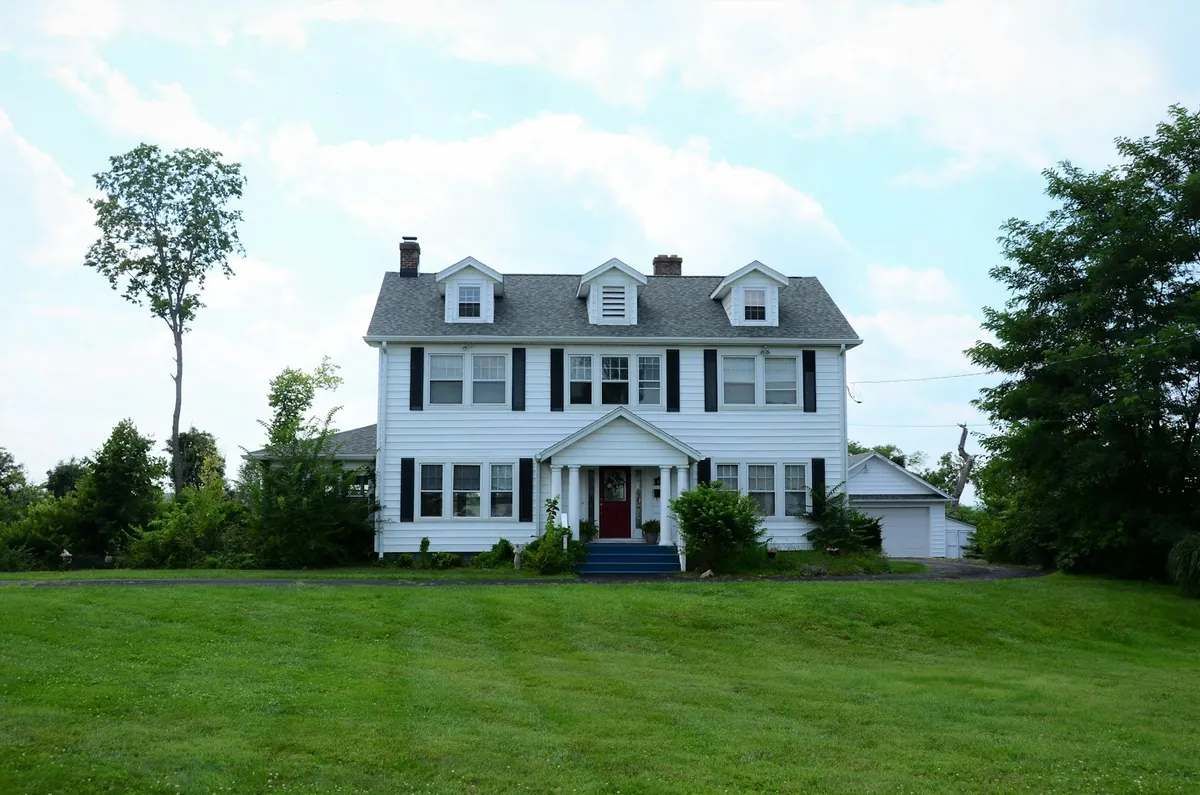
Along Winthrop Street and Route 44, Rehoboth’s antique colonials and farmhouses sit on large lots, and their windows are small, deep-set and finished with wide sills. Off Bay State Road, newer colonial subdivisions have bigger, more regular glass. Planning roman shades in Rehoboth, MA means working with both, and with one thing many town houses share: several of the older ones stand in open farmland with no near neighbours at all.
That changes the brief. Where nobody is looking in, a shade is chosen less for privacy and more for the light, the warmth a fabric brings to an old room, and the way it sits in a deep window. A soft fold in a well chosen cloth can make a low-ceilinged antique room feel finished without hiding the thick walls and old trim that give it character.
- Flat, hobbled or relaxed, sewn from cloth you pick in our showroom
- Made to fit small, deep and often out-of-square openings
- Measured on site and fitted by our installers
Roman Shade Folds and the Rooms They Suit
Flat fold
Even pleats that stack in a neat block. The most compact fold, which matters on a small antique window where every bit of glass counts.
Hobbled fold
Soft, layered loops down the full length. Generous and traditional, best on the taller windows of a front parlour or a newer colonial’s dining room.
Relaxed fold
A smooth face with a soft curve at the bottom. Easy-going and well suited to a farmhouse bedroom or kitchen.
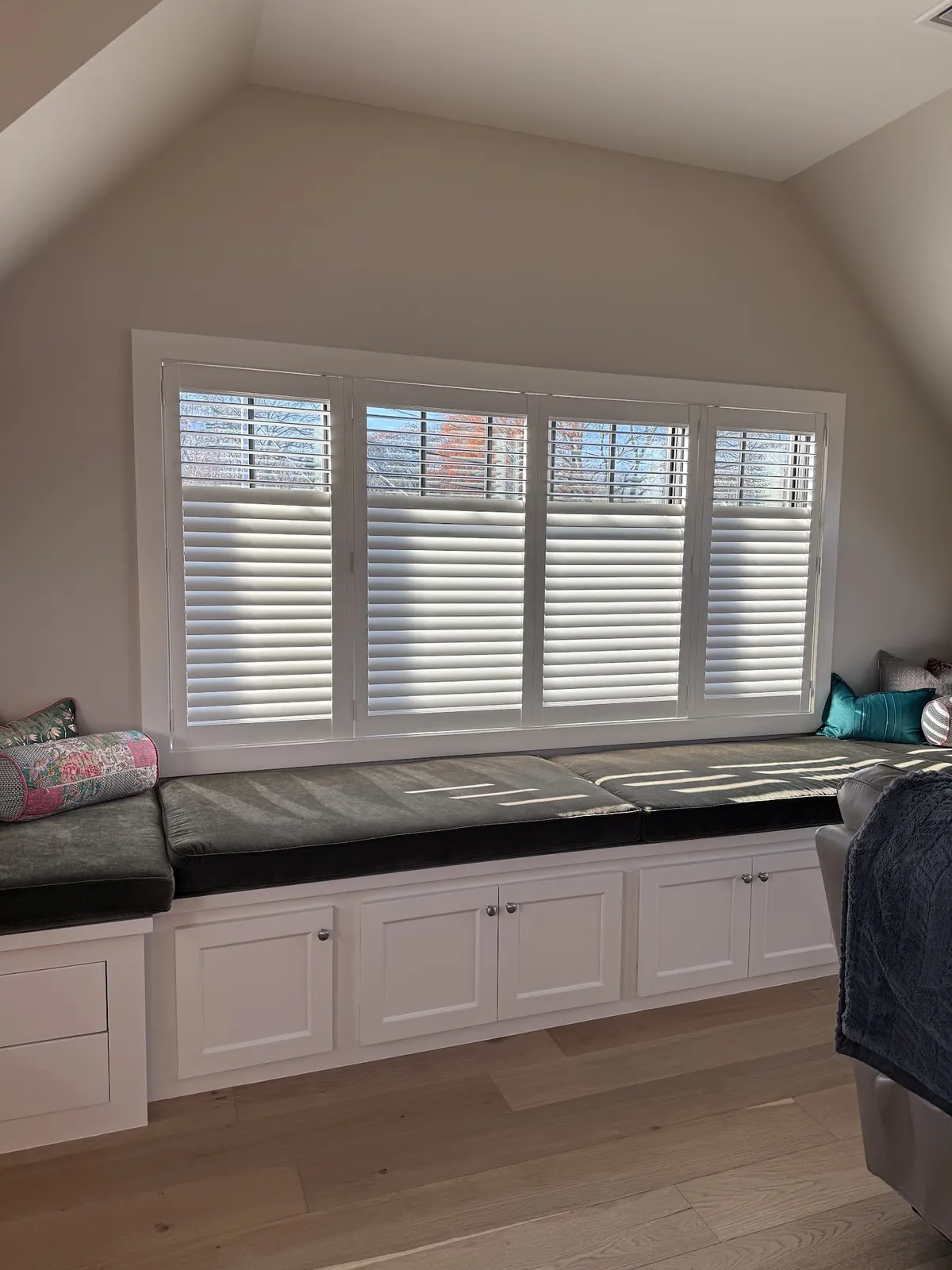
Shutters for a deep sill
Some deep windows suit interior shutters, set within the frame above the sill. See what we make for the town.
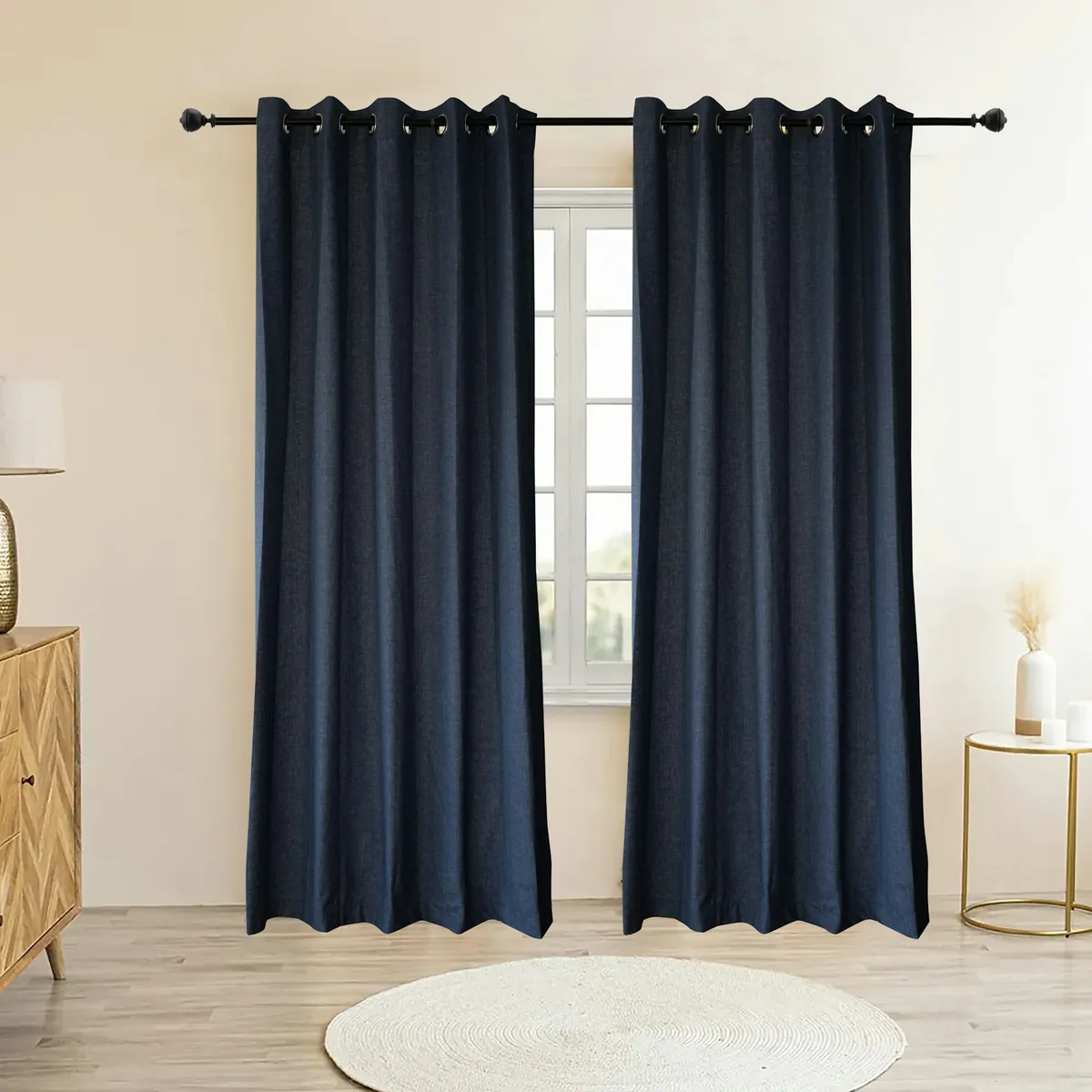
Drapes for the larger rooms
Side panels in a matching or contrasting cloth add height and colour around a roman shade.
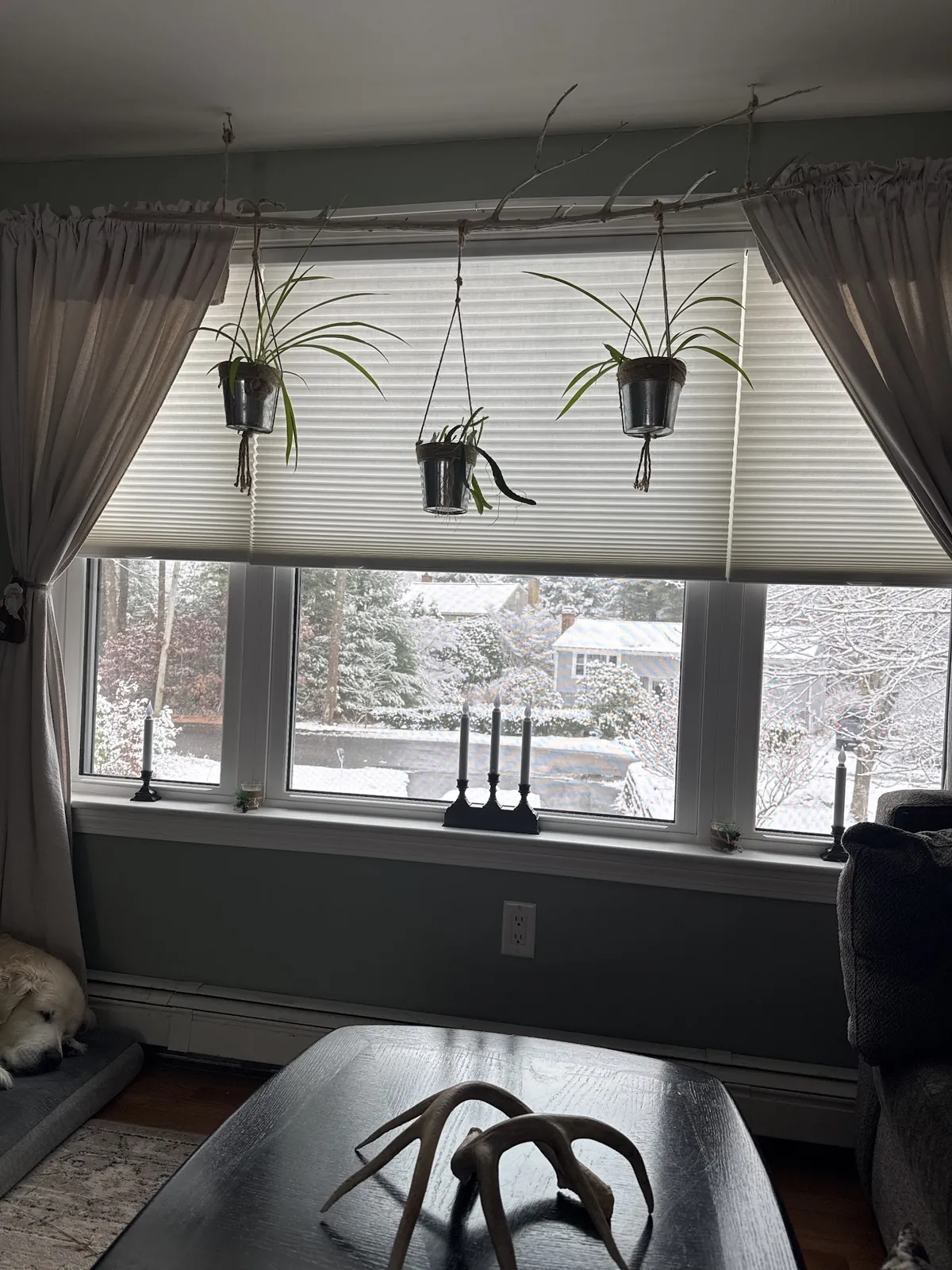
Cellular shades for the cold side
On a north facing window in an old house, a honeycomb shade holds air against the glass.
How Roman Shades in Rehoboth, MA Fit Antique Windows
Antique houses are where roman shades in Rehoboth, MA need the most care. The windows were made by hand or to old standards, the walls are thick, and very little is square. These are the questions we work through at each window.
Inside a deep window
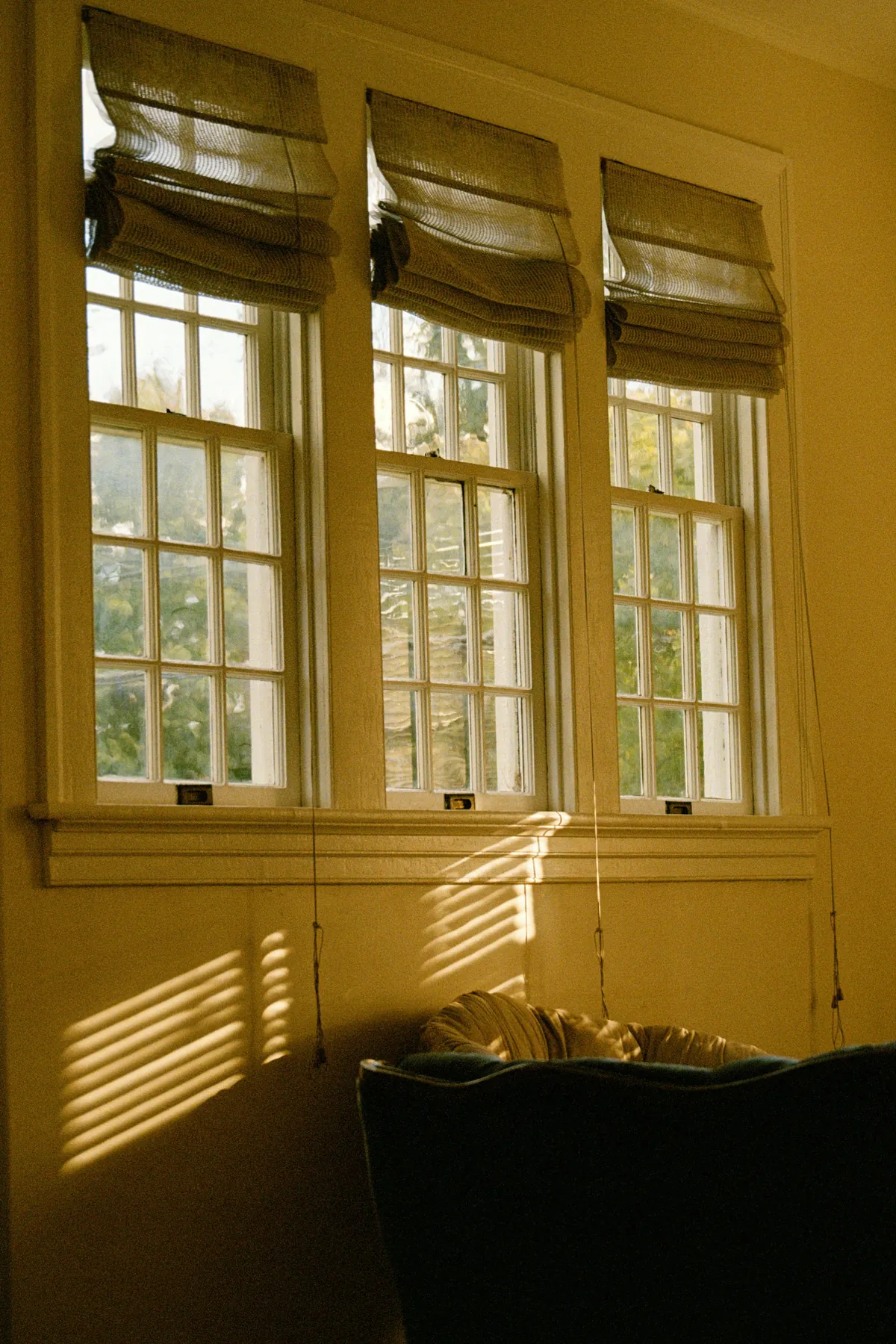
Thick walls in an antique colonial leave enough depth for a roman shade to sit entirely within the window, its folds gathering in the recess rather than standing proud of the plaster. That keeps the thick wall returns and the original casing visible, which is usually what you want in an old room. Because the frame is deep, the shade sits back from the room, and the window keeps its look of a recess in a solid wall.
Old carpentry is seldom square, though. The head of the frame can slope, the jambs can bow, and the top may be wider than the bottom. We take several widths and heights at every window and make each shade to suit its own opening, so it runs straight and does not rub or catch on the way up.
Keeping the wide sill usable
A wide sill is one of the pleasures of an antique house: a place for plants, a lamp or a row of books. A shade fitted within the frame stops neatly where the sill begins, so the sill stays clear and usable whether the shade is up or down. The length is cut so the bottom edge just meets the sill without crumpling onto it.
Where the sill is deep enough to sit on, as in some window seats, an inside mount also keeps the shade from hanging in front of anyone sitting there. If you would rather the window seat had a different treatment, we can talk about that too.
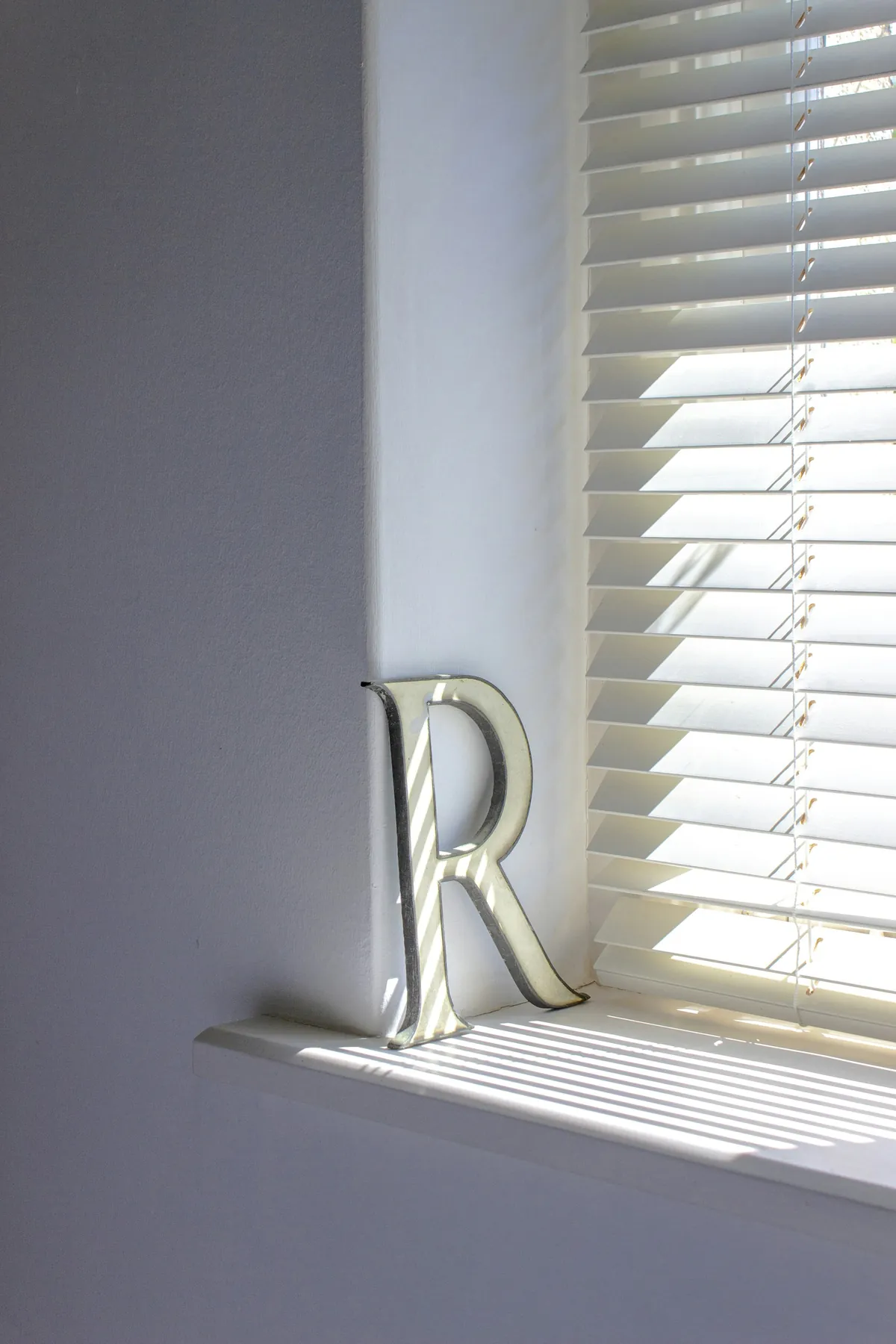
Small windows and the size of the folds
The smaller the window, the more the folds matter. On a short antique sash, a deep fold makes a heavy stack that hides much of the glass when raised. We use a shallower fold so the stack stays slim, and a flat fold, which gathers most compactly, is usually the best choice. If the space above the frame allows, mounting the shade a little higher still lets it rise clear of the glass, though that hides some of the casing, so we look at both options with you.
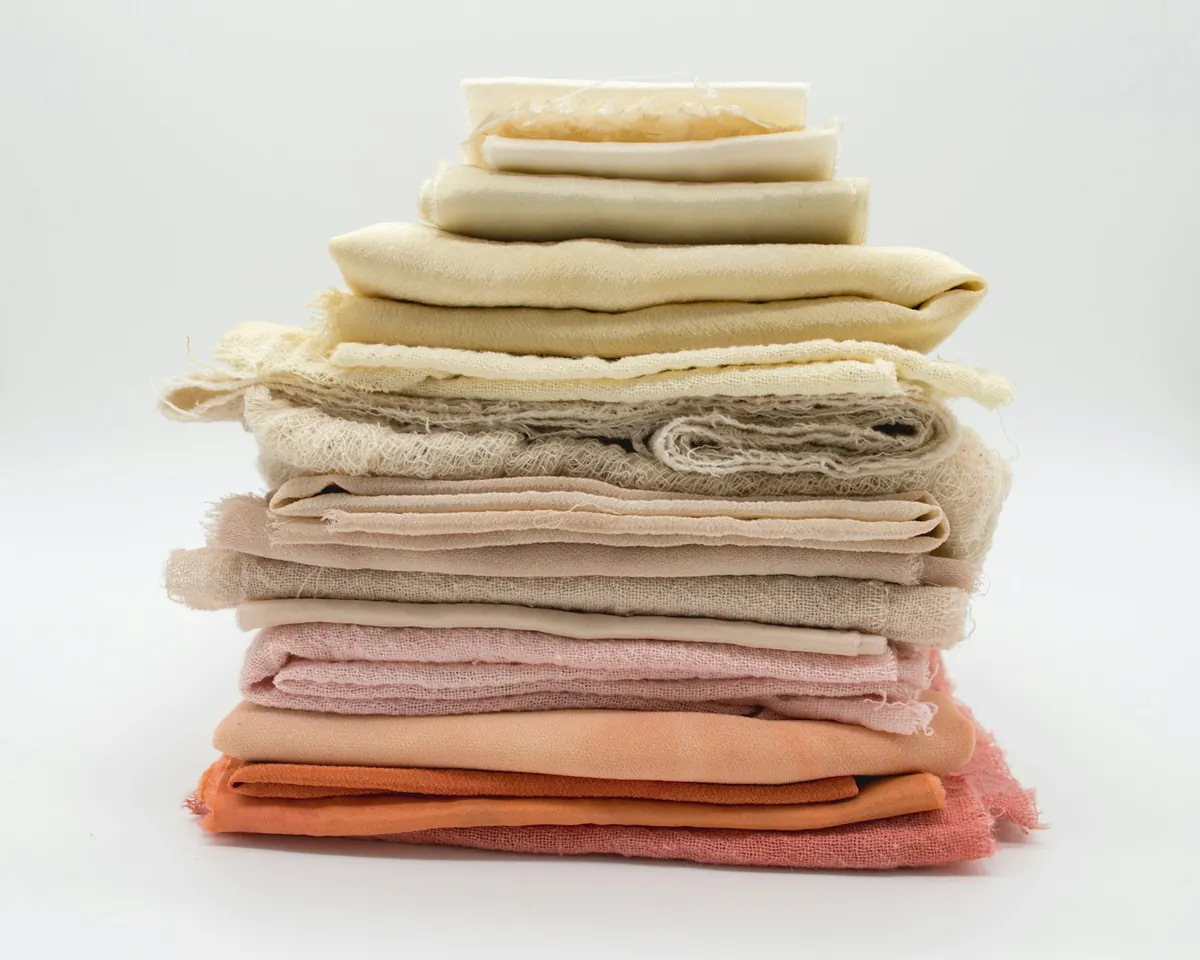
Fabric weight plays a part here as well. A lighter cotton or linen makes a thinner stack than a heavy weave, so on the smallest windows a light cloth often looks and works better.
Farmhouse kitchens and back rooms
The working rooms at the back of an old farmhouse, the kitchen, a mudroom or a back entry, often have a mix of window sizes that grew as the house was added to over the years. One window may be a tall sash, the next a small square window put in later. Rather than forcing them to match, we make each shade to its own opening and tie them together with one cloth and the same lining, so the room looks deliberate. A check or a simple stripe on a relaxed fold suits these rooms well and hides the odd mark from daily use better than a plain pale linen.
Rooms with low ceilings
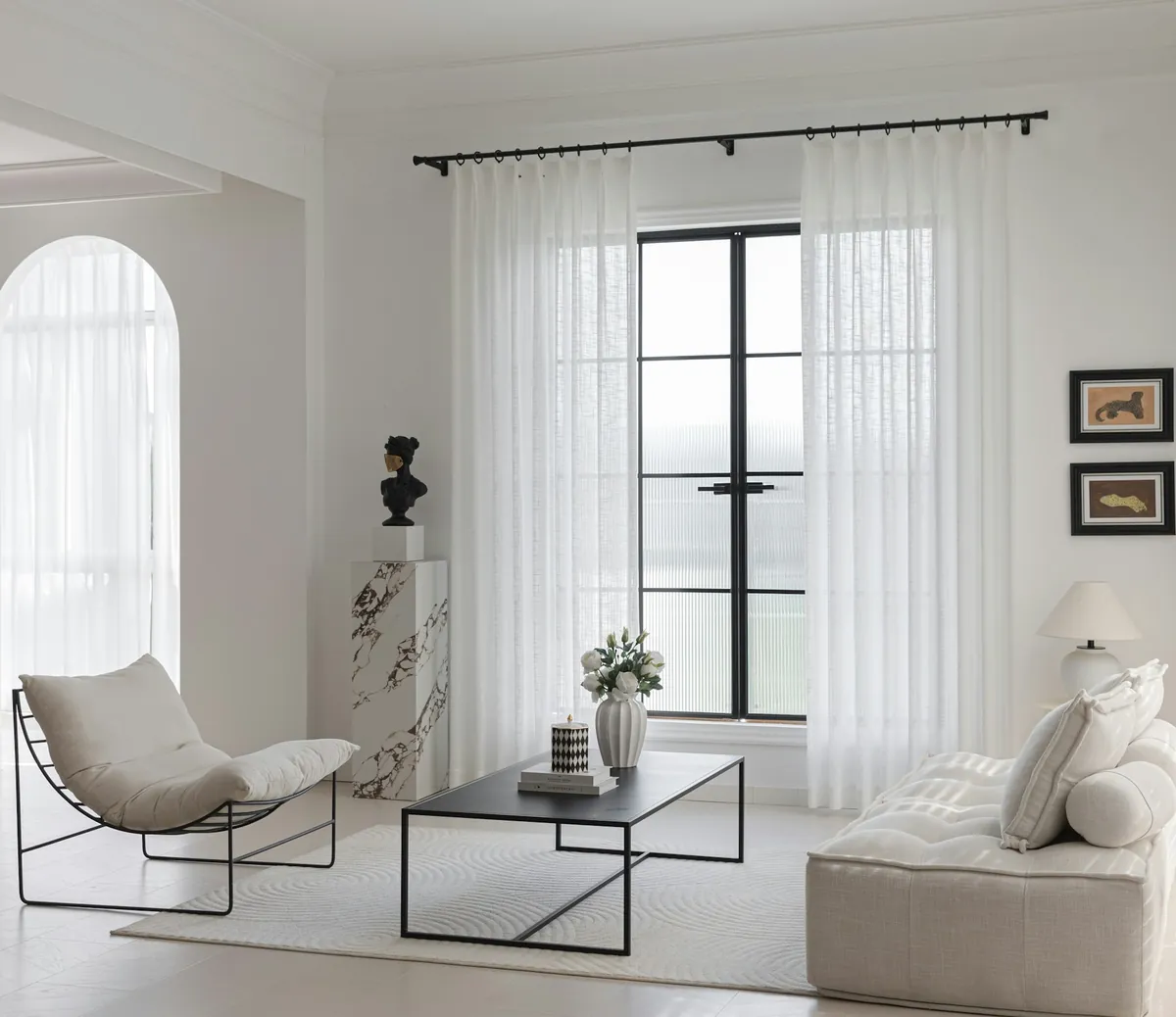
Many older Rehoboth houses have low ceilings, particularly upstairs under the eaves. A bold, heavy fabric can make such a room feel smaller. A pale, plain or softly textured cloth in a flat or relaxed fold keeps it light, while still giving the window a finished look.
Light First, Privacy Second
When a house stands alone in open fields, the usual reasons for a window treatment change. With no near neighbours to screen, many rooms only need covering at night, and some barely need it at all. The roman shade is chosen for what it does with the light and how it looks in the room.
Living rooms and parlours. Left unlined, a pale linen turns the window into a soft lantern when lowered, diffusing daylight softening low winter sun without darkening the room. Raised, a neat flat fold leaves the window almost clear.
Bedrooms. Out in the country, the night is dark, but the summer dawn arrives early and bright across open land. Backing the face fabric with something more substantial keeps a bedroom dim into the morning.
Rooms facing the fields. Where the view is the point of the window, the headrail goes high enough that the gathered fabric clears the glass and leaves the fields in full view, and is lowered only in the evening or when the sun is low and strong.
Rooms close to the road. Houses on Winthrop Street or Route 44 that sit nearer the road may want more privacy on that side, and a lined shade gives it after dark.
Newer Colonials off Bay State Road
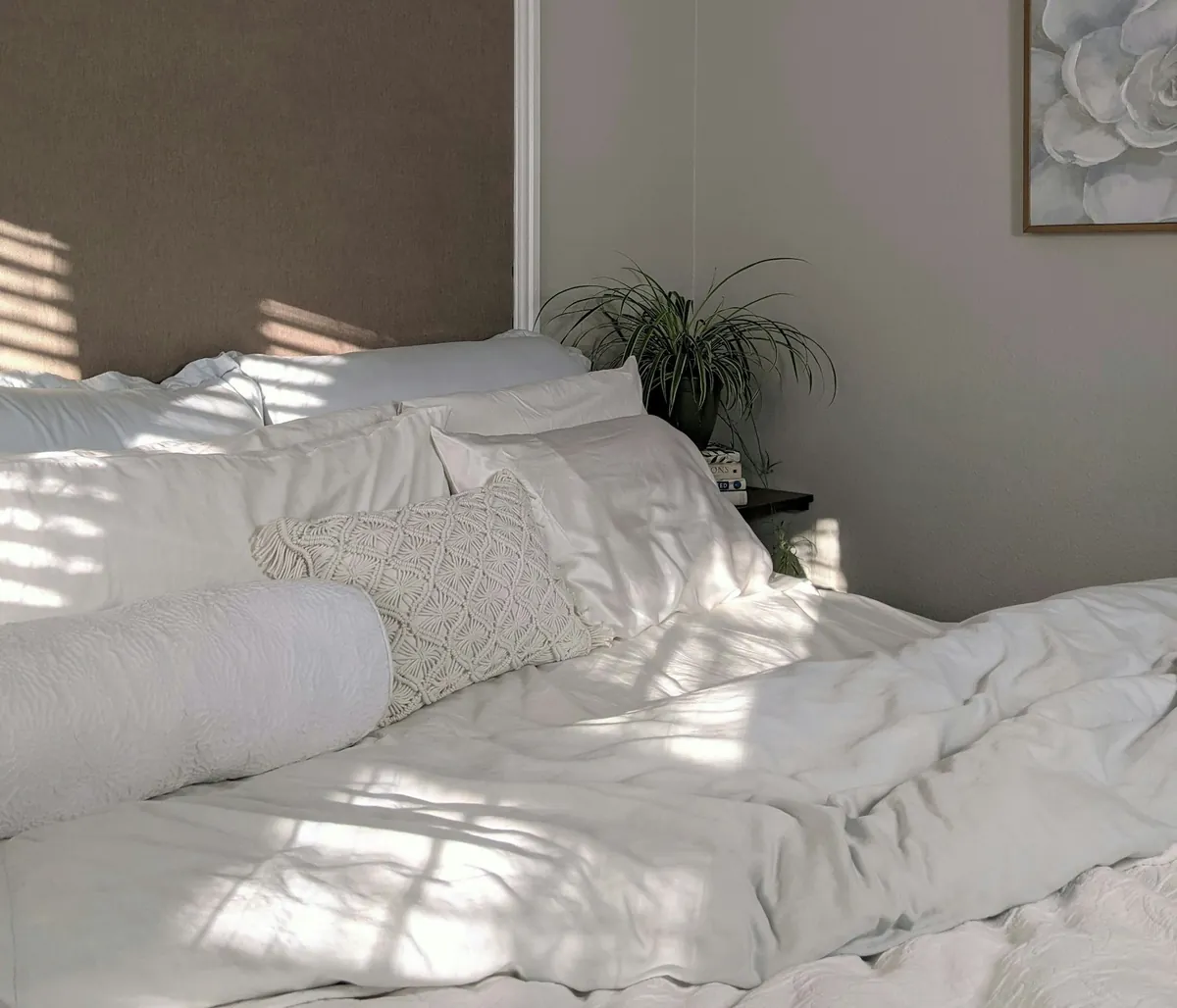
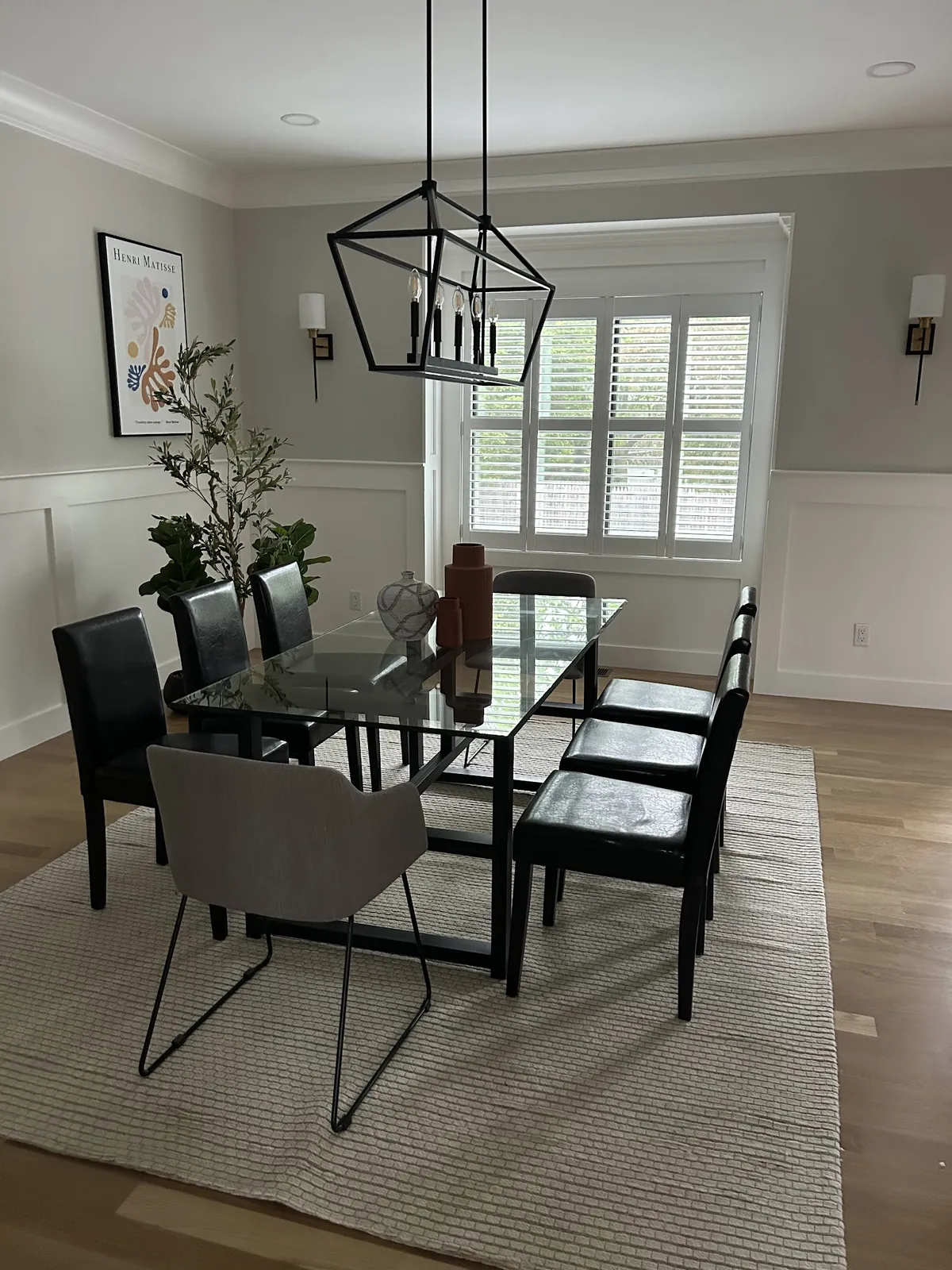
The newer colonial subdivisions off Bay State Road bring a different set of windows. The frames are more regular, the windows taller and often grouped in pairs, and the rooms larger. That gives a roman shade more height to work with, so a hobbled fold in a fuller fabric becomes a real choice for a dining room or a formal living room.
With windows in pairs or threes, we make every shade in the group to the same stack height, so they line up when raised. In a two storey foyer or over a staircase, a window you cannot easily get to may suit a different treatment, and we will tell you so at the measuring visit. Over a kitchen sink, a simple flat fold keeps its distance from the taps and the washing up.
Because these houses are newer, inside mounts are usually straightforward, though shallower modern frames sometimes mean an outside mount is the tidier choice. We check the depth at each window.
The front of the house from the road
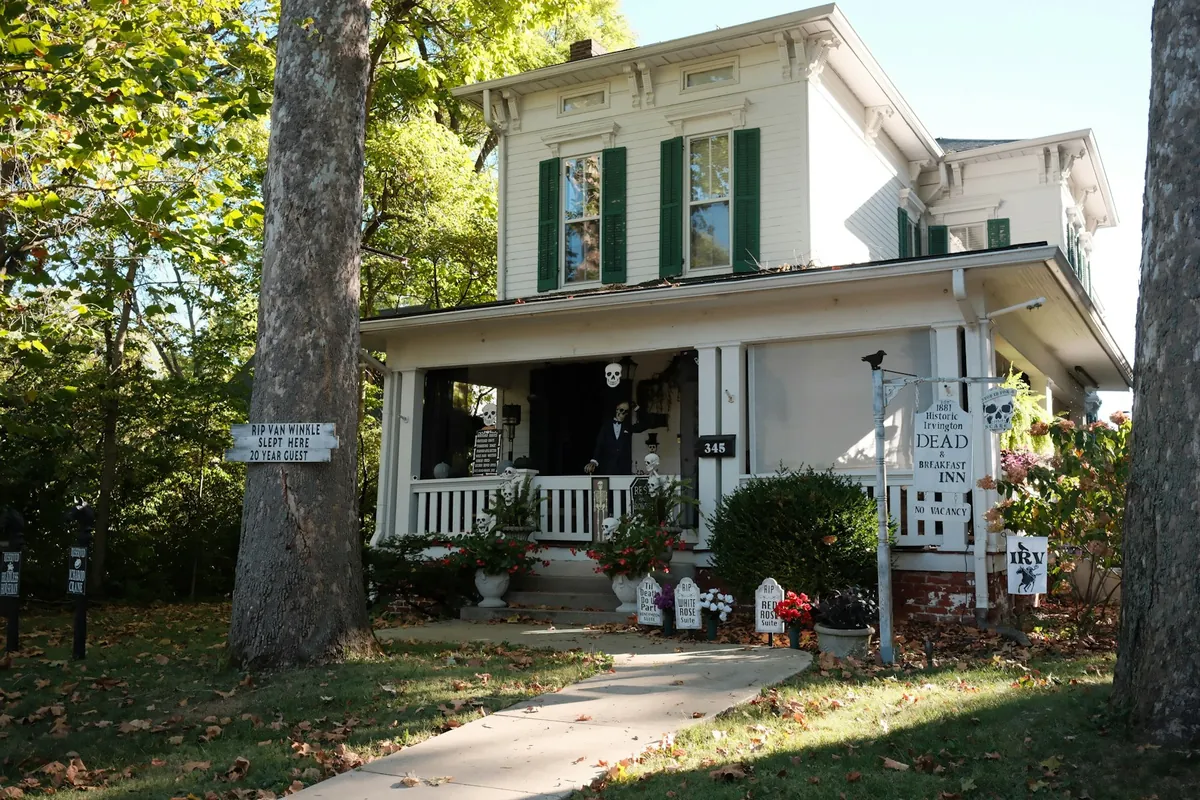
On the large lots along Winthrop Street and Route 44, a house is often seen from some distance across a field or a long front lawn. From there, the front windows read as a pattern of light and colour rather than as individual shades. Keeping the same lining colour behind every front facing shade, whatever the face fabric in each room, keeps that pattern even. White or a soft cream backing is the usual choice on a painted colonial, because it looks clean from outside against the trim.
Low winter sun across open land
With no trees or houses nearby to block it, low winter sun can reach deep into a room for much of the day. That light is welcome, but over the years it can fade a strong colour on the face of a shade. A lining shields the front fabric, and a paler or more muted cloth shows the effect less than a deep, saturated one. In a south or west facing parlour, we usually suggest both, and we will talk you through how the colours you like will hold up in that room.
Choosing a Fabric for an Old House
Fabric is where every roman shade starts, and in an antique house it does a lot of the work. Window Works has always been strong on drapery and fabric, and the showroom holds a broad range to choose from. Here is how different kinds of cloth tend to behave in an old house.
- Plain linen or cotton holds a crisp flat fold and suits the simple lines of an antique colonial.
- A small check or a narrow stripe looks at home in a farmhouse kitchen or bedroom, and reads well on a flat or relaxed fold.
- A softer, heavier cloth falls into the rounded loops of a hobbled fold, for a parlour or a newer colonial’s dining room.
- A print is best on a flat fold, centred on the window, where the pattern is not broken up.
Whatever the cloth, the fold should suit the window as well as the fabric. A small antique window looks best with a flat or relaxed fold in a light weight, while the tallest windows in the house can carry fuller hobbled folds in a heavier weave. We look at the two together, at the window, before anything is ordered, and if a fabric you love will not fold well on a particular window, we will suggest where else in the house it could go.
If the same room is having drapes, cushions or a duvet cover made, the shade can be cut from the same fabric or a partner to it. Our custom fabric decor is made in the same way.

From First Call to Finished Windows
Ordering roman shades in Rehoboth, MA is a straightforward run of steps, and we keep you posted at each one.
- Get in touch by phone or through the form with the rooms on your list, and we set up a free quote.
- A specialist comes out to the house. In an old building that means several readings per window, a note of how deep each frame runs and how wide each sill is, and a look at the wall above the casing.
- Cloth, fold and backing are chosen together, with swatches held up in your rooms or at the showroom.
- A written quote arrives listing every window by room.
- Every shade is sewn to its own opening.
- Our installers hang the set, test each one through its full travel, and walk you through using them.
- Any later adjustment is one phone call to Swansea.
On a large property, it often makes sense to start with the rooms you use most, then add others later. Shades ordered on a later visit can be matched in cloth, fold and stack height to the first ones, so the house still looks as though it was done at once.
Caring for roman shades
Dust drifts in off open fields, so give the folds a light going over every few weeks with an upholstery brush. Spots are best blotted gently with clean water, testing first on the back of a fold. Keep fabric shades out of the washing machine: the cloth may shrink and the pleats lose their line. When you order, we explain how to look after the particular cloth you picked.
Our main roman shades page covers the service in every town we serve, and everything we make for the town is on our Rehoboth window treatments page.
A Swansea Family Store Since 1988
Window Works began in Swansea in 1988, and a second generation of the family now runs it. Over 37 years, the store has dressed windows in everything from antique farmhouses to brand new colonials, throughout the SouthCoast and over the state line into the East Bay.
- Drapery and fabric specialists, with a showroom range to choose from
- An experienced team that measures every window in your home
- Our own installers hang every shade
- Warranties are offered on what we supply
- Regular contact from the first visit to the final fitting
Fabrics You Can Handle First
Swansea is just down the road from Rehoboth, and the showroom is the best place to see the fabric range before you choose roman shades in Rehoboth, MA. Hold a linen next to a heavier weave, see how a check reads on a flat fold, and look at each colour in daylight.
A paint sample, a fabric you are matching or a picture of the room gives our specialists something to work from. The Norman range is on display as well.
Questions from Rehoboth
Can a roman shade fit the small, deep windows in an antique colonial?
Yes. Thick walls give the shade space to sit inside the recess. We take several readings per window, since antique carpentry is seldom true, and keep the folds shallow so a small window does not lose its light.
Will the shade get in the way of my wide window sills?
No. Fitted inside the frame, the shade stops where the sill starts, leaving room for plants or books.
Do I need a lined shade if the house has no neighbours nearby?
Not always. Where privacy is not a concern, an unlined shade in a light fabric keeps the room bright. Bedrooms often still benefit from a heavier backing to keep the early light out.
Which fold suits a newer colonial dining room?
Taller, more regular windows can carry the generous loops of a hobbled fold in a fuller cloth, perhaps framed by side drapes.
How do I get a quote?
There is no charge for a quote. Ring us from the call button or send the form with a note of the rooms involved.
Take the Next Step
A free quote is the place to begin. Tap the call button to speak to the Swansea store about a measuring visit or installation, or leave your details on the form for a reply. Directions to the showroom are on the contact page if you want to handle the cloth first. Our Google rating is 5.0.