
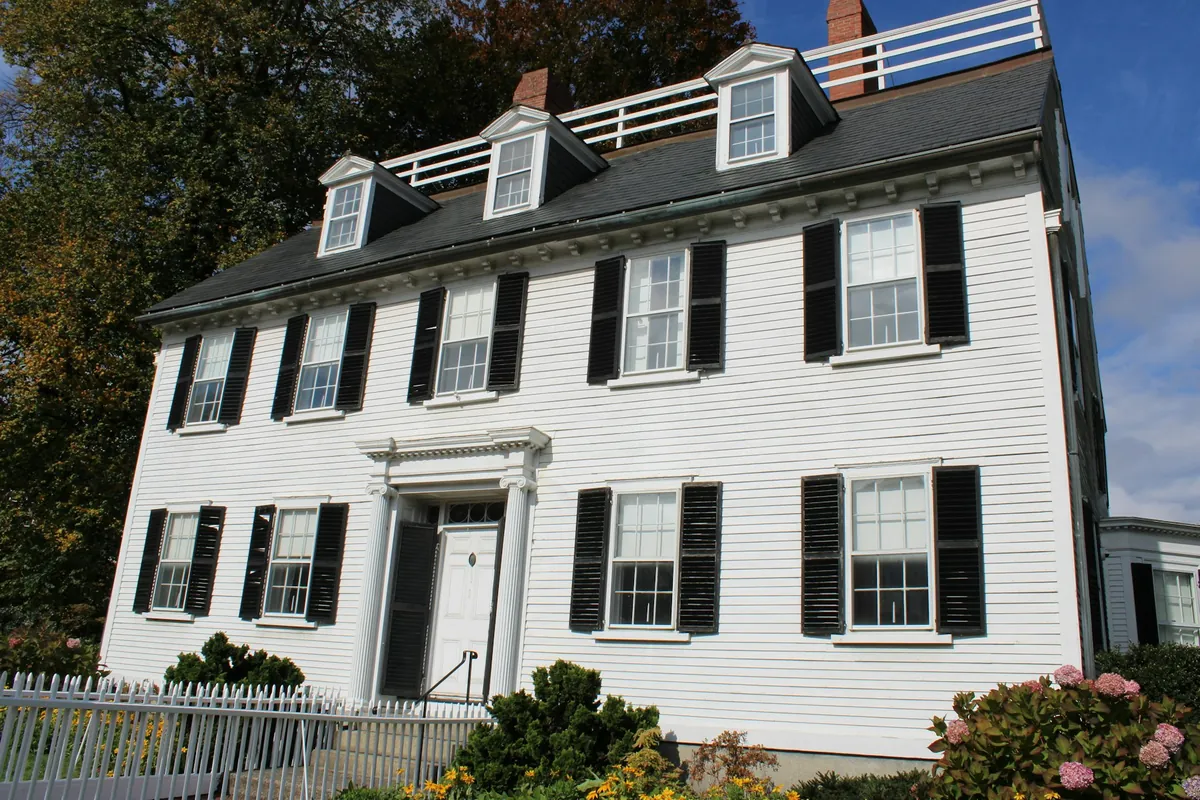
Deep Reveals and Historic Fronts
The Federal and Greek Revival houses along Hope Street were built with thick walls, and their windows sit well back inside them. That deep window reveal is the first thing we look at when we plan cellular shades in Bristol, RI, because it decides where a shade can be mounted, how it looks from the room and how well it closes off the cold glass.
The second thing is the street. Many of these houses stand in the historic district, where the front of the house is expected to look the way it always has. A honeycomb shade lives entirely indoors, tucked into the reveal, and when it is raised the window looks from Hope Street exactly as it did before.
- Single and double cell, in fabrics that suit an older house
- Measured at your house, reveal by reveal
- Installed by our own team, with the showroom in Swansea for samples
Honeycomb Shades Made for Bristol Houses
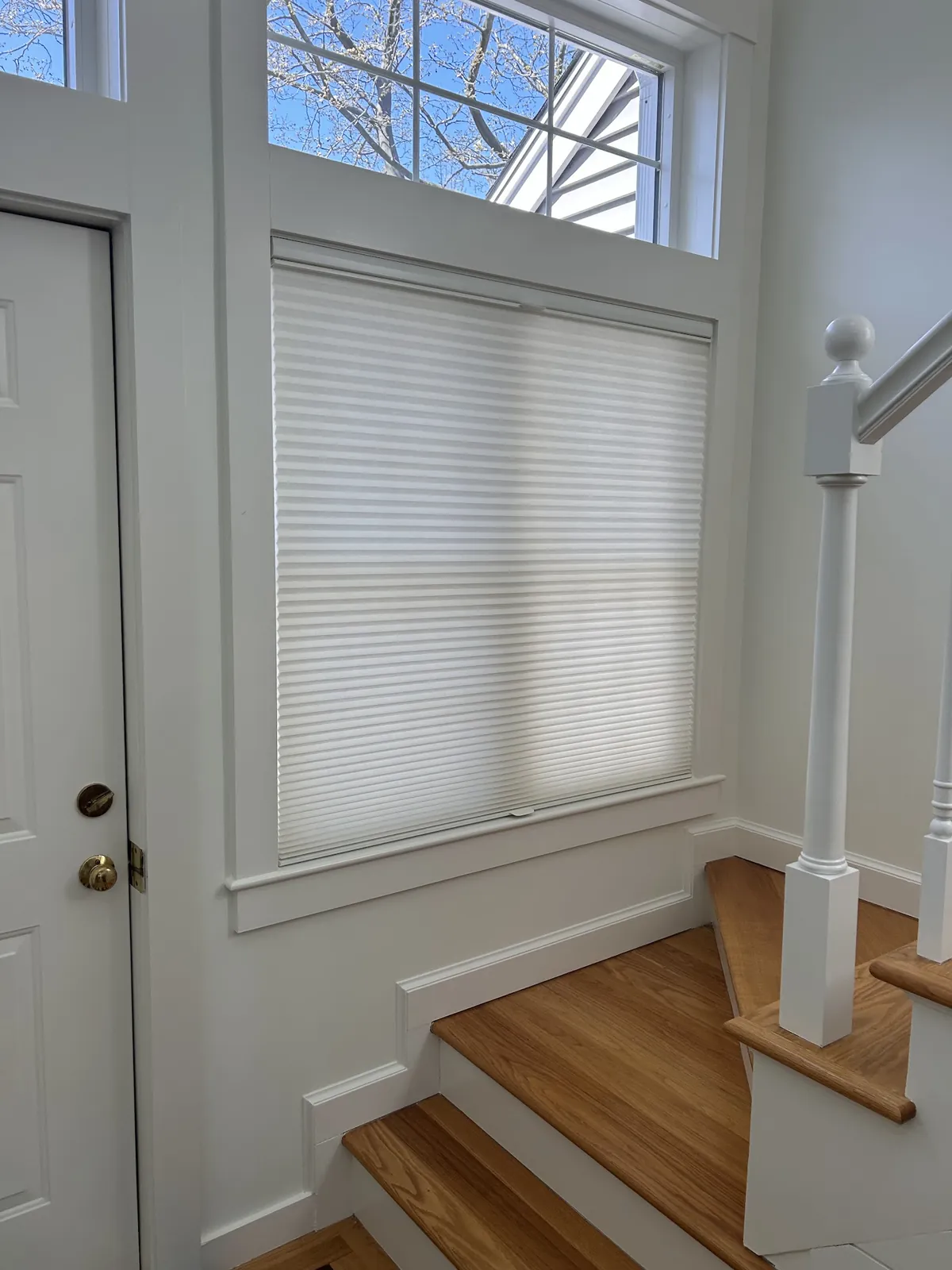
Single cell
A single row of cells, light and compact. It suits most rooms in a house that holds its warmth reasonably well, and it disappears into a deep reveal when raised.
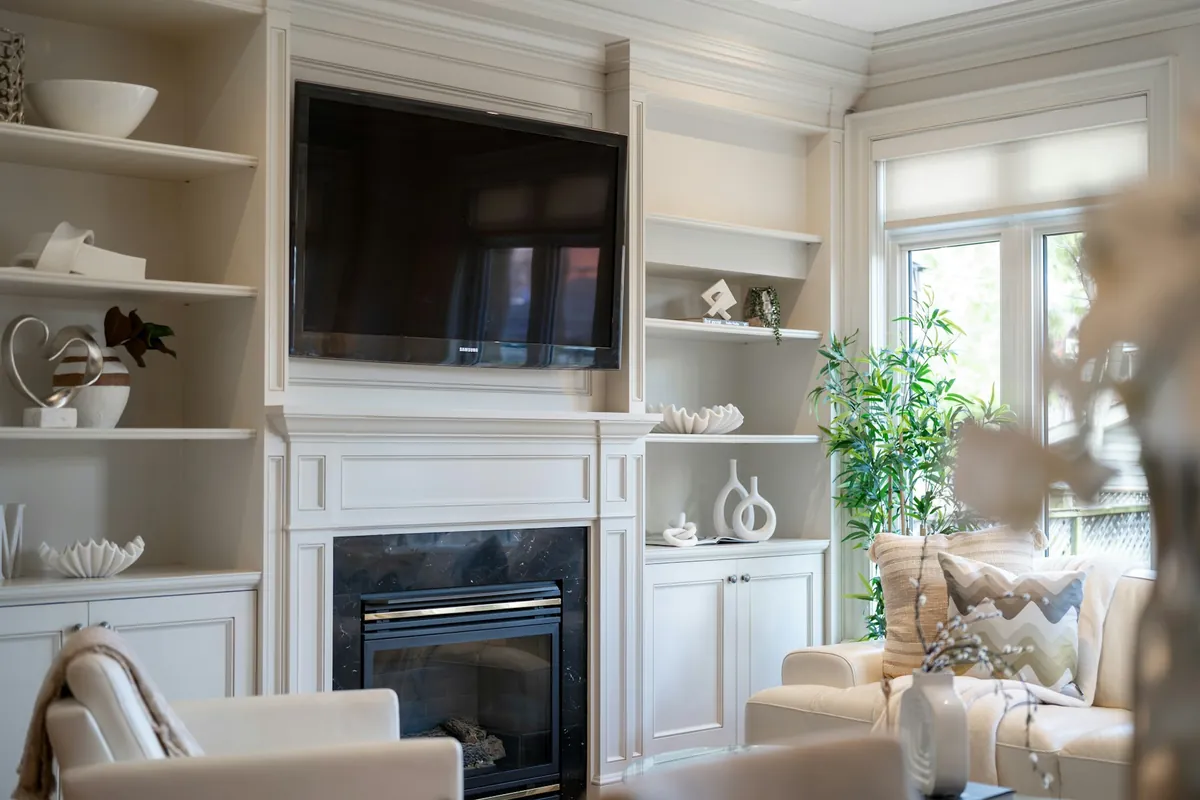
Double cell
A second row of cells behind the first. For the parlour that never warms up, the bedroom facing the bay, or an old sash that lets the wind through.

Sized to the reveal
Old reveals are rarely square or the same from one window to the next. Every shade is made to the opening it will hang in, measured where it stands.
Inside the Reveal: Where a Shade Belongs
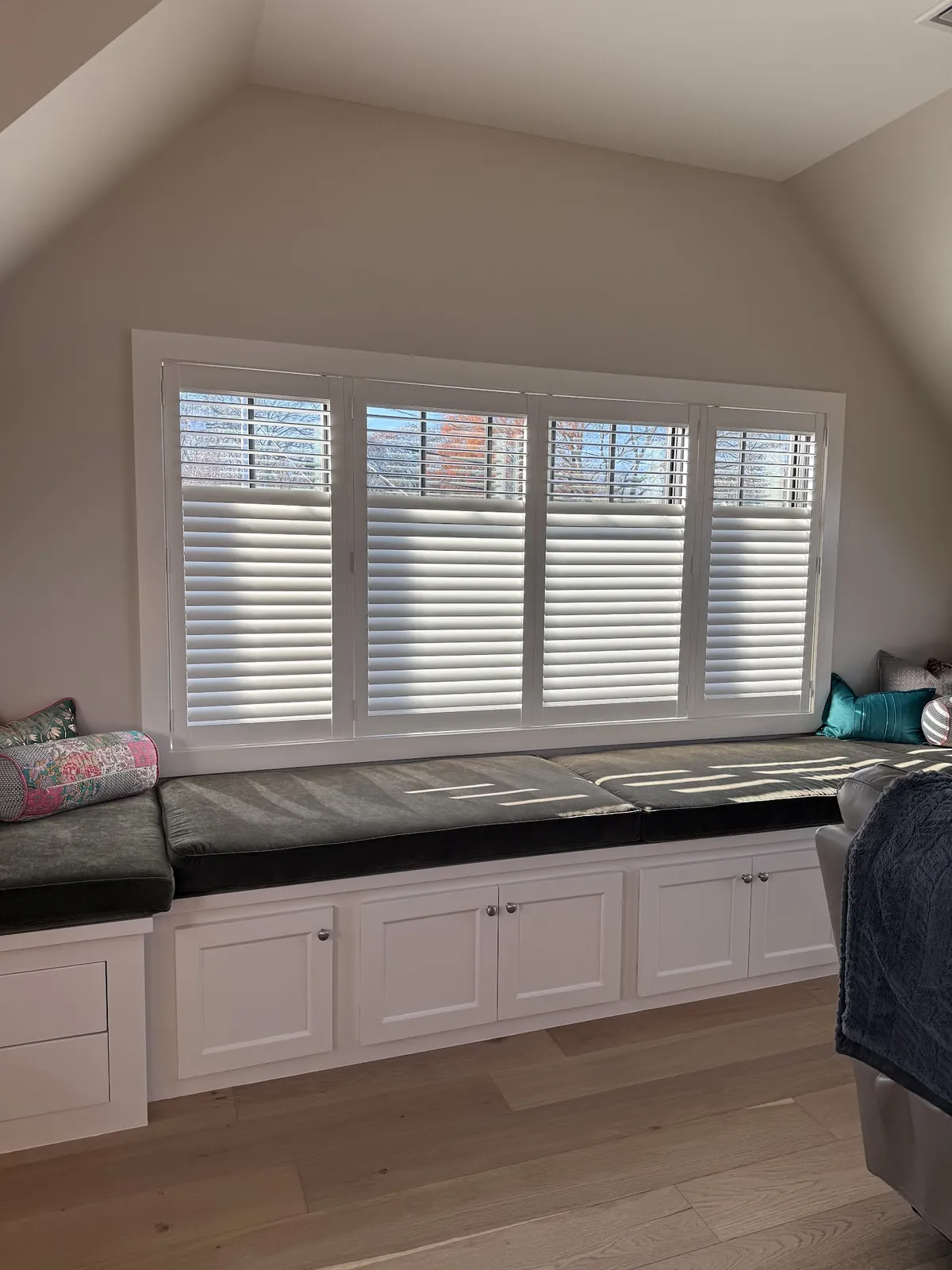
A deep reveal is a gift for a window shade. Mounted inside it, the shade sits snugly within the thickness of the wall, close to the glass, with the interior trim and any panelling around the window left fully on show. It reads as part of the window rather than something added in front of it. In a Federal parlour with original woodwork, that matters more than almost anything else.
It also helps the shade do its real job. The closer the shade sits to the glass, and the more neatly it fills the opening, the less room there is for cold air to escape around its edges into the room. A shade that fills a deep reveal edge to edge makes a closed pocket in front of the glass, with the wall itself forming the sides.
When the reveal is not square
The catch is that a reveal in a house this old is rarely a perfect rectangle. Walls settle, frames shift, and the opening can be noticeably wider at the top than at the bottom, or deeper on one side than the other. A shade made to a single standard size would leave a wedge of light and cold down one edge.
So we measure each reveal at several points, top, middle and bottom, and note its depth on both sides. The shade is made to suit the opening as it really is. Where a reveal is too far out of true for a clean inside fit, mounting the shade on the face of the trim, sized to cover the opening fully, can be the better answer, and we will show you why at the visit.
Interior shutters, sash weights and old hardware
Many older Bristol houses still have their original interior shutters folded into the reveal, or the pockets where they once sat. Others have sash locks, lifts, pulleys or old weatherstripping set into the frame. Any of these can sit exactly where a headrail would want to go.
These are not problems so much as details to plan around. A shade can often sit in front of folded interior shutters, or be set a little deeper or shallower in the reveal to clear a lock. We note every one of these at the measuring visit, so the finished shade fits the window you actually have.
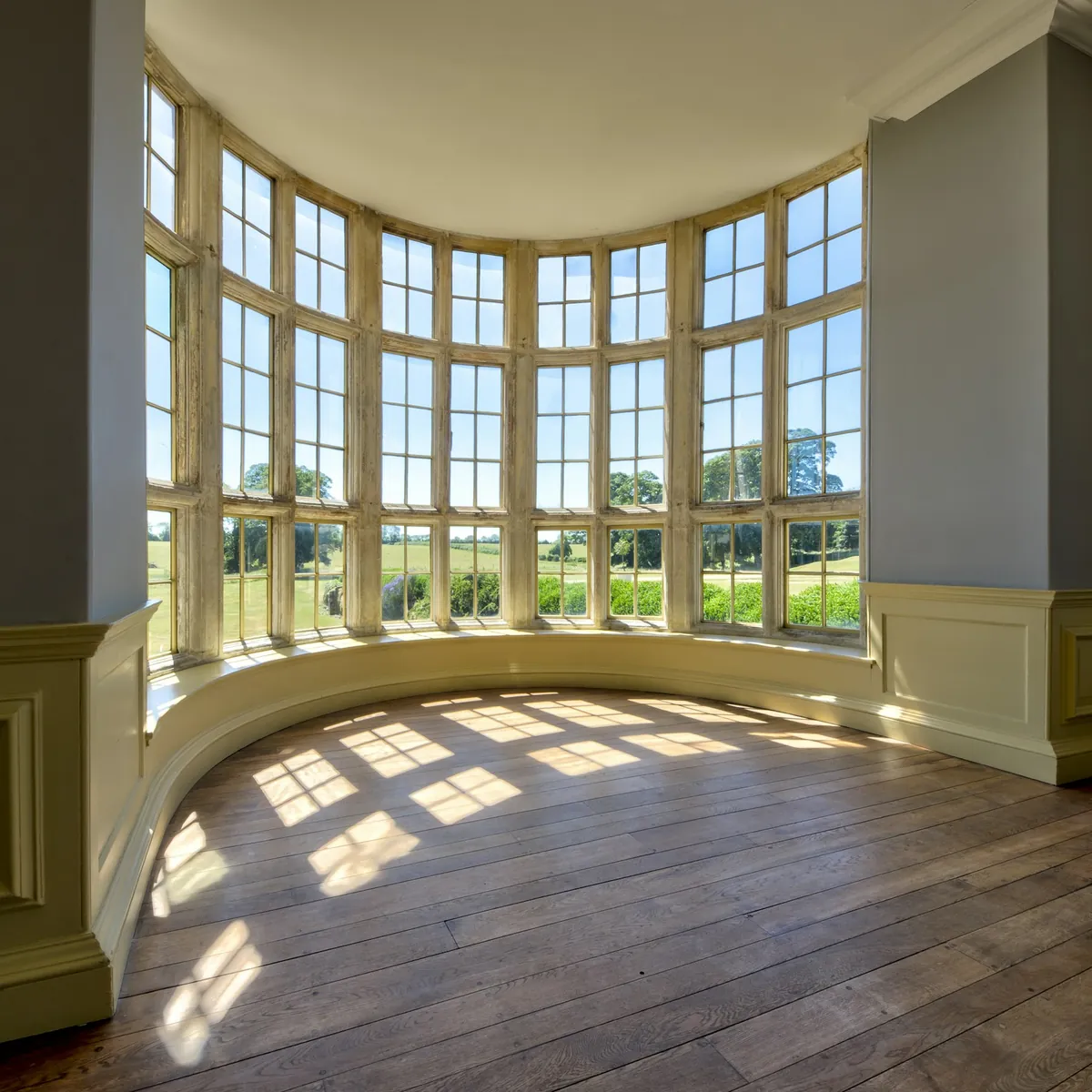
The Street Face of a Historic House
On Hope Street and the streets around it, the front of the house is seen as a whole. Owners of houses in the historic district are understandably careful about anything that changes how that front looks. An interior honeycomb shade does not touch the outside of the house at all. Raised, it all but vanishes into the top of the reveal. Lowered, it shows from the street as an even panel of colour behind the glass.
That panel is worth thinking about. Every window on the front of the house shows its shade to the street, so choosing one colour for all of them keeps the face of the house calm and consistent. White, ivory and soft neutrals are the usual choice for a Federal or Greek Revival front, because they sit quietly behind old glass and against painted sash. The rooms at the back, which nobody sees from the street, can take whatever colour suits the room.
Choosing cellular shades in Bristol, RI for a house in the district is mostly a matter of keeping that front even and letting the rooms behind it make their own choices.
Side streets and the houses between
Not every older house in town sits on Hope Street itself. The side streets running down toward the harbour and up from it are lined with smaller Federal and Greek Revival houses, often gable end to the street, with a narrow front and windows down the long side facing a neighbour across a driveway. In those houses the side windows matter as much as the front ones, both for privacy and for the cold, because they make up most of the glass in the house.
A shade on those side windows has to do two things at once: let daylight into rooms that rely on it, and stop the house next door from looking in. A light-coloured fabric that passes plenty of light does both, and lowered at dusk, the same shade closes off the glass for the night. On the gable end facing the street, the shades follow the same one-colour rule as a Hope Street front.
One Layer of Air or Two
The reason a honeycomb shade warms a room is simpler than it looks. Think of the difference between a single sheet and a quilt. The quilt is warmer not because of the fabric itself but because of the air caught in it. A cellular shade works the same way: its fabric is folded into closed cells, and each cell holds a pocket of air that cannot move. Still air carries very little heat, so with the shade lowered, much less of the room’s warmth reaches the cold glass.
A single cell shade has one row of those pockets. A double cell shade has two, one behind the other, so the cold has to cross two layers of still air instead of one. That is why we suggest double cell for the rooms that suffer most, and why many Bristol houses end up with a mix: double cell in the parlour and the bay-facing bedroom, single cell in the kitchen and the rooms that already feel comfortable.
Greek Revival rooms and taller windows
The Greek Revival houses tend to have taller windows than the Federals, sometimes reaching close to the floor in the front rooms, with generous ceilings above them. Tall glass means more cold surface, and it means more fabric for the shade to gather when it is raised. A honeycomb shade folds into a very small stack for its height, which keeps the top of a tall window clear and the room bright.
On the tallest windows, where the top of the shade is out of comfortable reach, motorised blinds and shades let you raise and lower each one from a remote or a wall switch.
Top-floor rooms under the roof
Up under the roof of a Federal, the bedrooms often have small windows set low in the knee wall or in a dormer, with the roof close overhead. Those rooms are the hottest in the house in August and among the coldest in February, and there is rarely space beside the window for anything but the window itself. A honeycomb shade fitted inside a small dormer opening takes up no room at all and gives that one window a layer of held air on winter nights. For a top-floor bedroom we usually lean toward double cell, because the room has so little else between it and the weather.
We get asked about cellular shades in Bristol, RI attic rooms more than almost any other space, and the answer is nearly always to measure each little window on its own, since the dormers on one roof are seldom exactly alike.
Along Mount Hope Bay and Out to Poppasquash Point
Away from the centre, the houses along the Mount Hope Bay shore and out toward Poppasquash Point face open water. Their rooms on the bay side get the light and the view, and in winter they get the wind as well. These are the windows where the difference between single and double cell is easiest to feel, and where we most often suggest double cell even when the rest of the house is single.
Shore houses also tend to have larger windows on the water side, sometimes a picture window or a run of glass that has replaced smaller original windows. Each section of glass gets its own shade, so you can lower some for warmth or glare and leave others up for the view. Measured together, cellular shades in Bristol, RI shore houses line up neatly along the wall and stack evenly when raised.
What Happens Once You Get in Touch
Every order for cellular shades in Bristol, RI follows the same short path, and someone from the store keeps you posted at each turn until the work is finished.
- Reach the Swansea store through the call button or send the form. A short note on which rooms concern you is enough to book a free quote.
- A specialist visits and goes reveal by reveal: depth on each side, width at the top and the bottom, and any shutters, locks or old hardware that a shade will need to clear.
- You pick single or double cell for each room, plus fabric and colour. The showroom keeps samples you can see and handle.
- The quote arrives with each window itemised.
- Each shade is built to the figures taken at the visit.
- Installers fit the shades, test that each one rises and falls square in its reveal, and explain how to use them.

Fabrics for an older house
Fabrics differ in how much light they let through. A lighter fabric keeps a front parlour bright while blurring the view in from the sidewalk, which suits a house close to Hope Street. A heavier fabric suits a bedroom that faces east or a room where you want the evening light kept out. Many owners use one fabric across the front for an even look from the street and a different one in the bedrooms at the back.
Texture matters too in an older house. A plain, finely textured fabric sits well against painted panelling and old glass. We can talk through the choices at the showroom, where you can hold the fabrics up to the light.
A shade, or a shade and something more
In the formal rooms of a Federal or Greek Revival house, a honeycomb shade often works best as the hidden layer, fitted in the reveal behind drapery or a fabric shade. The cellular shade handles warmth and privacy day to day, and the outer treatment gives the room its finish. If you want a fabric shade at the front of the reveal, our Roman shades in Bristol page shows what is possible, and we can plan both on the same visit.
In a kitchen, a bathroom or a small bedroom under the eaves, the honeycomb shade usually stands alone. It takes up no space outside the reveal, which is exactly what a small room needs. And if a window would honestly be better served by something else, such as interior shutters in a kitchen or a vertical track on a back door, we will tell you so at the visit.
Second Generation, Same Family
Window Works has been in Swansea since 1988. It is a family business, run today by the second generation, and window treatments are all it does. Over 37 years and more, the store has worked in houses from the Massachusetts SouthCoast down through the Rhode Island East Bay, and Bristol is among the 25 towns it serves.
What that means for you is simple. The person who measures your reveals is an experienced window treatment specialist. Our own installers fit what is made. Warranties are offered on the products we sell. And you hear from us throughout, not just when the order is placed.
Hold the Fabrics Up to the Light
Swansea is an easy drive up the East Bay. In the showroom you can lay a single cell sample beside a double cell one, see how each colour reads in daylight and watch how the fabric folds. The Norman range is on display as well. A phone photo of the room, a paint card or a scrap of the panelling colour gives our team plenty to work with.
See every treatment we make for the town on our Bristol window treatments page, or read about the shades in full on the main cellular shades page.
Questions from Bristol
Can a honeycomb shade sit inside a deep window reveal?
Yes, and a deep reveal is often the best place for it. The shade sits close to the glass with the trim on show. We measure each reveal at several points, since old openings are rarely square.
Will the shades change how my house looks from Hope Street?
The shade is entirely indoors. Raised, it tucks into the top of the reveal. Lowered, it shows as an even panel behind the glass, so we suggest one colour for every window on the front.
What if my windows still have interior shutters?
We note them at the measuring visit. A shade can often sit in front of folded shutters or be set to clear them, and we will show you the options.
Is double cell worth it for a room facing Mount Hope Bay?
For the rooms that take the wind off the water, yes. The second row of cells holds a second layer of air at the glass, which is where those rooms lose their warmth.
Do you charge for a quote?
No. Quotes are free. Press the call button or send the form and we will set a time to come and measure the reveals.
Start with a Free Quote
Press the call button to reach the store in Swansea. From there we can book your free quote, set a day for measuring at the house, or answer questions about installation. If seeing the fabrics comes first for you, the showroom directions are on the contact page. Window Works is rated 5.0 on Google.