
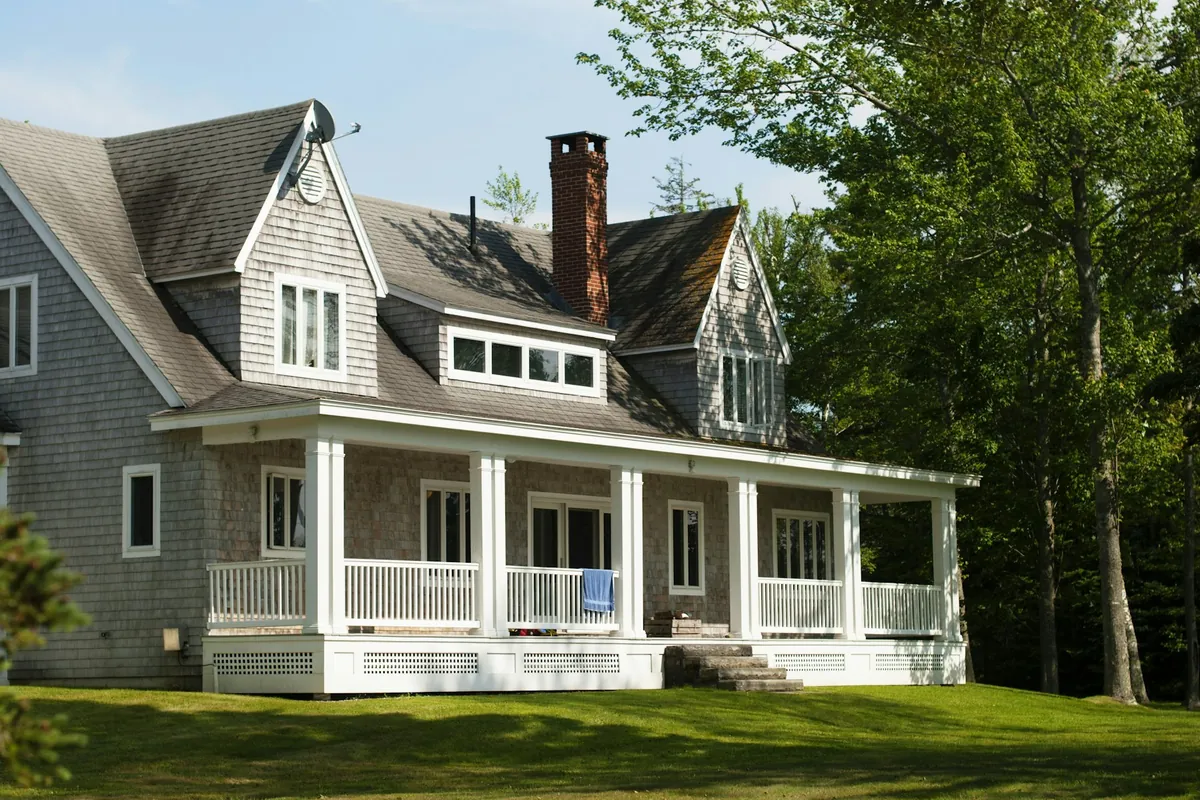
Grouped Windows in Riverside and Rumford
The bungalows of Riverside and Rumford, built between the 1920s and the 1950s, often set two, three or four windows side by side across the front room. From inside and out, those grouped windows read as one opening, and they usually look best treated as one. That single idea shapes most of what we do when we plan custom drapes in East Providence, RI for a bungalow: one rod across the whole group, fabric planned for the full width, and panels that frame the set rather than chopping it up.
The same neighbourhoods have colonials from the same decades, with separate, evenly spaced windows that call for something different. Watchemoket has older houses again, and Kettle Point brings newer construction with its own window sizes. So the city covers almost every kind of drapery job we do, often within a few streets.
Whatever the house, the fabric comes first, and every panel is cut to the measurements we take at your windows.
Our Drapery for East Providence Homes
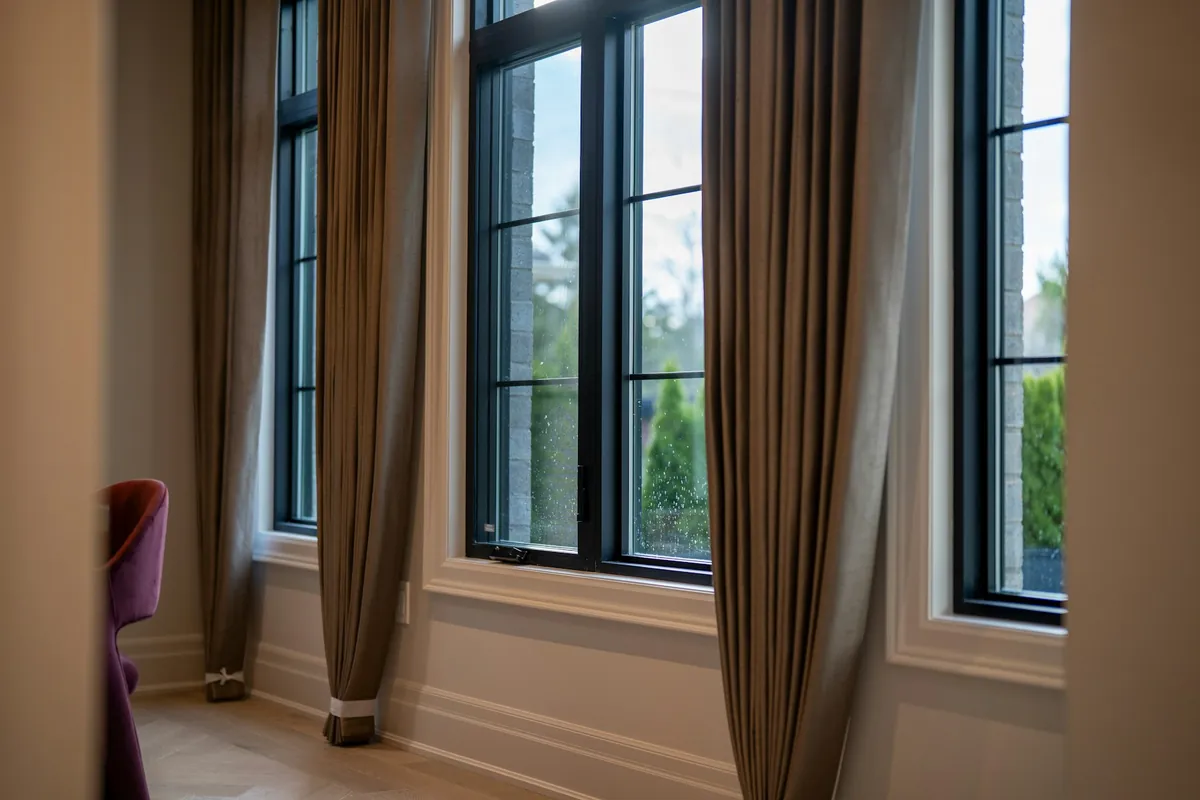
Framing panels for a grouped window
A pair of panels at the two ends of a window group, on one long rod, so the set reads as a single wide opening.
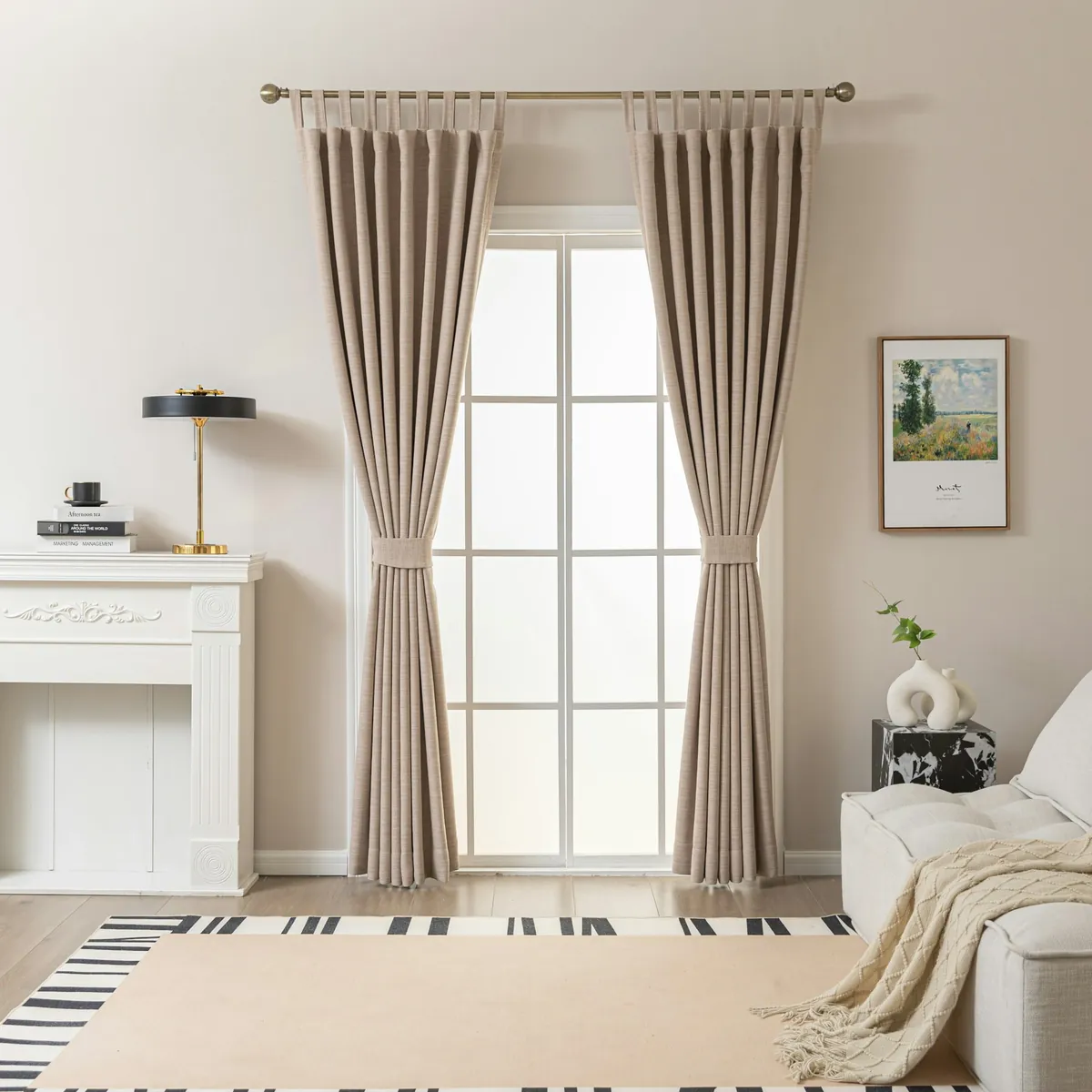
Pleated drapes for the colonial front room
Lined panels with a tailored, pleated heading, matched across separate front windows so the room looks even.
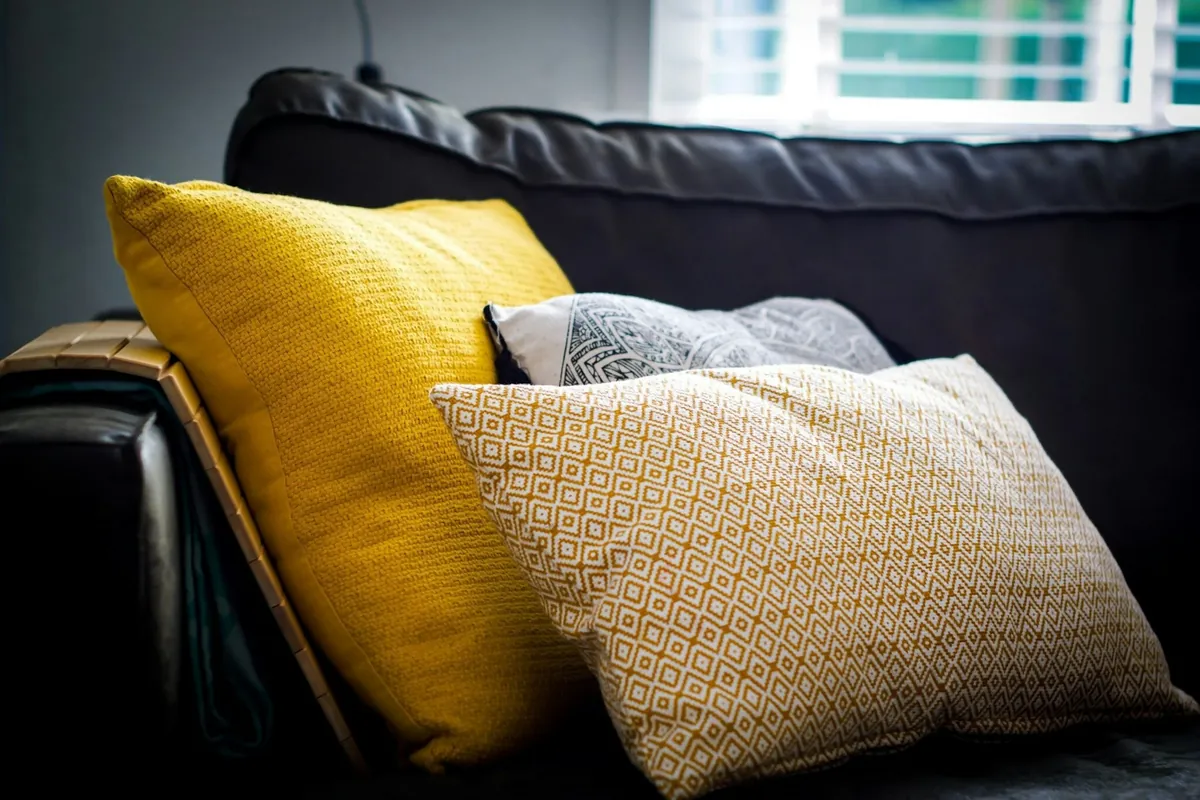
Fabric for the rest of the room
Pillows and covers made in the drapery cloth or a companion to it, so the window and the sofa belong together.
Custom Drapes in East Providence, RI for the Bungalow
A bungalow’s front room is often the heart of the house, and its window group is the feature that makes it. Two to four sash windows sit together, separated only by narrow mullions or posts, under one long head. Treating each window separately, with its own pair of curtains, breaks that line into pieces and crowds the posts with fabric. Treating the group as one opening keeps the room’s proportions and lets the light in.
One rod, the full width
The usual approach is a single rod running across the entire group and a little past it on each side. A pair of panels hangs from it, one at each end. When open, they rest against the wall beside the outermost windows, and the whole group of glass stays clear. When closed, they meet in the middle and cover the full width. This needs enough fabric in each panel to cover half the group comfortably, so we measure the full span and plan the fullness to match.
On a very wide group, a pair of panels can become heavy to draw. In that case, three or four panels on the same rod, or a pair that draws to one side, may be easier to use. We look at the width and how often you plan to close the drapes before suggesting one.
Where the stack goes
When drapes on a long rod are open, the fabric gathers at the ends. On a bungalow front room, the wall beside the window group is sometimes short, with a corner, a door or a built-in close by. If there is no room for the stack, the open drapes cover part of the end windows and the room loses light. Extending the rod a little further, choosing a lighter fabric that stacks slimmer, or drawing the drapes to one side only can all solve it. We note what is beside the group when we measure.
Low ceilings and the head of the window
Many bungalows have modest ceiling heights, with the window head not far below the ceiling. Mounting the rod close to the ceiling and letting the drapes fall to the floor makes the room feel taller and the window group feel grander. It also covers the gap above the head, which can otherwise look like an awkward band of wall. Where there is a deep frieze or a moulding above the windows, we place the rod to sit cleanly below it.
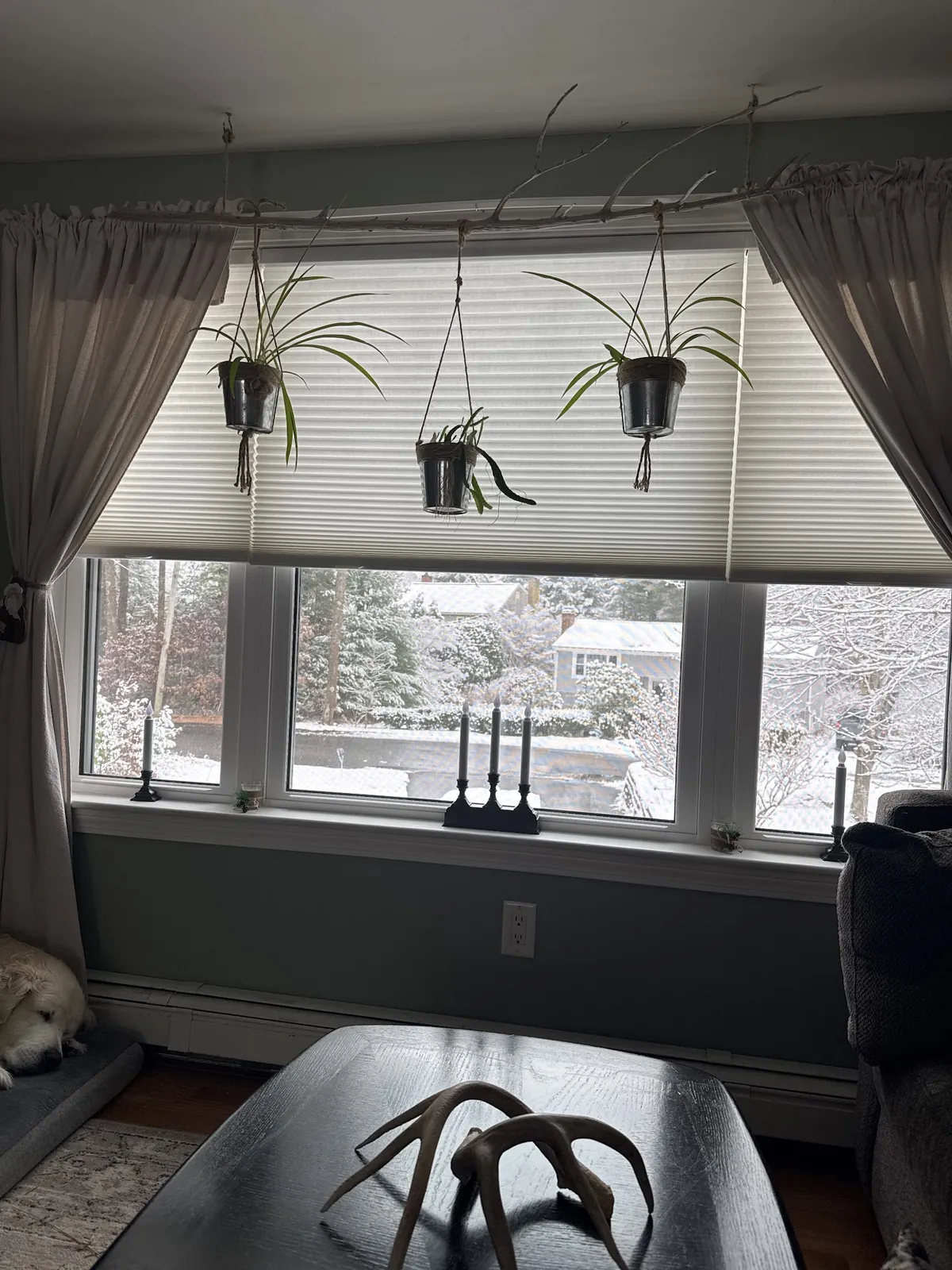
Drapes over shades on a window group
Bungalow window groups usually need privacy and light control through the day, which drapes alone can only do by staying closed. A common answer is a separate shade on each window inside the frame, with framing drapes on the long rod outside the group. The shades go up and down window by window; the drapes frame the whole set and close at night. A cellular shade in East Providence behind lined drapes is one of the warmest combinations for a front room that faces the street in winter.
Bungalow bedrooms under the roof
Upstairs in many bungalows, the bedrooms sit under the slope of the roof, lit by dormers or by small windows in the gable ends. These are tight spots for drapery. A dormer window is set into a recess with the ceiling sloping down on either side, so there is rarely room for a rod that runs past the frame. A single panel on a short rod inside the dormer recess, or a pair of narrow panels that tie back, usually works better than a full-width drape. In a gable-end window, the wall is often deeper and the ceiling higher, so a conventional pair can fit.
Because these rooms are bedrooms, darkness counts. A lined panel that closes fully across a small dormer window does a great deal for a room that would otherwise be lit at sunrise. We measure the recess, the slope of the ceiling and the clearance at the top of the window, then suggest what will fit and still be easy to use.
The Colonials of Riverside and Rumford
The colonials built alongside the bungalows in these neighbourhoods have a different rhythm. Windows are separate, evenly spaced across the front, and taller in proportion. Here each window usually gets its own pair of panels, or, in a room with two windows close together, a pair at the outer edges on one rod.
Consistency across the front matters most. From the street, the windows of a colonial are seen as a set, so the drapes in the living room and dining room should hang at the same height and show the same lining colour through the glass. Inside, the two rooms can use different face fabrics if you like, as long as they sit well together across the hall.
A pleated heading on lined panels suits these houses well, giving even, tailored folds that match the order of the facade. Upstairs, the bedrooms tend to want lined drapes that close fully for darkness and privacy, sometimes over a blind or shade.
How an East Providence Order Comes Together
Most orders follow the same path, and we stay in contact with you all the way through it.
- You tell us which rooms you have in mind, by phone or through the form, and we book a free quote.
- A specialist measures each window in your home. On a bungalow, that means the full span of the group, the posts between the windows, the height to the ceiling and the wall space at each end.
- With the measurements in hand, we talk through how each opening should be treated: as one group, as separate windows, or with a shade behind the drapes.
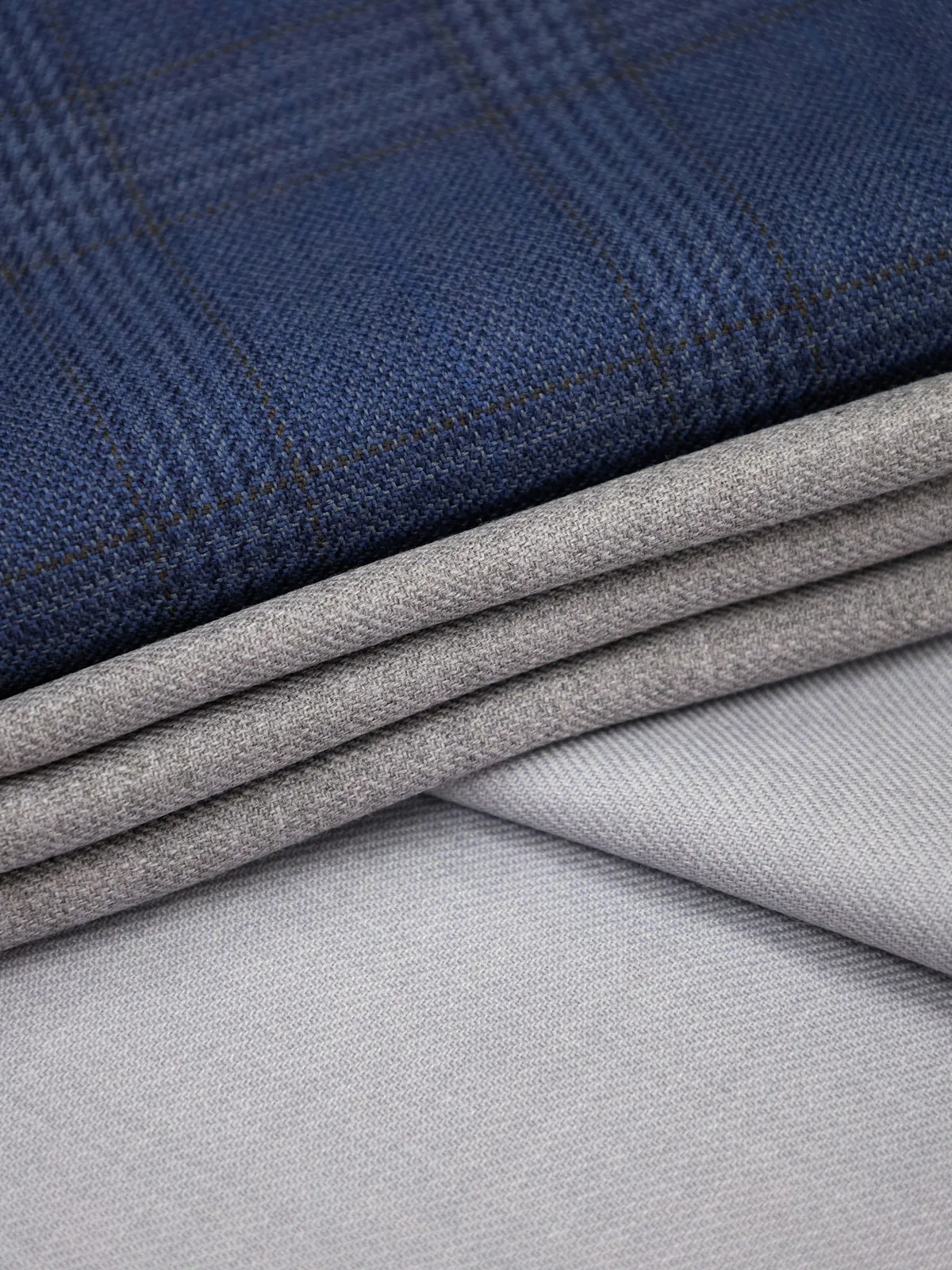
- You choose the fabric, the lining and the heading, comparing cloth in the Swansea showroom where you can see it in daylight.
- You get a quote listing every window and every rod.
- The drapes are made to the measurements taken in your home.
- Our installers hang them, set the folds so they fall evenly across the full width, and show you how they draw.
If something needs adjusting after the drapes have settled, you call the same store, and the same team comes back.
Watchemoket’s Older Houses
Watchemoket has older housing stock than the bungalow streets, and its windows tend to reflect that. Openings can be taller and narrower, frames are not always square, and generations of paint and repairs mean no two windows in a house are quite the same size.
That is where measuring every window individually pays off. A drape that is cut to a standard length can end up too short at one window and too long at the next, simply because the floors and heads are not level. We measure the drop at each window, so every hem sits at the same height above the floor across a room, even if the windows themselves do not line up perfectly.
Older rooms often have radiators under the windows. Floor-length drapes that hang in front of a radiator trap the heat behind them and push it up the cold glass. In those rooms, panels that stop at the sill, or drapes that hang to the floor but are drawn clear of the radiator through the day, usually work better. We will look at the heating when we measure.
Front rooms in Watchemoket can sit fairly close to the street, so privacy through the day is worth thinking about. A sheer on its own rod behind the main drapes lets light in while blurring the view from the sidewalk, and the heavier panels close over it at night. On a tall, narrow window, a pair of panels can look pinched, and a single panel drawn to one side, with a sheer behind it, often sits better. Older trim is usually worth keeping on show as well, so we mount the rod above the casing and wide enough that the open drapes rest beside it rather than over it.
Kettle Point’s Newer Construction
The newer homes at Kettle Point are a change of pace. Windows tend to be larger and more regular, ceilings can be higher, and the main rooms are often open to each other. Sliding doors and wide windows facing the water are common.
Open plans
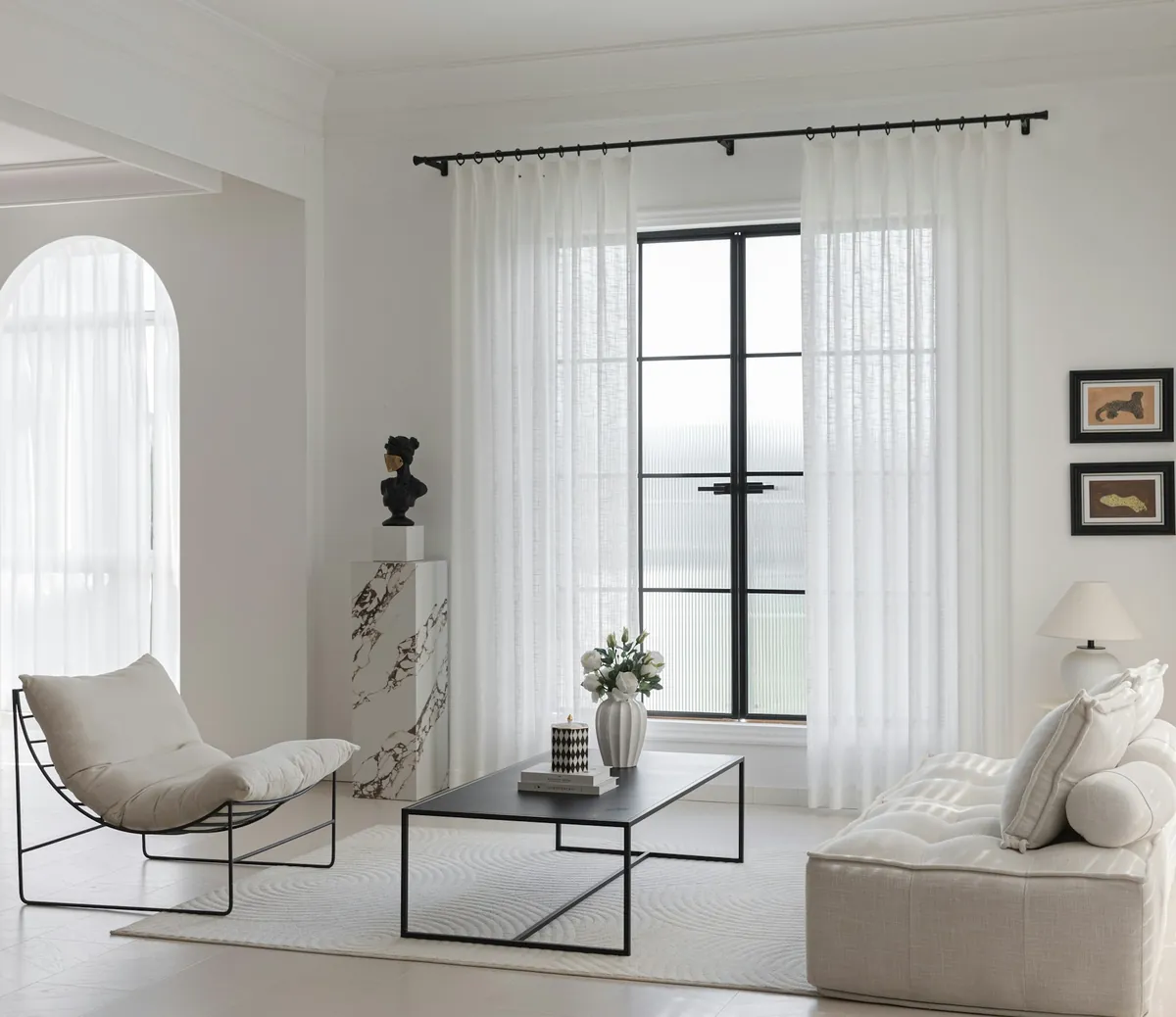
When a living room, dining area and kitchen share one space, the drapes are seen together, even if they hang at windows on different walls. A single fabric, or two closely related ones, across the whole space keeps it calm. Rods at the same height throughout help too, even where the windows differ.
Sliding doors and wide glass
Drapes on a sliding door need to clear the opening completely when open, so the door slides without catching the fabric. The rod runs well past the door frame on the side the fabric stacks. A lighter fabric with a smooth-running heading suits a door that is used often. For very wide glass, panels that part in the middle and draw to both ends keep the stacks balanced. A roller shade in East Providence behind the drapes can handle glare off the water during the day.
Higher ceilings
Where ceilings are higher, rods mounted near the ceiling with floor-length drapes give the room scale and soften all that open space. Longer drops need more fabric and benefit from a lining, which helps the panels hang straight. In a double-height space, the upper windows may be out of easy reach, so the drapes on them are often left as fixed side panels that frame the glass, with any opening and closing done at the lower level where you can reach it. We will talk that through with you at the measuring visit.
Choosing Fabric and Lining
Fabric is where every drape we make begins. For custom drapes in East Providence, RI, the right cloth depends on the room more than the house:
- Lighter linens and cottons for living rooms and bungalow window groups, where the drapes should frame rather than dominate
- Heavier weaves for bedrooms and colonial dining rooms, where you want depth and warmth
- Sheers where daylight matters and a second layer handles night-time privacy
- Patterns sized to the room, kept in proportion on a short bungalow wall and allowed to be bolder on a tall drop
Lining is the other half. It gives a drape body and an even fall, protects the face fabric from the sun and can add darkness or warmth where a room needs it. We will talk through what each room needs in general terms when we measure, and you can feel the difference between lined and unlined panels in the showroom.

Caring for your drapes
Most drapery needs little more than a gentle vacuum with a soft brush now and then, working from the heading down. Lined panels should usually go to a professional cleaner, because the face fabric and lining can shrink by different amounts in a home wash. Sheers are often easier to launder. Rotating which side of a pair takes the most sun, by swapping panels once in a while if they are identical, can help them age evenly. We will give you care advice for the particular fabric you choose, so your custom drapes in East Providence, RI keep their colour and shape for years.
See the Fabric in Swansea
Choosing drapery from a screen is guesswork. At the Window Works showroom in Swansea, you can see the fabric range in person, hold a length up to the light, feel how heavy it is and compare colours side by side. Bring a photo of the room, a cushion or a paint chip, and our specialists will help you narrow it down.
Window Works has been a family store since 1988 and is in its second generation. Drapery is our specialty, and we measure, order and hang every pair ourselves. Warranties are offered on what we sell.
To see all the treatments we offer in the city, visit our East Providence window treatments page.
Questions from East Providence
Should my bungalow’s window group get one set of drapes or several?
Usually one: a single rod across the whole group with a panel at each end, so the windows read as one opening and the glass stays clear when the drapes are open.
There is a corner right beside my front windows. Where do the drapes go when open?
We plan for it. A rod that runs a little further, a lighter fabric that stacks slimmer or drapes that draw to one side can keep the end window clear.
Can I have drapes over a radiator?
It is better not to. Panels that stop at the sill, or floor-length drapes drawn clear of the radiator by day, keep the heat in the room.
What works on a sliding door in a newer house?
A rod that runs past the frame so the fabric stacks clear of the opening, with a lighter fabric and a smooth-running heading for a door used every day.
Is there a charge for the quote?
No. Quotes are free, and you can book one with the call button or the form on this page.
Plan Your Drapes
You can start planning custom drapes in East Providence, RI today. Tap the call button to reach the Swansea store, book your free quote, set up measuring in your home or ask how installation works, or fill in the form and we will get back to you. The contact page shows how to find the showroom, and our custom drapes page covers every style. Window Works is rated 5.0 on Google.