
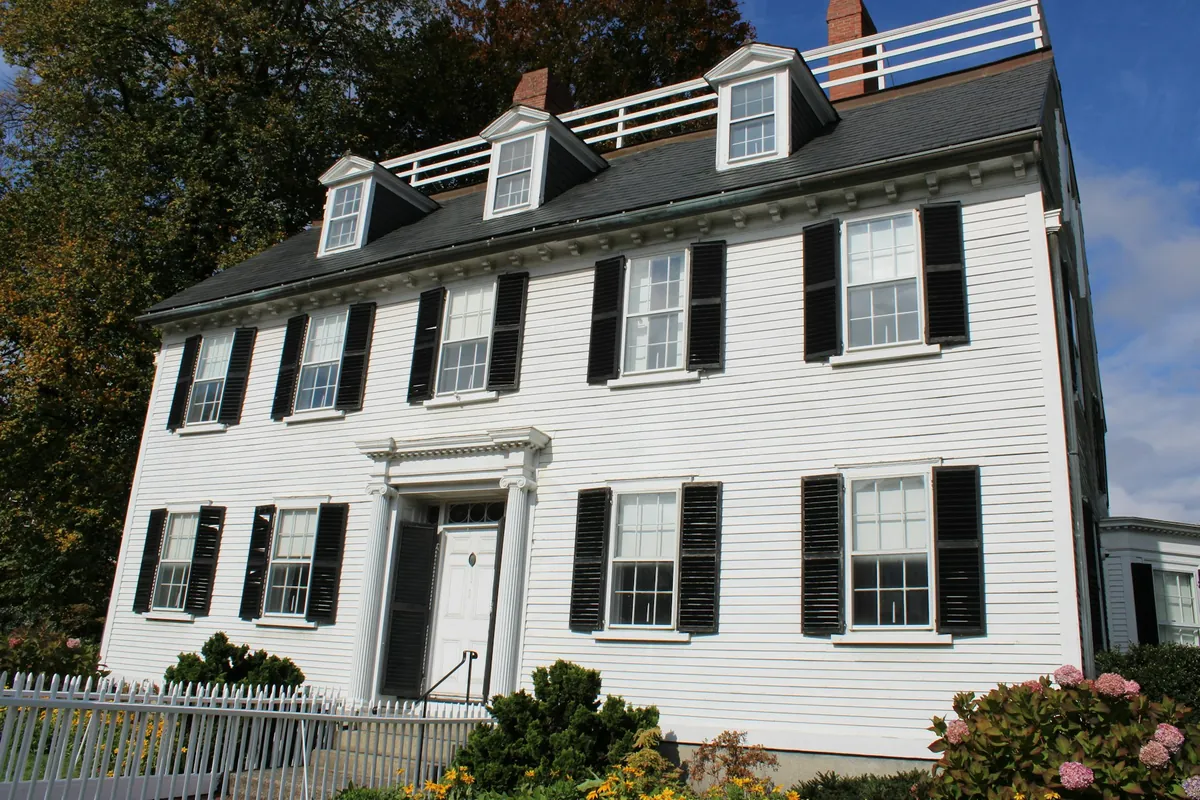
Deep Reveals and Old Sash
The Federal and Greek Revival houses along Hope Street were built with thick walls, and their windows sit well back in deep reveals. That depth decides a great deal about woven wood shades in Bristol, RI: where the shade can be mounted, how far back from the room it sits and whether the raised stack disappears inside the frame or hangs in front of it.
There is also the street to think about. In the historic district, the houses face the road with long, even rows of windows, and the look from the pavement matters to owners who have kept those fronts as they were built. A woven shade sits inside the glass, but its back is part of what the street sees.
Further out, along the Mount Hope Bay shore and on Poppasquash Point, the houses open to the water, and the shade has to manage bright, reflected light while keeping the view.
- Woven wood and bamboo shades, unlined or lined
- Measured window by window, then installed by our team
- Every weave and liner on show at the Swansea showroom
Woven Shades and Their Neighbours in Bristol
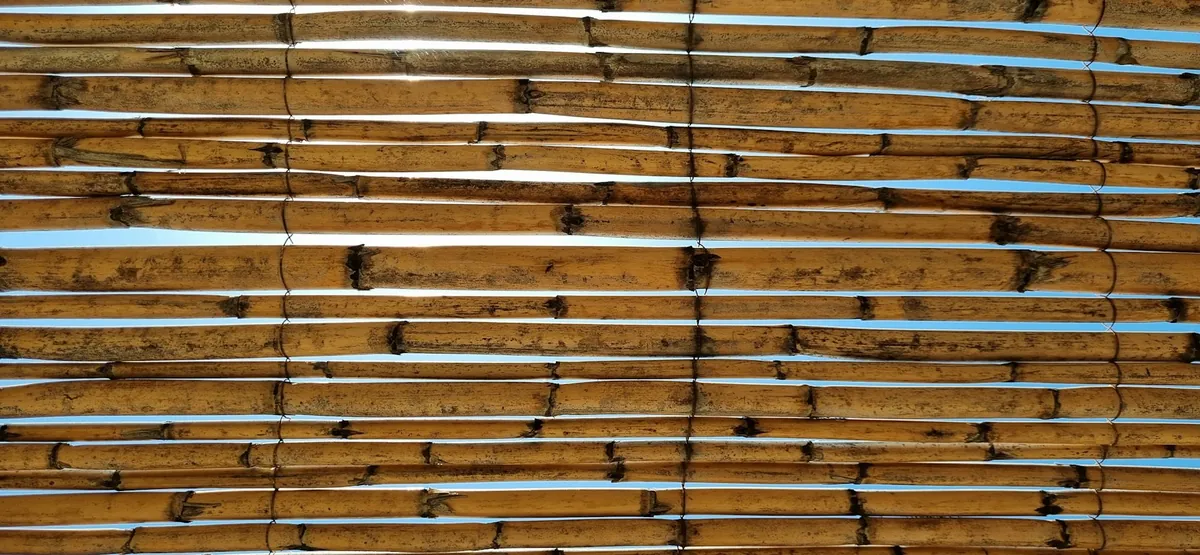
Bamboo, closely woven
An even, fine texture and a soft golden light. Sits neatly inside a deep Federal reveal and keeps a parlour private by day.
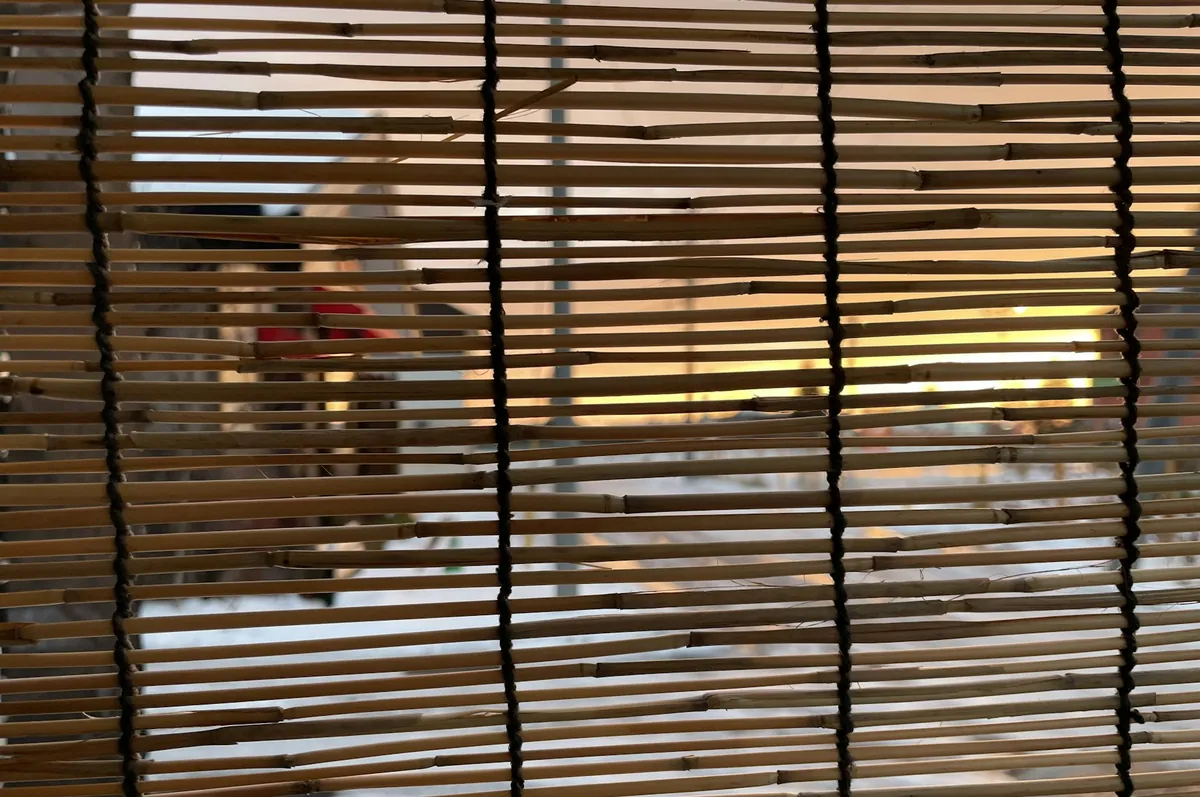
Wood, reed and grass weaves
Looser and more varied, for rooms on the bay side where you want the water to show through the shade.
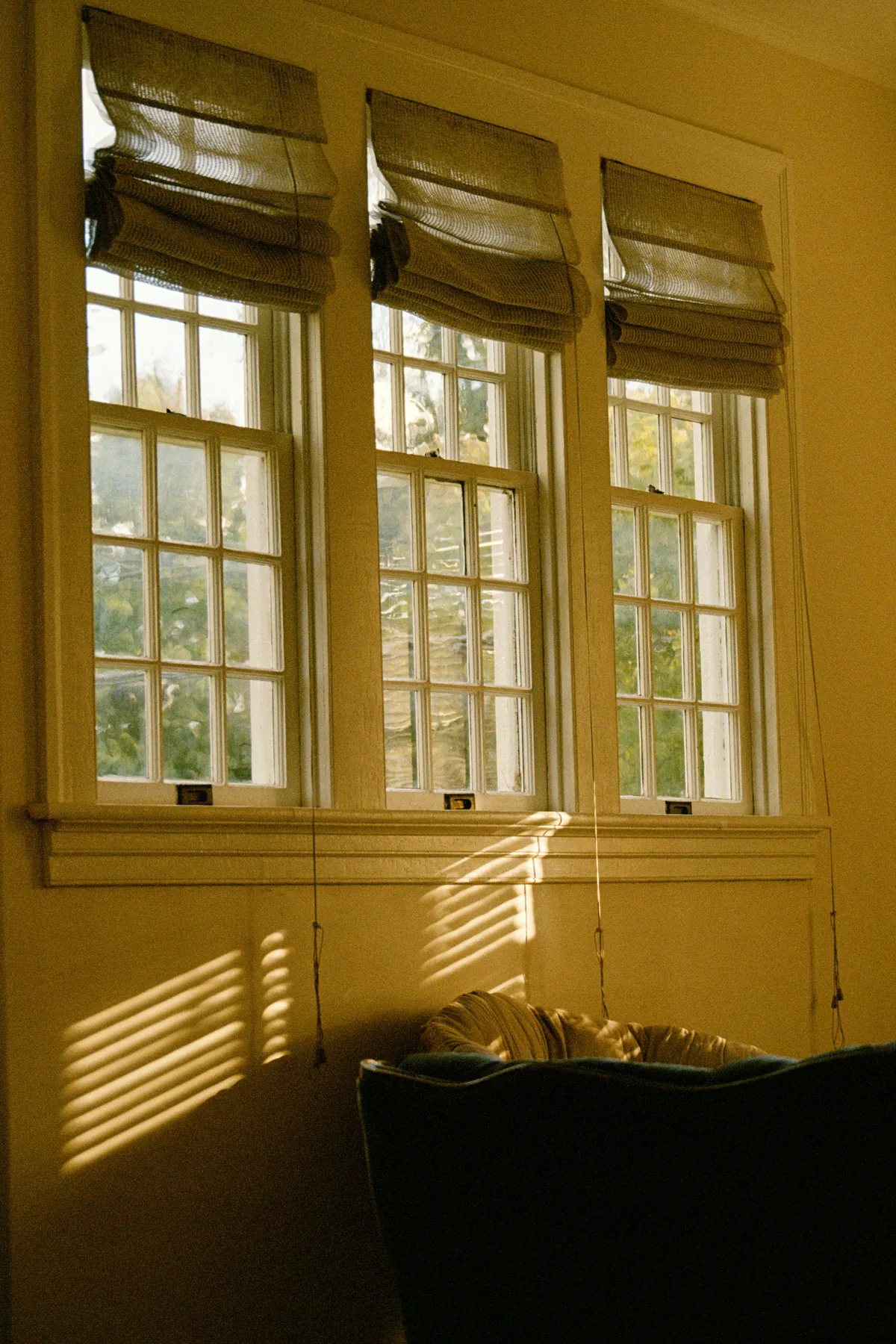
Roman shades
The same soft fold in fabric, for a formal room where you would rather have a textile than a weave.
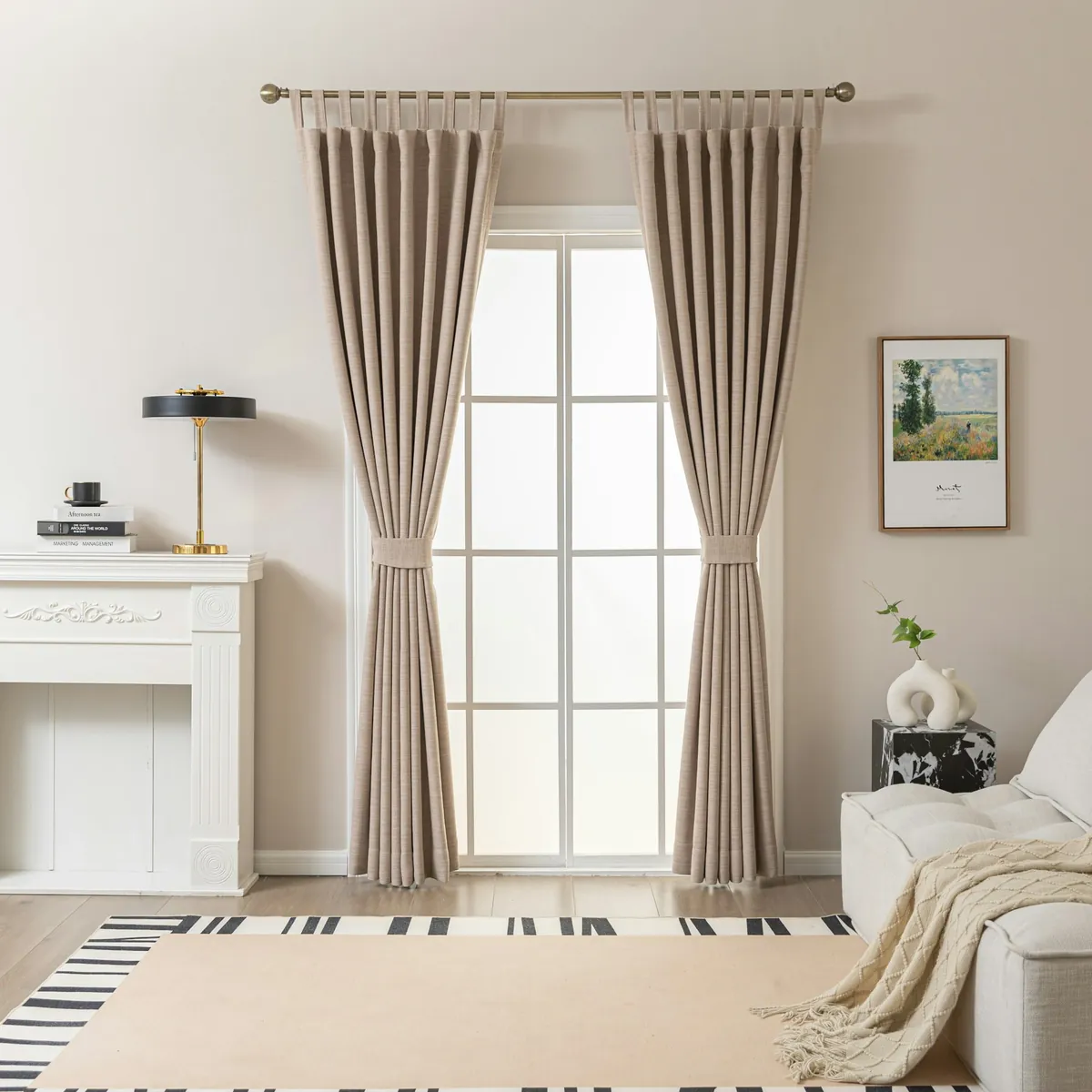
Drapes
Panels hung outside the reveal frame a woven shade and add warmth to a Greek Revival parlour.
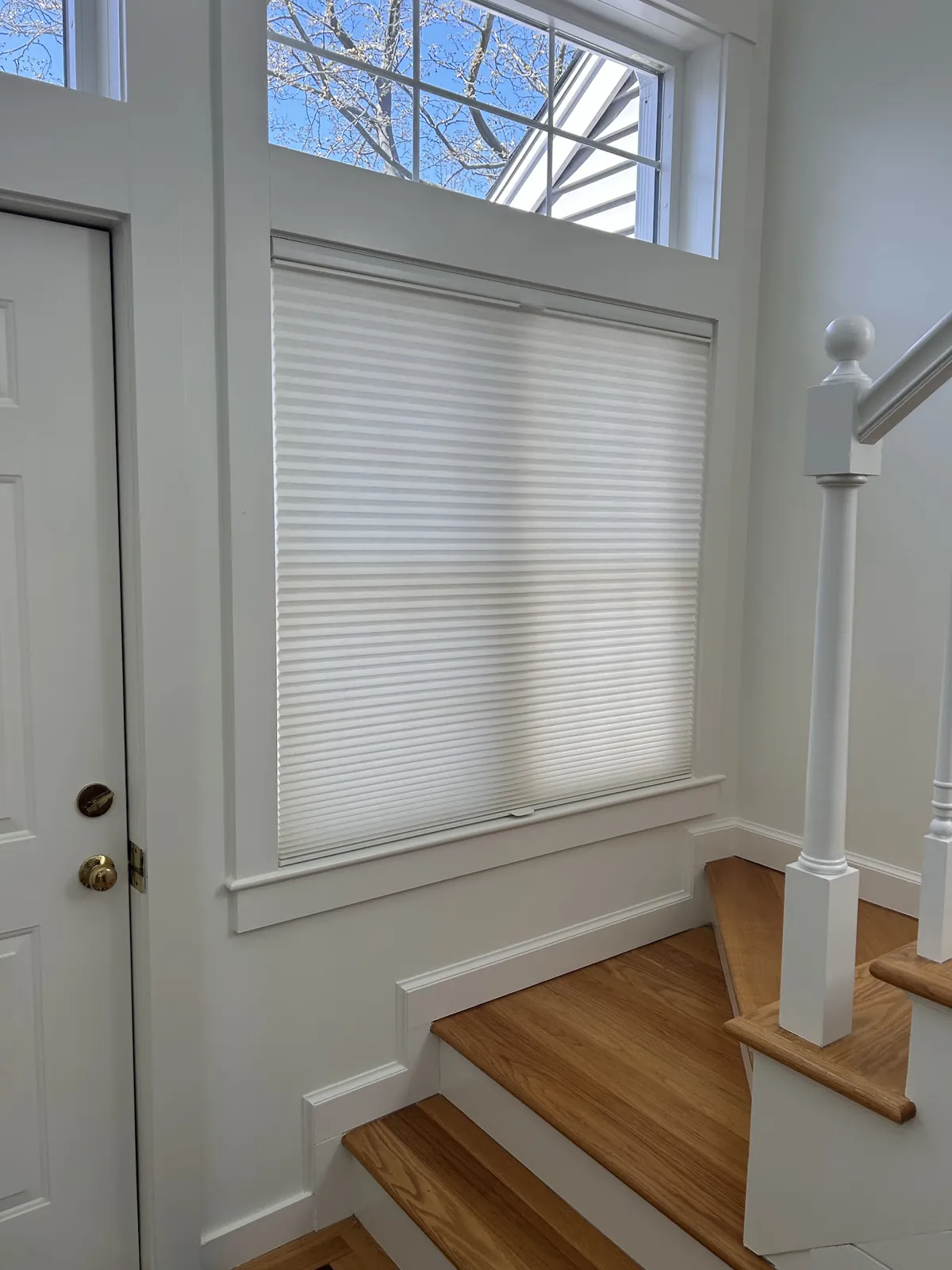
Cellular shades
For a cold hall or a bedroom on the windward side, a honeycomb shade that holds air in its cells.
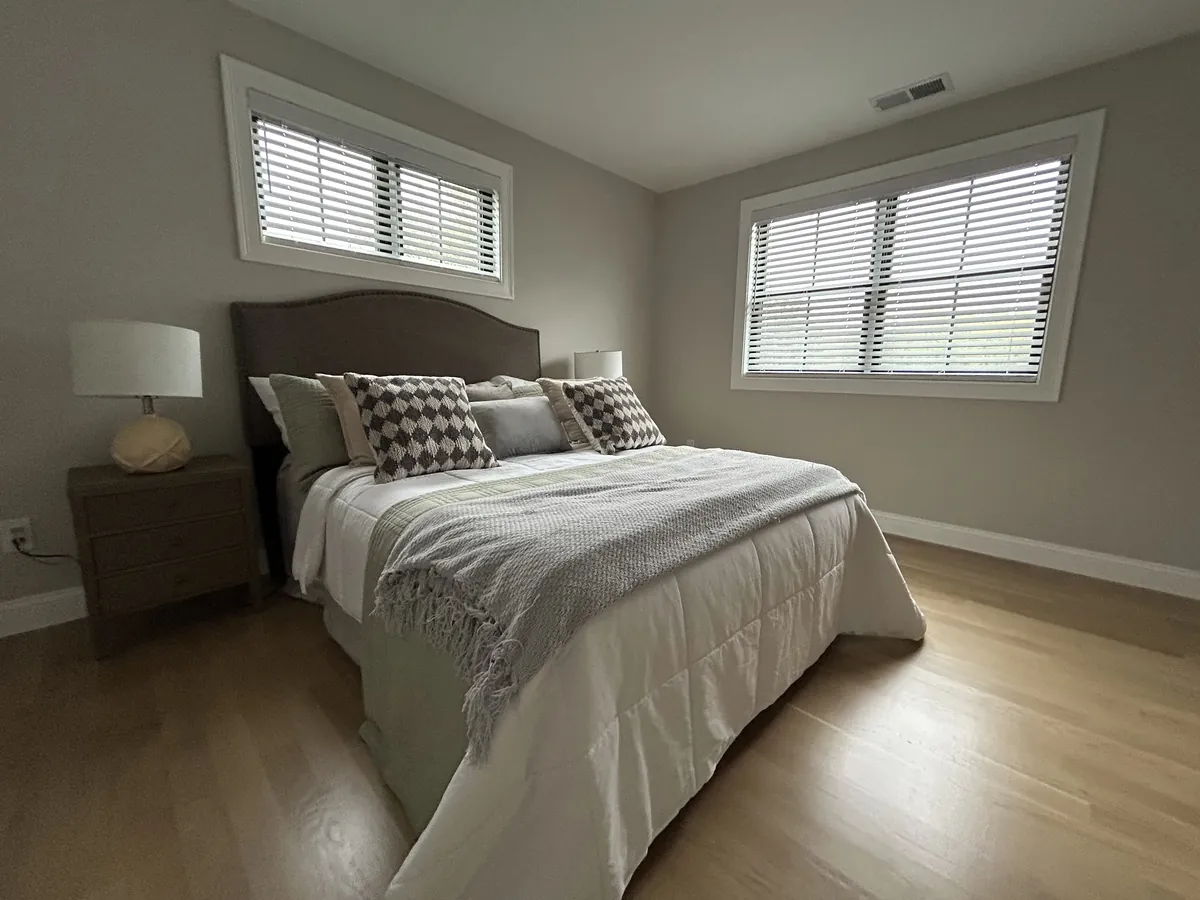
Plantation shutters
Louvres that tilt for privacy on the ground floor, set inside the frame like the shade would be.
Fitting Woven Wood Shades in Bristol, RI Houses
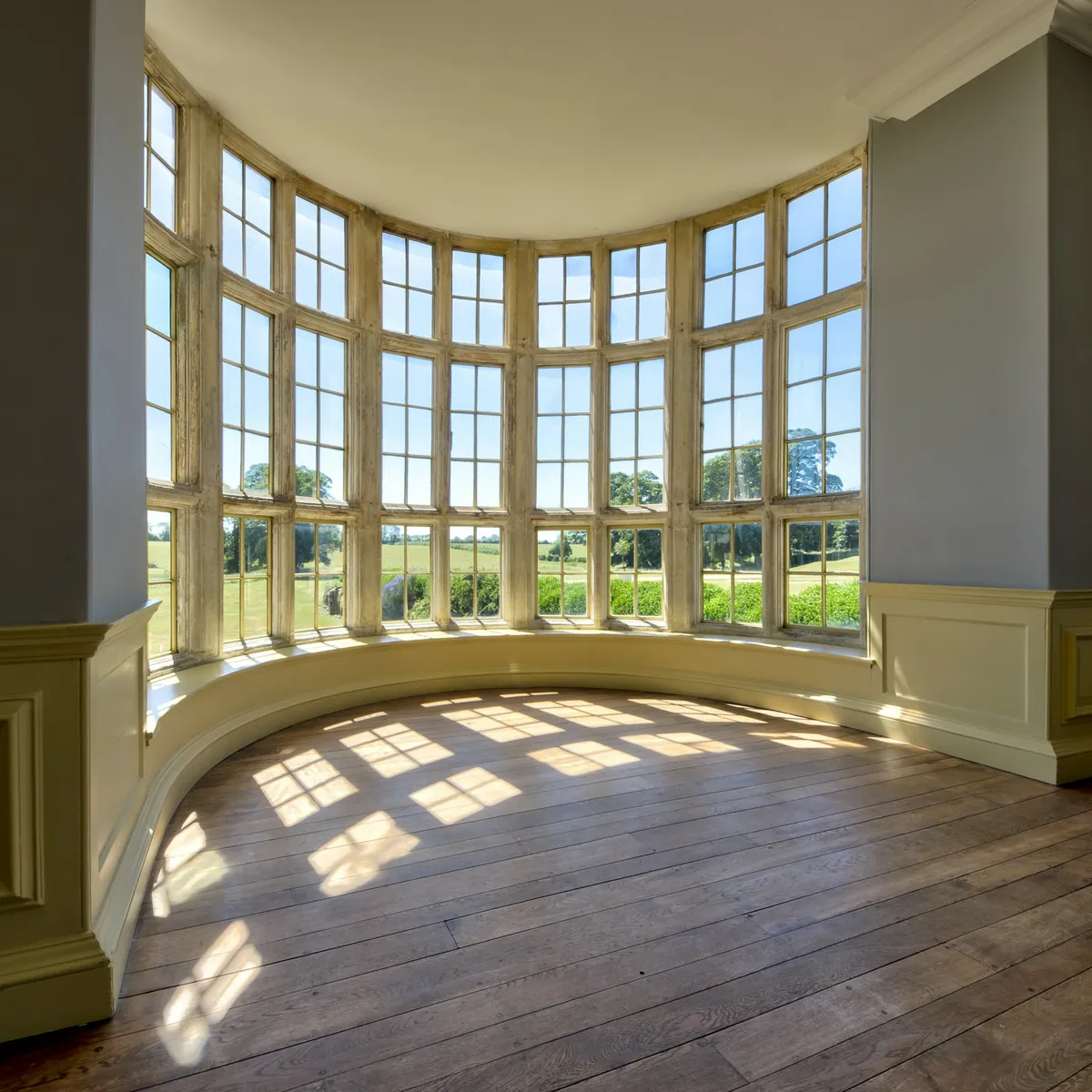
Fitting woven wood shades in Bristol, RI is mostly about the frame. A deep reveal is a gift for an inside mount, because the whole shade, headrail and stack included, can sit within the thickness of the wall. Pulled up, it almost disappears. Let down, it lines the window like a panel set into the house. But depth is only useful if it is measured properly, and old frames have a way of surprising you.
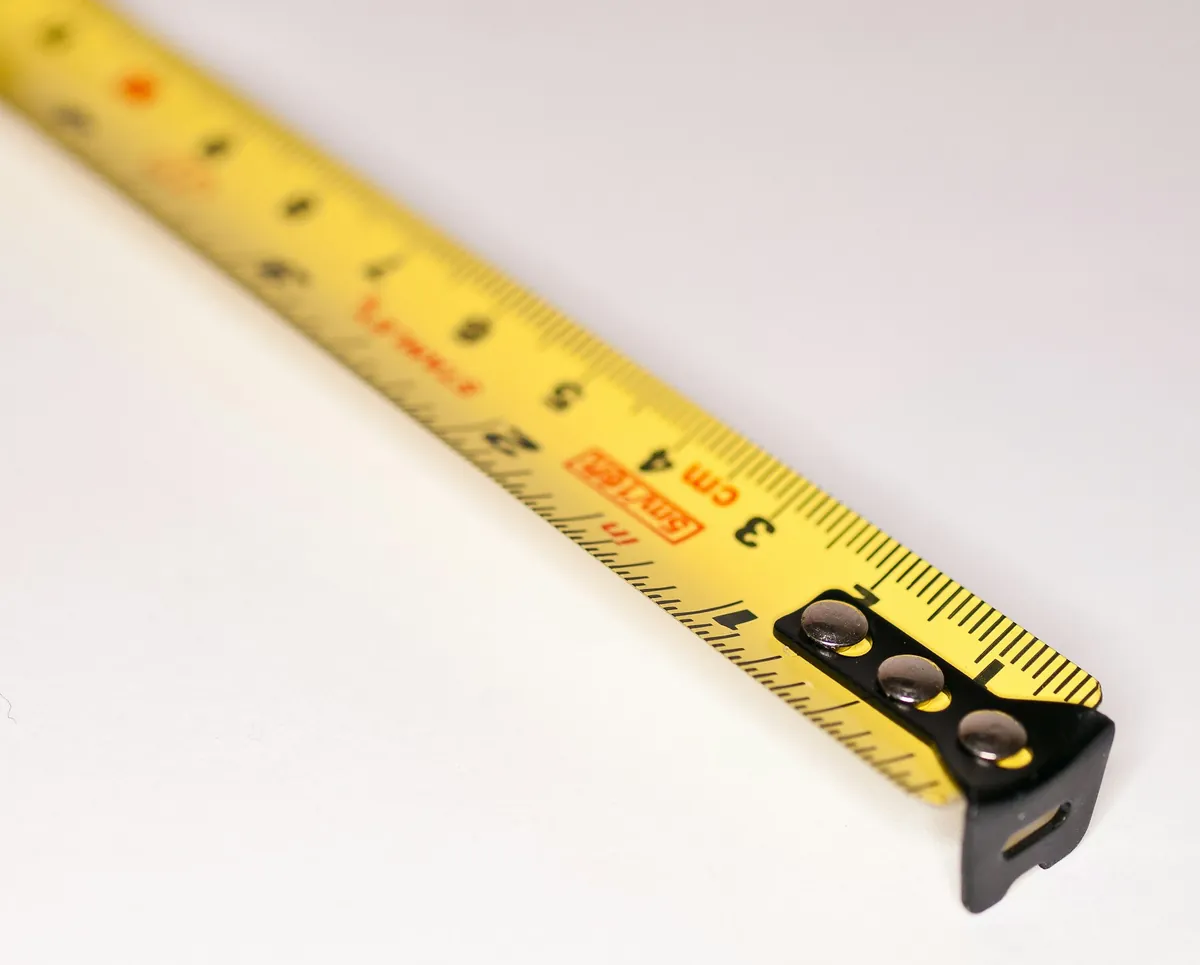
Measuring a deep reveal
In a house that has stood since the Federal period, no two windows are quite the same, even on one wall. The reveal can be deeper at the bottom than at the top, the sides may lean a little, and the width at the head can differ from the width at the sill. A shade made to one measurement can bind on one side and gap on the other.
So we measure the width at the top, the middle and the bottom of each opening, check the depth at more than one point and look for anything that sticks out into the reveal, such as a sash lock, a pulley or an old shutter hinge. The shade is then made to the narrowest point, so it runs freely the whole way down.
How far back to set the shade
A deep reveal gives a choice that a shallow frame does not. The headrail can be set back close to the glass, which leaves a ledge of painted reveal in front of the shade and shows off the depth of the wall. Or it can sit forward, nearer the room, which leaves more space between the shade and the sash for opening the window and keeps the shade clear of any condensation on the glass in winter.
Both look good. Setting the shade forward is usually the practical choice on windows you open often. Setting it back can look lovely on a formal front window that stays shut. We talk through each window, because a parlour and a kitchen in the same house may want different answers.
Greek Revival windows and their long drop
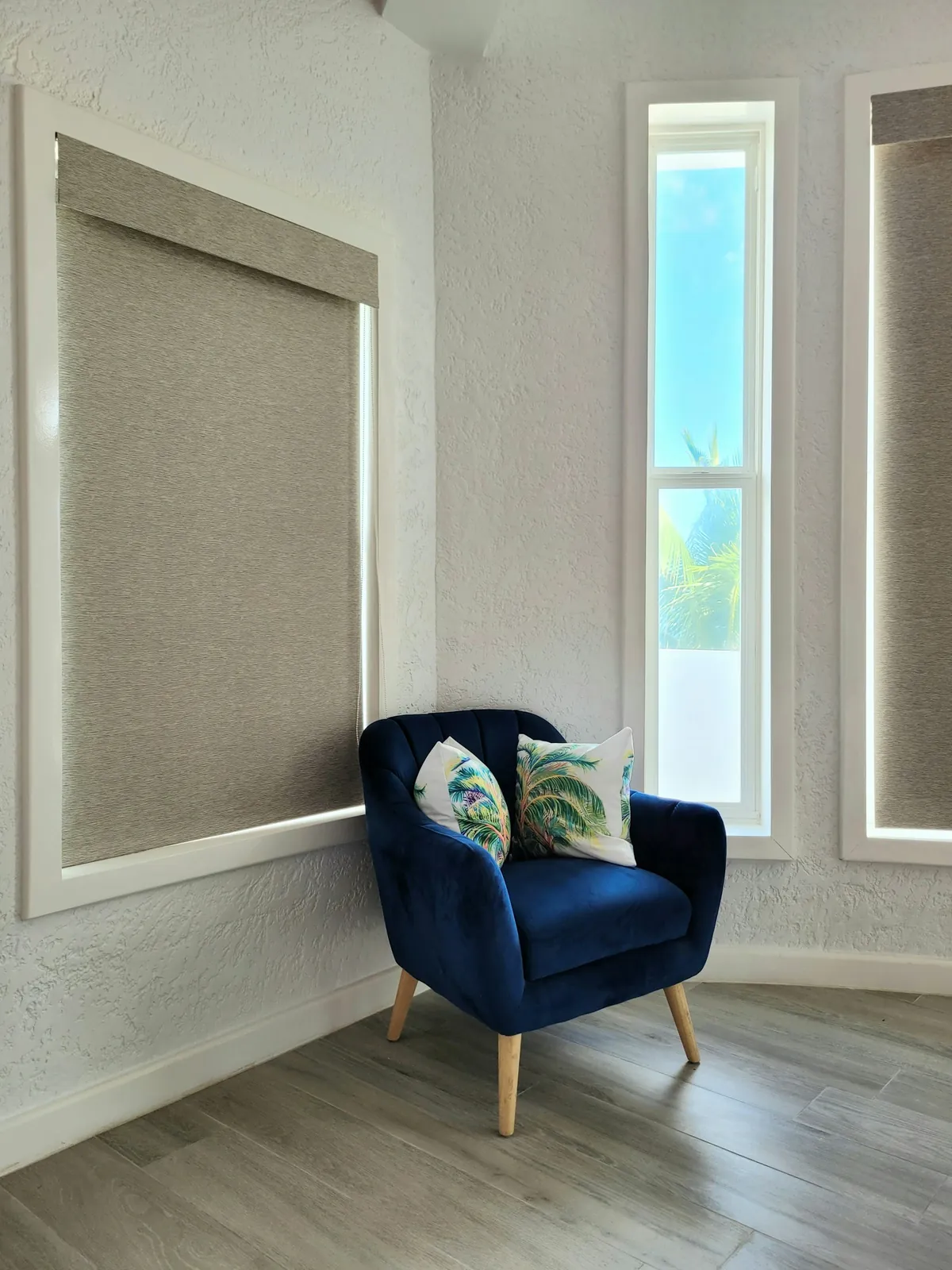
The Greek Revival houses in town often have taller windows than the Federals, with wide, plain trim and sometimes parlour windows that reach close to the floor. A long woven shade has more material to gather when raised, and on a folding style that makes a deeper stack. Inside a deep reveal the stack sits within the wall and still leaves most of the glass clear. On a shallower Greek Revival frame, we may suggest mounting the shade on the trim or just above it.
These rooms usually have high ceilings, so the shade is seen at full length a lot of the time. A weave with a gentle, regular texture tends to suit the plain classical trim better than a very rough, chunky one.
What the street sees
On a Hope Street house, the windows read as a set from the road, and owners in the historic district tend to care about that. Inside, you can choose any weave and colour you like. From outside, people see the back of the shade through the glass. A lined shade with a soft neutral backing gives every window the same quiet face, which keeps the front of the house calm and even.
If you would rather go unlined, the street sees the weave itself, and that can look handsome on an old clapboard front. The thing to avoid is a mix of different backs and different hem heights across the front windows. We make the street-facing shades to line up with each other, so that even half-lowered they look intentional.
Privacy in the front rooms
Houses on Hope Street sit near the road, and their ground-floor rooms are close to passers-by. By day a tight weave hides most of the room while you can still see out. At night, with lamps on, an unlined shade lets shapes show. A privacy liner fixes that and still lets a soft glow through in daylight.
Upstairs rooms and the third floor
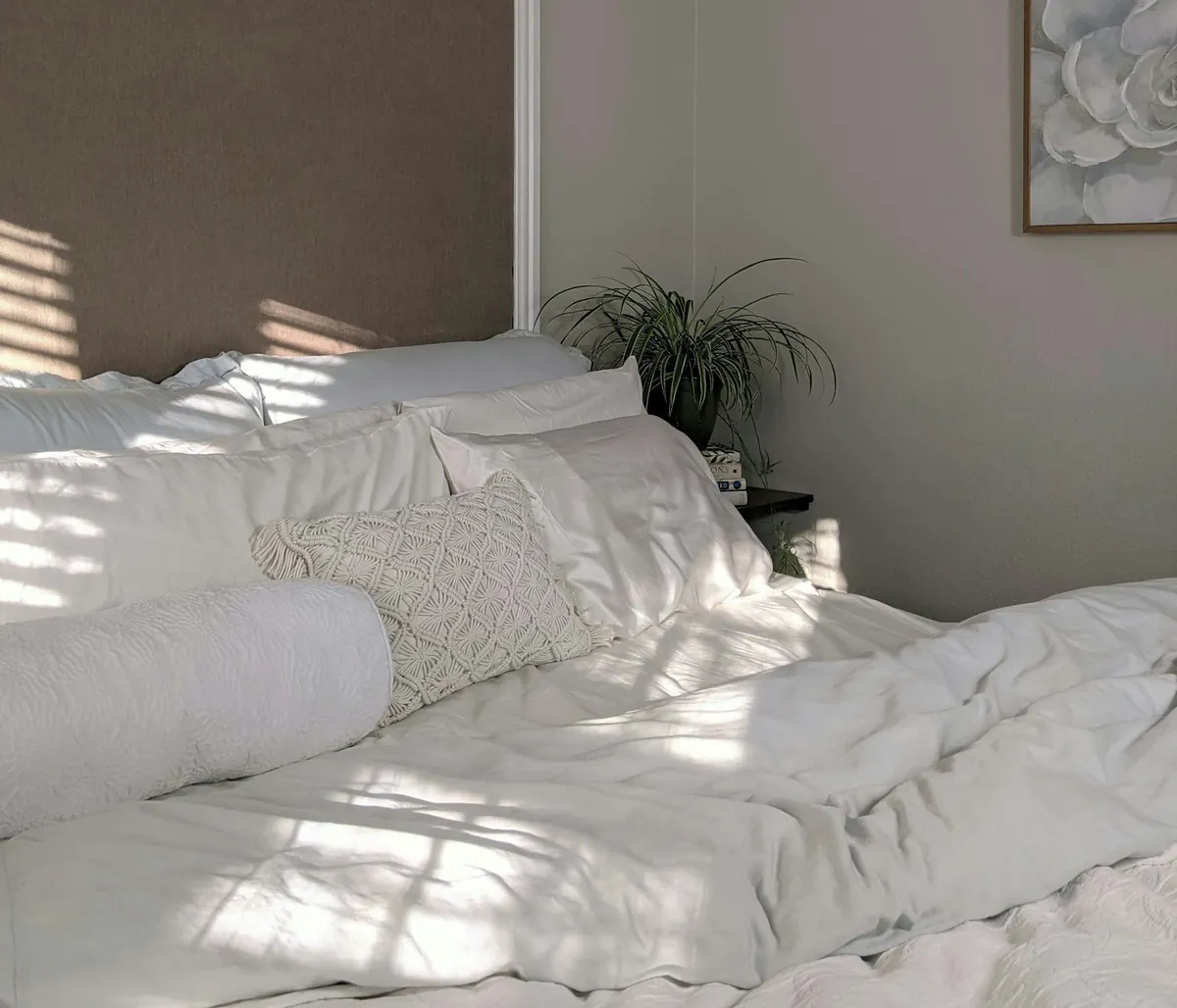
The upper floors of a Hope Street house are a quieter brief. The windows are above the pavement, so privacy from the street eases, and the bedrooms tend to be laid out in matching pairs with a window on each side of a chimney or a bed. Woven wood shades in Bristol bedrooms are usually lined, partly for the house across the street and partly for the early light, and each pair is made to one height so the front of the house stays even.
Many of the older houses have a third floor or an attic room with small windows set low under the eaves or in a dormer. The reveals up there can be shallower than on the main floors, and the wall around the window is often close in. A rolling style or a compact headrail mounted just above the frame keeps the raised shade off the glass, which matters when that one small window is all the daylight the room gets.
From First Call to Fitted Shade
You will hear from us at every stage, and the order is simple.
- Use the call button or the form to reach the Swansea store and arrange a free quote, mentioning roughly how many rooms you have in mind.
- A specialist visits to measure, taking several widths and depths at each window and noting the hardware in each reveal.
- You compare weaves and liners at the showroom and choose for each room.
- We send a quote that lists every window, with the mount and the liner for each.
- Your shades are made to the measurements taken at the house.
- Our installers fit them into the reveals, make sure each one travels freely from top to bottom and show you the controls.
The Bay Shore and Poppasquash Point
The houses along the Mount Hope Bay shore and out on Poppasquash Point face a different challenge from the town centre. Here the water is the view, and light arrives from the sky and again off the bay. In the afternoon it can come in low and hard, straight across a room.
A woven shade is one of the best answers to that. Its irregular weave breaks reflected glare into a softer, warmer light, and an open weave keeps the water in sight as a gentle blur even when lowered. You get the room cool and comfortable without losing the reason you are there.
On the Point, houses often have water on more than one side, and the light changes from room to room through the day. We look at which way each window faces when we measure. A west room that takes the full afternoon sun might want a tighter weave or a light liner. An east room used mostly in the evening might be best with the most open weave you can find.
Bedrooms by the water
The morning sun rises bright over the bay, and a bedroom facing it can be full of light very early. For these rooms we usually suggest a room-darkening liner behind the weave. The front of the shade matches the rest of the house, while the liner holds back most of the dawn. In a guest room or a study, a privacy liner is often enough.
Salt air and natural materials
Near the water, salt and fine grit drift in through open windows and settle on everything, woven shades included. It does them no harm if they are dusted now and then. A soft brush or a vacuum with a brush head, used gently from top to bottom, keeps the weave clean. Keep the shades dry and avoid hanging them anywhere spray or rain can reach.
Woven shades are well suited to living rooms, bedrooms and porches by the bay. They are not the right choice for a steamy bathroom or a mudroom by the back door, and we will suggest something else there.
Kitchens and the back of the house
Behind the formal front rooms, many of the town’s older houses run back into a kitchen wing or an ell added over the years, with windows of different sizes and often a door to the yard. The reveals here can be quite different from the front of the house, and the windows are opened far more often.
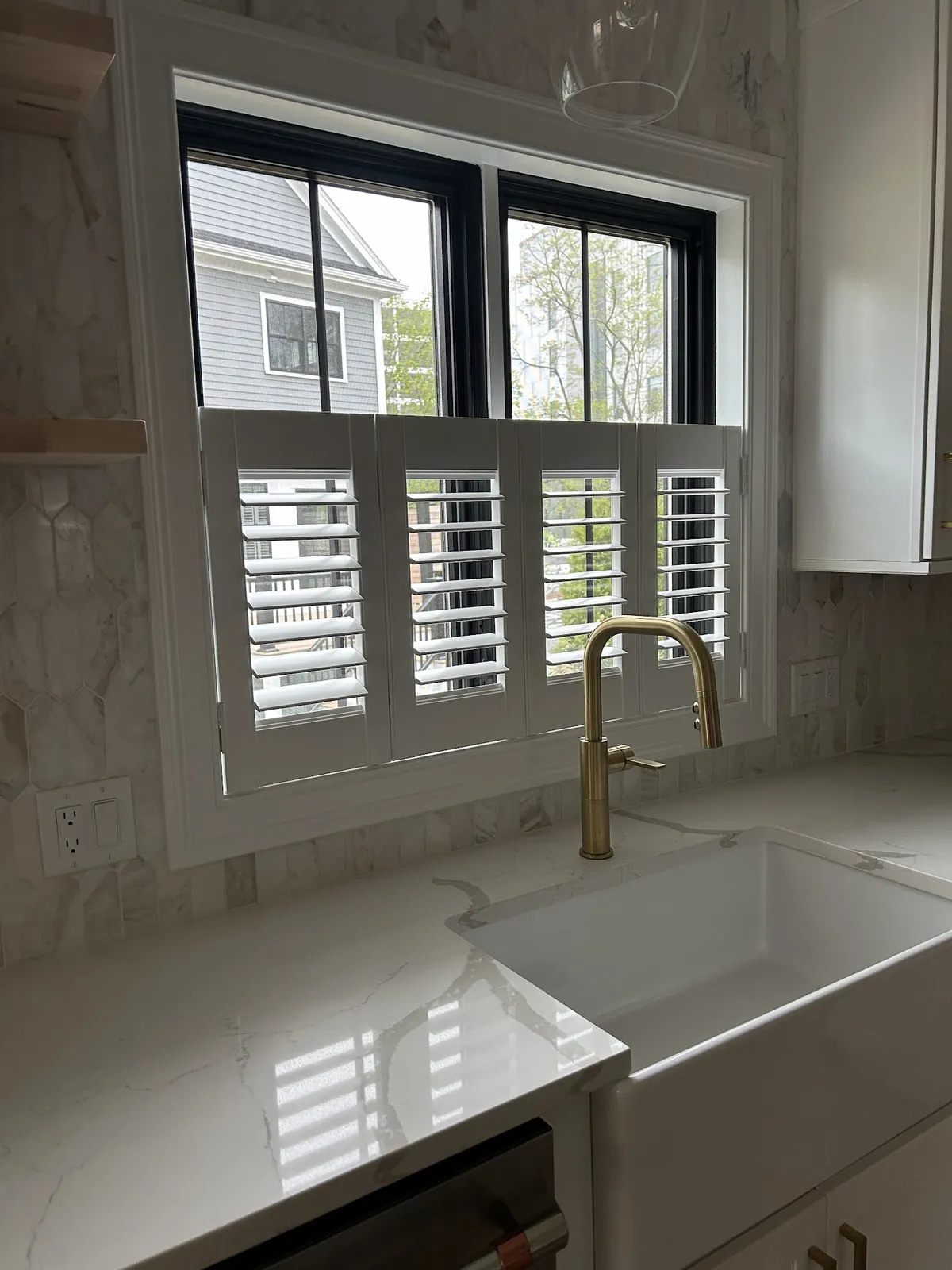
Woven wood shades for Bristol kitchens work well at a breakfast table or a window away from the stove and sink. Over the sink itself, where steam and splashes are part of the day, we would suggest a different treatment. In a sunny back room, an unlined medium weave keeps the garden in view and takes the heat out of the afternoon, and the shade can be set forward in the reveal so the sash opens freely behind it.

Choosing Colour and Weave Together
The colour of a woven shade is never quite flat, because natural material varies strand by strand. That gives it warmth, and it also means the colour changes with the light behind it. A mid-brown that looks restrained on a table can glow almost copper at a sunny window.
In the town’s older houses, the trim and floors guide the choice. A Federal parlour with painted trim and wide, worn floorboards suits a mid or warm wood tone. A Greek Revival room with pale walls and plain trim can take a lighter bamboo or grass. On the bay, a pale, open weave keeps a room bright and lets the view do the work. We always suggest holding a sample at the window you are choosing for, in the light it actually gets.
Think about the whole floor, not only the room. In a centre-hall house, the parlour and the dining room face each other across the hall and are often seen together through open doors. Shades in the same weave and colour on both sides make the ground floor feel planned, even if one room is lined and the other is not.
Fold, roll and the top of the shade
Depending on the style, a woven shade either folds up in soft, even pleats or rolls around a tube. Folding gives a fuller, more traditional look that suits a Federal or Greek Revival interior. Rolling keeps the raised shade slim and can tuck neatly inside a shallow frame. In a deep reveal either works well.
A matching valance in the same weave hides the headrail. Inside a deep reveal it is often not needed, because the headrail is tucked back out of sight. On an outside mount, it gives a clean finish.
Layering with drapery
In the formal rooms of a Federal or Greek Revival house, drapery panels hung outside the reveal frame the window and soften the room, while the woven shade inside does the daily work with the light. Drawn at night, the panels add privacy and a little warmth. We make both, so the shade colour and the fabric can be chosen together and measured on one visit. More on our drapery and other services in town is on the Bristol window treatments page.
Looking after your shades
Beyond the odd dusting, woven shades ask for nothing. Blot rather than rub if something marks one, and never soak it. If an older woven shade’s cord frays or its lift starts to catch, we can usually repair it.
Why Bristol Homes Call Window Works
Window Works opened in Swansea in 1988, and the family’s second generation runs it today. That is over 37 years of fitting window treatments in older houses across the SouthCoast and the East Bay, where deep frames and out-of-square openings are the everyday job.
- A team of window treatment specialists, not general contractors
- Every opening measured in person, with several readings in an old reveal
- Our own installers fit each shade
- We keep you in the loop until the work is finished
- Warranties are offered on what we sell
Everything about our woven range is on the woven wood shades page.
See the Weaves in Swansea
The showroom in Swansea is a short drive from Bristol. It is where you can line up a close bamboo beside a loose grass weave, hold each liner behind them and see the colours by daylight. A photo of the room and the front of the house helps us suggest the right combination. The Norman range is on display there too.
Questions from Bristol
Can a woven shade sit inside the deep reveal of an old Federal window?
Yes, and it often looks best that way, with the raised shade tucked inside the wall. We measure each reveal at several points first, because old frames are seldom square.
How do woven shades look from the street in the historic district?
The street sees the back of the shade. A lined shade with a neutral backing gives every front window the same calm look. We line the hems up across the front of the house.
Will a woven shade help with glare off the bay?
It will. The weave breaks reflected light into a softer glow, and an open weave keeps the water in view. A tighter weave or a light liner cuts more of it.
Is a woven shade enough for a bedroom that gets the sunrise?
Usually only with a room-darkening liner on the back. Without one, early light comes through the weave.
How do I arrange a quote?
It is free. Tap the call button or send the form with the rooms you are thinking about, and we will set up a time to measure.
Book Your Free Quote
A free quote is the place to start. Call the Swansea store from the call button to book measuring in your home or to ask about installation, or send us the form if writing suits you better. To see the weaves and liners before anyone comes out, visit the showroom; the contact page shows the way. Window Works has a 5.0 rating on Google.