
Old Sash, New Glass, One Room
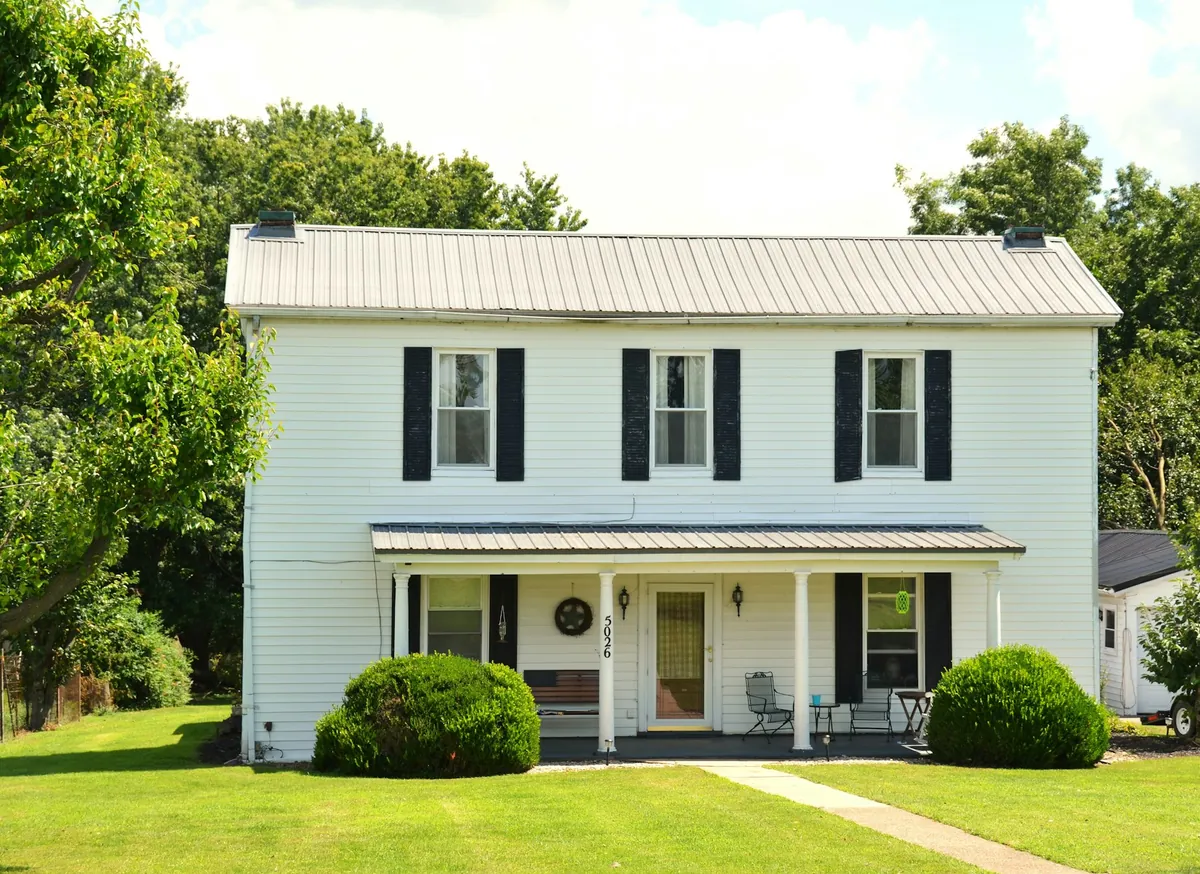
Dighton’s older houses have grown over the years, and that is the main reason roman shades in Dighton, MA are made window by window. The farmhouses and capes along Main Street and Somerset Avenue, and the houses on the Taunton River lots, often carry an addition with modern glass set right beside the original nineteenth-century sash, sometimes in the same room.
Put those two windows side by side and they rarely agree. The old sash is narrow and tall, with deep trim and a frame that has settled over time. The newer window is wider, squarer and set into a thinner wall. A shade that suits one can look wrong on the other unless both are planned together, and a fabric roman shade is one of the best ways to make them read as a pair.
- Flat, hobbled and relaxed folds, cut from our fabric range
- Old and new windows planned as one room
- Measured in the house and hung by our own installers
Roman Shade Styles We Make
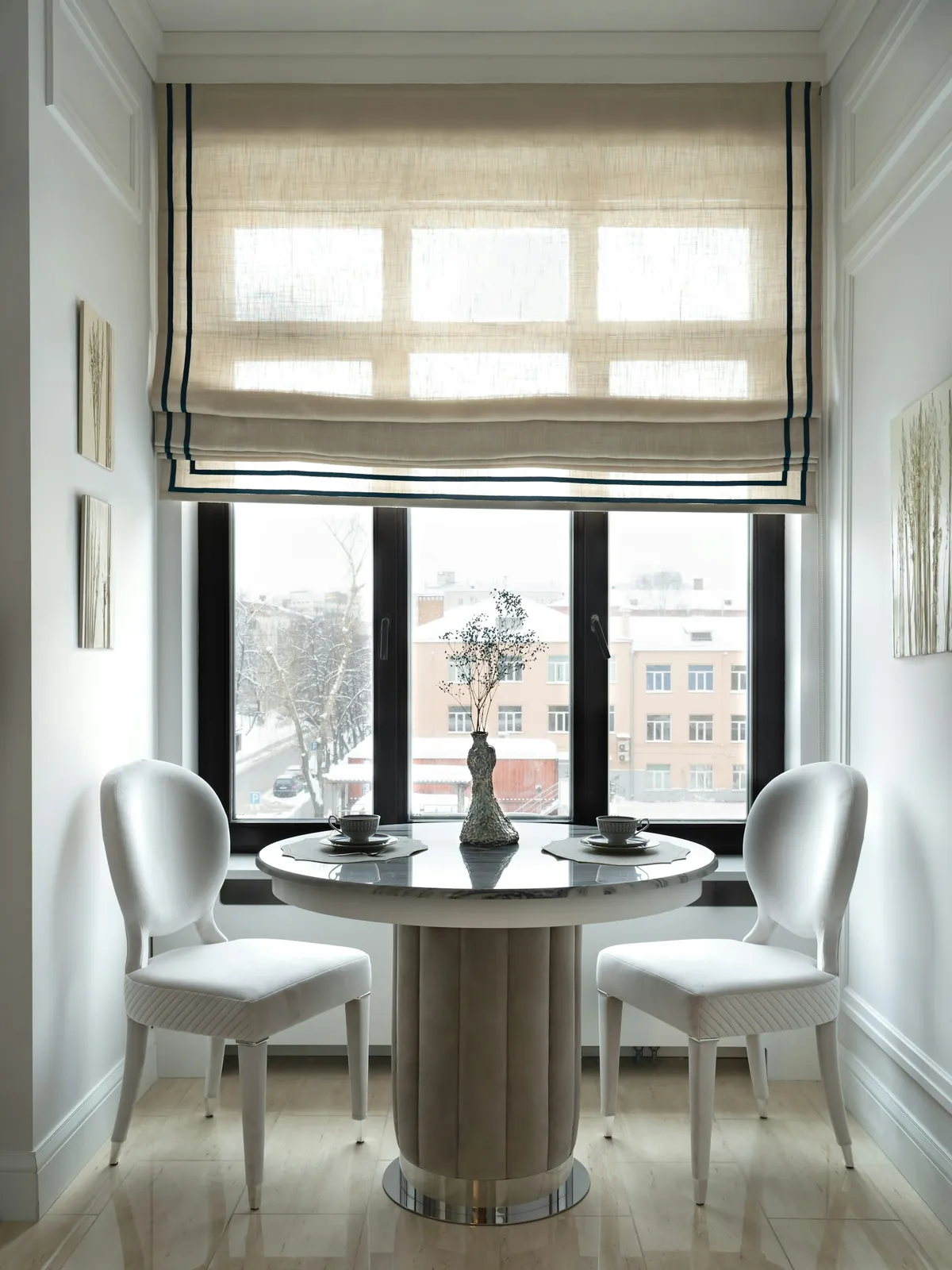
Flat fold
Neat horizontal pleats and a smooth face when lowered. It shows a pattern well and stacks compactly above a short window.

Hobbled fold
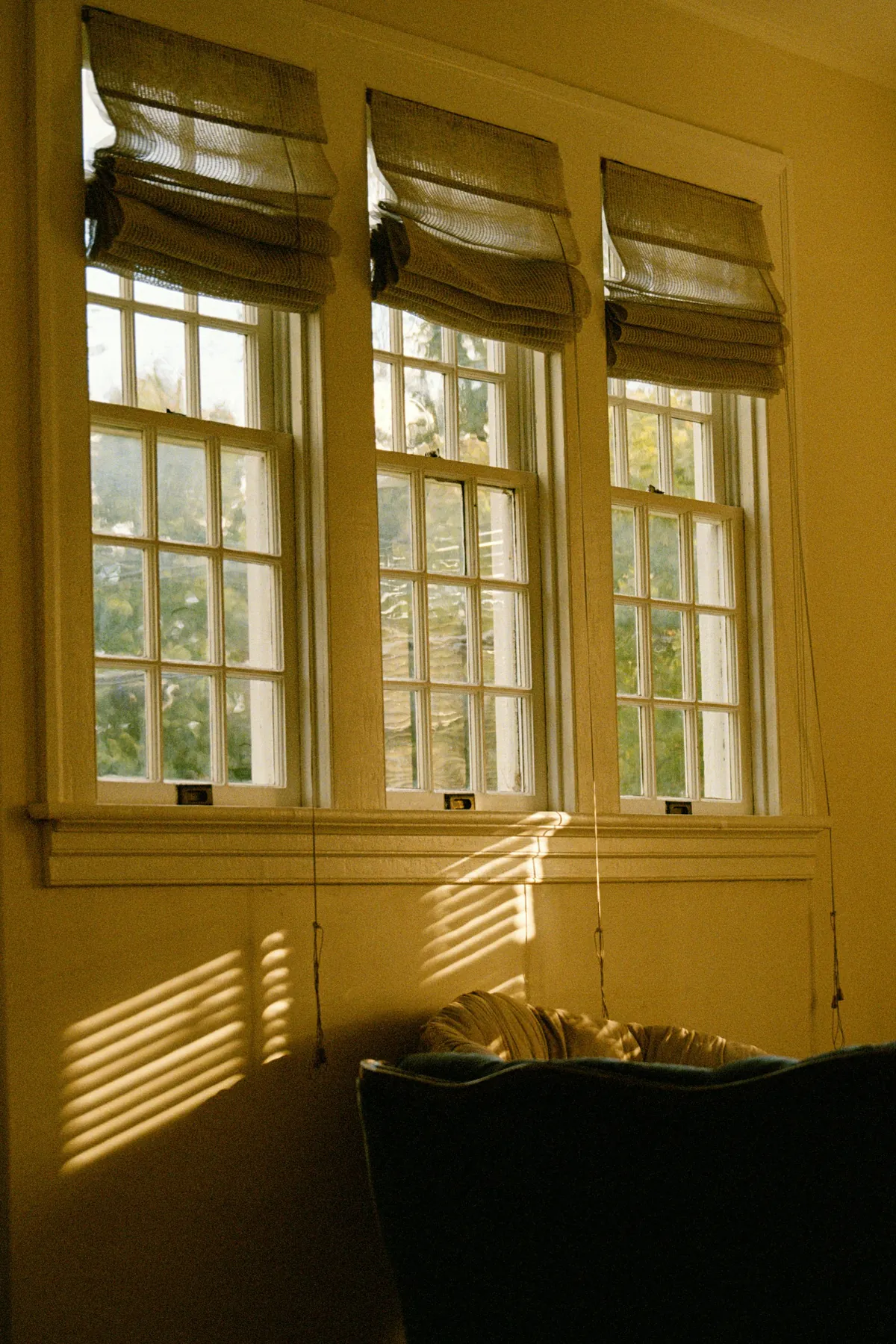
Layered loops of fabric that stay in place even with the shade down. Full and traditional, a natural match for old farmhouse rooms.
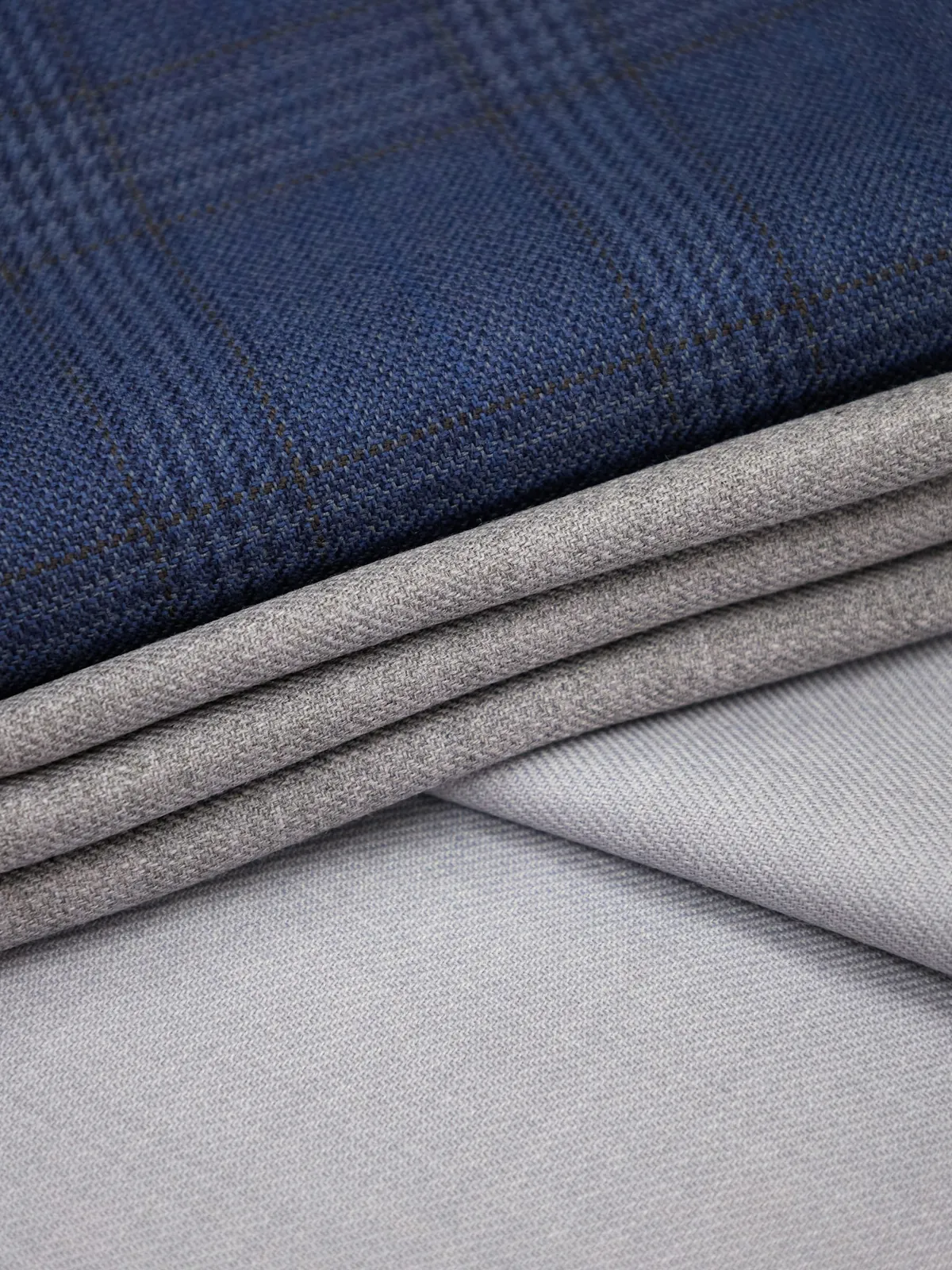
Relaxed fold
A plain face with a gentle sweep at the bottom edge. Informal, and forgiving on a window that is not quite square.
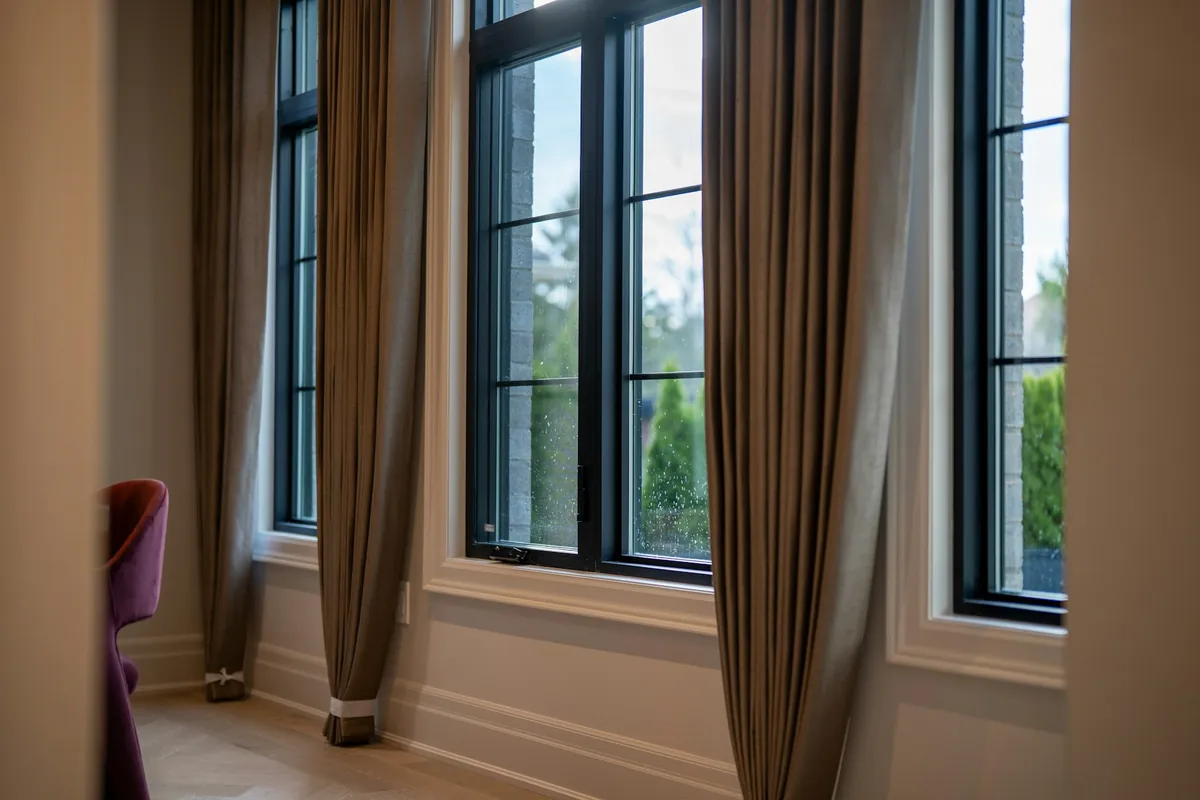
Drapes for the same room
Side panels around a roman shade add height and softness. Drapery has always been the store’s specialty.
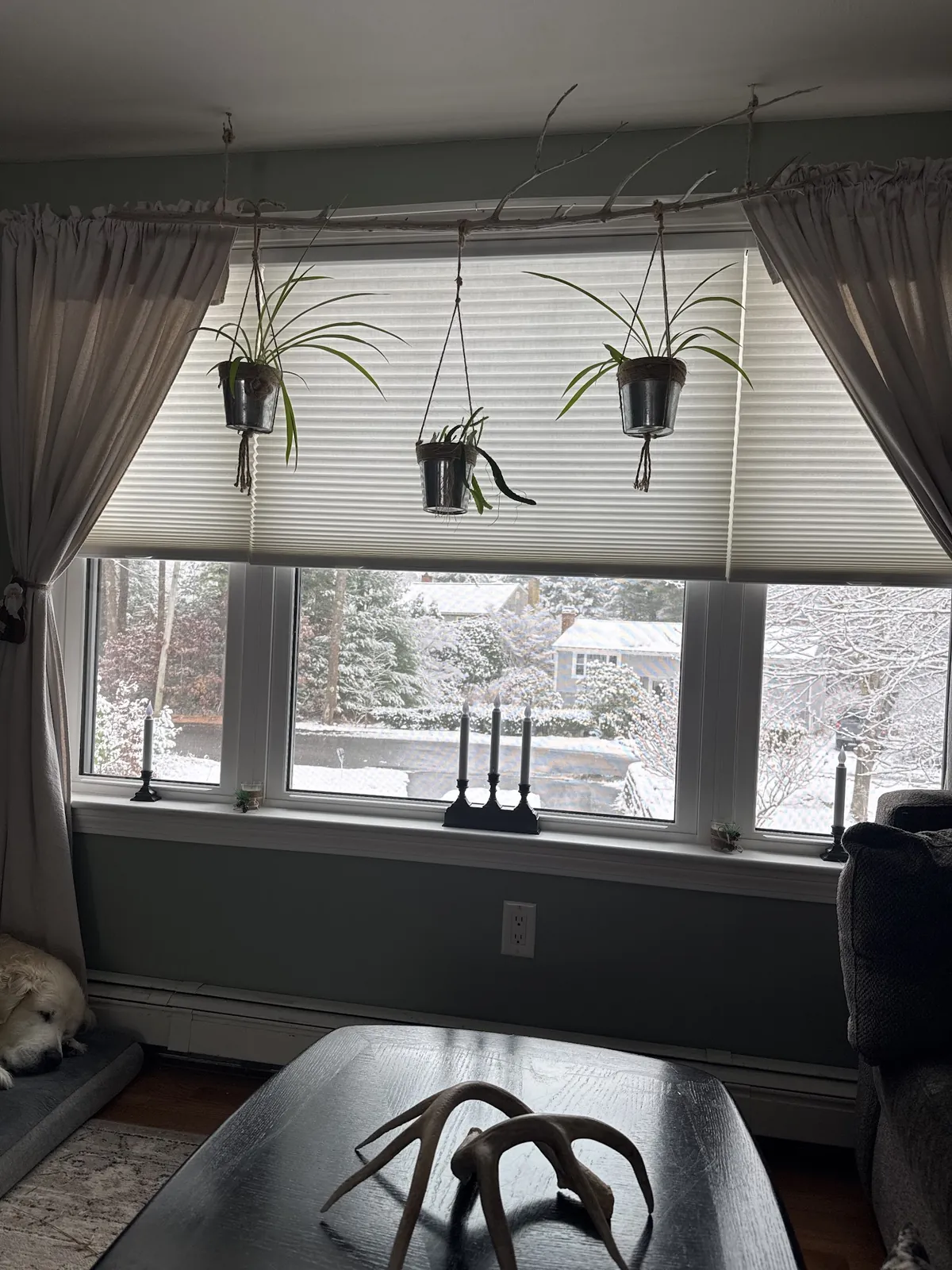
Cellular shades
For a draughty addition or a cold north room, a honeycomb shade is worth comparing.
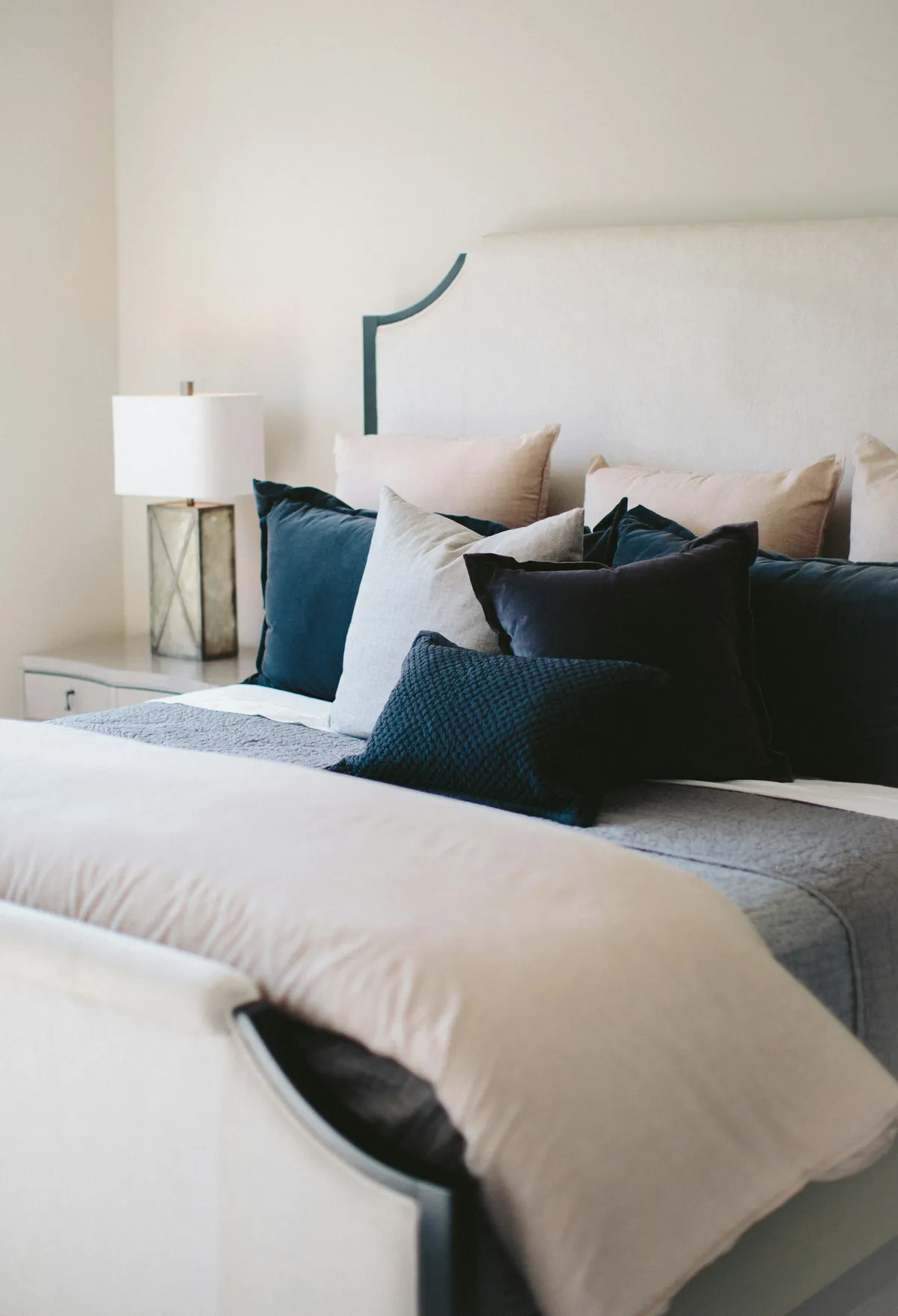
Bedding and cushions
Pillows and duvet covers cut from the shade’s fabric carry it through the room.
Making Old and New Windows Match
Getting roman shades in Dighton, MA right in a room with mixed windows comes down to three lines: where the tops of the shades sit, where the folds rest when raised, and where the hems fall when lowered. Line those up and an original sash and a modern picture window look like they belong to the same room, even though their frames are nothing alike.
Lining up the tops
Old sash in a Dighton farmhouse is usually set with its head trim at one height, and the addition’s window often sits a little higher or lower, because it was built decades later to a different standard. If each shade is mounted to its own frame, the tops step up and down across the wall.
The usual fix is to choose one line for the whole room. On the window that sits lower, an outside mount just above the trim lifts the shade’s top to match its neighbour. On the old sash, where the trim is worth keeping on show, an inside mount can still work if the newer window’s shade is set to the same height. We measure every window in the room before suggesting either, because a fraction off is easy to see once the shades are up.
Matching the stack
When a roman shade is raised, the fabric gathers into a stack at the top. A tall old sash and a wide new window raise to different stack depths unless they are planned to match. A flat fold keeps the stack shallow; a hobbled fold builds a deeper one because there is more fabric in it.
In a mixed room we often choose the same fold for every window and set each shade so its raised stack ends at the same line. From across the room, the eye reads that line rather than the differences in the frames.
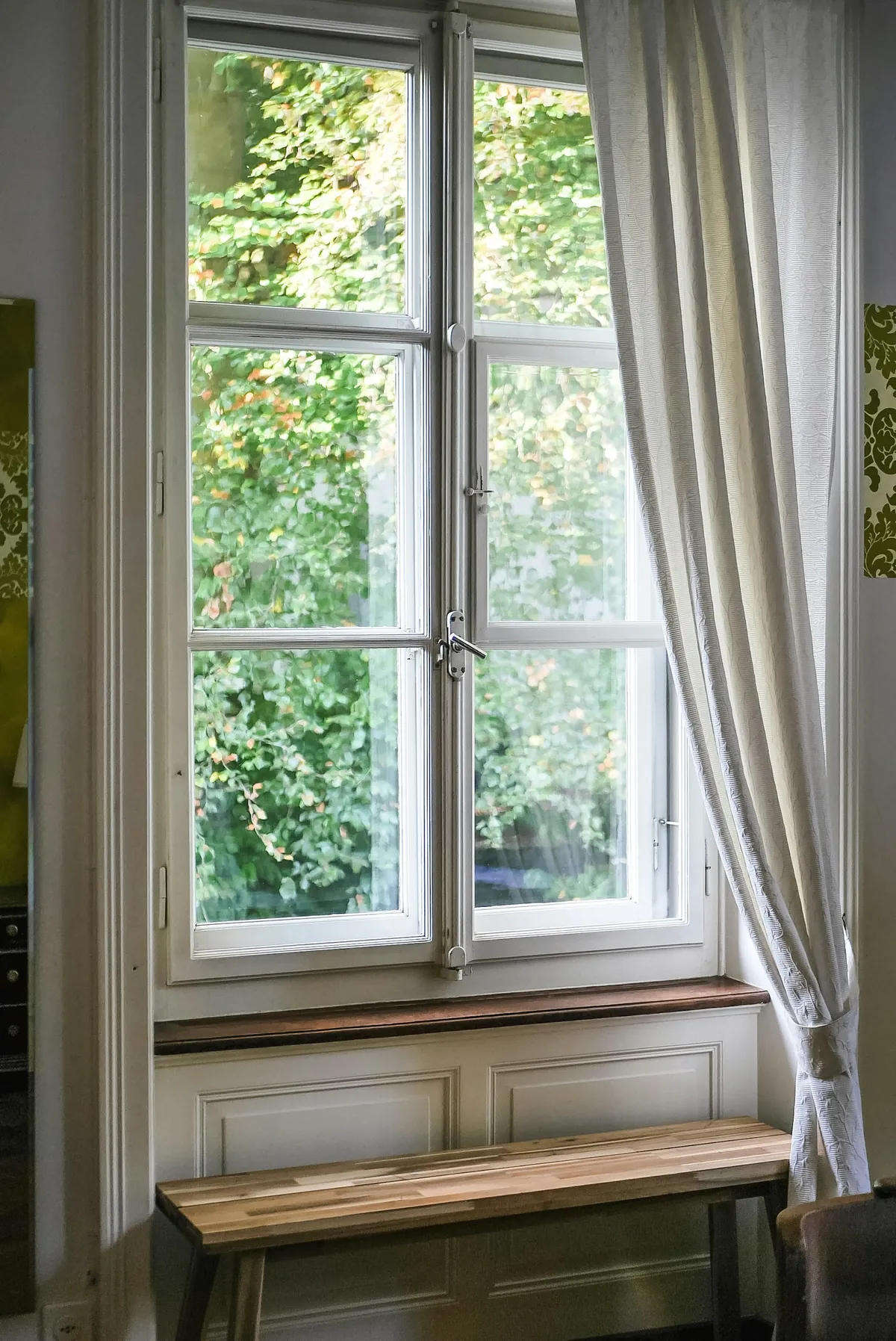
Choosing one fabric for both
The fabric is the strongest thing tying two different windows together. The same cloth, in the same fold, on an old sash and a new window makes the room feel deliberate. Where one window is much wider than the other, a plain cloth or a small pattern hides the difference in scale better than a large print, which shows how many repeats fit across each shade.
If the addition faces a different way from the original house, the two windows may take very different light. In that case the same face fabric can be lined behind the brighter window and left unlined on the shaded one, so they match from inside while each does its own job.
The Houses Along Main Street and Somerset Avenue
Farmhouses
The older farmhouses on Main Street have tall, narrow double-hung sash, often with deep sills and wide, painted trim. These are some of the most satisfying windows to dress with a roman shade. An inside mount keeps the trim fully on show, and a hobbled fold in a warm, textured cloth suits a parlour or dining room that still has its original woodwork.
Old frames are rarely square after this long. We measure each window at the top, middle and bottom, and where the opening is out of true we may suggest an outside mount, or a relaxed fold whose softer lines hide a small difference better than the crisp edge of a flat fold.
Capes
The capes along Somerset Avenue bring a different window: shorter, set lower in the wall, and upstairs often tucked into a dormer under the roof. For a dormer, the shade has to raise high enough to keep what little light there is. A flat fold mounted just above the frame is usually the answer, and a lighter fabric keeps the small room from feeling closed in.
Downstairs, the living room window in a cape is often the widest in the house. Rather than one heavy shade, two shades side by side are easier to raise and give you the choice of lowering only one.
River lots on the Taunton River
The houses on the river lots tend to face the water with their main rooms, and some have gained wide windows in later renovations. A roman shade in a room like that is about controlling light across the day while keeping the river in view. Mounted above the frame, it can be raised clear of the glass. Lowered partway, it shades the top of the window and leaves the view below.
Light off the water is brighter than it looks from the street, and it moves around the room as the day goes on. A shade that is right for the morning may need lowering by mid afternoon. That is one reason we talk about how each river room is used before choosing the cloth: a room you sit in at the end of the day wants a lining that takes the edge off the low sun, while a room used mainly in the morning can often stay with a lighter, unlined fabric that keeps it bright.
Wide openings are best split into several shades of matching fabric, each one easy to lift. For a sliding door out to a deck, a roman shade is rarely the practical choice, and we will point you to something better suited when that is the case.
Privacy on Quiet, Open Lots
Much of Dighton’s housing is spread out, with older houses on generous lots and fields or trees between neighbours. That changes what a shade is for. In many rooms privacy is not the first concern during the day, and the shade is there to soften strong light, cut the glare off a low winter sun and add some colour. In the evening, though, a lit room on a dark country road shows clearly from outside, and a lined shade lowered fully closes it off.
For that reason we often suggest a lined shade for the rooms that face the road and a lighter, unlined one for the rooms at the back of the house. Cut from the same cloth, the two look alike from inside and from the road, while each one handles its own side of the house.
Rooms in an addition
The rooms in a newer addition are often brighter than the rest of the house, with bigger glass and sometimes a window in a gable or close to a corner. Choosing roman shades in Dighton, MA for an addition is partly a question of how bright you want it to stay. A pale, unlined flat fold keeps a family room or a kitchen extension airy. A lined hobbled fold in a deeper colour makes a new bedroom feel as settled as the old rooms next to it.
How a Dighton Order Runs
We keep in regular touch from your first question until the last shade is hanging. An order usually goes like this.
- Use the call button or the form to tell us which rooms you are planning, and we will arrange your free quote.
- A specialist visits to measure. In a room with old and new windows, every opening is measured and the heights are compared before anything else.
- You choose the cloth, the fold and the lining, from samples brought to the house or by visiting the showroom.
- We send a quote that lists each window separately.
- The shades are made to the measurements taken in your rooms.
- Our installers hang them, check that the folds settle evenly and the tops line up, and show you how each one works.
Room by Room
Kitchens. A flat fold in an unlined cotton or linen sits neatly above a sink and lets soft daylight through. In a farmhouse kitchen with an old window over the counter, an inside mount keeps the deep sill clear.
Living rooms and parlours. A flat fold for a tailored look, or a hobbled fold if the room has original trim and a traditional feel. Lined, so the cloth and the furniture are shielded from the strongest sun.
Dining rooms. A hobbled fold in a richer fabric, often inside side drapes, gives an old dining room some occasion.
Bedrooms. Any fold with a lining, mounted outside the frame where the room needs to be dark early in summer. A relaxed fold in a soft colour suits a guest room under the eaves.
Bathrooms. A flat fold in a cloth that copes with some steam, mounted clear of the tub or the sink.
Fabric, Lining and Light
A roman shade is a fabric treatment first. The cloth decides how the folds form and how the room looks with the shade down, so it is worth spending time on.
- A crisp cotton or linen holds a sharp flat fold.
- A softer, heavier cloth falls into fuller hobbled loops.
- A texture shows best on a plain face; a print shows best on a flat fold, where the pattern is not broken up.
- An unlined shade in a light cloth lets daylight glow through it, which suits a kitchen or a back hall.
- A lined shade blocks more light and gives the folds more body, which suits a bedroom or a sunny front room.
Many Dighton farmhouse rooms are painted in plain whites and creams with natural wood floors. A roman shade is a simple way to bring in colour or pattern without changing anything else. If you are thinking about drapes, cushions or bedding for the same room, we can show how the fabrics work together before any of them are cut. Our window treatments for Dighton homes page lists everything else we make for the town, and the main roman shades page covers each fold in more depth.
Shades inside drapes
A roman shade can stand alone, but in a bigger farmhouse room it often sits inside a pair of drapes. The shade does the daily work of raising and lowering for light and privacy. The drapes stay open at the sides, adding height to a low-ceilinged room or framing a tall old window. Usually one of the two carries the pattern and the other is plain, and because both come from the same fabric range we can hold them together before anything is made.
This is also a good way to tie old and new windows together. Drapes hung at the same height across the whole wall give the room one strong line, and the roman shades for Dighton, MA rooms with mixed windows can then be quieter, since the drapes are doing much of the matching. Where there is no wall space for drapes, as in a small cape bedroom, a shaped valance above the shade can give the window a finished top instead.
Looking after the fabric
Fabric shades need very little care. A soft brush, or a vacuum on a low setting, keeps dust off the folds. Blot small marks with a damp cloth after trying it somewhere hidden. Washing usually shrinks a cloth and spoils the folds, so cleaning is best left to a professional. If the cord or the headrail on a shade you already own stops working properly, our team can look at it.
Why Dighton Homes Come to Window Works
Window Works has been a family store in Swansea since 1988 and is now in its second generation. For over 37 years it has made window treatments for houses on both banks of the Taunton River and across the SouthCoast and the Rhode Island East Bay.
- Window treatment specialists, with fabric at the heart of the store
- Every window measured where it is, old sash and new glass alike
- Shades hung by our own installers
- Warranties offered on what we sell
- Kept in touch with you until the work is done
The Swansea showroom holds the full fabric range, along with the Norman range of blinds, shades and shutters. Bring a photo of the room or a paint chip and we will help you narrow the choice.
Questions from Dighton
Can roman shades make an old window and a new one look the same?
Yes. We line up the tops of the shades, set the raised stacks to the same height and use the same fabric and fold, so the two windows read as a pair even though the frames differ.
My farmhouse frames are not square. Will a made-to-measure shade still fit?
We measure each window at several points. Where a frame is out of true, an outside mount or a relaxed fold usually hides the difference neatly.
Which fold suits a nineteenth-century parlour?
A hobbled fold in a warm, textured cloth suits original woodwork well, and an inside mount keeps the trim on show.
What about a river-facing room with wide glass?
Several matching shades, mounted above the frames so they lift clear of the glass, keep the view open when raised and shade the top of the window when lowered partway.
Is the quote free?
Yes, quotes are free. Use the call button or the form on this page to arrange one.
Book Your Free Quote
The simplest next step for roman shades in Dighton, MA is a free quote. Use the call button to talk to the Swansea store, arrange for a specialist to measure your windows, or ask about installation, or send the form and we will get back to you. If you would like to see the fabrics in daylight first, the showroom is a short drive away, and the contact page has the directions. Window Works holds a 5.0 rating on Google.