
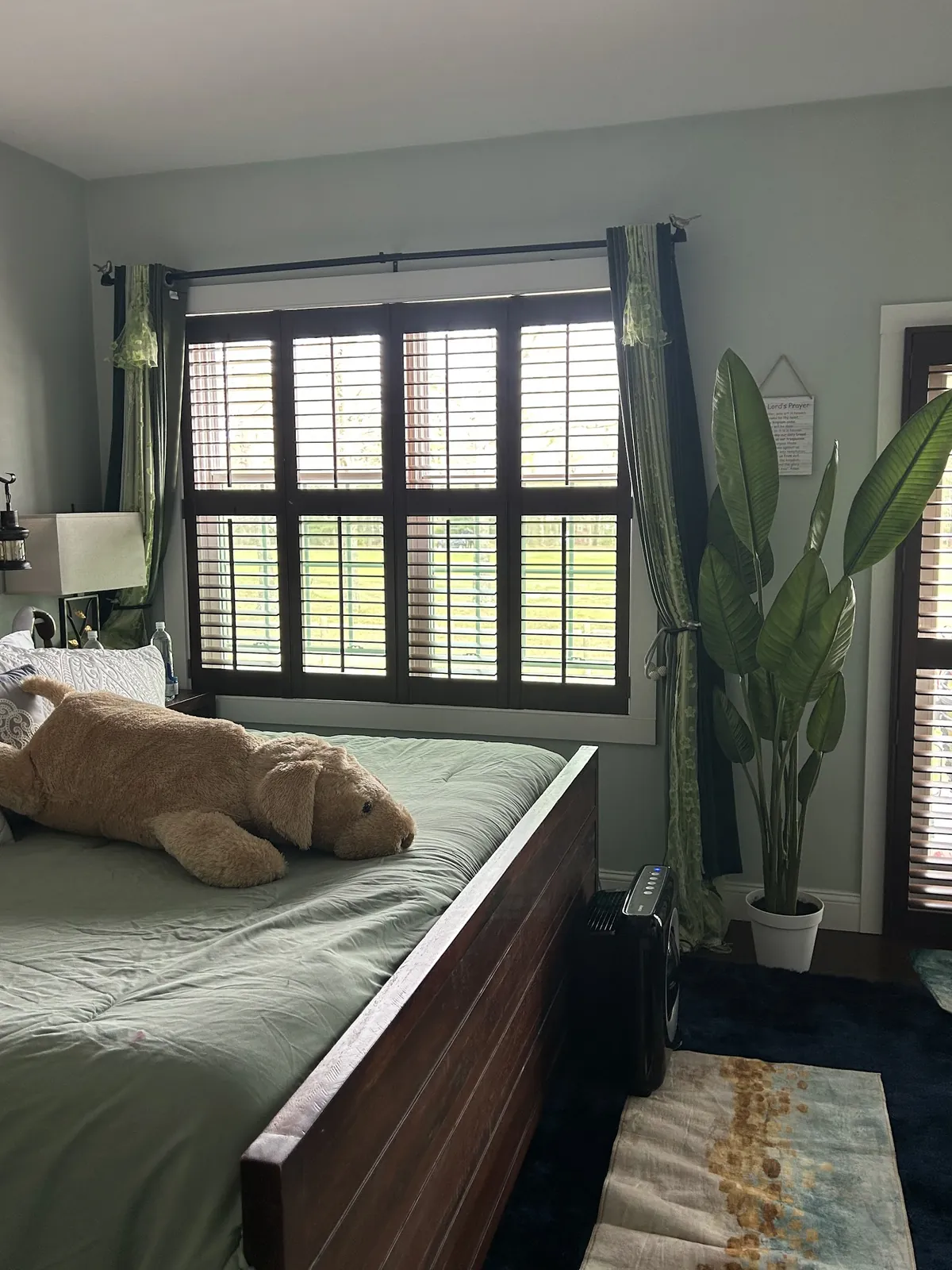
Made to Measure for Newport’s Old Windows
Newport’s windows are rarely simple. The historic colonials on the Point and Historic Hill carry large multi-pane sash in frames that have stood for a very long time. Shingle-style houses mix windows of many sizes and shapes. The Fifth Ward’s close-built streets put windows near the pavement and near the house next door, and the larger properties along Ocean Drive open whole rooms to the sea. Add historic-district review across much of the old town, and it is easy to see why nearly every set of plantation shutters in Newport, RI is made to measure.
A shutter built for a particular opening can do things an off-the-shelf product cannot: take up the lean in an old frame, line its rails up with the bars of a multi-pane sash, and sit within a deep reveal without hiding the casing. That is the work this page describes, window type by window type.
- Shutters for the inside of the house only
- Rails, louvres and frames planned around each old sash
- Every opening measured on site by our own specialists
The Store Behind These Shutters
Window Works Blinds Shutters and Shades is a family store founded in Swansea, Massachusetts, in 1988, and now run by its second generation. Our showroom is in Swansea, our specialists measure and install the shutters themselves, and Newport is part of the area we serve across Aquidneck Island, the Rhode Island East Bay and the SouthCoast. The call button on this page reaches our Swansea store directly.
Shutters for Every Part of Newport
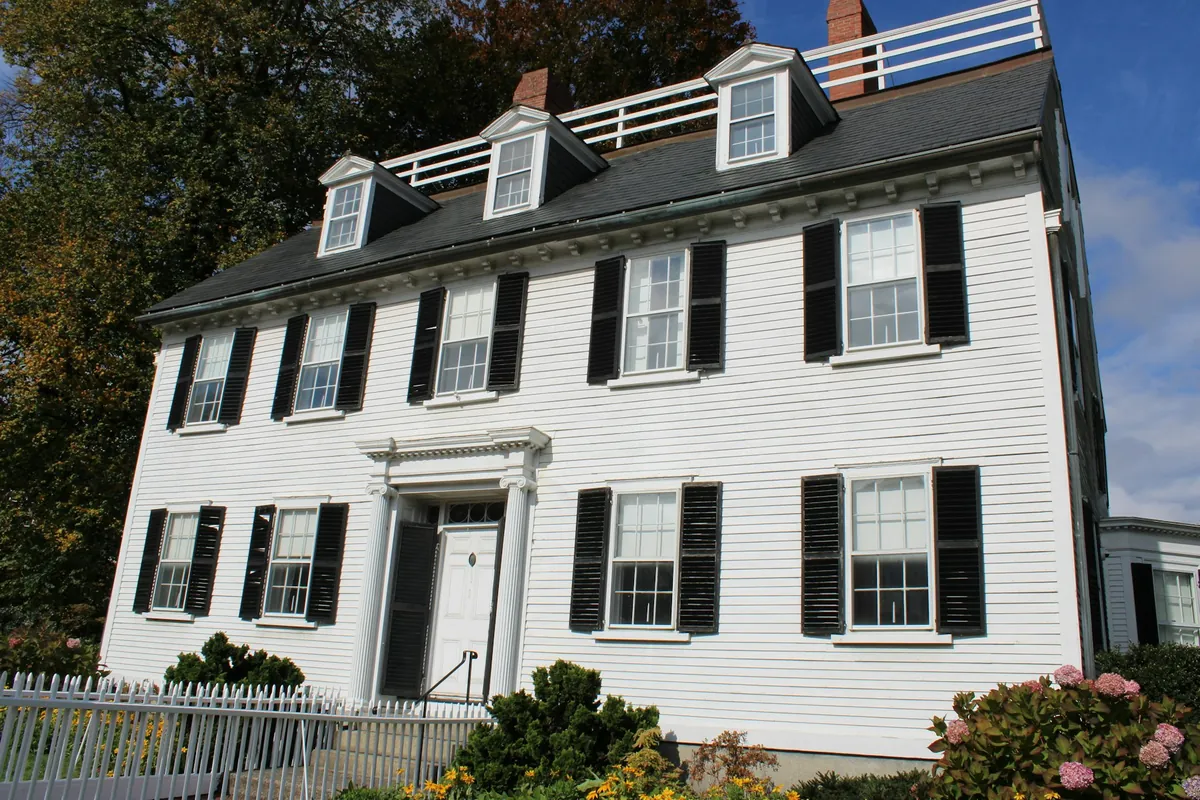
Colonials on the Point
Narrow and medium louvres with rails set to the sash, in frames made to take up the lean of an old opening.
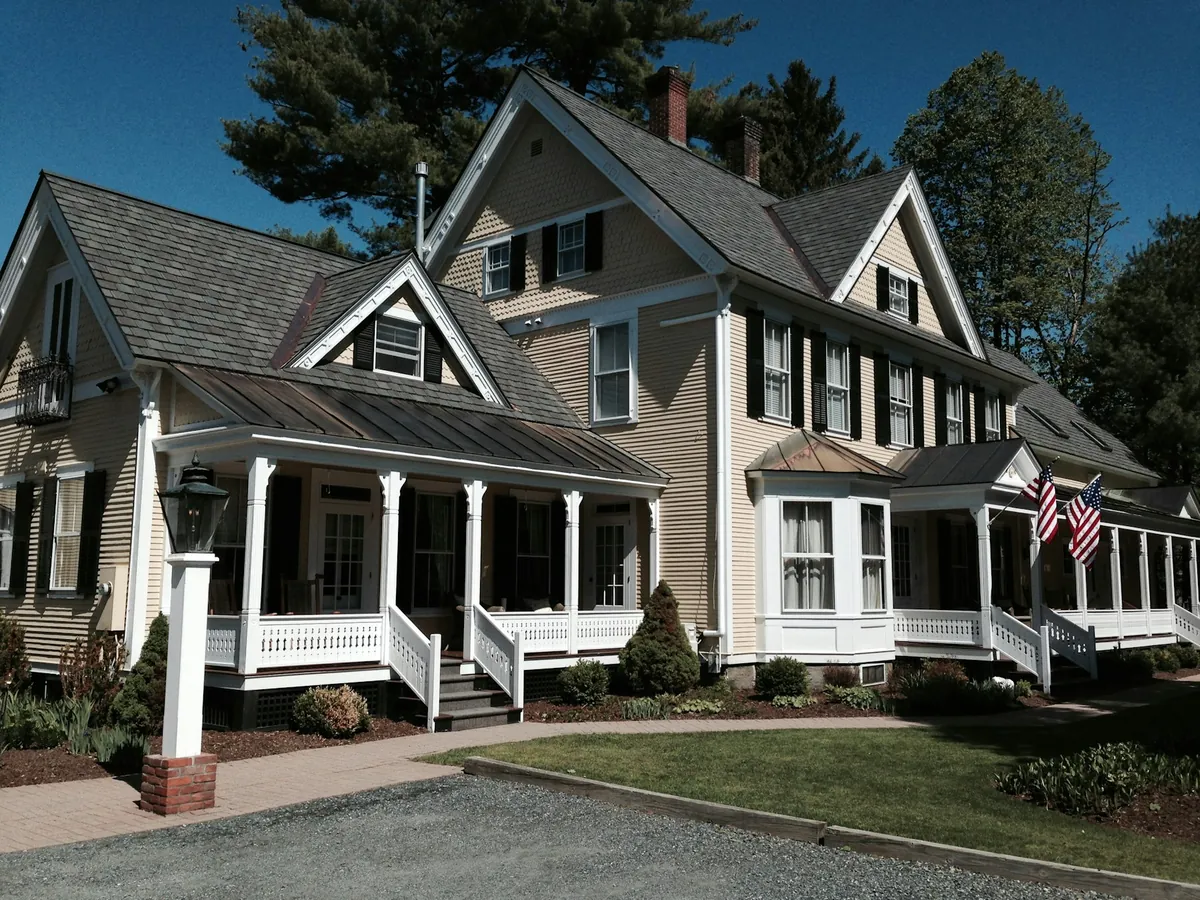
Shingle-style houses
Windows of many sizes in one house, given one finish and one plan so every room belongs together.
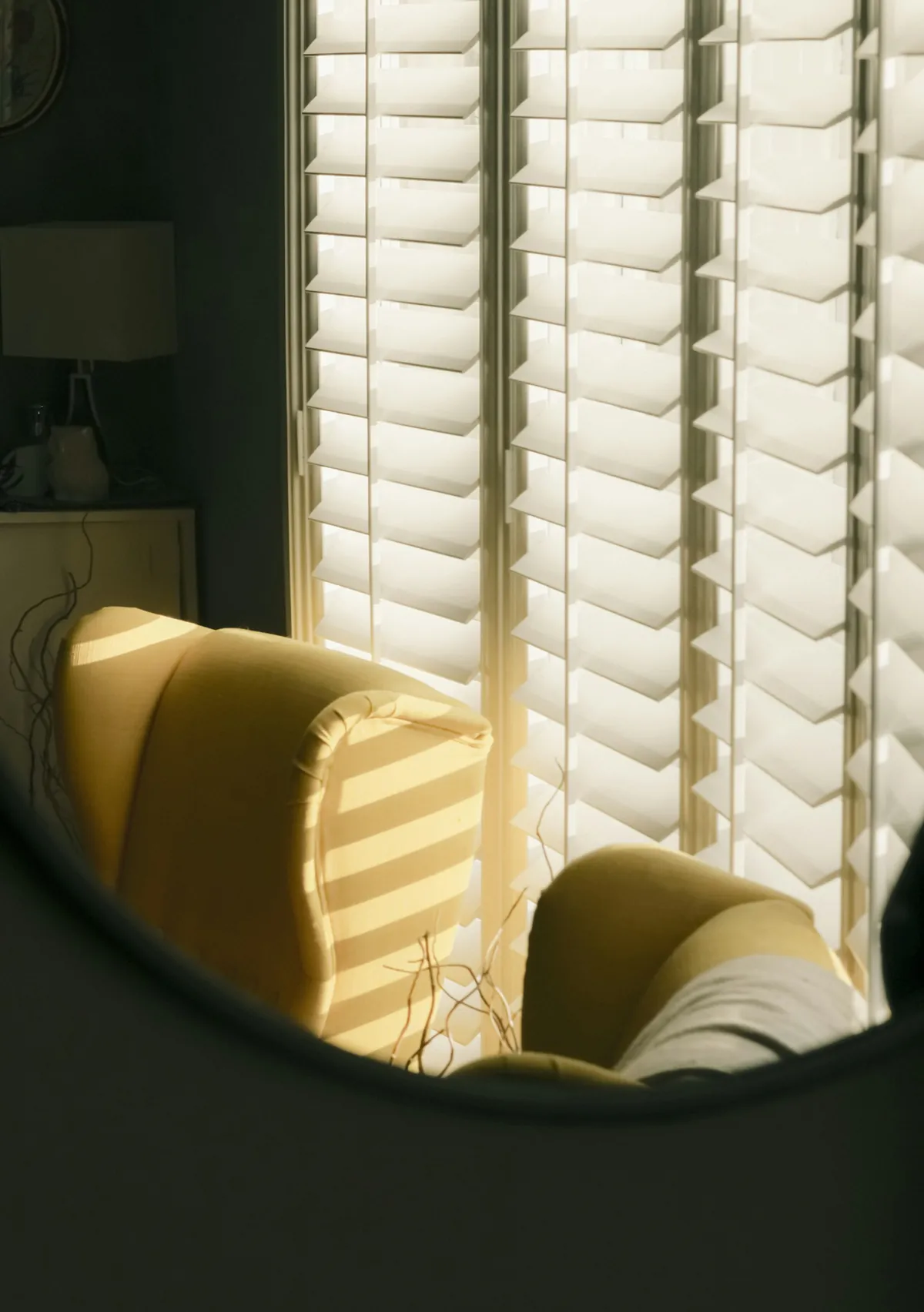
Fifth Ward rooms
Louvres angled for privacy on close-built streets, with light still reaching the room.
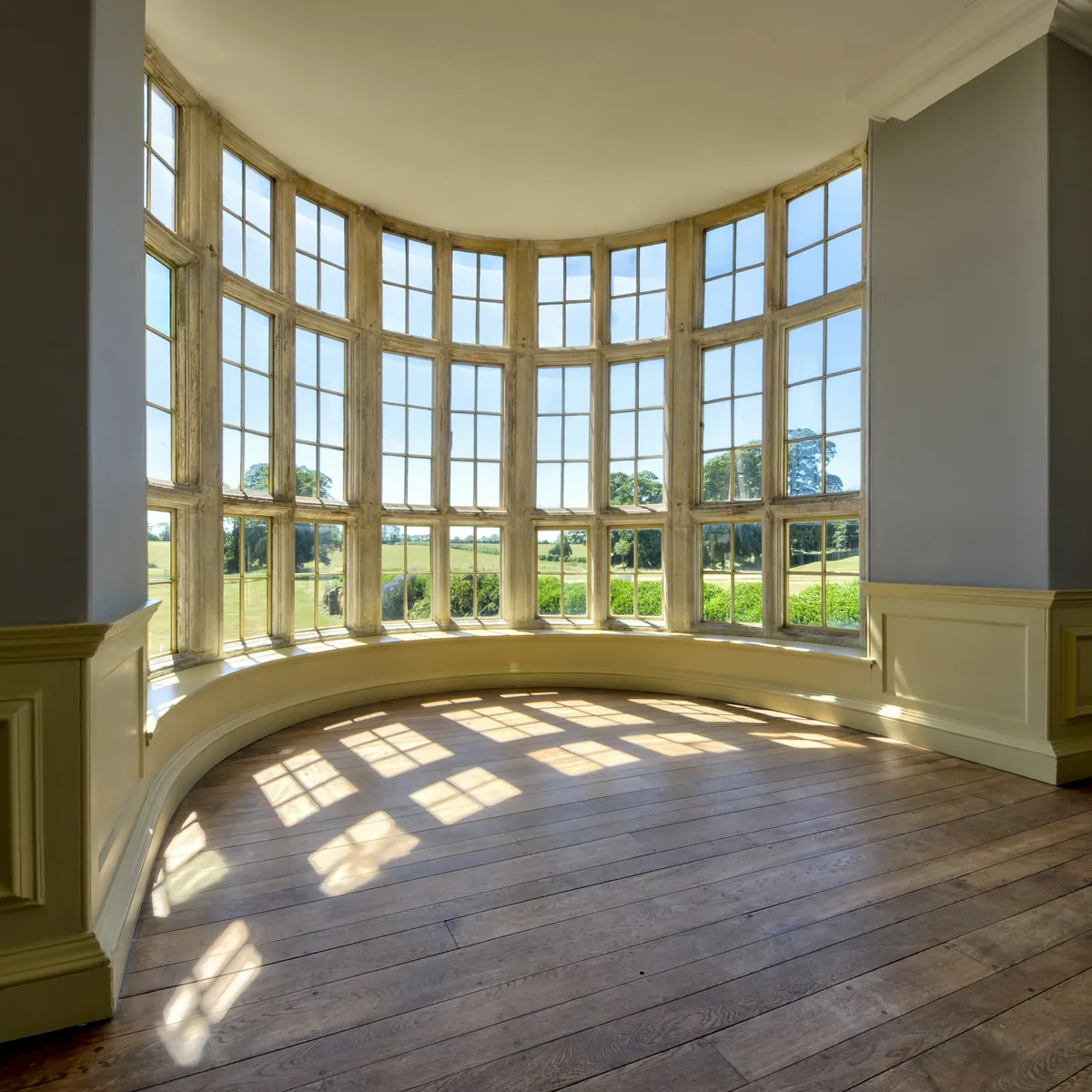
Ocean Drive views
Wider louvres and panels that fold right back to give the whole window to the sea.
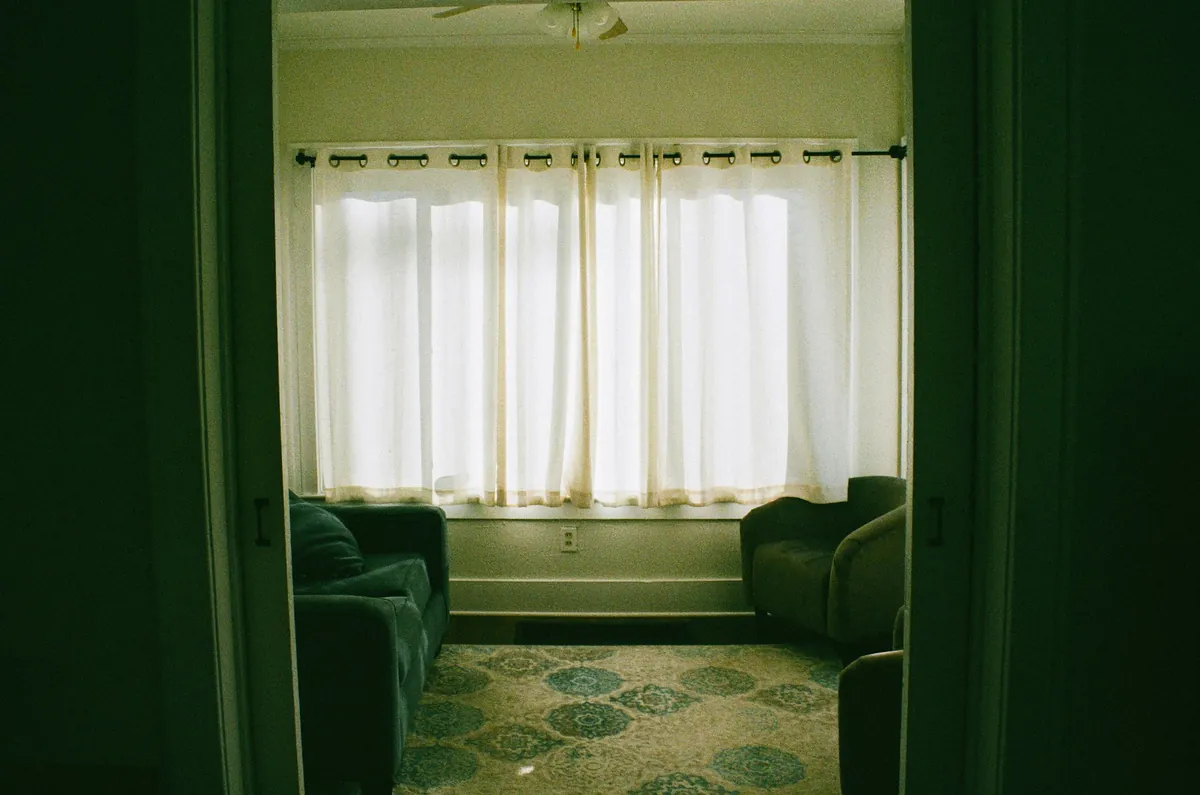
Drapery beside shutters
Shutters for light and privacy, drapes for softness. See custom drapes in Newport.

Every opening measured
Old frames vary from window to window, so each one is measured at several points before a panel is made.
Plantation Shutters in Newport, RI and the Multi-Pane Sash
A large multi-pane sash is divided by thin wooden bars, the muntins, into a grid of small panes. When a shutter sits in front of that window, its own horizontal lines, the rails and the louvres, sit against the grid behind it. If they ignore the grid, the window looks busy. If they follow it, the shutter looks as though it was always meant to be there.
The most important line is the meeting rail, where the upper and lower sash meet. A divider rail on the shutter is set at that height, so when the louvres are open you see the shutter’s rail lined up with the window’s own. The top and bottom sections can then tilt on their own: lower louvres angled for privacy, upper ones open to the sky.
Louvre width and pane size
The size of the panes helps choose the louvre. On a sash with small panes and slim muntins, a narrower louvre echoes the fine scale of the window. On larger panes, a medium louvre suits better and opens more of the view when tilted flat. On the biggest sash in a grand room, a wider louvre keeps the shutter in proportion with the window and the ceiling height.
Clearance
Old sash often have locks, lifts and hardware that stand proud of the glass. When louvres tilt open, they project from the panel, and a wide louvre can strike a sash lock. We check the clearance at every window and choose the louvre and the frame depth so everything moves freely.
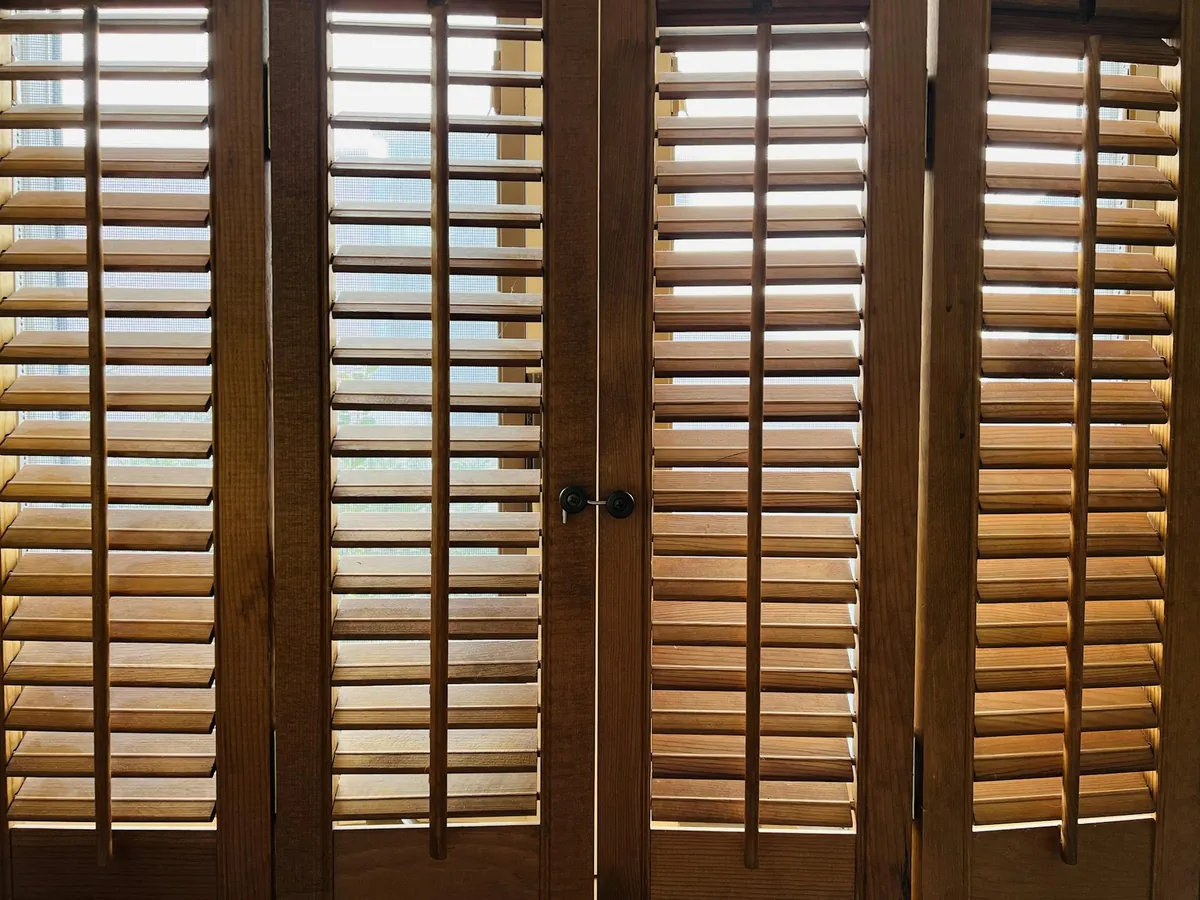
Colonials on the Point and Historic Hill
The colonials on the Point and Historic Hill are among the oldest houses in the city. Their frames have settled, their openings are rarely square, and no two windows are quite alike, even in the same room. A shutter for one of these houses starts with careful measurement.
Measuring an old frame
Each opening is measured across at the top, middle and bottom and down both sides, and its depth is checked in more than one place. Where a frame leans, the shutter frame is built to the real shape of the opening and takes up the difference, so the panels inside hang plumb and close evenly. On an old house, this is the single most important part of the job.
Keeping the casings
The casings in these houses are often original and worth keeping in view. Where the reveal is deep enough, the shutter frame sits inside the opening and the casing stays fully on show around it. A simple frame profile with a softly shaped edge sits quietly beside old trim and lets it remain the feature.
Close to the street
Many houses on the Point stand right at the pavement. Tip the louvres so their inner edges point to the floor and someone on the pavement looks into a screen of slats, while the sky’s light still slides between them; a rail across the panel lets the bottom stay that way while the top is opened wider. On a tall front window, that upper section alone lights the room.
Historic-District Review and Interior Shutters
Much of old Newport is covered by historic-district review, and owners are used to thinking carefully about how their houses look from the street. Interior shutters are fitted inside and add nothing to the outside walls, but they are seen through every front window. If your house is under review, it is worth asking whether interior work is covered before you settle the details.
Either way, the sensible choice is a shutter that looks right from outside: white or off-white to match the window trim, the same louvre on every window that faces the street, and divider rails lined up across the facade. Rooms at the back of the house, away from the street, can take a stained finish or a different louvre without affecting the front.
Shingle-Style Houses
Newport’s shingle-style houses are more relaxed and more varied than its colonials. Their windows come in many sizes in one house: wide windows grouped together, tall windows on a stair, small windows tucked under a gable, and bays that push out from the walls. Interiors often have a lot of wood, in panelling, beams and stair rails.
One plan for many windows
With so many window sizes, the risk is a house where every room looks different. The answer is one plan: one finish across the house, divider rails at consistent heights where the windows allow, and a louvre width chosen so it suits both the largest and the smallest windows. Plantation shutters for Newport shingle-style houses look settled when they share those details from room to room.
Grouped windows and bays
Grouped windows can often be shuttered as one run, with panel joins lined up over the posts between the windows so the louvres look continuous. Bays are shuttered window by window, each with its own frame, and the hinging is planned so neighbouring panels do not collide as they swing.
Shaped windows
Round, arched and other shaped windows are part of the shingle style. These are usually left uncovered so their shape still shows, with the shutter covering the rectangular windows around them.
Wood interiors
In a shingle-style house with panelled walls and wood beams, a stained shutter can look completely at home, picking up the warmth of the woodwork. Where the interior has been painted, a painted shutter matched to the trim suits better.
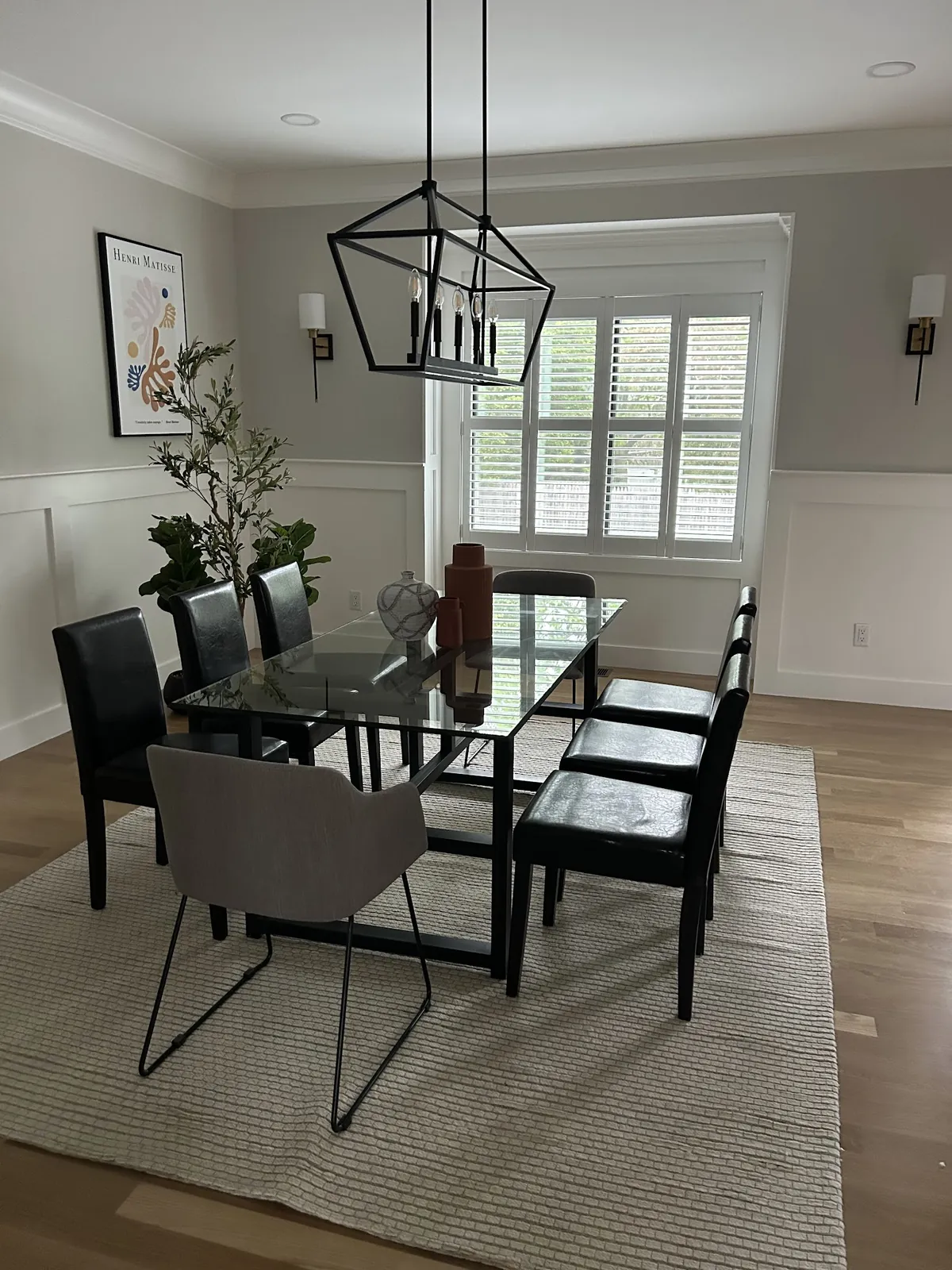
The Fifth Ward’s Close-Built Streets
The Fifth Ward’s streets are close-built, with houses near the pavement and near each other. Privacy at street level is usually the first thing a window treatment has to solve, and side windows often look straight across a narrow gap at a neighbour’s.
A shutter handles this better than most treatments, because the louvres can be angled rather than simply opened or closed. Set for privacy, they block a direct view in while letting light through, and on a side window that faces a neighbour they can stay that way most of the day.
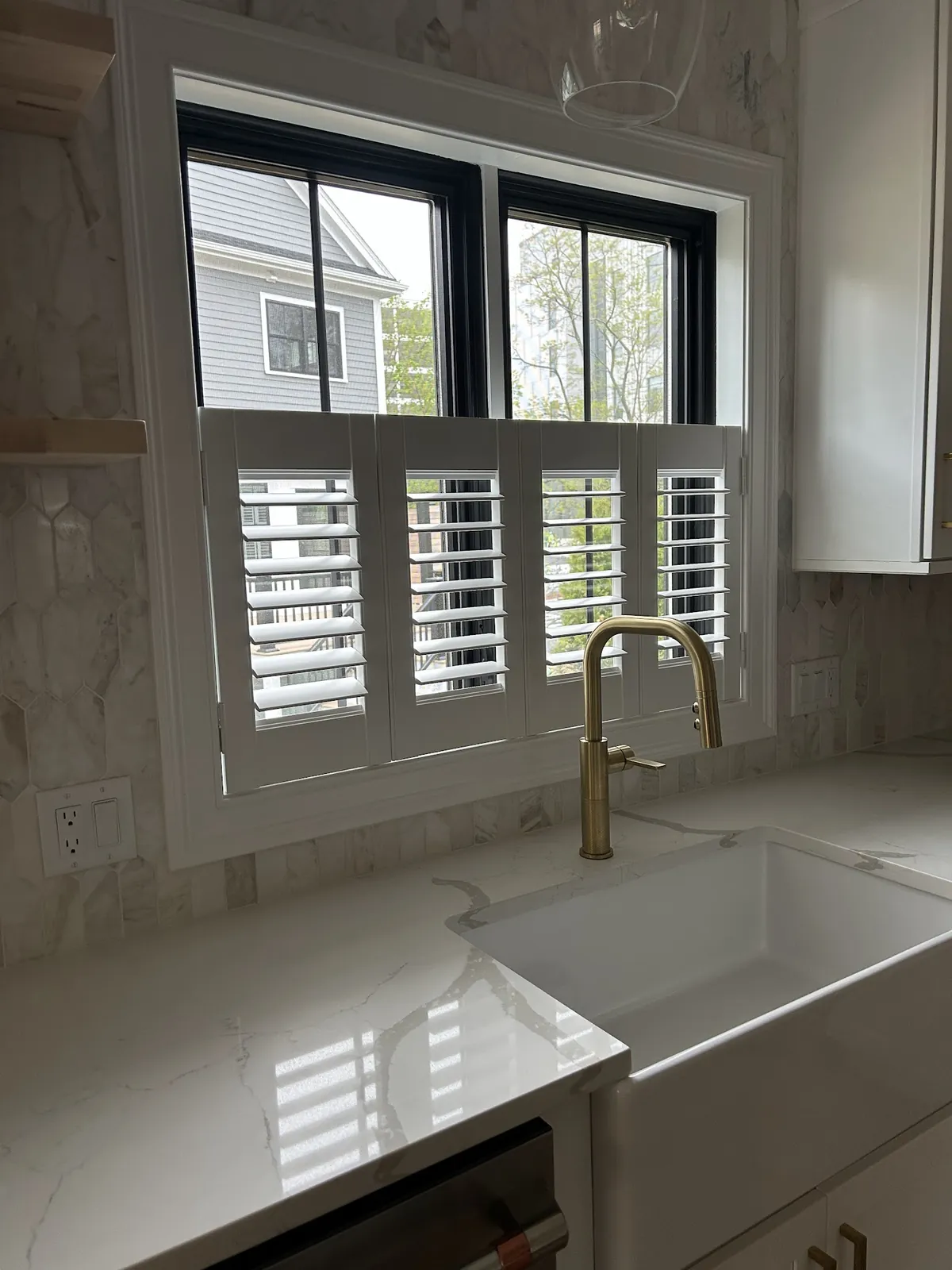
Half-height cafe shutters, covering just the bottom of the sash, are a good option for ground-floor front windows and kitchens. They screen the glass at eye level and leave the top of the window open to the sky.
On narrower windows, a single panel hinged to one side often looks better than a pair of very slim panels, and a narrower louvre keeps the proportions right.
Ocean Drive’s Larger Properties
The larger properties along Ocean Drive face a different set of questions. Their rooms are bigger, their windows larger and many look straight out to sea. Privacy is less of a concern than light, glare and the view.
Sea, sky and a broad louvre
Generous louvres belong on these big windows. Opened level, each one is a slim line across the horizon rather than a bar across it. Turned a little toward the floor, they screen the hard brightness overhead and the dazzle that comes up off the Atlantic, yet the shoreline stays in sight beneath them. Hinge the panels to fold flat against the reveal and, when the weather is fine, the whole sash belongs to the ocean again.
Rooms on these properties are often tall as well as wide, and plantation shutters in Newport, RI on a window of that scale are usually split by a rail, so the top louvres can stay open to the sky while the lower ones are adjusted through the day.
Many rooms, one plan
A large house can have a great many windows, and shuttering them is best planned as a whole: the louvre, the frame and the finish set for every window from the start, even if some rooms are done later. That keeps the house consistent from outside and from room to room.
Upkeep by the ocean
Open a window on Ocean Drive and the breeze brings a little of the sea with it, which shows over time as a dull film on anything near the glass. Painted panels shrug it off: louvres shut, one pass with a soft cloth wrung almost dry, louvres flipped, one more pass. Wood-stained panels are happier with a dry duster only.
Fabric Around the Shutter
A colonial parlour on Historic Hill or a big room off Ocean Drive can feel unfinished with bare shutters alone. Floor-length side panels, hung from a pole placed close to the ceiling and extended past the casing, add height, colour and a softer edge. The trick is room to swing: the pole runs far enough beyond the window that the gathered fabric rests on the wall, never in the path of an opening panel. Since drapery is part of what we make, one measuring visit can cover both, and both can be designed as a pair.
Bedrooms Under Old Roofs
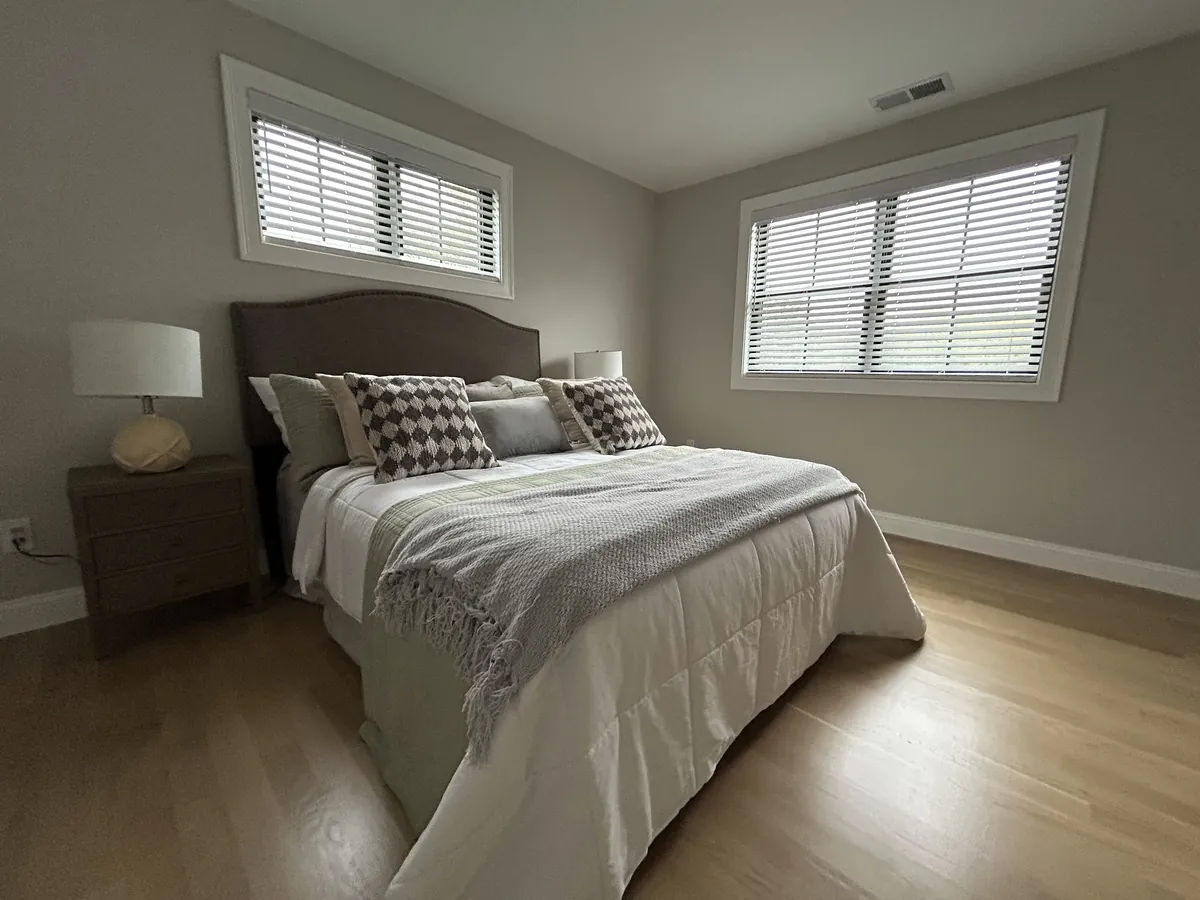
Upstairs in a Point colonial or a shingle-style house, bedrooms often sit under sloping ceilings with dormers or small gable windows. These openings are short and set close to the roof, so a shutter suits them well: it needs no space above the glass for a headrail. A single panel, or a slim pair hinged toward the side with more room, opens without striking the slope, and a narrower louvre keeps a short panel balanced. Closed tight, the louvres keep a summer sunrise from waking the house.
How a Newport Order Runs
Old windows reward patience, so the process is thorough, and we keep you posted at each turn.
- Ring through the button on this page or write through the form; tell us the rooms on your list and a free quote is arranged.
- A Window Works specialist travels over from Swansea and works round each window with a tape: three widths, two heights, the reveal depth in several spots, the line of the meeting rail and any lock or lift standing proud of the sash.
- Deep reveals, curved or arched heads, original casings and the furniture close by are all written down, because each changes how the panels divide and which way they open.
- Then you choose: louvre, frame, paint or stain, rails, tilt rod. The samples are kept at our Swansea showroom.
- Each window appears on its own line of the quote.
- Every shutter is built from the figures taken at your house.
- Our installers hang them, true every hinge, test every louvre and walk you through daily use.
Once they are in, plantation shutters for Newport houses need little more than a dusting, and if anything ever needs adjusting, the same Swansea store that measured them is a phone call away.
Visit Us in Swansea
Since 1988 the Window Works showroom has stood in Swansea, and that is where you can try our shutters for yourself: swing a panel, work a tilt rod, set two louvre sizes side by side, hold a painted sample next to a stained one. The Norman range is there as well.
- A family business in its second generation
- Over 37 years in window treatments
- Measuring and installation by our own staff
- We keep you informed until the last panel is hung
- Warranties available on what we supply
Find the way to Swansea on our contact page.
For a closer look at louvres, frames and finishes, read the main plantation shutters page; for everything else we make in the city, see Newport window treatments.
Questions from Newport
Can shutters work on large multi-pane sash?
Yes. The divider rail is set at the meeting rail and the louvre is chosen to suit the pane size, so the shutter follows the window behind it.
Will a shutter fit a very old frame that is out of square?
Yes. The frame is built to the opening’s real shape and takes up the lean, so the panels hang plumb.
What about the round and arched windows in a shingle-style house?
They are usually left uncovered so their shape still shows, with the shutters on the rectangular windows around them.
What suits the side windows on a Fifth Ward street?
Louvres angled for privacy from the house next door, or cafe-style panels that cover the lower glass and leave the top open.
What louvre would you choose for an Ocean Drive room?
A broad one. Laid flat it barely interrupts the horizon, and tipped down it screens the glare off the water.
Where to Begin
Every Newport job starts the same way, with a free quote. Tap the call button and you are speaking with our Swansea store, ready to arrange a measuring visit or answer questions about fitting; the form is there if you prefer to write. Curious to handle the shutters first? The showroom welcomes visitors, and the contact page shows how to find it. We carry a 5.0 rating on Google.