
Two Kinds of Barrington House, Two Kinds of Window
Barrington asks two very different things of a shutter, and that is why plantation shutters in Barrington, RI are planned house by house. Along Rumstick Road and Nayatt Road, a center-hall colonial with balanced pairs of sash on either side of the front door can stand a short walk from a mid-century modern built around long runs of glass that sit low to the floor. Some of those lots run down to the Barrington River, and the rooms facing the water carry the biggest windows in the house.
The colonial wants a shutter that respects its trim and its formal rooms. The mid-century house wants one that can cover a wide stretch of glass and still fold away when the view matters. Both are interior plantation shutters, and both come down to the same two decisions: how wide the louvres are, and what kind of frame holds the panels in the opening.
- Interior plantation shutters, fitted inside the house
- Louvre size and frame style matched to each window
- Measured in your home and installed by our own team
What a Barrington Shutter Order Can Include
Panels for long glass
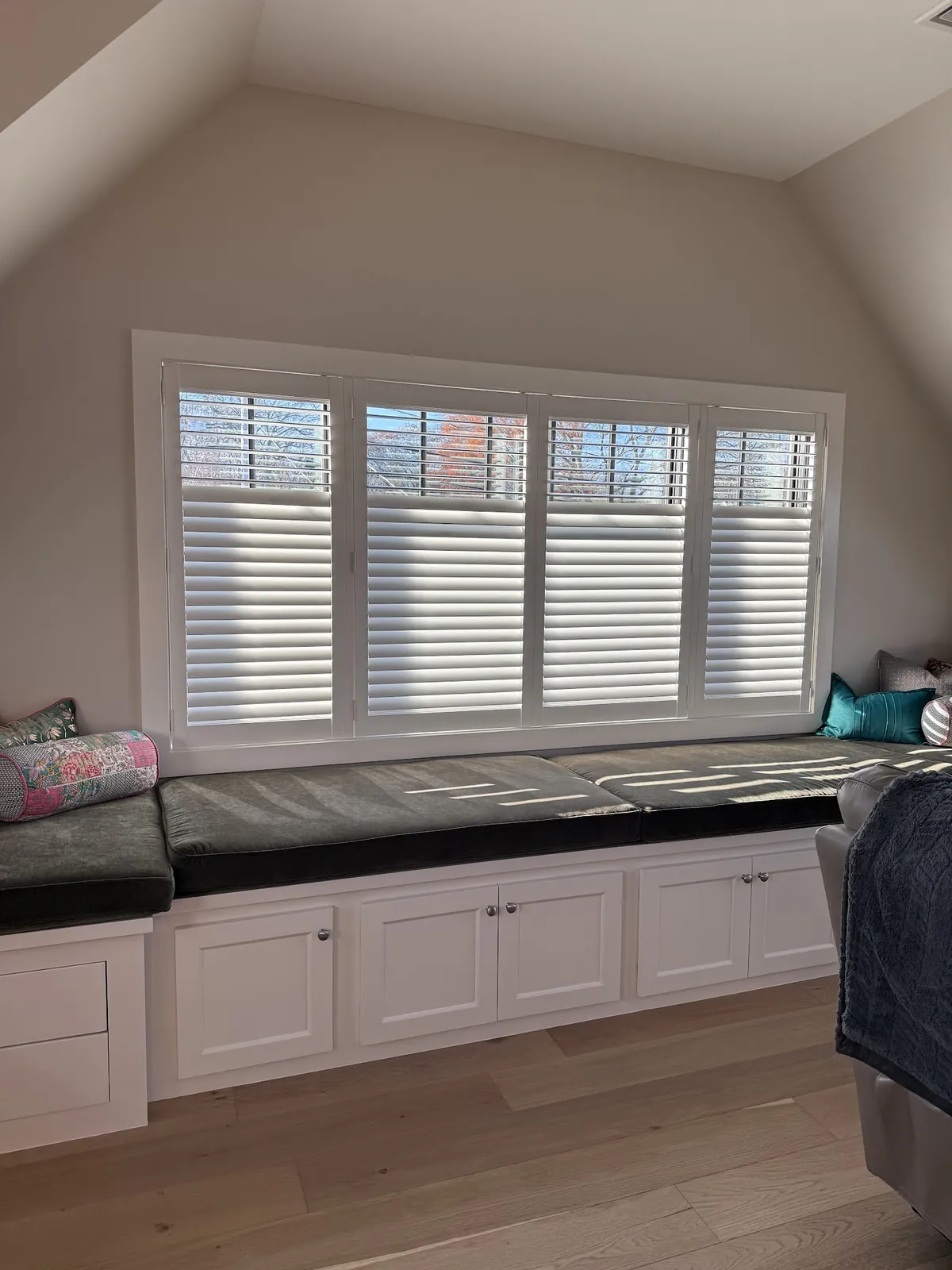
Several narrow panels hinged together, sized so a long run of low glass is covered evenly and folds back to the side.
Colonial sash pairs
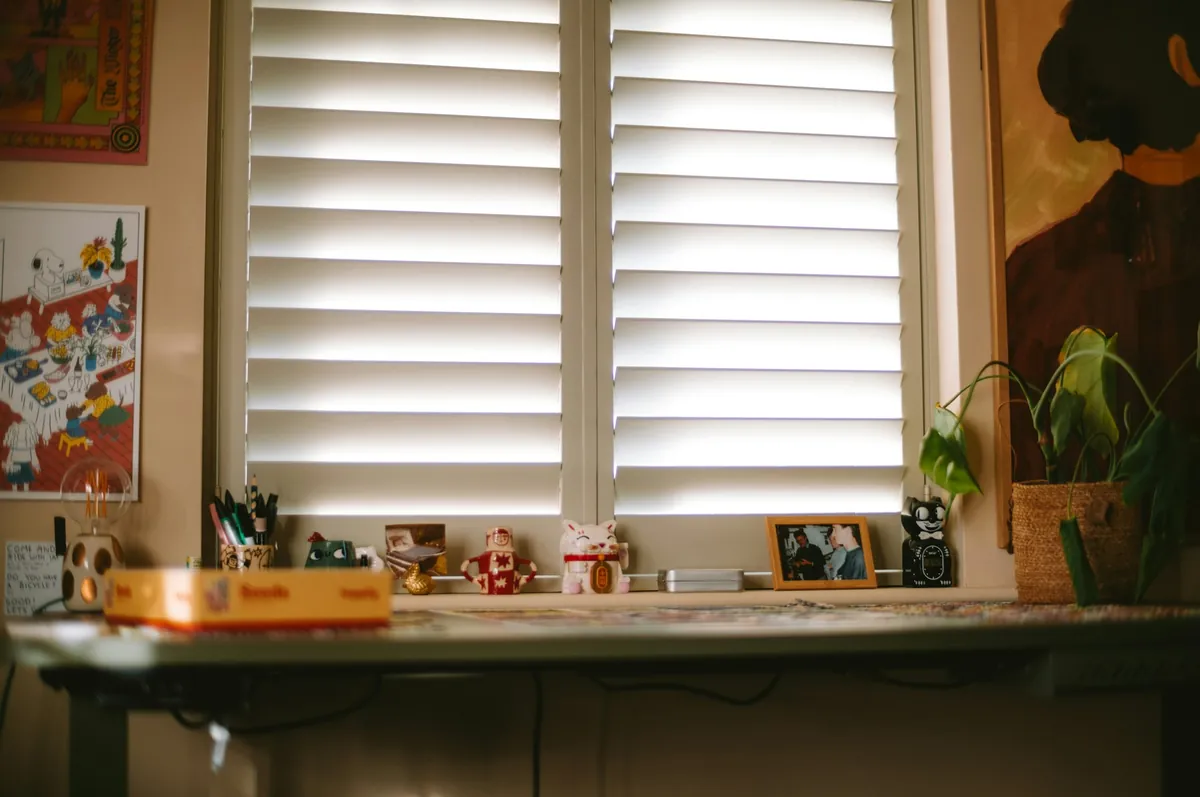
Matched shutters for the paired double-hung windows of a center-hall house, so every window on the front reads the same.
Shutters under drapery
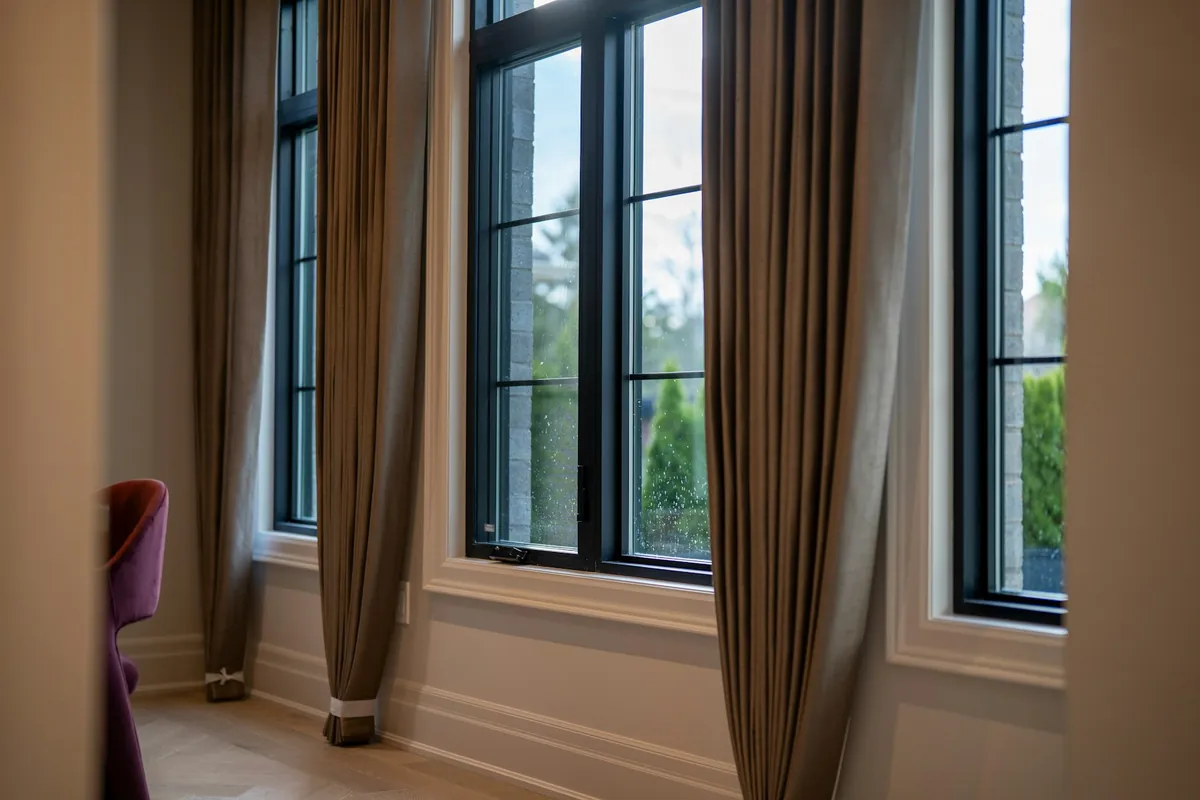
In a formal living or dining room, side drapes frame the shutter. See our custom drapes in Barrington.
Plantation Shutters in Barrington, RI, Starting with the Louvre
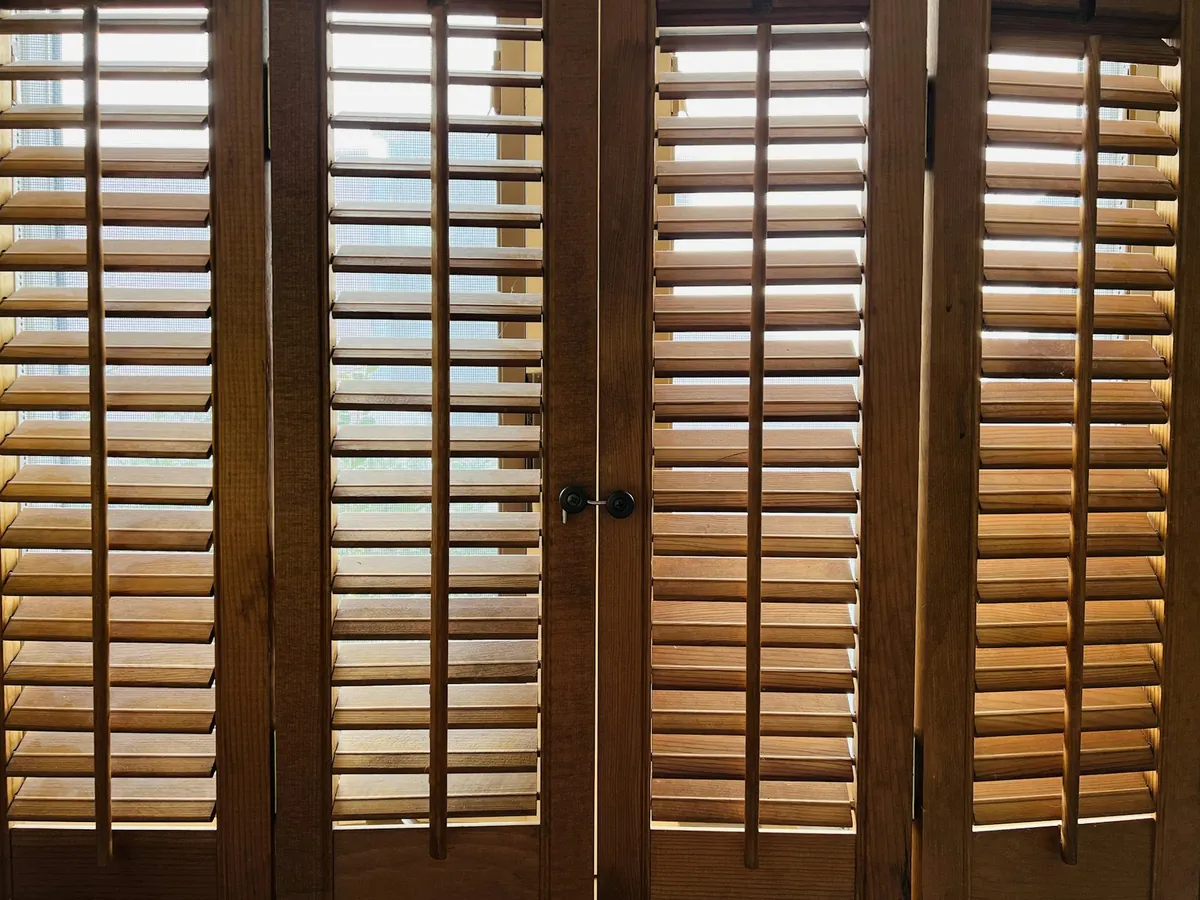
The louvre is the part of a shutter you handle every day: the slat that tilts to let light in, angle it upward or shut it out. Choosing plantation shutters in Barrington, RI begins with its width, because the same louvre that looks right on a broad mid-century window can look crowded on a colonial’s narrow sash.
On the mid-century houses, a wider louvre usually earns its place. Tilted fully open, it leaves bigger gaps between the slats, so more of the yard or the river shows through and the shutter reads as a light frame across the glass rather than a wall. With fewer louvres in each panel, the face of the shutter also looks calmer, which suits the plain lines these houses were designed around.
The colonials tend to go the other way. Their double-hung windows are taller than they are wide, and a narrower louvre gives each panel more slats, which looks balanced on a slim opening and sits comfortably with the traditional trim. It also stands out less from the panel when tilted open, which helps where the sash lock or the window’s own hardware sits close to the shutter.
There is no fixed rule. A colonial with a large rear addition might use a narrow louvre at the front and a wider one in a family room that faces the water. We look at each window, then suggest a louvre for it and explain why.
Low Sills and Long Runs of Glass
The windows that define a Barrington mid-century modern are the hardest to dress with anything off the shelf. They run long, often across most of a wall, and they start close to the floor. Fabric shades of that width are heavy to lift, and blinds of that width stack into a deep bundle at the top of the glass. A shutter avoids both problems, because it has no stack: when the panels are open, the glass is clear from top to bottom.
What a long window needs instead is a sensible panel layout. We divide the width into panels that are wide enough to look substantial but narrow enough to swing without hitting a chair, a radiator cover or the next wall. Panels are hinged in sets so they fold back on themselves and park against the side of the opening. On a very wide run, the shutter may be split into two or three sections, each folding to its own side, with the joins lined up with any posts in the window frame so the louvres look continuous.
Low sills bring one more consideration. A shutter that starts close to the floor sits right beside furniture, so we check where sofas, low cabinets and heating units sit before deciding which way each panel swings. A panel that opens into the room needs a clear space to open into. Where it would collide with something, the hinging is changed or the panel is made narrower.
Frames for a mid-century opening
Many of these windows have little or no trim, just a clean opening in the wall. A flat, plain frame suits that look and keeps the shutter quiet against the glass. Where the opening has enough depth, the frame sits inside it so the shutter is almost flush with the wall. Where the opening is shallow, the frame mounts on the wall face around it, and we size it so it lines up with the ceiling or a nearby door head instead of floating at an odd height.
Center-Hall Colonials and Their Formal Rooms
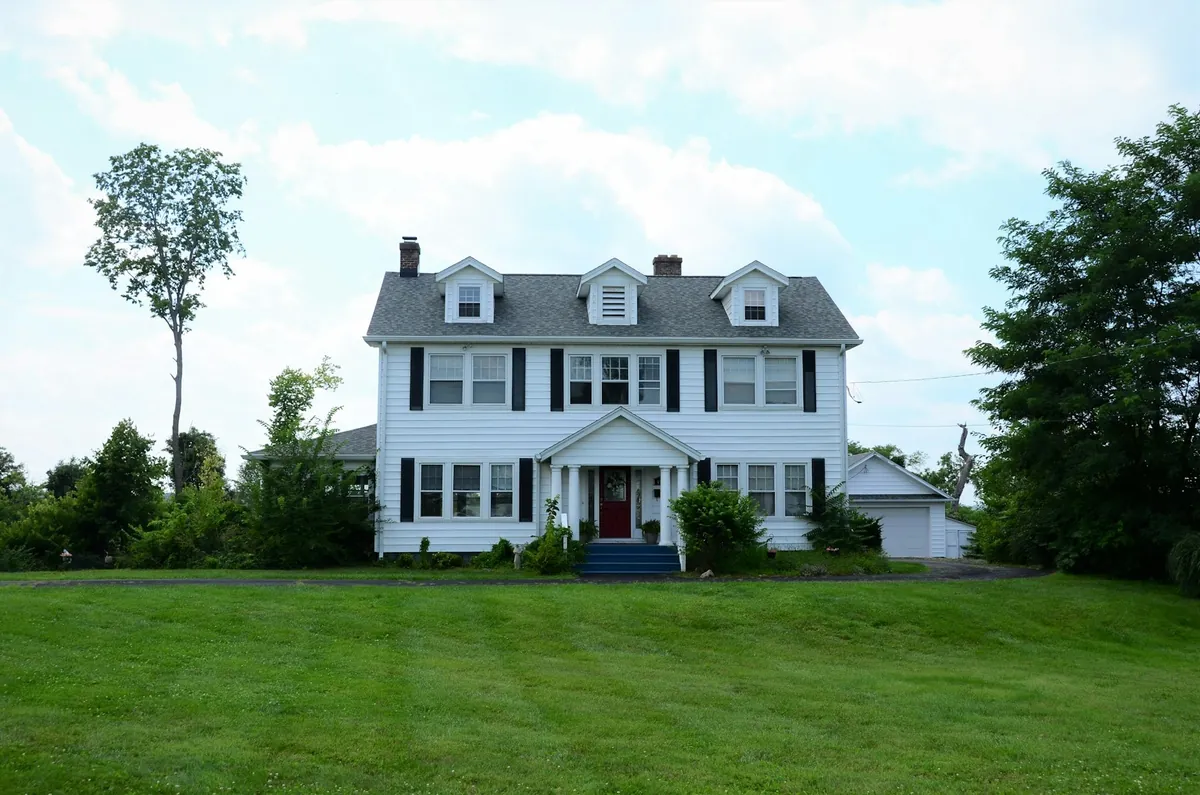
A center-hall colonial is laid out around its rooms: a living room on one side of the hall, a dining room on the other, each with matching windows. That symmetry is part of the house, and the shutters should respect it. Every window on the front facade gets the same louvre width, the same frame profile and the same finish, so that from Rumstick Road or Nayatt Road the house reads as one considered set.
These windows often keep their original casings, and those casings are worth showing off. Fitting the shutter frame inside the opening leaves the casing fully visible around it, as if the shutter had been part of the house from the start. That only works where the opening is deep enough to hold the frame and let the louvres tilt, so the depth is checked at each window rather than assumed from the first one.
When an old frame has moved over the years and the opening is no longer square, the shutter frame takes up the difference, so the panels still close in a straight line. A frame with a moulded edge sits well beside traditional casings. In a room with plainer trim, a simpler profile is used.
Drapery and shutters together
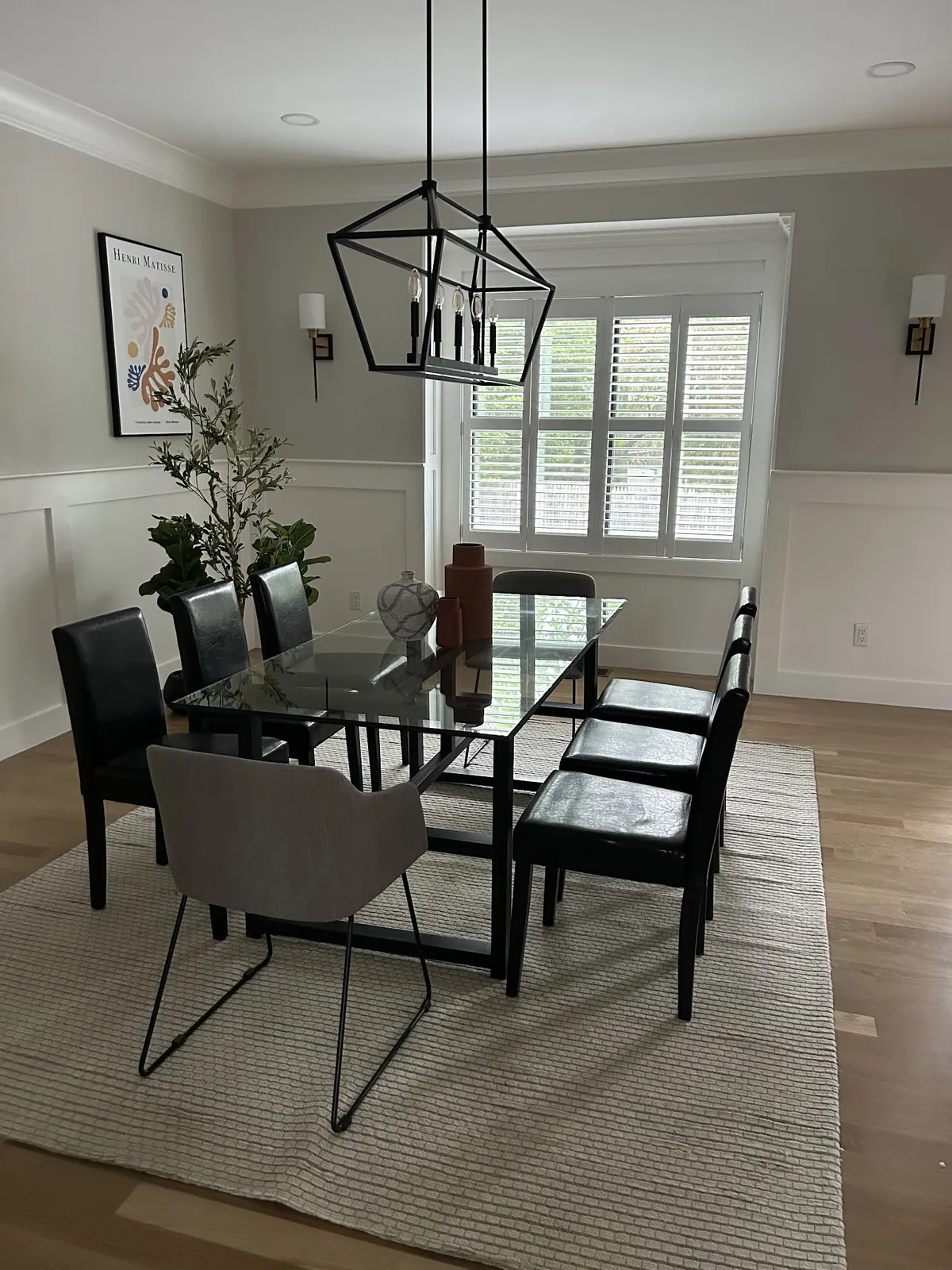
In a colonial’s formal living room or dining room, drapery is expected rather than optional. A bare shutter can look unfinished in a room with high ceilings, crown moulding and good furniture. The usual answer is to layer: the shutter handles privacy and light, and side drapes hang beside it for colour, softness and a finished frame around the window.
That layering only works if the two are planned together. The drapery rod has to sit high and wide enough that the panels hang clear of the shutter, so it can swing open without catching the fabric. The drapes need to stack beside the window, not across it. Because Window Works makes drapery as well as shutters, we measure for both on the same visit and plan the rod position around the shutter’s swing.
Rooms That Face the Barrington River
The rooms that look over the Barrington River, or over the water at the end of a Nayatt Road lot, have a particular problem: bright, reflected light for much of the day, especially later in the afternoon. A shutter handles it better than most treatments, because the louvres can be angled rather than simply opened or closed.
Tilt the louvres upward and the light is thrown onto the ceiling, which brightens the room without glare on a screen or a table. Tilt them down and you can still see the water below while the bright sky above is cut. When the light is at its strongest, close them fully. A divider rail across a tall panel lets the top and bottom louvres work separately, so you can keep the lower half angled for privacy from a path or a dock and leave the upper half open.
Shutters on these windows also need to open completely. On a fine day the point of the window is the view, and panels that fold flat to the side return the whole of the glass to the room.
Waterside rooms also tend to collect a fine film on the glass and the frames. A painted shutter copes with that well: close the louvres, run a soft duster or a vacuum brush down the panel, then turn them the other way and repeat. A barely damp cloth lifts marks from a painted finish, while a stained shutter is better kept to a dry cloth. If a hinge loosens or a louvre stops holding its angle after a few seasons of daily use, call the store and tell us what you are seeing, and we will say what can be done.
Bedrooms, Kitchens and the Rest of the House
Formal rooms and river views get most of the attention, but the everyday rooms are where shutters often do their best work.
Upstairs in a colonial
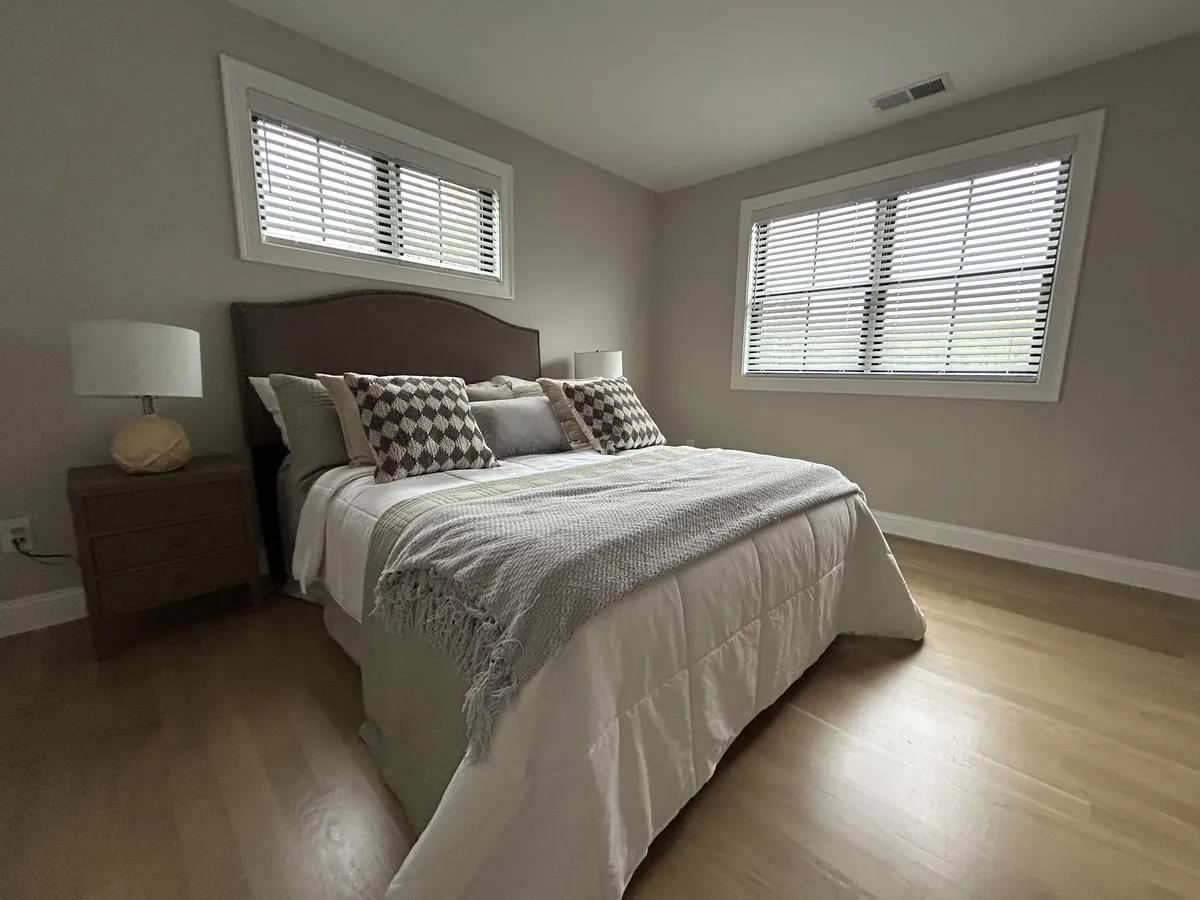
The bedrooms on the second floor of a center-hall colonial usually repeat the double-hung windows of the rooms below, sometimes a little shorter. Plantation shutters for Barrington bedrooms are mostly about the morning: closed louvres, set tight against a well-fitted frame, keep early light down to a soft line, and the panels swing fully open once you want the day in. Because the same windows face the street as the ones downstairs, we match the louvre and finish to the ground floor so the front of the house still reads as a set.
Kitchens and baths
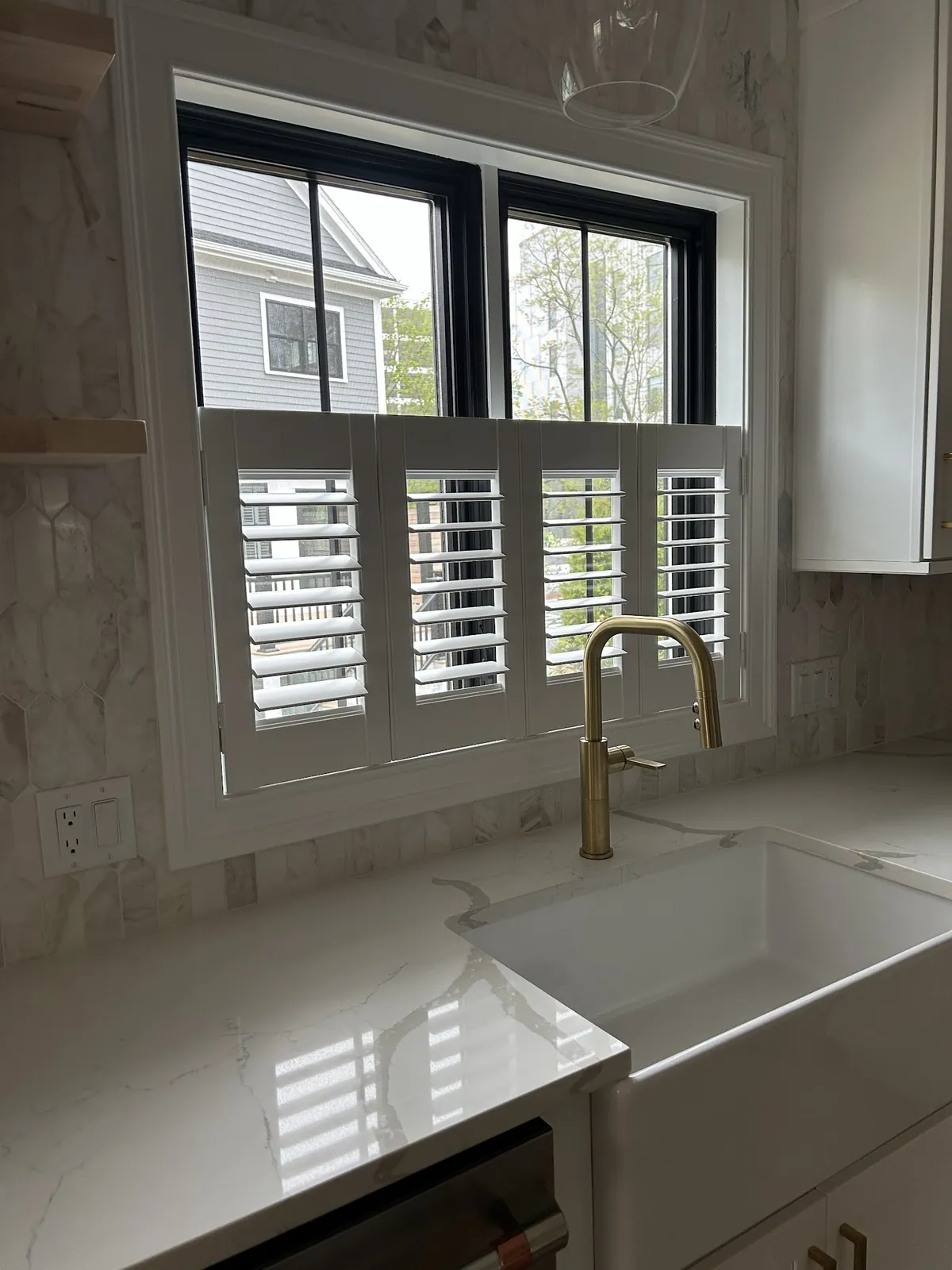
A kitchen window over the sink is a good place for cafe-style shutters, which cover only the lower part of the window. You get privacy at the counter while the top of the glass stays open to the sky. Shutters also stand up to steam and splashes far better than fabric, and a painted panel wipes clean, which makes them a sensible choice in a bathroom too.
The mid-century family room
In a mid-century house the family room is often the room with the longest glass and the lowest sill, opening onto a patio or the yard. Here we sometimes suggest leaving a sliding door to a different treatment and keeping the shutters for the fixed windows beside it, so nothing has to swing across a doorway that is used every day. When the room is planned as a whole, plantation shutters in Barrington, RI can run along the windows while a vertical blind for Barrington handles the slider in a matching colour.
Studies and dens
A stained finish rather than paint suits a study or a den with wood floors, built-in shelves or panelled walls, and it brings the shutter into the room as a piece of joinery. It also shows that a shutter does not have to be white. A painted finish can follow the trim colour of an older colonial when that trim is cream or grey rather than bright white.
From Your First Call to the Last Panel
A shutter is only as good as the numbers it is built from, which is why the visit to your house matters more than any brochure. Here is the order of things for plantation shutters in Barrington, RI.
- Ring the store with the call button or fill in the form, mention the rooms on your list, and we set up a free quote.
- One of our specialists visits the house. Each opening is measured across and down in more than one place, its depth is noted, and any lean in the frame is recorded.
- While measuring, the specialist looks at what lives around each window: a sash lock, a crank, a low bookcase, a heating cover. That decides how the panels are split and which way they swing.
- Louvre width, frame profile, finish, divider rails and the tilt rod are settled with you. To handle the samples, call in at the Swansea showroom.
- A written quote follows, window by window, so nothing is left vague.
- Each shutter is built to the figures taken at your house.
- On fitting day our installers hang every panel, set the hinges so it closes true, make sure the louvres turn evenly, and walk you through using them.
Through all of it you deal with the same small store, and we stay in contact until the work is finished to your satisfaction.
Tilt rods and finishes
Louvres are tilted with a rod. A visible rod down the front of the panel is the traditional look and suits a colonial. A rod hidden at the back gives a cleaner face that many people prefer on a mid-century window. Most shutters are painted white or off-white to match trim, but a painted finish can also follow a wall colour, and a stained finish suits a study or a den with wood floors or panelling.
Why Barrington Homes Choose Window Works
We opened in Swansea in 1988 as a family business, and the second generation runs the store today. Over 37 years of fitting windows across the SouthCoast and the East Bay of Rhode Island means Barrington, a short drive across the state line, is familiar ground.
- Window treatment specialists with long experience, not order takers
- Measurements taken at your windows, never guessed from a photo
- Our own installers hang and adjust every panel
- Regular contact from us from the quote until the work is complete
- Warranties available on what we supply
At the showroom you can swing a panel, try a tilt rod and hold two louvre widths side by side before deciding. Norman shutters are on display there too.
Shutters are one part of what we make for Barrington houses. Every service we offer in town is on our window treatments for Barrington page, and the full story on louvres, frames and finishes is on the main plantation shutters page.
Questions from Barrington
Can shutters cover the long, low windows in a mid-century house?
Yes. The width is divided into hinged panels that fold back to the sides, and the layout is planned around furniture and heating near the low sill.
Will shutters hide the original casings on my colonial?
Not when the frame is fitted inside the opening, which leaves the whole casing visible. We check that each window is deep enough first.
Do I still need drapes in a formal dining room?
Many colonial dining rooms look best with both. The shutter handles privacy and light, and side drapes add colour and a finished frame. We plan the rod so the panels swing clear.
Which louvre width suits a room facing the river?
Usually a wider louvre, which opens more of the view when tilted flat. A divider rail lets you set the top and bottom halves differently.
Can one room have shutters and another room blinds?
Yes, and plenty of houses mix them. We keep the colour consistent on the windows that face the street so the outside still looks even.
Ready When You Are
The simplest way in is a free quote. Press the call button to speak with the Swansea store about measuring at your house or about installation, or leave your details on the form and we will reply. If you would sooner see the louvres for yourself before anyone visits, the showroom welcomes walk-ins, and directions are on the contact page. Our Google rating stands at 5.0.