
Mill Sash and Newer Colonials in One Town
Lincoln holds two very different sets of windows, and window treatments in Lincoln, RI have to answer both. In Lonsdale and Manville the mill housing still has its original narrow openings, tall and slim, set into walls that were built for workers rather than views. Around Lincoln Woods and Breakneck Hill the newer colonials go the other way: standard sizes, and a lot more of them, room after room down two floors.
Out along Great Road the larger lots add their own mix, with long rooms, wide back windows and houses set well away from the road. A treatment that makes sense in a Manville duplex will rarely be the right one for a colonial full of matching windows, so every order starts with the house itself.
- Narrow mill openings measured one by one
- Matching sets for the many standard windows in newer colonials
- Measured in your home and installed by our own team
Every Service, Made for Lincoln Houses
Plantation Shutters
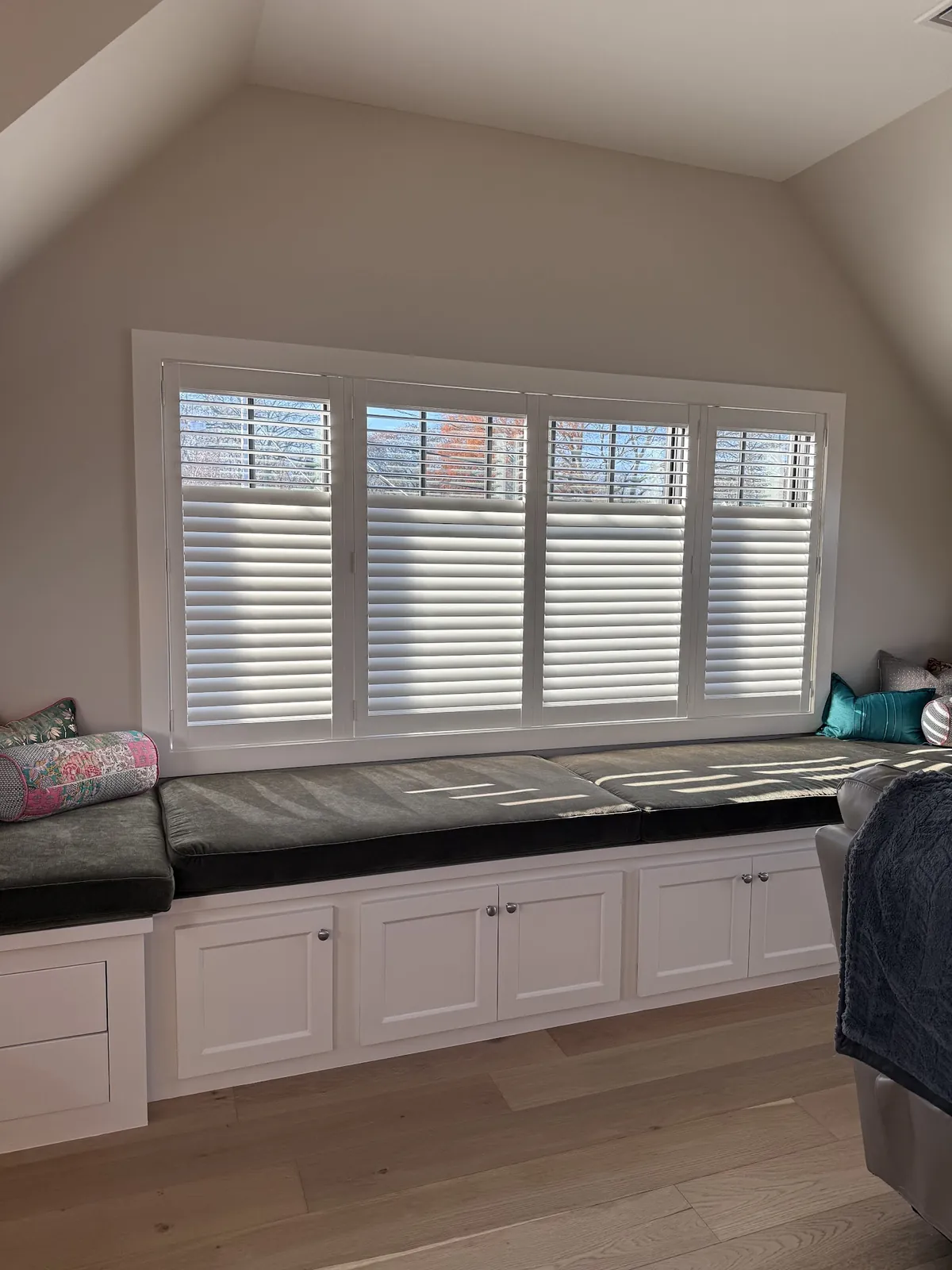
Interior shutters with louvres sized to the frame. They suit the formal front rooms of the Breakneck Hill colonials.
Custom Blinds
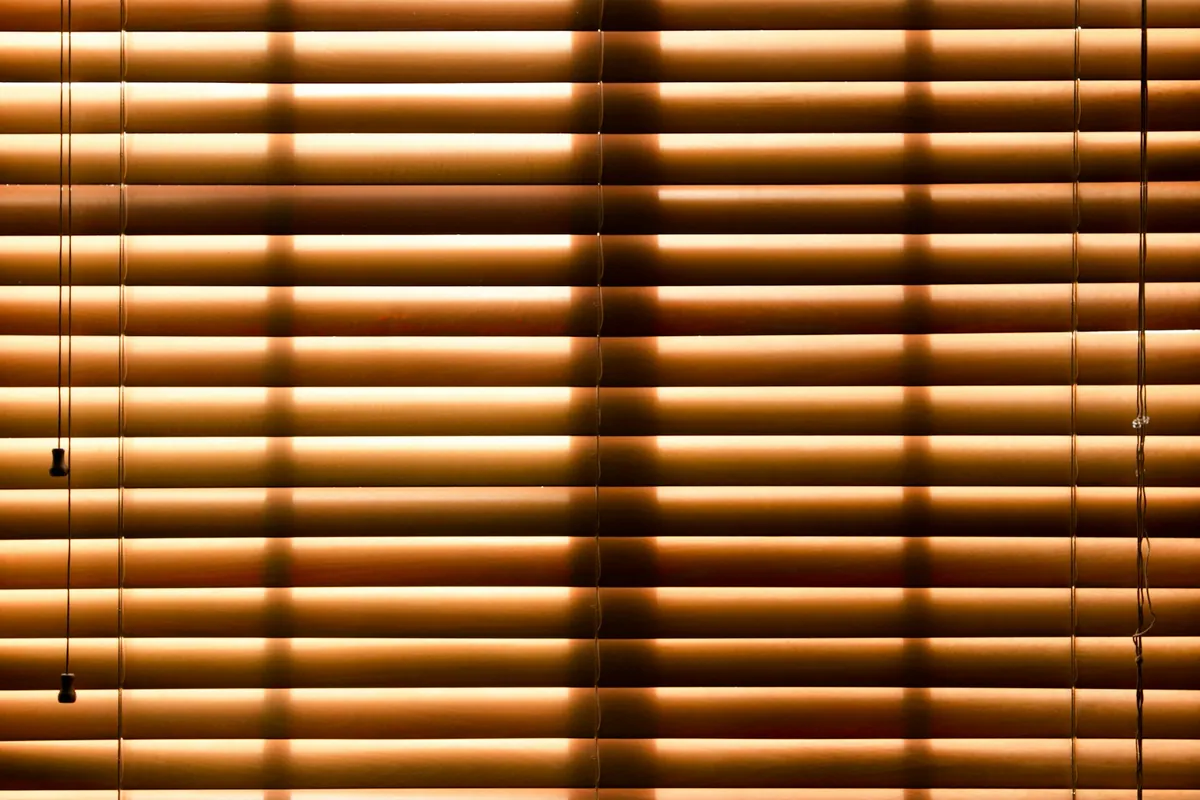
Blinds in wood, faux wood, aluminium or vertical vanes. Slim metal slats keep a narrow Lonsdale window almost clear once raised.
Cellular Shades
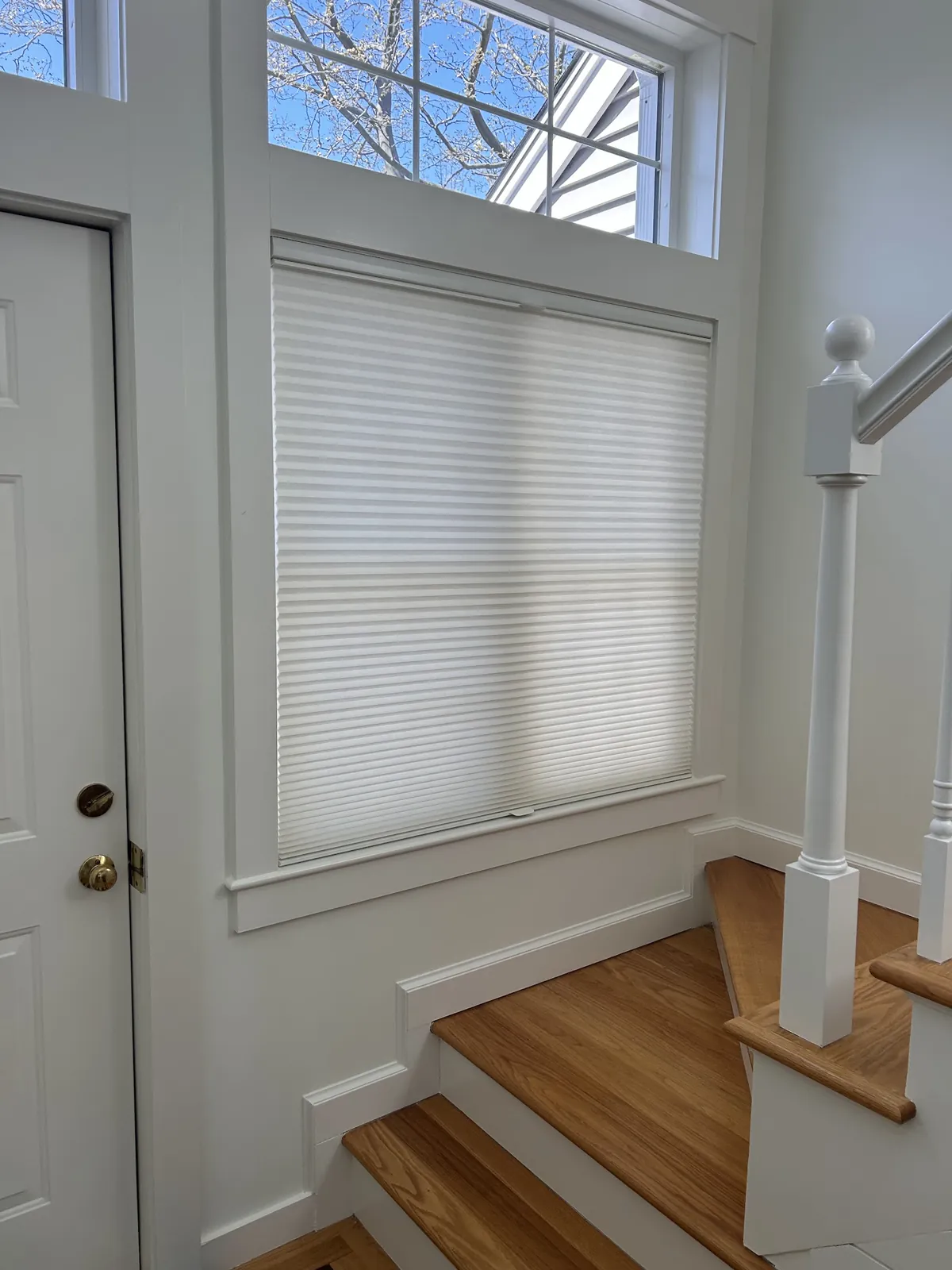
Honeycomb fabric, single or double cell, that keeps a pocket of still air against old mill glass where a draught creeps in.
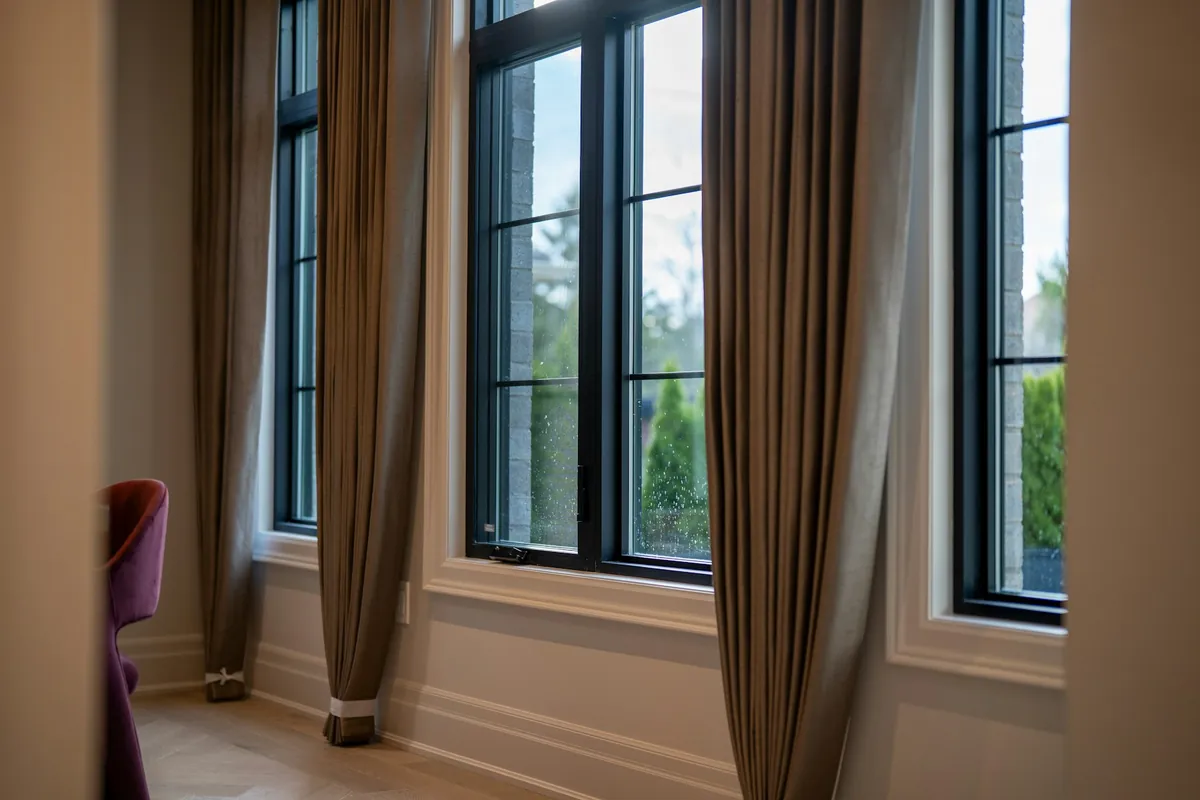
Drapes and Curtains
The store’s specialty. Lined, floor-length panels bring warmth and scale to a long Great Road living room.
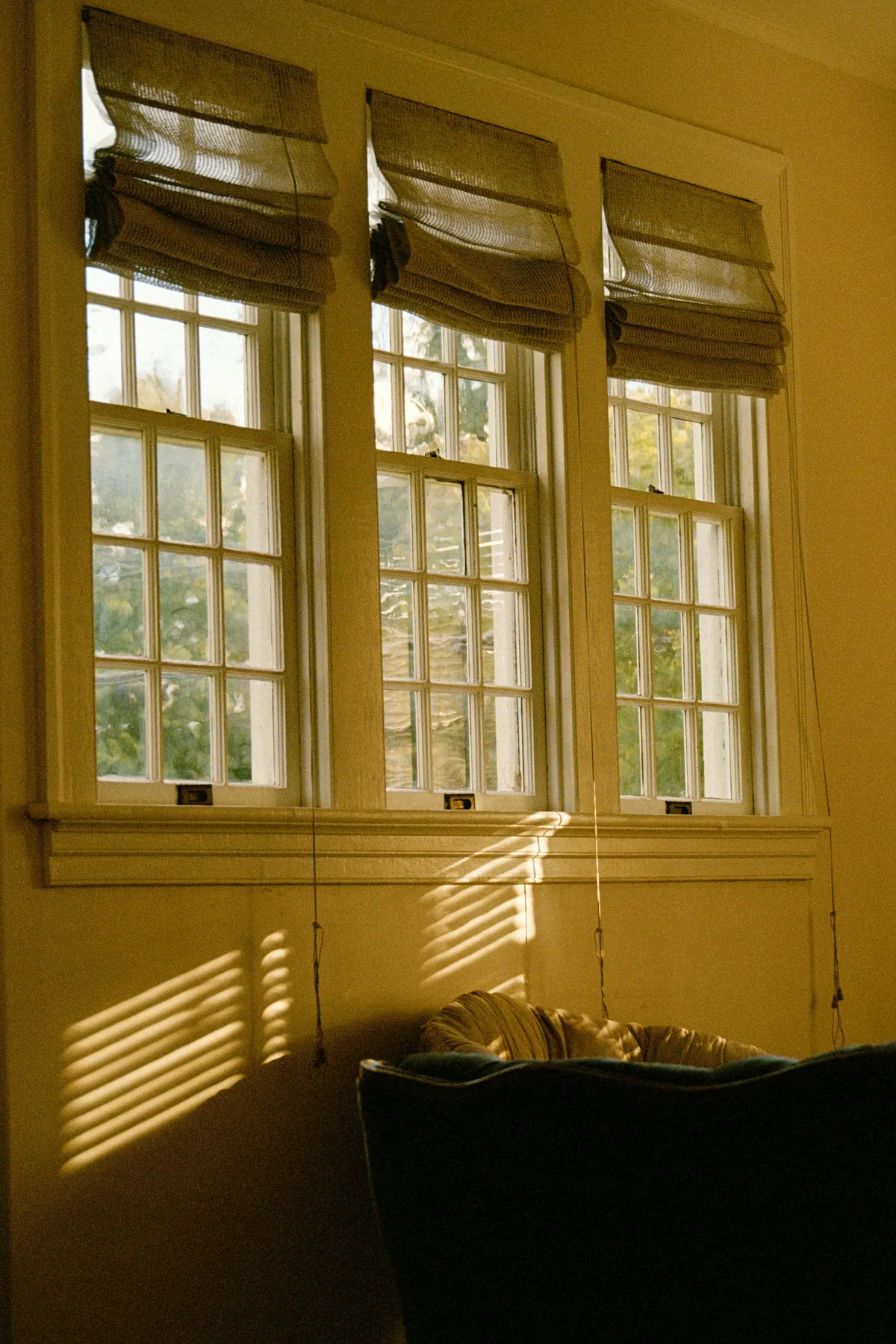
Roman Shades
Folded fabric, relaxed, hobbled or flat, that softens the dining room at the front of a newer colonial.
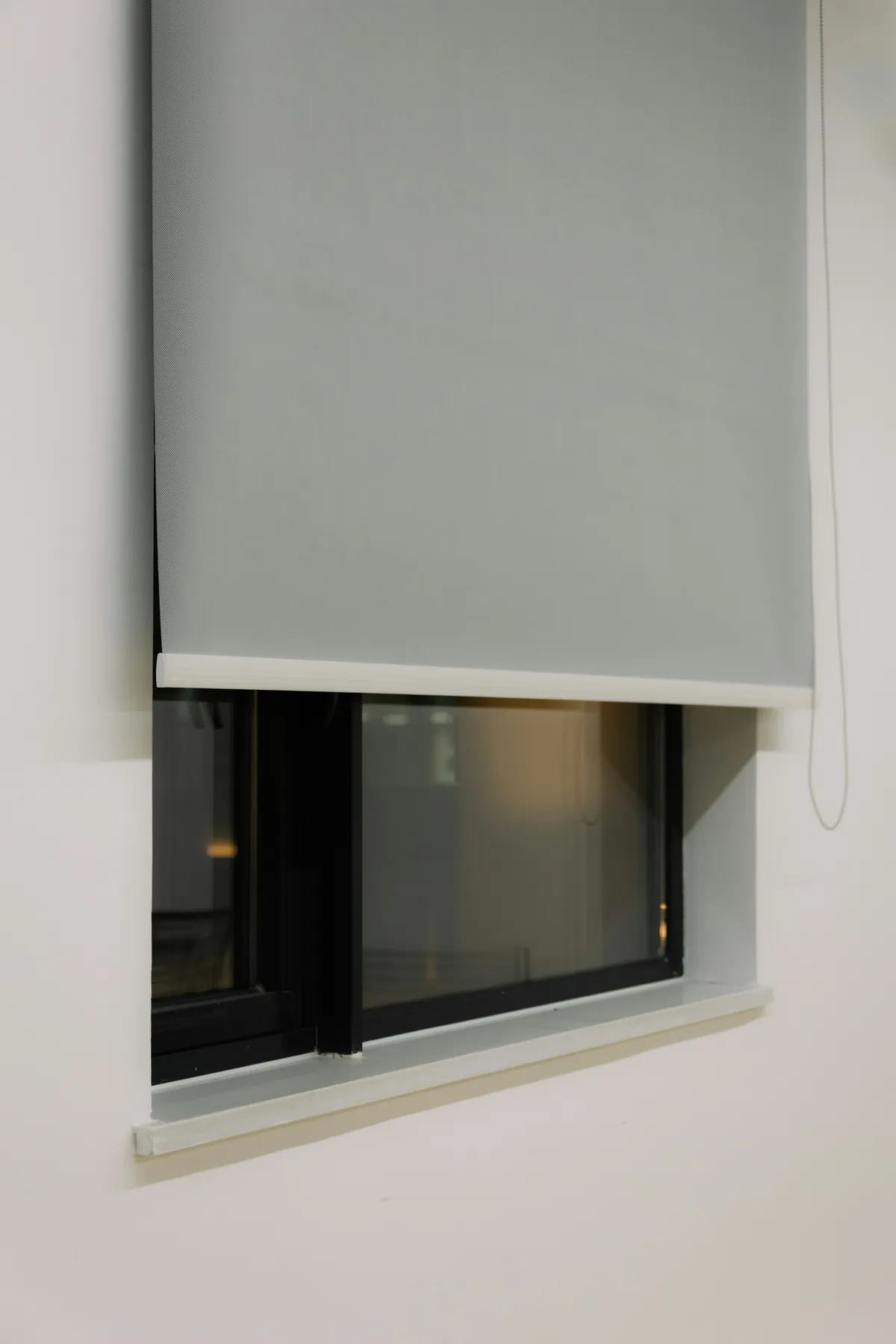
Roller Shades
Plain rollers or solar screens, easy to repeat across a row of identical bedroom windows upstairs.
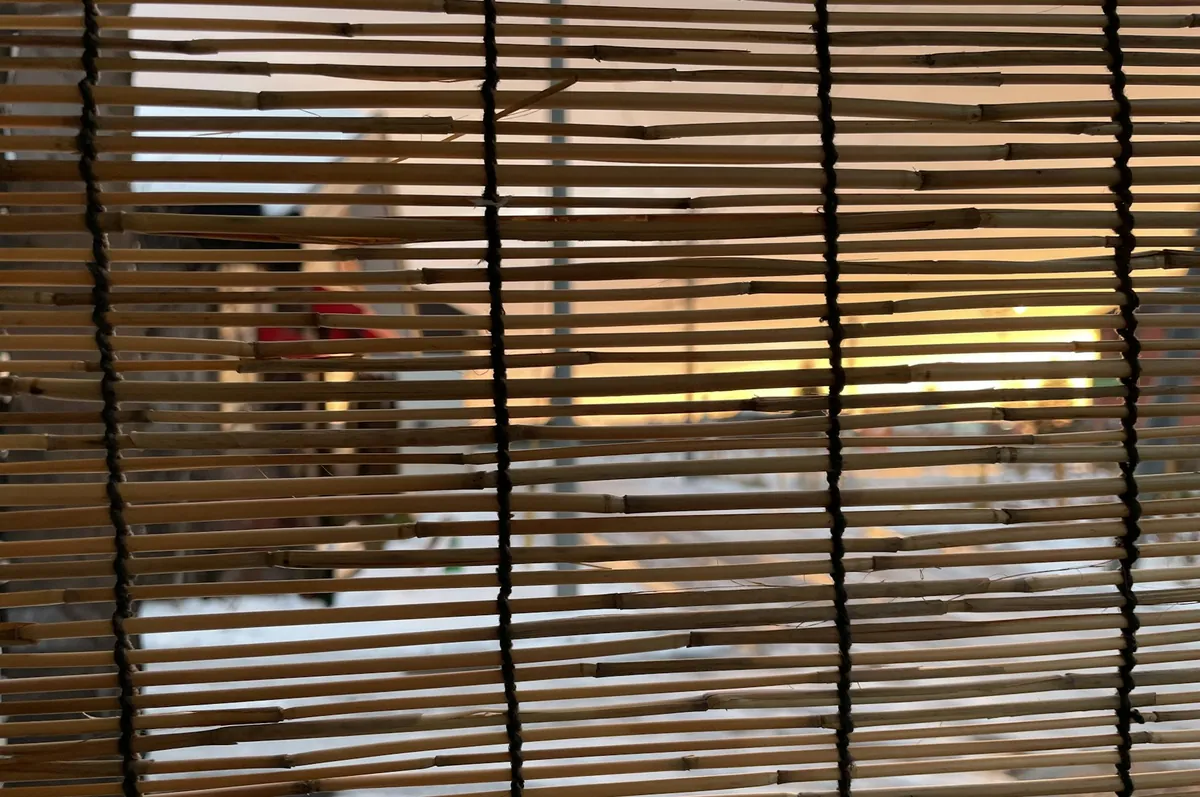
Woven Wood Shades
Grass and wood weaves, lined or unlined, for a back room that looks out into the trees.
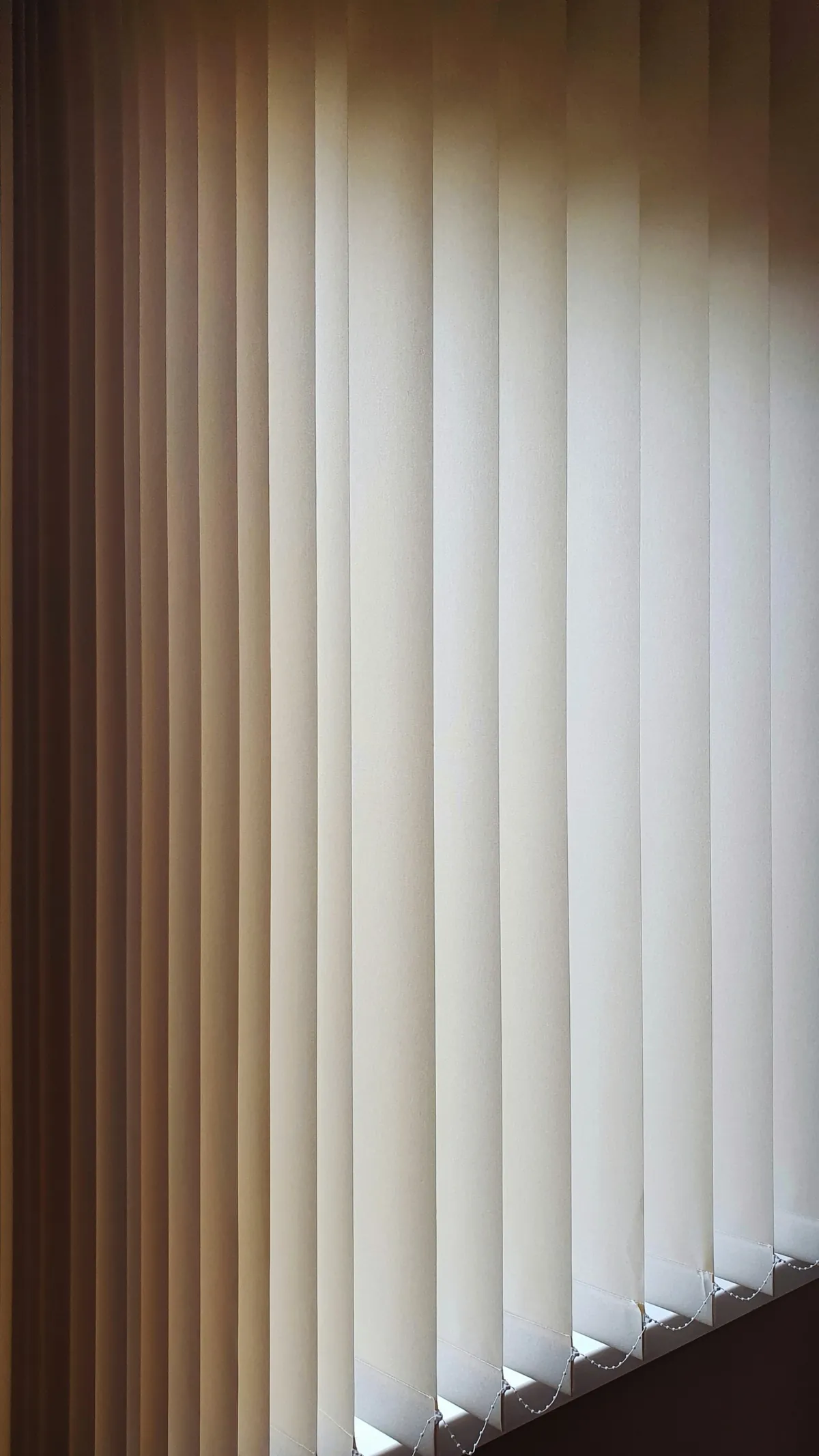
Vertical Blinds
Vanes or sliding panel tracks across the deck doors at the back of many newer Lincoln houses.
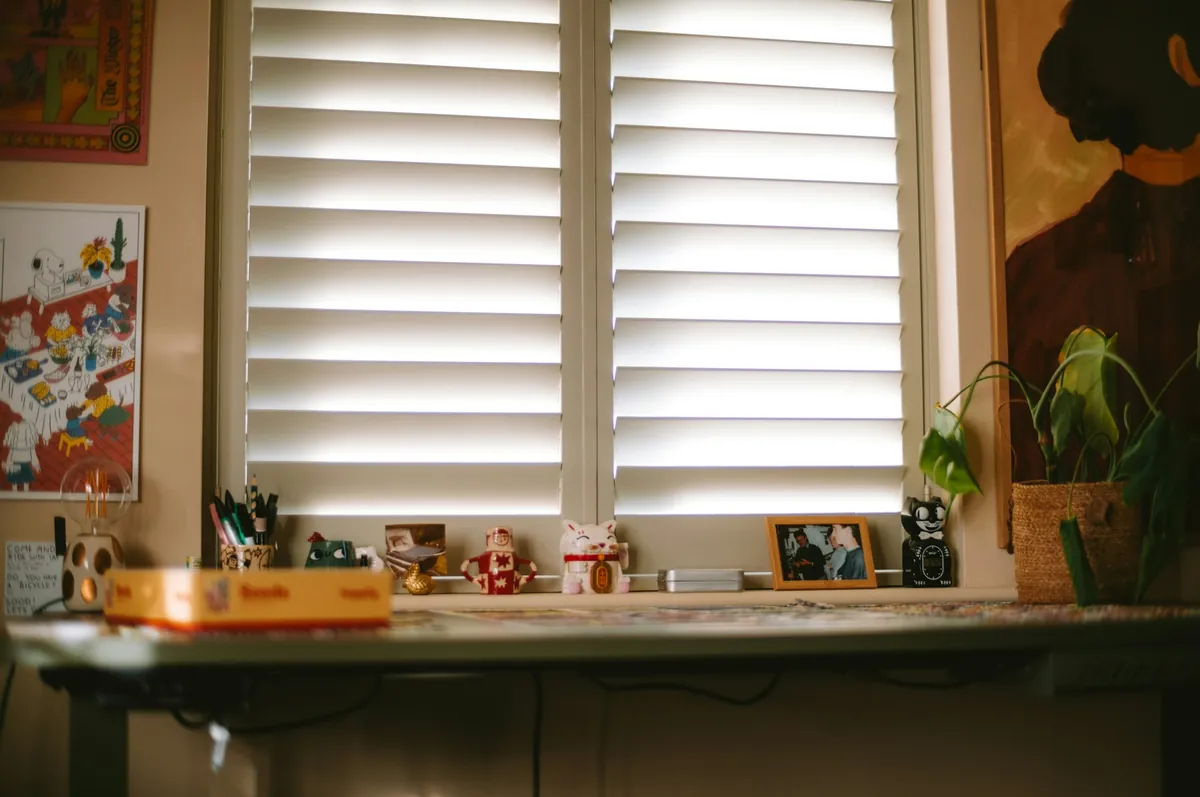
Norman Window Fashions
Norman blinds, shades and shutters for Lincoln windows, set out to compare on the Swansea showroom floor.
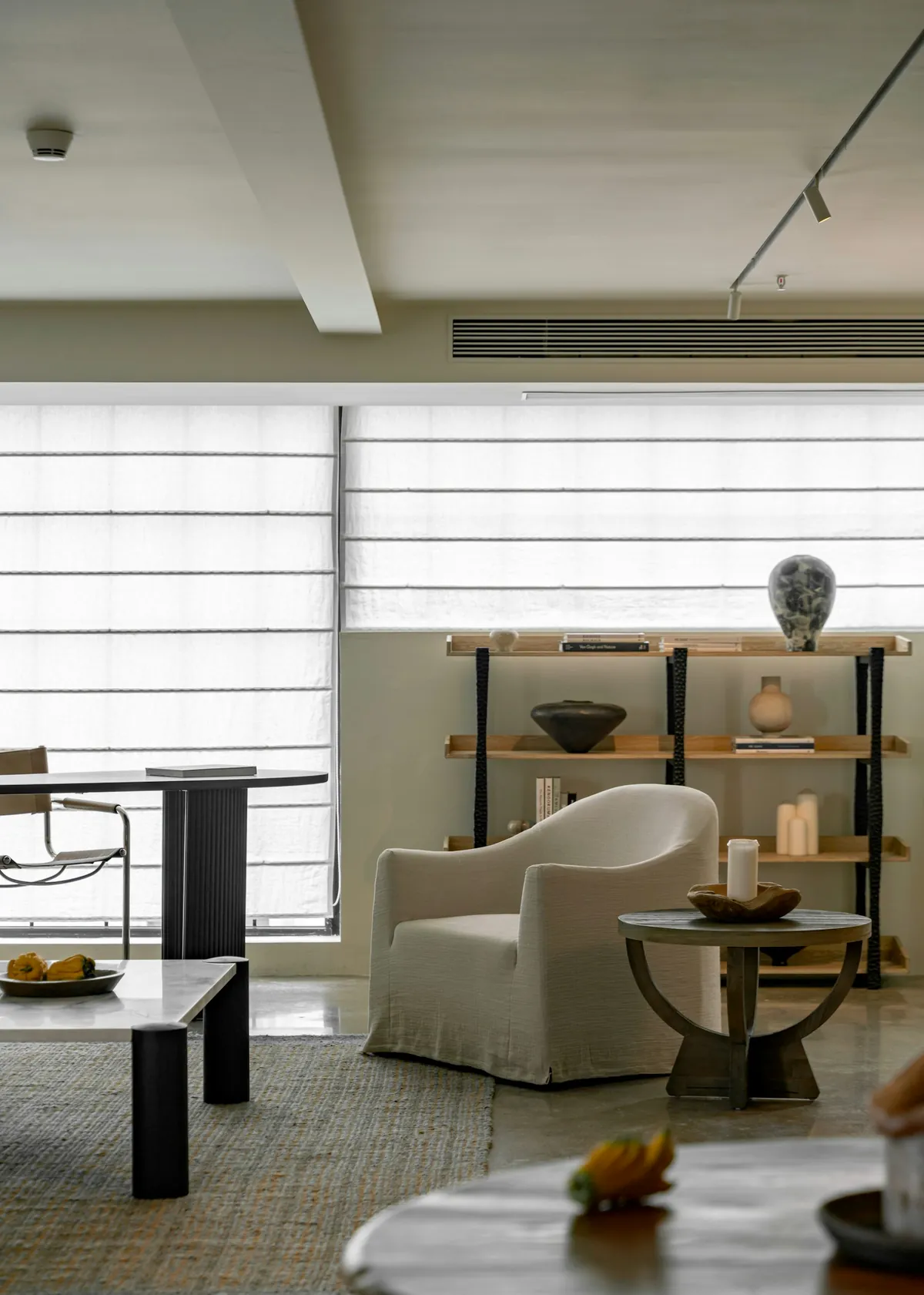
Motorized Blinds and Shades
Lower a high stair window shade from a handheld remote or a switch by the door, with no ladder and no pole.
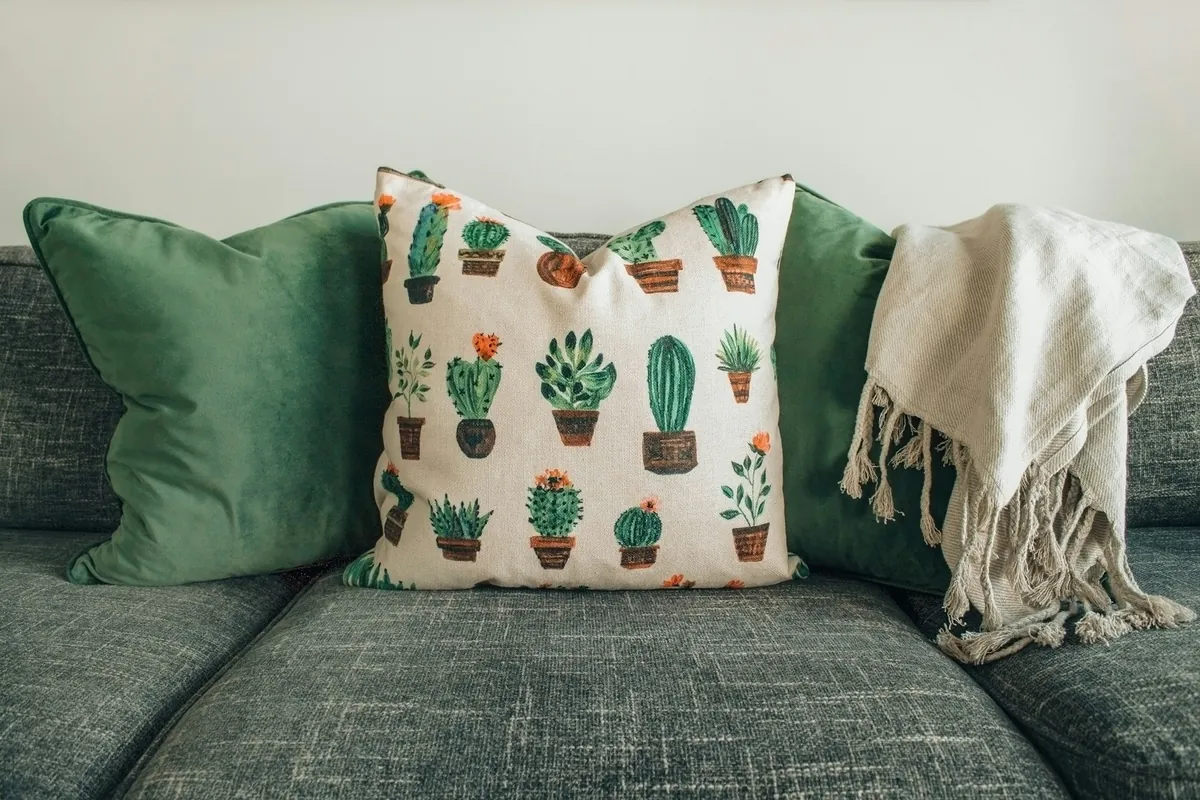
Custom Fabric Decor
Pillows and duvet covers, plus some upholstery, sewn from cloth that echoes the drapes or shades in the same room.
How We Approach Window Treatments in Lincoln, RI
Most of the choices behind window treatments in Lincoln, RI come down to which part of town the house is in and when it was built. A mill house and a new colonial can be a short drive apart and share almost nothing at the glass. Below is how we handle each kind of house, how to think about a large order with many matching windows, and what happens once you book.
Lonsdale and Manville: the original narrow openings
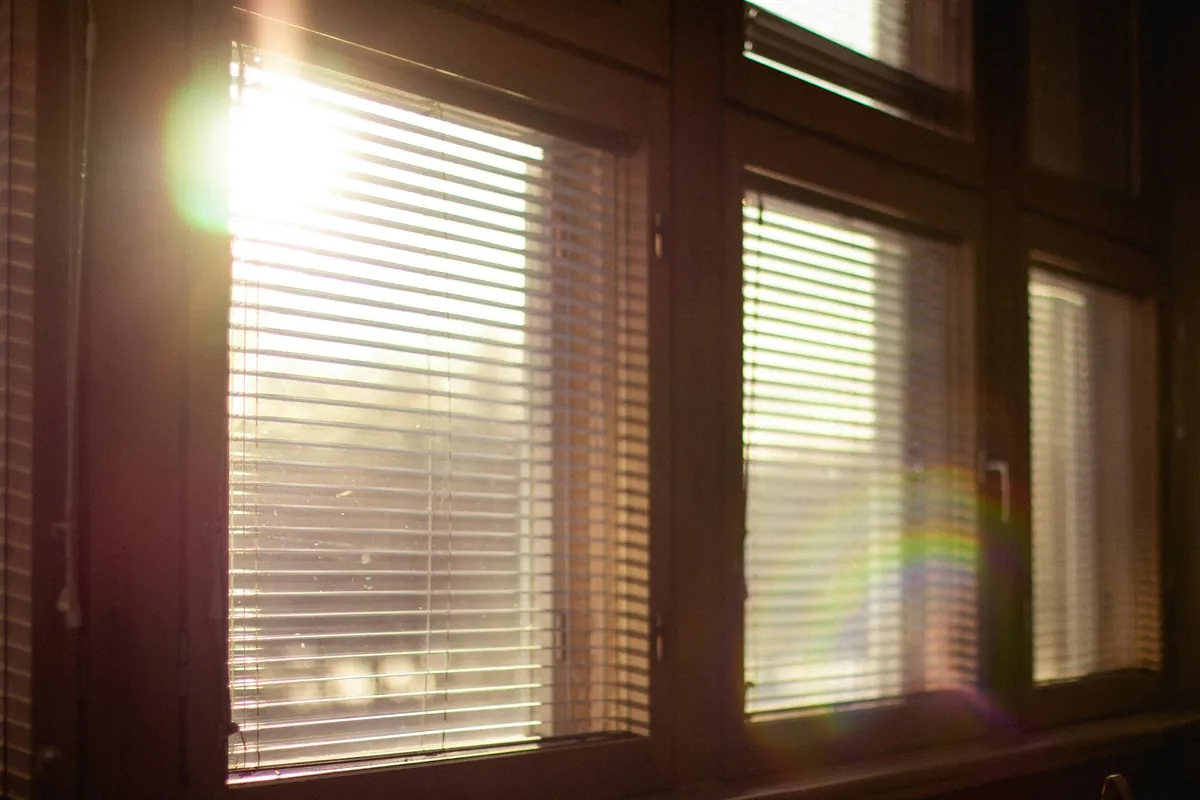
The mill housing in Lonsdale and Manville was built close and built plain. Windows are narrow, often taller than they are wide, and many still sit in their first frames. Trim is simple but worth keeping on show, and the sills tend to be shallow. Over the years a lot of these openings have ended up with a blind that is slightly too wide, screwed to the face of the trim, or a curtain rod that hides half the frame.
A treatment made to measure fixes that. We check each opening separately, because in an older house no two windows are quite the same, even when they look identical from the street. Where the frame is deep enough, an inside mount keeps the trim visible and makes a narrow window look intentional rather than squeezed. Where it is not, the headrail is sized to the trim so the treatment lines up with the woodwork.
For these windows the slim treatments work best. Aluminium blinds stack small, so a raised blind leaves most of the glass clear. Cellular shades fold into a compact stack and add a layer of still air between the room and an old pane that is not as tight as it once was. Roller shades in a light filtering fabric soften a window that faces straight onto the next house without making the room dark.

Privacy where houses sit close
In the mill neighbourhoods, houses often face each other across a narrow gap or sit tight to the sidewalk. That makes privacy the first question for front rooms and bedrooms. The usual answer is a treatment that lets light in from above while screening the view at eye level.
A top-down, bottom-up cellular or roller shade does that well: lower the top for daylight and keep the bottom raised for privacy. Horizontal blinds tilted upward do the same job in a more traditional way. For a bedroom on a busy side street, a room-darkening fabric behind a lighter front treatment covers both night and day.
Breakneck Hill and Lincoln Woods: many windows, standard sizes
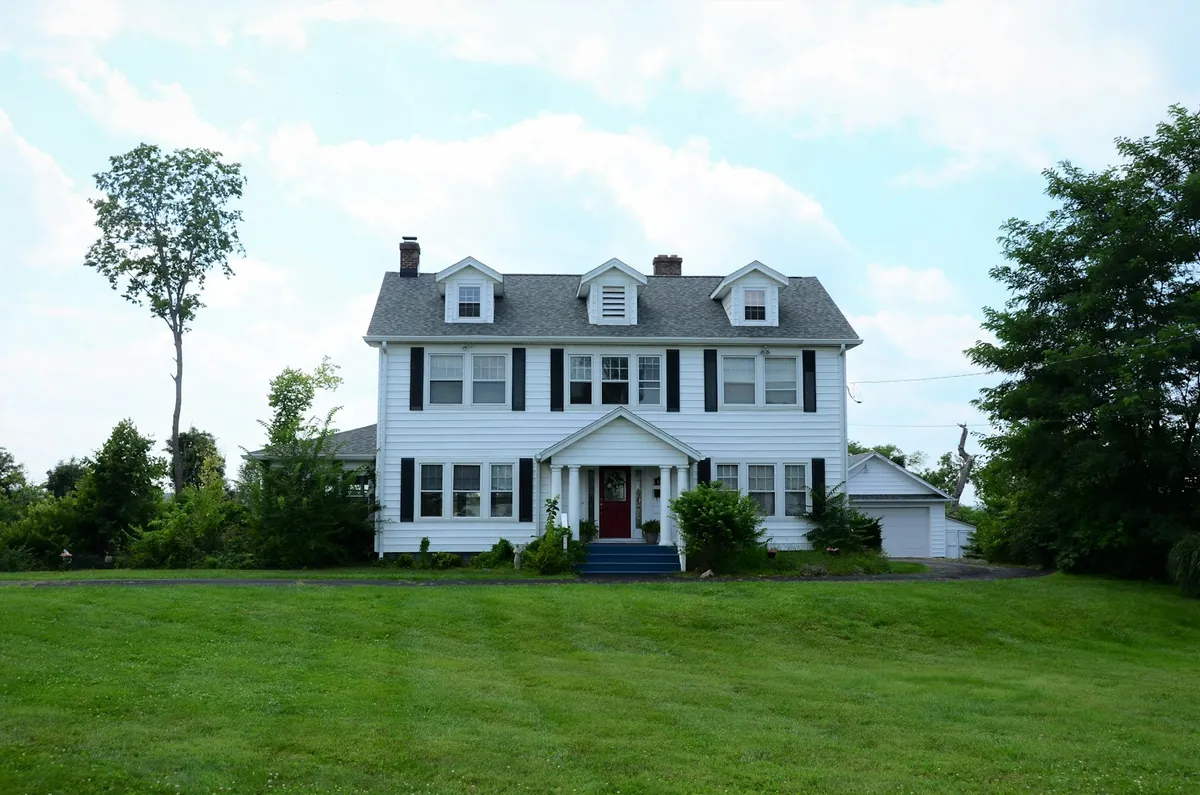
The newer colonials around Lincoln Woods and Breakneck Hill are the opposite problem. Their windows are mostly standard sizes, which makes fit straightforward, but there are a lot of them. A full house can run from a two-storey foyer through a living room, dining room, family room, kitchen and a run of bedrooms, each with its own set of windows.
With that many openings, consistency matters more than any single window. From the street, the front of a colonial reads as one face, so the windows on that side usually look right in the same colour and style, even if the rooms behind them use different treatments. Inside, we tend to suggest a plan room by room: shutters or Roman shades for the formal rooms at the front, blinds or cellular shades for the bedrooms, faux wood or a moisture-friendly shade over the kitchen sink, and something for the sliders at the back.
Many owners of newer houses do the order in stages. That works fine, as long as the first rooms are chosen with the rest in mind, so the later windows can be matched to them.
Foyers, stairs and the high windows
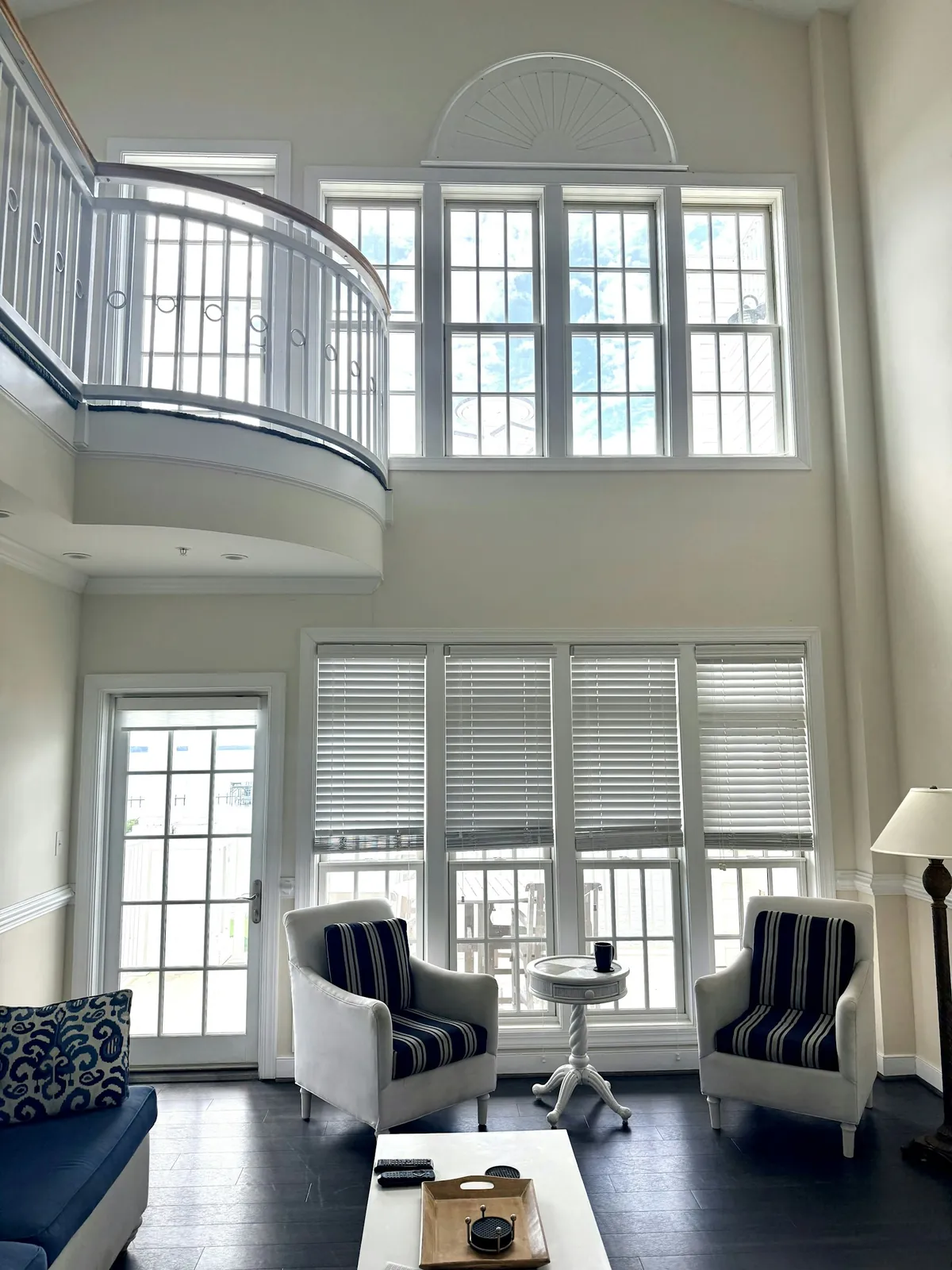
The hardest reach in a newer Lincoln colonial is usually the window over the front door or the tall glass on a stair landing. These windows bring in a lot of light, and they are often left bare because they are awkward to get at.
Motorised blinds and shades solve that with a remote or a wall switch, so the shade can be lowered without a ladder. Cellular shades are a common choice here, since they are light and soften the glare that comes down the stairs in the afternoon. Arched or half-round tops can be covered or left clear, depending on how much of the shape you want to keep.
Great Road lots and the bigger rooms
The larger houses off Great Road tend to have long living rooms, wide back windows and more glass looking out over the lot. Drapery is where these rooms come into their own. Floor-length lined panels on a rod that extends past the frame make a window look larger, add warmth to a big room and soften the echo that comes with hard floors and high ceilings.
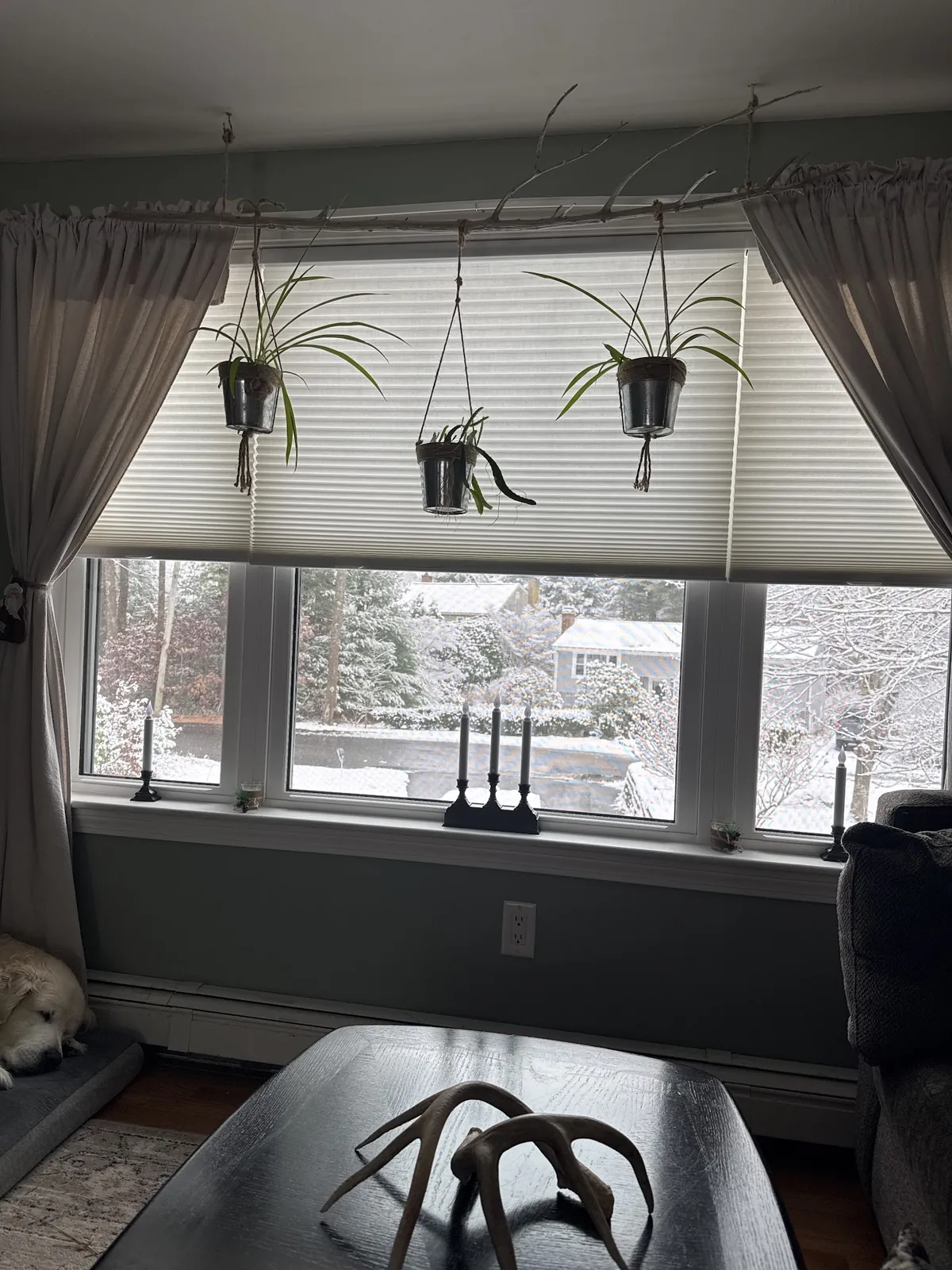
Behind the drapes, a working layer does the daily job: a cellular shade, a roller shade or a woven wood shade that you raise and lower while the panels stay open. Woven wood suits back rooms that look into trees, since the weave filters the light into something warm and textured.
On a big lot the back of the house is often the side with the most glass and the least need for privacy, because nobody looks in from the yard. Those windows can be dressed mainly for light and comfort: a shade that cuts the low evening sun in summer, a lined drape that holds a little warmth on a winter night, and nothing that blocks the view during the day. The front rooms facing Great Road still want a tidy, matching look, so the two sides of the house are often planned differently and then tied together with one colour or one fabric.
Inside mount or outside mount
Every treatment we make is either fitted inside the window frame or mounted on the wall or trim around it, and the choice changes how a room looks. Inside mounts keep the trim on show and give a clean, built-in look. They need enough depth in the frame for the headrail, and they need a frame that is reasonably square, since any lean shows as a gap down one side.
The mill houses are where this decision matters most. Their frames have often moved over the years, and the depth can change from one window to the next. We measure the width at the top, middle and bottom and the height on both sides, then decide window by window. Where a frame is too shallow or too far out of square, an outside mount sized to the trim hides the problem and can make a narrow opening look a little wider.
In the newer colonials, frames are usually square and deep enough, so inside mounts are the normal choice. Outside mounts still have a place there: over a slider, above a window where drapes will hang, or where you want a shade to stack above the glass and leave the whole view clear.
Planning window treatments in Lincoln, RI room by room
A good plan for a Lincoln house starts with a walk through every room, noting which way the windows face, what the room is used for and who sees in from outside. A south-facing family room near Lincoln Woods gets strong afternoon sun and benefits from a solar screen or a light filtering shade. A north-facing bedroom in a Manville duplex needs privacy more than shade. A home office wants glare off the screen without losing daylight.
From there, the plan usually settles into two or three treatment types across the house rather than a different one in every room. That keeps the look calm, makes the controls familiar and lets the street side stay even. We write the plan into the quote window by window, so you can change one room without losing track of the rest.
From First Call to Finished Windows
We keep every order simple and stay in touch with you until the job is done. A typical Lincoln order runs like this.
- Reach the Swansea store through the call button or the form, mention whether it is a mill house or a newer colonial, and book a free quote.
- A specialist comes out to measure. Every opening gets its own width and height readings, and the old mill frames get checked for lean and depth.
- You settle on fabrics, slats and controls, either with sample books on your own table or at the showroom.
- The quote arrives window by window, with the room named against each line.
- Everything is made to those home measurements, nothing to a standard size.
- Our installers fit each piece, run it up and down, and walk you through the controls before they leave.
Choosing the right treatment for each room
With window treatments in Lincoln, RI, it helps to think about what each room needs before thinking about style.
Bedrooms usually want darkness at night and some privacy by day. Room-darkening cellular or roller shades do the first, and a lighter shade or a blind handles the second. Drapes in front add another layer.
Living and family rooms want soft light, a view and privacy once the lamps are on. Shutters, blinds tilted open or a light filtering shade all work, often with side panels.
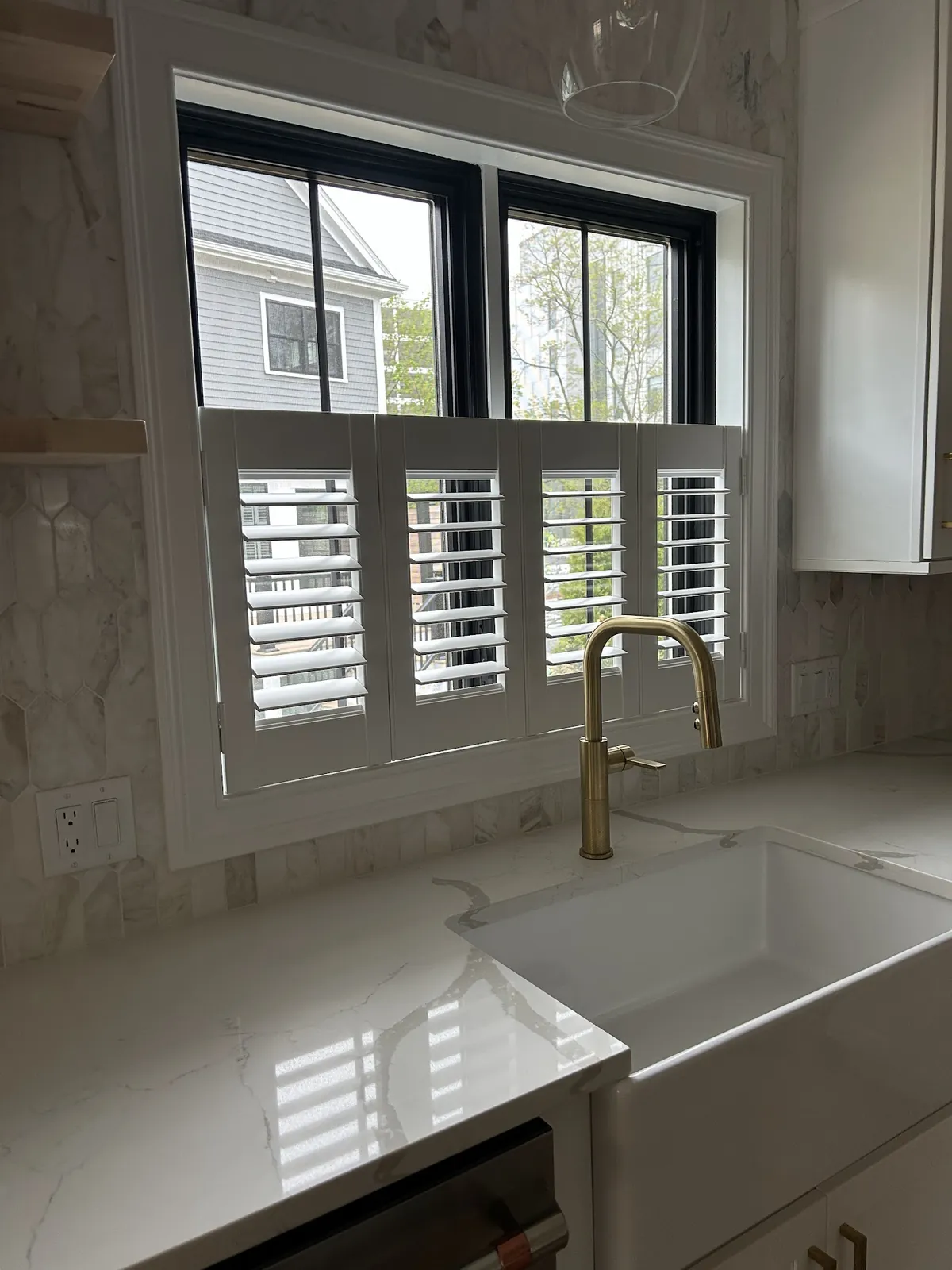
Kitchens and bathrooms need materials that cope with steam. Faux wood blinds, cafe-style shutters and moisture-friendly shades are the usual picks.
Sliders and patio doors need something that draws aside rather than lifts. Vertical blinds and panel tracks are made for these openings.
Matching fabrics across the house
Because Window Works makes drapes and custom fabric decor as well as blinds and shades, the fabric at a window can carry through the room. A Roman shade in a dining room can share its fabric with the seat cushions. A bedroom drape can be repeated in a duvet cover and a pair of pillows. In a newer colonial with an open plan, using one fabric family across the living room and kitchen ties the space together.
Looking after treatments in older and newer houses
Most treatments need very little care. A soft duster keeps blinds and shutters clean, and fabric shades can be vacuumed lightly with a brush attachment. In the mill houses, where windows may still be original, it is worth checking that a blind is not catching on loose sash or a sticking stop.
If a cord frays, a wand stops turning or a headrail sticks on a treatment you already own, our team can look at it. Often it is a repair rather than a replacement.
What Sets Window Works Apart
Lincoln sits at the northern reach of the area we cover, and the work there is done exactly as it is next door to the store. Window Works Blinds Shutters and Shades opened in Swansea in 1988, and the second generation of the family runs it today.
- Mill sash and new colonial windows measured by specialists, on site
- Fitting done by our installers rather than handed to someone else
- Regular updates from the first visit until the last shade is up
- Warranties offered on the products
- Rated 5.0 on Google
See It in the Showroom First
Seeing a fabric or a slat in daylight makes the choice easier than any picture. At the Swansea showroom you can hold samples, try the controls, compare shutter louvres side by side and look through the Norman range in person.
If you are planning a whole colonial, a phone snap of each elevation helps our team suggest a scheme in one sitting. For a single awkward mill window, a rough width is plenty to start the conversation.
Questions from Lincoln
Can you fit the narrow windows in a Manville or Lonsdale mill house?
Yes. We measure each opening on its own, mount inside the frame where the depth allows and size the treatment to the trim where it does not. Slim blinds and cellular shades suit these windows well.
Do you handle a whole colonial at once?
Yes, and we can plan it in stages too. We measure every window, suggest a treatment for each room and keep the street side consistent so the house looks finished from outside.
What can go on a two-storey foyer window?
Motorised shades with a remote or wall switch are the usual answer, so the window can be covered without a ladder. Cellular shades are a common choice for that kind of glass.
Who fits the treatments once they are made?
Our own installers. The same store that measured the house sends the team that hangs everything and checks each piece works.
Is there a charge for a quote?
No, the quote is free. Start with the call button or the form on this page and say roughly how many rooms are involved.
Book Your Free Quote
Whether it is one narrow Manville window or every room of a Breakneck Hill colonial, it starts with a free quote. Tap the call button to talk with the store about measuring and installation, or leave your details on the contact page. Directions to the showroom are there too, if samples come first.
Window Works serves 25 towns across the SouthCoast and the Rhode Island East Bay; you can see them all on our service areas page.