
Big Sash, Old Houses, Made to Measure
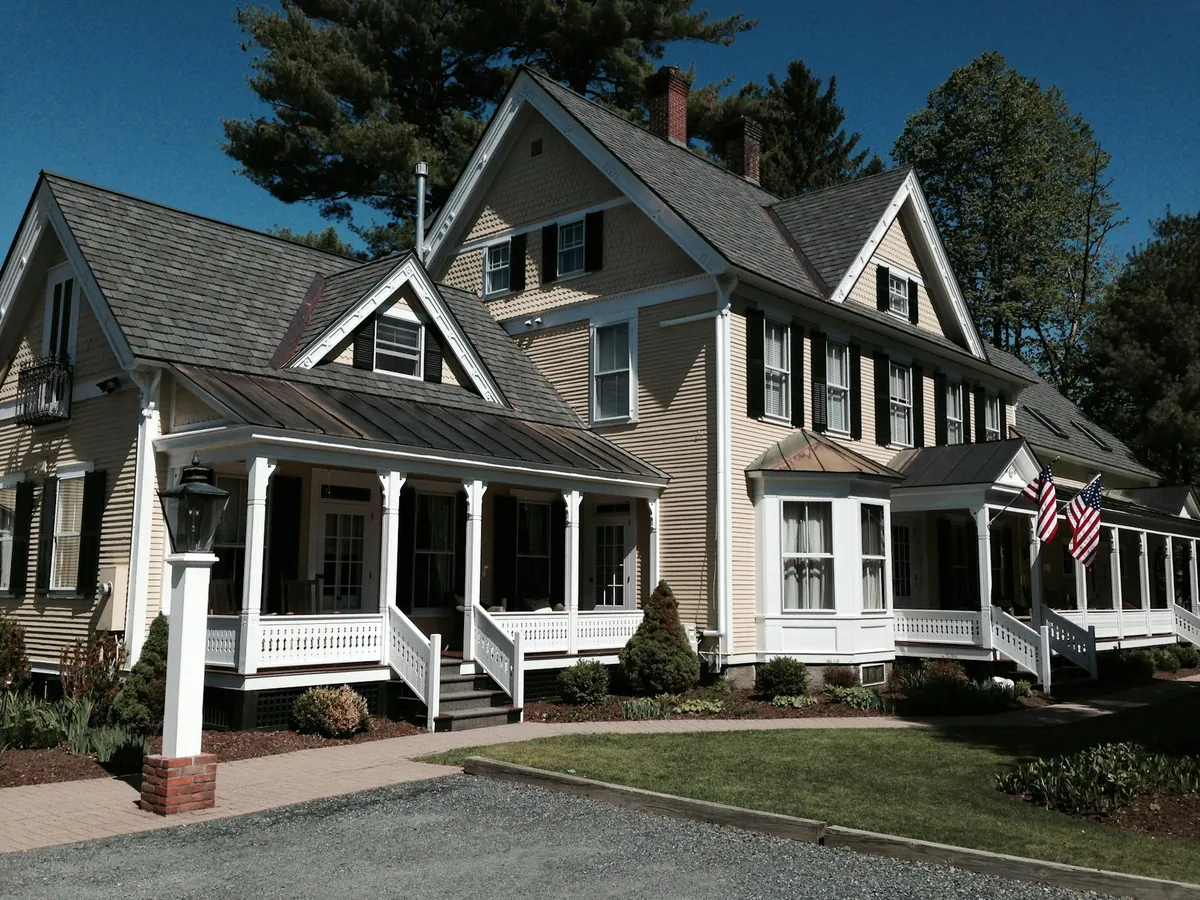
On the Point and up on Historic Hill, Newport’s colonials and shingle-style houses are known for large, multi-pane sash: big windows divided into many small panes. Add historic-district review, and very little here is standard. Openings vary from room to room, frames have moved over the years, and what shows through the glass matters to the street. That is why almost all custom drapes in Newport, RI end up made to measure, and why we start every job at the window itself.
The Fifth Ward’s close-built streets bring privacy to the front of the list. Ocean Drive’s larger properties bring scale, wind and the open sea. Each needs a different hand with fabric.
The drapery on this page is made by Window Works Blinds Shutters and Shades. We opened in 1988, our showroom is in Swansea, Massachusetts, and curtains and drapes have been our particular craft from the first day.
Our Drapery for Newport Houses
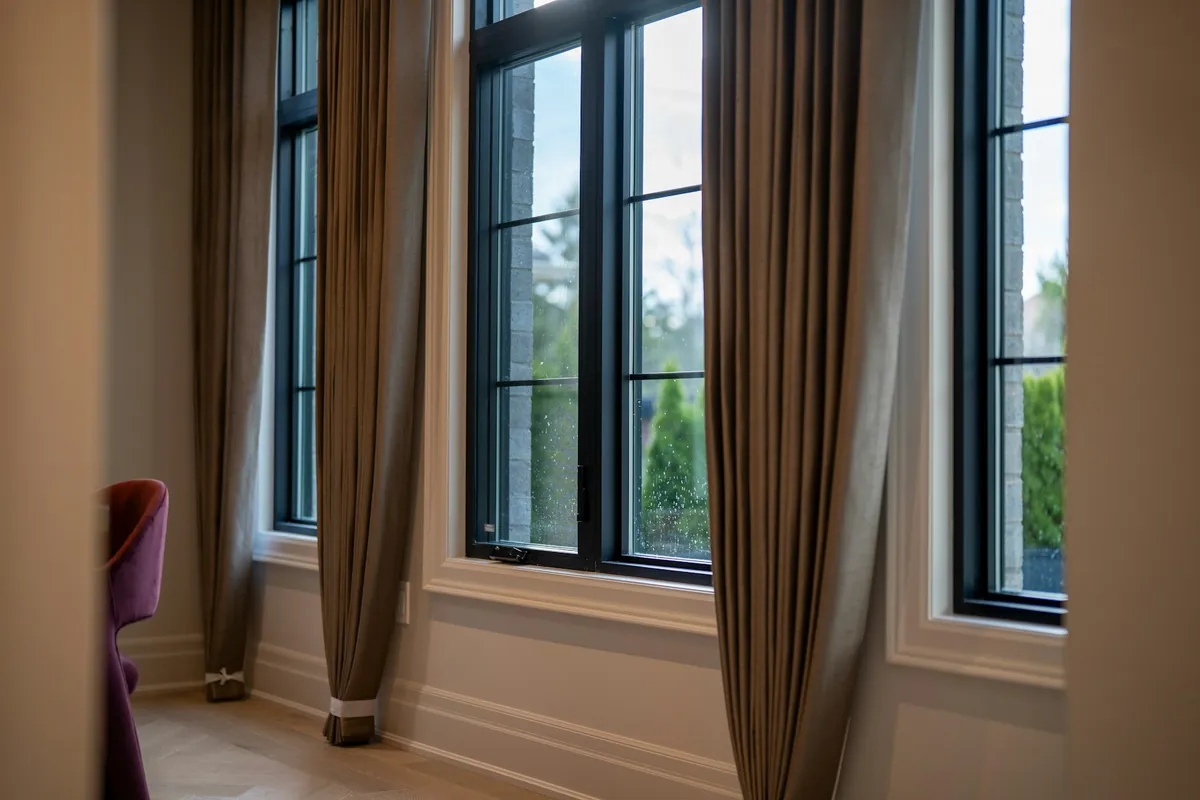
Floor-length panels that frame the grid
Drapes that rest beside the window when open, so a handsome multi-pane sash is framed rather than hidden.
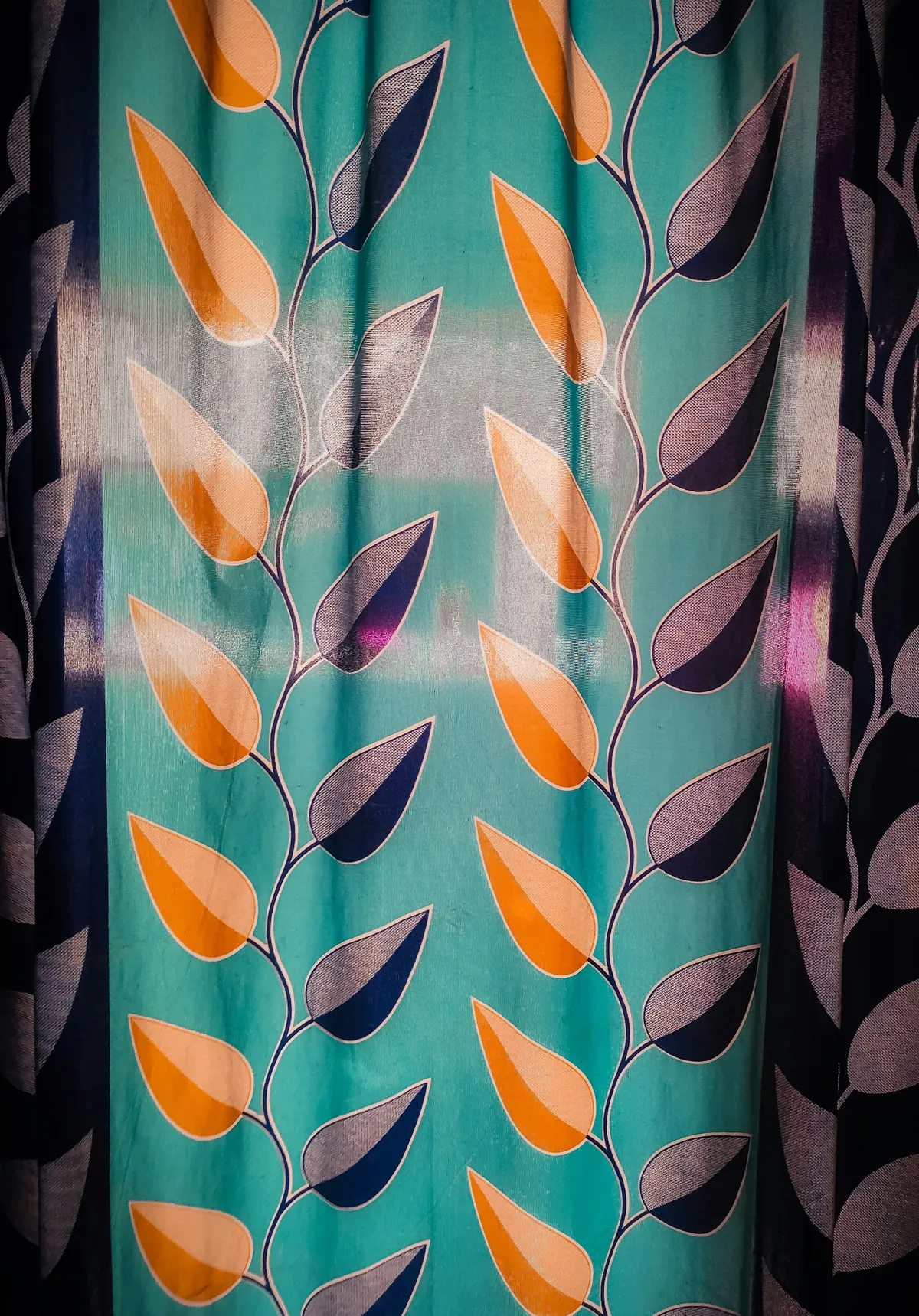
Botanical prints for a period room
Pattern with history in it, sized to the room and matched across each pair.
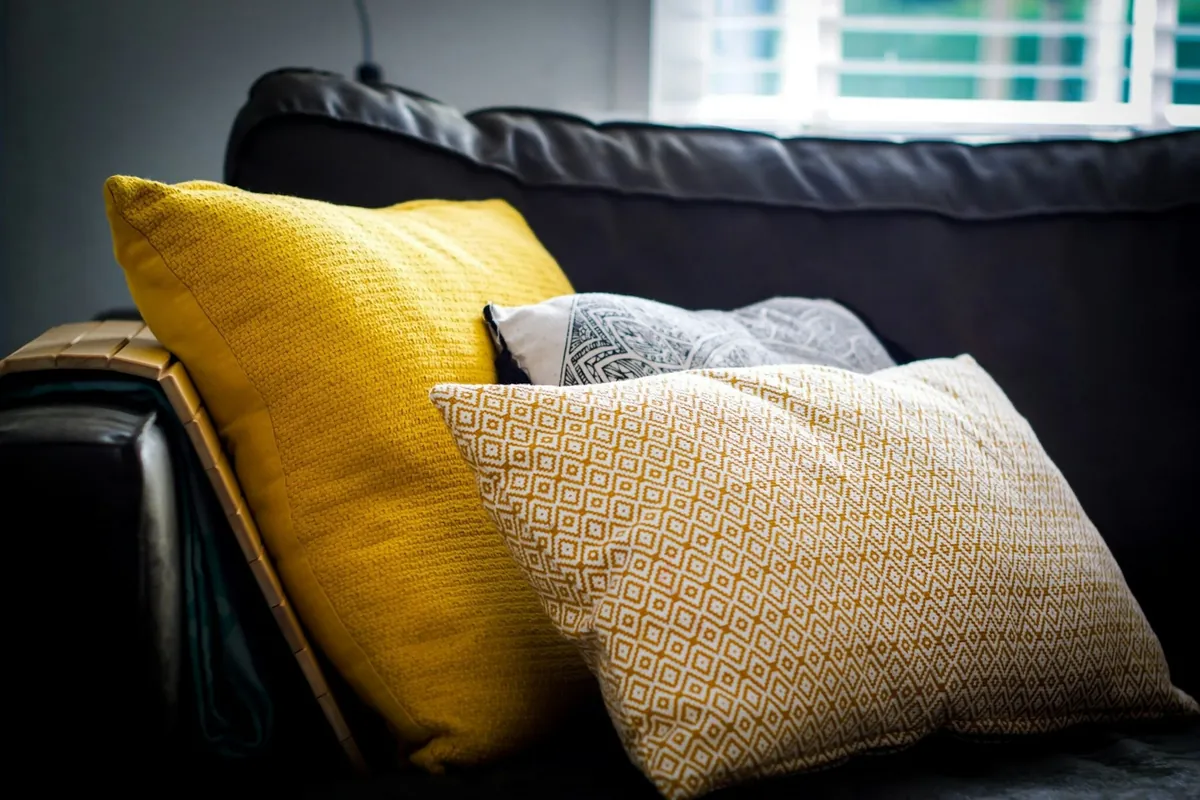
Cushions cut from the drapery cloth
Pillows and some upholstery in fabric that ties back to the window, through our fabric decor work.
Custom Drapes in Newport, RI for Multi-Pane Sash
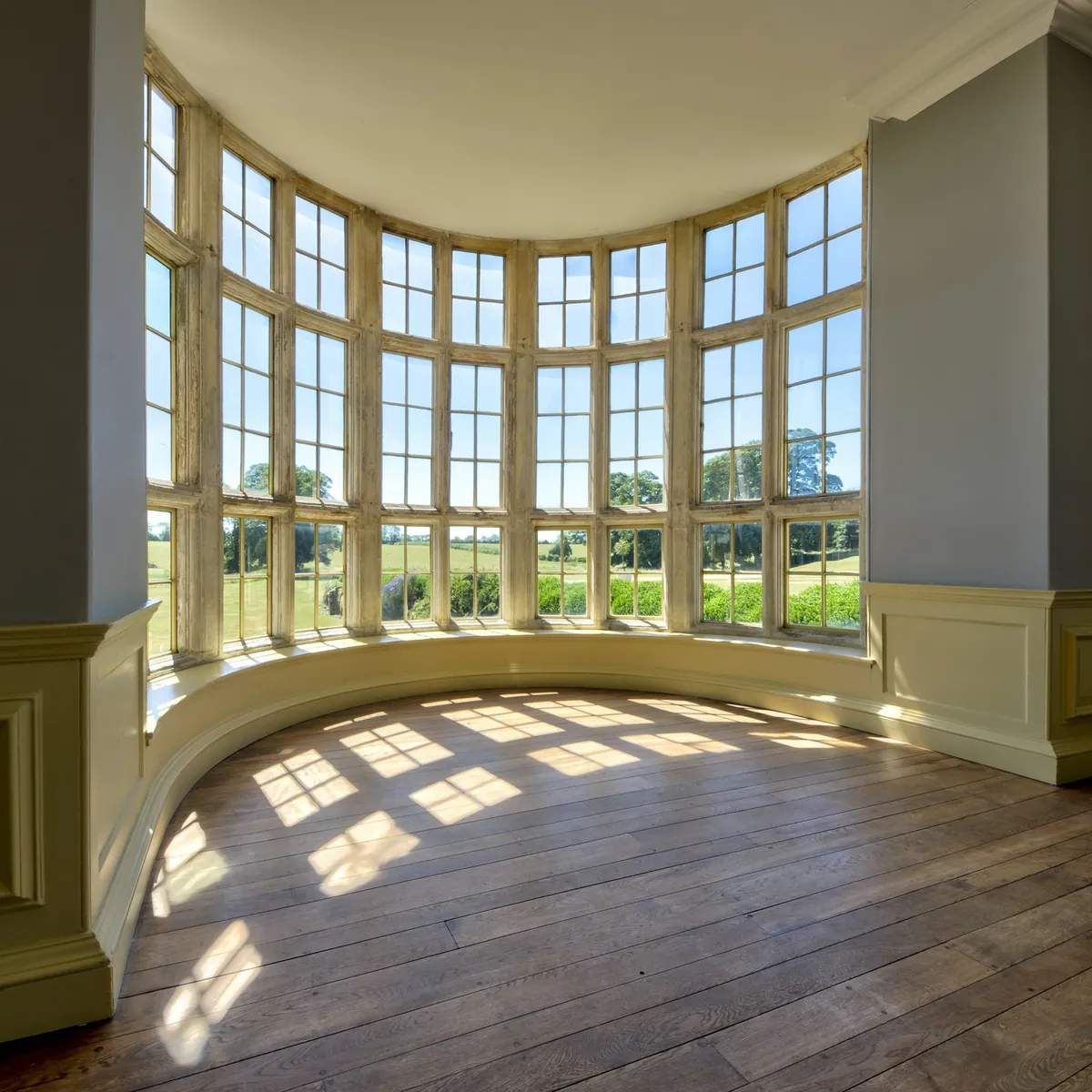
A window divided into many small panes is a feature in its own right. The grid of muntins catches the light, draws a pattern on the floor and gives the room its period character. Drapery for these windows should respect that grid rather than cover it.
Keep the glass clear when open
The first rule on a fine multi-pane window is that open drapes should not sit over the glass. That means a rod that runs past the frame on both sides, far enough that the gathered fabric rests on the wall. How far depends on the fabric’s weight and fullness: a heavy, full drape stacks wider than a light one. We measure the wall either side of each window and plan the stack so the whole grid stays on show.
Heading and height
Old Newport rooms vary. Some colonial rooms on the Point have modest ceilings and big sash that nearly fills the wall; there may be only a narrow strip above the window head for a rod. Some shingle-style rooms soar. In a low room, a slim rod and a neat heading placed in that strip let the drape fall without crowding. In a tall room, raising the rod toward the ceiling gives the window more presence. We decide room by room, because the houses do.
Trim and casings
Historic casings are often worth more than any fabric. Mounting the rod above the casing, rather than on it, protects the woodwork and frames it. Where the trim is very wide, the rod is sized to the trim’s outer edges so the drapes sit symmetrically.
Inside or outside
Where a deep frame allows it, some rooms suit a shade inside the opening, behind side panels hung outside. The shade handles light and privacy; the drapes soften and frame. Because we make both, they can be measured together and the rod set to clear the shade.
Colonials on the Point and Historic Hill
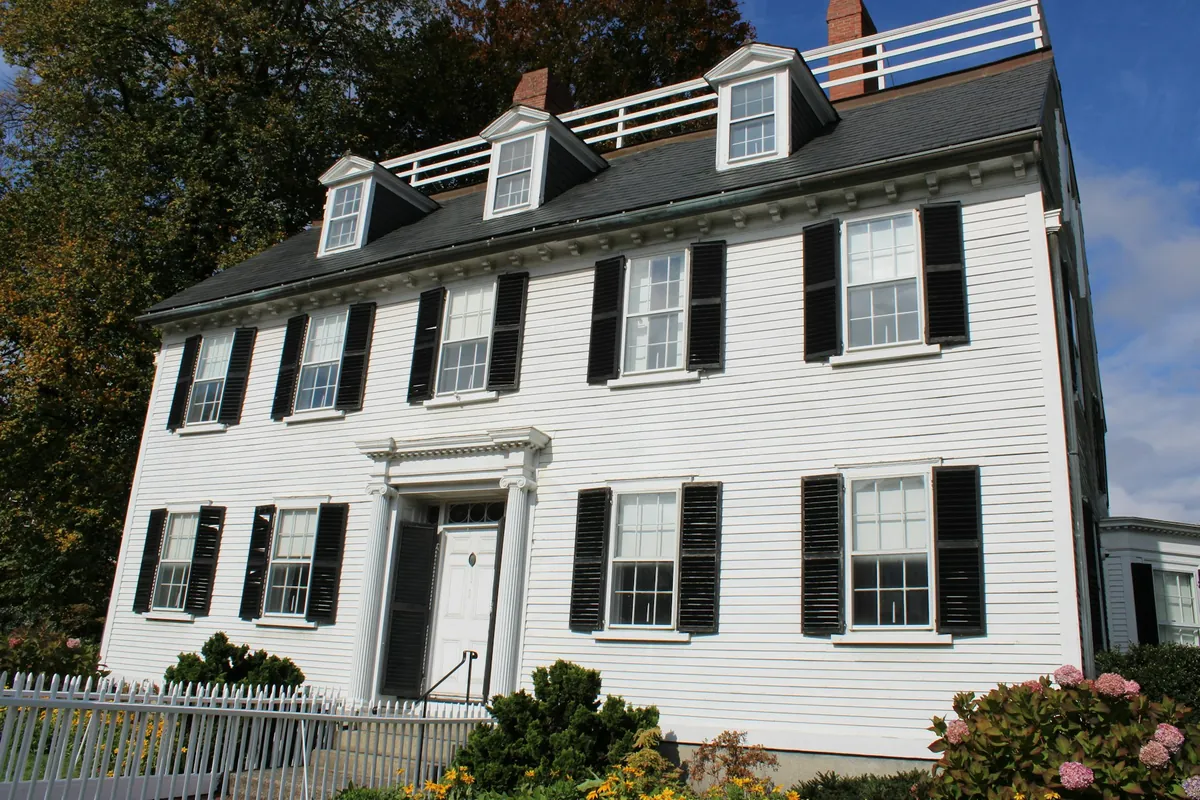
The colonials of the Point and Historic Hill are among the oldest houses we work in. Rooms are often compact, floors and walls are rarely true, and every window can be a slightly different size from its neighbour.
Measuring an old house
In an old colonial, a ready-made curtain will almost always miss somewhere. A panel that fits one window is short at the next because the floor dips, or too narrow because the frame was rebuilt at some point. We measure each window, and the drop at each side where the floor slopes, so every hem finishes level and every panel closes properly.
Fabric for compact rooms
Small rooms usually look best with fabrics that do not overwhelm them: linens, cottons, fine checks and small prints, in colours that keep the room light. A simple heading with soft, regular folds suits a colonial’s plain woodwork. Lined panels give body and protect the face fabric from the sun, which matters on a south-facing room with big panes.
Privacy close to the street
Many of these houses stand right at the sidewalk. A sheer behind the main drapes stays drawn by day so the street sees a glow rather than the room, and the lined panels close over it in the evening.
Fireplace walls and corners
Colonial rooms often place a window tight against a corner or squeeze two windows either side of a chimney breast. Neither leaves much wall for fabric to gather on. Against a corner, a single panel that draws away from the corner keeps the glass clear. Beside a chimney, slim panels in a lighter cloth, hung so they open toward the fireplace rather than away from it, keep both windows bright and the hearth framed. Planning custom drapes in Newport, RI for a room like this is a matter of inches of wall, which is why every one is measured on site.

Shingle-Style Houses
The shingle-style houses are a different proposition: larger, freer in plan and full of variety. One room might have a broad bay, a row of tall casements, a window seat tucked under a gable and a big multi-pane window looking out over the garden or the water.
Bays and window seats
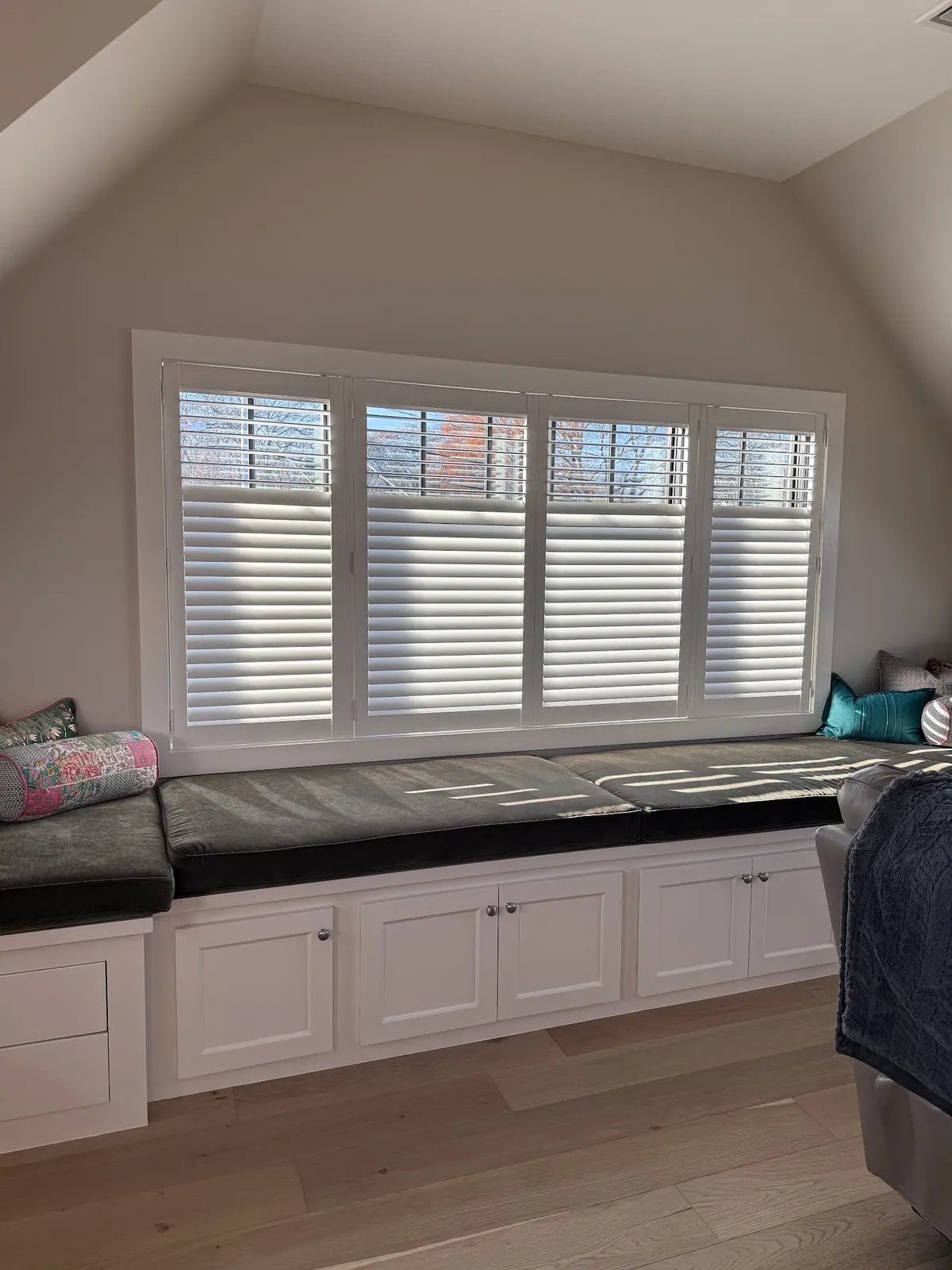
A bay or a window seat is often the best spot in the room. Drapery that covers it ruins it. For a bay, panels at the outer corners on a rod shaped to follow the bay frame the whole projection and leave the glass and the seat open. Under a gable, a built-in seat is happiest with one curtain hung to its side, or with short drops ending at cushion height, so nobody has to fight fabric to sit down. Where the seat needs privacy, a shade on the glass does the job.
Rooms of many windows
A shingle-style living room may have windows of three or four different sizes. Keeping the rods at one height around the room, set by the tallest window, gives a level line that ties the room together. One fabric across all the windows stops the room looking busy. Where a window is too small for a full drape, a valance in the same cloth keeps it in the family.
Scale
Bigger rooms carry more fabric. Generous fullness, longer drops and heavier cloths look at home here in a way they never would in a small colonial. A bolder pattern has the space to show its repeat.
Rooms behind a porch
Shingle-style houses often wrap a deep porch around one or more sides. The rooms behind it are shaded and cool, sometimes dim, and the porch puts visitors and chairs right outside the glass. Those rooms want drapery that keeps whatever light they get: lighter cloths, a lining that does not darken, rods long enough that the panels open fully clear. A sheer layer helps when people are sitting on the porch, giving privacy without shutting the room in. Custom drapes in Newport, RI for a porch-side room are often the lightest in the house.
The Fifth Ward
The Fifth Ward’s close-built streets put houses near the road and near one another. The first job of any drapery here is privacy, and it is needed by day as well as at night.
A layered approach works best. A voile, or any fine unlined cloth, stays closed over the glass from morning on, letting light in and blurring the view from the sidewalk and the house next door. Lined panels hang in front, open by day and closed at night. On narrow side windows facing a neighbour, the sheer alone may stay drawn most of the time. Where a front room has only a small strip of wall either side of the window, a single panel that draws to one side often fits better than a pair.
Rooms at the back, away from the street, can be lighter and more relaxed. Fifth Ward kitchens are often narrow, with a window over the sink looking onto a side yard or the next house. A café-height curtain across the lower sash keeps that view private while the upper panes stay open to the sky. Kitchens want washable curtains kept well away from the stove; bedrooms want lined panels that close fully.
Upstairs in a close-built house, a bedroom window may face another bedroom window only a few strides away. A sheer that never opens, with a lined panel for the night, is the usual answer there. Where the window is small or set near the eaves, a short rod across the opening with one panel avoids crowding a tight wall.
Ocean Drive’s Larger Properties
The larger properties along Ocean Drive face the open sea, and their windows are often big and exposed. Three things matter most: the view, the light and the weather.
The view
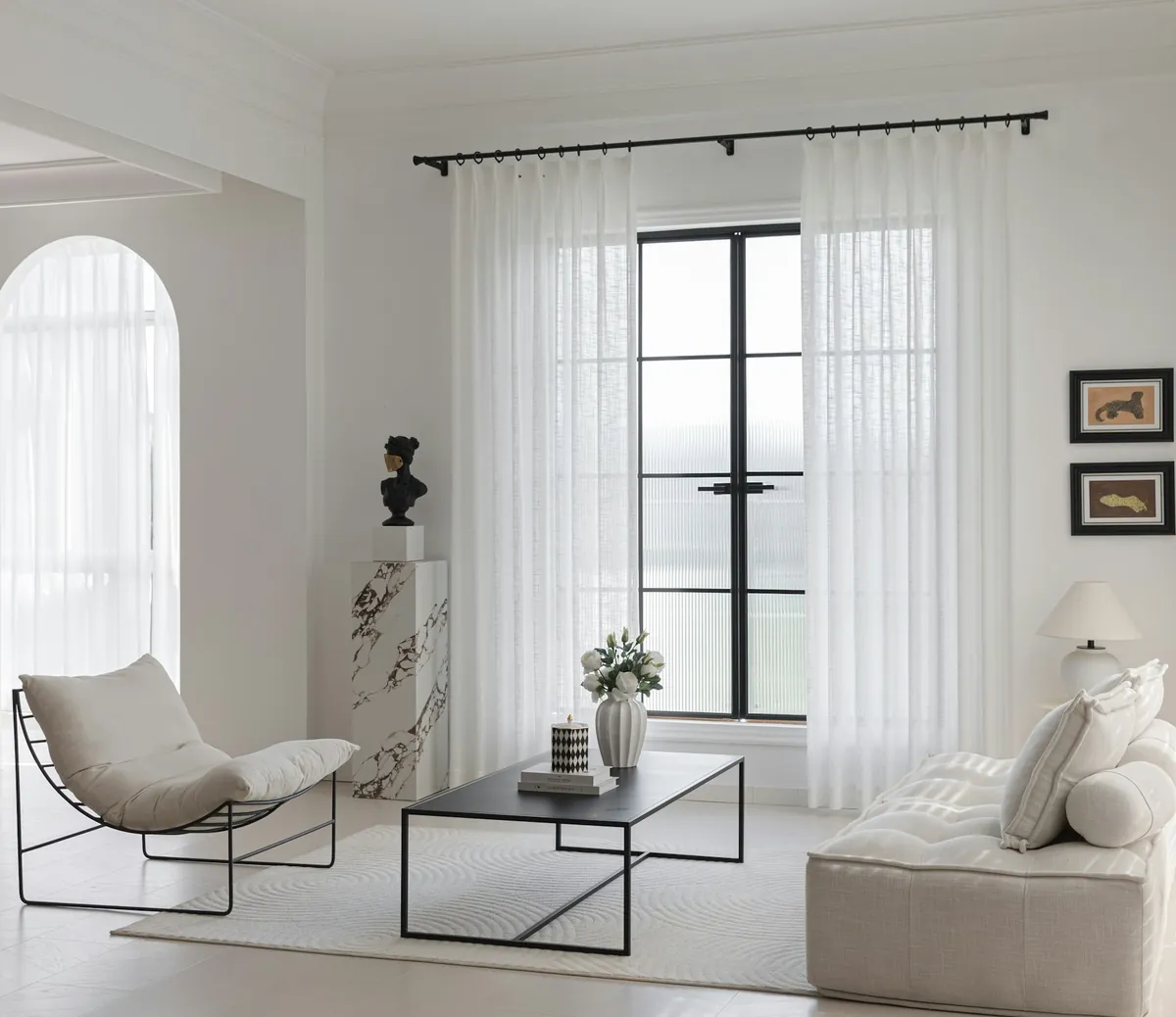
Where the window looks at open ocean, the fabric’s daytime job is to vanish. Generous rod lengths and cloth that bunches into a slender column put the entire seascape back on show. Come nightfall, pulling the panels across replaces a cold, dark void with something soft.
The light
Ocean glare arrives low and hard through the late day and bleaches colour fast. Back every seaward panel with lining, and let a shade tucked behind take care of dazzle while the drapery stays open. A roller shade in Newport is a common partner for that job.
Big rooms
Ocean Drive living rooms can be large and hard-surfaced, with wide floors, high ceilings and a lot of glass. Generous drapery does more than decorate there: it softens echo, warms the look of a big space and gives the windows a sense of proportion. Full-height panels from a high rod, rich fullness and a substantial cloth all suit the scale. Keeping one fabric around the room holds it together.
The weather
Gusts and brine never really let up on Ocean Drive. Dense, robust weaves outlast flimsy, open ones here. When a gale sets in, heavy lined curtains pulled shut take the edge off a big room remarkably well, and a breezy dry afternoon with every window thrown open freshens both room and cloth.
Historic-District Review and the View from Outside
Drapes hang inside, on the wall or trim of the room, and leave the windows themselves untouched. What the street sees is the lining. A consistent, light lining behind every street-facing window keeps the facade even and calm, whatever face fabrics you choose for each room. It is a simple way to respect a historic house from outside while having full freedom inside.
If you are going through review for other work on the house, we are glad to explain how the drapery will look from the street.
Sheers count as well. By day, a sheer is the layer the street actually sees, so using one sheer cloth on every front window gives the same even effect as a matched lining. Choosing both layers from one range at the same time makes that simple, and it lets the room side be as colourful or as quiet as you like.
The same thinking applies to rods and finials. Where any hardware shows through the upper panes, a slim rod in a finish that disappears against the trim keeps the window looking as it always has from outside. It takes only a moment to settle at the measuring visit and saves second thoughts later.
How a Newport Order Runs
- Ring or message the Swansea store and we pencil in your free quote.
- A specialist measures in your home, window by window, including the drop at each side, the casing width, the ceiling and the wall available for the stack.
- We work out the mounting for each window and which drapes need to move.
- You choose fabric and lining, at the showroom if you can, where the cloth can be seen in daylight.
- A quote follows, listing each window.
- The workroom makes each panel from those figures.
- Fitters put up the hardware, hang everything and train the pleats.
Updates come from us throughout, until you are satisfied.
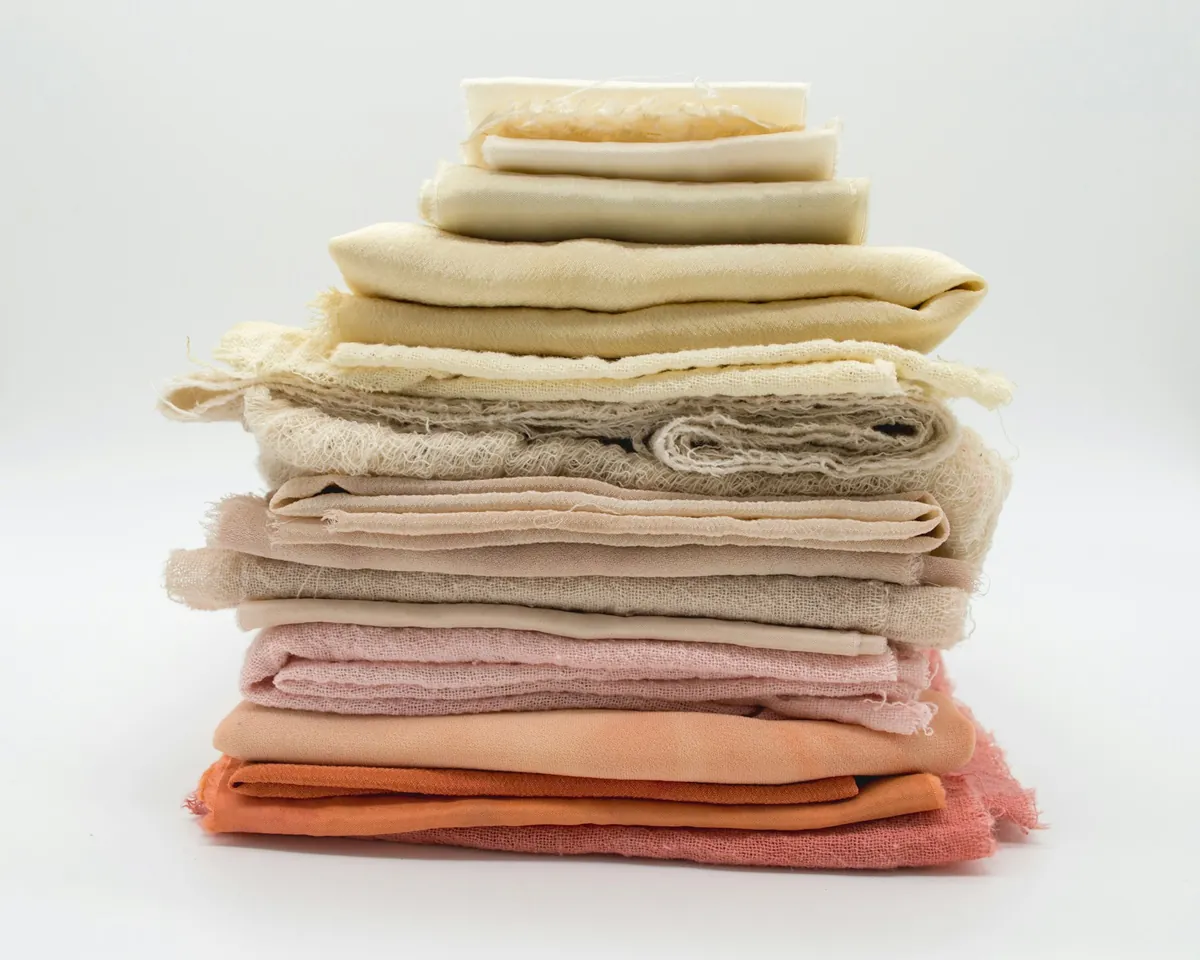
Fabric guidance
- Linens, cottons and fine patterns for compact colonial rooms on the Point and Historic Hill
- Richer, heavier cloth and bolder prints for big shingle-style and Ocean Drive rooms
- Sheers for daytime privacy in the Fifth Ward
- Tightly woven, lined fabric for sea-facing windows
Care
Dust the headings with an upholstery brush every so often. Send lined work to a dry cleaner rather than the washing machine. Near the sea, regular airing keeps cloth from feeling damp. Each fabric comes with our advice on looking after it.
Who We Are
Our name is Window Works Blinds Shutters and Shades. The business began in 1988 in Swansea, Massachusetts, where the showroom still is, and a second generation of the same family runs it now. More than 37 years of drapery, blinds, shades and shutters have gone into houses around the Massachusetts SouthCoast and across Rhode Island’s East Bay.
To speak to us, use the call button or the contact page here. Newport commissions are measured, ordered and fitted by our in-house specialists, with regular updates as the work moves along. Products come with warranties, and you are welcome to browse the fabric library in Swansea.
Every service available in the city is gathered on our Newport window treatments page.
Questions from Newport
How do you keep a multi-pane window on show?
By running the rod past the frame so the open drapes rest on the wall, not over the glass. We plan the stack from the fabric’s weight and fullness.
My colonial’s windows are all slightly different. Is that a problem?
No. We measure every window and the drop at each side, so each panel fits its own opening and the hems finish level.
Does historic-district review affect drapes?
Drapes hang inside and leave the windows untouched. A consistent light lining on street-facing windows keeps the facade even from outside.
What suits a sea-facing window on Ocean Drive?
Lined drapes in a sturdy, tightly woven cloth, on a rod long enough to clear the glass, often with a shade behind for glare.
Where is Window Works based?
In Swansea, Massachusetts, where Window Works Blinds Shutters and Shades has had its showroom since 1988. Use the call button here to speak to the store.
Book Your Free Quote
Whether it is a Point colonial or a house on Ocean Drive, custom drapes in Newport, RI begin with a free quote. Tap the call button and we will arrange a measuring visit at your home and explain how fitting is handled, or write to us through the form. Find the showroom route on the contact page and browse every drapery style on the custom drapes page. On Google, Window Works holds a 5.0 rating.