
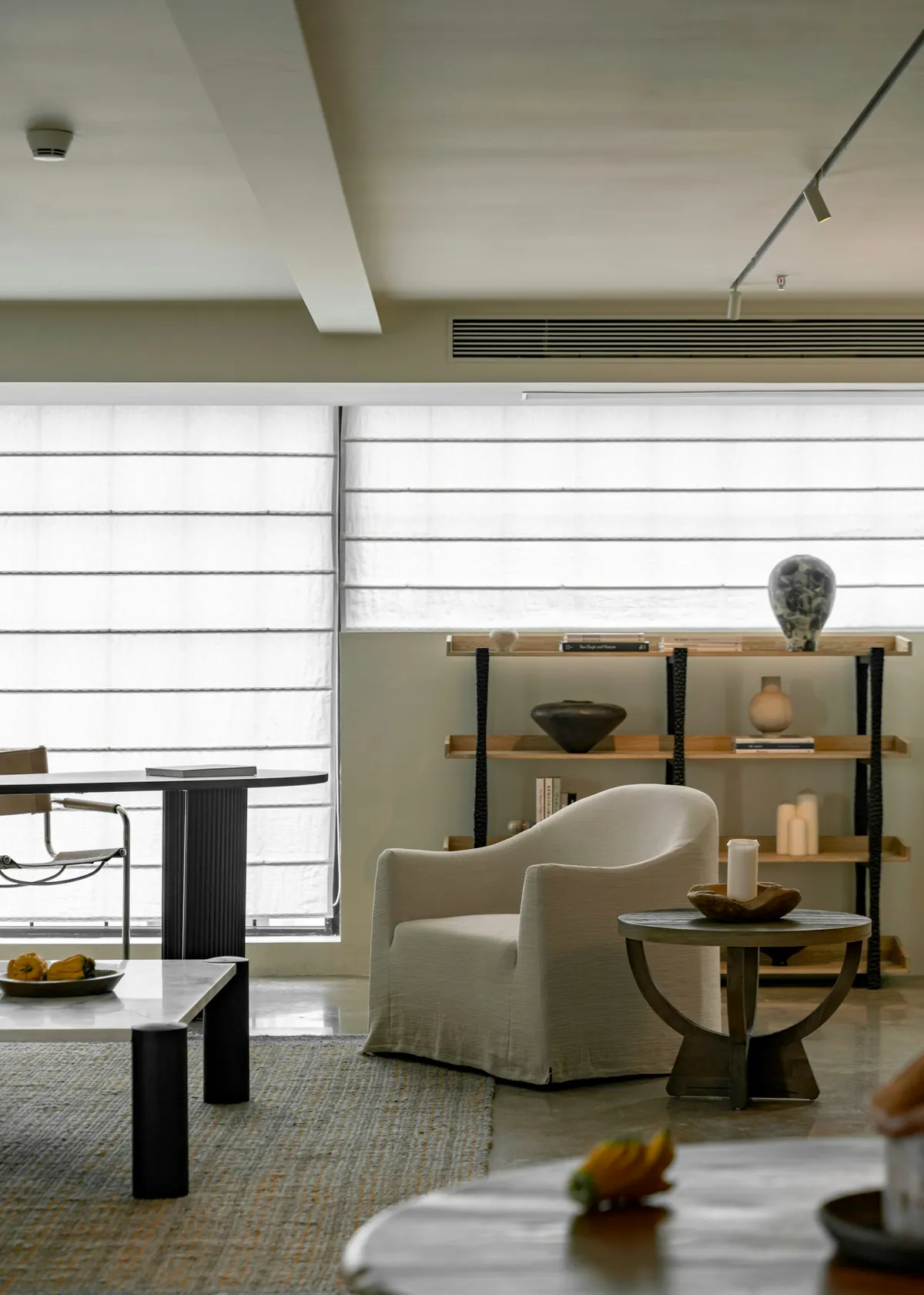
Long Glass and Formal Rooms by the River
Barrington gives a vertical blind two very different jobs, and that is why vertical blinds in Barrington, RI are measured opening by opening in the house. The mid-century moderns along Rumstick Road and Nayatt Road were built around long runs of glass, often set low to the floor so the room looks straight out to the Barrington River. The center-hall colonials nearby have formal living and dining rooms where a slider or a wide back door sits behind rooms that are dressed with drapery as a matter of course.
In the first kind of house, the vertical blind is often the main treatment across a whole wall. In the second, it usually works quietly behind fabric, handling light and privacy while the drapes do the decorating.
- Vertical blinds and panel tracks, made to each opening
- Measured where they will hang and installed by our own team
- Vanes and panel fabrics to handle at the Swansea showroom
Ways to Cover a Wide Opening
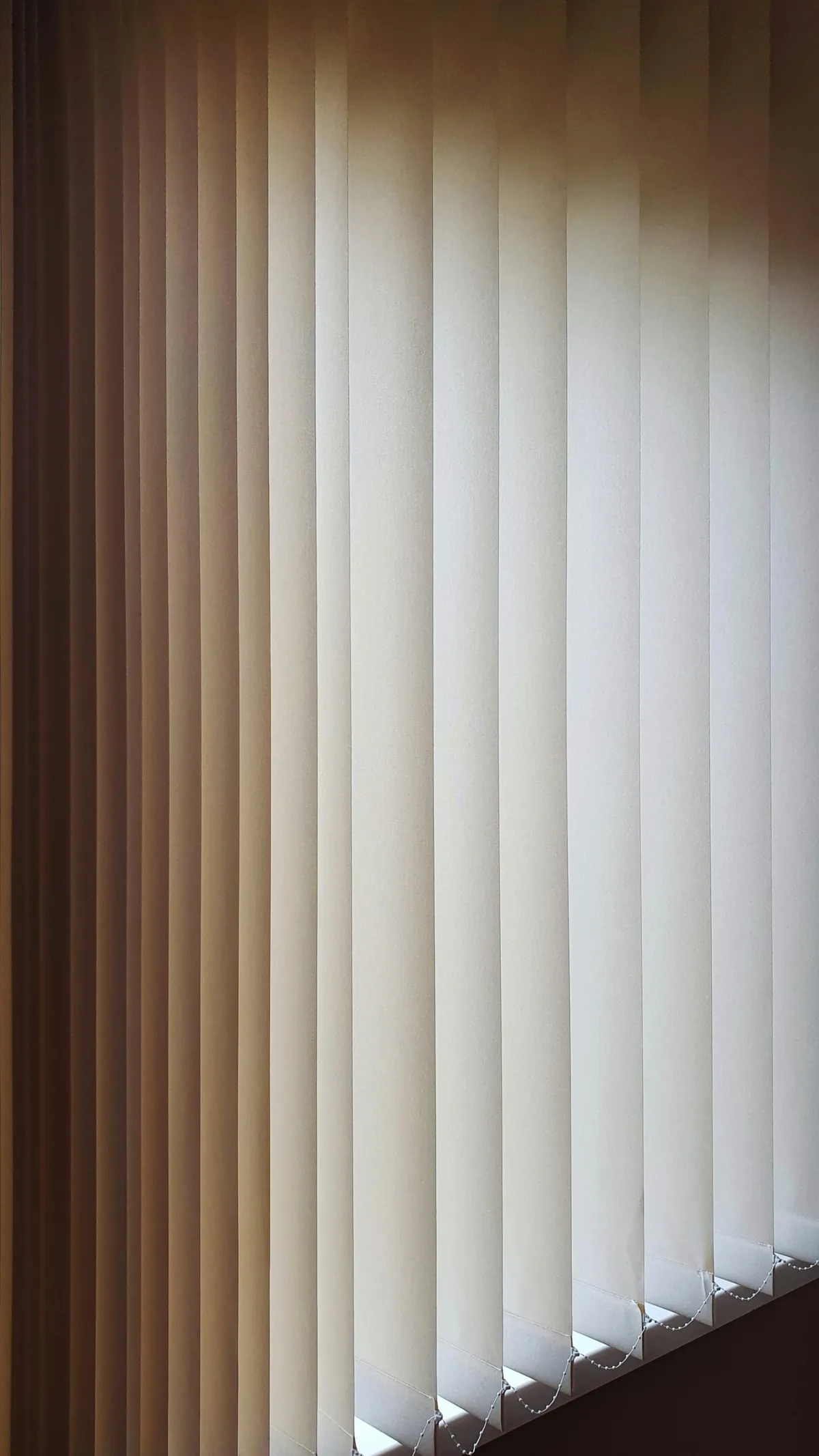
Vanes that turn
Narrow vanes hang from one head track. Turn them a little for soft light, edge on for the view, or shut them for the evening.
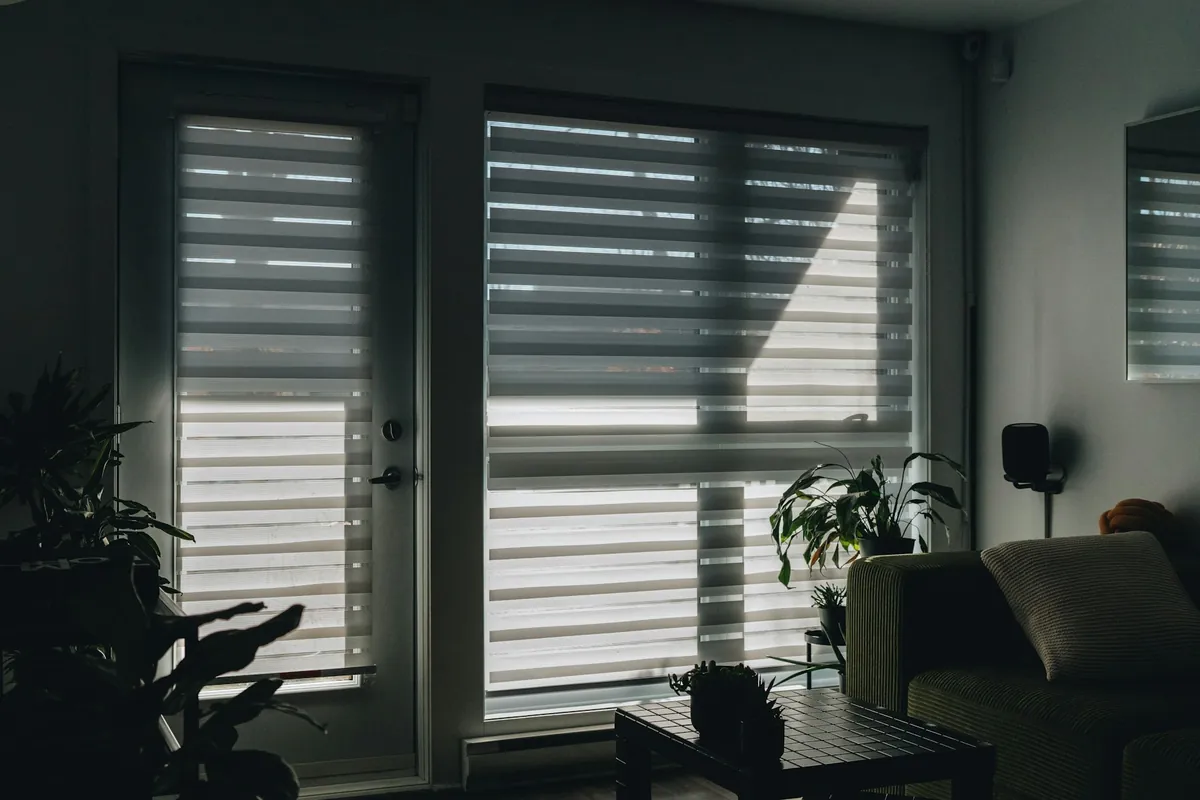
Panels that glide
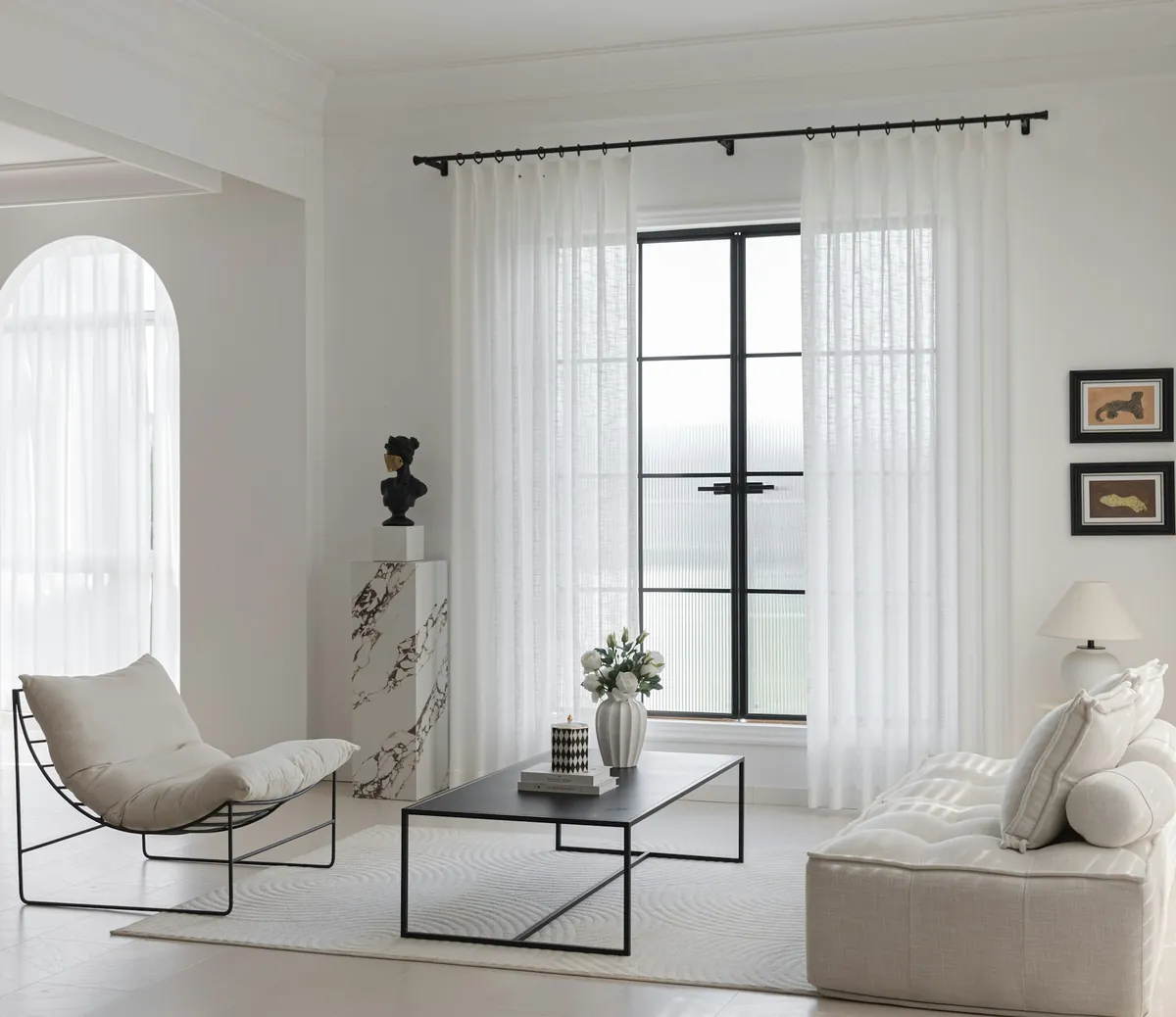
A panel track uses a few broad fabric panels that slide past one another and stack flat. It reads as a calm, modern fabric wall on long mid-century glass.
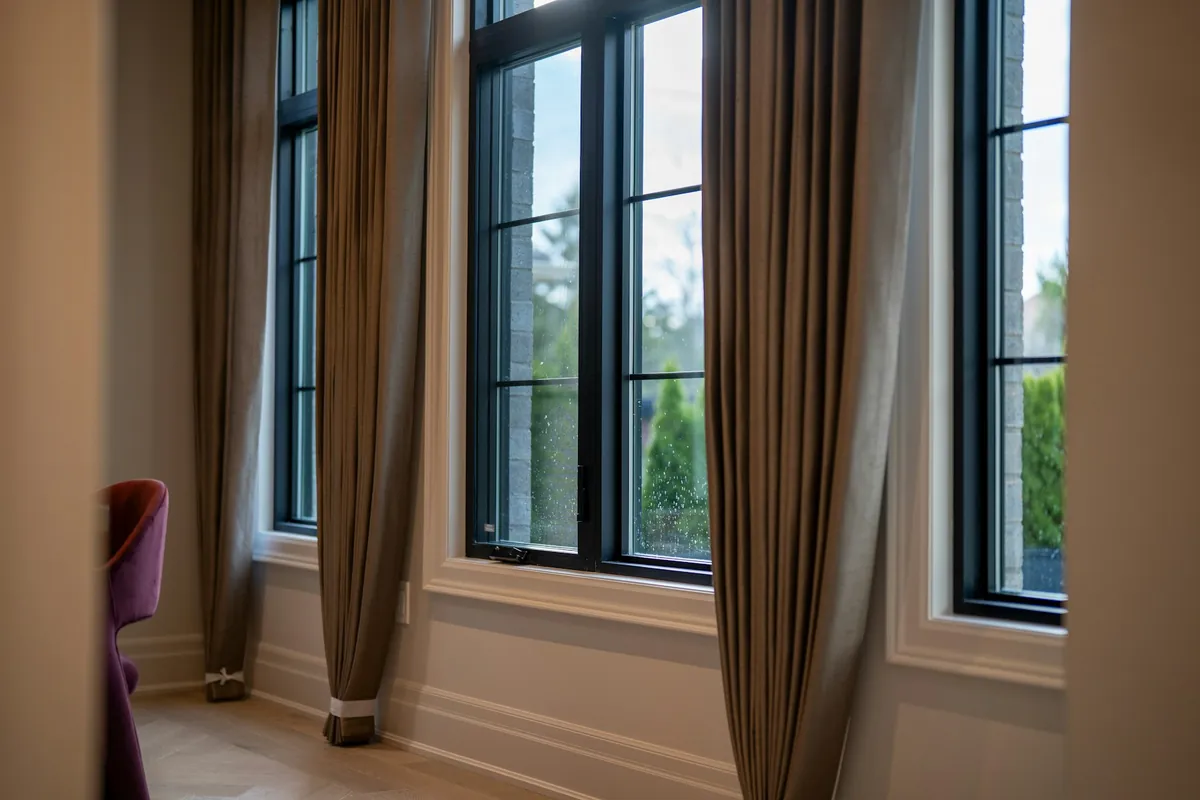
Behind the drapery
In a formal colonial room, the blind or track sits close to the glass and side drapes frame it. See our custom drapes in Barrington for the fabric half of that pairing.
Planning Vertical Blinds in Barrington, RI
Good vertical blinds in Barrington, RI begin with the way the opening is used rather than with a vane colour. Which panel of the door slides, where the family walks through to the deck or the lawn, where the sofa sits, and when the sun comes off the river all decide how a blind should be set up. We go through those questions on the measuring visit, standing in the room, because a vertical blind that draws the wrong way or stacks in front of the view is irritating every single day.
Mid-century houses on Rumstick Road and Nayatt Road
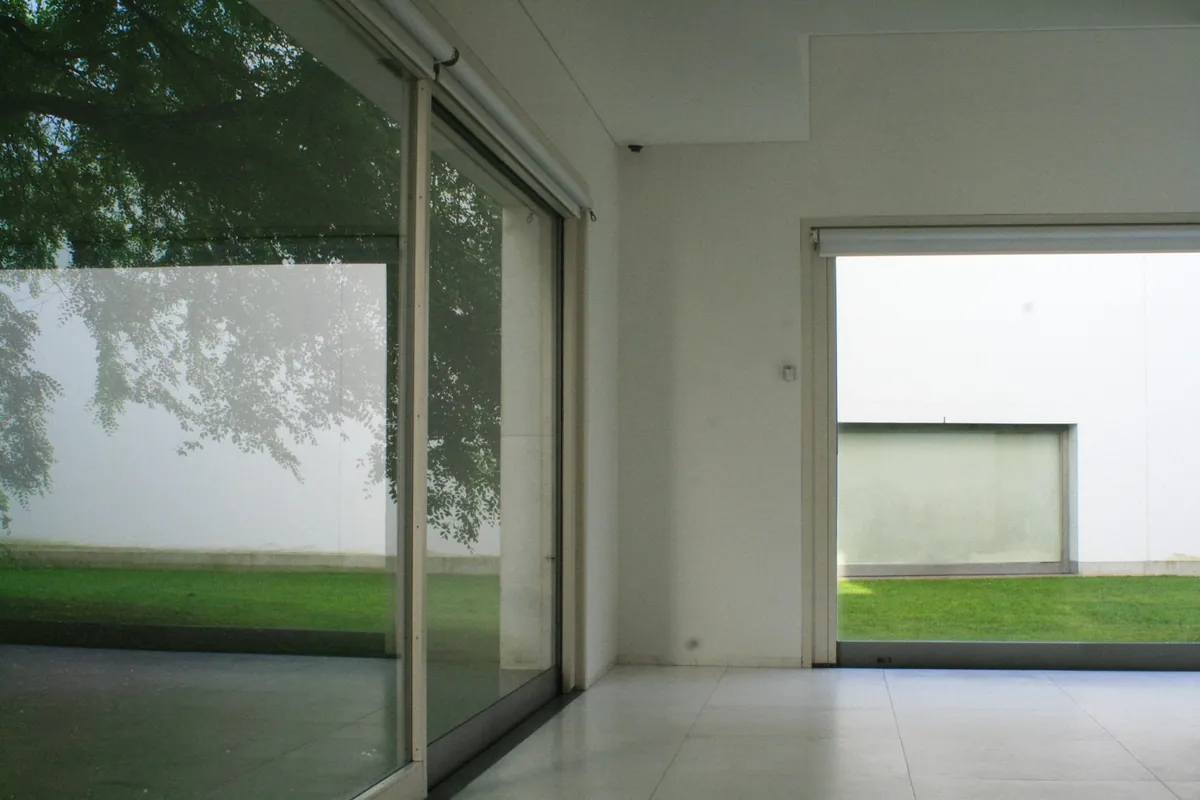
The mid-century moderns in this part of town were drawn with glass as a building material, not an afterthought. A living room may have one long wall of fixed panes and sliding doors side by side, with sills set close to the floor and a ceiling that runs straight out to the eaves. That kind of opening is where vertical treatments earn their place, because a horizontal blind of that width would be heavy to lift and would hide the top of the view when raised.
There are a few things we look at closely in these rooms. The first is the mount. Many of these houses have no deep frame or trim to mount inside, so the head track usually goes on the ceiling or on a slim strip of wall above the glass. A ceiling mount lets the vanes fall in one clean line from the ceiling almost to the floor, which suits the architecture and makes the low sills disappear behind the fabric. The second is the stack. When the blind is open, the vanes or panels gather at one or both ends, and on a long wall we plan that stack so it sits against solid wall wherever possible, not across the best part of the glass.
The third is the low sill itself. Where glass comes down close to the floor, the bottom of a vane is in reach of feet, pets and the vacuum. We set the drop so the vanes clear the floor by a small, even margin and do not sweep or tangle.
River light and glare off the water
Houses with Barrington River frontage get a long, bright reflection off the water through much of the day, and in a room built around glass that reflection lands on screens, floors and furniture. Vertical vanes deal with it well. Angled part way, they turn the light aside without hiding the river, and the angle can be changed through the day as the sun moves around the house. When you want the room dim for a film or a nap, the vanes close fully.
A panel track behaves differently. Its panels do not turn, so the light is set by the fabric you pick and by how far the panels are drawn. A light filtering fabric gives a soft, even glow across a wall of glass. A heavier fabric darkens the room more. For a riverside room that is used in the evening as much as the day, some households prefer vanes for their adjustability, while others choose a sheer panel track because it keeps the room looking open even when it is closed.
Center-hall colonials and their formal rooms
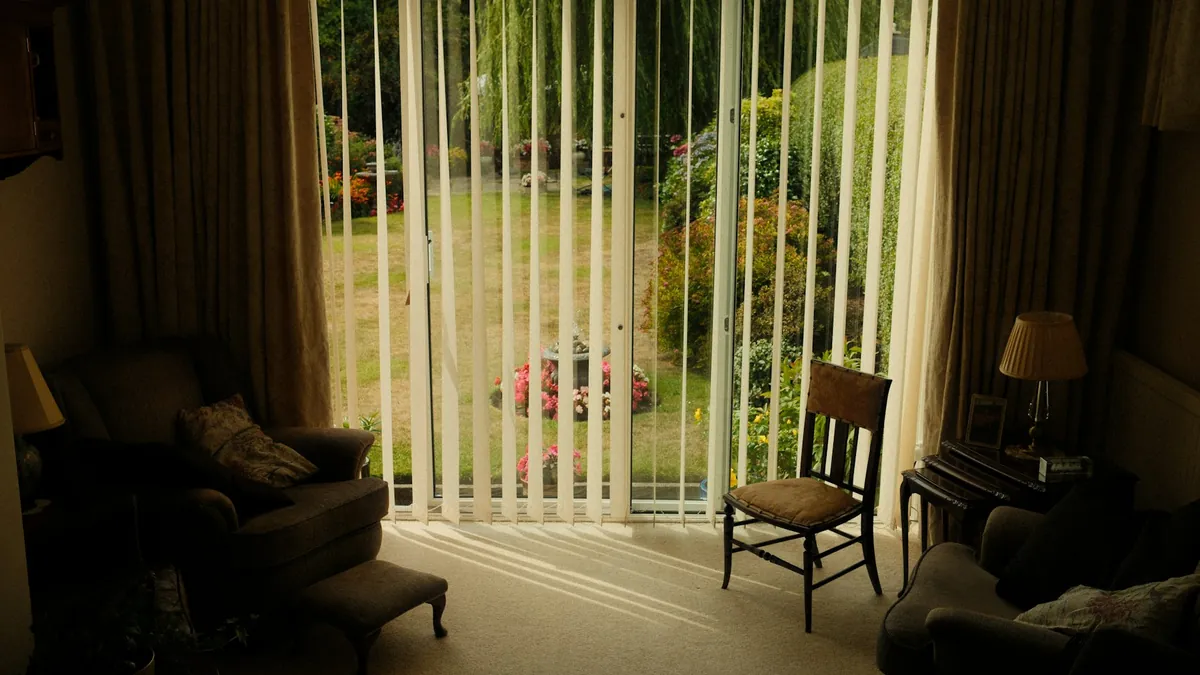
The colonials around Rumstick Road and Nayatt Road follow a familiar plan: a central hall, formal rooms either side, and a kitchen and family room across the back. In the formal rooms drapery is expected, and the front windows are usually dressed with fabric on rods or poles. The vertical blind comes in at the back of the house, where a later family room or kitchen opens onto a patio through a slider, or where a wide pair of doors leads out to the garden.
On those doors, the aim is for the blind to stay out of the way of the room’s style. We usually mount the track high and tight to the frame, choose a vane colour close to the wall or the trim so it recedes, and leave room on either side for side drapes to hang clear of the stacked vanes. That way the drapes match the formal rooms, while the blind does the daily work of privacy and glare.
Where the family room is more casual, the blind can be the whole treatment. A vane or panel fabric picked to go with the upholstery is often enough on its own.
Back additions, sunrooms and bedroom sliders
Many Barrington houses of both kinds have grown at the back. A colonial may have gained a kitchen extension with a slider to the patio, or a glassed-in porch that is now used all year. A mid-century house may have a primary bedroom with its own door out to a deck. These rooms tend to have more glass than the original house, and they often face the garden or the river, which is exactly where the strongest light comes from.
Each of them asks for something slightly different. A sunroom with glass on three sides may need several blinds that read as one set, with every vane in the same fabric and every track at the same height so the room looks calm. A kitchen slider needs a blind that copes with daily use and wipes clean near the cooker. A bedroom slider usually needs the most privacy and the least light at night, so the vanes should close tightly and the track should sit close to the frame to cut down the glow round the edges. Vertical blinds in Barrington, RI rooms like these are often chosen for that one reason: they close fully when you want the room dark, then disappear to the side when you want the deck.
The door and the windows beside it
A slider almost never stands alone. In the colonials it shares a family room with ordinary sash windows, and in the mid-century houses it may sit between fixed panes or beside a corner window. The room looks best when everything is chosen together. A common answer is vertical vanes on the door and horizontal blinds on the windows in a matching colour, so the treatments read as one decision. Another is a panel track on the door with Roman or roller shades on the windows in a related fabric. Because we make blinds, shades and drapes, the whole room can be measured on the same visit and planned as one.
What Happens Once You Call
We keep in touch with you at every stage until the job is done. An order for a Barrington slider or window wall usually runs like this.
- You call the Swansea store or send the form, describe the door or the run of glass, and book a free quote.
- A specialist comes to measure the opening in your home: its full width and height, the ceiling or wall above, the floor below and the solid wall either side for the stack.
- We talk through vanes or panels, which way it should draw and where the controls will sit, with the room in front of us.
- You choose the fabric and colour, at home with your own walls in view or at the showroom with the samples in your hand.
- Your quote lists every opening, so you know what is being made.
- The blind is made to the measurements taken in your house.
- Our installers hang it, check that it draws, turns and clears the door handle, and show you how to use it.

Choosing which way the blind draws
A vertical blind can draw to one side, split in the middle and draw to both sides, or on some wide openings draw to the centre. On a slider, stacking the vanes on the side of the fixed panel means the moving door is clear as soon as the blind is open. On a long mid-century wall, a centre split often looks more balanced and keeps the stack from piling up at one end. Where a slider sits at one end of a window wall, a single draw away from the door can make more sense. We sketch the options for your room before anything is ordered.
Vane and panel fabrics
The fabric sets the mood of the room more than any other choice, because a vertical treatment covers such a large area. Smooth, solid vanes give a crisp line and wipe clean, which helps on a busy back door. Textured fabric vanes soften a room and filter light more gently. Panel track fabrics range from sheers that blur the view to heavier fabrics for bedrooms and media rooms.
Colour follows the same thinking. White and soft neutrals recede against painted walls and keep a glass wall from feeling heavy. A warmer or deeper colour can echo wood floors or furniture. Bring a paint chip, a cushion or a photo of the room to the showroom, and match the fabric under real daylight.
Controls on a long run
On a wide opening, the controls matter more than people expect. A wand lets you draw and turn the vanes with one hand and keeps cords out of the way, which suits homes with children and pets. A cord and chain can make it easier to move a very long blind. We place the control on the side you naturally reach first when you walk up to the door, so using it becomes second nature.
If the controls on a high or very wide opening are a stretch, ask us about motorized blinds in Barrington, which we sell with remote and wall-switch operation.
Planning around furniture and the way you walk
A long window wall in a mid-century living room is rarely empty. There may be a sofa with its back to the glass, a reading chair in the corner, a piano or a dining table close to the slider. All of that affects the blind. Vanes need a little room to turn, so a track mounted too close to a chair back can leave them brushing the upholstery. A stack planned for the end of the wall can end up behind a bookcase where nobody can reach the wand. We note where the furniture stands on the measuring visit and set the track depth, the draw and the control side so the blind works with the room as it is actually used.
The route through the door matters as well. On a slider that leads to the deck, the vanes should part on the side people walk through, so nobody has to push past fabric with a tray of food in their hands.
Where a vertical blind is not the answer
Not every Barrington window suits a vertical treatment, and we will say so. The colonials’ double-hung sash on the front of the house is almost always better with horizontal blinds, shades, shutters or drapery. A small window in a mid-century bathroom or kitchen is usually tidier with a horizontal blind or a shade. Our custom blinds in Barrington page covers the horizontal side, and the town’s other services are listed below.
Why Barrington Houses Come to Window Works
Window Works opened in Swansea in 1988, and the second generation of the family runs it today. For over 37 years we have measured and fitted window treatments across the SouthCoast of Massachusetts and the Rhode Island East Bay, a short drive across the line to Barrington.
- Window treatment specialists who measure in your home
- Our own installers, not a delivery service
- One store to call, in touch with you until the job is finished
- Warranties offered on the products we sell
- A showroom where you can try verticals and panel tracks side by side
The showroom also carries the Norman range, so you can see those products in person too.
Looking after a vertical treatment
Vertical blinds need little care. Turn the vanes flat and run a soft duster or a vacuum brush down them now and then, and wipe solid vanes with a damp cloth when a back door gets grubby. Panel track fabrics are dusted or vacuumed in place. Draw the blind fully clear before sliding the door, so the vanes are never caught in the gap. If a vane drops or the track starts to drag on a blind you already own, mention it when you call, because it can often be repaired rather than replaced. You can see every vertical option we make on the main vertical blinds page, and everything we do in town on our Barrington page.
Questions from Barrington
Can one blind cover a whole wall of mid-century glass?
Yes. One track is measured across the full run, and the blind can split in the middle or draw to one side. Where a wall is very long, we may suggest two blinds that meet at a post so each is easier to move.
Will the vanes catch on a low sill or the floor?
No. We set the drop so the vanes finish just clear of the floor, measured at more than one point because floors are not always level.
Can a vertical blind sit behind drapes in a formal room?
Yes. We mount the track tight to the frame and leave space either side so the drapes hang clear of the stacked vanes.
Vanes or a panel track by the river?
Vanes turn to angle the glare off the water and can be changed through the day. A panel track gives a softer, more modern look, with the light set by the fabric. Try both at the showroom.
How do I start?
Book a free quote with the call button or the form, and tell us about the door or glass you want covered. We then arrange measuring in your home.
Getting Your Barrington Opening Covered
The simplest next step is a free quote for vertical blinds in Barrington, RI. Use the call button to reach the Swansea store, arrange measuring in your home or ask about installation, or send the form and we will get back to you. To compare vanes and panel tracks first, visit the Swansea showroom; directions are on the contact page. Window Works holds a 5.0 rating on Google.