
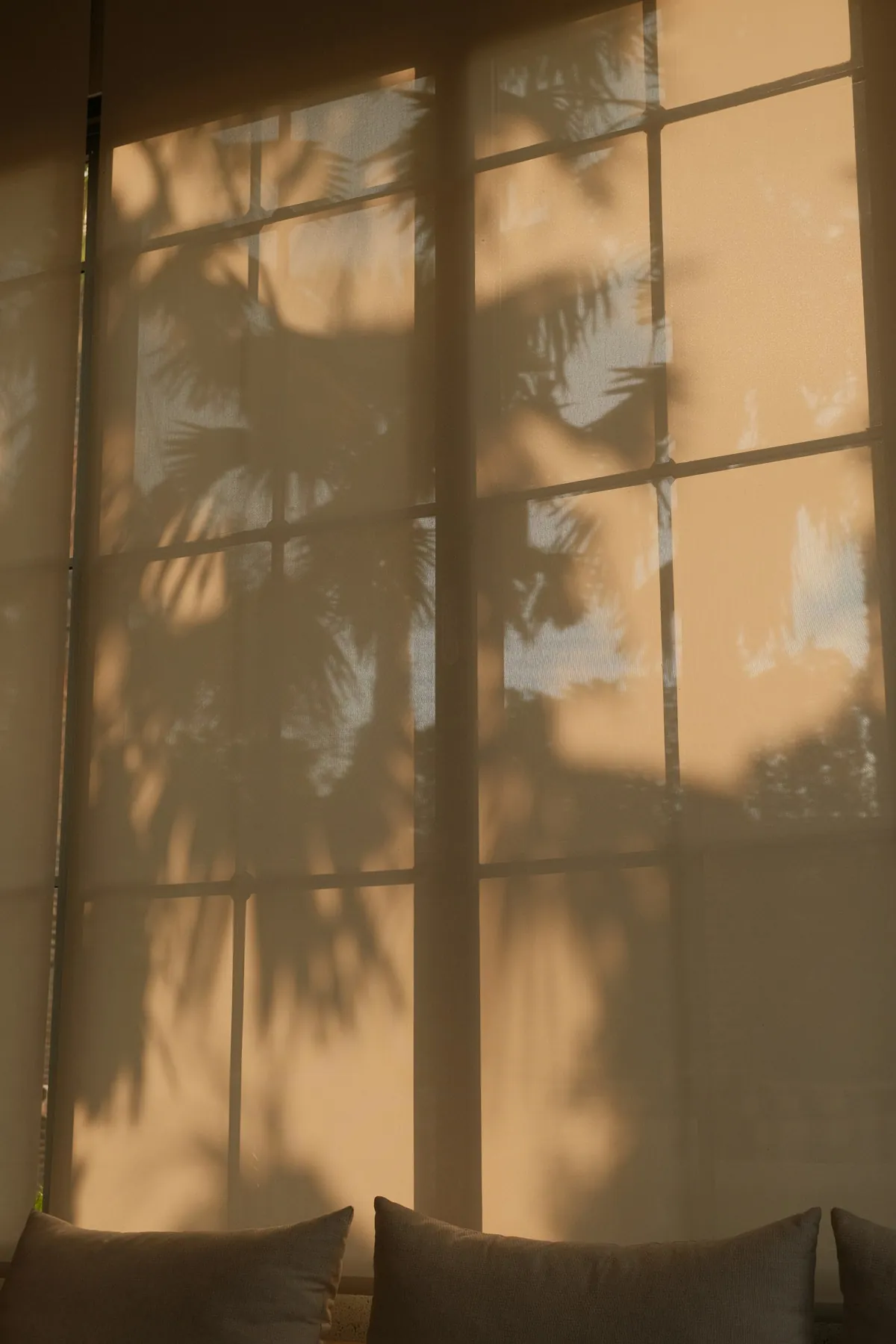
Long Glass, Low Sills and Formal Rooms
Two very different kinds of house line Rumstick Road and Nayatt Road, and roller shades in Barrington, RI have to be planned for both. The mid-century moderns were built around long runs of glass set low to the floor, so the garden or the Barrington River fills the room. The center-hall colonials keep a symmetrical front, with formal living and dining rooms either side of the hall, where drapery is expected rather than optional.
A roller shade suits each of them for its own reason. On a mid-century window wall it is a single clean panel that disappears when raised and leaves the architecture alone. In a colonial’s formal room it does the daily work of light and privacy quietly, tucked behind the drapery that gives the room its finish.
- Roller shades in light filtering and blackout fabrics
- Solar screen shades for bright, water-facing rooms
- Measured in your home and installed by our own team
Fabrics and Screens for Barrington Houses
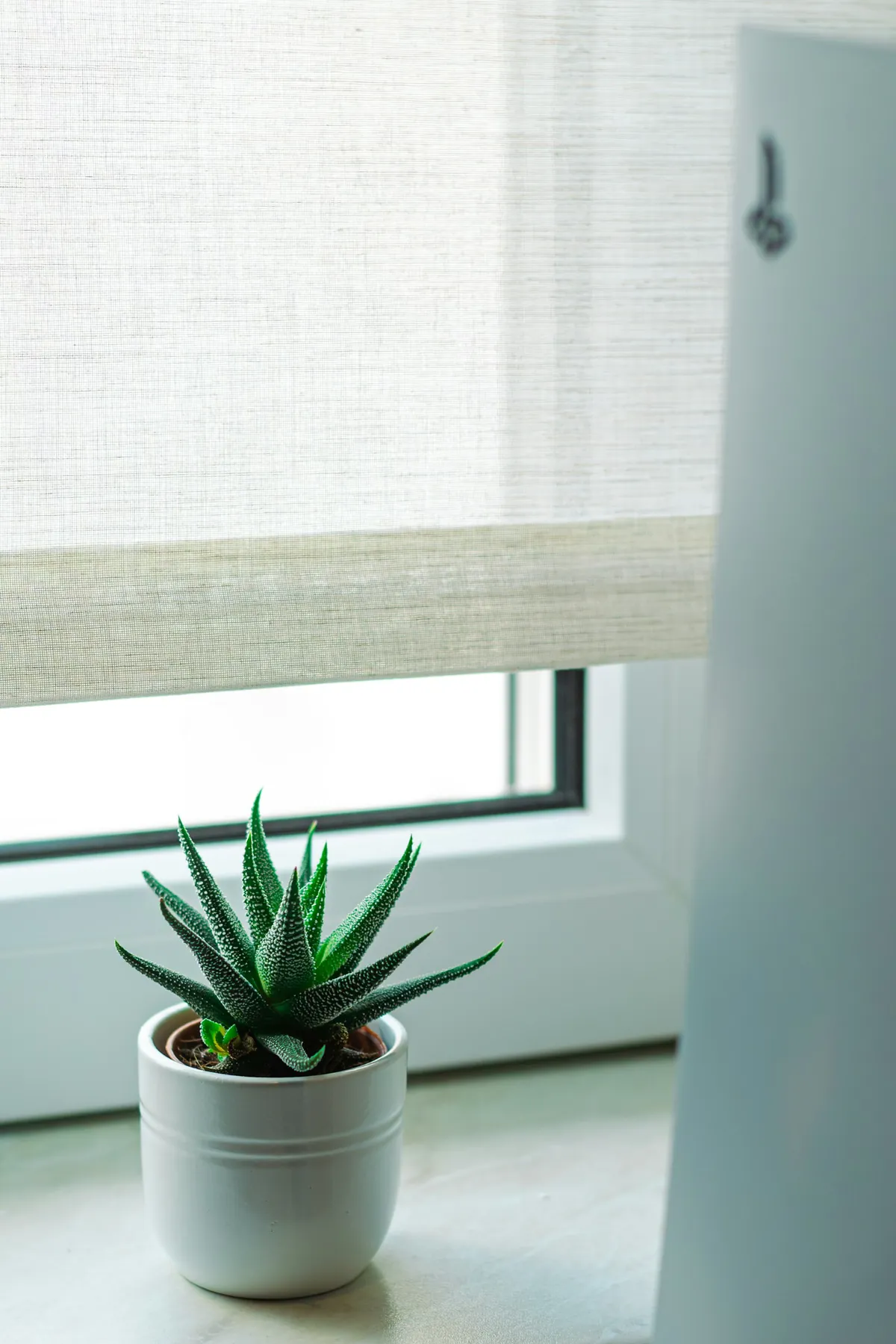
Light filtering fabric
A fabric that lets daylight through softly while keeping the room screened from the road. Kitchens, family rooms and studies are its usual home.
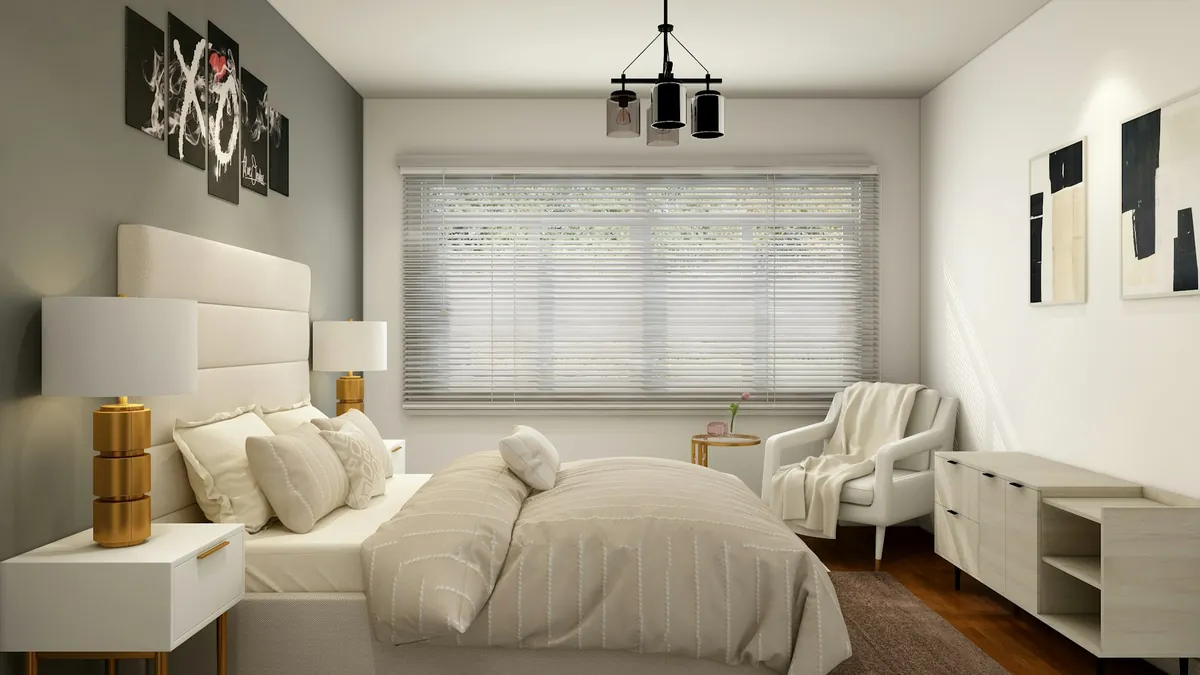
Blackout fabric
A solid cloth for bedrooms and any room with a television, so early sun off the water does not wake the house.
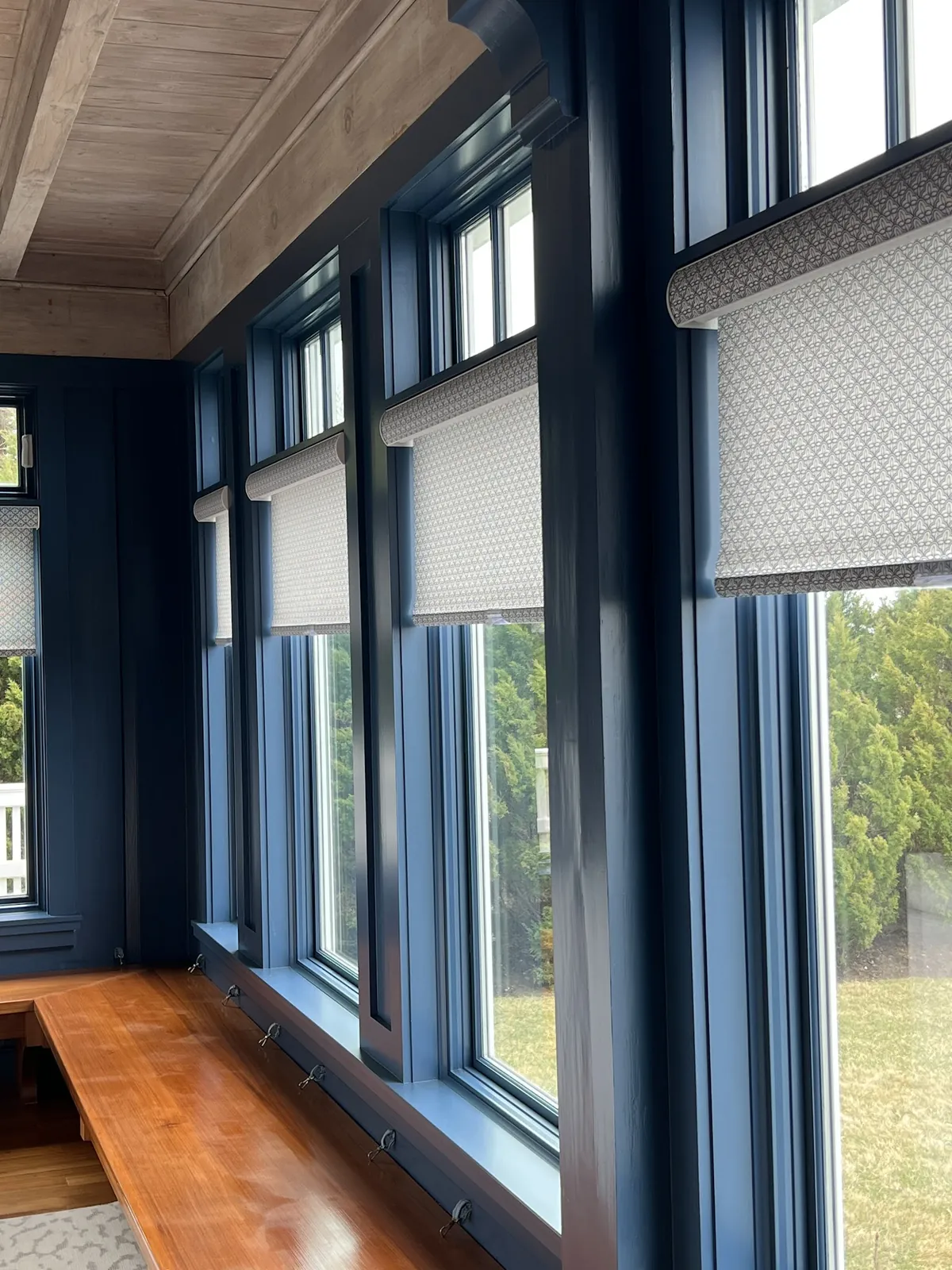
Solar screen
An open weave that tames glare on bright glass while the river and the garden stay in sight.
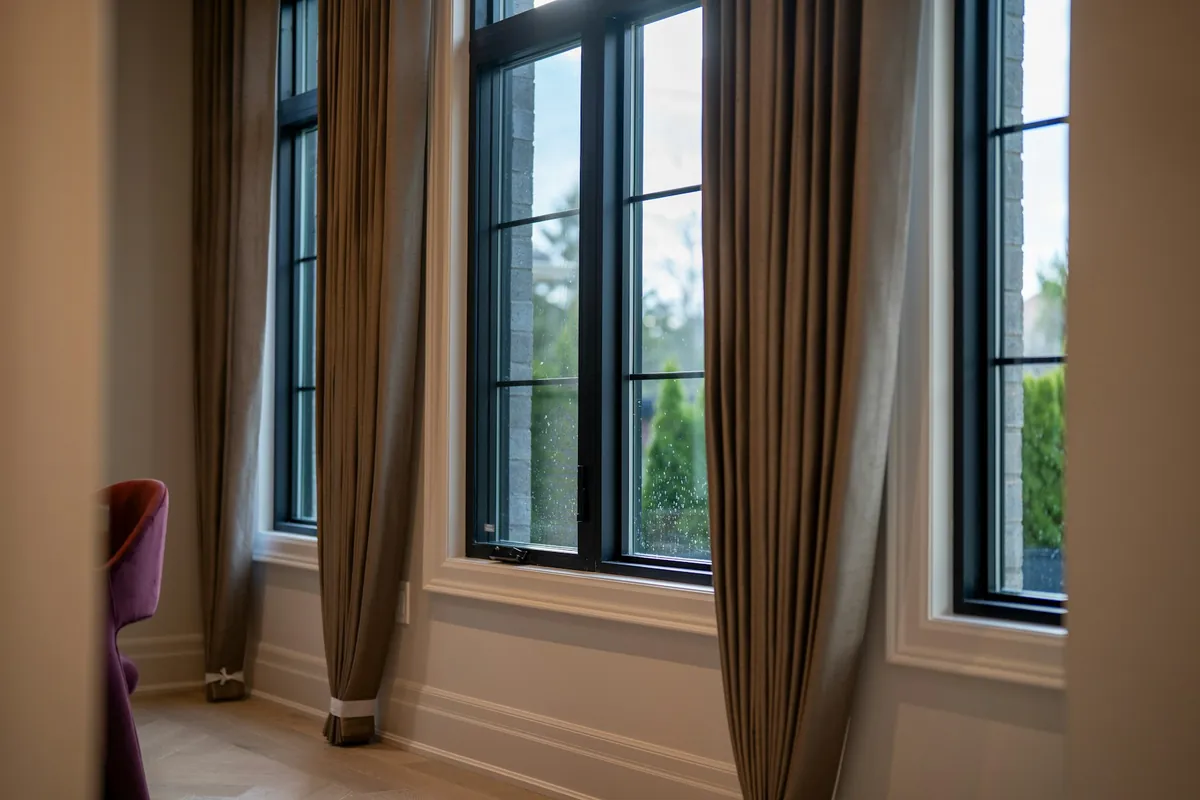
Behind formal drapery
A slim shade set close to the glass, so a colonial’s drapes can hang for looks while the shade handles the sun.
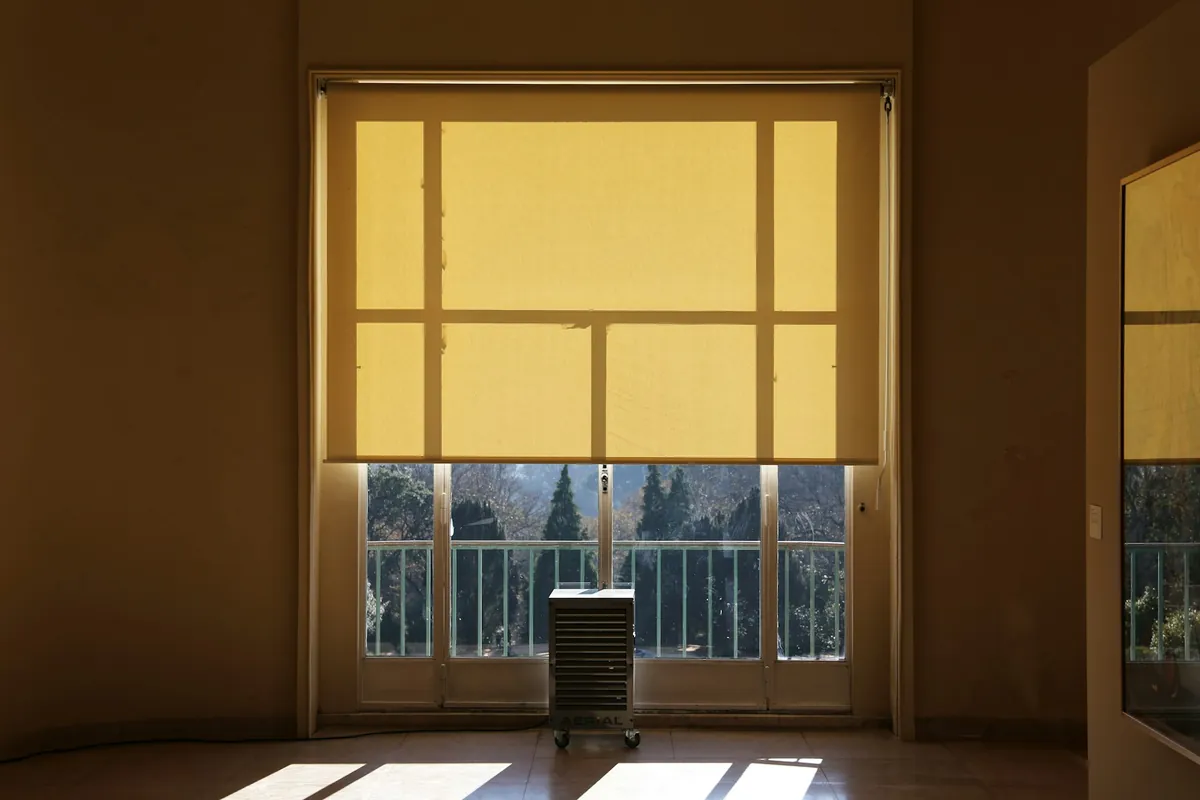
Colour and weave
Plain, woven and coloured fabrics, from quiet whites that disappear against trim to a colour that makes a point.
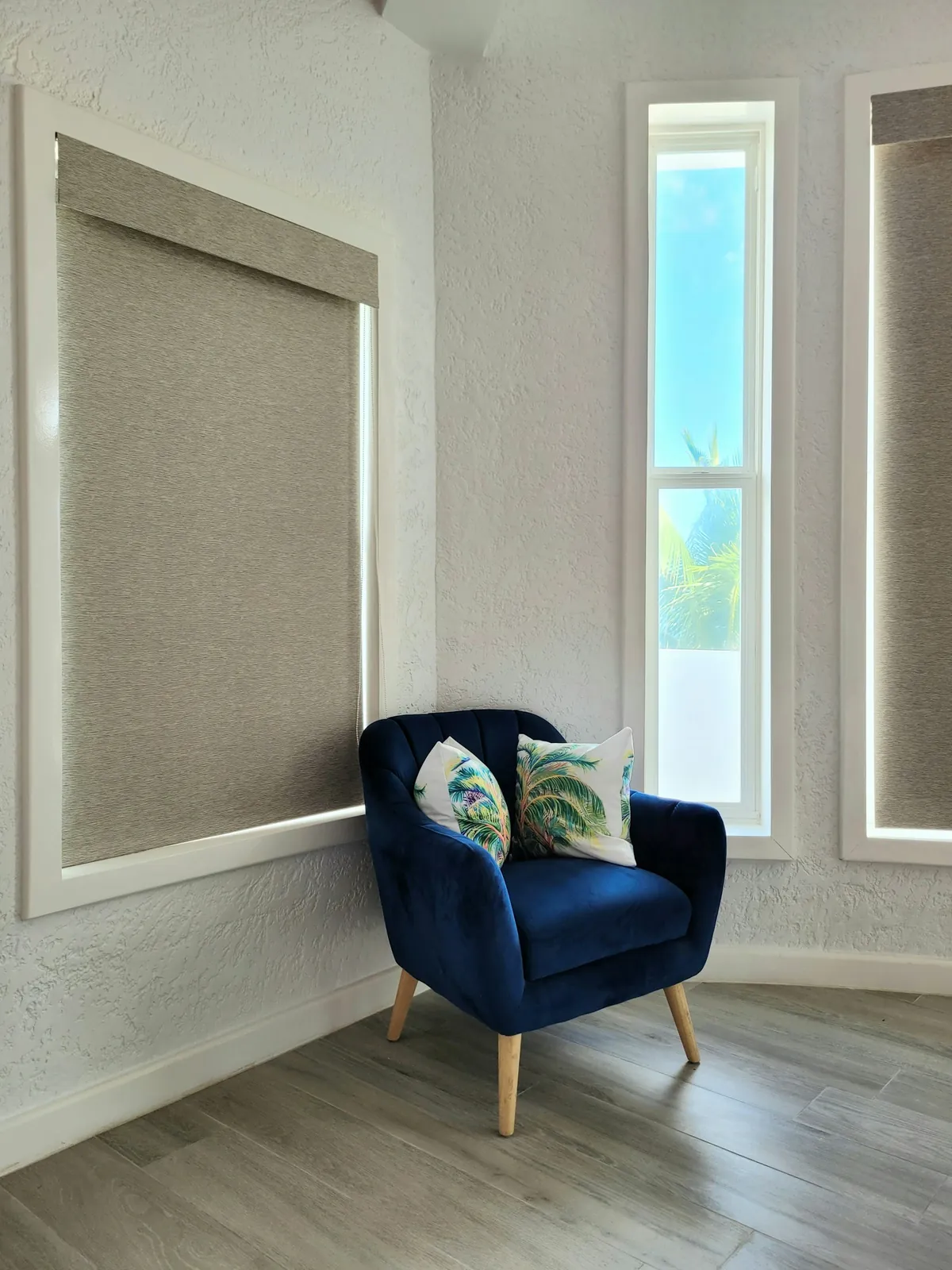
Motorised operation
Shades that raise and lower by remote or wall switch, useful on a run of glass too long to work by hand.
Planning Roller Shades in Barrington, RI
Planning roller shades in Barrington, RI begins with the house rather than the fabric book. A mid-century living room with a wall of glass to the river and a colonial dining room with a pair of tall sash either side of the fireplace need almost opposite things from a shade, even if they sit a few doors apart on the same road. Below is how we approach each one, how to choose between fabric and screen, and how an order runs from the first call to the day the shades go up.
Mid-century moderns and their window walls
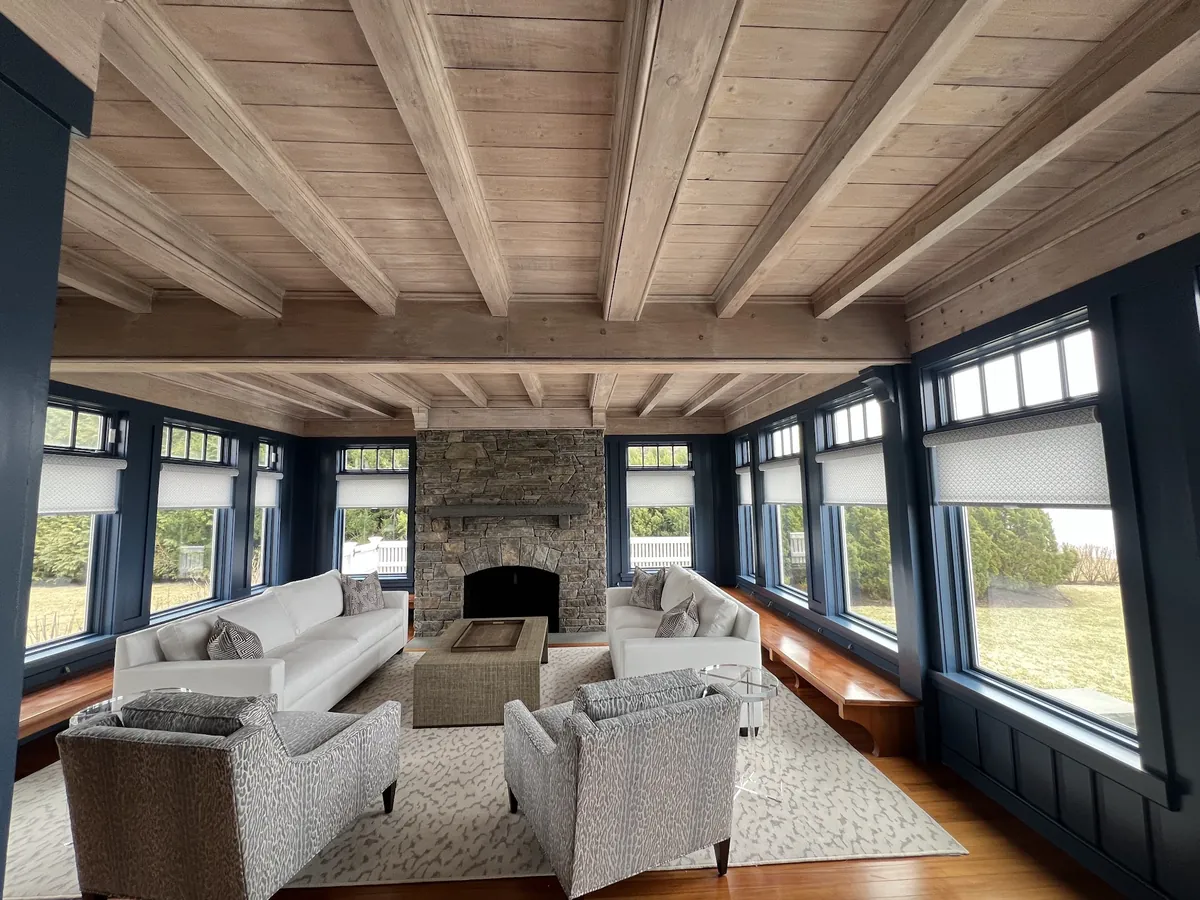
The mid-century houses along Rumstick Road and Nayatt Road were designed to bring the outside in. Their windows tend to run in long horizontal bands or floor-to-ceiling sheets, often with low sills that put the bottom of the glass close to the floor. That is what makes the rooms so open, and it is also what makes them hard to live in on a bright afternoon or after dark, when every lit room is on show to the garden.
A roller shade is a natural fit for this architecture. It has no slats, folds or pleats to compete with the clean lines of the frame, and when raised it rolls away into a narrow band at the head of the window, leaving the glass almost entirely clear. Lowered, it reads as a flat, calm plane of fabric.
Long runs of glass raise a planning question before anything else: how many shades, and where do they meet? A band of windows can take one shade per pane, so each lowers on its own, or a smaller number of wider shades whose edges line up with the window’s own mullions. We look at where the frame divides naturally, because a seam that falls on a mullion all but vanishes, while one that falls across clear glass draws the eye. Lining up the hem heights matters just as much, so a half-lowered row looks deliberate rather than ragged.
Low sills bring their own detail. When a window runs down near the floor, the lowered shade hangs close to furniture, radiators or a built-in bench, and the hem is often within reach of children and pets. We note what sits in front of each window during measuring, so the shade clears it and the controls end up somewhere sensible.
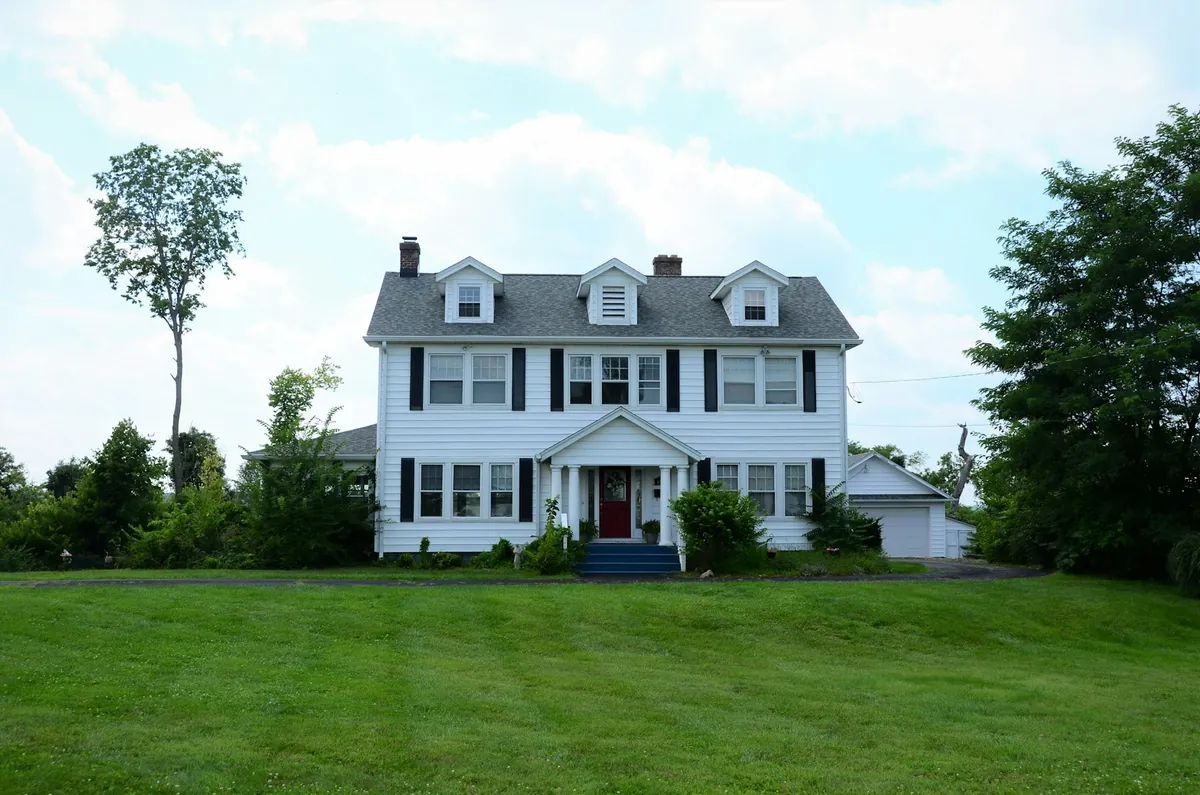
Center-hall colonials and formal rooms
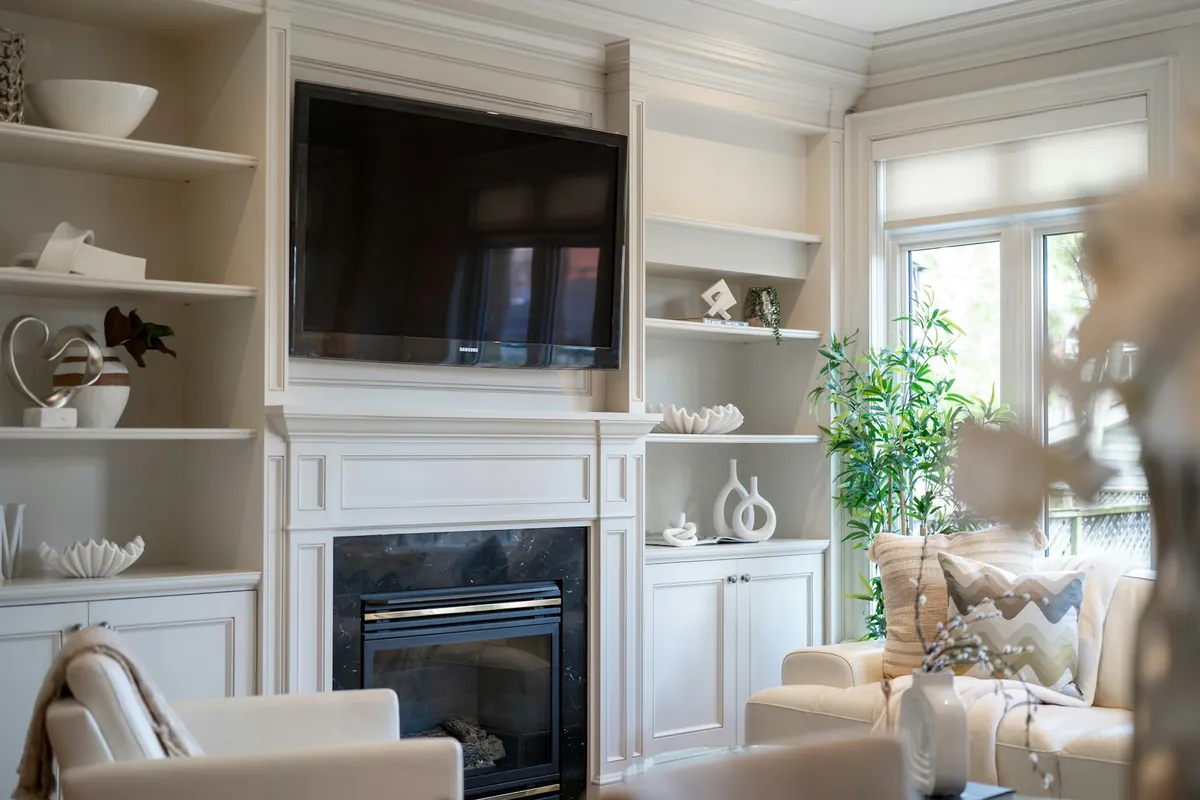
In a center-hall colonial the formal living and dining rooms set the tone of the house, and drapery is usually part of that. Side panels or full drapes frame the windows and soften rooms that are often large and high. What the drapes do less well is the everyday adjustment: dropping a little to cut the glare at lunch, or closing fully at night without dragging heavy fabric across the rod.
That is where a roller shade earns its place in these rooms. Fitted inside the window frame, close to the glass, it sits behind the drapery and stays nearly invisible when raised. The drapes can then stay where they look best, and the shade does the daily work. A light filtering fabric keeps the room bright and private through the day. A blackout fabric suits a colonial bedroom where the drapes alone let light in around the edges.
Because the shade and the drapes are seen together, we plan them together. The colour of the shade fabric should sit comfortably with the drapery lining, and the depth of the window frame decides whether the shade fits inside it or needs to be mounted above. Window Works makes drapes as well, so both can be measured on the same visit; our custom drapes in Barrington page covers the drapery side.
The upstairs rooms of a colonial are usually simpler: regular double-hung windows, often several of them, seen from the street as a matched row. Keeping the same fabric and colour on every front window gives the house an even face, even where the rooms behind use different fabrics for different jobs.
Rooms that face the Barrington River
Houses with Barrington River frontage get the best of the view and the hardest of the light. Low sun reflects off the water late in the day, so glare reaches deep into living rooms, kitchens and studies on the river side. Nobody wants to cover a river view with a solid fabric, and that is exactly the problem a solar screen solves.
A solar screen is a woven fabric with small openings through the weave. Lowered over bright glass, it cuts the glare to a level you can sit and read in, while the shapes of the water, the boats and the far bank stay visible through it. Raised, it disappears, and the window is clear again for the rest of the day.
Openness: How Much View, How Much Glare
The choice that matters most with a solar screen is its openness, meaning how open or close the weave is. It comes down to a trade between view and glare.
- A more open weave keeps more of the view and lets in more daylight. It suits rooms where the outlook is the point, such as a river-facing living room in a mid-century house.
- A closer weave holds back more glare and gives more privacy by day. It suits a study where you work at a screen, or a room that takes the sun head on.
Colour changes the result too. A darker screen tends to give a clearer view out, because the fabric itself catches less light. A lighter screen looks softer from inside and sits closer to white window frames and trim. The only reliable way to judge either is at your own window, at the time of day the light is worst, so we bring samples to hold up against the glass.
Some rooms need a screen by day and a solid fabric at night. A river-facing bedroom is the usual example. One answer is a solar screen paired with drapes that close in the evening. Another is to choose blackout fabric for that room and accept a little less view when the shade is down. We talk this through room by room before anything is ordered.
From First Call to Fitted Shades
We stay in contact with you from your first question until the last shade is up. An order usually runs like this.
- Get in touch by phone or the form, mention the rooms that bother you most, and we set up a free quote.
- A specialist comes to your house to measure. Each window is measured on its own, the frame depth is checked for an inside mount, and anything in the way, such as a crank, a lock or a radiator under a low sill, is noted.
- You choose fabrics, screens, colours and how each shade operates, with samples at your windows or by visiting the showroom.
- Your quote lists every window with its fabric and mount, so nothing is left vague.
- The shades are made to the measurements taken in your home.
- Our team installs them, checks that each shade rolls straight and stops where it should, and shows you how they work.
- Should a shade need adjusting later, the same Swansea team picks up the phone.
Inside the frame or above it
An inside mount places the shade within the window opening. It looks neat, leaves the trim on show and is the usual choice behind drapery in a colonial. It needs enough depth in the frame, which is why we check every window rather than assuming one size fits the house.
An outside mount places the shade on the wall or trim above the opening and lets it overlap the edges. It suits shallow frames, windows with hardware that would catch the fabric, and bedrooms where you want to cut the light at the sides as far as possible. On a mid-century window wall with slim frames, an outside mount along the head of the whole run can also give one clean line.
Choosing fabric room by room
Most Barrington houses end up with more than one fabric. The river side might take solar screens, the bedrooms blackout, and the kitchen and family room a light filtering fabric that lets the day in without leaving the room on show. In a mid-century open plan, where living, dining and kitchen run together under one long stretch of glass, a single fabric and colour across the whole run keeps the room calm, even if the openness changes where the sun is strongest.
In the colonial’s formal rooms, the shade is more of a supporting player. A plain fabric in a colour drawn from the drapery lining or the wall usually works better than a pattern, because the drapes already carry the decoration.
Motorising a long run of glass
On a mid-century window wall, raising and lowering a row of shades one by one gets tedious. Motorised roller shades raise and lower by remote or by a switch on the wall, and several shades can move together so a whole run lifts in one go. The same is true of a tall window above a stair or a shade behind heavy drapery that is awkward to reach. You can read more on our motorised page for the town.
Who Measures and Fits Your Shades
Window Works is a family store in Swansea, founded in 1988 and now in its second generation. For over 37 years it has made window treatments for houses across the SouthCoast of Massachusetts and the Rhode Island East Bay, and Barrington is a short drive across the state line.
- Window treatment specialists, not a counter that takes orders
- Every window measured in your home before a shade is made
- Installation by our own team
- In constant contact with you until the job is done
- Warranties offered on what we sell
A single bedroom shade gets the same care as a full river house.
Keeping shades looking right
Roller shades ask for very little. Dust the fabric now and then with a soft brush or a vacuum on a low setting, and wipe most fabrics gently with a damp cloth if a mark appears. Solar screens near the river can be brushed down in the same way. Raise each shade fully once in a while so the fabric rolls evenly. If a shade you already own starts to roll unevenly or a bracket works loose, ask us to take a look.
When a roller shade is not the answer
A roller shade is not right for every window, and we will say so. A colonial’s formal room may suit Roman shades in a fabric that matches the drapery, a sliding door to the deck is often better with a vertical blind, and a room that needs to hold its heat in winter may be better with cellular shades. The full range for the town is on our window treatments for Barrington homes page, and everything we make in roller and solar screen is on the main roller shades page.
See the Fabrics in Person
The Swansea showroom is the easiest place to compare roller fabrics and solar screens side by side, see how a weave looks with daylight behind it, and feel the difference between a light filtering cloth and a blackout one before you choose roller shades in Barrington, RI.
Bring a photo of the room, a swatch of the drapery or a paint chip if you have one, and our specialists will help you narrow it down. The showroom also carries the Norman range, so you can see those shades in person too.
Questions from Barrington
How do you handle a long band of windows in a mid-century house?
We look at where the frame divides and plan the shades so their edges meet on the mullions, with matching hem heights. A long run can also be motorised so the shades raise together.
Can a roller shade sit behind the drapes in a formal colonial room?
Yes. Fitted inside the frame, close to the glass, it stays almost out of sight when raised and handles light and privacy while the drapes hang where they look best.
Will a solar screen still let me see the river?
That depends on the openness you choose. A more open weave keeps more of the view, a closer weave cuts more glare. We bring samples to hold up at your window.
My windows come down almost to the floor. Is that a problem?
No. We note what sits in front of each low window when we measure, so the shade clears furniture and the controls are placed where they are easy to reach.
How do I arrange a quote?
The quote costs nothing. Send the form or press the call button, list the rooms, and we will find a time to come and measure.
Book Your Free Quote
Whether you have one bright river room or a whole house of windows in mind, getting roller shades in Barrington, RI starts with a free quote. Press the call button to reach the Swansea store, where you can book that quote, set a time for measuring in your home or ask how installation works. You can also leave your details on the form and we will get back to you. To handle fabrics before anyone visits, the contact page shows how to find the Swansea showroom. Window Works is rated 5.0 on Google.