
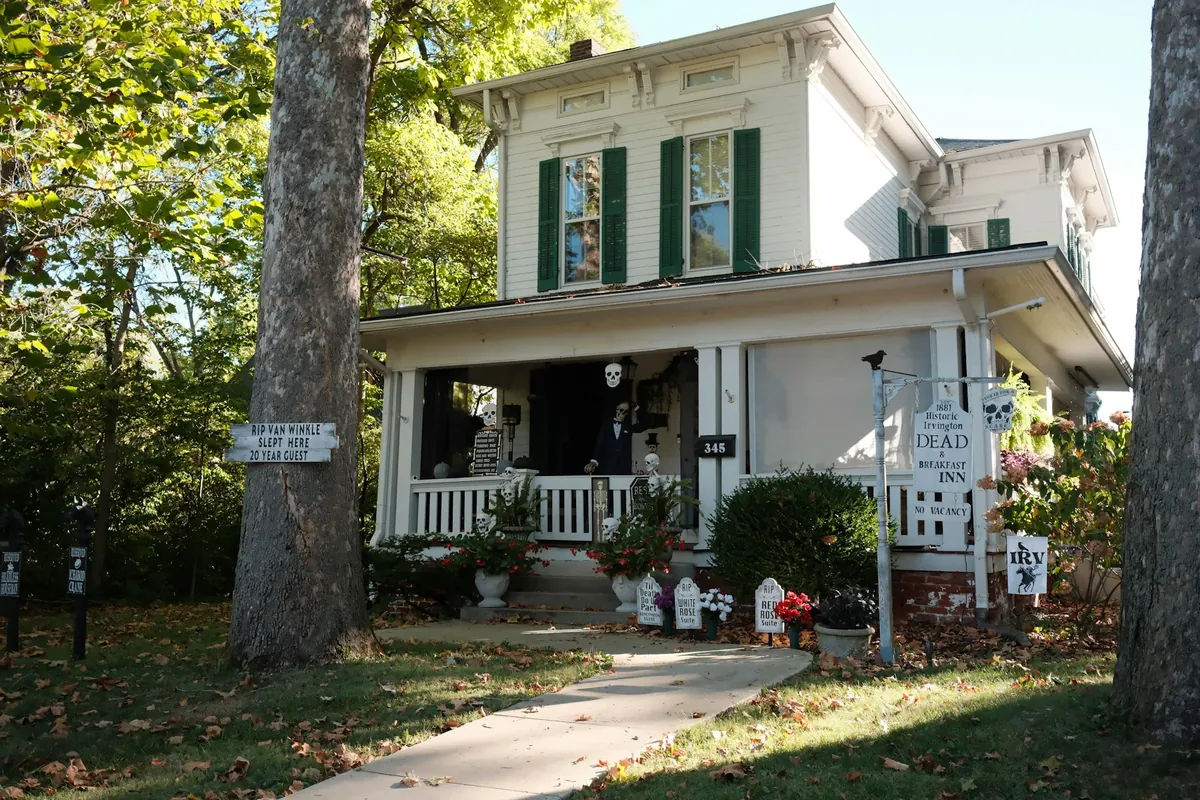
Narrow Windows, Close Neighbours
Pawtucket’s older houses share one window above all others: the tall, narrow double-hung sash. You find it in the Victorians on Oak Hill and Quality Hill and in the mill-era three-deckers on the streets off Broadway, and in both cases the houses sit close to the street and close to each other. For woven wood shades in Pawtucket, RI, that sets the priorities. Length and privacy come first. Width hardly comes into it.
A narrow window behaves differently from a wide one. The shade is long and slim, so its proportions, its weave and the light at its edges all show more. And because the house next door may be a few steps away, the side windows often need screening all day rather than only at night.
A woven shade brings real warmth to these rooms, which often have tall ceilings and plain plaster walls. The trick is choosing a weave that looks right on a slim window and a liner that keeps the neighbours out.
- Woven wood and bamboo, with or without a fabric liner
- Measured at each window and installed by our own team
- Weaves and liners to compare at the Swansea showroom
Woven Shades for Tall, Slim Sash
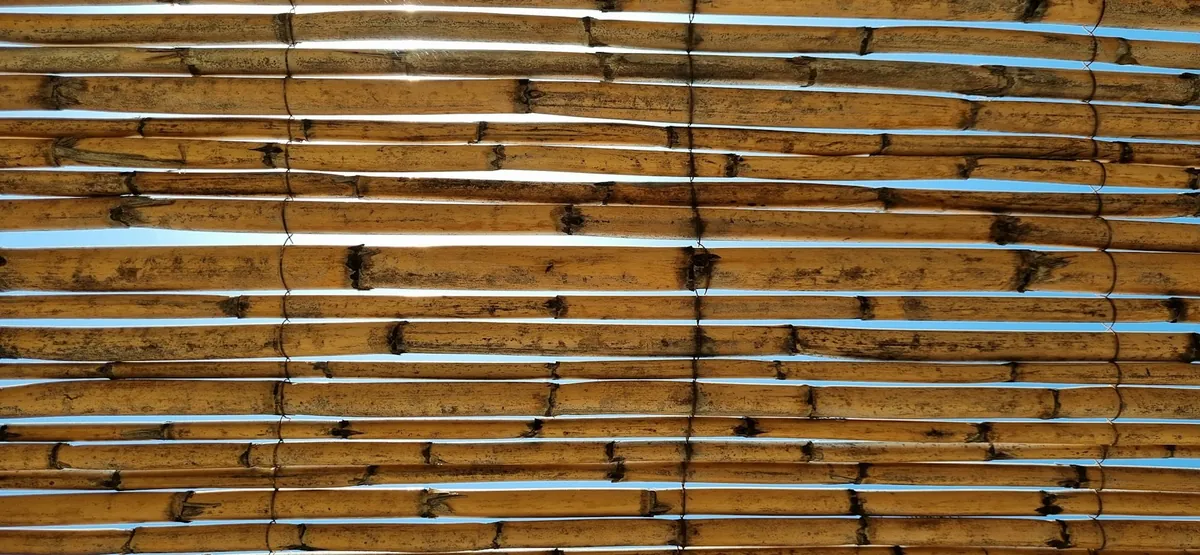
Fine weave, slim window
A close bamboo weave has a small, even texture that suits a narrow window. A chunky weave can look heavy on a slim opening.
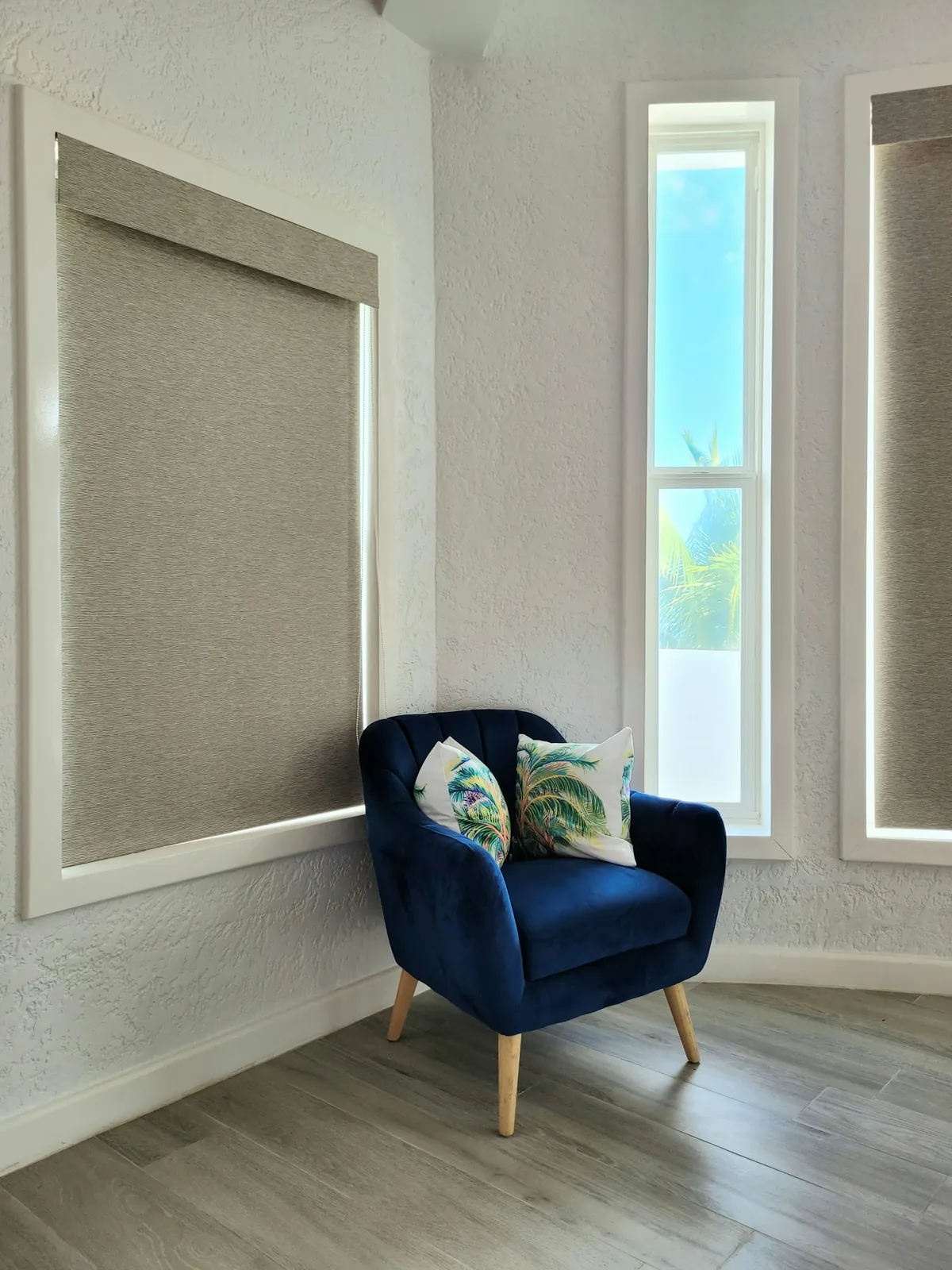
A long drop with a liner
Full-length natural texture on a tall window, with a privacy liner behind so the room stays screened from the house next door.
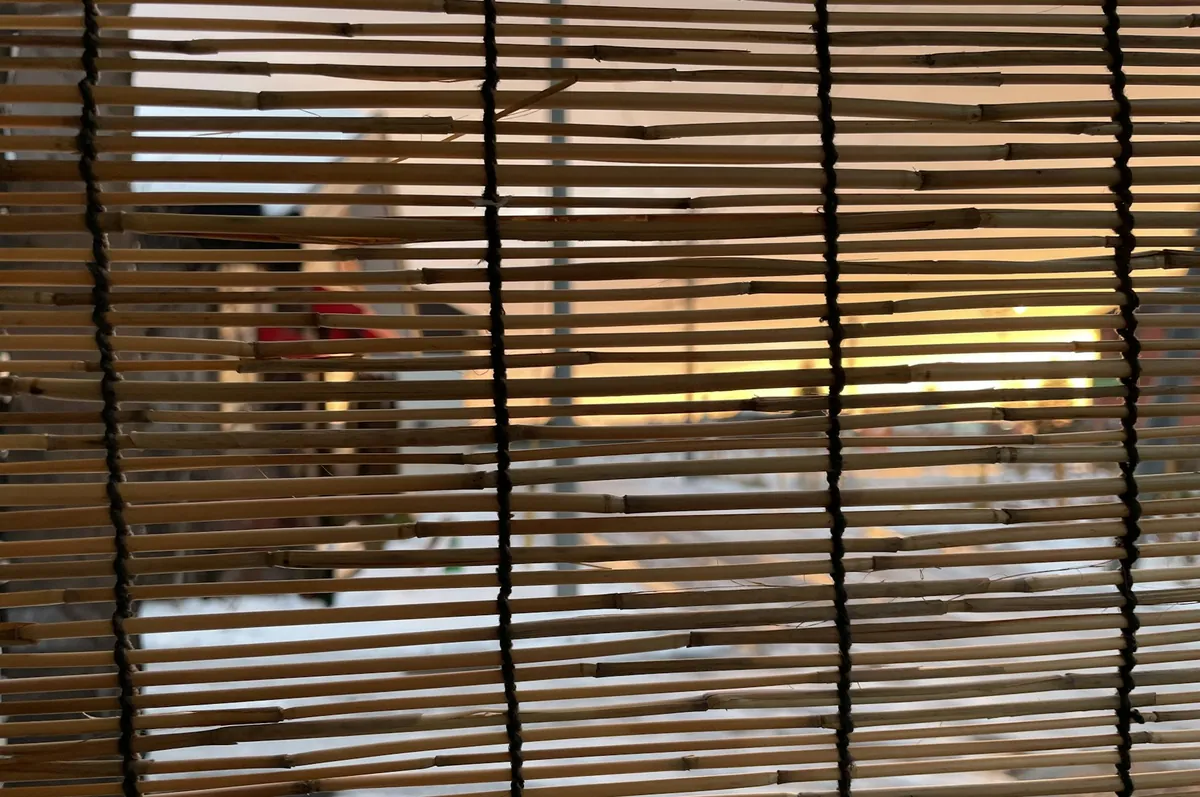
Unlined at the back
Rooms facing the yard can often go without a liner, for the texture, the light and a soft view out through the weave.
Length Before Width: Woven Wood Shades in Pawtucket, RI
When we measure for woven wood shades in Pawtucket, RI, most of the conversation is about height and privacy rather than width. A tall, narrow window has a long drop, a slim profile and a lot of glass above the eye line, and each of those affects the shade.
Proportion and weave
On a wide window, a bold, open weave can look relaxed and generous. On a narrow window, the same weave can look busy, because the texture is large compared with the width of the shade. A finer weave, with smaller strands set close together, usually sits better on a slim opening. From across the room it looks like one even strip of natural texture, top to bottom, instead of a busy pattern.
Colour plays into proportion too. A pale bamboo on a tall, narrow window keeps the window looking light and tall. A dark wood draws the eye and can make a narrow window look narrower, which can be lovely in a study but heavy in a small bedroom.
Light at the edges
An inside-mounted shade sits within the frame, and there is always a small gap between the edge of the shade and the side of the frame so the shade can move freely. On a wide window those gaps are a small share of the opening. On a narrow one, they are a bigger share, and in a bedroom they let a thin line of early light in on each side.
Where that matters, mounting the shade outside the frame, over the trim, covers the gaps. The shade is made a little wider than the opening, so it overlaps the frame on each side and blocks the light that would leak round an inside mount. Where the trim is original and worth showing, we may stay inside the frame and choose a liner that keeps the room dark enough. It is a choice made window by window.
The long drop and the stack
A tall window means a long shade, and when a woven shade is raised, all that material gathers at the top. A folding style makes a deeper stack, which on a narrow window can cover a fair part of the upper sash. A rolling style keeps it slimmer. Where there is room above the frame, mounting the shade higher lets the raised stack sit on the wall and clear the glass. In the Victorians on Oak Hill, with their tall ceilings, that space is usually there.
Oak Hill and Quality Hill Victorians
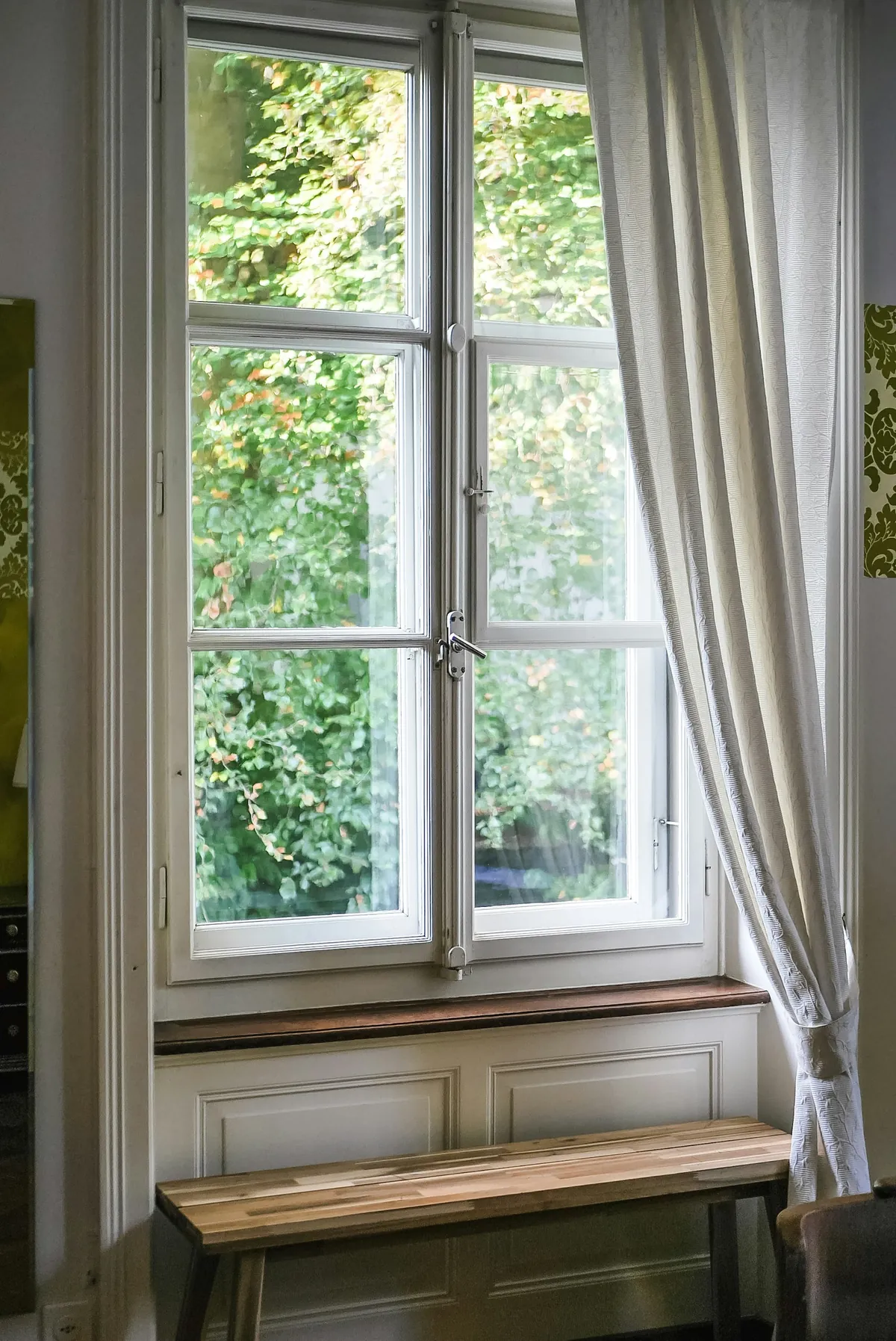
The Victorians on Oak Hill and Quality Hill often have tall windows in pairs, with narrow single windows on the stairs and in the halls and sometimes a bay on the front. Paired windows usually take a matching pair of shades, made to the same length and set to lower to the same line, so they read as one design. A bay takes a shade on each of its windows, measured separately because the angled windows are seldom identical.
Victorian woodwork is often dark and detailed, with tall casings and deep sills. A mid or warm woven wood suits that woodwork, while an outside mount can be sized to the width of the casing so the shade looks part of the trim rather than stuck on in front of it.
Privacy in close-set houses
Pawtucket’s older streets put houses close together. On the front, the ground-floor windows are near the pavement. On the sides, a neighbour’s window may sit directly across a narrow gap at the same height. A tight weave helps by day, because the outside is brighter than the room and the weave hides most of what is inside. At night that reverses, and an unlined weave lets shapes show through when the lights are on.
That is why most street-facing and side windows in these houses take a privacy liner. It turns the shade into a screen after dark and still passes a gentle, even light by day. On the sides, where privacy is needed all day, a lined shade can stay lowered without making the room dim, especially if both the weave and the liner are pale.
Sash you open every day
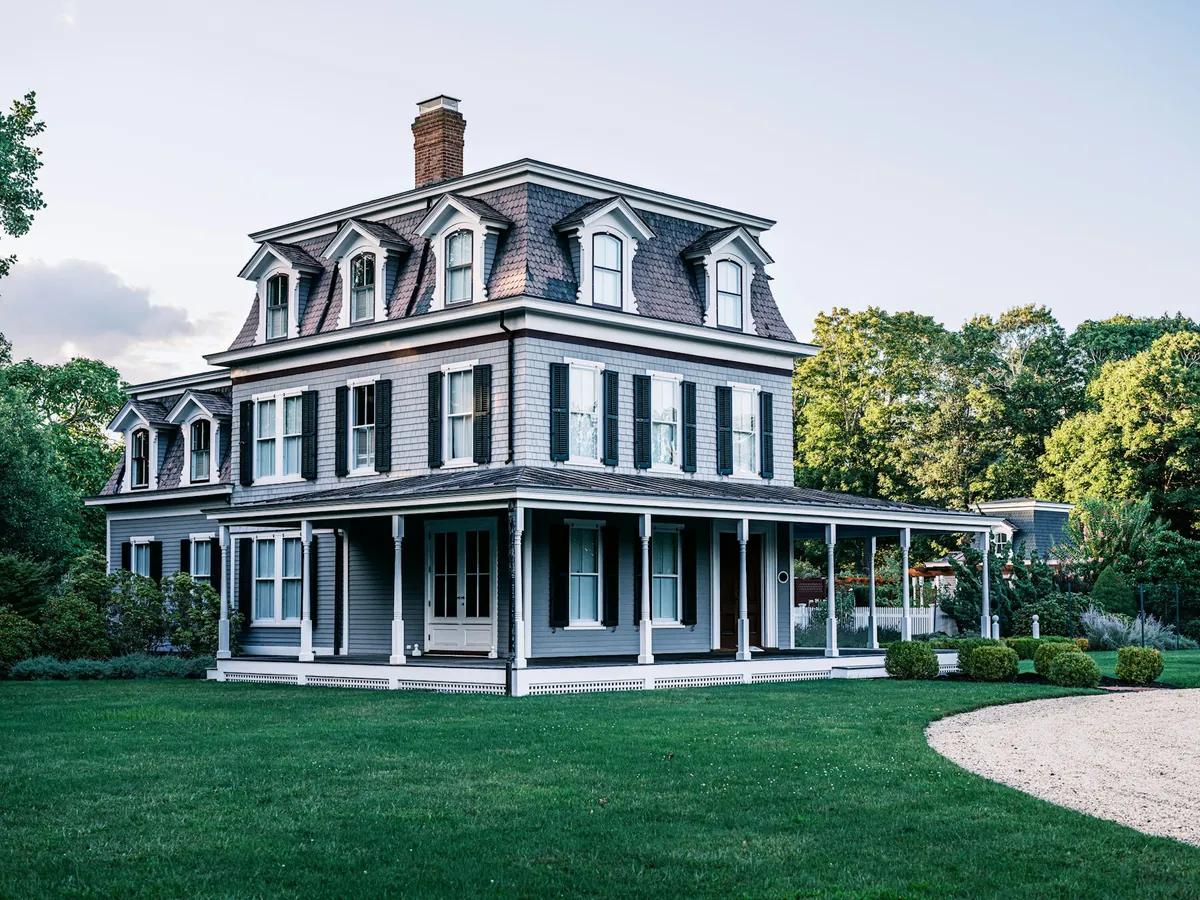
Old double-hung windows are made to be opened, and in summer many of them are, top and bottom, to pull air through a tall room. A shade on a window like that should get out of the way easily. On an inside mount, we set the headrail far enough forward in the frame that the sash locks and lifts clear of it, and we place the controls on the side away from any furniture so you can raise the shade before you open the window.
Woven wood shades in Pawtucket rooms that are opened often tend to suit a rolling style, which lifts in one smooth movement and leaves a slim roll at the top, or a folding style mounted high so the stack sits above the opening sash altogether. We will look at how you use each window before suggesting either.
Planning a whole Victorian
A Victorian on Oak Hill can easily have a dozen or more tall windows, plus the narrow ones on the stairs. Doing them all at once is the surest way to get a consistent look, but it is not the only way. Many people start with the front rooms, which face the street and need privacy first, and add the bedrooms and back rooms later in the same weave and colour.
How an Order Goes
We keep in touch with you at every stage until the job is done. The steps are short.
- Ring the Swansea store from the call button, or fill in the form, to set up your free quote and tell us roughly what you want covered.
- A specialist comes out and measures each sash, noting how deep the frame is, how much wall there is above the trim and which windows are overlooked.
- You choose weave, colour and liner for each room, and come to the showroom to see them side by side if you would like.
- Your quote lists every window with its mount and liner.
- We make each shade to the measurements taken at your house.
- Our installers fit the shades, check that each one travels straight on its long drop and show you how they work.
Three-Deckers off Broadway
Off Broadway, the mill-era three-deckers stand shoulder to shoulder, each floor a complete flat with its own front room, kitchen and bedrooms, and a stack of porches on the street side. The windows are the same tall, narrow sash found in the Victorians up the hill, but the setting is tighter and the light is harder won, so woven wood shades in Pawtucket three-deckers are planned a little differently.
Front rooms that sit behind a porch
A porch roof over a window takes a good share of the sky away before any shade goes up. Add a dark, close weave and the front room can feel dim at midday. We usually steer these rooms towards a pale bamboo or grass in a medium weave. If the room is at street level, a light privacy liner goes behind it; on an upper floor, where the porch rail and the height already block most views in, the shade can often stay unlined.
Windows that face the next building
The gap between two three-deckers can be little more than a path, and the windows on that side look straight at the neighbours’ windows, floor after floor. Those openings want screening from morning to night. A lined shade left down most of the day does that job, and because the liner still passes light, the room does not go dark. Pale on both faces is the rule we suggest here, so the room keeps what little side light it gets.
One building, several flats
Where one owner is fitting out more than one floor, or the whole building, the street view deserves a thought. Passers-by see the backs of the shades on every floor at once. Choosing the same neutral liner for all the front windows gives the building an orderly face, and each flat can still pick its own weave colour for the inside of the room.
Kitchens at the back
Most three-decker kitchens sit at the rear, away from the street, and often catch the afternoon sun. A woven shade at a kitchen window away from the sink can be open and unlined, bringing warmth and texture to a room that is usually all hard surfaces. The window over the sink is another matter: steam and splashes are hard on natural fibres, and we would suggest a treatment built for wet rooms there.
Upper-floor bedrooms
The bedrooms on the top floor of a three-decker get the first light and the most heat in summer, sitting right under the roof. A room-darkening liner behind a pale weave keeps them restful without making them look gloomy by day, and on a narrow window an outside mount over the trim closes the edge gaps that would otherwise let a line of dawn in down each side.
What Sets Window Works Apart
Window Works is a Swansea family business that dates from 1988 and is now led by its second generation. For over 37 years our specialists have worked through the East Bay and the Massachusetts SouthCoast, and tall, narrow old sash like Pawtucket’s is everyday work for us.
- A team that specialises in window treatments
- Measuring in your home, every window, every time
- Installation by our own team
- In touch with you from start to finish
- Warranties offered on the products we sell
Liners, Colour and the Look of the Room
Choosing the liner for each room
Most houses with close neighbours end up with a mix of liners. Street-facing living rooms take a privacy liner, so the room is screened at night but still bright by day. Bedrooms take a room-darkening liner, which holds back most of the morning light. Back rooms facing the yard can often go unlined, so the weave shows its full texture and casts its pattern of light on the floor.
The front of each shade is the same weave whatever liner is behind it, so from inside the house the rooms still look like one set.
Colour in tall rooms
Tall ceilings and plaster walls give woven shades a lot of space to be seen. A pale bamboo or grass keeps a tall room light and makes the most of the daylight from narrow windows. A mid-brown ties into old floors and woodwork. A dark wood brings warmth to a study or a dining room used in the evening.
Natural colour shifts with the light. With the sun behind it a shade turns warmer and a touch darker, which is why it is worth judging a sample at your own window, not on a counter.
Woven shades with curtains
On a tall, narrow window, a woven shade with a single curtain panel at one side, or a pair at the sides, adds softness and height. The shade handles light and privacy, and the fabric gives colour and can be drawn in the evening for extra screening. We make curtains and drapes too, so both can be chosen and measured together.
Narrow hall and stair windows
The halls and stairs in a Pawtucket Victorian often have the narrowest windows of all, sometimes only wide enough for a single slim shade. A fine, pale weave keeps these windows light. Where a window is so narrow that a woven shade would look out of scale, a blind or a simple roller shade may suit it better, and we will say so. Our custom blinds in Pawtucket page covers that option, and the Pawtucket window treatments page shows our other services in the city.
Care
Woven shades need little looking after. Draw a soft brush or a vacuum’s brush tool down the shade every so often to lift the dust, keep it dry and blot any spills. If an older woven shade’s cord frays or its lift starts to stick, bring it to us, as a repair is often enough. Everything we make in woven wood is on the main woven wood shades page.
Weaves and Liners Side by Side
The Swansea showroom is the best place to see how a fine weave and a coarse one look at the scale of a narrow window, and how much each liner screens when you hold it to the light. Bring a photo of your windows or a measurement of the room if you have one. The Norman range is on display as well.
Questions from Pawtucket
Which weave looks best on a tall, narrow window?
Usually a finer weave, with small strands set close together. A bold, open weave can look busy on a slim window.
Will light leak round the sides of a shade on a narrow window?
An inside mount always leaves small gaps at the edges. Mounting the shade outside the frame, over the trim, covers them.
My side windows face the house next door. What should I choose?
Pick a lined shade and leave it down. The liner screens the view from next door, and soft daylight still comes through.
Does a raised woven shade cover the upper sash?
Woven shades stack when raised. Mounting above the frame, or choosing a rolling style, keeps more of the glass clear.
How much is a quote?
A quote is free. Press the call button or send the form and list the windows involved.
Book Your Free Quote
Take the next step with a free quote. Tap the call button to speak with the Swansea store about measuring in your home or installation, or use the form and we will get back to you. Anyone who wants to handle the weaves beforehand will find showroom directions on our contact page. Window Works holds a 5.0 Google rating.