
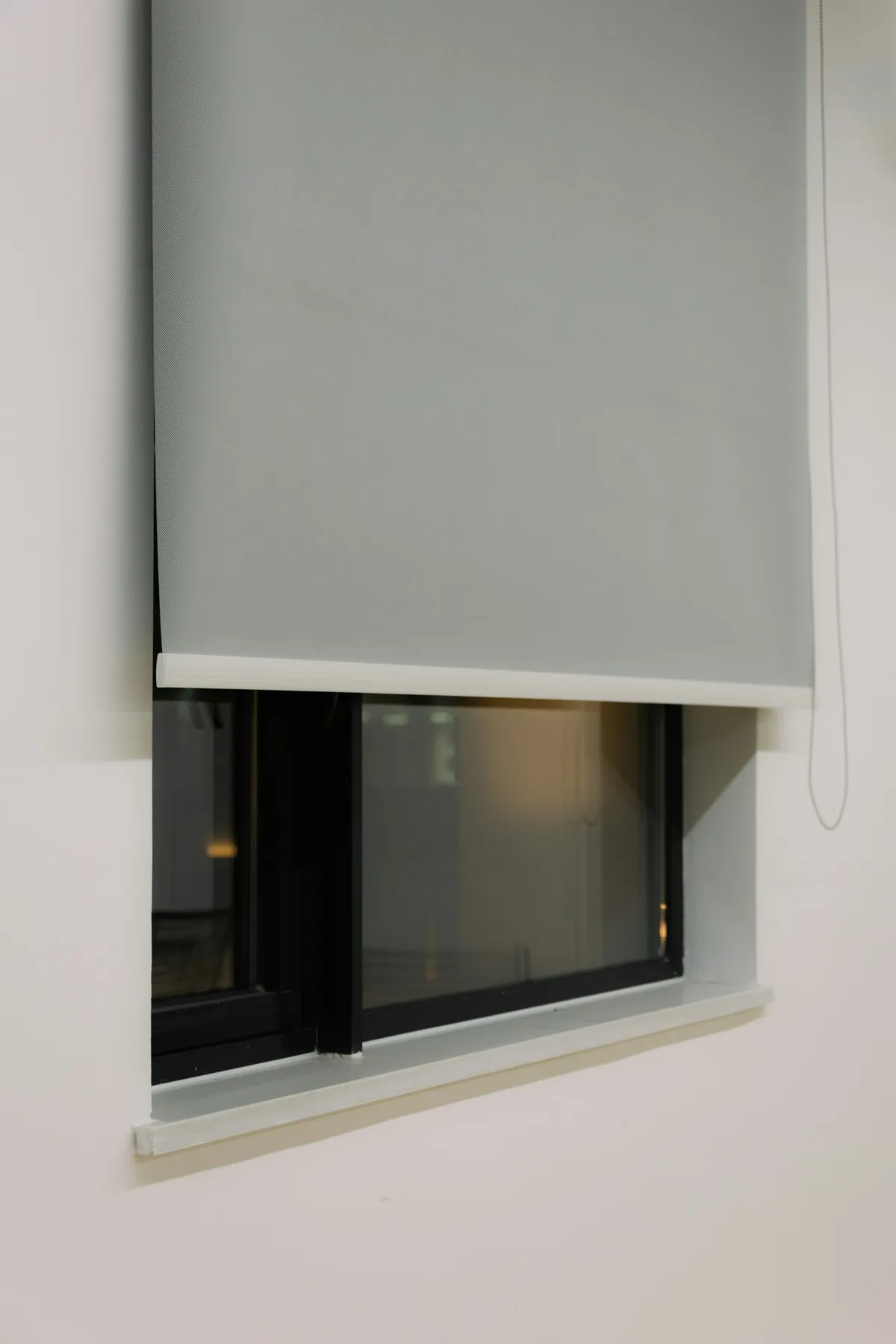
Tall Sash, Deep Reveals and a City on a Hill
Fall River’s older housing was built tall. The mill-era three-deckers and Victorians through the Highlands and Corky Row have high ceilings and narrow double-hung windows that reach well above head height, and the top of the sash is a stretch for almost anyone. Motorized blinds in Fall River, MA bring that top rail within reach of a button, so a shade can be lowered fully at night and raised clear of the glass in the morning without a chair to stand on.
Two other things shape the work here. Those older windows sit in deep interior reveals, which is good news for a powered shade, because the headrail and motor can tuck inside the frame. And the hills mean one side of a house can be in bright sun while the other stays in shade, so the rooms on each side want different handling.
- Remote and wall-switch operation
- Every window sized in the apartment or house
- Hung and tested by our installers
What We Motorize in Fall River Homes
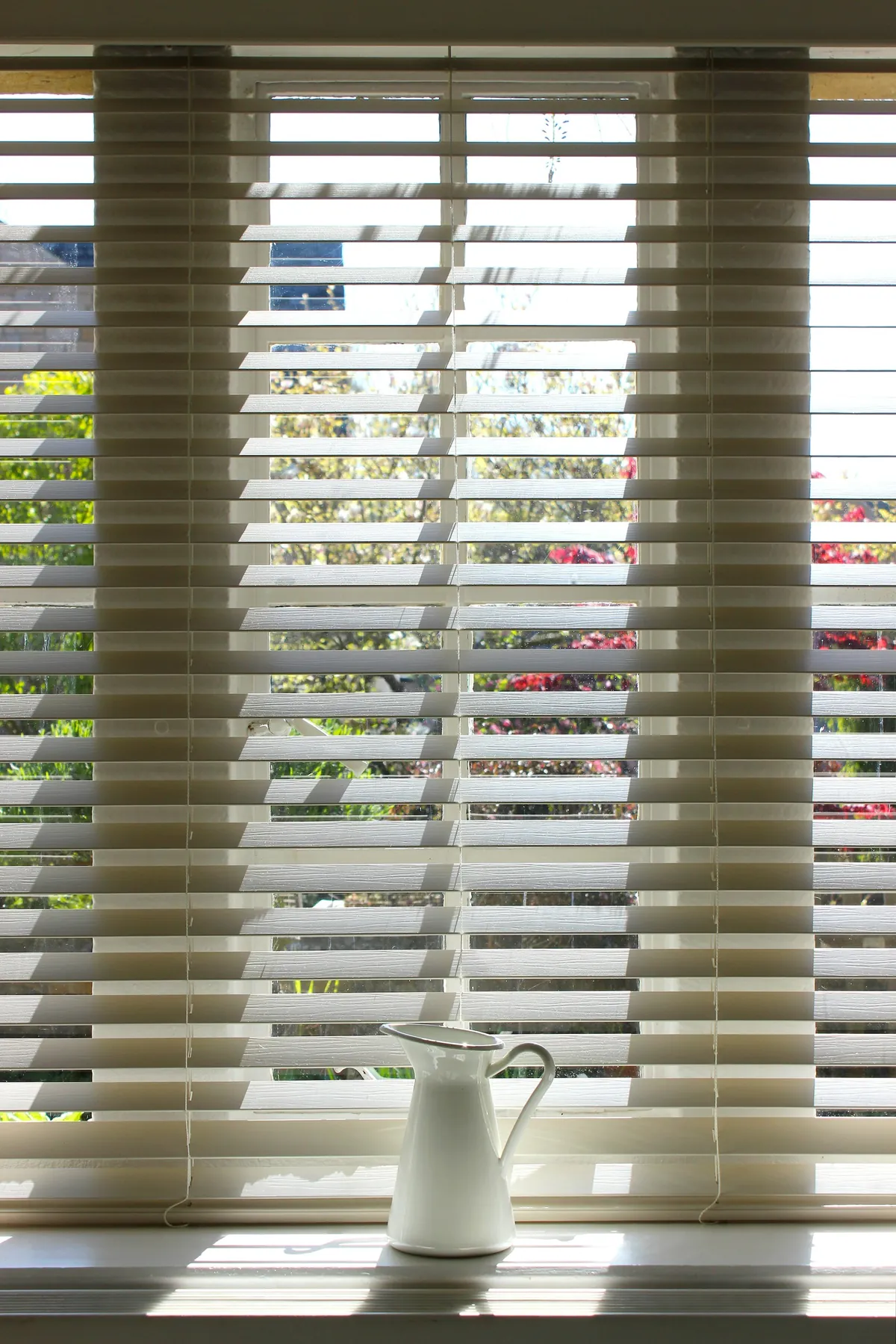
Tall Victorian sash
High windows in parlours and front rooms, lowered all the way down without stretching for the bottom rail.
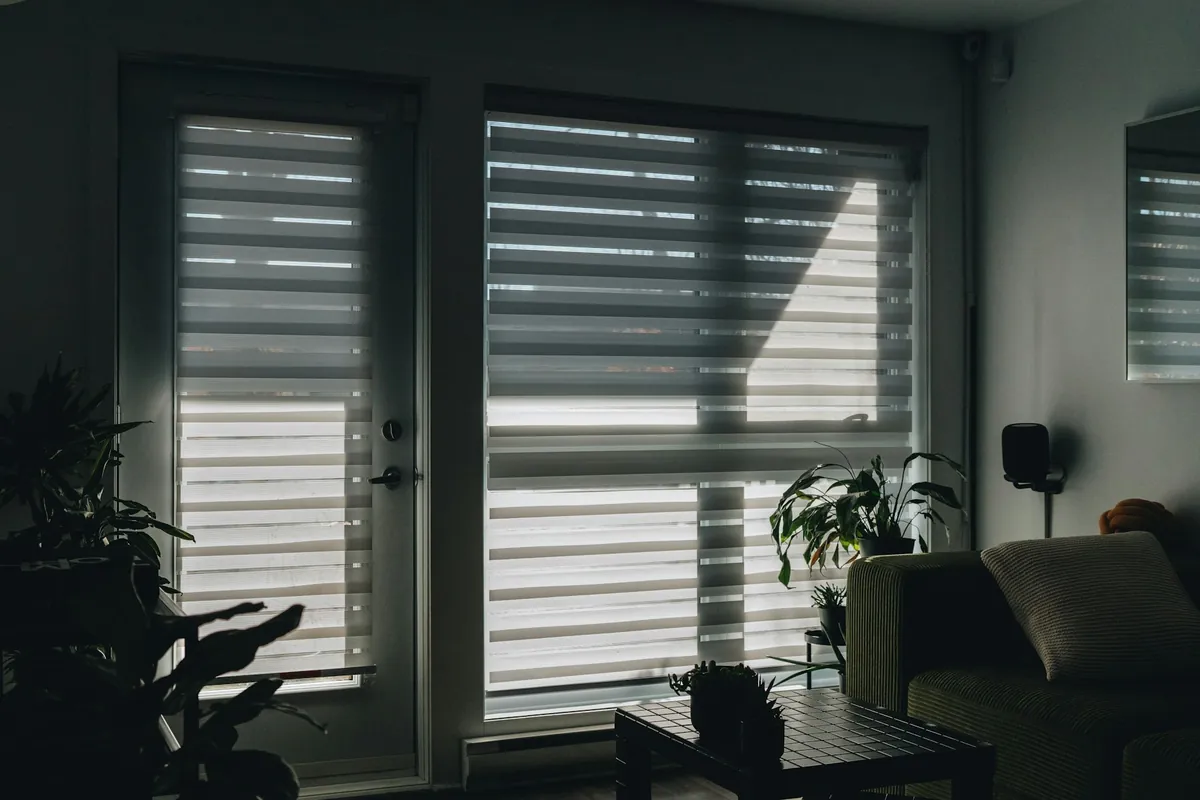
Three-decker flats
One floor of a stacked house, with every window in a long, narrow flat run from the room you are in.
Waterfront glass
Large modern panes in the condominiums on the downtown waterfront, where a by-hand shade is heavy work.
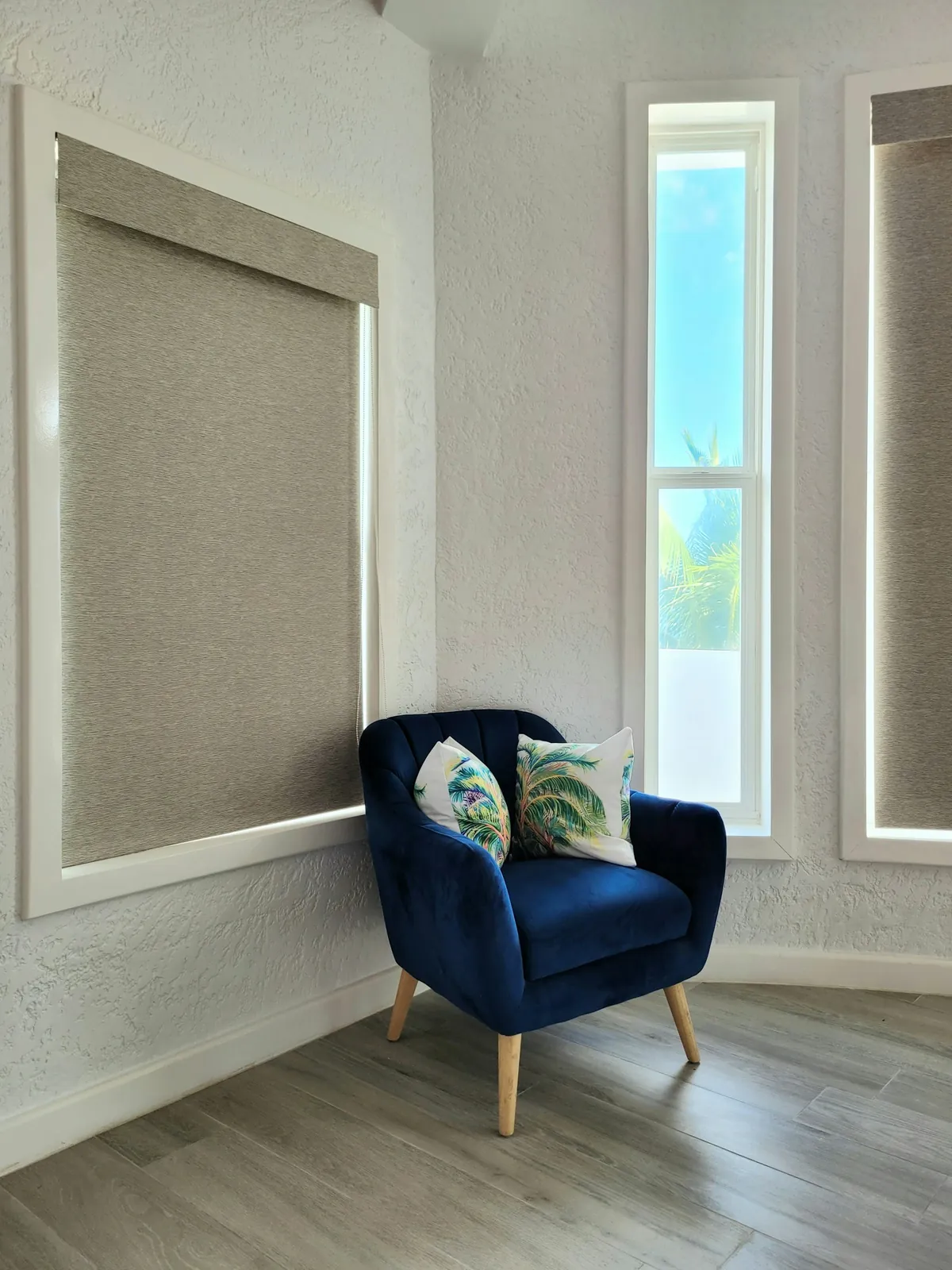
The sunny side of the hill
Rooms that take the strongest light, lowered as the sun comes round and raised again when it goes.
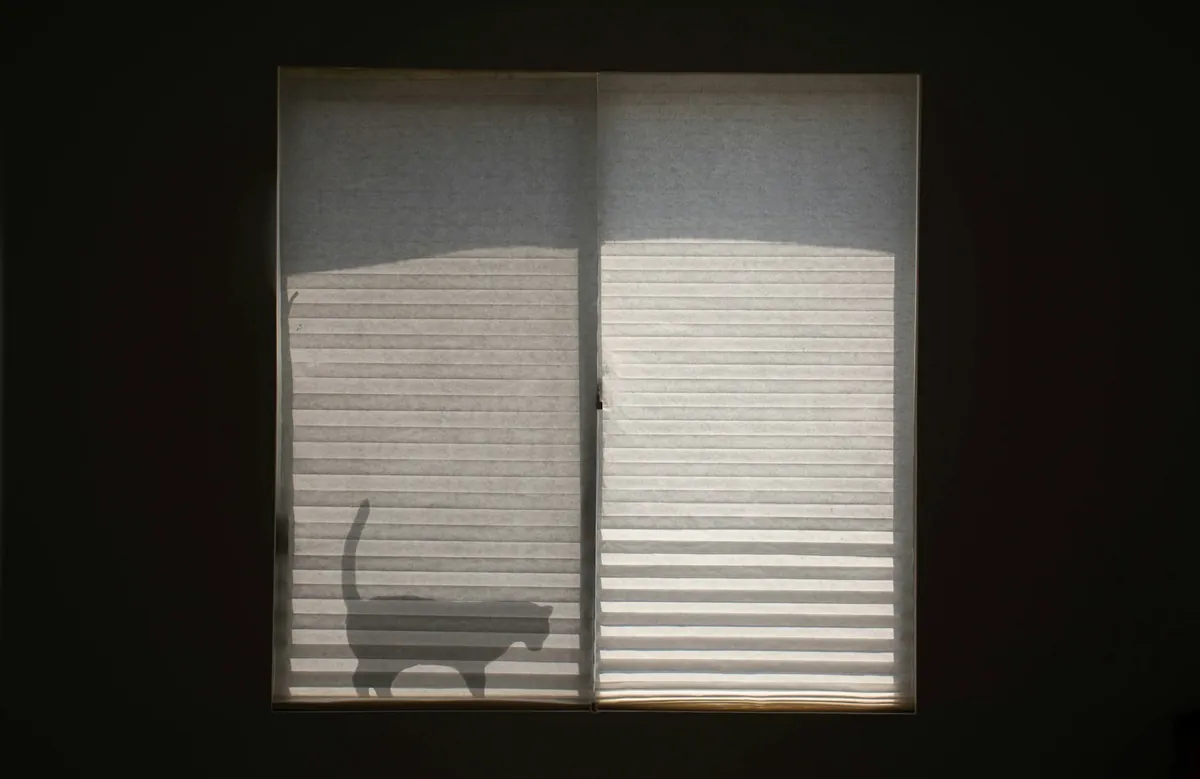
By remote
Left on the arm of a chair or a nightstand, for the rooms you settle into for the evening.
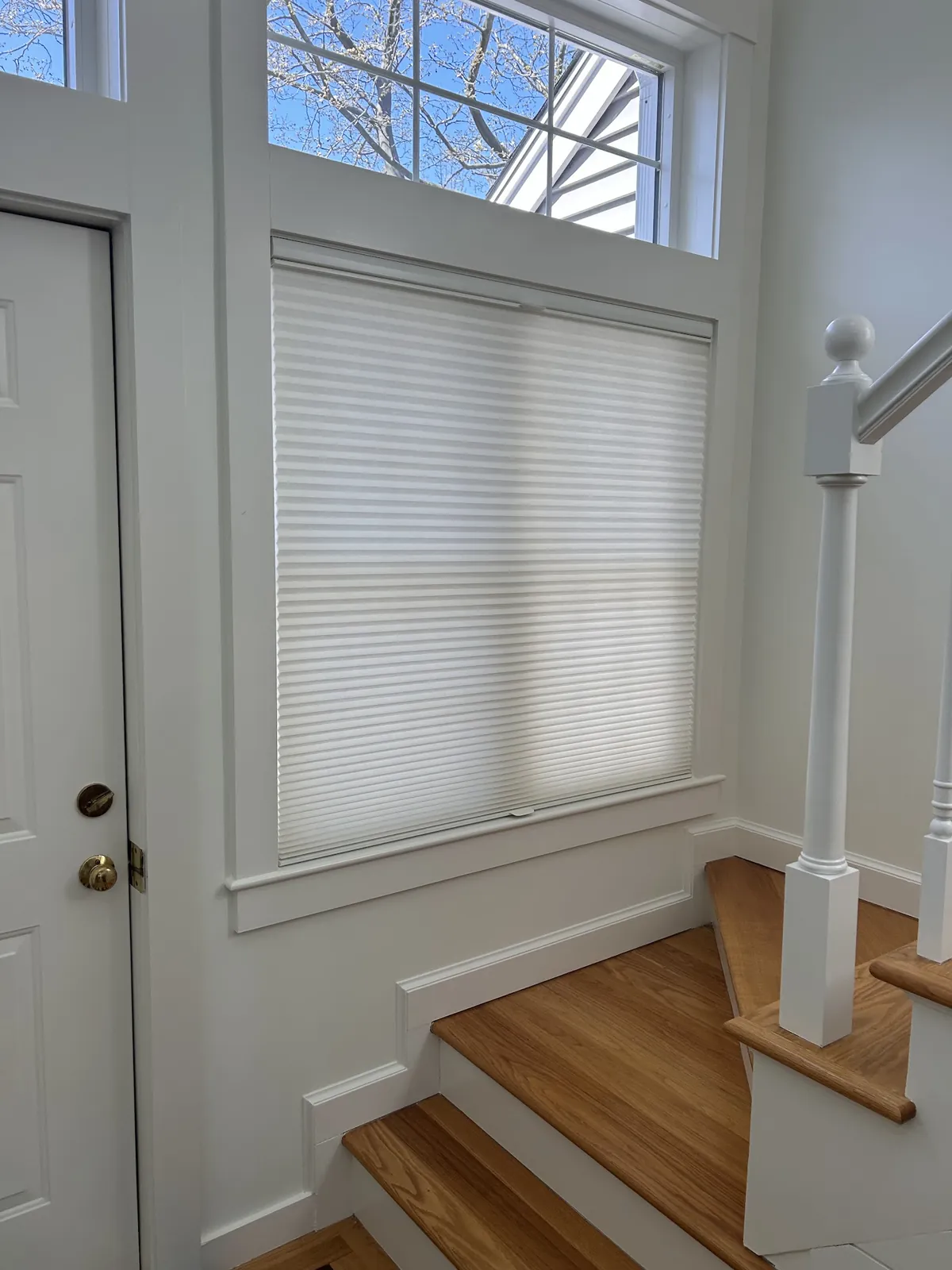
By wall switch
Mounted by the doorway of a hall or stairway, so the shades go up the moment you come through.
Motorized Blinds in Fall River, MA, House by House
Most Fall River homes need only a few powered windows, and choosing motorized blinds in Fall River, MA starts with finding them. In a Victorian it is often the tallest front windows and the stair. In a three-decker flat it is the run of windows down one side of the apartment. In a waterfront condominium it is the big glass looking out over the harbour. Everything else can stay hand operated, matched in fabric and colour so the powered windows do not stand out.
The deep reveal is the motor’s friend
The thick walls of the older Fall River houses leave a deep reveal inside each window, and that depth makes a powered shade easy to fit neatly. With room inside the frame, the motor and headrail sit within the opening as an inside mount, out of sight from most of the room, and the trim around the window stays fully on show. A shallower modern frame often forces the headrail outside, onto the wall above.
Depth is not the same everywhere, though. A replacement window set into an old opening can leave a different reveal from its neighbour, and a bay in a Victorian may have a shallower frame than the flat windows beside it. Each reveal gets its own tape measure reading, and from those readings we decide window by window whether the shade goes inside the frame or above it.
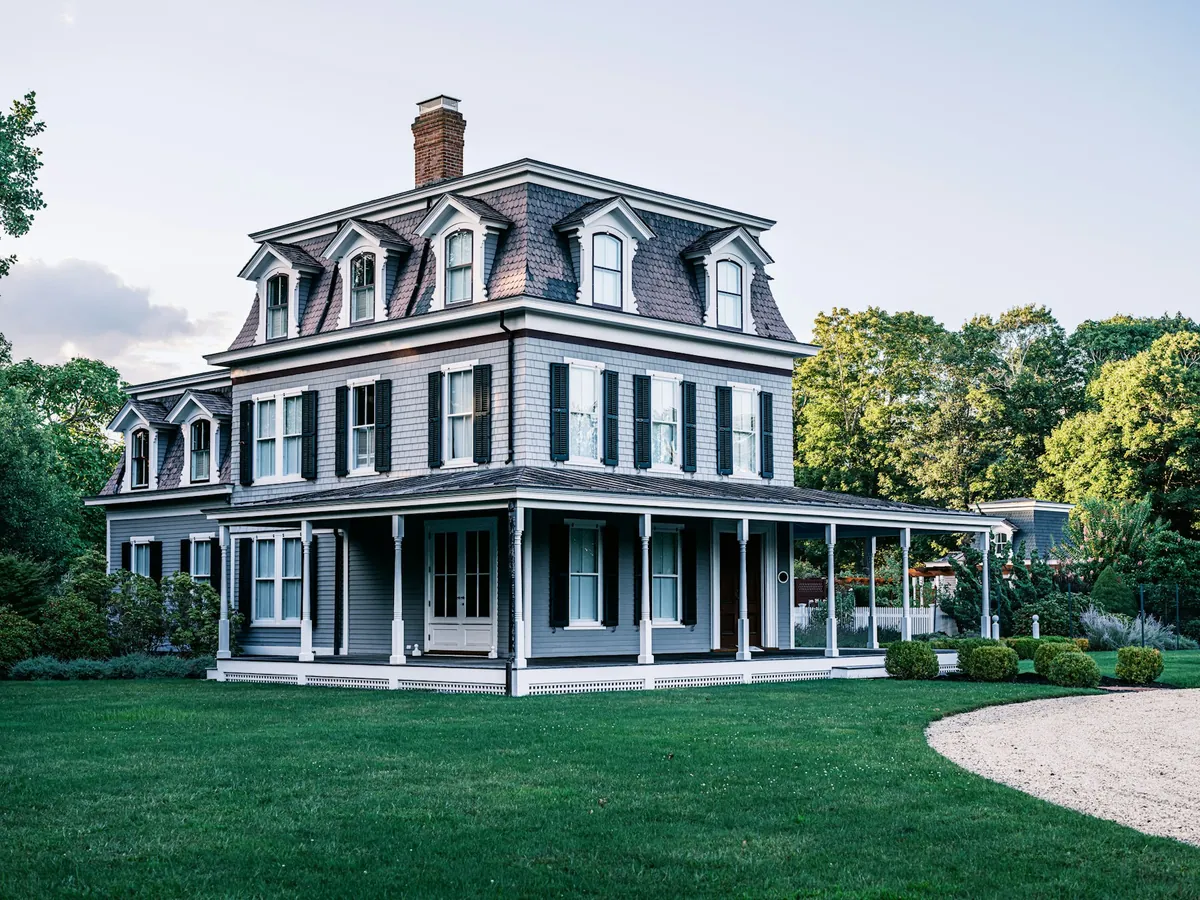
Victorians in the Highlands
The Highlands Victorians have the tallest windows in the city, and some of the most awkward. A parlour window can run nearly floor to ceiling. A stair landing window may sit high above the steps, where nobody can reach it safely by hand. Many of these windows have been left bare, or covered with a shade that never moves because getting to it is a nuisance.
A motor changes that. The landing window can be worked from a plate on the wall at the bottom step. The front parlour shades can be lowered in the evening from a remote and raised in the morning, so the room is private at night and full of light by day. Because the windows are so tall, we pay attention to how far each shade drops and where it should stop, so a lowered shade meets the sill neatly and a raised one clears the view.
Bay windows in these houses are worth a word too. Every face of the bay takes a separate shade cut to that face, and the angles at the corners need care so the shades do not catch on one another. With motors on the bay, each face can be lowered while you stay seated.
Three-deckers and long flats
A three-decker flat usually runs front to back, with windows down one side and a cluster at each end. Going from room to room down the apartment to close each shade is the sort of chore that gets skipped. Put motors on the front room and the main bedroom, and the street side of the flat can be shut for the night without leaving your seat.
Three-decker porches and the windows that open onto them are another common spot. A door with glass, or a window right beside the porch, often needs privacy more than anywhere else in the flat because the porch is shared or overlooked. A powered shade there comes down as you settle on the porch after work.
Because the flats are stacked, the light differs from floor to floor. The top floor gets more sky and more heat in summer. The ground floor is closer to the street and the passing traffic. We take that into account when suggesting a fabric, so the shade does what that particular floor needs.
How a Fall River Order Comes Together
Here is the usual course of an order. You get updates from us at each stage, right through to the finished installation.
- You ask for a free quote, by phone or through the form, naming the rooms that trouble you.
- You visit the Swansea showroom, if you like, to see the styles, handle the fabrics and try a remote and a switch.
- A specialist visits to measure, records the depth of every reveal and how high each window runs, and asks what each room is used for.
- We suggest which windows to power and which control suits each room.
- Your quote lists each window, with the powered ones marked.
- Each shade is built to the visit’s measurements.
- Installation day: our team hangs them, pairs each remote and switch, and shows you how they work.
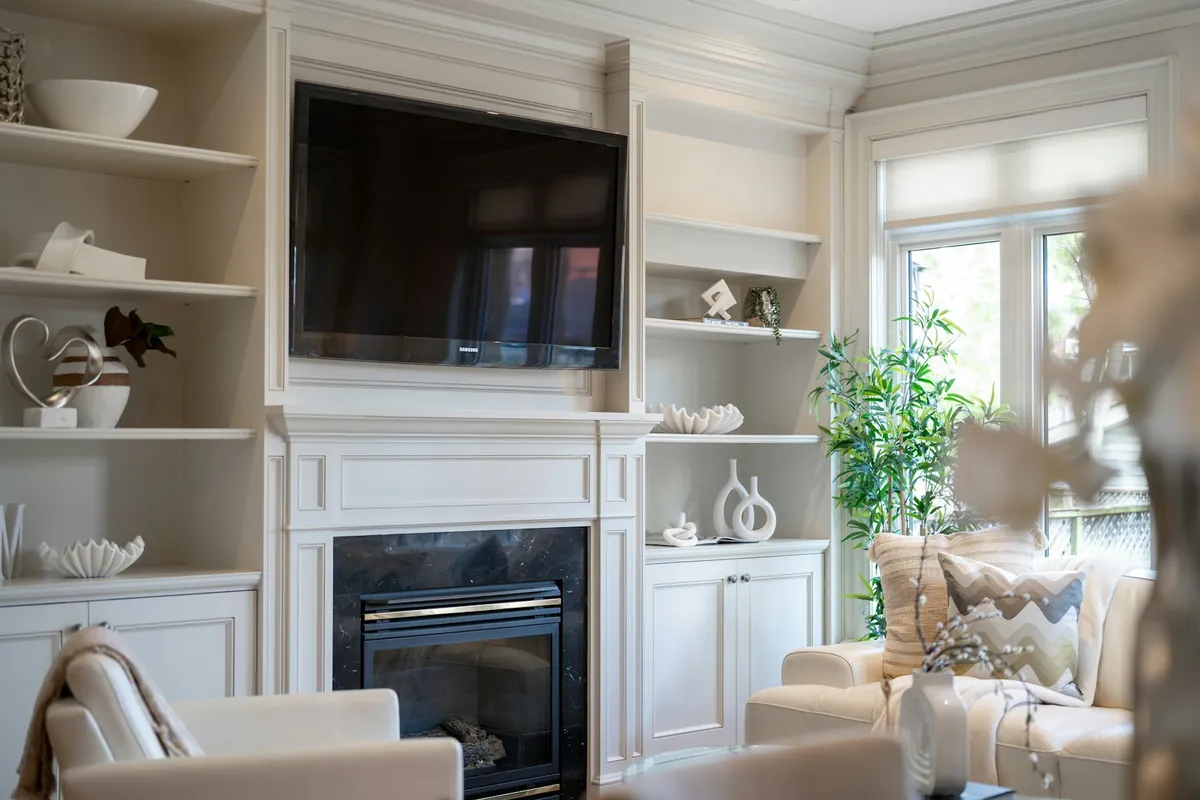
The waterfront condominiums
The condominiums on the downtown waterfront are the opposite of the mill-era houses: large modern glass, often floor to ceiling, with the harbour and the river beyond. The windows are big, the frames are slim and the light off the water can be fierce in the afternoon. A shade across a pane that size takes real effort to lift, and a cord running down the glass spoils the clean look of the room.
Powered shades suit these rooms well. They raise evenly every time, nothing dangles against the window, and you can bring them down from the sofa as the evening glare builds off the water. For a view you want to keep, a fabric that cuts glare while leaving the outlook visible is often the best choice for daytime, with something heavier in the bedrooms. When we measure, we study how the ceiling meets the glass, because with so little frame there may be only one clean place for the headrail.
Light on a hillside street
Fall River climbs steeply from the water, and that shapes the light in a way flatter towns never see. A house on a hillside street can have its front rooms looking out over the rooftops into strong afternoon sun while the back rooms, set against the slope, stay dim most of the day. The two sides want different things.
On the sunny side, the shades work hard: lowered through the brightest hours, raised once the sun drops. That is where a motor pays off most, because those shades are moved most often. On the shaded side, the shades mostly need to give privacy at night, and a hand-operated shade may be all you need. Planning motorized blinds for Fall River houses this way puts the motors where they are actually used.
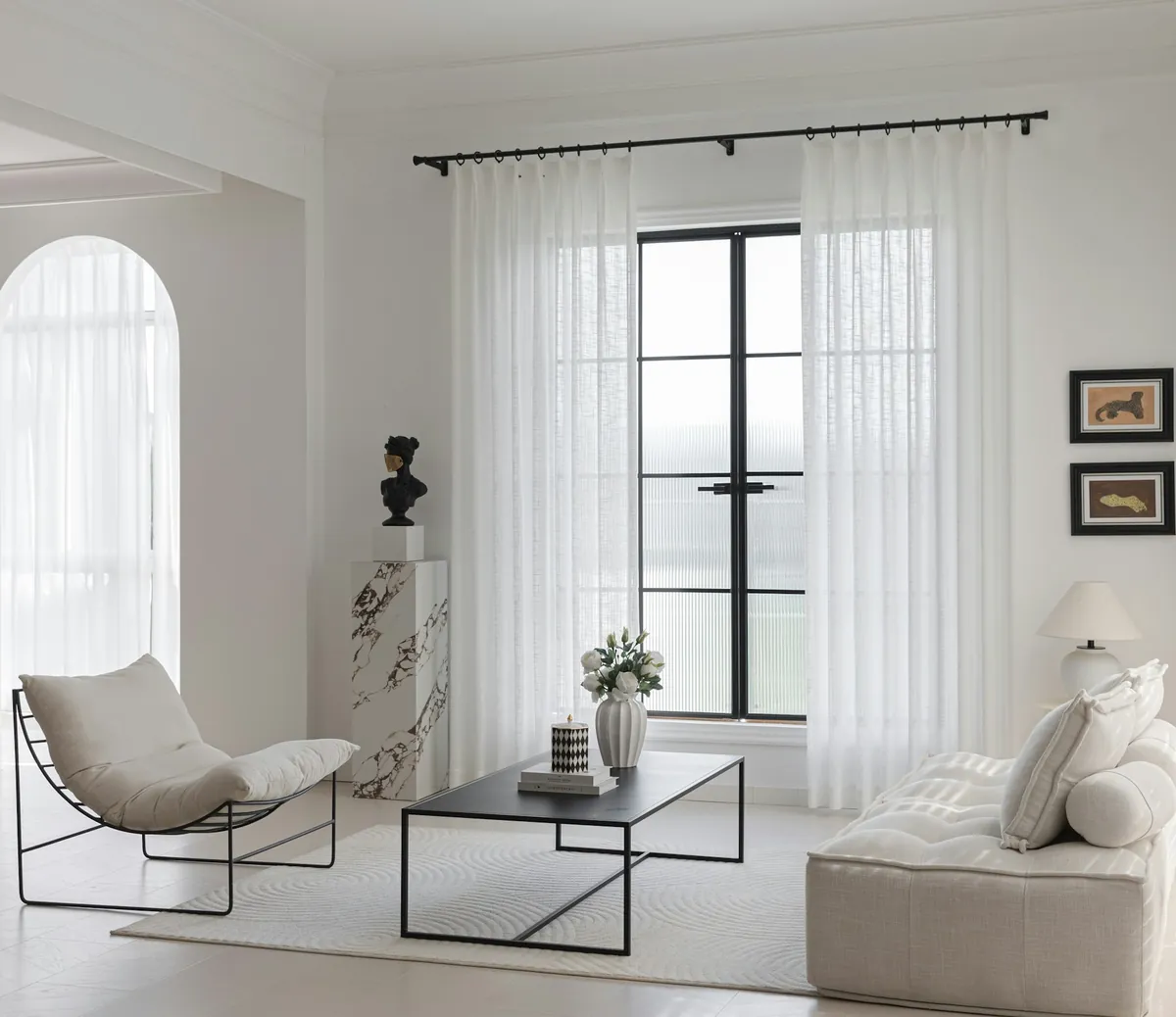
Choosing the fabric for the room
The motor makes the shade easy to move. The fabric decides what it does once it is down. For a front parlour where you want soft light and privacy from the street, a light-filtering fabric keeps the room bright while blocking the view in. For a bedroom on the bright side of the hill, a blackout or room darkening cloth holds back the early light. For a waterfront living room, a fabric that tames glare but keeps the outlook is often the right call. Many Fall River homes mix all three.
The showroom has the fabrics hanging next to each other to compare. For more on two shade styles that suit the city’s houses, see roller shades in Fall River and cellular shades in Fall River.
No cords on the glass
Without lift cords, a powered window is tidier and simpler to live with. In a three-decker flat where space is tight and children or pets are close to every window, there is nothing loose hanging within reach. On the tall Victorian sash, it also means no long cord coiled on the sill. There is more on the safety side in our cordless blinds and child safety guide.
Top-floor flats and the summer sun
The top floor of a three-decker sits right under the roof, and with sky on every side it takes the full weight of a summer afternoon. Its windows are often the ones that most need covering in the heat of the day, yet they are also the ones that tend to be left open for air. A powered shade suits that pattern. You can bring the sunny-side shades most of the way down while the sash below stays open, then raise them again in the cool of the evening to let the air move through.
Because the shade stops wherever you tell it, there is no need to choose between full sun and a dark room. Lowering it partway shades the glass where the sun strikes hardest and keeps the lower part of the window open to the breeze and the street. On the measuring visit we note which top-floor windows you open most, so the shades are set up never to come down onto a raised sash.
The same thinking applies to a Victorian’s attic room or a converted third floor, where a dormer or a gable window catches the sun in exactly the same way.
What to have ready for the measuring visit
A few things make the measuring visit quicker. Think about which windows bother you most and why: too high, too wide, too bright, too exposed to the street. Note any window you open regularly in summer, so we can plan where the shade stops. If you rent, or the building has an association, check whether there are rules about what can be fixed to the window frames. And if you have a fabric or paint colour you want to match, bring it into the showroom or have it to hand when we visit.
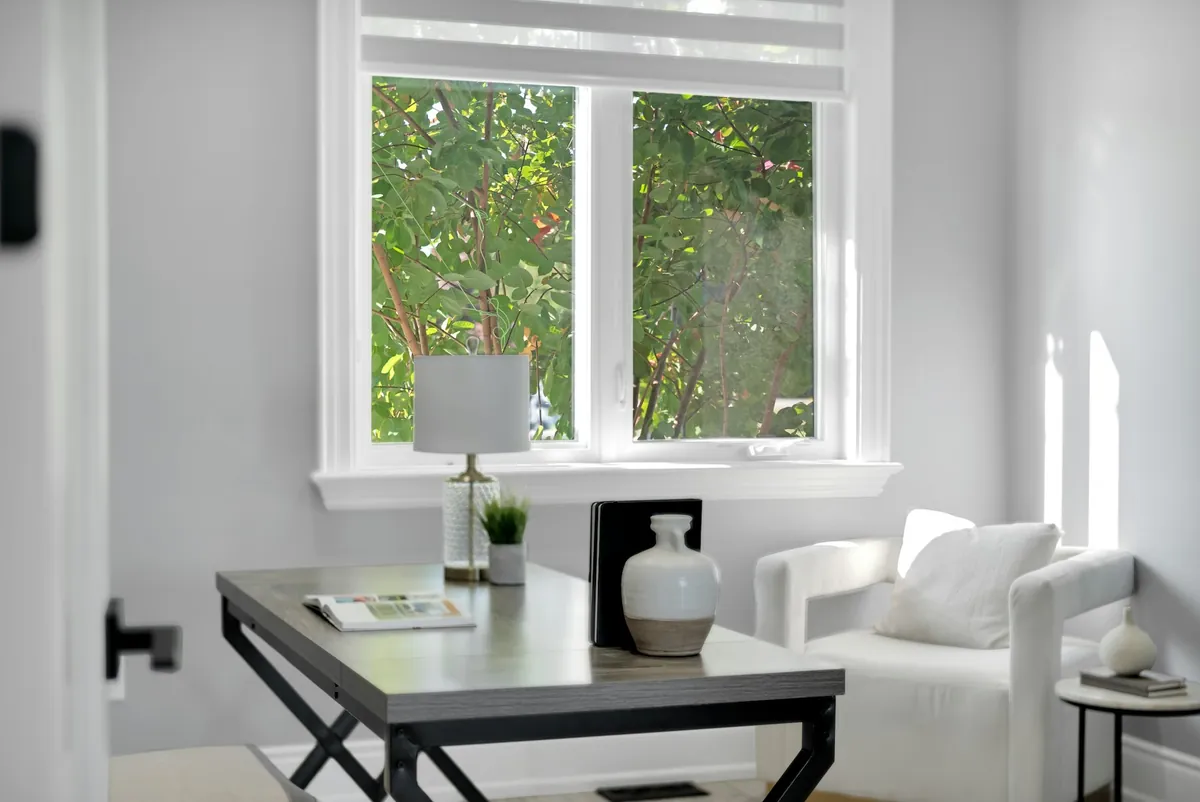
Corky Row and the smaller mill houses
Not every older Fall River house is a grand Victorian. Through Corky Row and the streets around it, many of the mill-era houses are plainer and closer together, with the same tall, narrow sash but smaller rooms and less space around each window. A radiator often sits right under the glass, a bed or a sofa is pushed close because the room allows nothing else, and the gap between one house and the next can be a few steps across a side yard.
In rooms like these, the window you cannot reach is usually blocked rather than high. A powered shade lets you lower it without moving the furniture or leaning over a hot radiator in winter. Where a side window looks straight at the neighbouring house, privacy is the main job, and a shade that can be dropped quickly in the evening matters more than how it filters the light.
The tight spacing also affects the headrail. Where trim runs close to a ceiling or a neighbouring window, we choose a compact top that fits the space, and we check the clearance on the visit rather than guessing.
Matching powered and hand-operated shades
In a three-decker flat or a Victorian, it often makes sense to motorize only the windows that need it and leave the rest by hand. That works best when both kinds look the same. We order the powered and hand-operated shades in the same fabric and colour, set to the same drop, so from inside the room and from the street the windows read as one set. Later, if you decide a second room would benefit, a matching powered shade can be added without anything looking out of place.
Care and small checks
Looking after a powered shade is mostly a matter of a duster. Wipe with a damp cloth only if the fabric allows. Keep a lamp or a tall plant from creeping into the drop under the shade. Once in a while, send a rarely used shade through its full travel, top to bottom, so any stiffness shows early, and ring the store if it does. The styles we power are set out on the main motorized blinds hub, and everything we do in the city is gathered on our Fall River window treatments page.
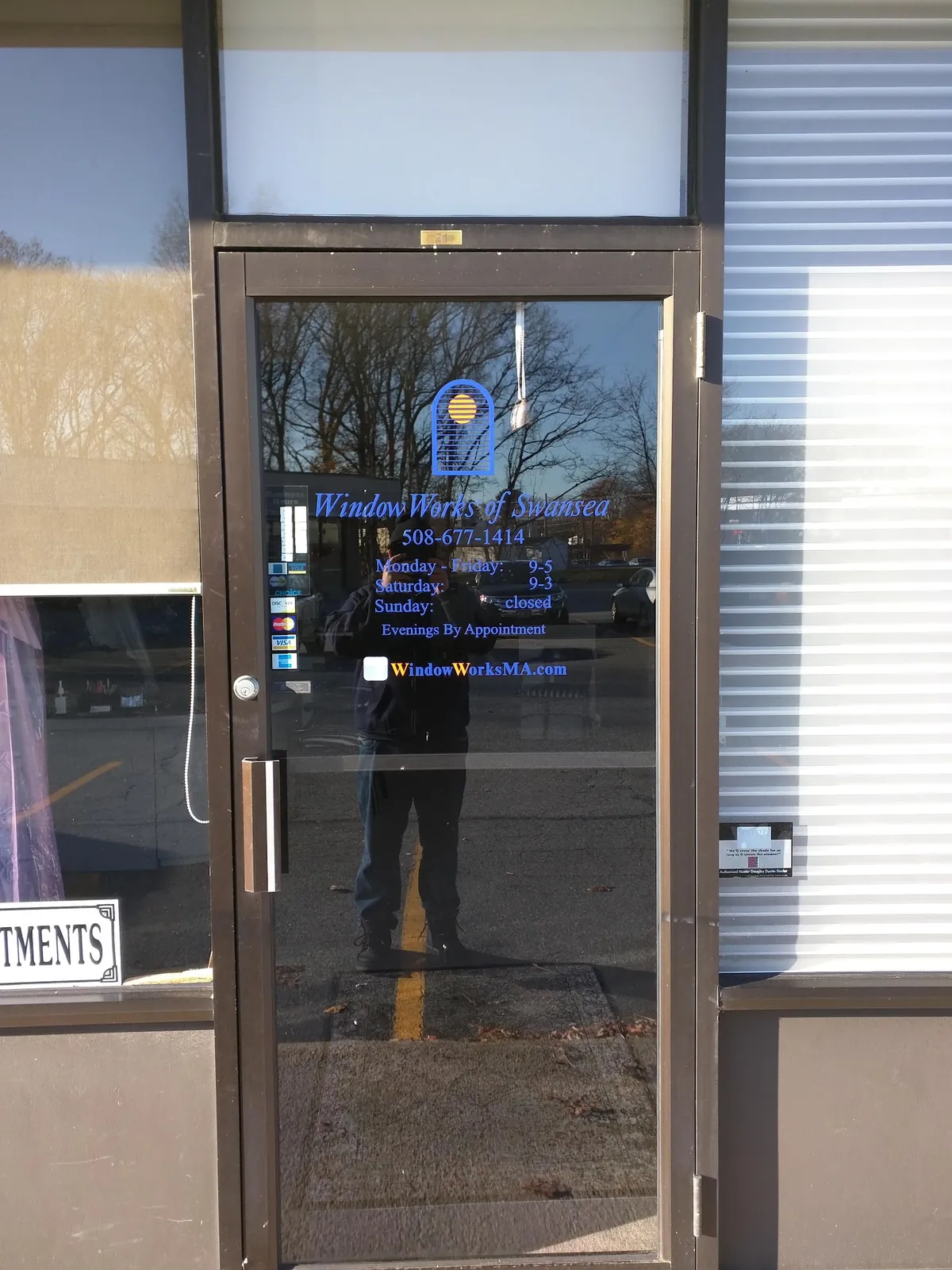
Window Works, Just Across the River
Window Works has been a family store in neighbouring Swansea since 1988, and the second generation runs it today. Over 37 years, that work has taken us up and down Fall River’s hills many times, and out to the rest of the SouthCoast and the East Bay of Rhode Island.
- Seasoned window treatment specialists
- We measure on site and our own installers do the fitting
- Warranties offered on the products we sell
- In constant contact with you until the work is complete
- A nearby showroom to test the controls before ordering
Questions from Fall River
Can a motorized shade fit inside the deep frame of an older window?
Usually, yes. The deep reveals in many Fall River houses leave room for the headrail and motor inside the frame. We measure each window, because the depth can vary within one building.
What about a landing window high above the steps?
That is a very good place for a motor. A switch at the bottom or top of the flight works it, and nobody has to lean out over the stairwell.
Do powered shades suit the big glass in a waterfront condominium?
Yes. Large panes are heavy to raise by hand, and a motor lifts them evenly with no cord on the glass. We check where the headrail can sit, since these frames are slim.
Is a remote or a wall switch better for a three-decker flat?
That depends on the room. A handheld control fits the front room and the bedroom; a plate on the wall fits the hall or the porch door.
How do I book a quote?
There is no charge for a quote. Ring us or fill in the form with the windows you would like powered, and a measuring visit is set up from there.
The Next Step
The first step toward motorized blinds in Fall River, MA is a free quote. The call button puts you through to the Swansea store, where we can book the measuring visit and answer questions about installation. The form works too, if writing suits you better. To handle the fabrics and press a few buttons before deciding, drop into the showroom across the river; directions are on the contact page. Window Works is rated 5.0 on Google.