
Built Around the View
Choosing window treatments in Westport, MA starts outdoors. Coastal exposure and salt air govern what lasts on a window here, and the rooms that face the harbour or the Westport River are laid out around the view rather than the wall. A treatment that blocks that view by day, or fades and sags after a few summers of hard sun, is the wrong treatment no matter how good it looks in a sample book.
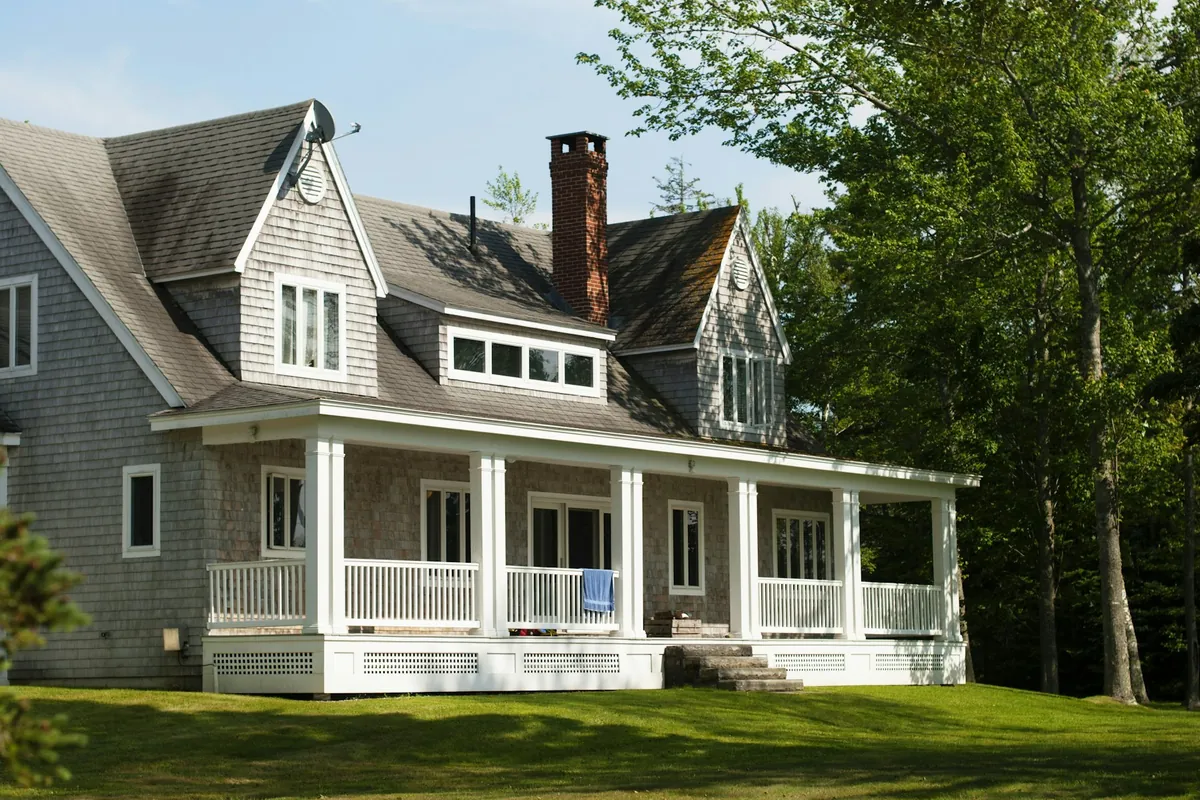
The housing splits two ways. Along Main Road sit shingled capes and farmhouses, with modest windows, dormers upstairs and old trim worth keeping on show. Toward Horseneck and the river, larger and newer homes open whole walls to the water. Each asks for something different, and we measure for both.
- Fabrics and materials chosen with sun and salt in mind
- Measured on site, fitted by our own installers
- Every option on show at the Swansea showroom
Treatments for Westport Homes, Service by Service
Roller and solar shades
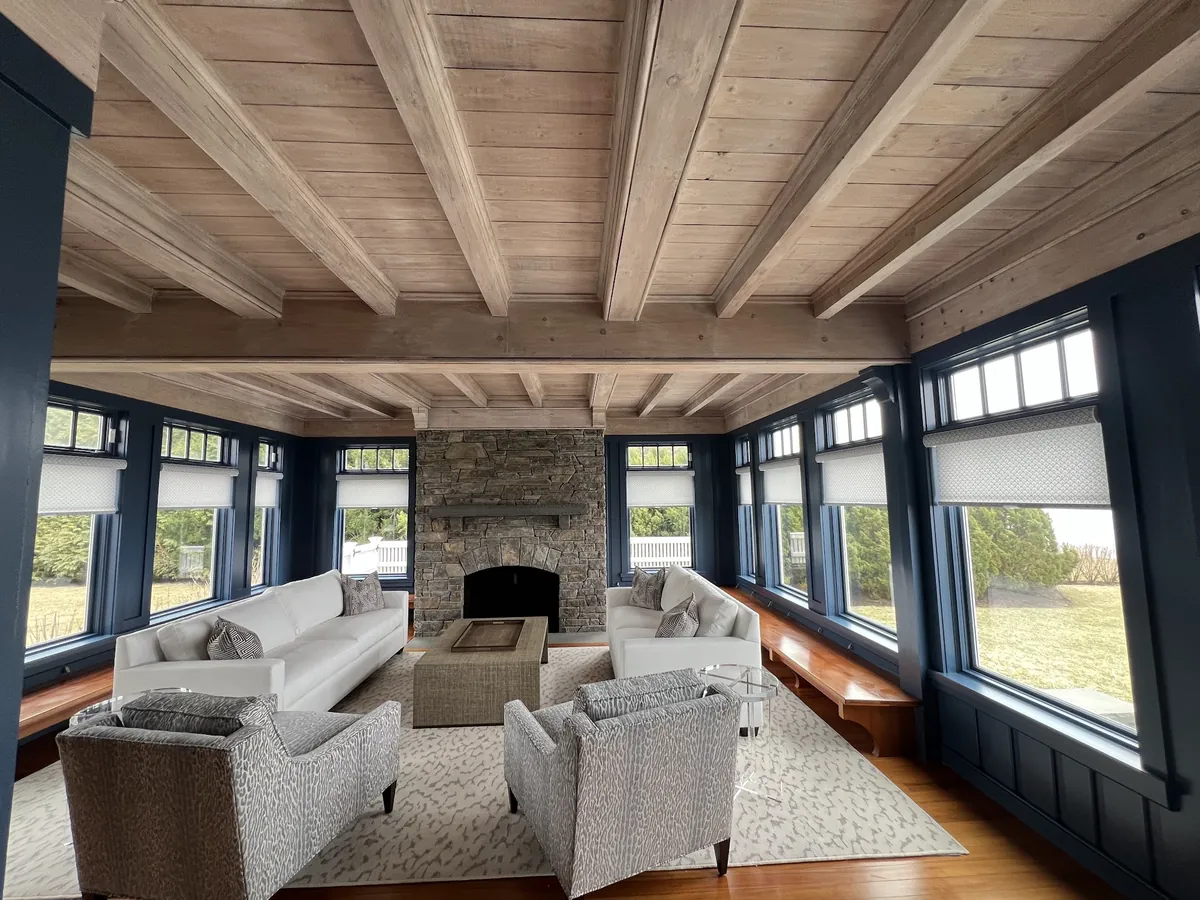
Solar screen fabric that tames glare off the water and keeps the outlook.
Cellular shades
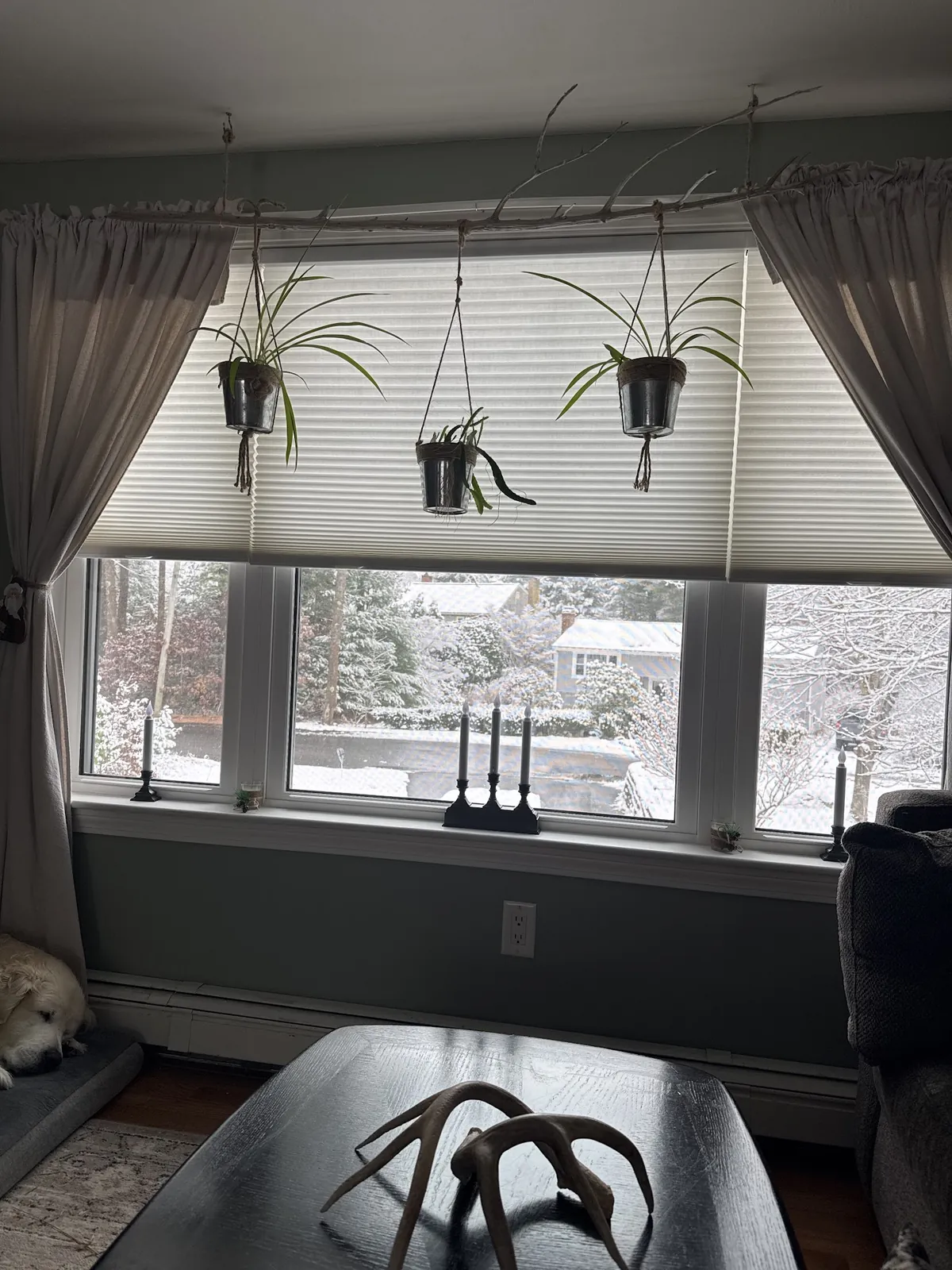
Honeycomb cells hold air at the glass, steadying a room that faces a cold bay wind.
Motorized shades and blinds
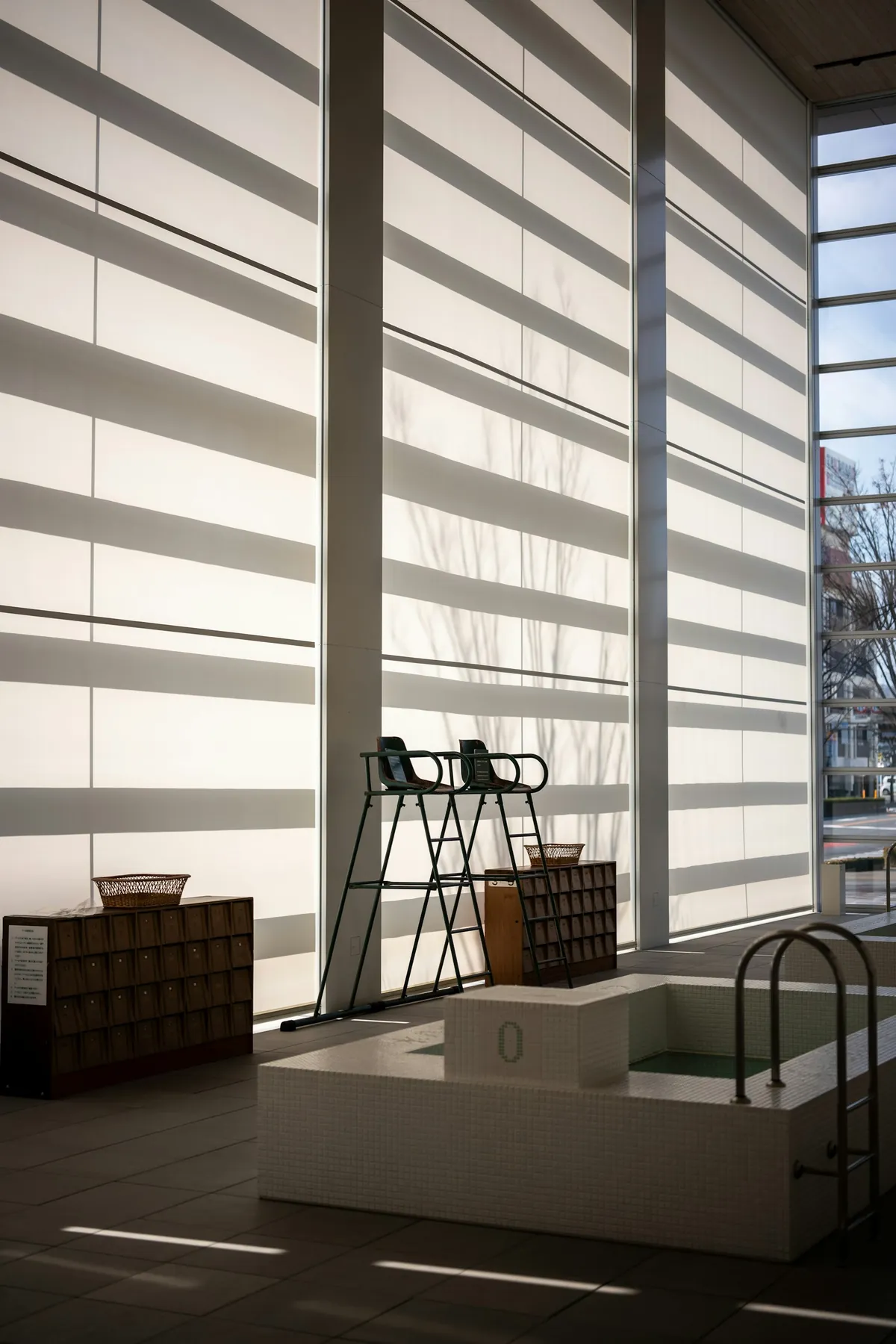
Remote or wall switch control for a long run of river-facing glass.
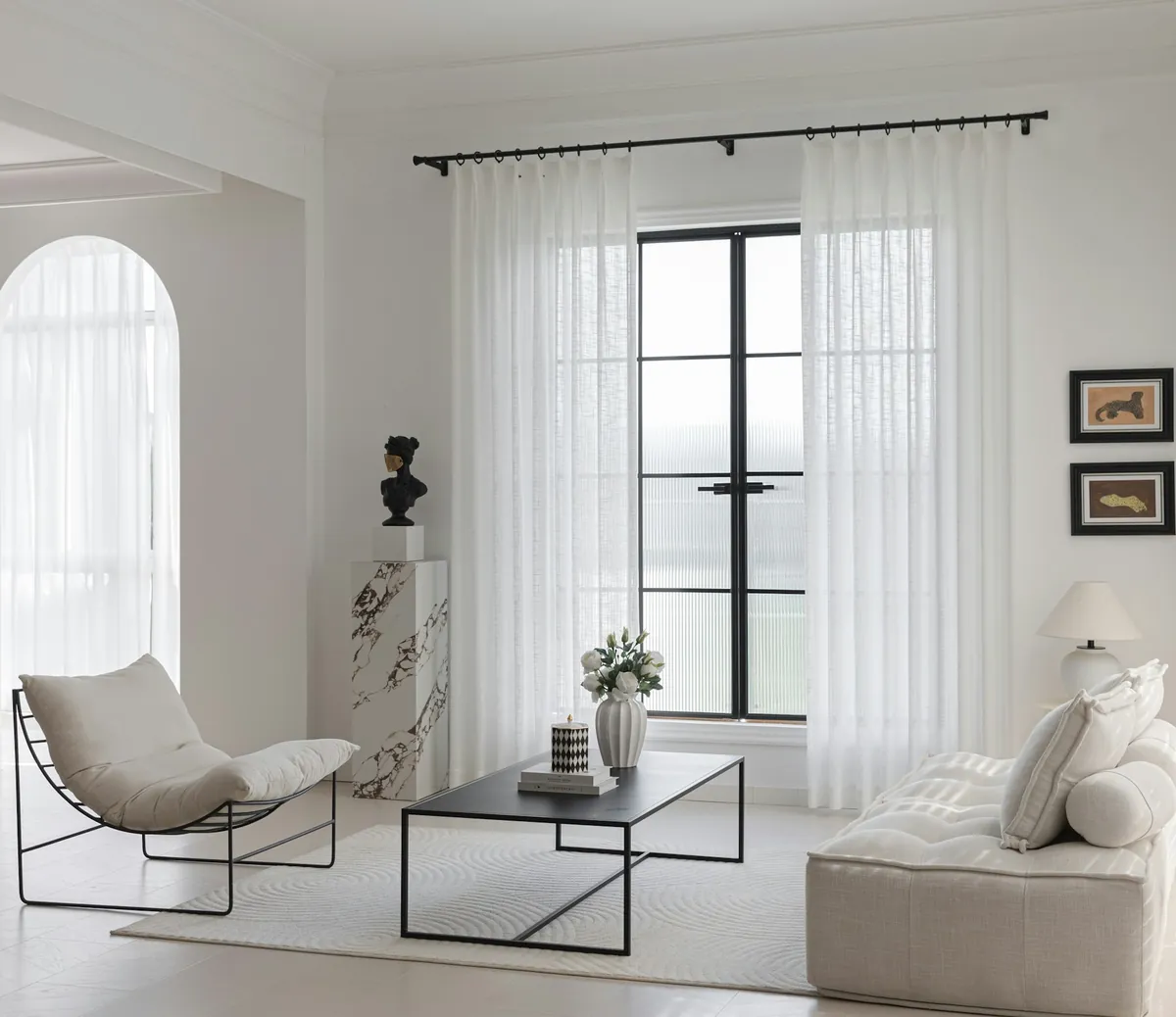
Drapes and curtains
Sheers and lined panels, our specialty, made in fabrics that suit a sunny coastal room.
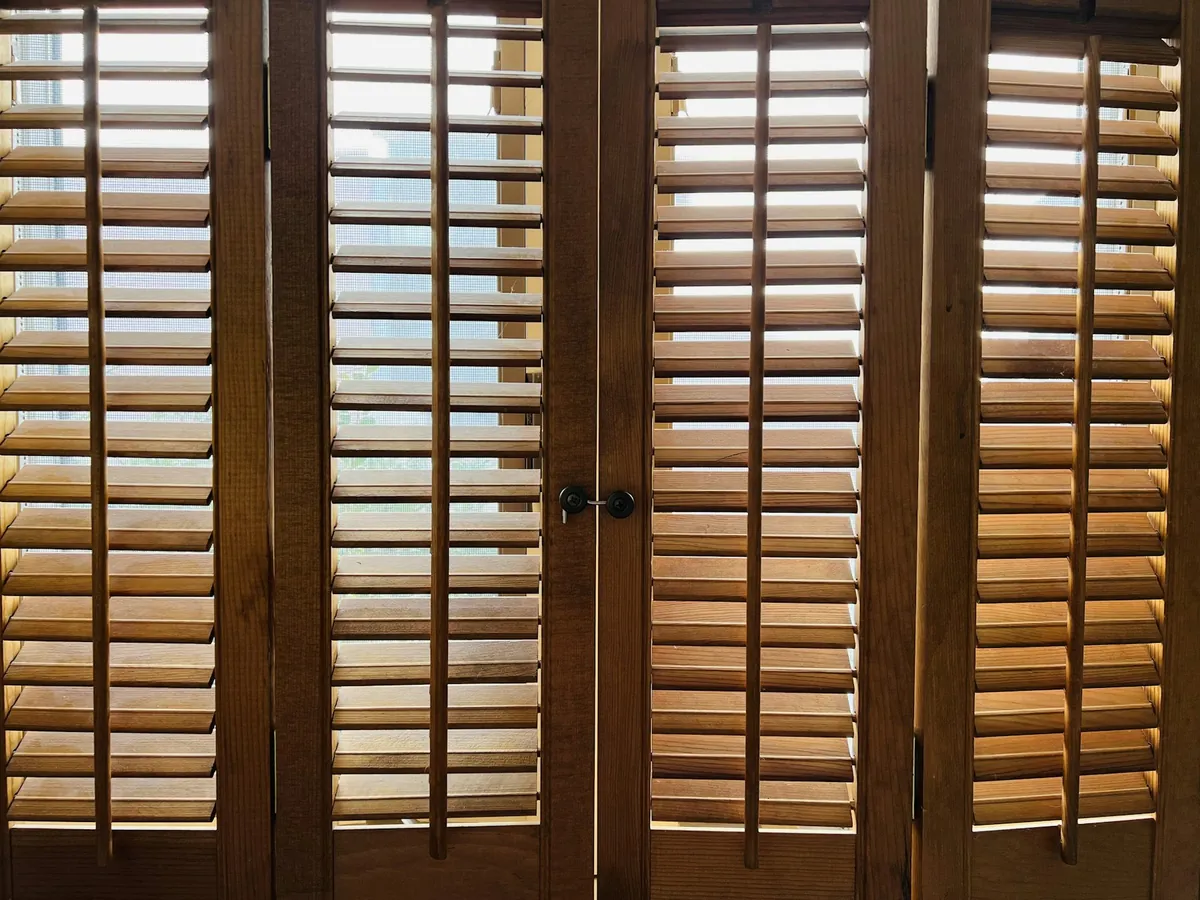
Plantation shutters
Interior louvred panels, a clean match for the trim in a Main Road cape.
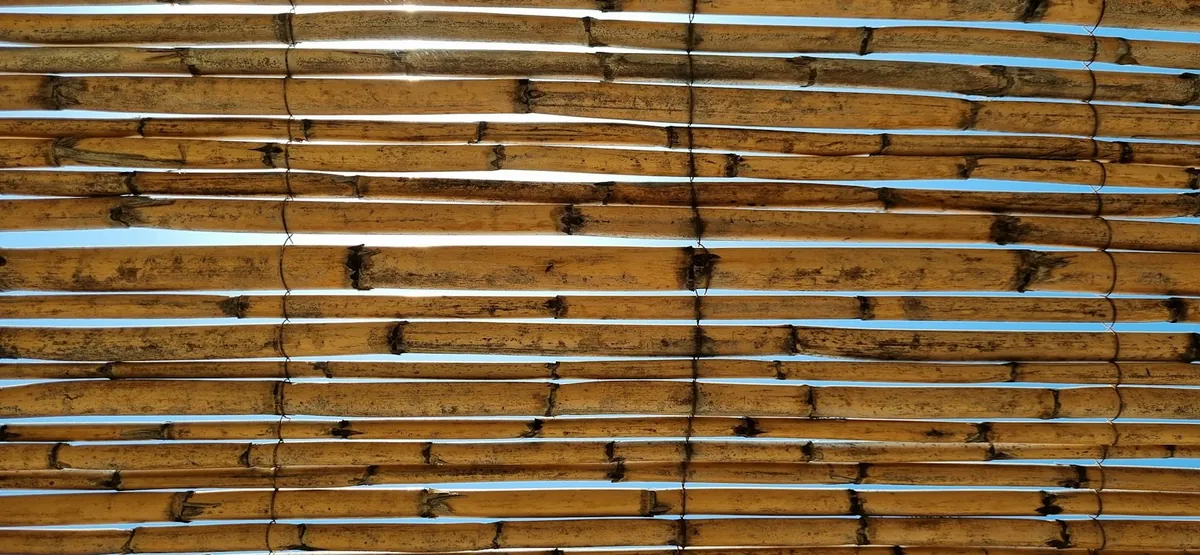
Woven wood shades
Natural weaves that filter sun into soft strips, with a liner where privacy matters.
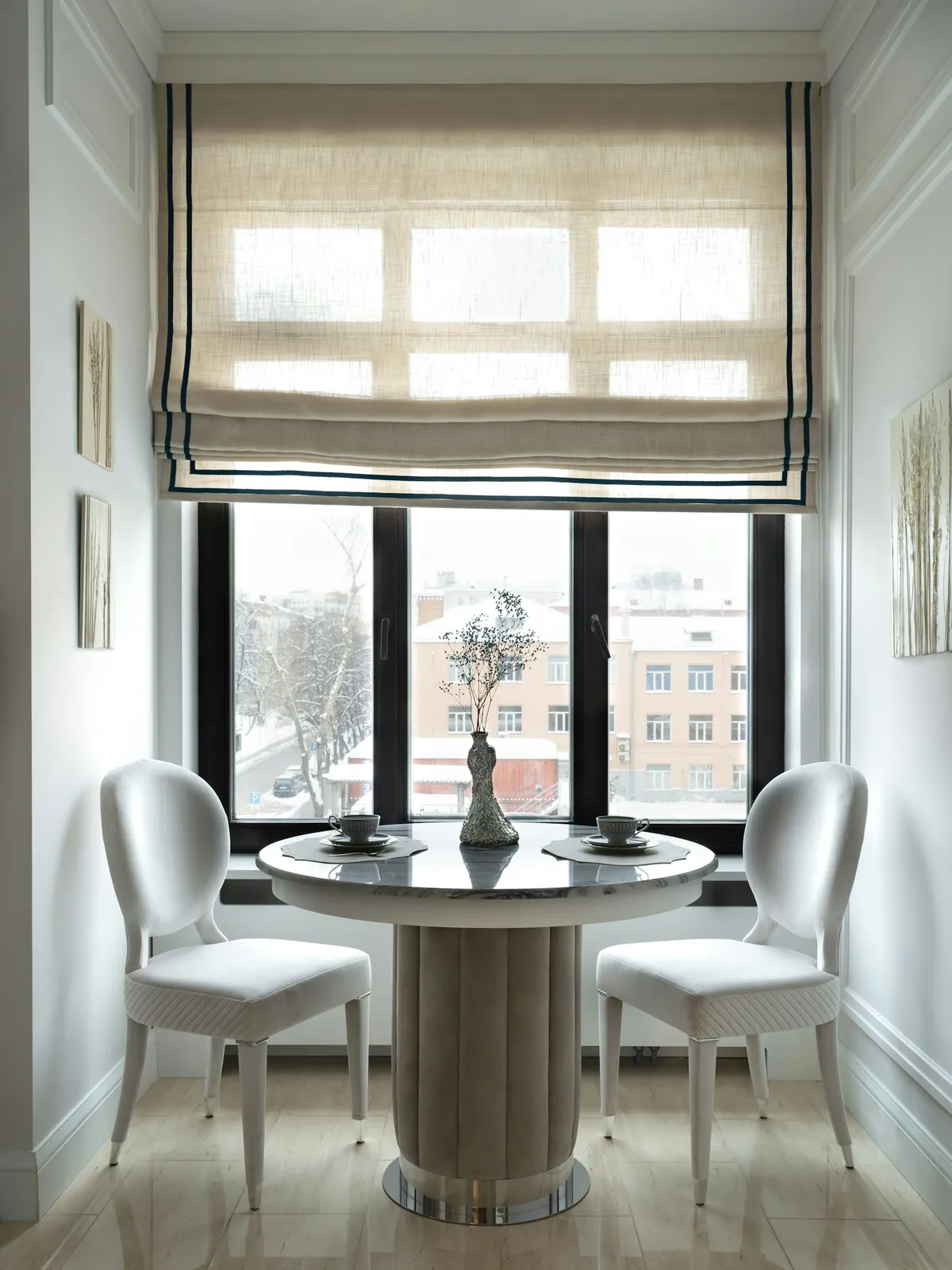
Roman shades
Fabric folds, flat, hobbled or relaxed, for bedrooms and breakfast corners.
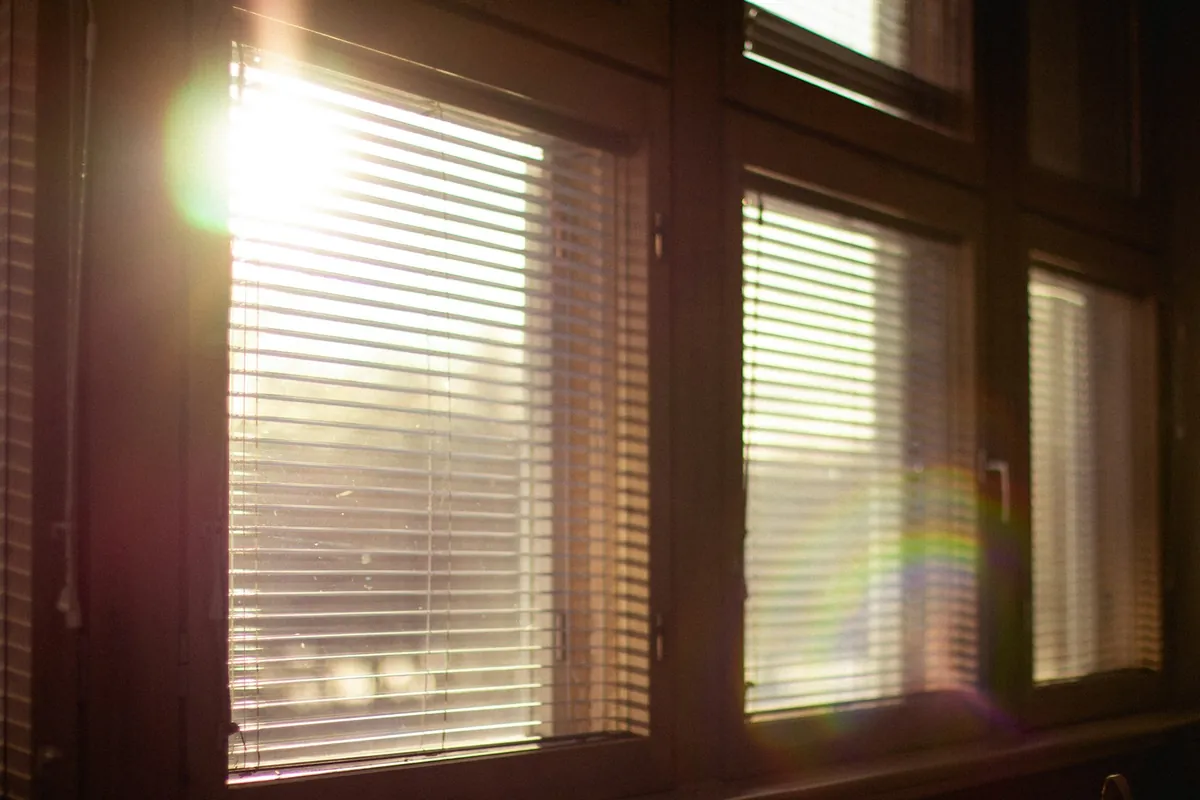
Custom blinds
Faux wood and aluminium blinds that cope with damp sea air, and wood away from it.
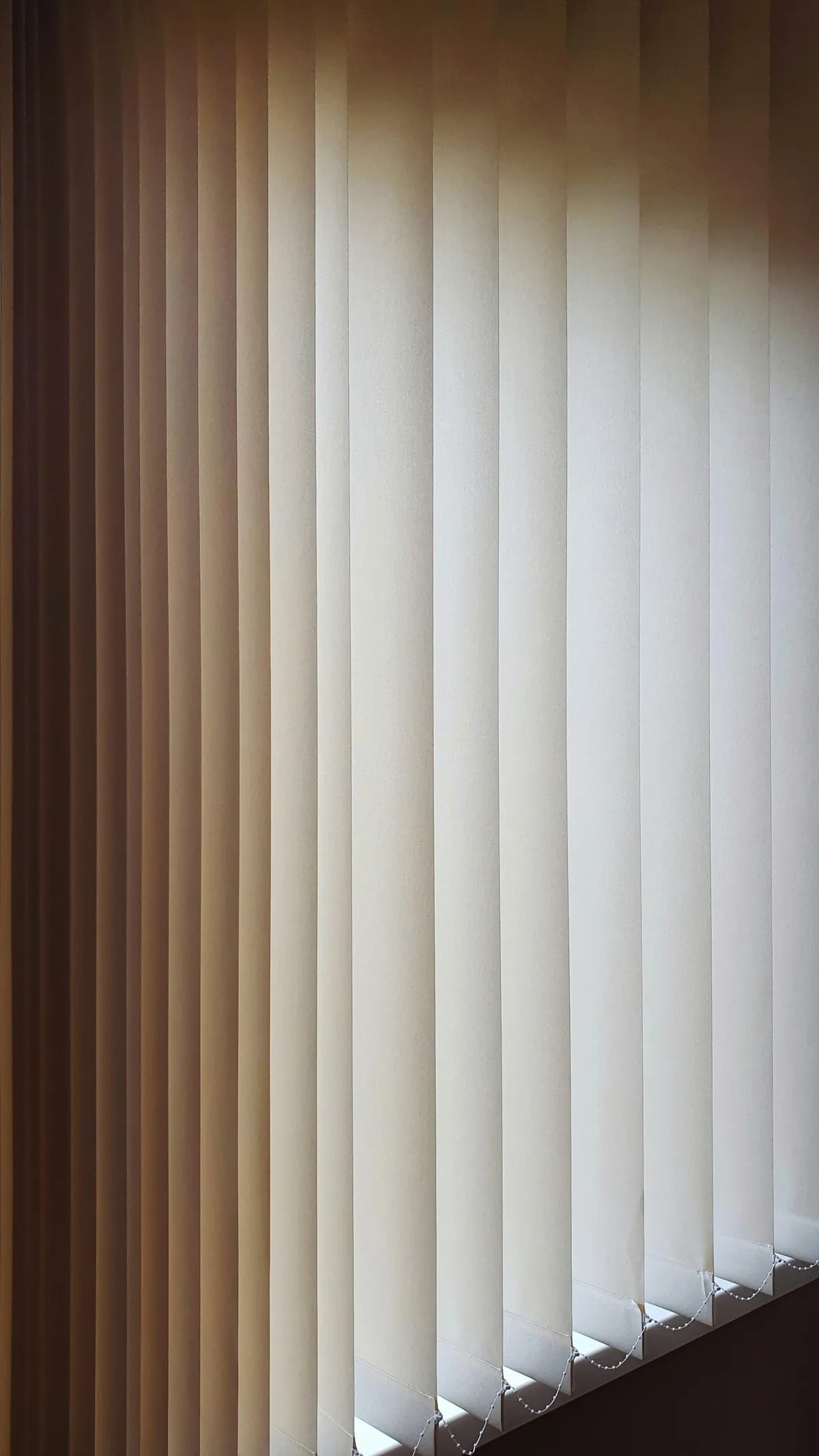
Vertical blinds
Verticals and panel tracks for sliders out to a deck or a lawn.
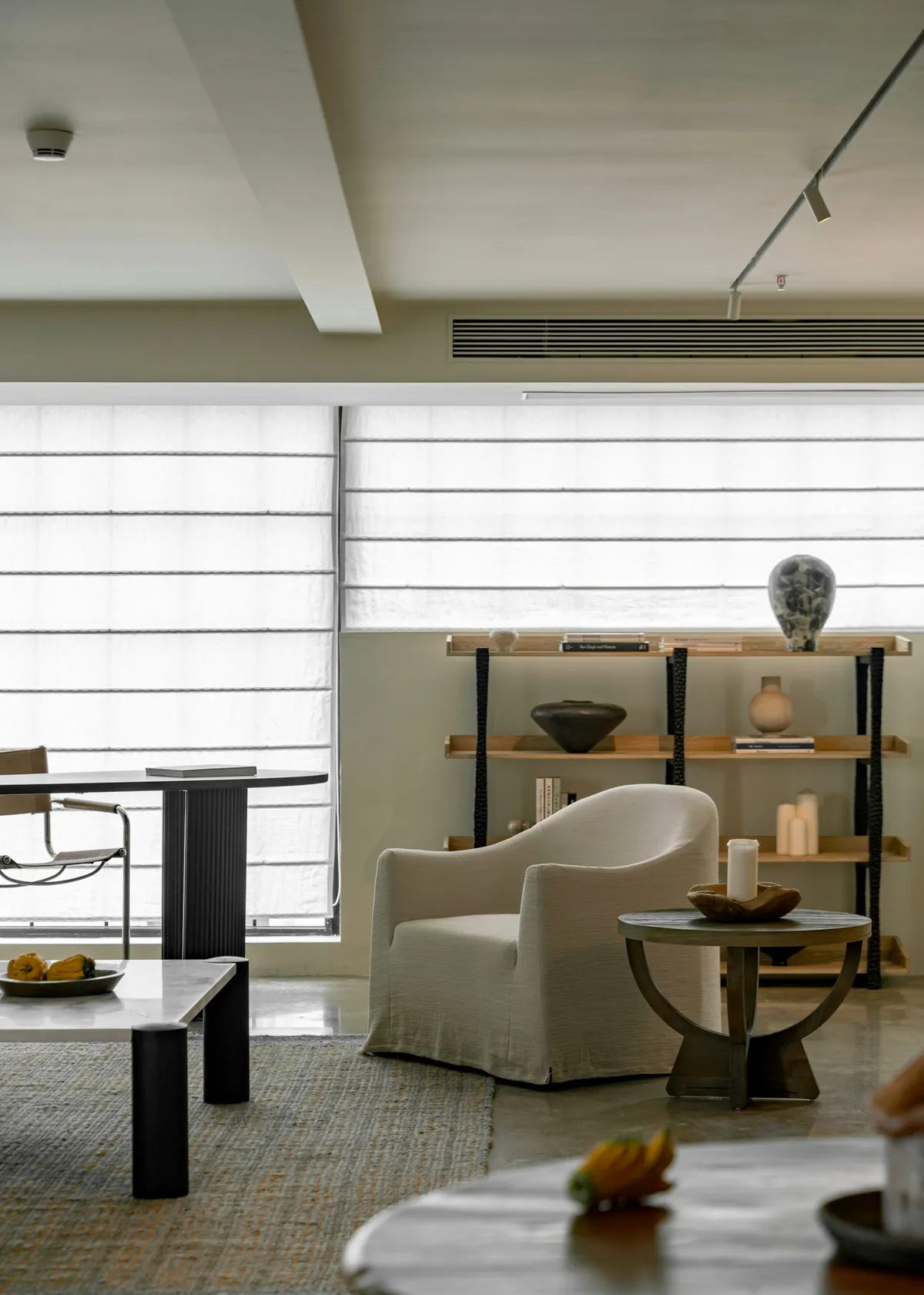
Norman window fashions
Norman blinds, shades and shutters, a range we carry and display.
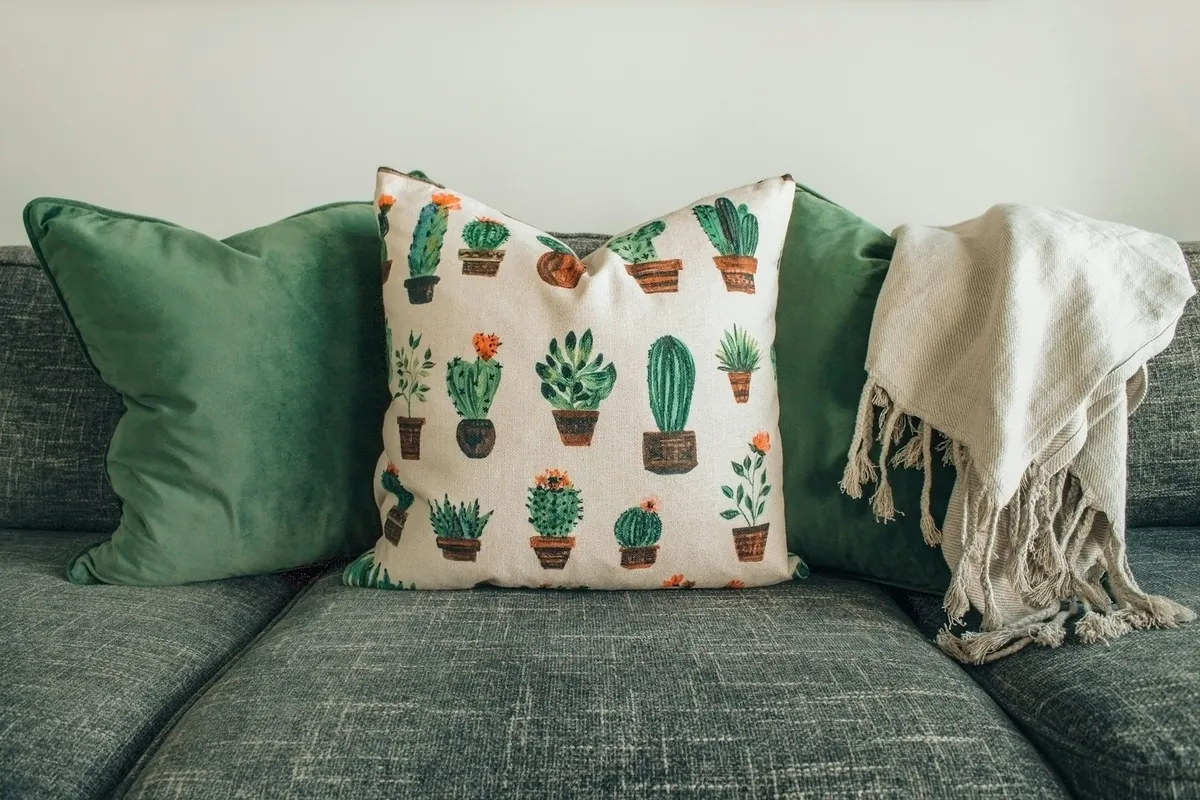
Custom fabric decor
Pillows, duvet covers and some upholstery cut from your window fabric.
Blind and shade repair
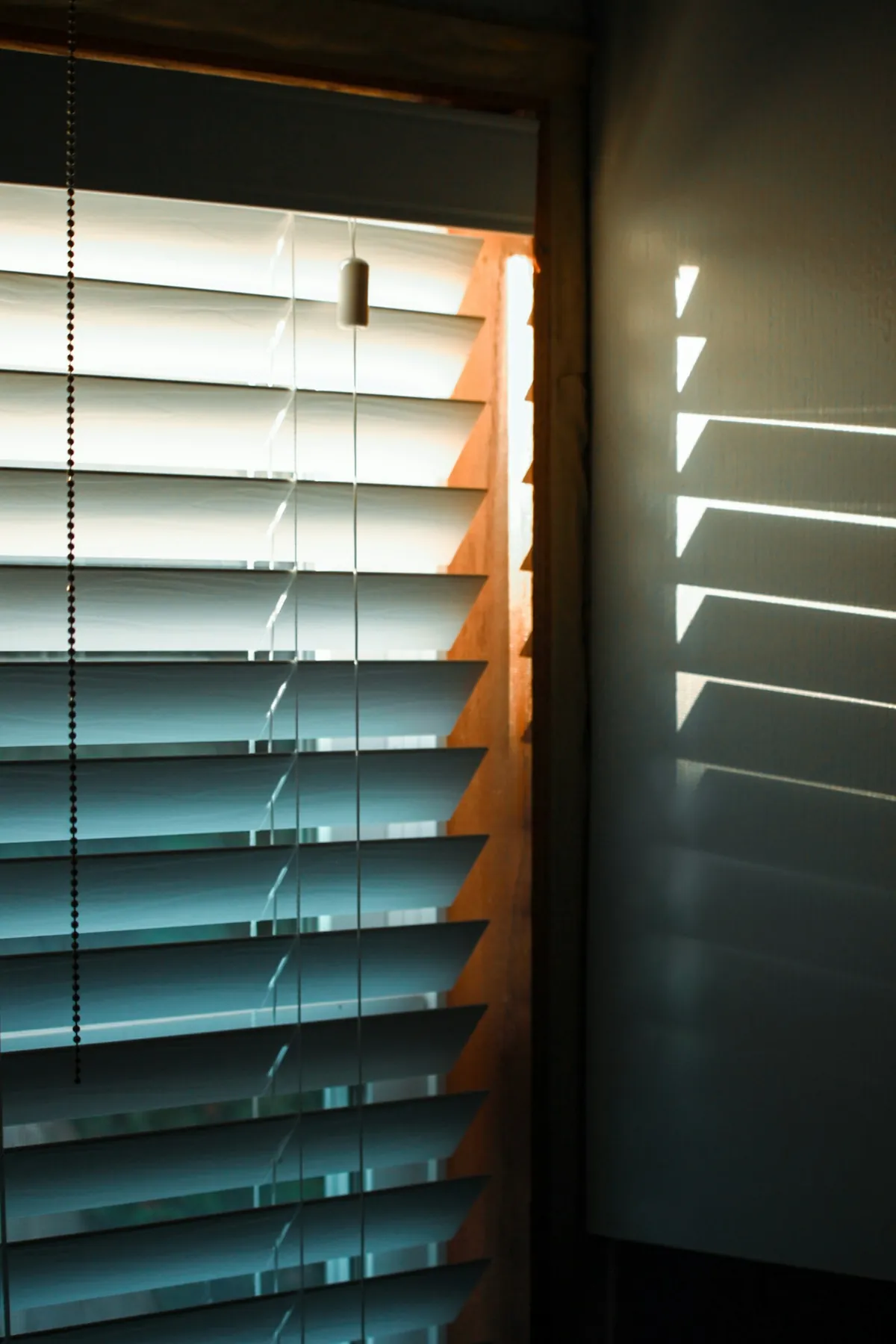
New cords, restringing, wands and headrails for treatments you already have.
Salt, Sun and Damp: Window Treatments Westport, MA Can Live With
Salt air is hard on anything near a window. It settles on slats and tracks, draws moisture into some fabrics and dulls metal over time. That is why the first conversation about window treatments for Westport, MA is about materials rather than colours. A room a short walk from the water, with windows open through the summer, needs a different list from a room in an inland town.
Faux wood blinds shrug off damp in a way real wood does not, so they are the sensible pick for a beach house bathroom or a kitchen that faces the harbour. Synthetic shade fabrics hold their shape when the air turns heavy. Cellular and roller shades with enclosed headrails keep the working parts out of the breeze. Where you want real wood, for its warmth, we suggest keeping it to rooms set back from the open windows.
Sun is the other half of the story. Water reflects light upward and into a room, so a harbour-facing window takes glare from below as well as above. Fabrics fade faster on that side of the house, and so do the floors and furniture behind them. A treatment that filters ultraviolet light protects everything in the room, not only the window.
Ceiling fans and open windows keep summer air moving in a coastal house, and a treatment that flaps or knocks in a breeze soon becomes a nuisance. Shades mounted inside the frame stay put better than loose panels, and a bottom rail with a little weight in it keeps a roller shade hanging straight. We look at how each window opens before suggesting a treatment for it.
Rooms that face the water
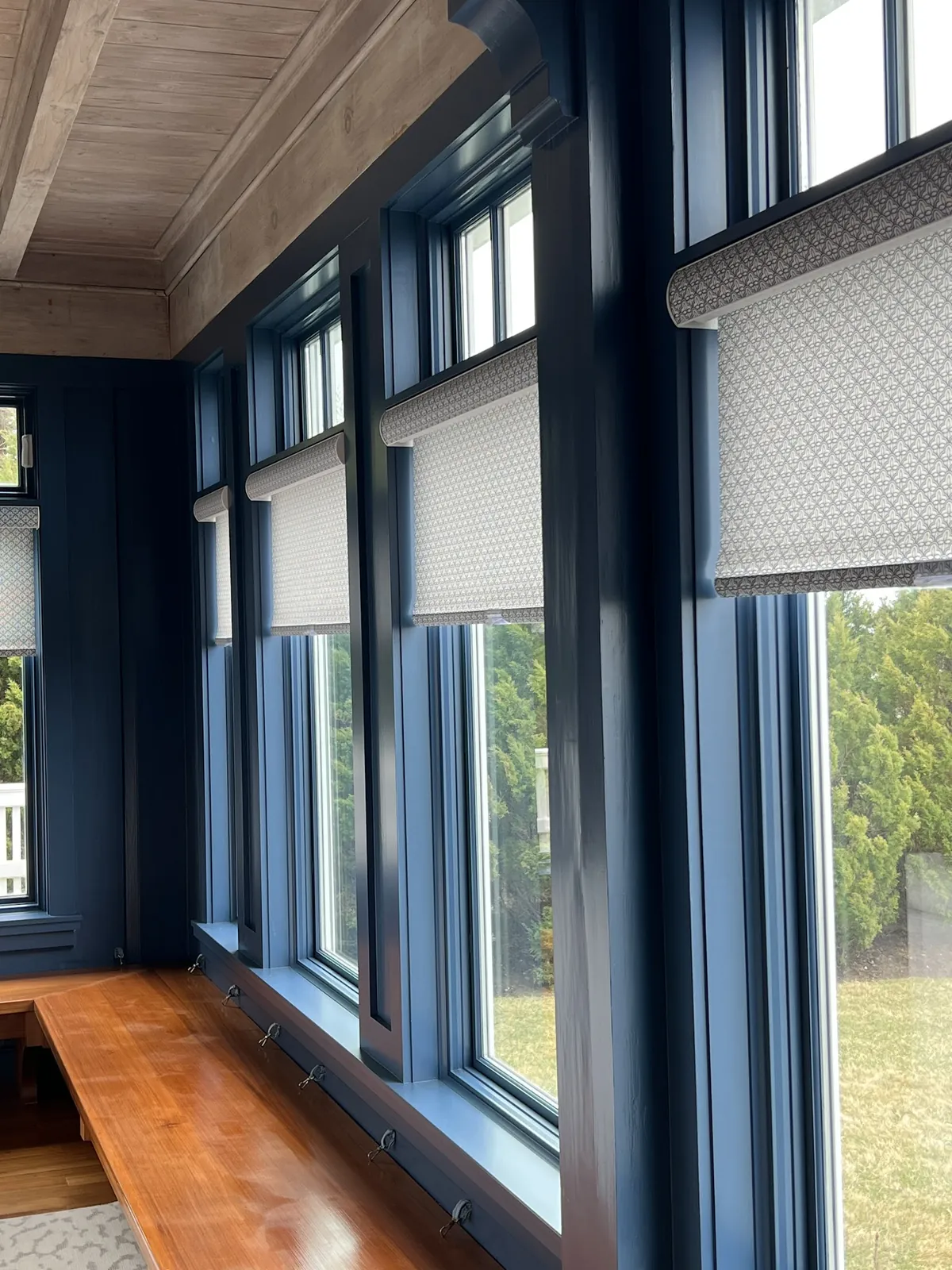
In a harbour-facing living room the view is the reason for the room, and the treatment should disappear when it is not needed. Solar screen roller shades are made for exactly this. The weave is open enough to see through, and the openness you choose decides the balance: a more open screen keeps the boats and the far shore clear, a tighter one cuts more glare at the cost of some view. When raised, the shade rolls into a slim headrail and the glass is clear.
Many of the newer houses toward Horseneck have long runs of glass, sometimes with taller windows above. A row of shades on those walls is a lot to raise and lower by hand twice a day. Motorized shades, controlled from a handheld remote or a switch on the wall, let you bring a whole wall down together when the afternoon sun comes round and lift it again at dusk. We keep it to remote and switch control.
Evenings change the picture. A lit room with a wall of glass is on show to the water, and some owners want to close it off completely at night. Layering a solar screen with lined drapes, or choosing a dual shade with a sheer and a solid band, gives a daytime and a night-time setting at one window.
Shingled capes and farmhouses on Main Road
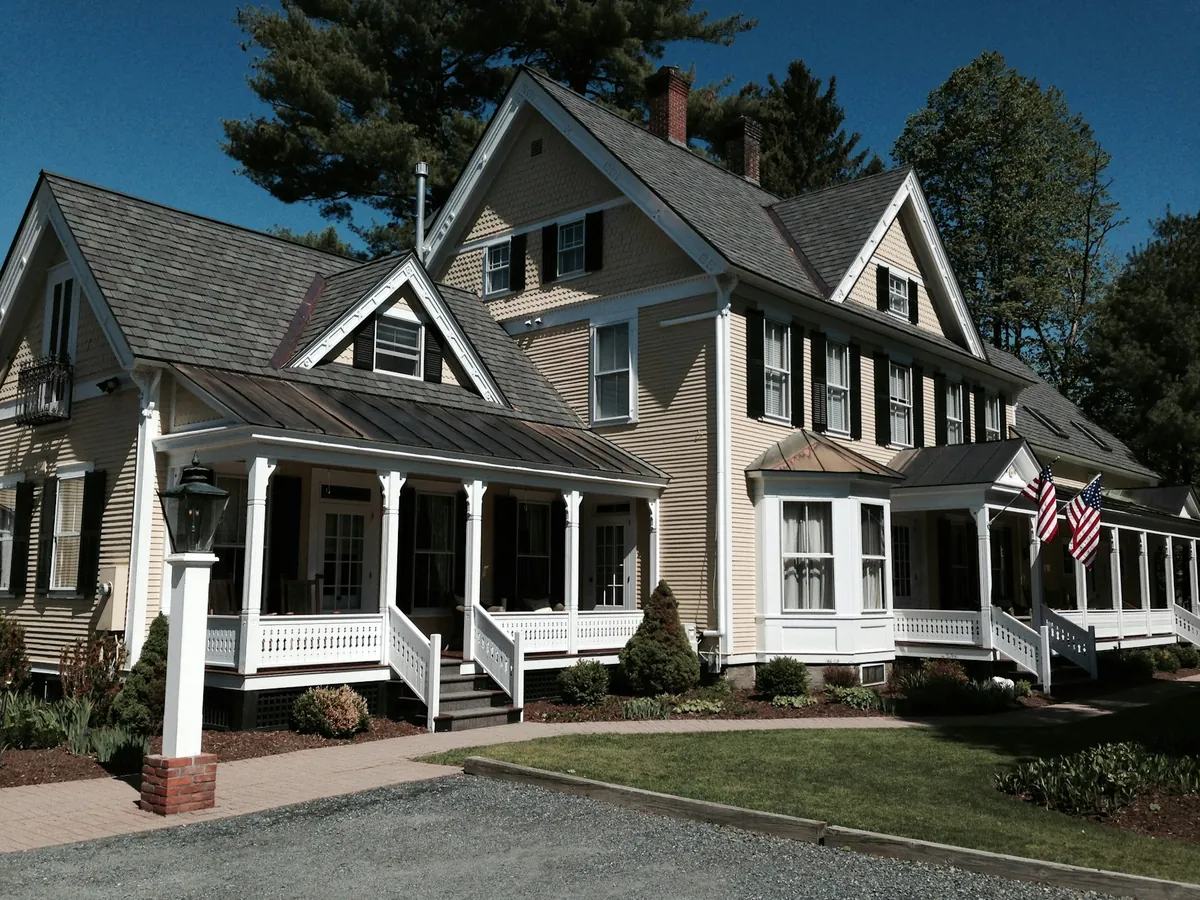
The older houses along Main Road are a quieter job. Windows are smaller and spaced around the rooms, and the upstairs often has dormers tucked under the roof with sloping walls close in. These houses tend to look best with treatments that respect their trim: shutters fitted inside the frame, Roman shades in a plain linen, or simple pleated drapes on a slim rod.
Dormer windows need a treatment that leaves the glass clear when raised, since that one window may be the only light in the room. A cellular shade stacks very small at the top, and a Roman shade with a shallow fold does nearly as well. In a farmhouse with old wavy glass, a sheer curtain lets the glass show while softening the light.
Shutters in a shingled house
Interior plantation shutters have a long history in coastal houses, and they still suit the Main Road capes and farmhouses well. Fitted inside the frame, they keep the trim on show from inside and give the front of the house a neat, even look from the road. The louvres tilt to steer light up toward the ceiling or close for privacy, and a larger louvre opens more of the view when tilted flat. We choose the louvre size and frame style to suit the window, so a small dormer and a wide living room window still look like one set. On the sunny side, a painted finish holds up well, and it can be wiped down when salt spray settles on it. Window treatments for a Westport, MA house often mix shutters on the street side with shades on the water side, and the two sit together comfortably.
Sunrooms and porches turned into rooms
Enclosed porches and sunrooms are common on both kinds of house, and they are the hardest rooms in town for a window treatment. Glass on three sides, sun from morning to evening and sea air coming in whenever the windows open. Roller shades suit them well: one on every window, in the same fabric, raised to the top when you want the view and dropped when the sun moves round. Woven wood shades are a warmer alternative, and they give a sunroom a natural texture that matches the shingle outside.
Planning a Whole Westport House
It helps to plan the house as one before settling on any single window. From the road, a cape or a farmhouse shows a row of front windows, and they read well in one colour, even if the rooms behind them use different products. From the water, the back of a newer house shows its glass walls, and a matching set of shades across those walls looks calm and deliberate.
Inside, we go room by room. The questions are simple: how much light the room should keep, how much privacy it needs, and when. A guest room used on summer weekends wants a room darkening shade for sleeping late. A home office facing the river wants glare control with the view intact. A bathroom wants a moisture tolerant blind. Out of those answers comes a list, and the list becomes a quote.
How an order runs
Every stage is handled by the same Swansea store, and someone stays in touch with you until the final fitting.
- Get in touch through the call button or the form, say which rooms are on your mind, and we arrange a free quote.
- A specialist comes to the house to measure. Coastal homes get a note of which windows face the water and how much they open, as well as the sizes and depths.
- You pick fabrics, finishes and controls, from samples we bring or on a visit to the showroom.
- A written quote lists each window by room.
- Your treatments are made to the measurements taken on that visit.
- Our installers fit them, check each one moves smoothly, and show you how to work them.
Drapes, sheers and the coastal room
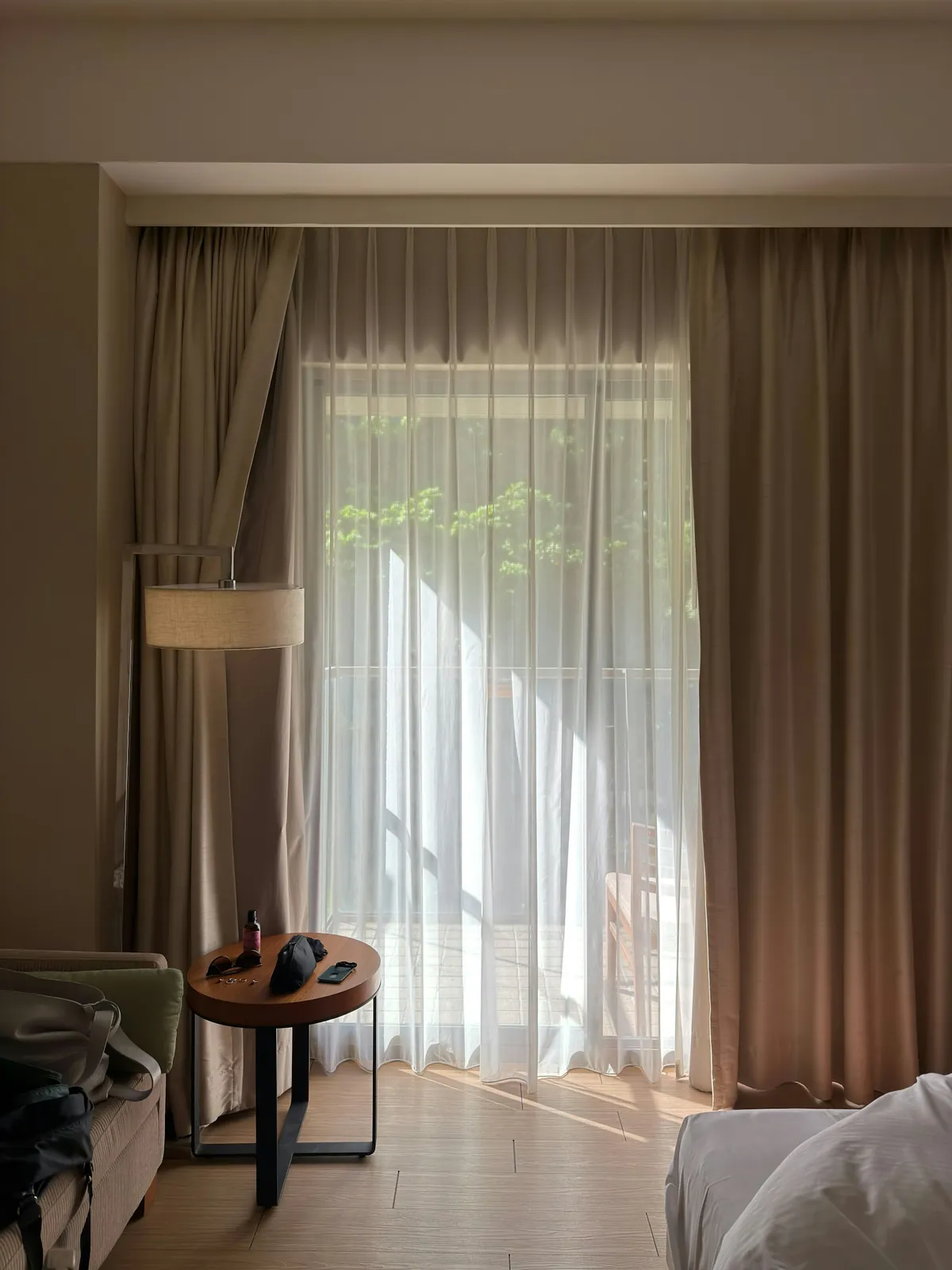
Drapes are the store’s specialty, and coastal rooms show them at their best. A floor-length sheer moving in a breeze from an open window is part of the feel of a summer house, and it softens hard reflected light without blocking the view. Heavier side panels on the same rod add colour and close off the room at night. Lined drapes protect the face fabric from fading and help a room keep its warmth when the wind comes off the water in winter.
Fabric choice matters more here than inland. Lighter, more fade resistant cloths on the sunny side of the house, richer fabrics in rooms that face away from the water. We bring swatches to the house so you can see them in your own light, and the full drapery range is on the custom drapes page. The same cloth can carry into pillows, a duvet cover or some upholstery through our custom fabric decor work.
Bedrooms by the water
Morning sun off the water arrives early and bright. A bedroom on the east side of a Westport house often needs more than a light shade to stay dim. A room darkening cellular shade fitted close to the frame does much of the work, and blackout lined drapes on top close the remaining gaps around the edges. For a softer look, a Roman shade with a blackout lining keeps the room dark while still looking like fabric rather than equipment.
Sliders out to the deck and the lawn
Most of the newer houses, and plenty of the older ones after a renovation, have a sliding door out to a deck, a patio or a lawn running down toward the water. That door is used all day in summer, often with sandy feet, so the treatment has to be quick to open and hard to damage. Vertical blinds on a single track draw clear to one side and turn to angle the light without being moved. A panel track, with wide fabric panels gliding past each other, gives a softer, more modern look for a family room. Both are measured across the full width of the opening and hung high enough to clear the door handle.
Kitchens and bathrooms near the water
Kitchens in coastal houses get steam from the stove and salt from the open window, often at the same time. Faux wood blinds over the sink wipe clean and do not warp, and a moisture tolerant roller shade does the same in a simpler line. Bathrooms with a window over the tub take the same treatment, with a top down, bottom up shade where you want daylight in over a covered lower pane. Cafe shutters, covering only the lower half, are a tidy choice for a kitchen window that looks onto a road but keeps a view of the sky.
The cellular shade in a seasonal house
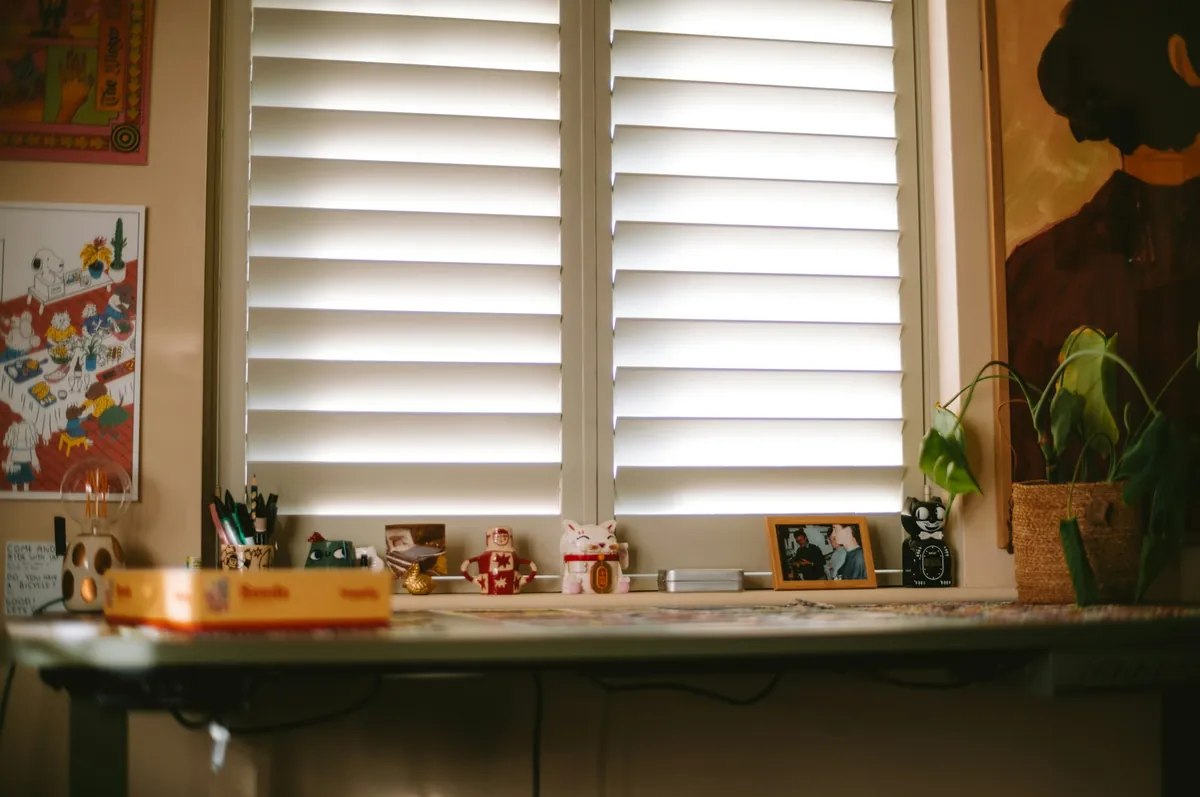
Houses that are opened up in summer and shut down for the colder months benefit from treatments that help the rooms hold an even temperature. A cellular shade traps air in its cells, which is why a room with one holds heat in winter and stays cooler with the shade down on a hot afternoon. A double cell holds a little more. They also stack small and keep a clean look, which suits the simple interiors of many shingled houses. Read more on our cellular shades page.
Repairs to what is already on the windows
Sea air wears on cords and lift parts over the years. If a blind or shade you already own needs restringing, a new cord or wand, or a headrail that has stopped working properly, our team can look at it and tell you whether a repair makes sense.
Come and See Everything in Swansea
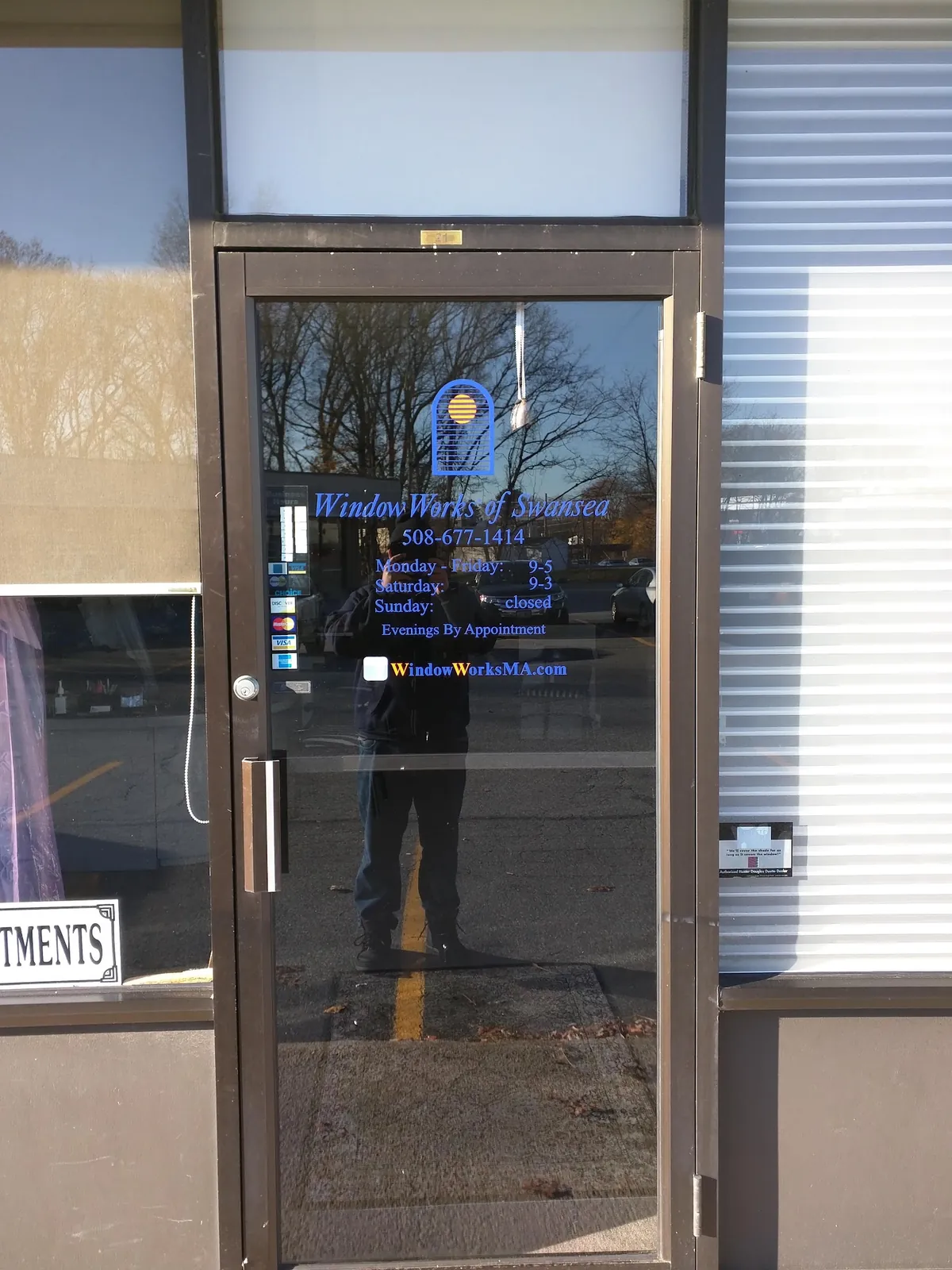
The Swansea showroom is the simplest way to compare window treatments for your Westport home before anything is ordered. Hold a solar screen up to the light and see how much view it keeps, run a cellular shade up and down, feel a linen against a cotton for drapes, and try a motorized shade on its remote.
The Norman range of blinds, shades and shutters is on display as well. Bring a photo of the room or a sample of the wall colour, and a specialist will help you narrow the choice.
Why Westport Homes Call Window Works
The store opened in Swansea in 1988 and is family owned, now run by the second generation. For over 37 years it has worked on houses across the SouthCoast and the Rhode Island East Bay, coastal towns very much included.
- Specialists who know window treatments, not a general store
- A solution worked out for your rooms and your exposure
- Measuring on site and installation by the team
- Kept informed throughout, until the job is finished
- Warranties offered on the products sold
Questions from Westport
Which treatments stand up best to salt air?
Faux wood and aluminium blinds, synthetic roller and cellular shade fabrics and enclosed headrails all cope well with damp, salty air. We keep real wood and delicate fabrics to rooms set back from open windows.
Can I cut glare from the harbour without losing the view?
Yes. A solar screen roller shade filters glare and sunlight while staying see-through. The more open the weave, the more of the view you keep.
We have a long wall of river-facing windows. Is motorization worth it?
On a long run of glass it often is. Motorized shades raise and lower together by remote or wall switch, so one press handles the whole wall.
What suits a dormer bedroom in an old cape?
A cellular or Roman shade that stacks small, so the glass is clear when raised. Add a room darkening fabric if the room faces the morning sun.
How do I arrange a quote?
Quotes are free. Use the call button or the form, and we will set a time to measure at the house.
Your Next Step
A free quote is the place to begin. Press the call button to speak with the Swansea store, set up measuring at the house or ask about installation, or send the form and we will reply. To see the samples first, the contact page shows how to reach the showroom. Window Works carries a 5.0 rating on Google, and the full range is on the window treatments page.
Window Works serves 25 towns across the SouthCoast and the Rhode Island East Bay; you can see them all on our service areas page.