
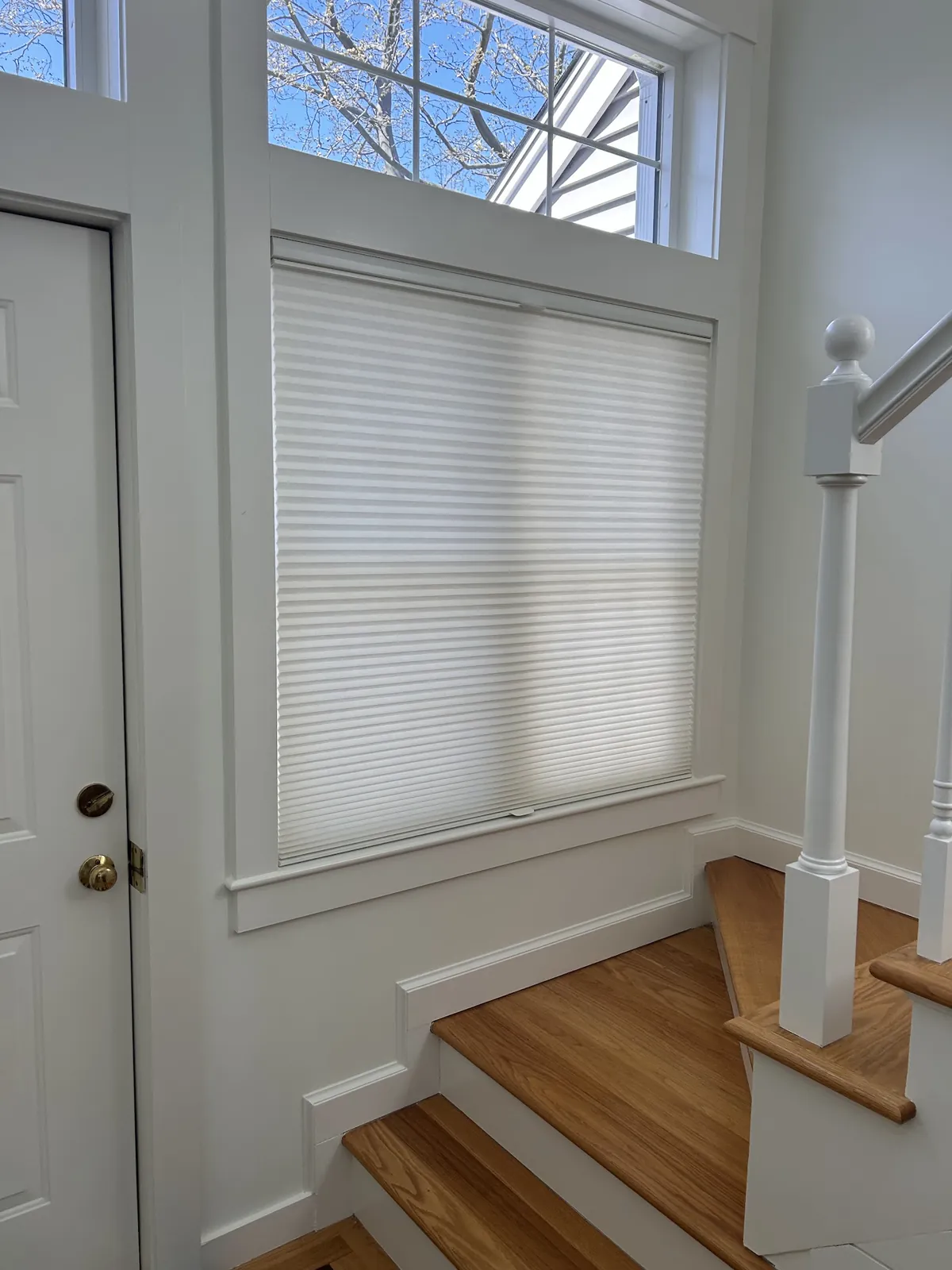
A Bright Side and a Shaded Side
Portsmouth sits on an island with water on both flanks, and plenty of houses are oriented to catch a view of one bay or the other. The upshot is that many homes have a bright side, flooded with light reflected off the water, and a shaded side that sees little direct sun and feels every winter wind. The rooms on those two sides want quite different things, and that contrast shapes nearly every plan we draw up for cellular shades in Portsmouth, RI.
A honeycomb shade can be tuned to either job. Its cells are closed pockets of air; drawn down, they lay a still layer over the pane, which keeps warmth from escaping on the shaded side and holds back the sun’s heat on the bright side. What changes from one side of the house to the other is the cloth, the number of cell layers and the way the shade lifts, while the colour can stay constant so the house looks like one place from outside.
- Single and double cell shades, tailored to each window
- A specialist measures in your rooms; our own team installs
- Fabrics and lifts to try out at the Swansea showroom
Honeycomb Shades We Make for Portsmouth
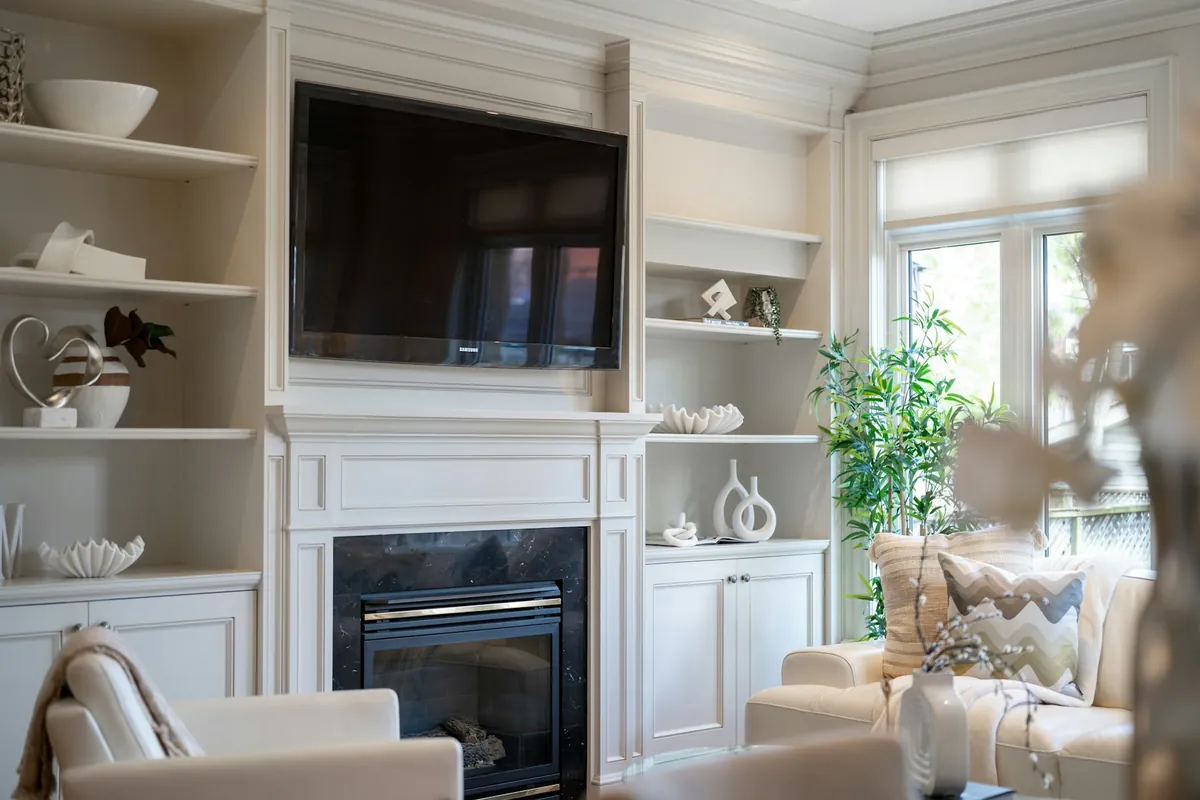
Single cell
One row of pockets, the airiest look and the smallest stack when raised. A natural fit on the bright, view side.
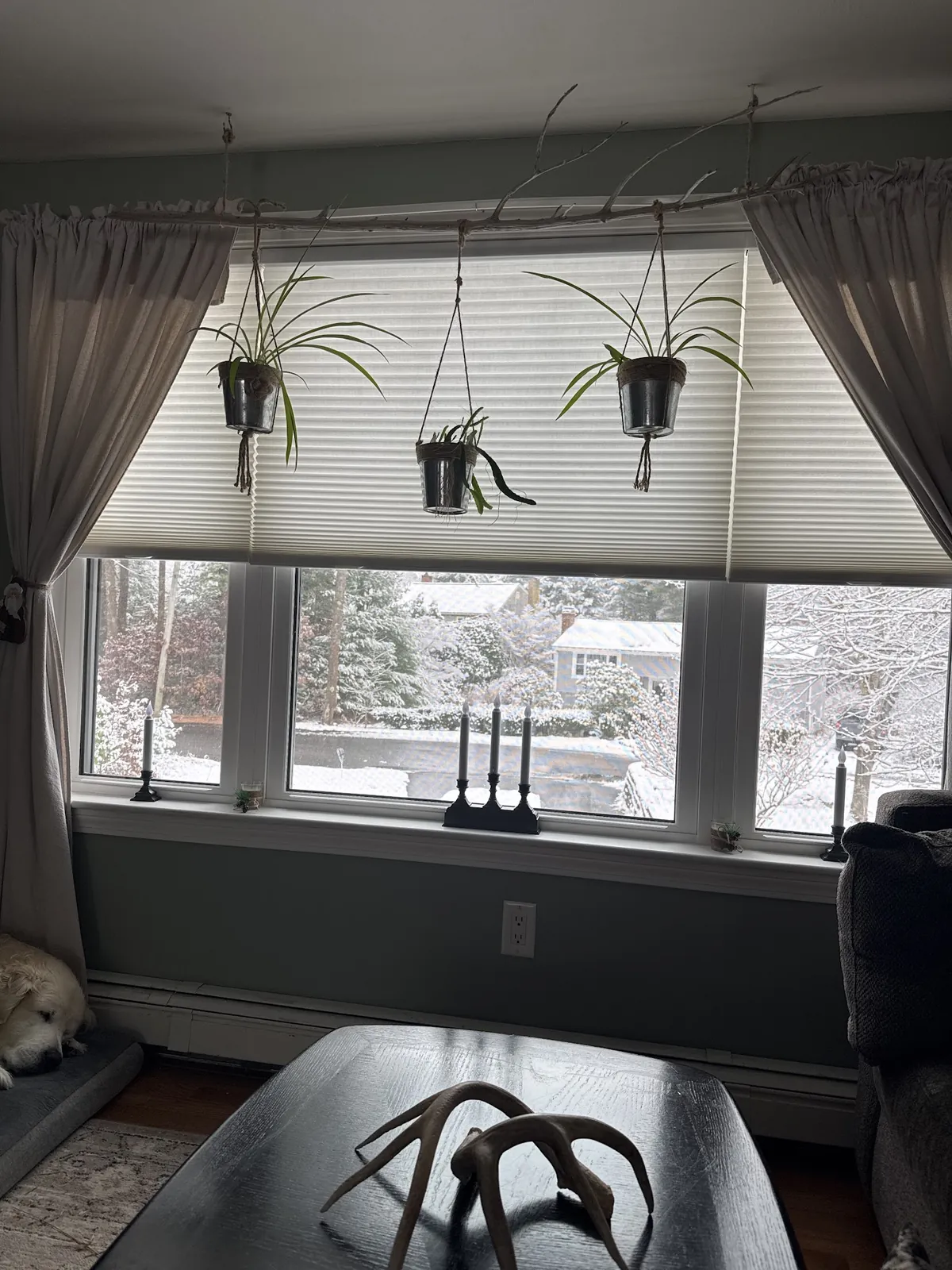
Double cell
Two rows of pockets for the shaded side, where winter is felt most and the sun rarely helps.
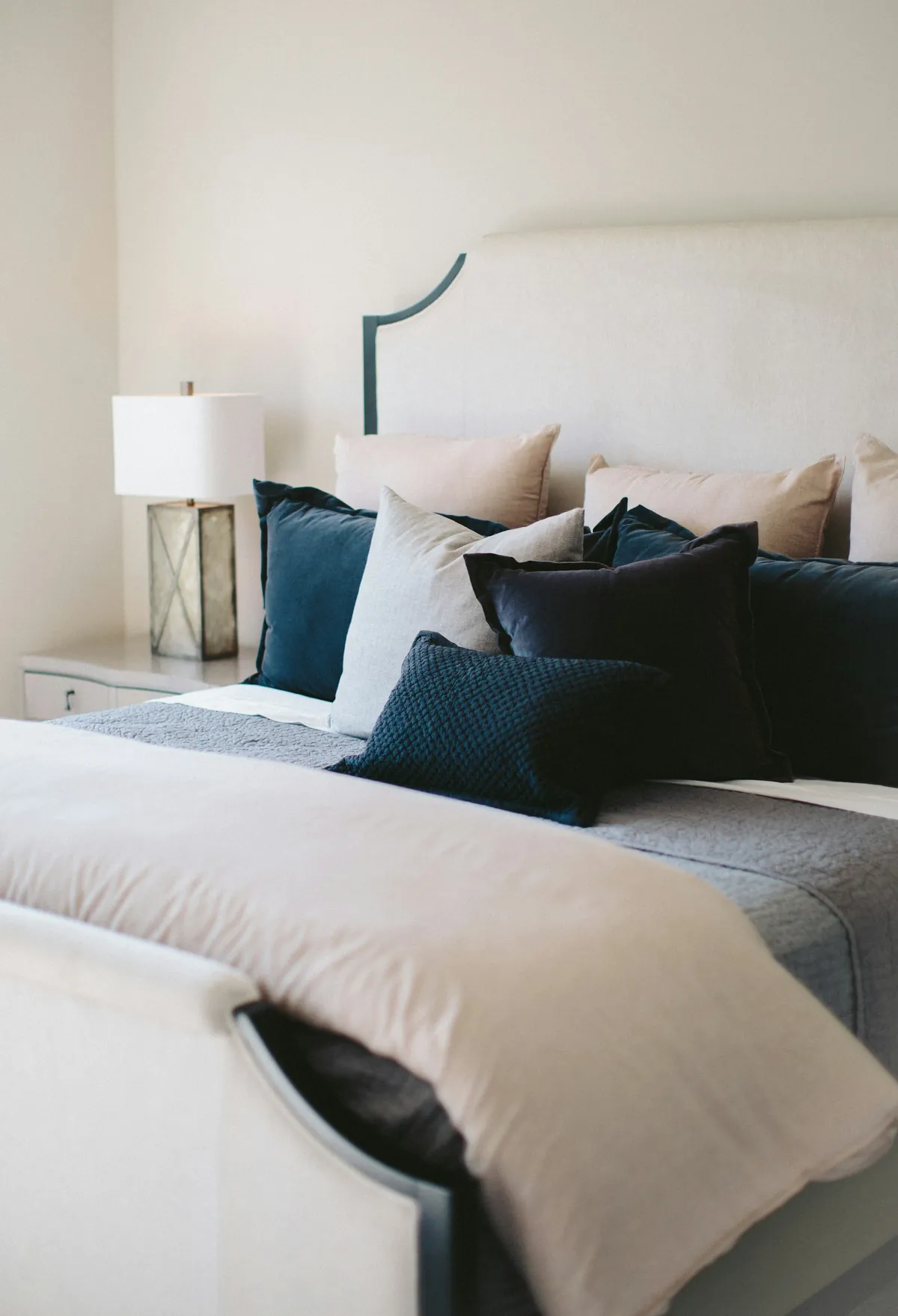
Room-darkening cloth
For bedrooms on the sunrise side, where summer light over the bay arrives very early.
Treating Each Side on Its Own Terms
The bright side
Rooms facing the water get the sky’s light and the bay’s reflection on top of it. That makes them wonderful places to sit and hard places to keep comfortable: glare at midday, heat building behind the glass on summer afternoons, and floors and furniture slowly fading.
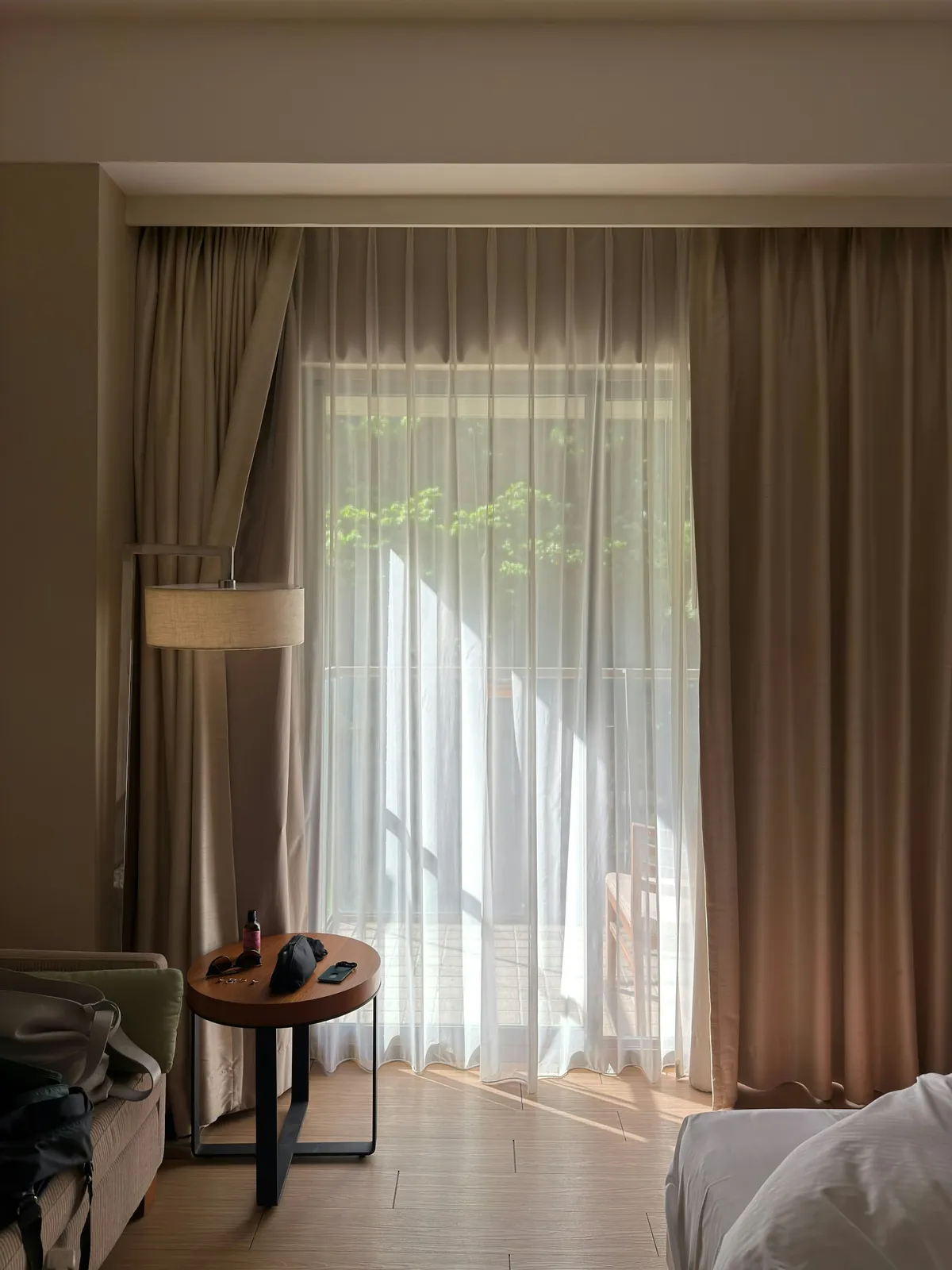
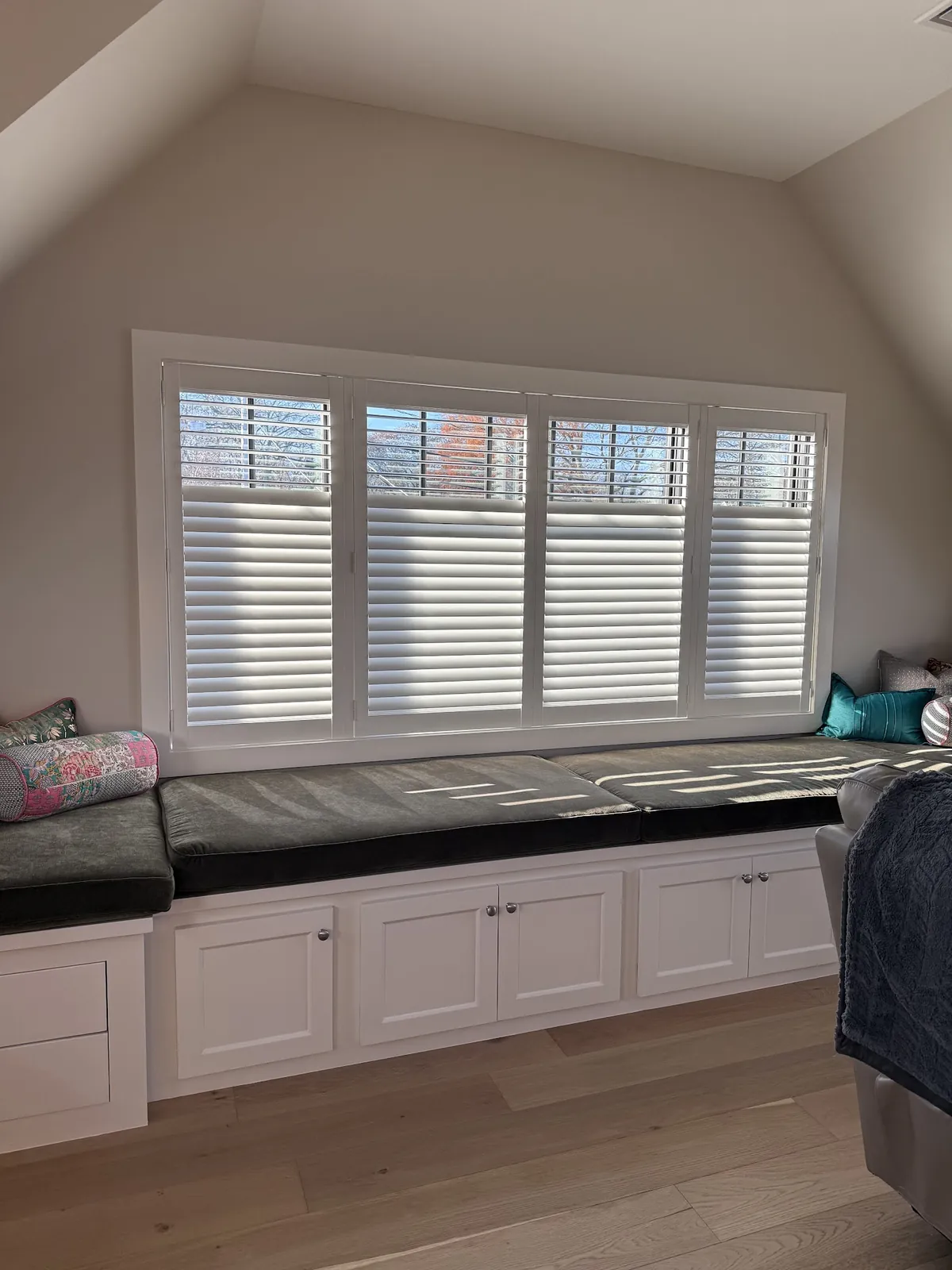
On this side, a light-filtering single cell honeycomb in a pale colour usually does best. Lowered through the brightest hours, it softens the light to an even glow and slows the heat. Raised, it packs into a narrow strip at the head of the frame and leaves the view almost untouched. A top-down, bottom-up lift adds flexibility: lower the top for sky and water, keep the bottom closed for privacy from the road or a neighbour’s deck.
The shaded side
The side facing away from the water, or into trees, a hill or the house next door, has the opposite problem. It sees little sun to warm it, it often takes the winter wind, and its rooms can feel cool for much of the year. Here, double cell is usually our advice. The extra row of pockets thickens the layer of still air at the glass, and the room holds its warmth better on a January night.
Since these rooms are short of light already, the cloth should not take more away. A pale light-filtering fabric keeps what daylight there is while still screening the room after dark. Heavy, dark fabrics belong only in the bedrooms on this side, if anywhere.
One colour, two jobs
Keeping one colour on the street side of every shade means the house looks consistent from outside even though the bright side and the shaded side are doing different jobs inside. We bring samples so you can see the difference between fabrics against your own walls, in your own light, before deciding.
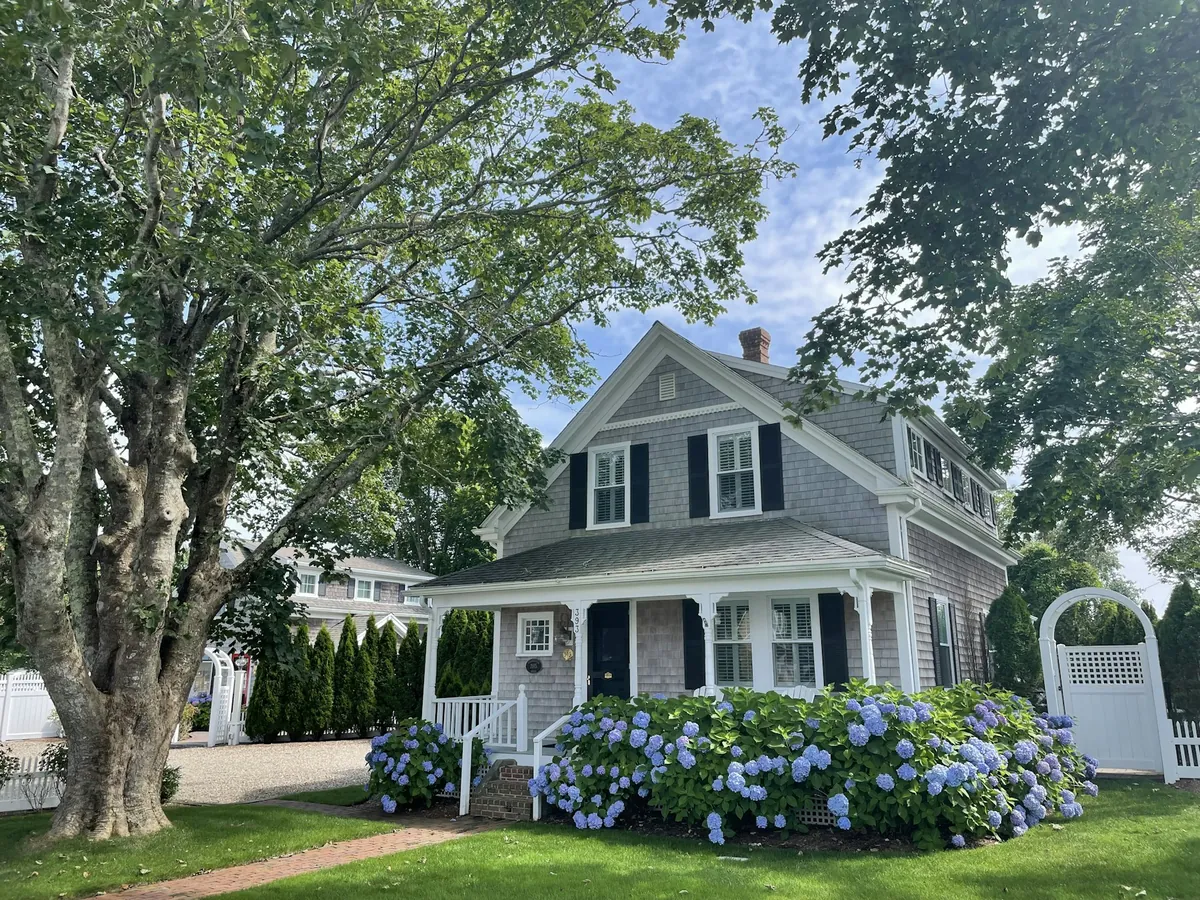
Cottages at Island Park and Common Fence Point
The cottages of Island Park and Common Fence Point tend to be compact and set close together near the water, often with modest ceiling heights. Where a cottage has been extended or had some windows replaced, one room can end up holding openings of several different sizes.
That mix is where made-to-measure shades earn their place. Each window gets a honeycomb built to its own frame, and every shade in the room shares the same cloth and colour, so mismatched windows read as one tidy set. The honeycomb’s small stack matters in a low-ceilinged cottage too: raised, it leaves the short windows nearly clear, which keeps a small room from feeling smaller.
Cottages close to the water take the wind in winter, and their walls are often thinner than a newer house’s. Double cell on the windward windows helps the rooms hold their warmth, and with neighbours close on either side, a light-filtering or room-darkening cloth gives privacy without a dark, closed-in feel. A cordless lift keeps the narrow sills clear of cords.
Small rooms, short windows
Cottage bedrooms are often tucked under the eaves with a single short window. A honeycomb mounted inside the frame takes up no wall space at all, which in a room that small is worth a great deal. Room-darkening cloth on the sunrise side lets a summer guest sleep past dawn without being woken by the glow coming off the bay.
Salt and sand
Cottages near the shore collect salt and fine sand on every surface. Honeycomb cloth tolerates it well. Pass the gentle brush of a vacuum along the pleats every few weeks and wipe any spot with a cloth that is barely damp. Pale colours hide the light dusting better than dark ones.
Colonials off East Main Road
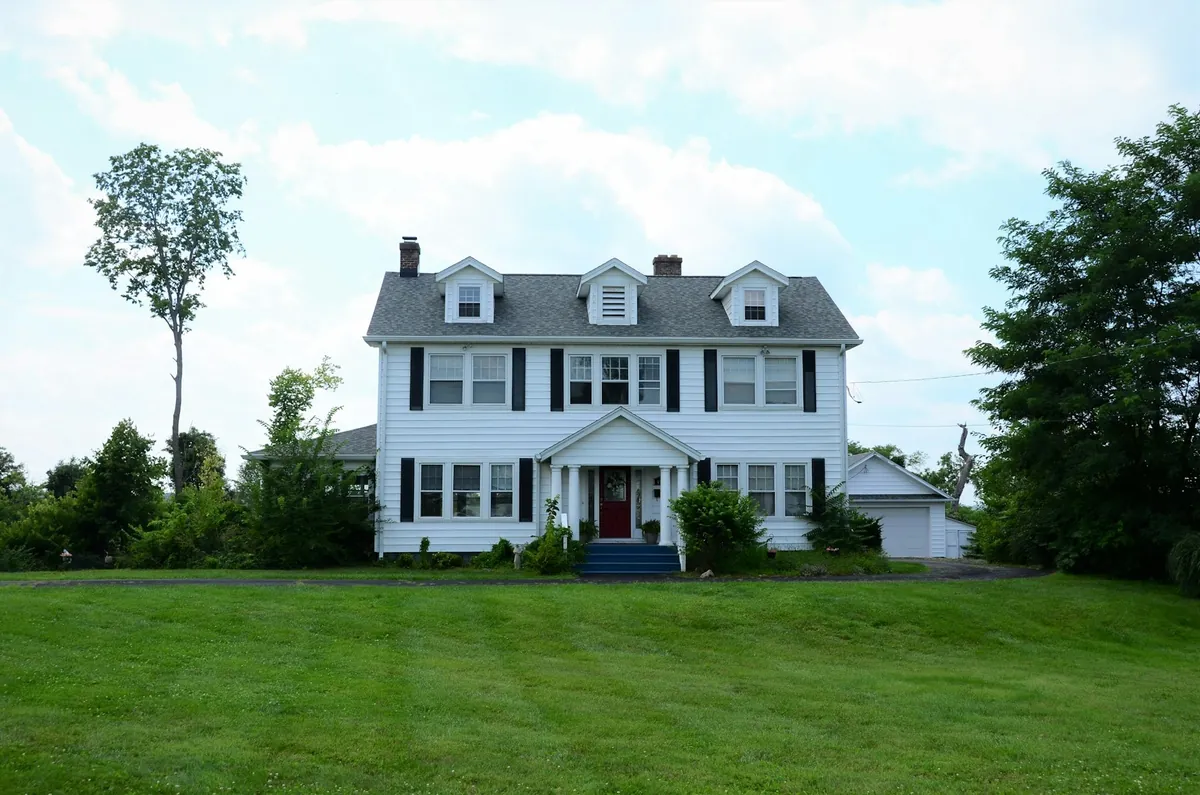
The newer colonials off East Main Road are a different kind of house: larger, more tightly built, with matched double-hung windows on the front, a family room at the back and often a room over the garage. Draughts are rarely the issue. The amount of glass, and which way it faces, is.
A colonial off East Main Road may have its bright side at the back, facing a bay view, and its shaded side at the front, or the other way around. We plan the shades by orientation: light-filtering single cell on the sunny walls, double cell on the north and windward ones, and room-darkening cloth in bedrooms on the east. Every front window shares one colour on the street side.
The room over the garage is often the coldest in the house, with unheated space underneath. Double cell is our usual suggestion there, in a dimming cloth if it is a bedroom. Owners who use that room as an office or a playroom tend to prefer a light-filtering cloth instead, keeping the extra warmth of the second cell layer without losing the daylight.
Family rooms and sliders
The family room at the back of a colonial usually has several windows and a sliding door to a deck. Honeycomb shades suit the windows, lowered together at dusk to close the room in. On a slider used all day, a vertical blind is often more practical than a shade you would have to raise every time, chosen in a colour that sits well with the honeycombs beside it.
Kitchens and baths
Over a kitchen sink, a cordless light-filtering honeycomb is simple to work while leaning over the counter. In a bathroom, a modest light-filtering shade screens the window while the room stays light.
Bedrooms facing east over the water
On the east side of the island, bedrooms that look across the Sakonnet catch the sunrise straight off the water. In June it comes up very early and very bright. A room-darkening honeycomb mounted close inside the frame holds the room dim until you are ready, and on winter nights the same shade, especially in double cell, keeps a bedroom with a big window noticeably warmer. Bedrooms on the west side face the opposite issue in the evening, when the sun sets across Narragansett Bay, and a light-filtering cloth softens that late glare without making the room dark too early.
Larger Homes toward Carnegie Abbey
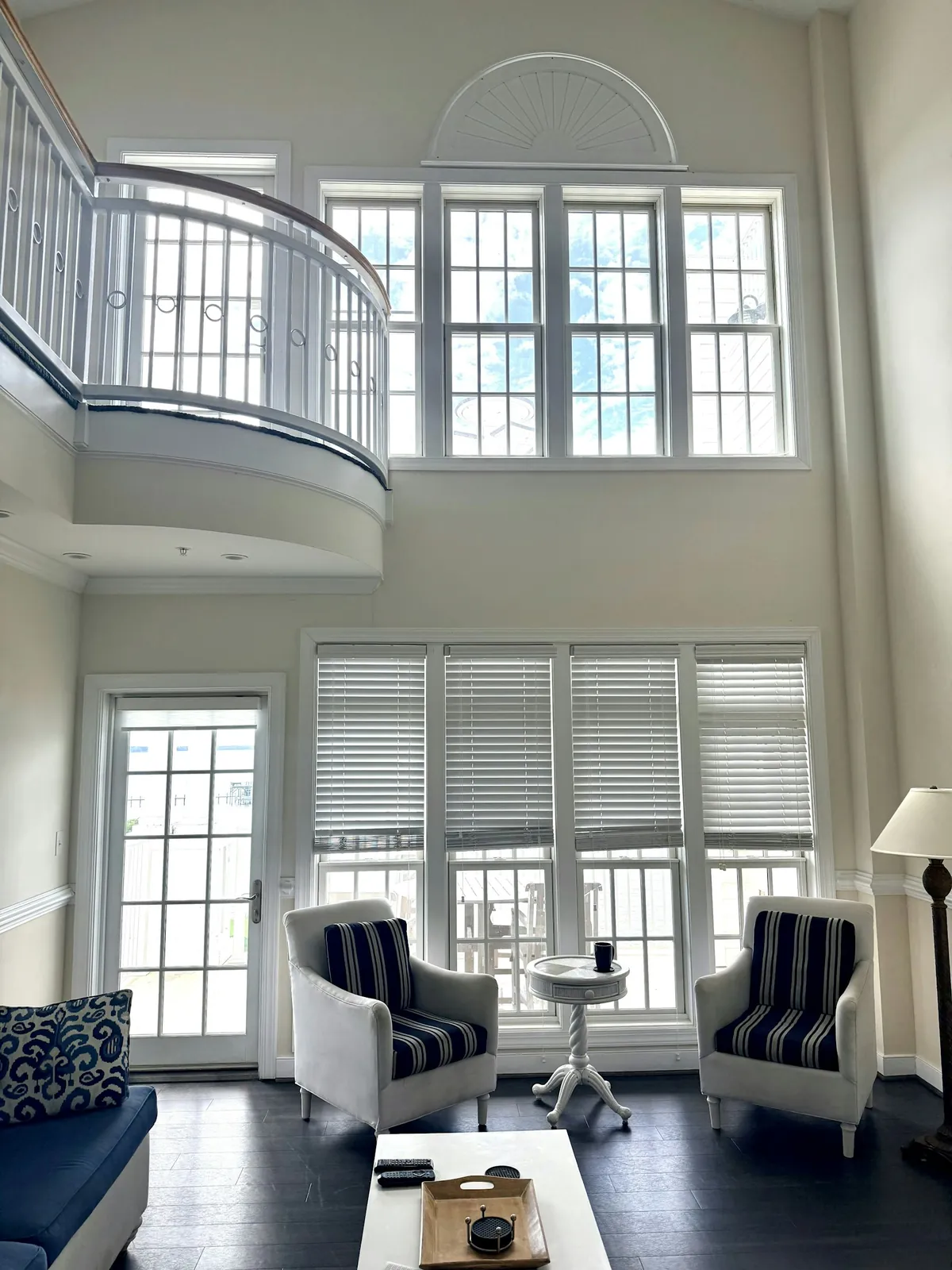
The larger homes toward Carnegie Abbey tend to have the most glass of all: tall windows, two-storey living rooms, banks of windows and glass doors facing the bay. In these rooms the bright side is very bright, and the scale of the windows makes them a challenge to manage by hand.
Motorised shades are often the answer. Each shade, or a whole group, raises and lowers from a remote or a wall switch, so a two-storey wall of glass can be shaded at midday and opened again by late afternoon without anyone reaching for a pole. Honeycomb works well at this scale, because its light cloth and compact stack keep tall shades manageable and leave tall windows almost clear when raised.
On a long run of windows, we make a separate shade for each opening, set so the bottom rails line up when lowered and the stacks align when raised. From the water, the house looks ordered whether the shades are up or down.
Big rooms also tend to have windows of several kinds side by side: a tall fixed pane, operable windows beneath it, a glass door at one end. Each gets its own shade, and we talk through which edges should line up so the whole wall reads as one composition. Where a fixed pane sits very high, it can be grouped with the shades below on the same motorised control, so one press of the switch shades the entire wall and another opens it back up to the bay.
Winter on the exposed side
Large windows facing the bay are lovely in summer and cold in winter, when wind off the water draws heat from the glass. Double cell honeycomb, lowered at dusk, gives these big rooms a far more comfortable evening. Pairing the shades with floor-length drapes on either side adds a second layer at night and softens a room that can feel cavernous with every shade down. We make custom drapes for Portsmouth homes as well, so the two can be planned together.
How the Two Sides Change Through the Year
The bright side and the shaded side do not stay fixed. In winter the sun is low and swings through the south, so south-facing rooms get warm sun deep into the room for a few hours, while north-facing rooms get none. In summer the sun is high and rises and sets further round, so east and west rooms take the worst of the early and late light.
Using the shades with the seasons gets the most from them. On a sunny winter morning, raise the shades on the south side to let the sun warm the floors, then lower everything before the light fades to keep that warmth in. On a summer afternoon, lower the shades on the west and the water side through the hottest hours and leave the shaded side open for light. Motorised groups make this easy, but even cordless shades take seconds per window.
When you plan cellular shades in Portsmouth, RI homes around these seasonal patterns, the bright side never overheats and the shaded side never feels like a cold back room.
Choosing Cellular Shades in Portsmouth, RI
These are the questions we work through, one window at a time.
- Which side is it on? Bright side windows usually take single cell in a light-filtering cloth; shaded side windows take double cell.
- Is it a bedroom? Room-darkening cloth for bedrooms on the sunrise side, light-filtering elsewhere.
- How is it lifted? Cordless for most windows, top-down, bottom-up where privacy and view both matter, motorised for tall glass.
- Inside or outside? Inside where the frame is deep enough; on the trim where it is shallow, out of square or where you want fuller coverage at the edges.
- What colour? Pale neutrals on the bright side to reflect the sun, one consistent street-side colour throughout.
Working in stages
When cellular shades in Portsmouth, RI are being added a few rooms at a time, the bright side is a sensible first step, since that is where glare and fading show up soonest. Others begin with the coldest rooms on the shaded side.
Porches and sunrooms
A closed-in porch or sunroom, common on cottages and colonials alike, often faces the water and holds more glass than any other room. Honeycomb on every window lets it be used for far more of the year: drawn on summer afternoons to take the heat off, drawn on autumn evenings to keep the day’s warmth in. The rest can follow and still match, because we keep a record of every cloth and colour.
What to Expect When You Order
You will have someone to ask at every step, right up to the moment the final shade is working. The route to cellular shades in Portsmouth, RI runs in six short stages.
- Ring through the call button or fill in the form, mention which rooms look at the water and which run cold, and a free quote is booked.
- Our specialist comes to the house, records every window and glass door, notes its orientation and checks depth and obstructions.
- Side by side, you pick cells, cloth, colour and lift, from samples in your rooms or on display in Swansea.
- Your quote lists each window individually.
- Production works from the figures taken on site.
- The installers hang each shade, level every row, try each one and explain the controls.

A Swansea Family Store
Window Works began in Swansea, Massachusetts, in 1988, and the founding family’s second generation looks after it now. Through more than 37 years our specialists have worked in shoreline cottages and glass-walled homes alike, across 25 towns between the SouthCoast and Rhode Island’s East Bay.
- Seasoned window treatment specialists
- Measurements always taken at your house
- Shades hung by our own installers
- Regular updates until everything is finished
- Warranties available on what we supply
- A showroom with cloths, lifts and the Norman range to see in person
All our services on the island are on the Portsmouth window treatments page, and the main cellular shades page explains the honeycomb in more depth.
Questions from Portsmouth
Should the bright side and the shaded side have the same shades?
Usually not the same cell or cloth, but the same colour. Single cell light-filtering suits the bright side, double cell the shaded side.
Can you fit shades in a small cottage with mismatched windows?
Yes. Each window gets a shade made to its own frame, all in the same cloth and colour, so the room looks like one set.
Are motorised shades worth it on tall windows facing the bay?
On a two-storey wall of glass, usually yes. A remote or wall switch raises and lowers the whole group with no reaching.
Will the shades block the bay view?
Only while lowered. Raised, a honeycomb packs into a narrow strip at the top of the window.
Is there a charge for a quote?
No, quotes are free. Use the call button or the form.
Book Your Free Quote
Tap the call button and the Swansea store can set up a free quote, book measuring in your home or answer questions on installation; the form works too. If you would like to handle the cloths first, the contact page tells you how to reach the showroom. Google reviewers give Window Works a 5.0 rating.