
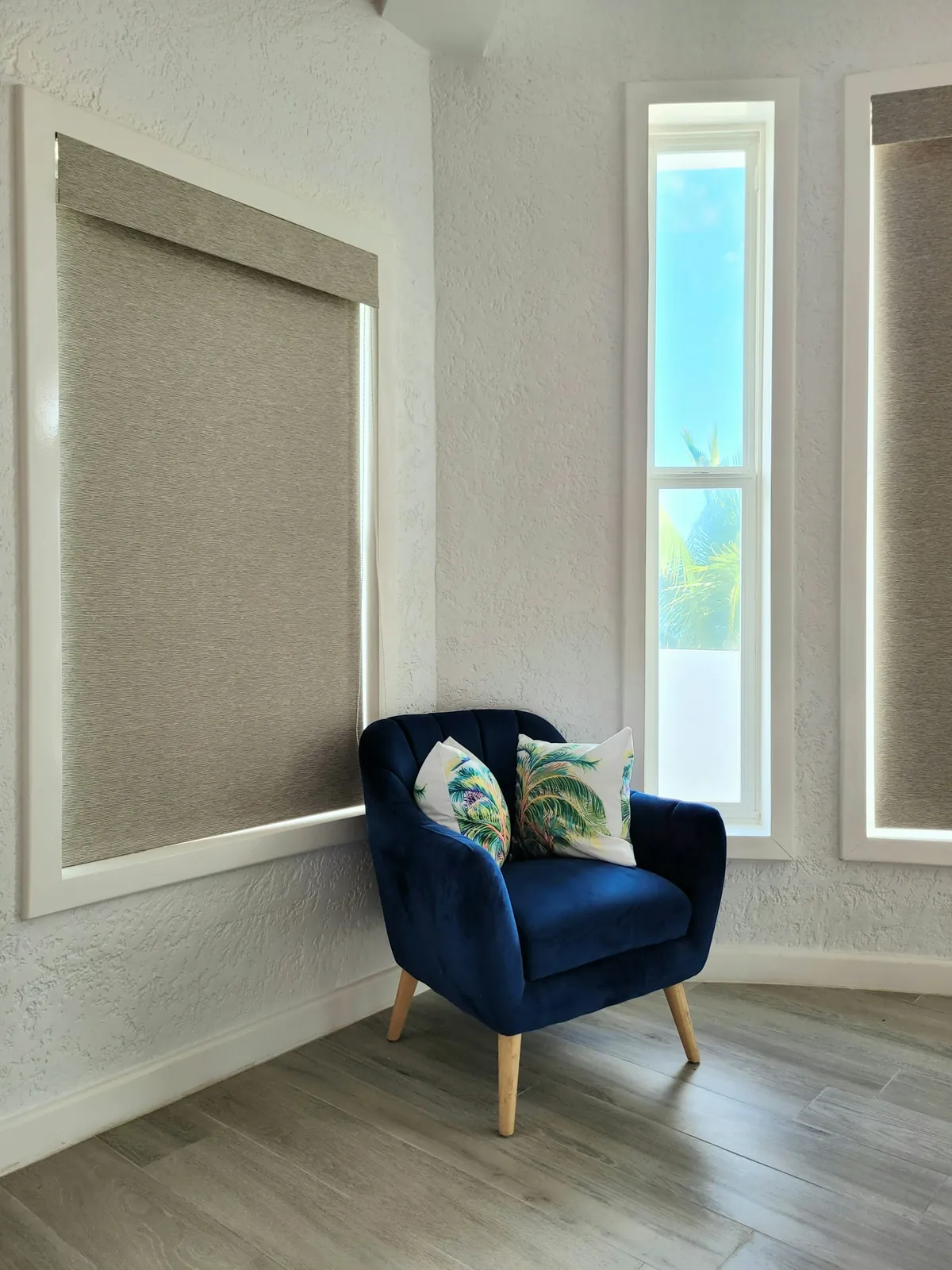
Glass Facing the Sakonnet
Roller shades in Tiverton, RI often go up in rooms that are more window than wall. Along the Sakonnet River and around Nanaquaket, the waterfront houses carry a great deal of glass on the water side, and those rooms are exposed: open to the river, the sky and the weather, with nothing between the panes and the sun. Inland, around Four Corners, the farmhouses and shingled capes are older and more sheltered, with smaller windows and a calmer kind of light.
By the river, two forces decide the fabric. Sunshine arrives twice, once from above and again bounced off the water. And salt drifts in on every breeze, so whatever hangs at the glass has to shrug it off. A roller shade is a single flat panel that winds away to a slim roll, so the view is untouched when it is up, and when it is down it can take on both jobs.
- Screens for the river side, cloth for the rest
- Light filtering and blackout options
- Sized in the house and hung by our installers
Roller Shades for Tiverton Houses
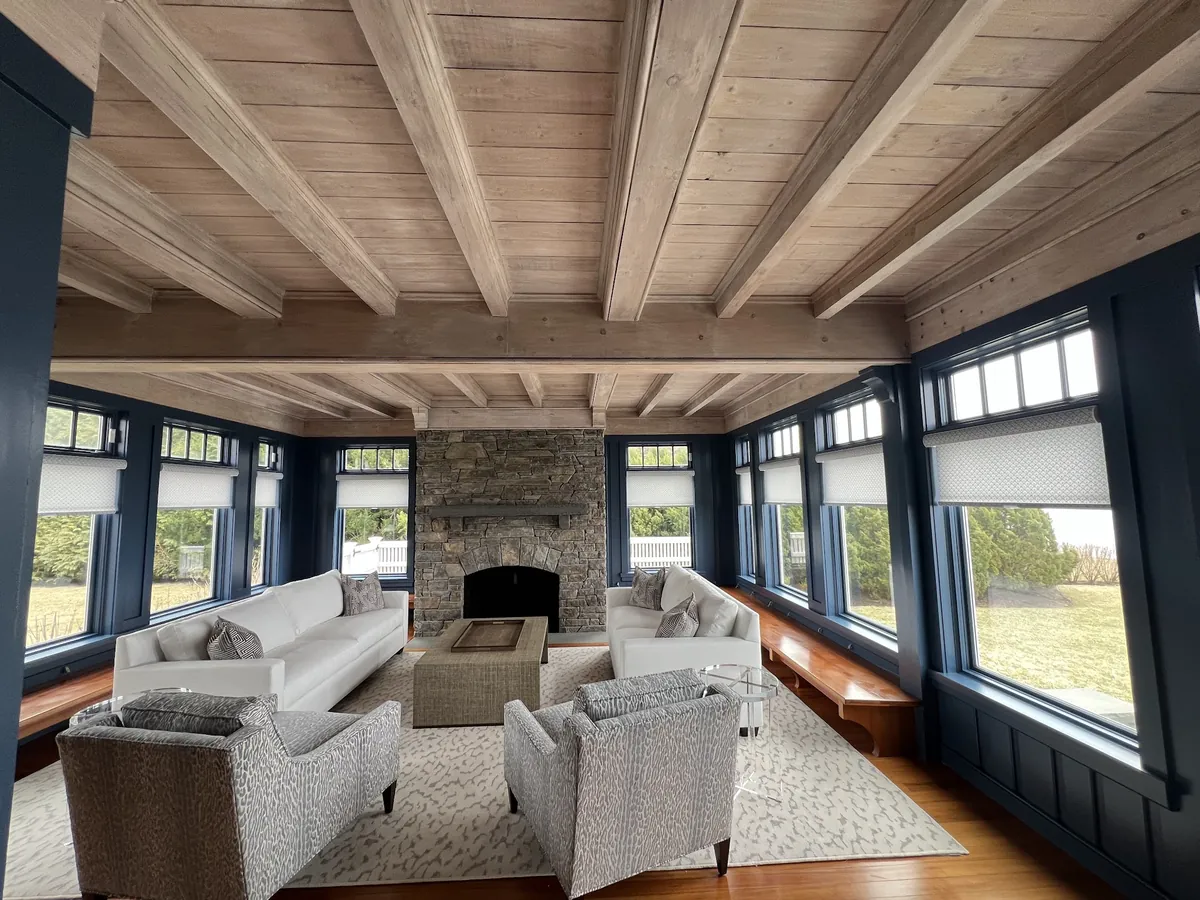
River-facing glass
Screens on a long run of waterside windows, each lowered in turn as the sun swings round.
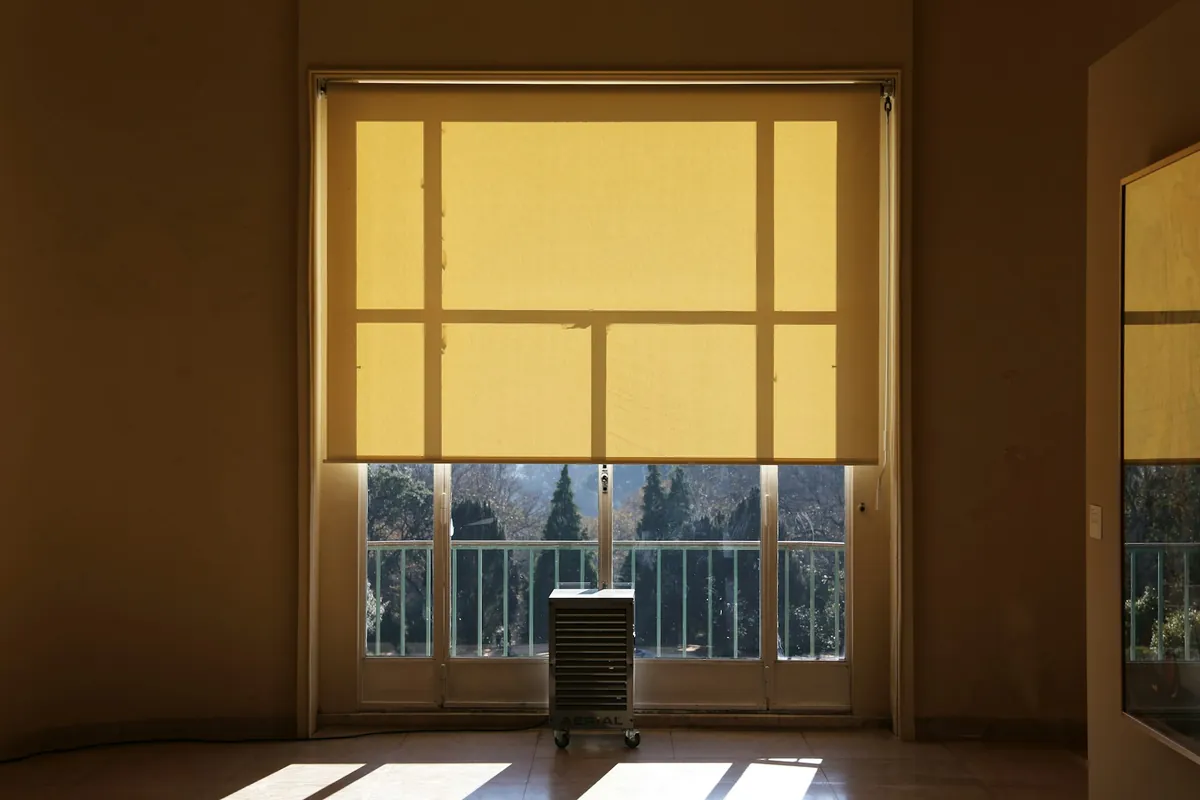
Sheltered rooms inland
Light filtering cloth for the front rooms of a Four Corners farmhouse or cape.
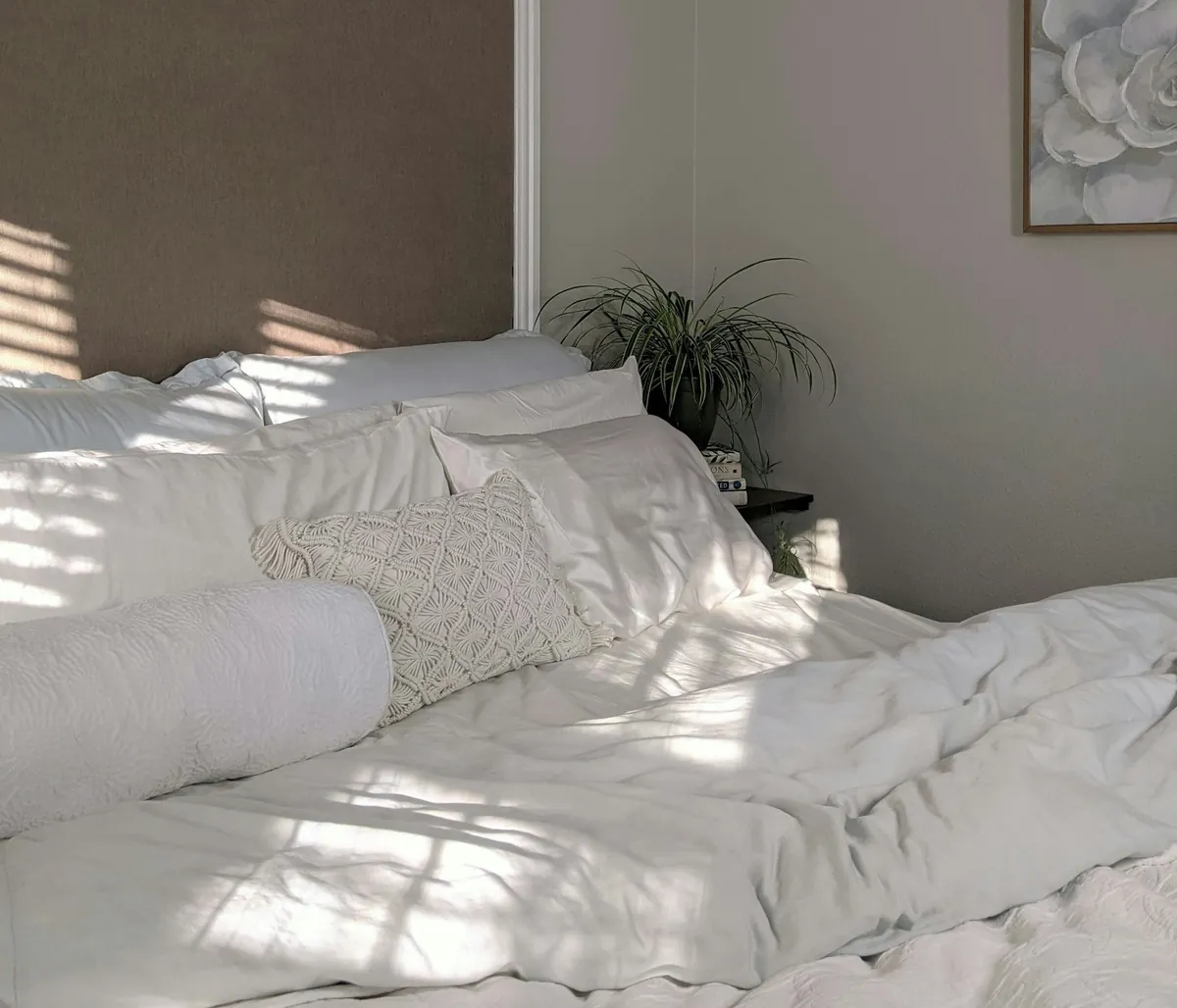
Bedrooms by the water
Blackout cloth for a bedroom over the river, where dawn light off the water comes early.
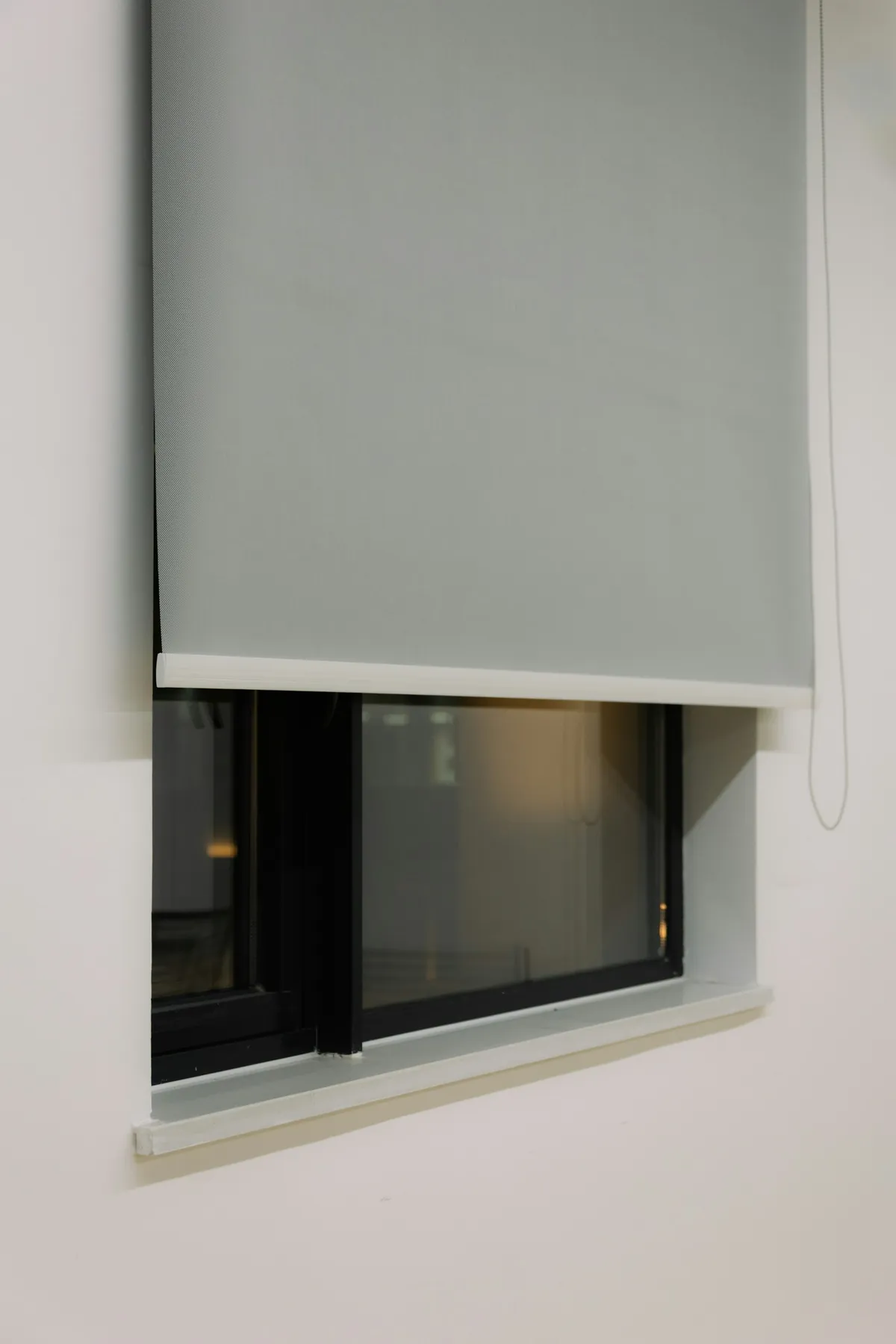
Small cape windows
Compact shades that tuck into a dormer or a shallow cape window without crowding it.
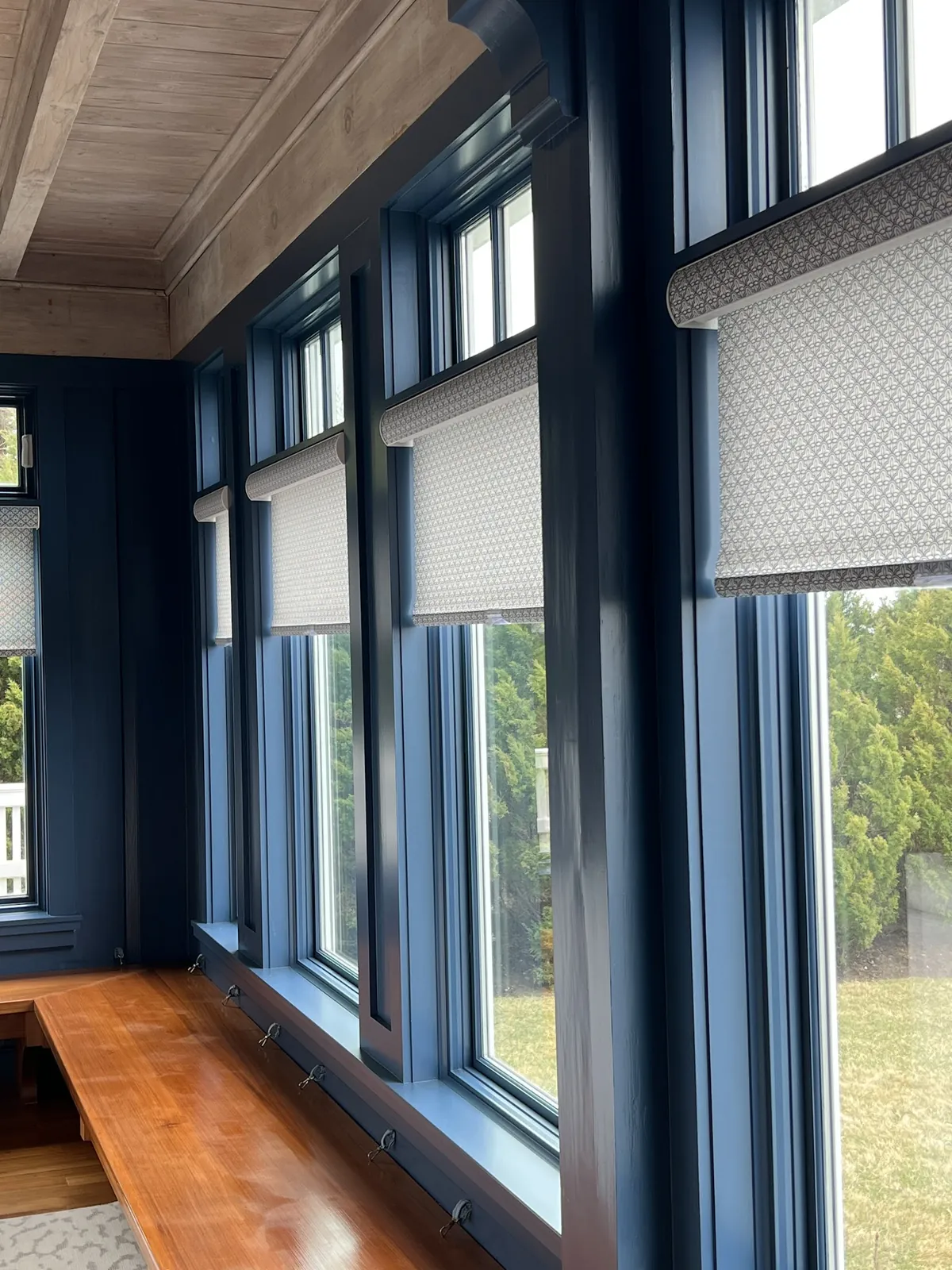
Remote or wall switch
Motorised roller shades for tall or numerous waterside windows, moved together from a handset or a switch.
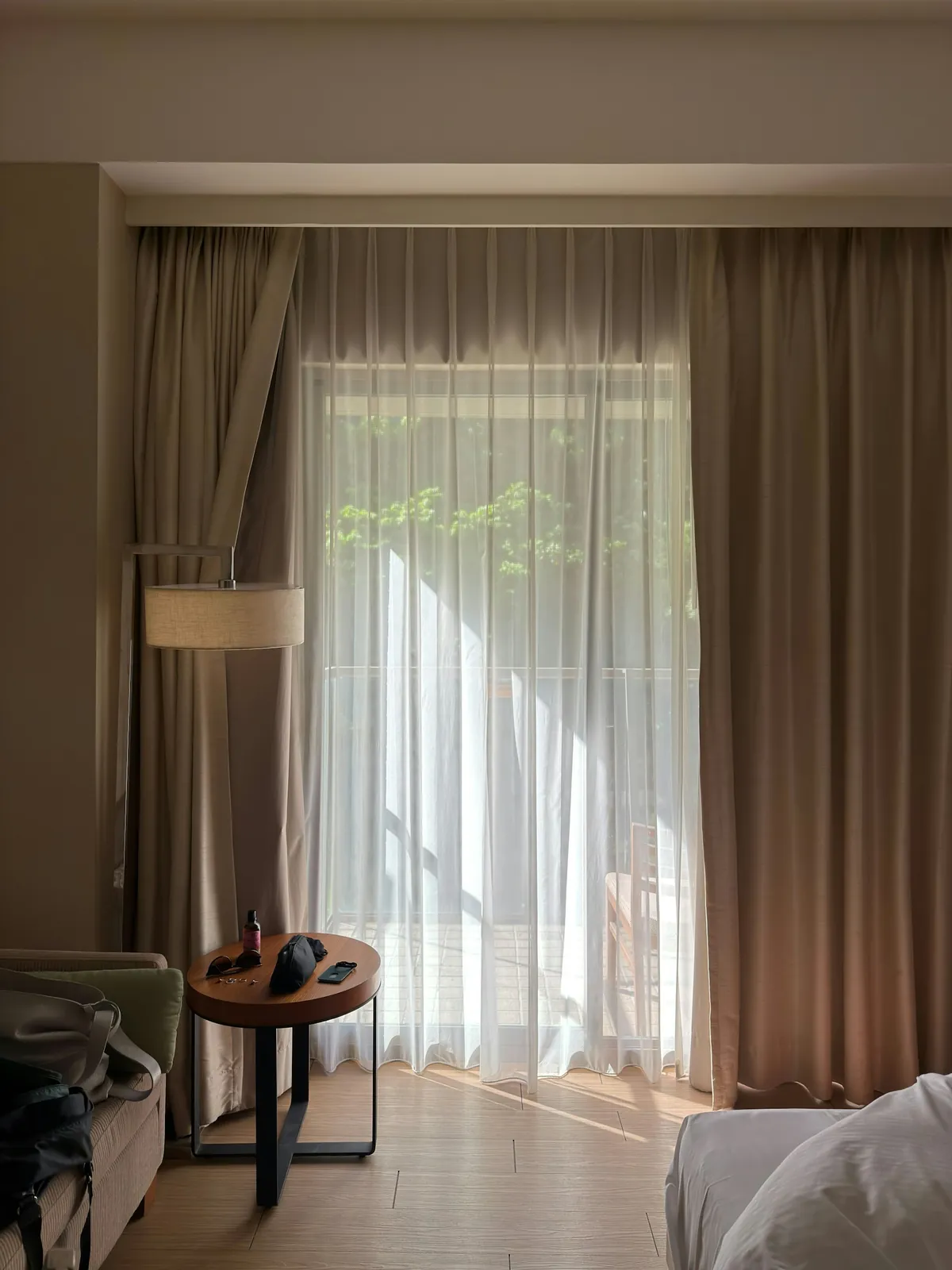
Layered for evening
Fabric panels that close over a screened window at night, since a screen on its own hides little after dark.
Planning Roller Shades in Tiverton, RI on the Water
The river houses come first, because they test a shade hardest. Along the Sakonnet and on Nanaquaket, living rooms, kitchens and main bedrooms tend to sit on the water side behind broad or tall glass, and they take whatever the weather sends.
Why does the late day hurt?
Tiverton’s shore looks west over the Sakonnet, so the hardest light comes late, low across the river and level with your eyes. A table set for supper, a television, a chair by the window: all of them are caught in it. Reflection off the water doubles the effect and pushes the brightness well into the room.
That is the case for a solar screen. Think of it as tinted glasses for the window. Its weave has tiny gaps, so with the shade down you still watch the water and the far shore, only dimmer and easier on the eye. The real decision is how tight that weave should be. Go open, and the river comes through crisply with plenty of daylight, which suits a room built for looking out. Go tighter, and the dazzle drops further while anyone on the shore or a boat sees less of you, which suits a room with a screen or a desk.
Colour changes the picture again. Charcoal, bronze and other deep tones are usually easiest to see through from inside. White, ivory and pale grey disappear against light frames but show a brighter face. The surest test is a swatch pressed to your own window late on a sunny afternoon, and we bring a spread of them.
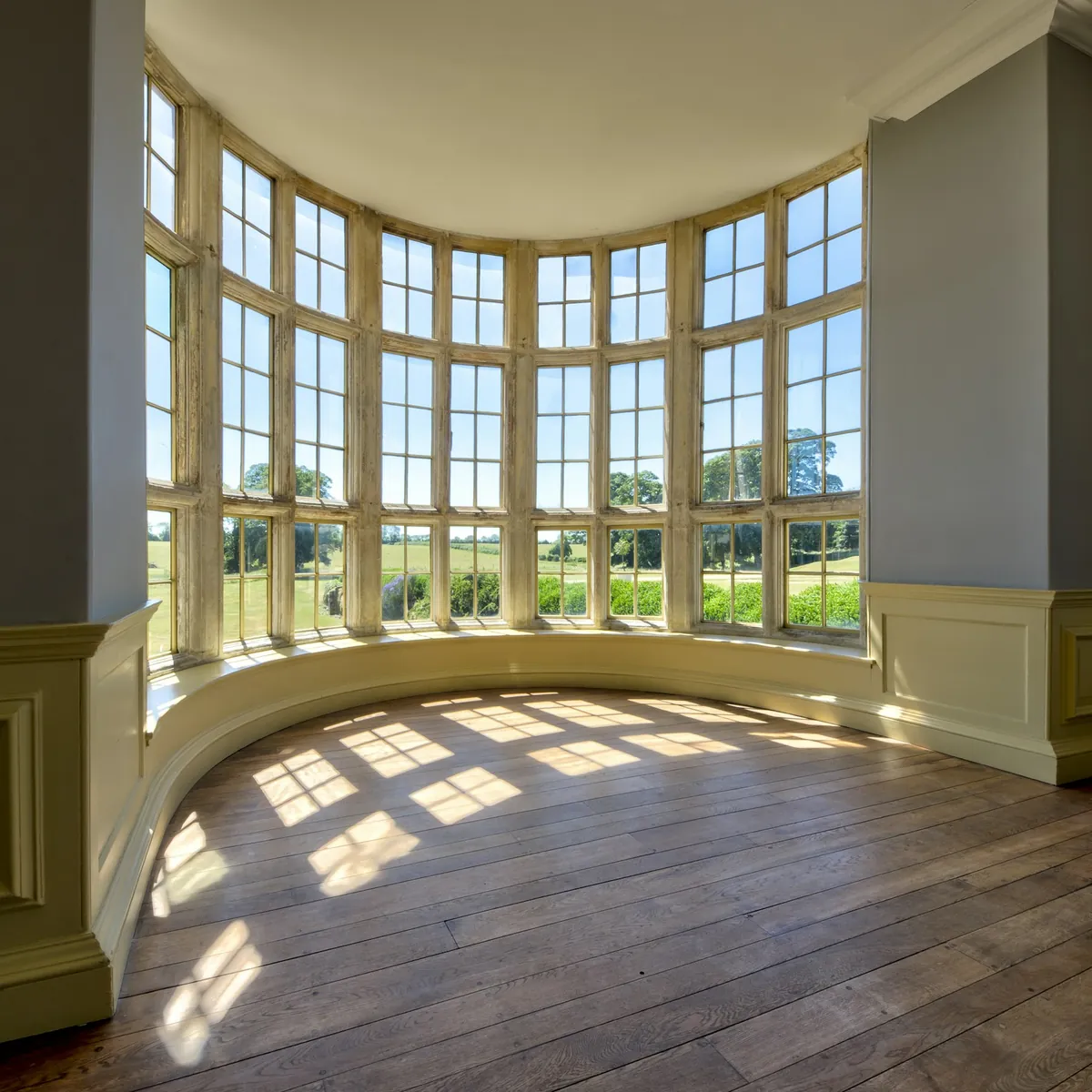
One shade per window, or one per wall?
Rooms with a lot of glass usually have a row of windows rather than a single pane, and we give each window its own shade. On a summer evening you may want only the two nearest the sunset covered; at midday, perhaps none. Separate shades make that easy. Keep them all in a single fabric and tone, set them to stop level when half down, and the row looks deliberate in any position.
A long row raised and lowered by hand every evening soon becomes a nuisance. Motorised roller shades let a whole row move together from a handset or a switch by the door.
Salt, haze and choosing the right cloth
Living by salt water means a faint crust on every surface near an open window. On a shade, that film catches dust, and over the seasons it can take the brightness out of a colour.
Choose with cleaning in mind. A cloth or screen that tolerates a soft brush and a barely damp sponge will look fresh for far longer in a river room than one that needs special care. At the quote we point out which samples in our range clean up most easily, and which are better kept for an inland bedroom. Middle tones, neither very dark nor very pale, tend to hide the haze best between cleans.
Where does the shade sit on tall glass?
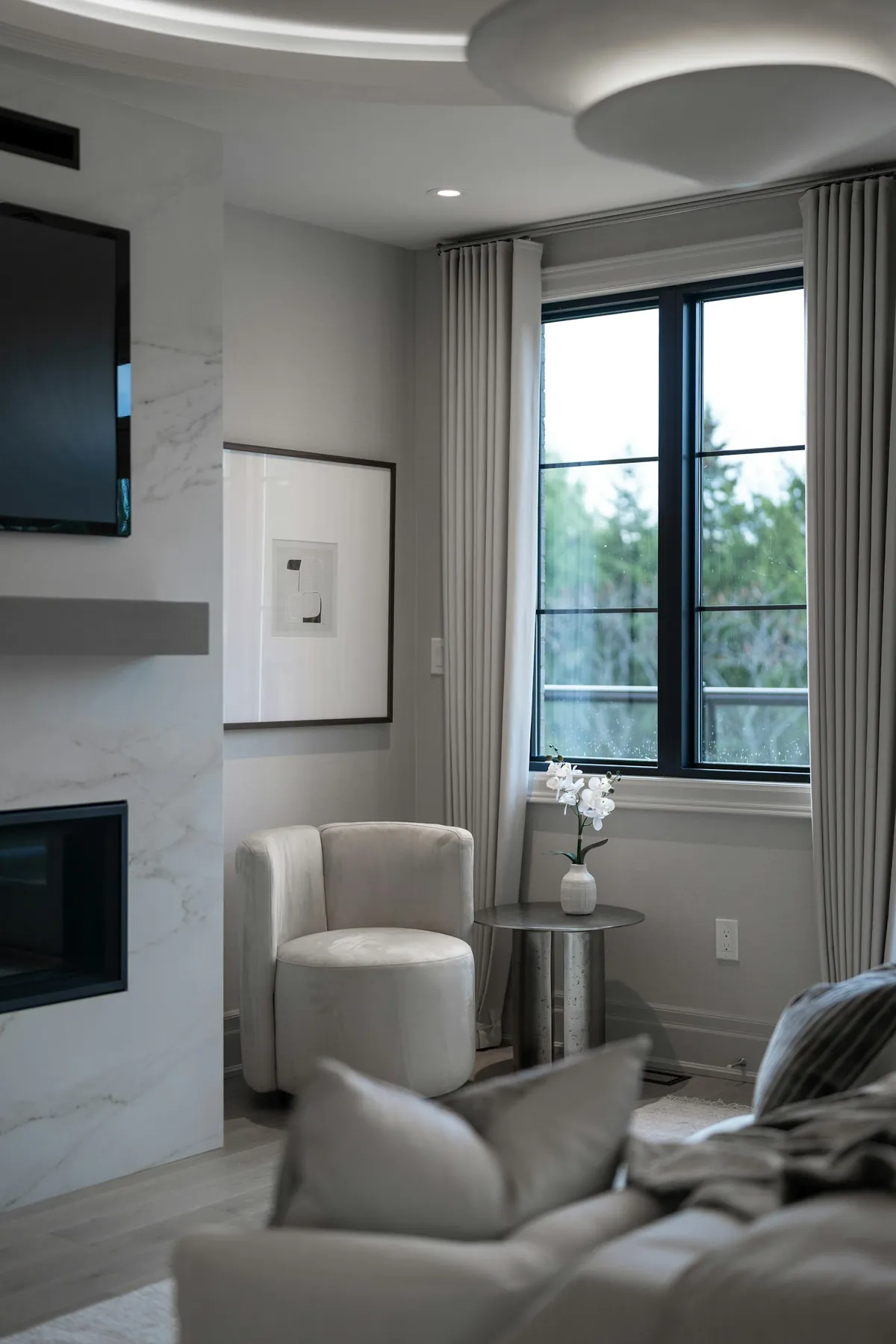
Waterfront glass often runs close to the ceiling, with slim modern frames and little or no recess. On those windows the shade usually fixes to the wall or ceiling just above the glass, made a touch wider than the pane so it overlaps each side. That overlap matters: it closes the bright sliver that would otherwise show down both edges, which is exactly where low river light likes to slip through. Mounting high also means the roll sits above the glass when raised, so not a strip of the view is lost. During the measuring visit we check what the wall or ceiling above the window is made of, so the brackets are fixed into something solid.
A house with two faces
Many river houses have a water side and a road side, and the two need different things. Facing the river, the shades deal with glare and keep the view. Facing the road, privacy matters more than outlook, so a light filtering cloth does the job better than a screen. The trick is to choose the screen and the cloth in one colour family. Walk through the house and the shades feel like one decision; stand on the road and the front looks tidy.
Exposure through the seasons
An exposed room swings from bright and warm on a clear afternoon to grey and cool when the cloud rolls in. A roller shade follows those changes in seconds. Drop the screen while the sun is on the water, then raise it the moment the sky turns and let every bit of light back in. In winter, when the sun stays low for longer, that flexibility matters even more.
Houses on Nanaquaket
Nanaquaket’s houses look over sheltered water instead of the open river, but their water rooms are just as generously glazed. The light tends to be softer than on the Sakonnet, though a bright day still throws plenty of glare off the surface.
Because the outlook is calmer, a screen one step more open than on the river often suits these rooms, so the pond and its edges stay vivid. Bedrooms on the water side usually want blackout cloth. Where a bedroom also has a view worth keeping by day, two shades can share the window, a screen at the front and a blackout behind, so the room is bright and filtered by day and fully dark at night.
Sheltered water also invites the windows to be opened more often, and a shade has to live with that. When a sash or casement is open, a lowered shade should still hang clear of the handle and not flap in the breeze across the pond. We look at how each window opens before deciding where the shade goes and how far it drops, so it works whether the window is shut tight or thrown open on a warm evening.
What about privacy after sunset?
Once lamps are lit indoors, a screen turns almost transparent from outside. On a secluded stretch, nobody may notice. Where the house looks onto a road, a neighbour or water with boats on it, plan a second layer from the start: curtains or sheers to pull across at night, or a light filtering shade behind the screen. Window Works makes both, so they can be measured on one visit.
Farmhouses and Capes Around Four Corners
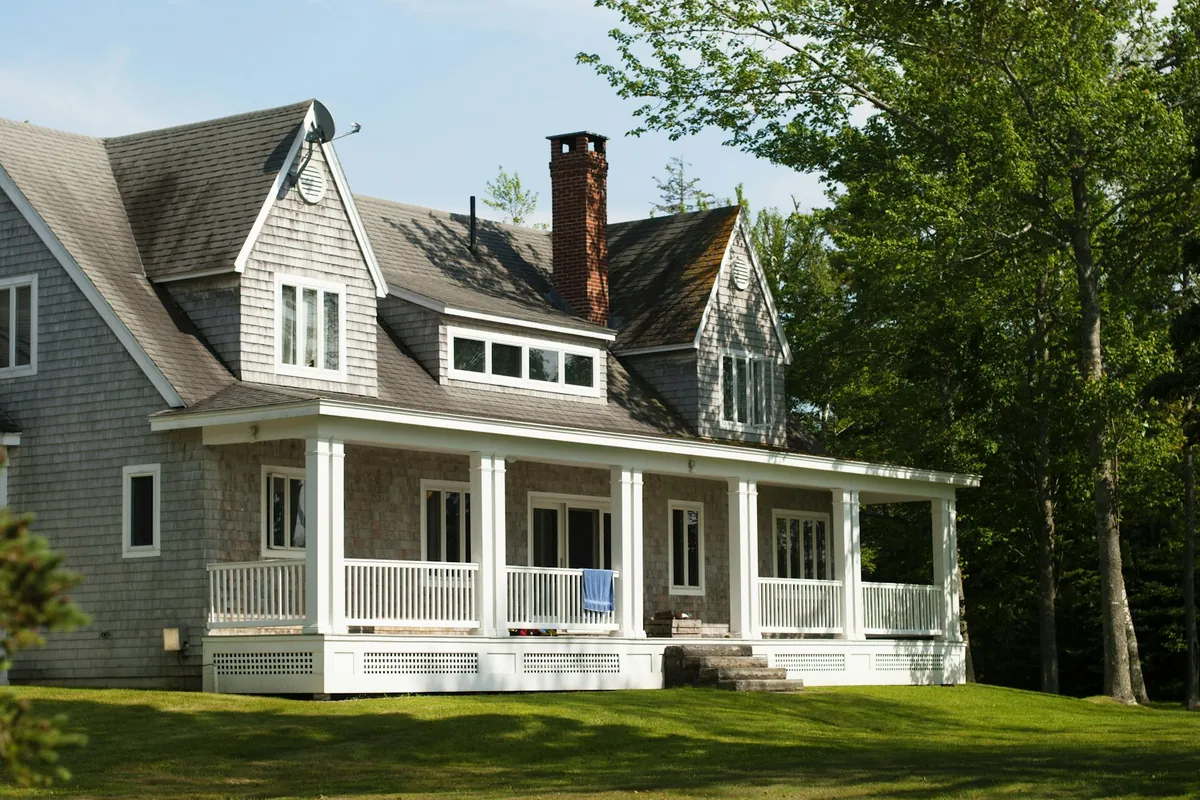
Inland, around Four Corners, the work is gentler. The farmhouses and shingled capes have more modest, traditional openings, mostly double-hung sash in weathered shingle walls, and the light is steadier than by the water.
Farmhouse ground floors
Ground-floor rooms in a farmhouse often have tall, old-fashioned sash with moulded casings. A light filtering roller shade there softens the sun and blocks the view from the lane, then winds up to almost nothing, so the casing and the old glass are left alone. Where the recess is deep enough, we set the shade inside it. Farmhouse frames have usually moved over the years, so we take each one’s measurements separately.
Dormers and cape bedrooms
A cape’s bedrooms sit under the roof, lit by dormers set into the slope. There is little room above a dormer window, and a roller shade’s slim roll fits where bulkier products will not, leaving nearly all the glass clear when up. Blackout cloth makes sense here, especially in a dormer facing the sunrise. Where a cape bedroom has a gable window as well as a dormer, both take the same cloth so the room feels finished, even though the two openings are quite different sizes.
River kitchens
On the water side, kitchens are often open to the living room and share its wall of glass. The sink may sit right under a window facing the river, where a filtering cloth or a screen that sponges clean is the practical choice. If the kitchen and the living area share one long run of windows, giving every shade in the run the same fabric keeps the space calm, even if the kitchen end is lowered more often while you cook in the evening sun.
Farmhouse kitchens
Over a farmhouse sink, choose a filtering cloth you can sponge down after a steamy afternoon of cooking, and fit it inside the frame so the faucet stays clear. Where the kitchen catches the low western light, swapping to a screen keeps the counter usable without losing sight of the garden.
Roller shades in Tiverton, RI for these older houses usually follow a simple pattern: light filtering downstairs, blackout under the roof, one colour throughout.
Porches and enclosed rooms
Older farmhouses often gained a porch or sunroom somewhere along the way, and on the river side that room can catch more sun than any other. Matching screens on each window there let the room be used through a bright afternoon, and because porch frames are often slim and close together, we check how each shade will sit beside its neighbour before anything is made.

From Phone Call to Fitting Day
You will hear from the store at every turn, and someone sees the order through to its last bracket.
- Ring us or send the form, say which rooms look over the water, and fix a time for a free quote.
- A specialist calls at the house and sizes each opening, noting depth, nearby hardware and which way each room looks.
- Swatches go up against your own glass in your own light, or you visit the Swansea showroom for the full collection.
- Your quote names every window separately.
- Each shade is made to the figures from the visit.
- Installers hang the lot, roll each one to make sure it tracks square and sits level with the next, and show you the controls.
Colours for river and farmhouse
By the water, interiors lean to white, sand, weathered grey and river blue, and shades in those families feel natural. A deeper screen tone can sharpen the view out without looking heavy against a dark window frame. In a Four Corners farmhouse, warmer creams and oatmeal shades usually sit more comfortably beside old painted woodwork than a bright, cold white.
Remember that the outward face of each shade is part of the house from outside. From the river, a row of lowered screens is seen against the shingles or clapboard, so a tone that sits with the exterior, a soft grey against weathered cedar, for instance, keeps the water side looking as good from a boat as it does from the sofa.
Upkeep
A soft duster or brush attachment, used every few weeks in summer, clears dust and salt before they settle in. Spot marks usually lift with a slightly damp sponge. Now and then let each shade wind fully up, which helps the cloth lie flat.
Other choices
A roller shade is not always the right answer. A chilly north room may suit a cellular shade in Tiverton, whose cells hold air, and a dining room may want the soft folds of a Roman shade. Every service for the town is gathered on the window treatments for Tiverton homes page, and the main roller shades page describes the whole range.
Window Works, Across the Line in Swansea
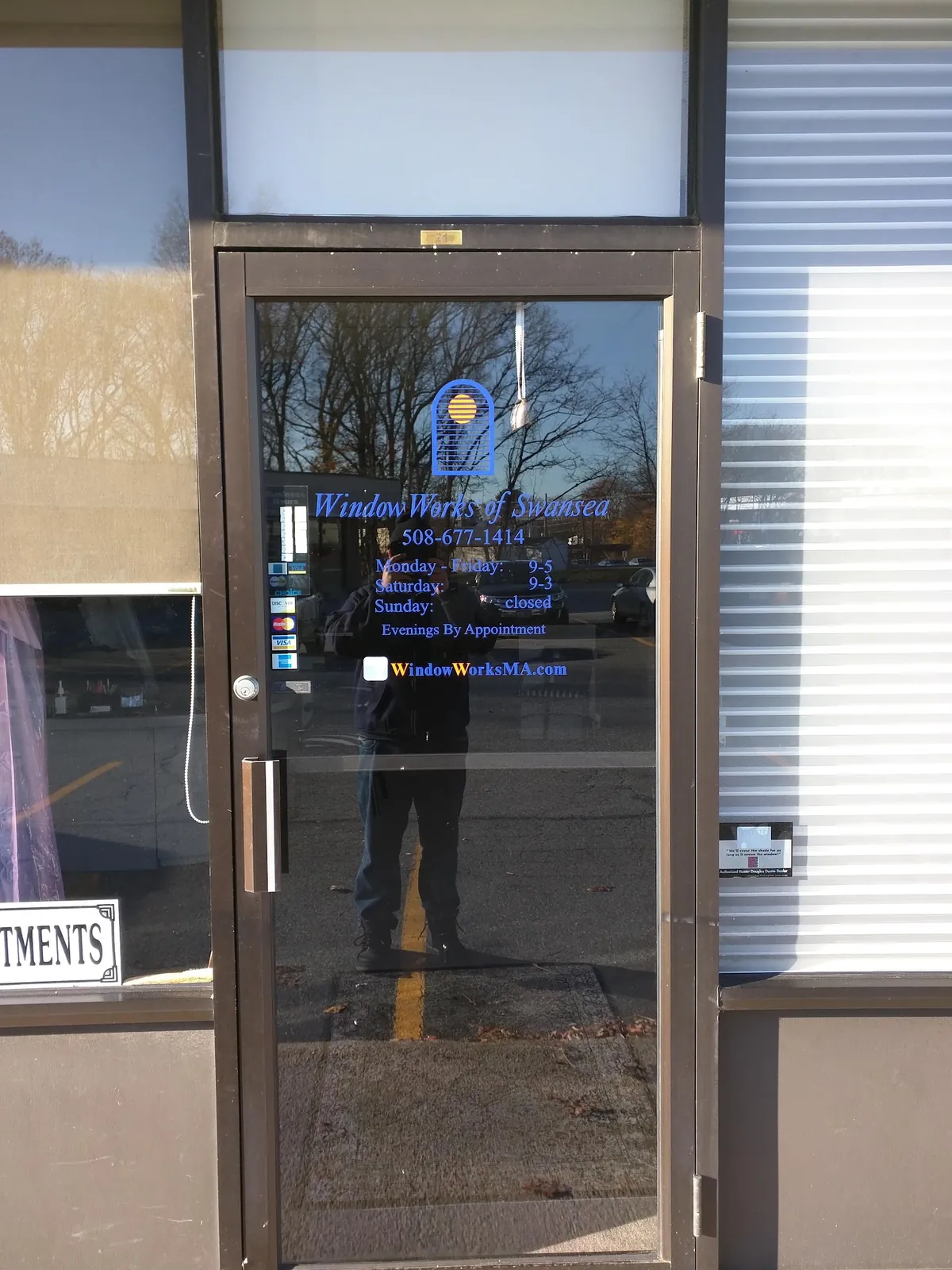
Window Works is a family store in Swansea, Massachusetts, founded in 1988 and now in its second generation. Tiverton is a short drive south over the state line, and for over 37 years our specialists have hung shades in river houses and old farmhouses across the SouthCoast and the Rhode Island East Bay.
- Window treatment specialists with years of practice
- Every opening measured at your house
- Fitting by our own installers
- Regular contact from the store until the work is complete
- Warranties offered on what we supply
Screens, cloths and the Norman range can all be compared in person at the showroom.
Questions from Tiverton
Can I still see the Sakonnet with a screen down?
Yes. A solar screen is woven with tiny gaps, so the river shows through. Open weaves favour the view; tighter ones favour glare control and privacy.
Which fabrics cope best with salt air?
Ones that clean easily with a soft brush and a lightly damp sponge. At the quote we show you which samples are simplest to keep fresh near the water.
Can a room be screened by day and dark at night?
Yes. Put a screen and a blackout shade on the same window, or pair a screen with curtains, and the room does both.
What fits a cape dormer?
A roller shade with blackout cloth. Its slim roll suits the tight space above a dormer window and leaves the glass clear when raised.
Is the quote free?
It is. Use the call button or the form, tell us about the rooms, and the store will arrange a measuring visit.
Your Free Quote
Choosing roller shades in Tiverton, RI begins with a free quote. Tap the call button to book it, set up a measuring visit or ask about installation, or write to us through the form. To see screens and cloths before you decide, call in at the Swansea showroom; directions are on the contact page. Window Works holds a 5.0 rating on Google.