
Two Kinds of House, One Natural Weave
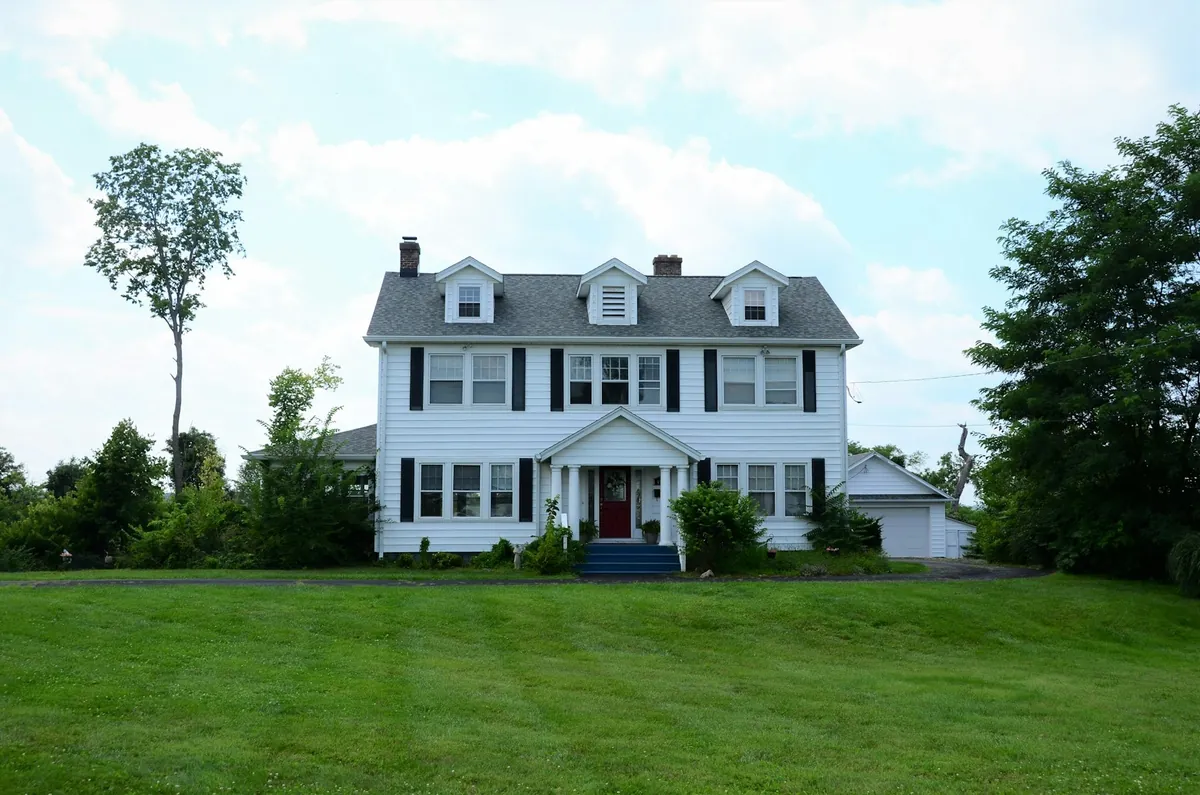
Barrington’s housing pulls in two directions, and woven wood shades in Barrington, RI have to suit both. On Rumstick Road and Nayatt Road a formal center-hall colonial can stand a short walk from a mid-century modern built low to the ground, and plenty of both look out over the Barrington River. The colonial wants its front rooms dressed properly. The modern house wants its glass left as open and quiet as possible.
A woven shade sits comfortably in each. In the colonial it becomes the working layer behind drapery, the part that softens the sun while the fabric panels frame the window. In the mid-century house it is often the only treatment, a run of natural texture along a wall of glass that filters the light without hiding the line of the architecture.
- Woven wood and bamboo, with or without a fabric liner
- Every window measured where it is, then installed by our team
- Weaves and liners to handle at the Swansea showroom
What a Barrington Woven Shade Can Be
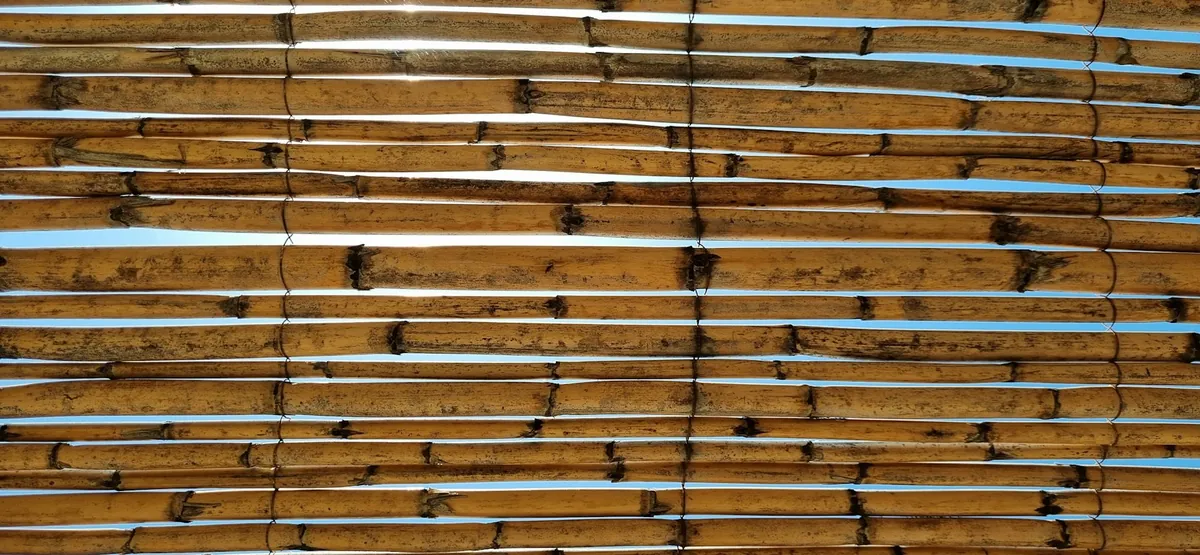
A close bamboo weave
Fine slats packed tight give an even, honey-toned light and a good measure of daytime privacy. A calm choice for a colonial’s parlour or study.
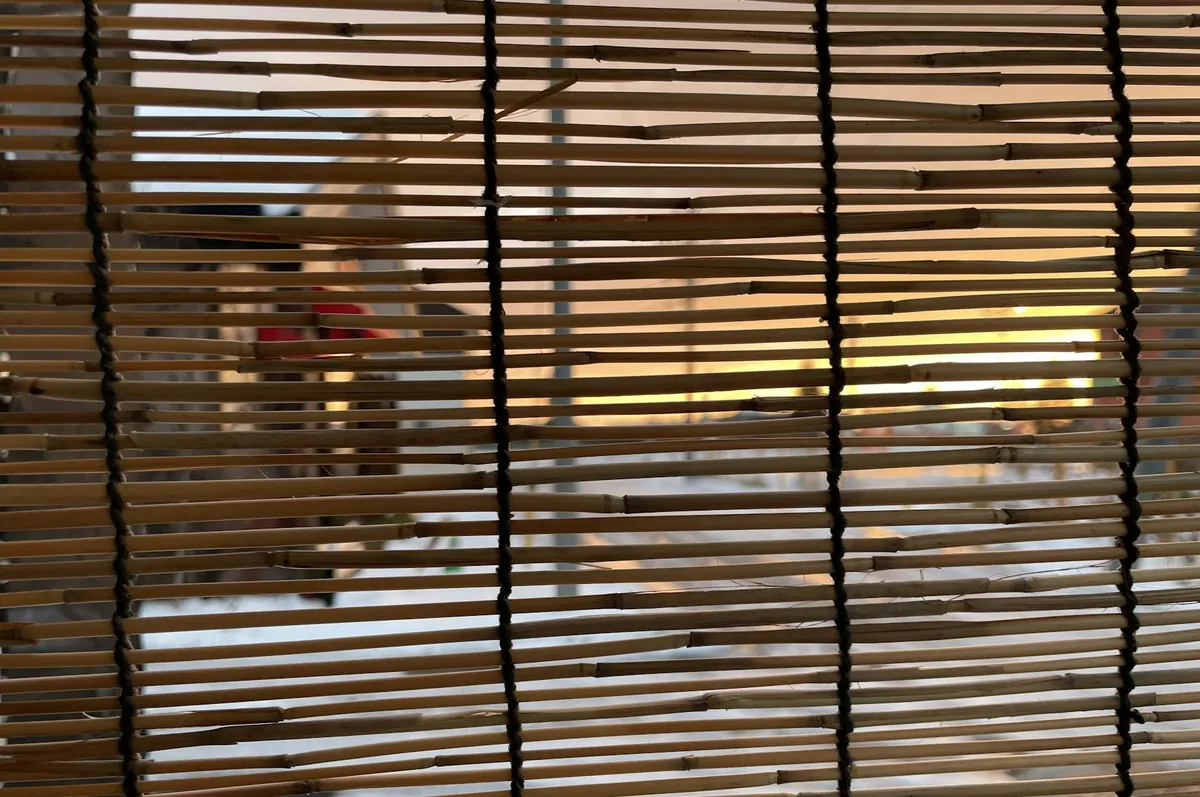
A looser natural weave
Reeds, grasses and woods set further apart. The river stays visible as a soft blur, and the sun lands on the floor in a fine pattern.
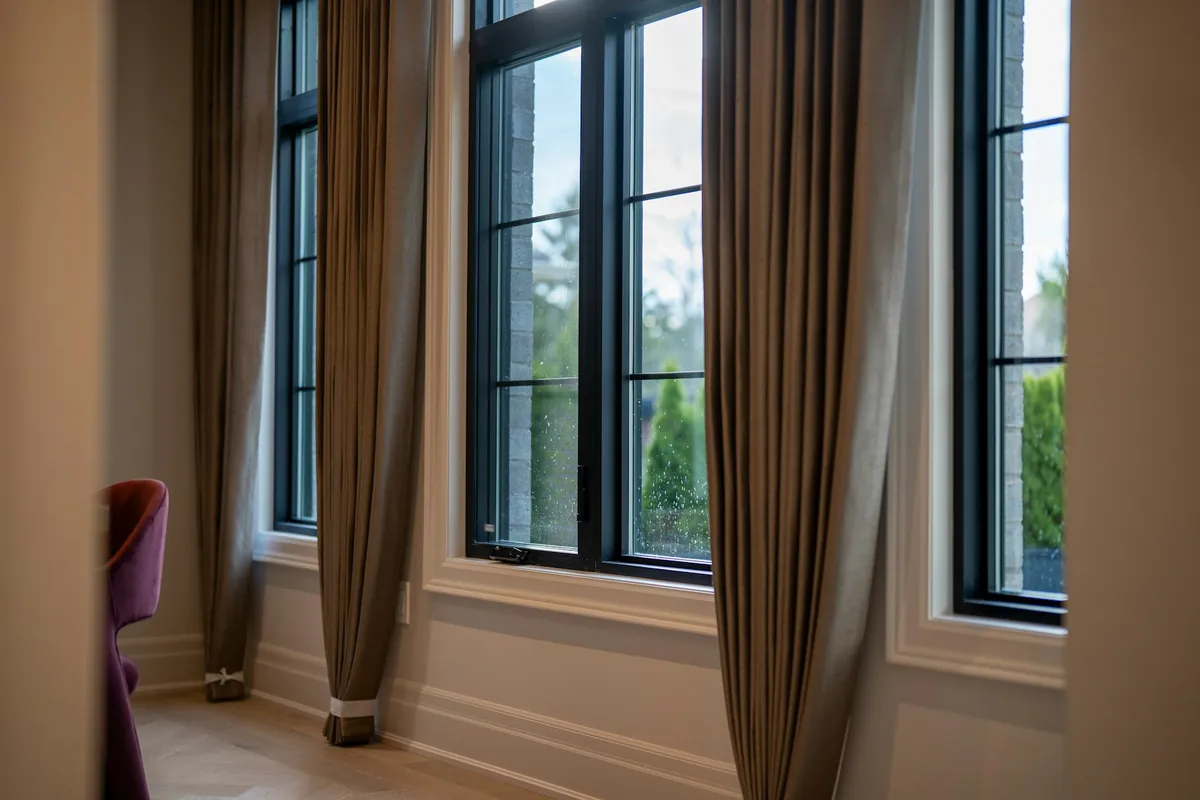
Behind formal drapery
In the dining and living rooms of a center-hall house, the shade handles the light and the panels give the finish. We make both.
Light Through the Weave: Woven Wood Shades in Barrington, RI
Every choice about woven wood shades in Barrington, RI comes back to one question: what do you want the light to do once it passes through? A woven shade is not a solid sheet. It is a mat of natural material, and the gaps between the strands decide how bright the room stays, how much of the view survives and what the floor looks like late in the afternoon. The liner on the back then decides what happens after dark.
So we start with the room rather than the sample book. A colonial’s front parlour that faces the road, a mid-century living room with a whole wall of glass and a bedroom over the river each want something different from the same kind of shade.
The center-hall colonial, where drapery comes first
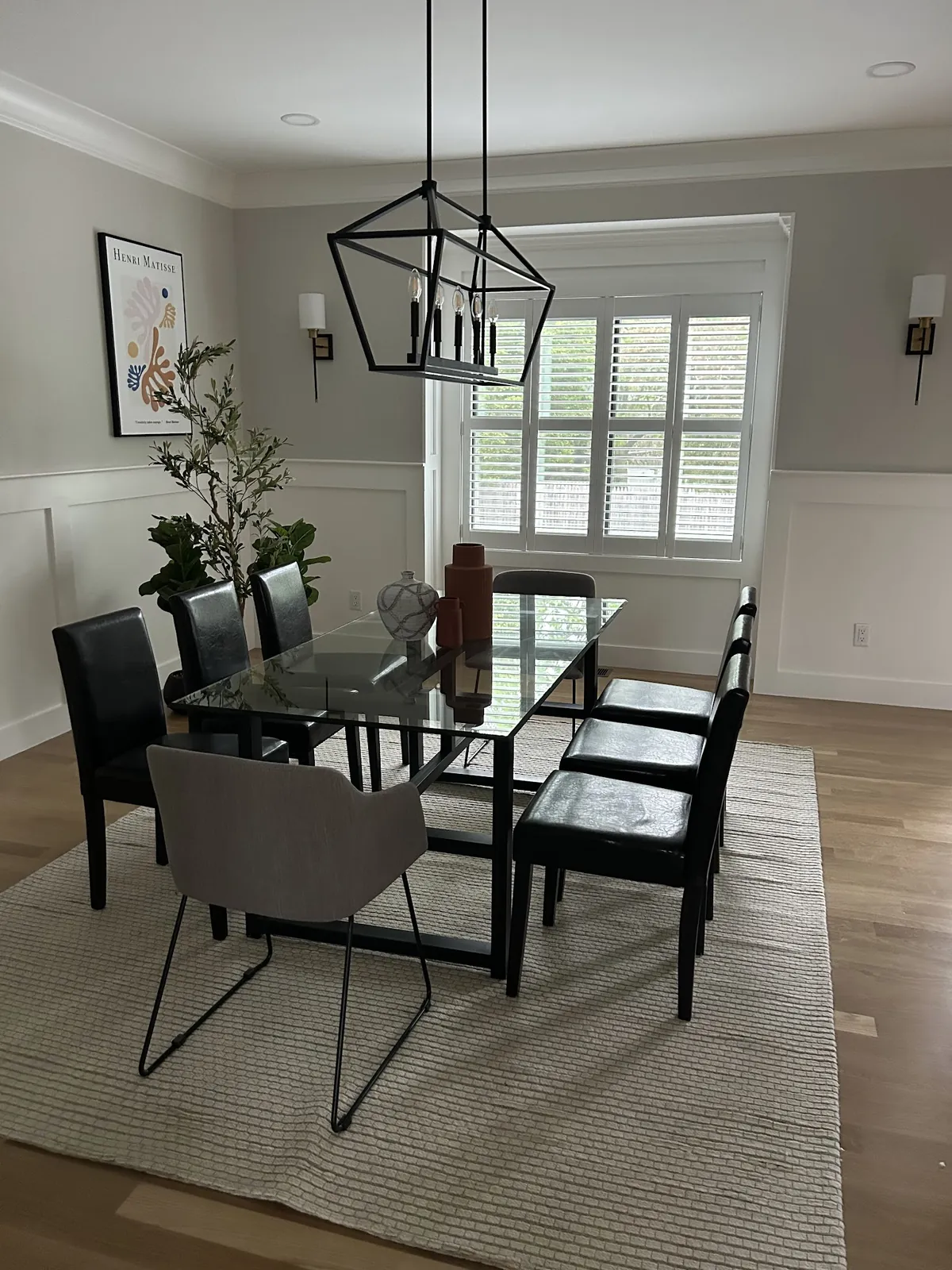
In a formal colonial, the dining room and the front living room are rarely left with a shade alone. Drapery is part of how those rooms are meant to look, and a bare woven shade in a room with crown moulding and a mantel can feel unfinished. That is no reason to skip the shade. It is a reason to plan the two together.
The usual arrangement is an inside-mounted woven shade with drapery panels hung outside the trim. By day the panels stay open and the shade does the work, taking the glare off a south-facing window while keeping the warmth of the room. In the evening the panels draw across and the shade can stay where it is. Because the panels cover the edges, a little light at the sides of the shade matters less here than it would on a bare window.
That means the colour of the shade and the colour of the drapery have to be chosen as a pair. A pale bamboo behind a heavy, deep-toned panel gives a light, layered look. A darker wood behind a linen panel is warmer and more traditional. We measure for both on the same visit, so the rod and the shade sit at heights that suit each other.
Mid-century houses and their long runs of glass
The mid-century moderns along the river were built around long runs of glass, often with low sills that bring the window down close to the floor. That glass is the point of the house, and it also lets in a great deal of sun, especially across a room facing the water.
Here a row of woven shades, each made to its own window, tends to suit the house better than any fabric treatment. The texture repeats along the wall like a single surface. Raised, they stack neatly at the head of each window. Lowered, they turn a hard wall of light into an even, filtered glow. The trick is getting every shade to hang at exactly the same height and every hem to sit on the same line, which is why each opening is measured on its own instead of assuming the whole wall is identical.
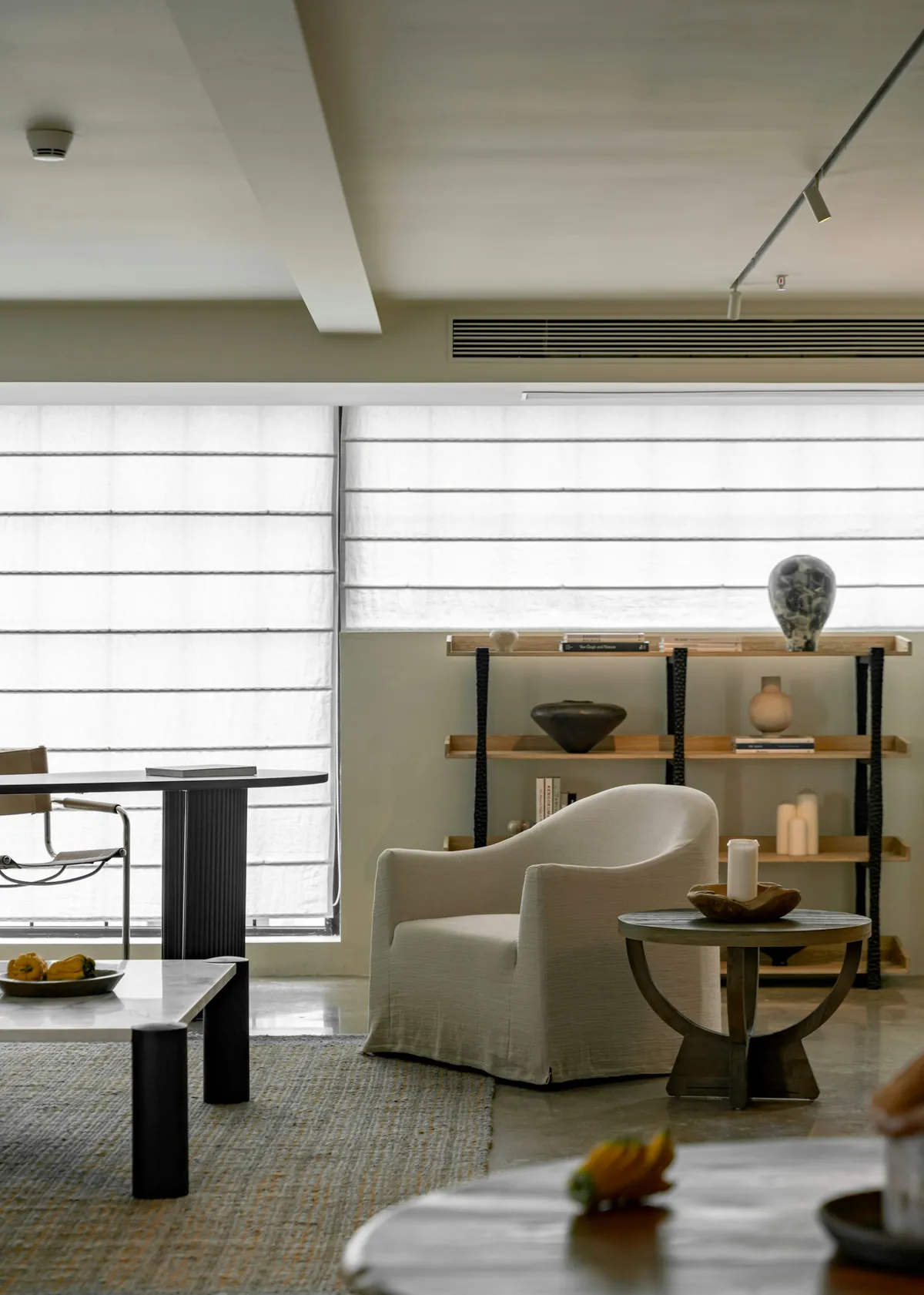
Low sills and furniture in front of the glass
A low sill changes how a shade has to be planned. A sofa or a built-in bench often sits right in front of the window, and a long shade that reaches near the floor has to clear it when lowered and lift past it easily. We note what stands in front of each window when we measure, so the length is right and the controls end up somewhere you can reach without leaning over the furniture.
Low glass also shows more of the shade from outside. From the lawn or the river side, a row of lined woven shades reads as one calm band of colour, so it pays to pick a liner whose back is a soft neutral.
How a Barrington Order Comes Together
We stay in touch from the first conversation until the last shade is up. For most houses in town, the steps run in this order.
- You get in touch with the Swansea store by the call button or the form, tell us which rooms you have in mind and book a free quote.
- A specialist comes to the house to measure each window, checking the frame depth, the space above the trim for the raised stack and anything sitting in front of the glass.
- You decide on the weave, the colour and the liner for each room, and you can come to the showroom to see the full range side by side.
- Your quote lists every window, so you know exactly what is being made.
- The shades are made to the measurements taken in your home.
- Our installers fit them, check that each one lifts and lowers evenly and show you how they work.
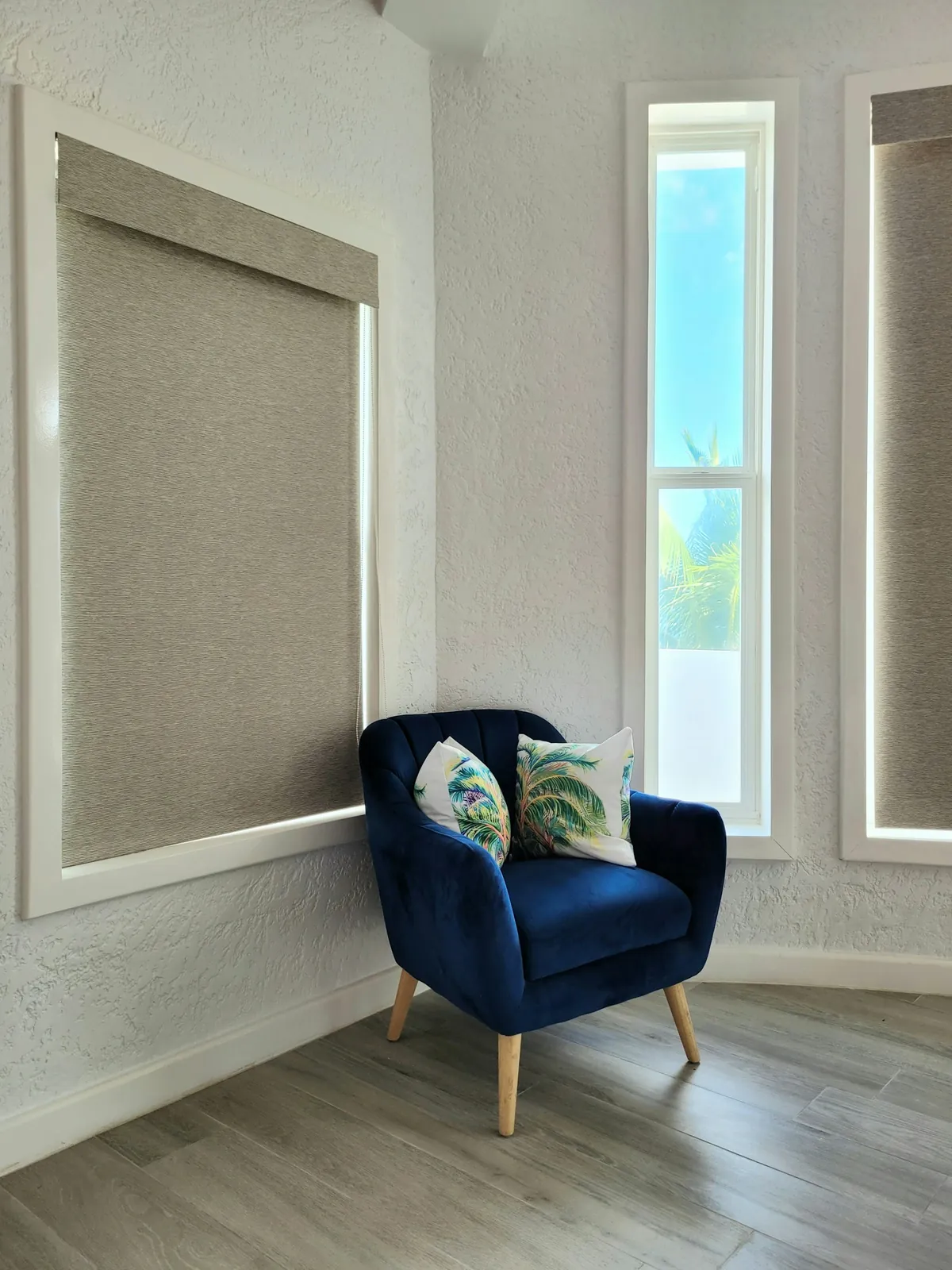
Choosing a liner, room by room
An unlined woven shade is lovely in daylight and honest about its limits at night. With the lamps on inside, the weave lets shapes show through to anyone outside. In a colonial with drapery that close at night, that may not matter. On the open glass of a mid-century house with no other treatment, it usually does.
A privacy liner solves it. Sewn to the back of the shade, it stops the see-through effect while still letting a soft light pass, so the room looks the same by day but is screened by night. For a bedroom, a room-darkening liner goes further and holds back most of the early light, which matters in a room that faces east over the water. We hold each liner up behind the weave you like, so you can see the difference rather than imagine it.
Many houses end up with a mix: unlined shades in a sunroom or a kitchen eating area, privacy liners in the main living rooms and room-darkening liners upstairs. The fronts all match, so from inside the house looks consistent.
Fold or roll, and a tidy top
Woven shades can lift in two ways, depending on the style you pick. Some gather into soft, even folds as they rise, which gives a fuller, more tailored look that sits well in a colonial. Others roll up around a tube, which keeps the raised shade slimmer and suits the plain lines of a mid-century room. A folding shade makes a deeper stack at the top, so on a window that is short or set close to the ceiling, we check whether the shade should be mounted above the frame to keep the glass clear when it is up.
The top of the shade is worth a thought too. A matching valance made from the same weave hides the headrail and gives a finished edge, which helps on a window with no drapery over it. Under a drapery rod, the valance is usually left off, because the fabric heading already covers that line. We talk through which way each window should go before anything is ordered.
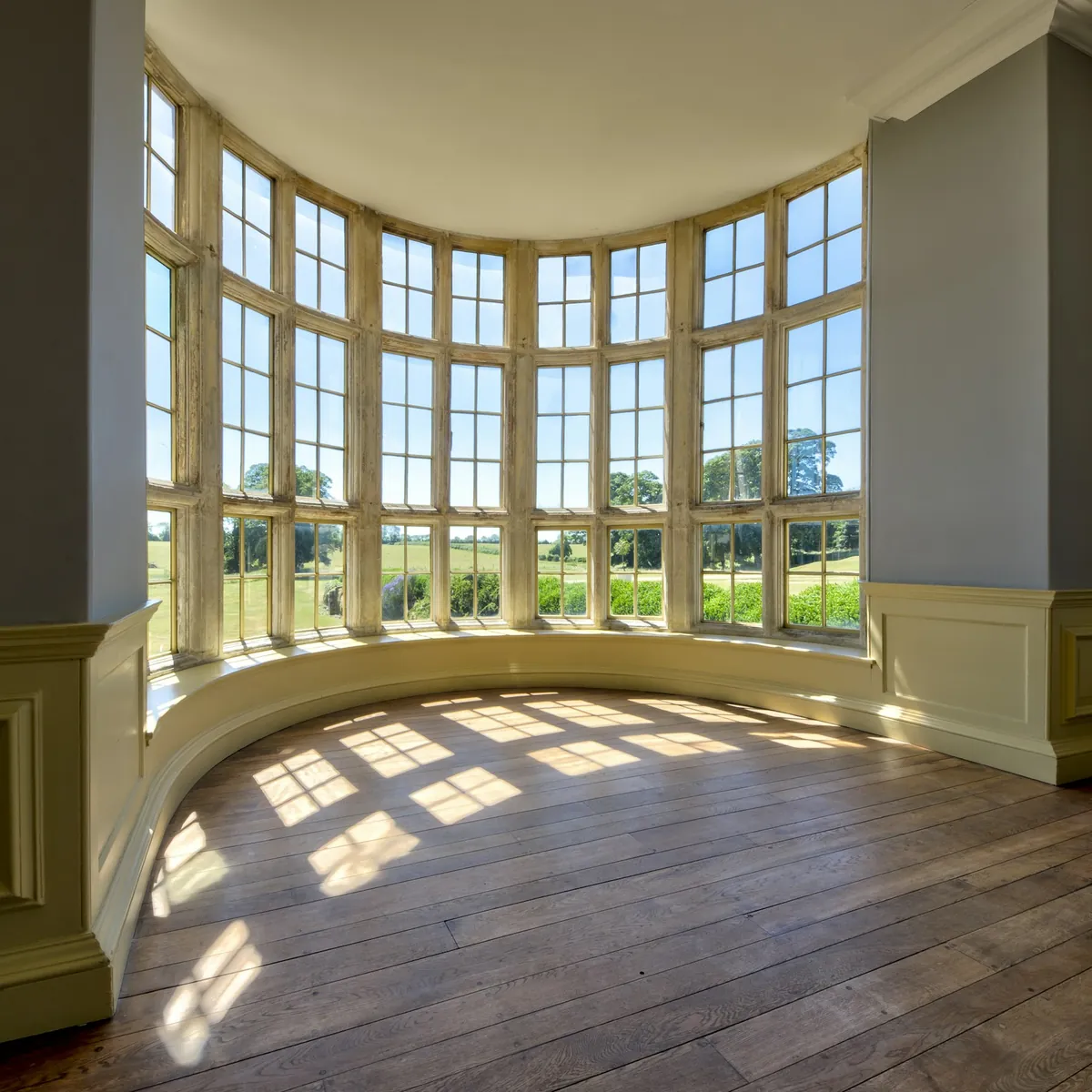
River glare and the afternoon sun
Houses with Barrington River frontage get light twice, once from the sky and again off the water. In the afternoon that reflected light comes in low and bright, straight across the room. A woven shade takes the edge off it in a way blinds and roller shades do not quite manage, because the irregular weave breaks the glare up into something softer.
If the glare is strong, a tighter weave or a light liner tames it further without turning the room dim. If the room is used mostly in the evening, an open weave keeps the view and lets the sunset through. We look at which way each room faces when we measure, and that tells us a lot about which weave will feel right.
Rooms on the land side of a river house have the opposite problem. They can be shaded by the house itself or by old trees for most of the day, and a heavy weave there makes them gloomy. For those windows we lean towards a pale, open weave, often unlined, so the shade adds texture and a little privacy without taking away light the room cannot spare.
Colour with old woodwork and modern finishes
A colonial’s painted trim and wide floorboards suit the mid to warm tones of woven wood. A pale bamboo can look too light against dark old floors, and a deep wood brings it all together. In a mid-century house, with its clean surfaces and often a lot of natural wood already, a lighter grass or bamboo keeps the room from feeling heavy.
Natural material is never one flat colour. Each strand is a little different, and the tone changes when the sun is behind it. That is why we always suggest holding a sample against the window itself before deciding. A colour that looks right on a table can look darker or redder with light coming through.
Upstairs in a center-hall house
The second floor of a colonial is a different brief from the formal rooms below. The bedrooms are usually symmetrical, with a pair of windows on each outside wall and sometimes a smaller one in a dormer or over the stairs. Drapery is often lighter up here or left out altogether, so the shade carries more of the room on its own.
For these rooms, woven wood shades in Barrington, RI are usually lined. A privacy liner suits a guest room or a study, and a room-darkening liner suits the main bedroom, especially on the side of the house that catches the sunrise. Because the windows come in matched pairs, we make each pair to the same height so that, from the lawn, the front of the house still looks even. The stair window is often the odd one out in size, and we measure it on its own so its hem lines up with the rest when you look at it from the hall.
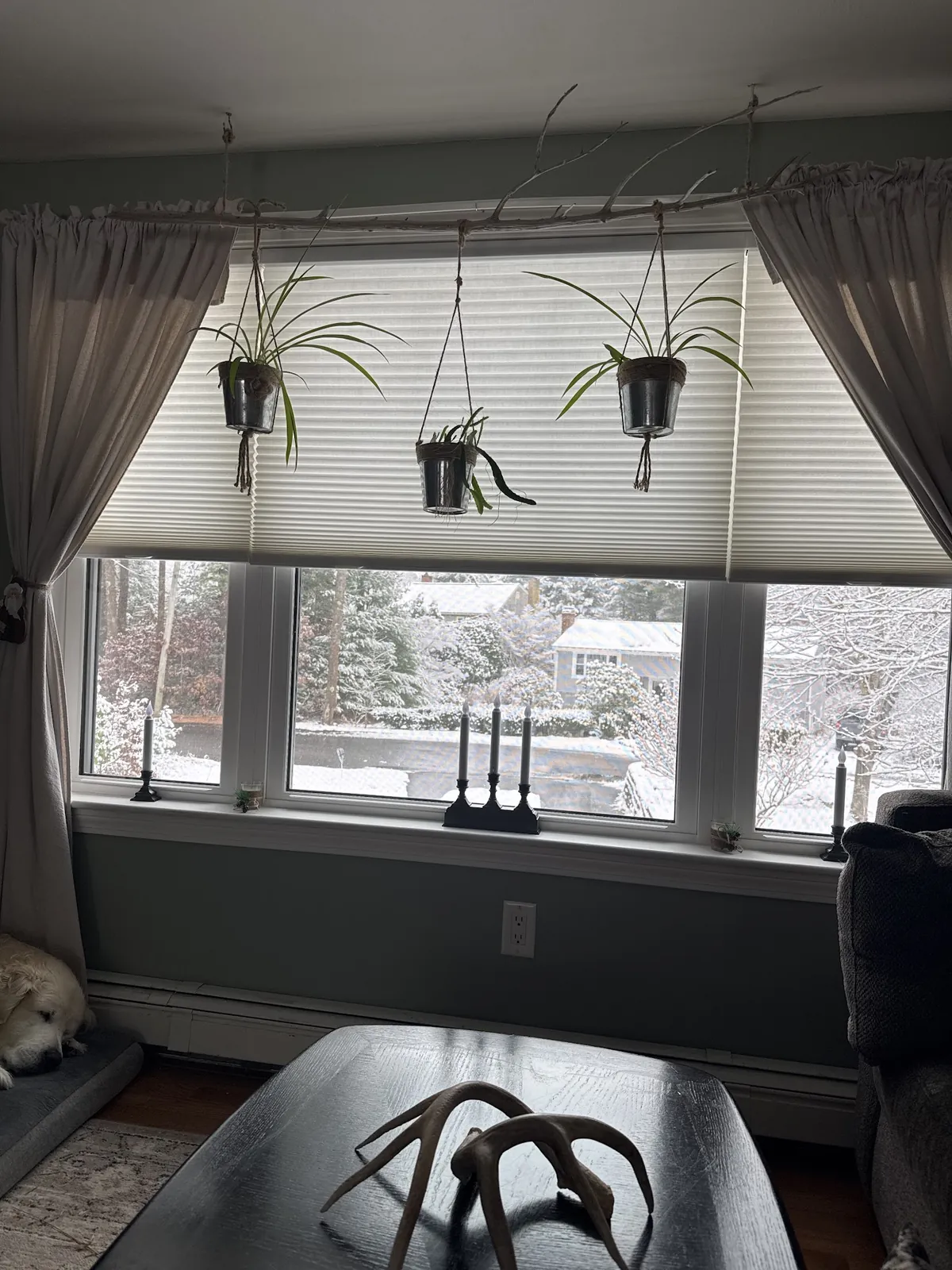
When another treatment suits the window better
Woven shades are not the answer everywhere. A bathroom full of steam is no place for natural fibres, and a nursery that has to be fully dark may be better with a cellular or roller shade. For a formal room where you want fabric on its own, a Roman shade gives a softer fold. If a window is better served by something else, we will tell you, and our Roman shades in Barrington and cellular shades in Barrington pages show the alternatives. The full list for the town is on the Barrington window treatments page.
Care and small repairs
A woven shade asks for very little. Run a soft brush or a vacuum with a brush head down it now and then, and keep it dry. Near the river, a slightly more regular dusting stops salt and grit settling in the weave. If a cord frays or a lift sticks on a shade you already own, our team can usually put it right rather than replace it.
Starting with one room
You do not have to dress the whole house at once. Many orders for woven wood shades in Barrington start with the room that troubles you most, often the mid-century living room with the biggest glass or a colonial dining room that gets the low winter sun. Once those are up and you have lived with the weave and the liner for a while, the other rooms can be matched to them.
When you come back for the next rooms, we match the weave, colour and liner you chose the first time, so the new shades sit beside the earlier ones as if they were made together. That also makes it easy to change your mind on a room that turned out to need more privacy or less, without starting again from scratch.
What Sets Window Works Apart
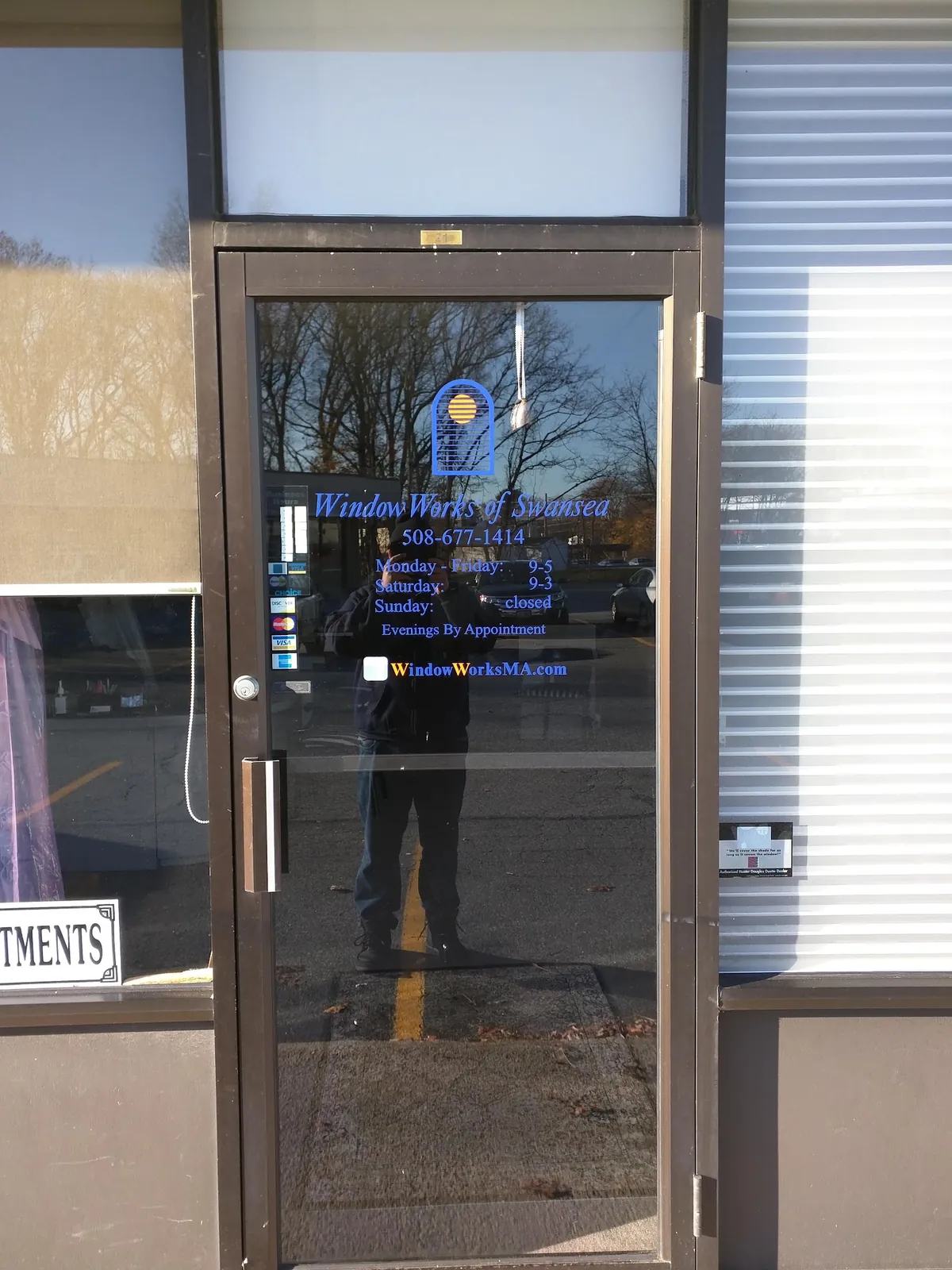
Window Works has been a family store in Swansea since 1988 and is now in its second generation. Over 37 years, our team has dressed windows across the SouthCoast of Massachusetts and the Rhode Island East Bay, Barrington included.
- Window treatment specialists who measure in your home
- Installation by our own team, not handed on to anyone else
- In constant contact with you until the job is done
- Warranties offered on the products we sell
- Drapery and woven shades planned and measured together
All of our woven shades are covered on the main woven wood shades page.
Handle the Weaves Before You Order
The Swansea showroom is the easiest place to compare a tight bamboo with an open grass weave, feel how light each liner is and see what the colours do in daylight. If you are pairing a shade with drapery, bring a photo of the room or a fabric swatch and we can lay the two side by side. The Norman range is on show there as well.
Questions from Barrington
Will a woven shade look right in a formal colonial dining room?
Yes, usually as the layer behind drapery panels. The shade handles the sun by day and the panels give the room its finish. We measure for both on the same visit.
How do you handle a long wall of glass in a mid-century house?
Each window gets its own shade, measured on its own, so that every shade hangs at the same height and every hem lines up along the wall.
Can people see in at night through an unlined shade?
With the lights on inside, an unlined weave shows shapes. A privacy liner on the back stops that and still lets soft light through by day.
Do woven shades help with glare off the river?
They do. The irregular weave breaks reflected light up into a gentler glow. A tighter weave or a light liner cuts it further.
How do I book a quote?
The quote is free. Use the call button or the form on this page and tell us which rooms you want to cover.
Book Your Free Quote
The simplest next step is a free quote. Press the call button to reach the Swansea store, arrange measuring in your home or ask about installation, or send the form and we will be in touch. To see the weaves and liners first, visit the showroom, with directions on the contact page. Window Works holds a 5.0 rating on Google.