
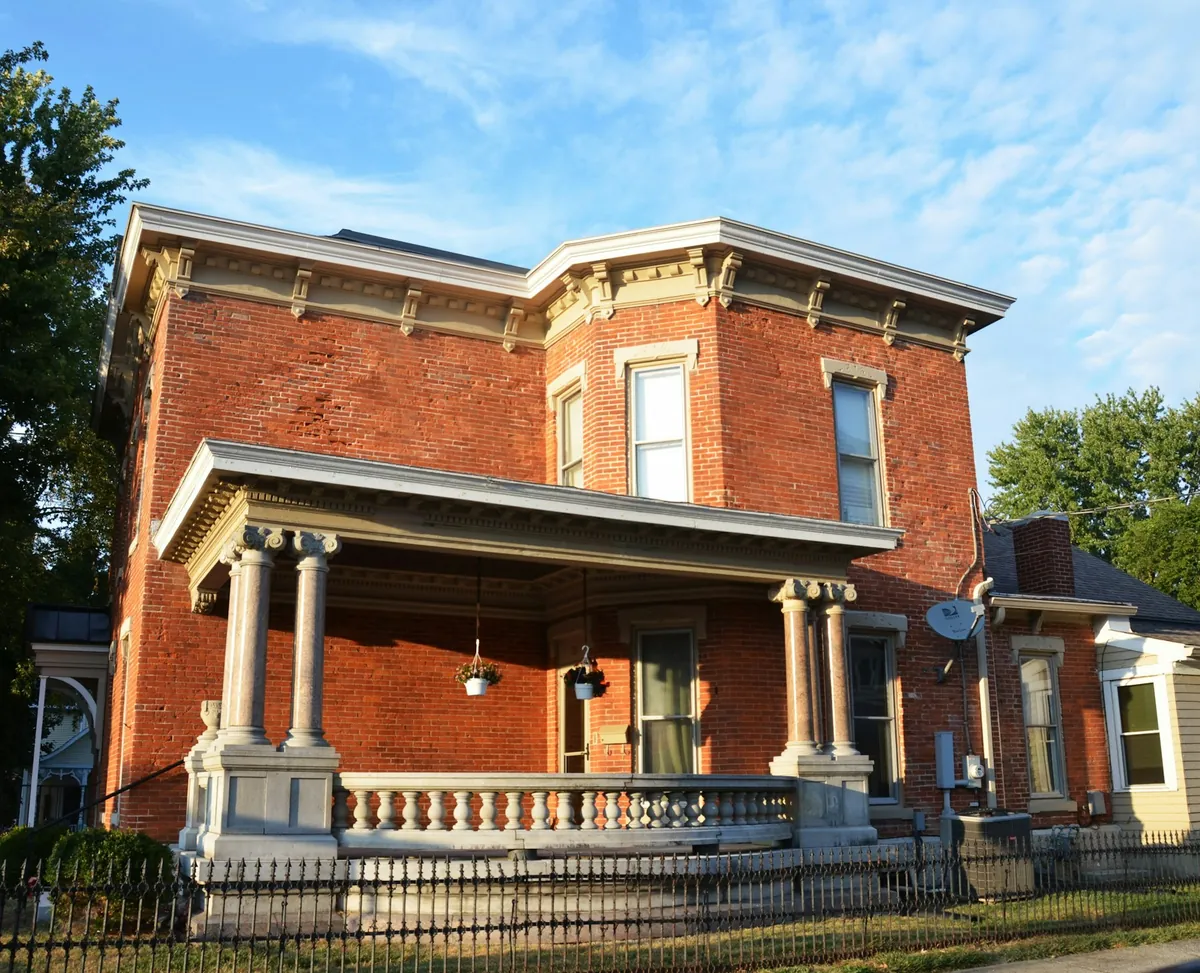
Tall Windows, High Ceilings
Downtown Taunton was built tall. Around the Green and through Weir Village, the Victorians and triple-deckers have rooms with high ceilings and windows that rise most of the way to them, long and narrow, often in pairs. Those windows are handsome, and they are also exactly the kind that ready-made products struggle with. That is where plantation shutters in Taunton, MA come in: a shutter is built to the full height of the opening, in proportions chosen for that window.
Beyond downtown, the picture changes. The ranches across East Taunton went up in the post-war years, single-storey with lower ceilings and broader windows. The larger, newer colonials off Bay Street have bigger rooms, fuller trim and sometimes a two-storey entry. All three can take shutters well, but the louvre and the frame are chosen very differently in each.
- Plantation shutters for inside the house, never the outside
- Louvre size balanced against the height of the window and the room
- Frames made to fit tall old openings, ranch windows and new colonial trim
Three Parts of Town, Three Approaches
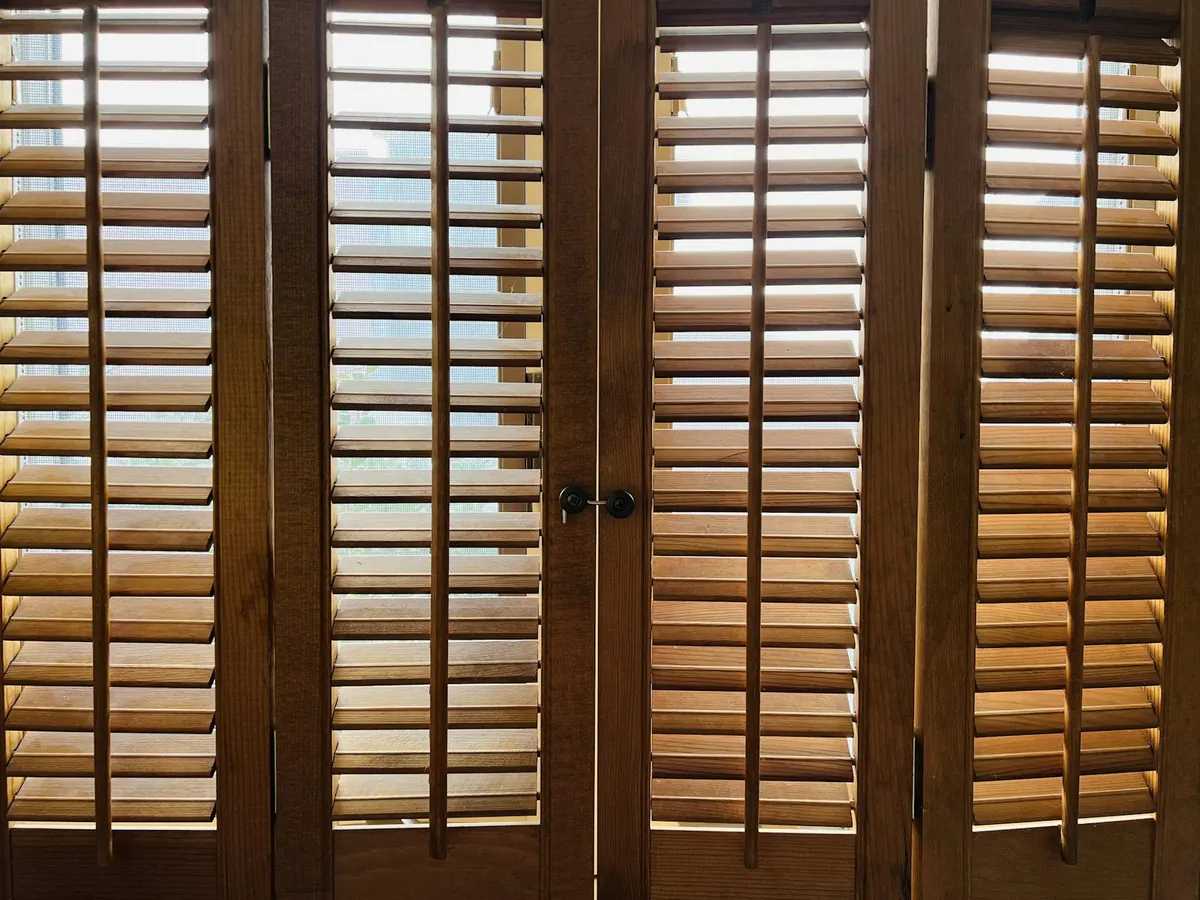
Near the Green
Tall, slim panels in pairs, sized so the louvre pattern runs evenly up a window that may be nearly as tall as the room.
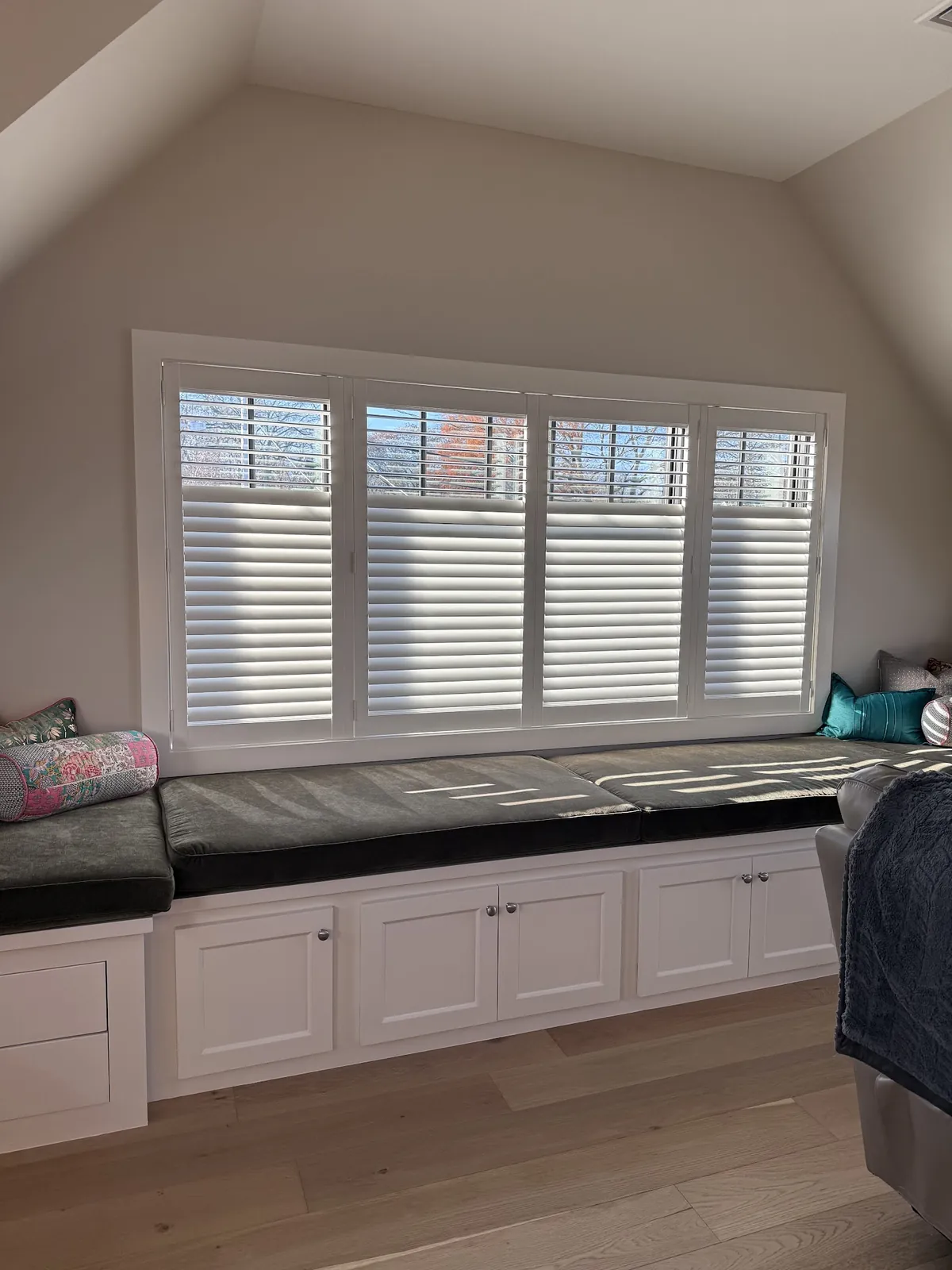
East Taunton ranches
Lower, broader openings, where the panels fold to the sides in pairs and the front windows are matched across the house.
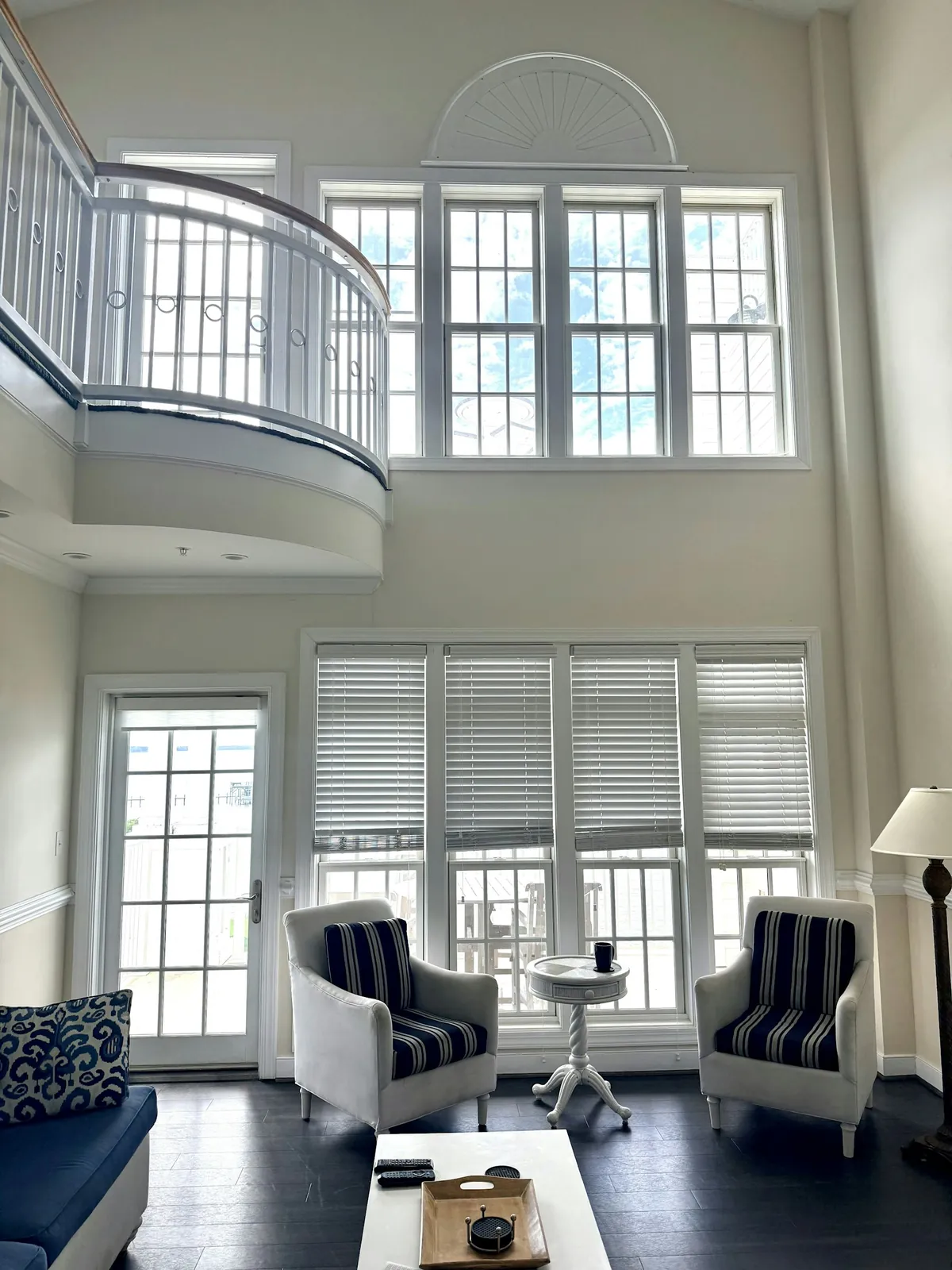
Off Bay Street
Larger rooms and stacked windows, each shutter lined up with the next so the louvres run level across a whole wall.
Proportion Is Everything on a Tall Window
A tall, narrow window gives you a long, slim shutter panel, and the first job is making that panel look right. Too few slats running down a long panel look sparse and heavy. Too many very small slats on a big window can look busy. The louvre size is what sets the balance.
Lofty rooms can carry a bigger slat, because the space around it is generous. A bigger slat also opens up more light and outlook when angled flat, which a parlour with long windows can make good use of. In a narrow window, though, a big louvre can make the panel look crowded across its width. In practice, a middle-sized louvre is often where downtown Victorian rooms end up, but it really does depend on the window, which is why the specialist suggests a size at each window and the showroom has sizes side by side to compare.
The panels themselves are usually set in pairs on a tall window, opening from the middle like a pair of doors. On the very narrowest windows, a single panel hinged at one side can be neater.
Splitting the height
On a very tall window, the panel can be divided across its height so the upper louvres move separately from the lower ones. In a front room on a busy street near the Green, that lets you keep the lower louvres closed for privacy while the upper ones stay open for daylight. Where the split falls is worth getting right: lining it up with the meeting rail of the sash behind it usually looks tidiest, and we look at that when we measure. On some very tall windows, separate upper and lower panels that open independently may suit better, which we can talk through at the visit.
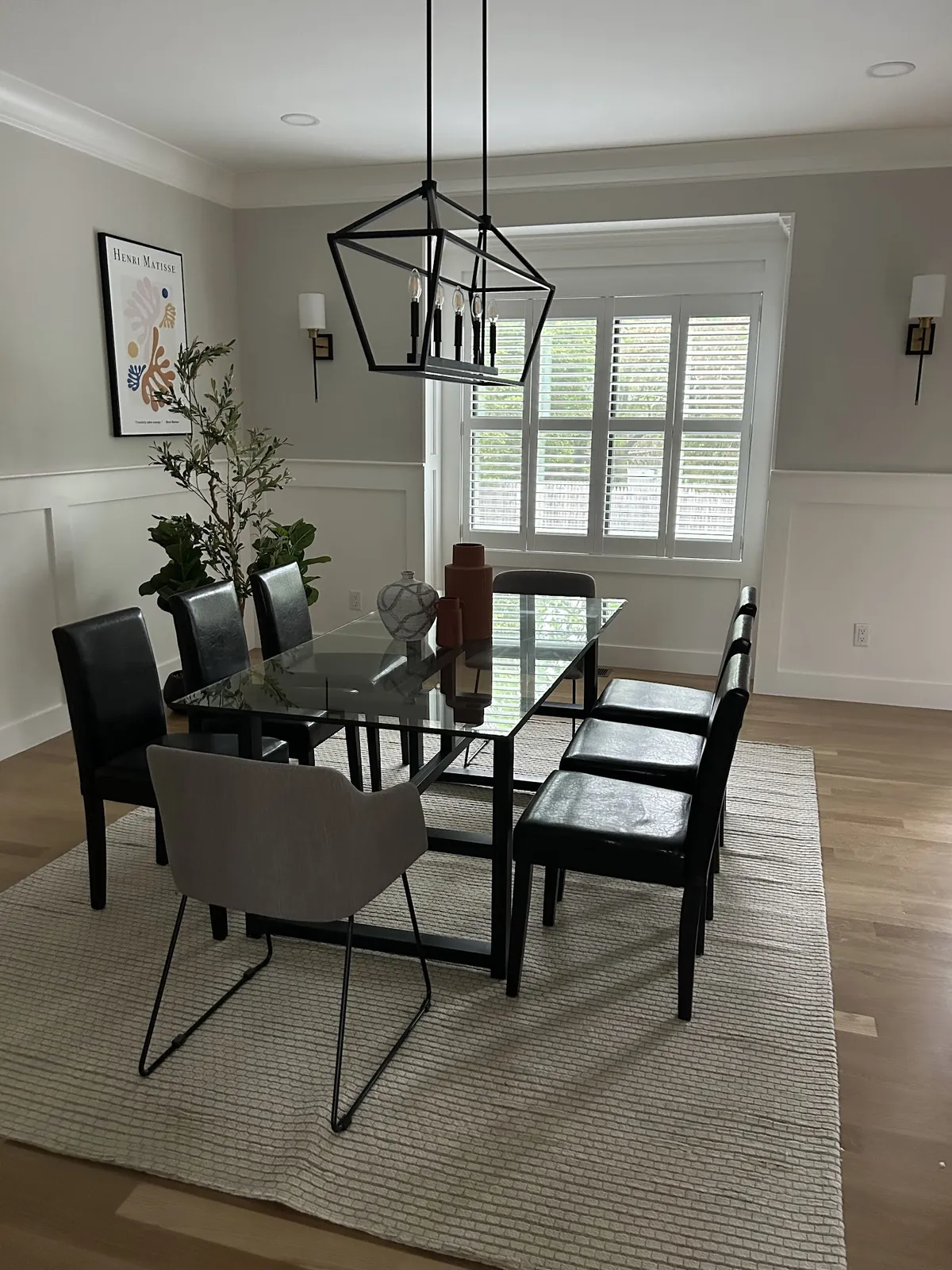
Frames for Taunton’s Older Openings
The frame is the part fixed to the window, and the panels hang from it. In Taunton’s Victorians, the windows usually sit back in the wall, which leaves room for the frame to go inside the opening. That keeps the casing, often tall and detailed in these houses, fully on show, so the shutter blends in with the original woodwork.
Old openings rarely stay perfectly square. Over many decades a tall frame can lean a little, and on a long window even a small lean becomes visible down the length of a panel. We build the frame to absorb the lean, leaving the panels plumb. Taking the width at several heights and the height on both sides tells us exactly how each window has moved.
Some downtown windows have been replaced with shallower units, and some casings are beyond saving. For those, the frame mounts on the surrounding wall or over the trim, which still leaves the louvres space to rotate. Victorian rooms usually look best with a moulded frame profile; ranches and most newer houses suit a plain one.
Plantation Shutters in Taunton, MA for Victorian Rooms
High ceilings bring one practical question: reaching the top of the shutter. Panels open and close by hand from any height you can reach, but on a very tall window you will want to be able to tilt the upper louvres without a step stool. That is part of why splitting the height, or choosing how the louvres are linked, is worth discussing on a tall window before anything is made.
The front parlour is usually first on the list. It faces the street through a bay or a pair of long windows, and a shutter solves privacy and appearance in one go. The dining room behind it often has equally tall glass, and the crisp, fitted look of a shutter matches its formality. Upstairs, bedrooms may have slightly shorter windows; using the same louvre keeps the house consistent from outside.
Stair halls are another place where plantation shutters in Taunton, MA earn their keep. The long landing window on a Victorian staircase is often the tallest single window in the house, and it is viewed from above, below and outside. Built to its exact height, with a frame painted like the banister, a shutter there finishes the whole stairway.
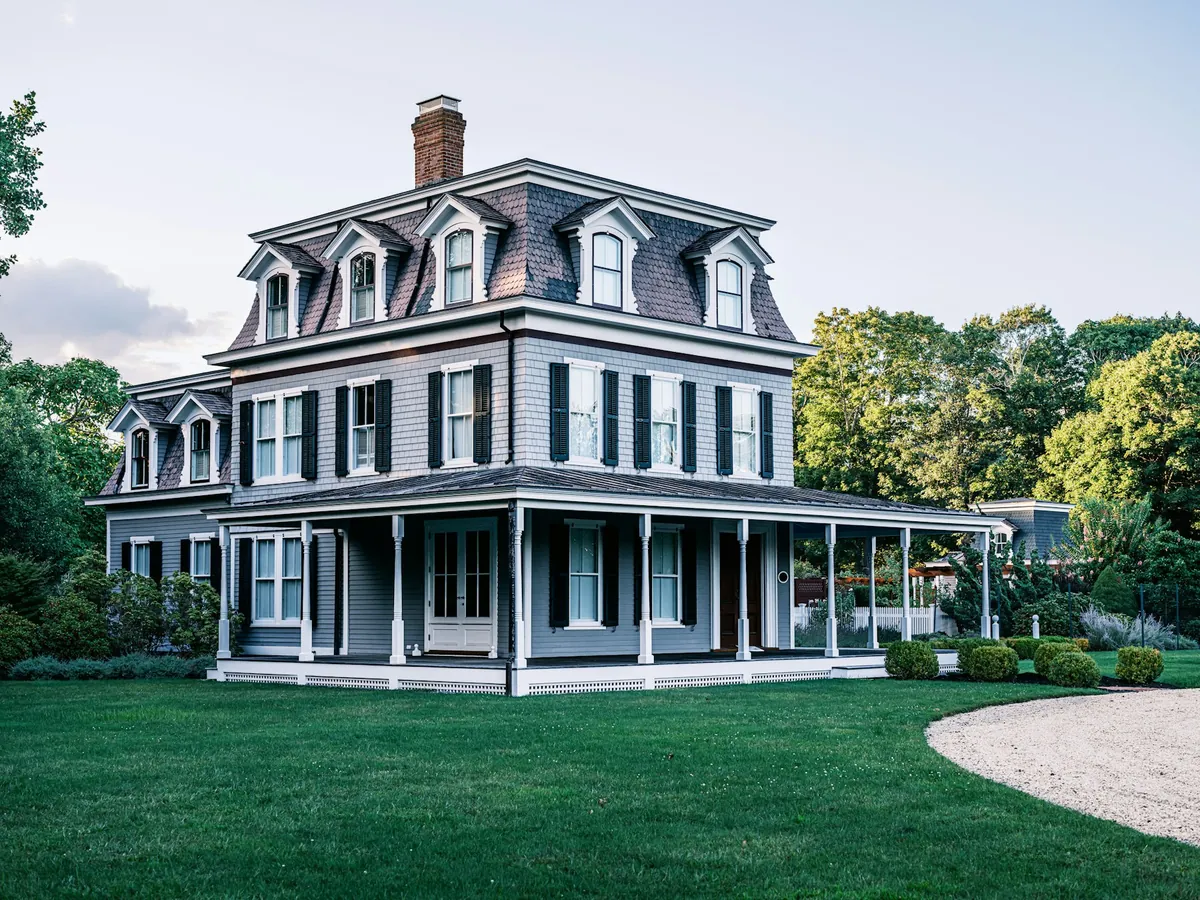
Triple-Deckers in Weir Village
The triple-deckers through Weir Village and around downtown stack three homes, one above another, each with the same tall front windows and often a bay or a porch on the front. We are happy to measure one unit at a time or every floor in one go.
An owner doing the whole building gets the tidiest street face by keeping one slat width and one colour on every level. A tenant or owner of a single unit can choose purely for their own rooms, and a white front shutter is the safe bet next to the neighbours’ windows. The angled sides of a front bay are measured separately, so their frames come together cleanly where the walls meet.
At the back, kitchen and bathroom windows often look straight at the house next door. Covering just the lower sash with a cafe-style panel blocks that view, and the glass above still brings in the sky.
East Taunton Ranches
The post-war ranches across East Taunton are much simpler to fit than the downtown houses, and shutters suit them well. Ceilings are lower, windows are broader and regular, and everything is on one floor.
The living room usually has a wide front window. It takes several panels across its width, hinged in pairs to fold back to the sides, so the whole window opens on a bright day. Bedrooms take matching sets, which keeps the front of the house even. A plain frame edge and a middle or wider louvre usually suit a ranch’s simple lines.
Ranch ceilings are lower than downtown ones, so the shutters are shorter and every louvre is within easy reach. That makes daily use simple: tilt in the morning, fold back at midday, close at dusk, all without stretching. It is one reason ranch bedrooms are such a natural place to start.
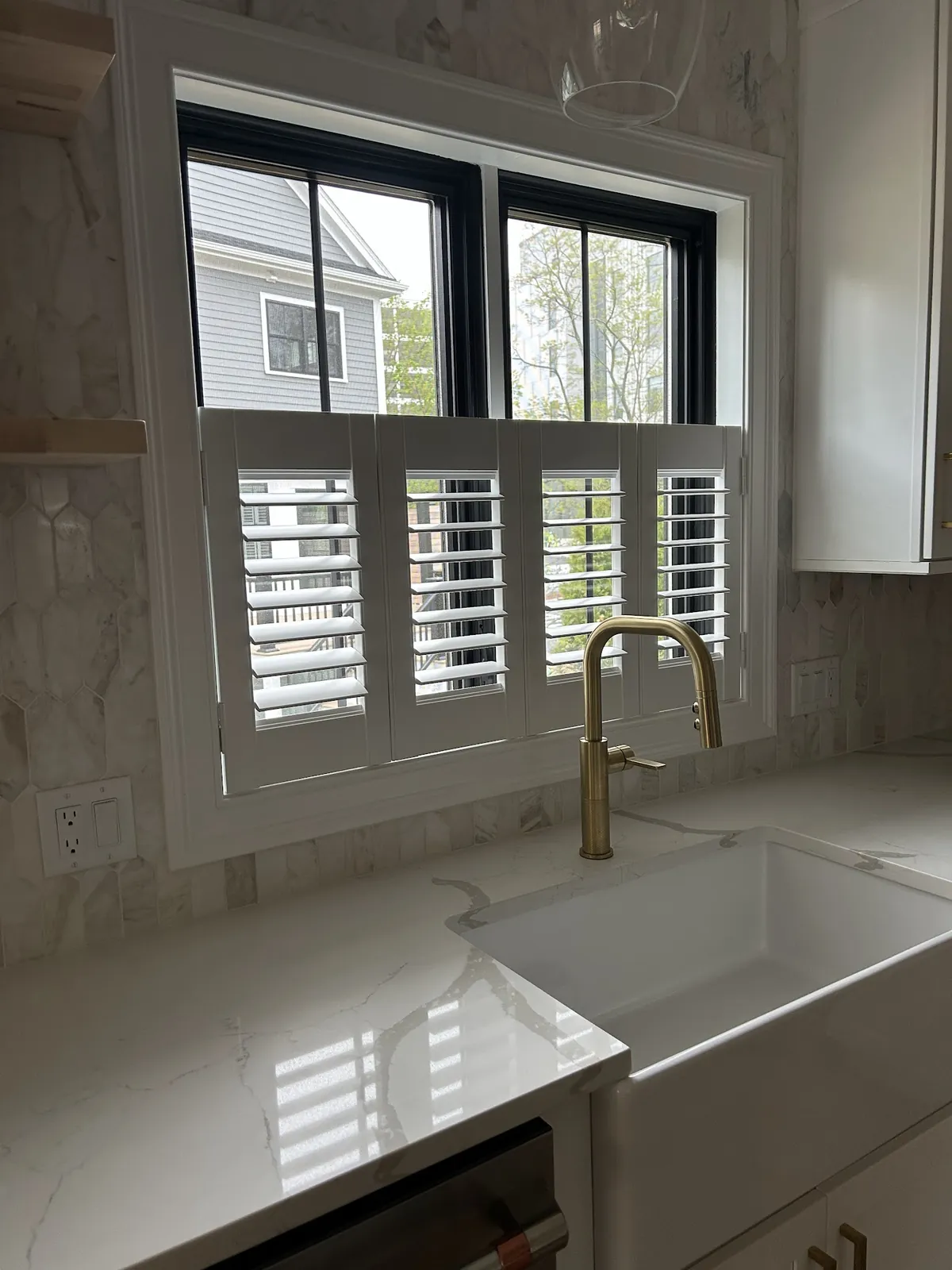
Over the kitchen sink, a cafe-style shutter covers just the lower part of the window, screening the counter while the top lets in the light. Where a ranch has a sliding door to the back yard, a shutter is not always the right choice; our page on vertical blinds in Taunton covers the usual alternative.
Newer Colonials off Bay Street
The larger colonials off Bay Street are the newest housing in this group, with big rooms, fuller trim and often a family room open to the kitchen. Some have a two-storey entry or family room with windows stacked one above another.
In those rooms, each window takes its own shutter, and the frames are lined up so the louvres run level across the whole wall and from the lower windows to the upper ones. The upper shutters are often left open for light and closed only when the sun is low. A wider louvre usually suits these bigger windows, giving a broader view when tilted flat, and a frame with a shaped edge sits well against fuller trim.
Bedrooms upstairs usually have two windows each, often on two walls. Shutters in the same louvre and finish on both, closed at night and open by day, make a calm, private room. From the road, the front windows of a colonial are seen together, so we suggest one finish across all of them.
Plantation Shutters in Taunton, MA and the Rest of the House
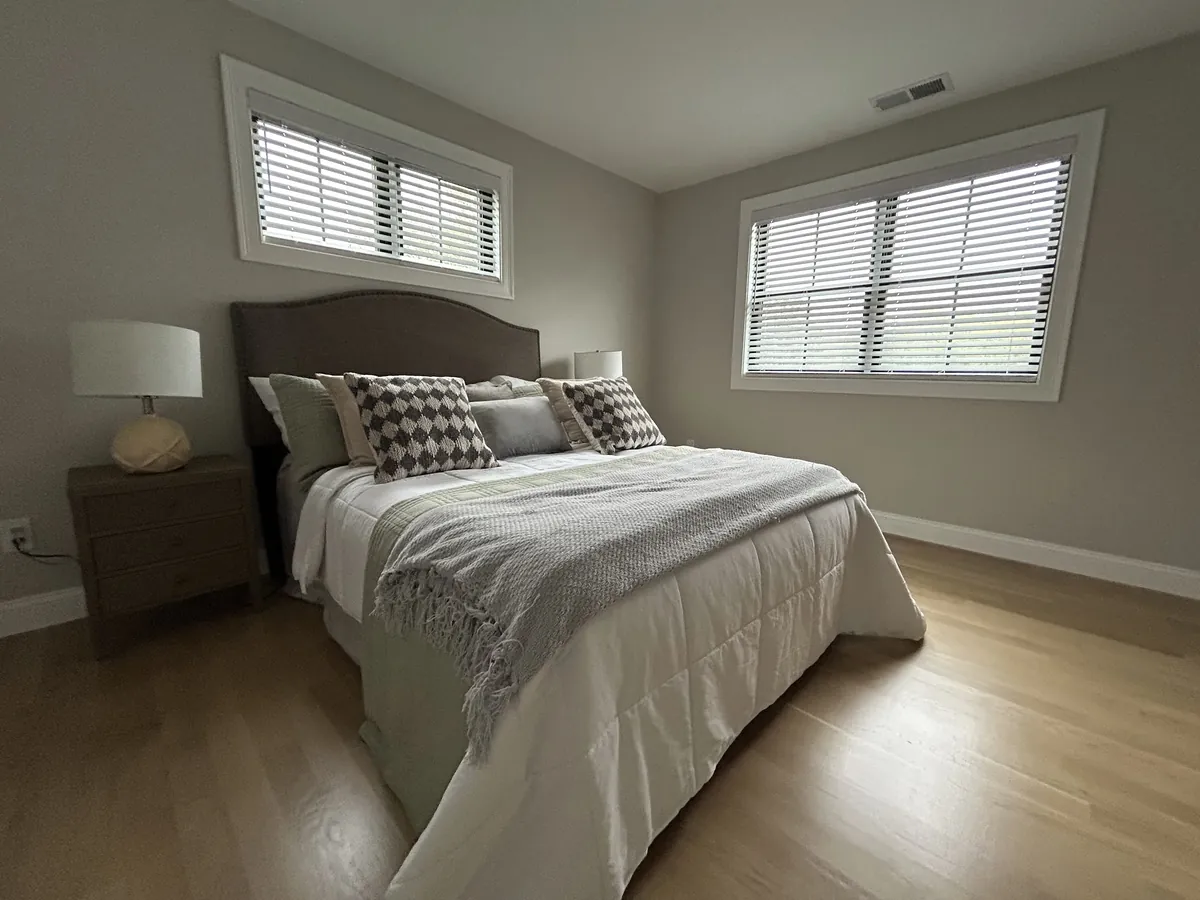
Shutters rarely go on every window in a house, and they do not need to. Many Taunton orders start with plantation shutters in Taunton, MA for the rooms that face the street and the bedrooms, then use other treatments where they fit better. A sliding door may suit a vertical blind. A bay in a Victorian may take shutters on its windows with drapes framing the whole bay. A sunroom added to a ranch may be better with shades that disappear completely.
We sell all of those, so we have no reason to push a shutter onto a window that would be better served by something else. On the measuring visit we will tell you plainly where a shutter works and where it does not, and suggest what would suit those other windows.
The aim is a house that looks consistent from the street. The front windows, where shutters are most often chosen, set the tone; the treatments behind them can vary from room to room without anyone outside noticing.
Light and Privacy Room by Room
A shutter gives you three kinds of control: how far the panels are open, which way the louvres tilt, and how far. Here is how that tends to play out in Taunton houses.
- A downtown front room on the street: louvres tilted up so passers-by see slats and the ceiling catches the daylight; closed fully at night.
- A tall-windowed bedroom: panels closed snugly to the frame for a dark room, opened right back in the morning.
- A ranch living room: panels folded back in daytime for the whole window, closed in the evening.
- A colonial family room with stacked windows: lower shutters set for privacy, upper ones open for light.
- A home office: louvres tilted to send daylight to the ceiling rather than onto the screen.
Finishes for Old and New Houses
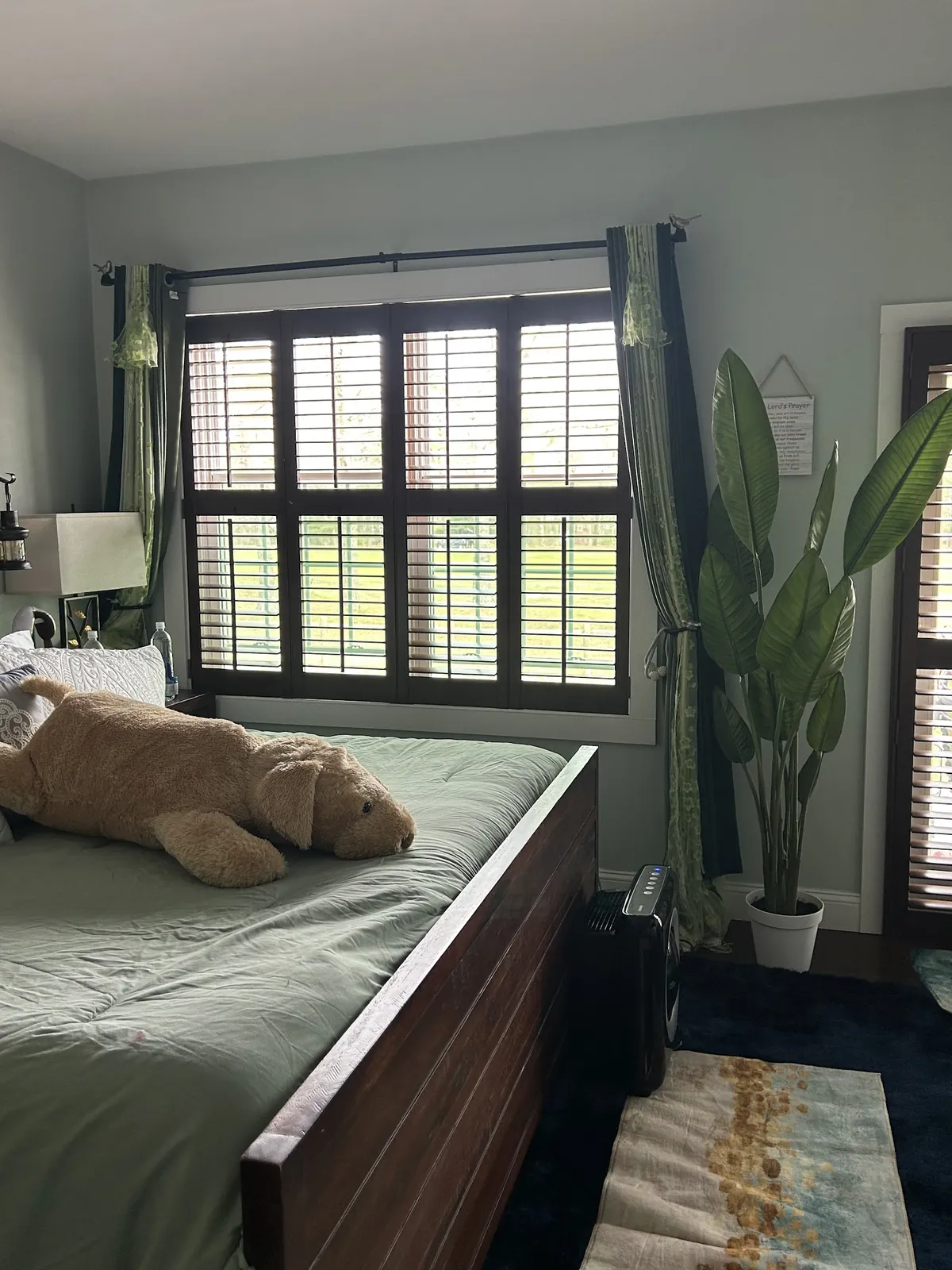
Most Taunton orders are painted white or a gentle off-white. Against Victorian casings, the paint can be chosen to match the trim exactly. In ranches and colonials it brightens rooms and sits easily with modern mouldings. Where trim is painted a colour, the shutter can follow it.
Stain is the alternative, letting the grain show. It belongs in rooms where old varnished woodwork survives, in a dining room over hardwood, or in a study. Side drapes around a wood shutter can make a tall room feel warmer. Window Works makes drapes as well, and custom drapes for a Taunton room can be planned with its shutters so the fabric clears the panels.
What Happens After You Call
Our team keeps in touch with you right through, so you always know where things stand.
- Phone or message the Swansea store, say which rooms and floors you have in mind, and a free quote gets booked.
- A specialist comes to measure every window: width at several heights, height on both sides, depth, and anything a louvre or panel could catch.
- On tall windows, we agree whether and where to split the height and how high the louvres need to be reachable.
- You pick louvre size, frame style, finish and layout with us, at home or at the showroom with the panels in front of you.
- You get a written quote listing every window.
- Each shutter is made for its own opening.
- Our installers fit the frames, hang and true the panels so they close evenly down their full height, and show you how they work.
Taking Care of Shutters
Cleaning is a matter of dust. Shut the slats, sweep down the face of each panel, reverse the angle and sweep again. On a tall window, a vacuum brush on an extension wand reaches the top without a ladder. Painted panels tolerate a slightly moist cloth; stained ones should stay dry. Years down the line, if a hinge sags or a slat goes slack, the store can tell you the options.
Who Makes Your Shutters
Started in 1988 and still in family hands, Window Works is now run by the second generation. Over 37 years, its specialists have fitted window treatments in houses from the SouthCoast across into Rhode Island’s East Bay, tall Victorians and post-war ranches included.
- Window treatment specialists used to tall, old openings
- Sizes taken inside your home, never from a guess
- The same company sells and fits
- One store keeps you informed until the last panel is right
- Warranties are offered on what we sell
The Swansea showroom has working shutters to try, slat widths to compare and Norman shutters on display.
The plantation shutters page covers the full range, and window treatments in Taunton lists everything else we make for the city.
Questions from Taunton
Can shutters be made for the very tall windows in a Victorian near the Green?
Yes. Shutters are built to the full height of the window. On very tall windows the panel can be split across its height so the top and bottom louvres move separately.
Big slats or small ones for a downtown parlour?
Usually something in between, so the long, narrow panel looks even. Where the ceiling is especially lofty, going a size up can work, and comparing sizes side by side in the showroom settles it.
Do shutters suit a post-war ranch?
Very well. Broad front windows take panels hinged in pairs, bedrooms take matching sets, and a plain frame suits the simple lines.
Is it worth doing one unit of a triple-decker on its own?
Certainly. Every window is priced and made separately, so a single unit is a normal order, and a white front shutter looks at home beside the floors around it.
How do I book a quote?
Quotes are free. Call or send the form with the rooms you want covered, and the store will find a day to measure plantation shutters in Taunton, MA at your house.
Your Free Quote Starts Here
Ready to go ahead? It begins with a free quote. One tap on the call button and you are talking to Swansea about a measuring visit or about fitting; the form is the quieter route. If you would sooner see the panels in person, the showroom welcomes visitors, and the contact page maps the way. Google reviewers have given Window Works a 5.0 rating.