
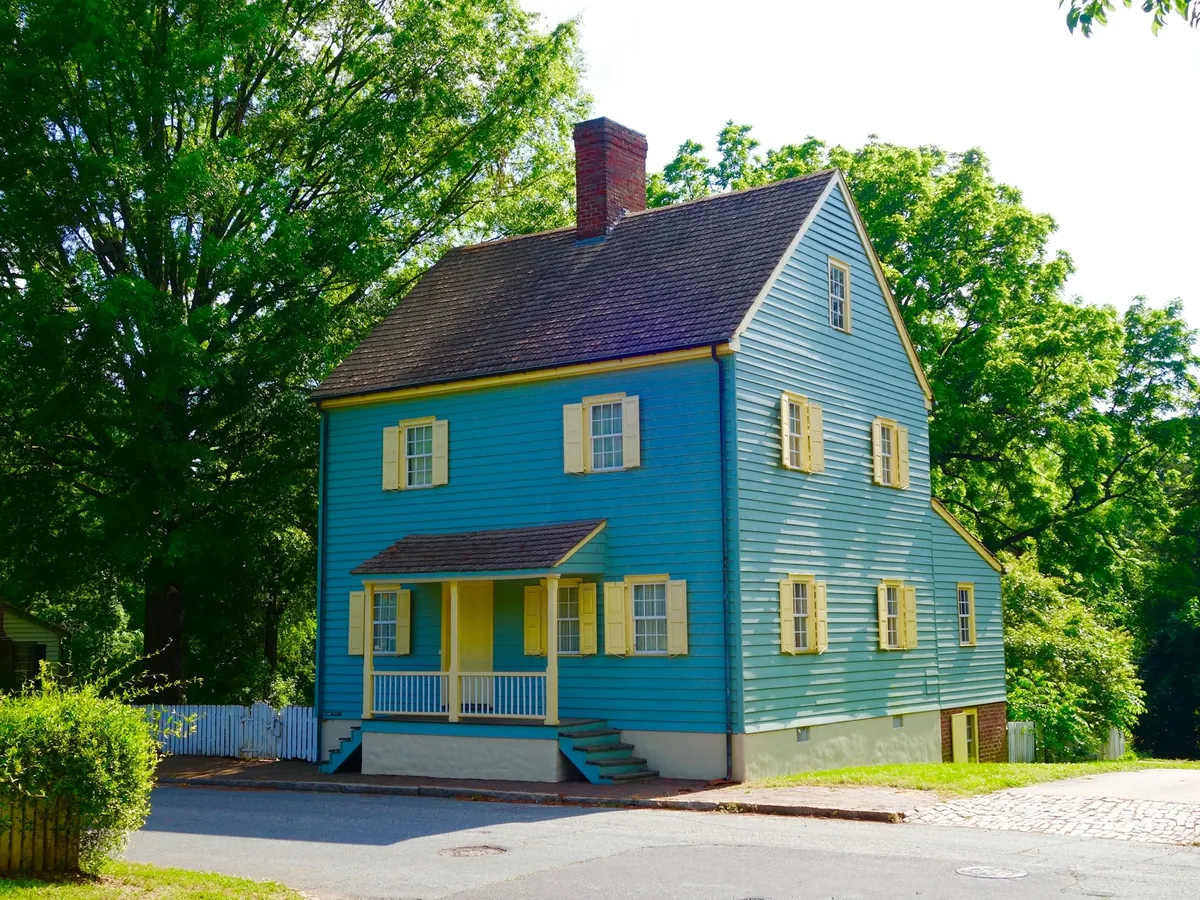
Narrow Mill Windows and Many Newer Ones
Lincoln’s housing pulls roller shades in two directions, which is why roller shades in Lincoln, RI are always planned for the particular house. In Lonsdale and Manville, the mill housing still has its original narrow openings, slim windows set in thick old walls that rarely match a stock size. Around Lincoln Woods and Breakneck Hill, the newer colonials have standard window sizes, but a lot of them: a single house can have a long list of openings on two floors. Out along Great Road, larger lots bring bigger houses and more glass facing open land.
So the job here is sometimes about getting a narrow, irregular window exactly right, and sometimes about getting a whole house of regular windows to look and work as one set.
- Roller shades and solar screen shades
- Light filtering and blackout fabrics
- Measured where they will hang and installed by our team
Shade Types for Lincoln Houses
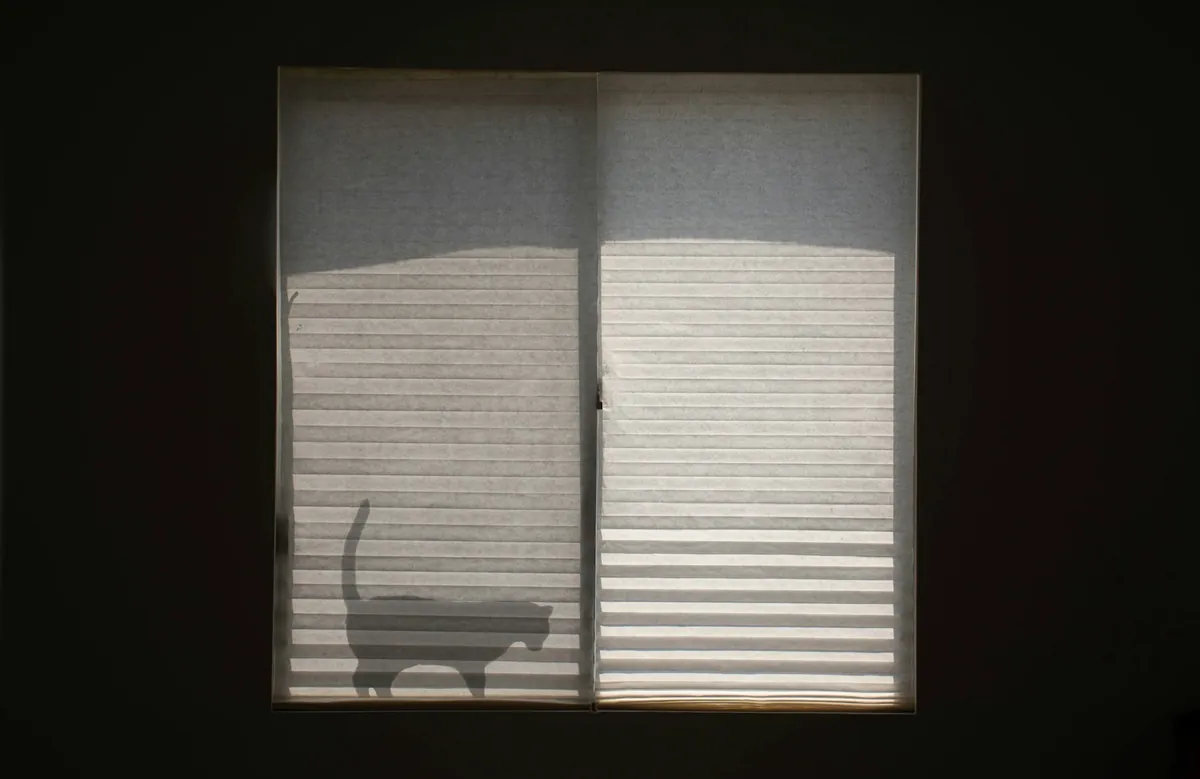
Plain roller fabric
A smooth, light filtering fabric that brightens a room and keeps it private. The workhorse for most windows in a colonial.
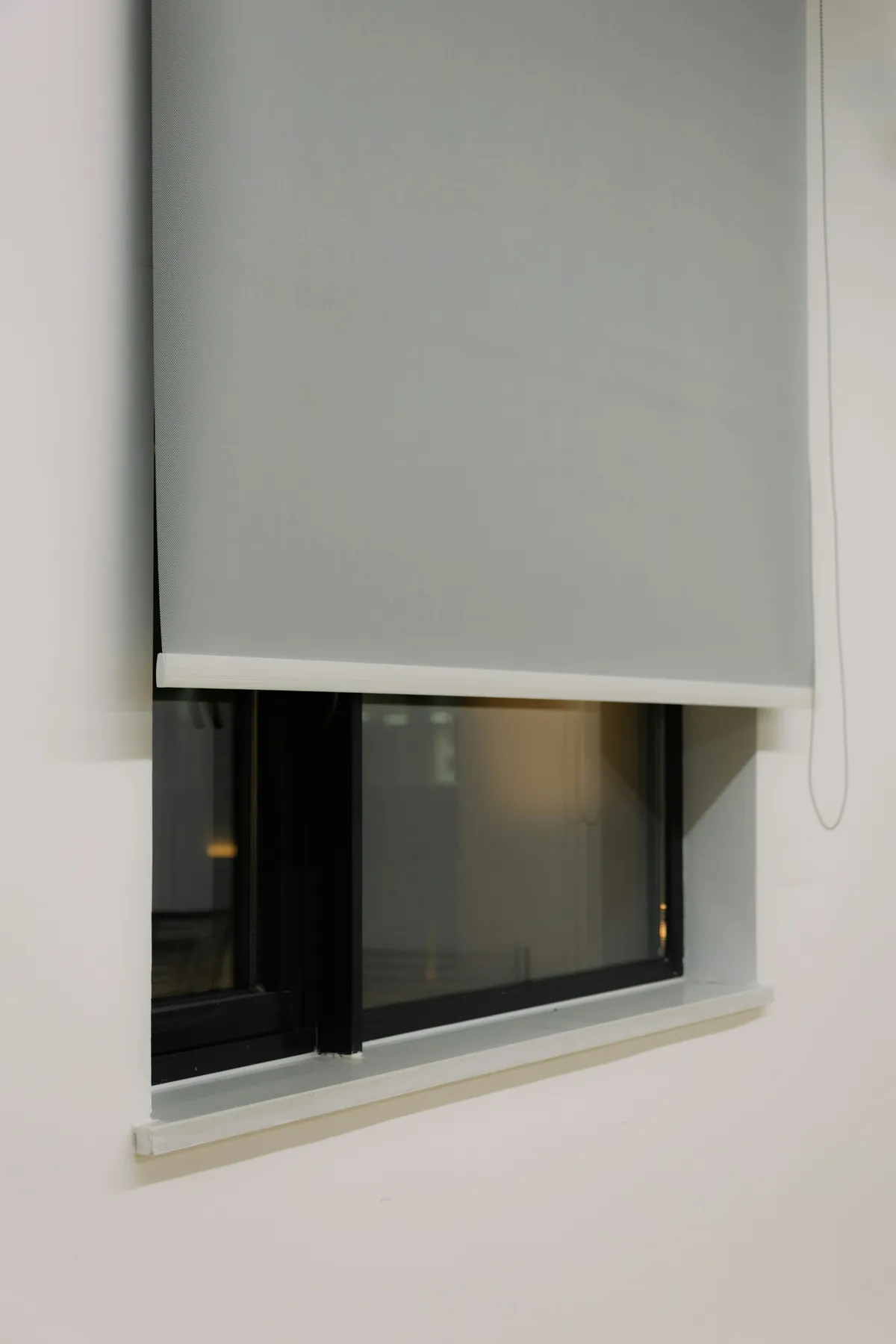
Room darkening
Blackout fabric for bedrooms, nurseries and media rooms, fitted to keep the edges as dark as the window allows.
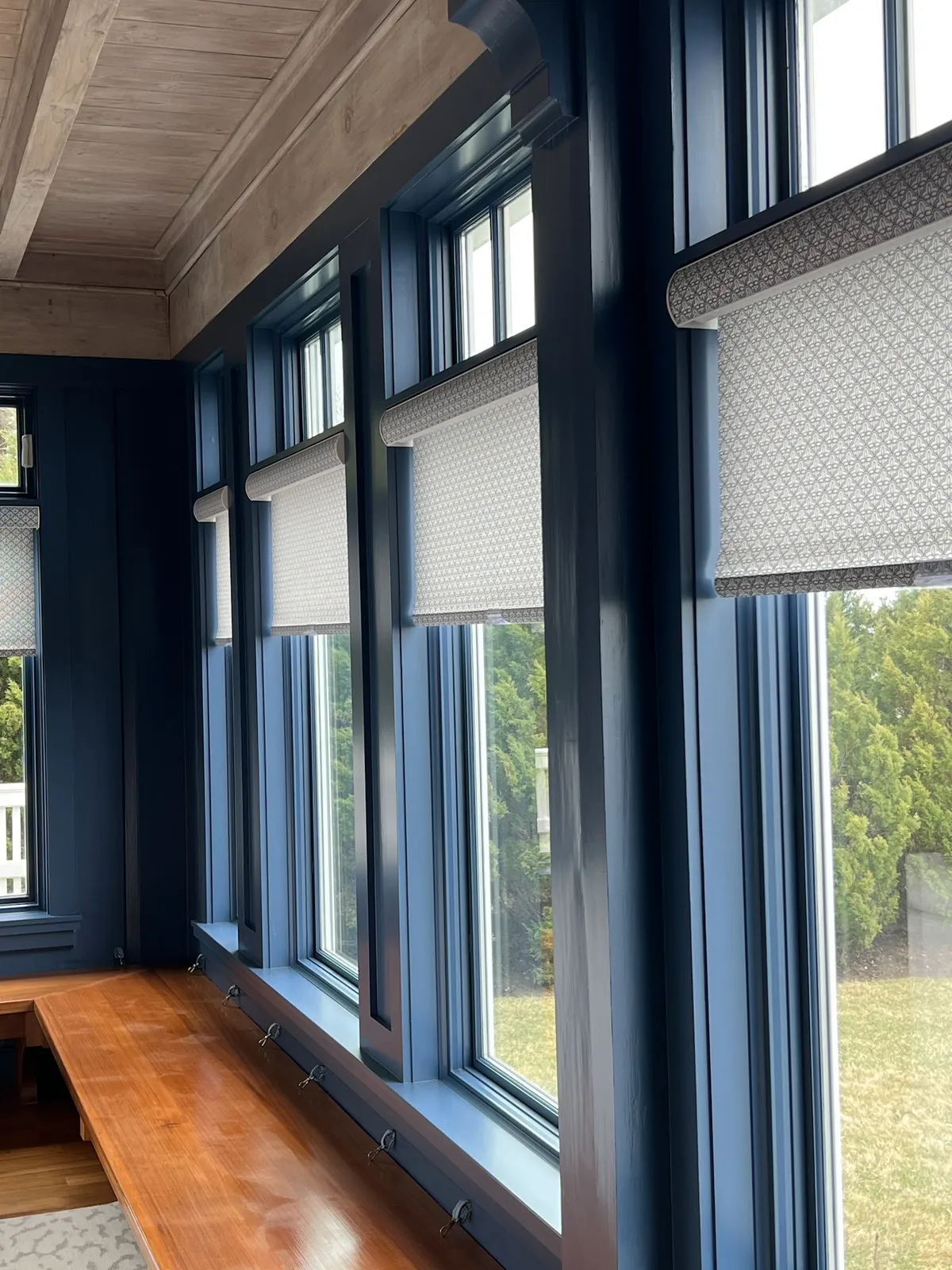
Solar screen
An open weave that cuts glare and keeps the view, for back rooms and windows that face open ground.
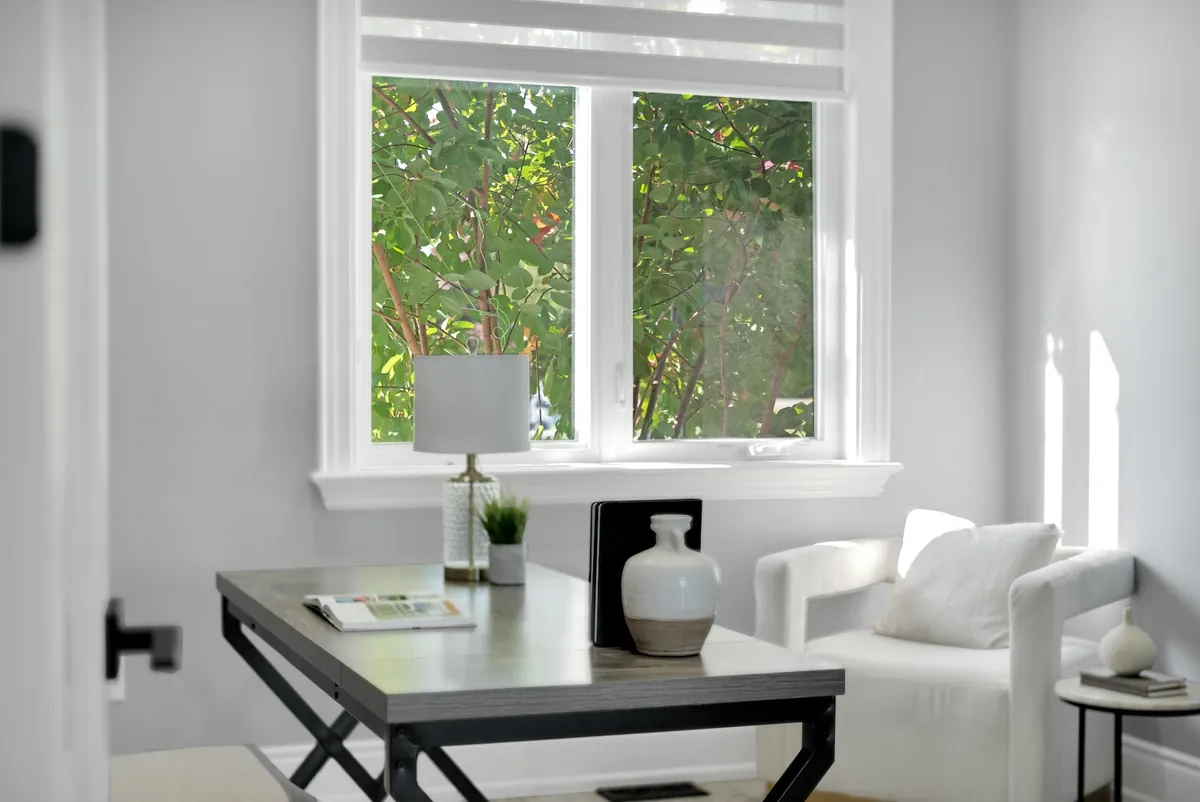
Desk and screen glare
A shade lowered just far enough to take the sun off a monitor, while the rest of the window stays bright.
Counting the Windows in a Newer Colonial
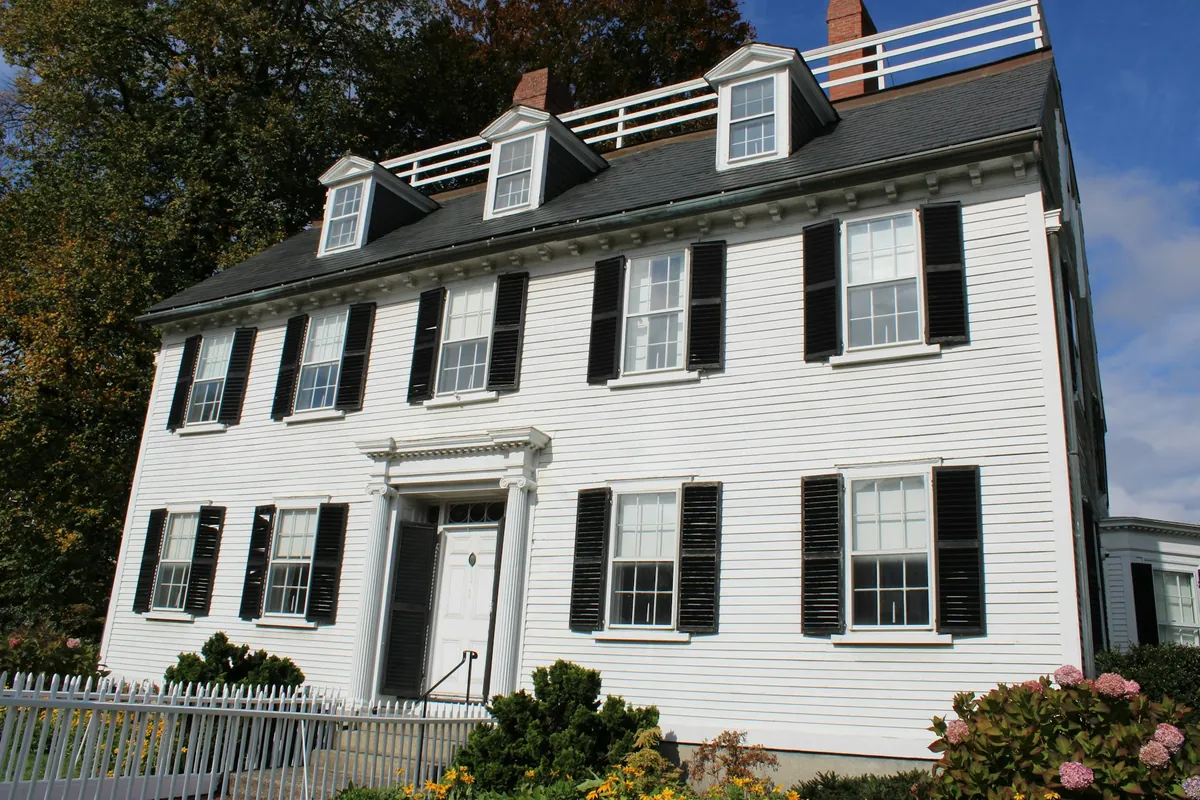
The colonials built around Lincoln Woods and Breakneck Hill are where most of our roller shades in Lincoln, RI end up, simply because there are so many windows in each house. A typical layout has a row of double-hung windows across the front on both floors, more along the sides, a kitchen window over the sink, a family room at the back with a wider window or a pair, and often a slider to a deck.
Standard sizes make fit straightforward. The real decisions are about material and consistency. When a house has this many windows, the shades become part of how the house looks from outside, and small differences add up. Two slightly different whites on neighbouring windows, or hems stopping at different heights, are noticeable from the driveway.
Our approach is to plan the whole house at once, even if you are only ordering a few rooms now. We pick one colour and fitting for the front windows, then choose the fabric room by room behind it: blackout in the bedrooms, light filtering in the living spaces, a solar screen on the windows that take the afternoon sun. Later rooms can be matched to the first order without guesswork.
Inside the house, the open spaces need the most thought. Where the kitchen opens into the family room, a single colour on every window ties the space together, and only the fabric weight changes where a window needs more control.
Upstairs, the bedrooms in these houses usually line up along the front and back, with a primary suite at one end that may have a larger window or a pair. Children’s rooms and the primary bedroom are the obvious places for blackout fabric, while a hall bath or a landing window can take the same light filtering fabric used downstairs. Keeping the upstairs front windows the same colour as the downstairs ones finishes the look from the street.
Kitchens, baths and the back slider
The service rooms of a newer colonial each ask for something slightly different. The window over the kitchen sink is usually small and hard to reach across the counter, and it takes splashes and steam. A light filtering roller fabric that wipes clean suits it, set so the shade can be pulled down without leaning over the taps. Bathrooms need privacy above all, often on a window facing the side yard or the next house; a light filtering fabric lowered most of the time does the job and still lets the room feel bright.
The slider to the deck is the opening people most often ask about. A roller shade can cover it if it is fixed high enough to clear the door frame and the handle, but a door used many times a day is often better served by a vertical blind or a panel track that draws to one side. We look at how the door is used before suggesting either, and match the colour to the roller shades in the rest of the room so the back of the house reads as one.
Bonus rooms over the garage
Many of the newer colonials around Breakneck Hill have a room over the garage, used as a playroom, a gym or an office. These rooms often have windows in dormers or gable ends, with sloped ceilings close above them. That slope limits the space for a shade to roll up into, so we check the clearance above each window carefully. Light filtering fabric keeps these rooms usable through the day; blackout makes sense if the room doubles as a guest bedroom.
Fitting standard frames
Newer colonial frames usually have the depth to take a shade inside them, which is the cleanest look and leaves the trim on show. We still check every frame, because a window with a lock that sits proud of the sash, or a frame trimmed differently from the others, can change the answer for that one opening.
In bedrooms, some owners prefer the shade fixed above the frame and made wider than the glass. It covers the edges where light would otherwise leak in, which makes a real difference in a room facing a street light or the early morning sun.
Lonsdale and Manville Mill Housing
The mill housing in Lonsdale and Manville is a different job entirely. These houses date from the mill era, and their windows are narrow and set into walls that have had a long time to settle. The original openings are often slimmer than anything a stock shade comes in, and the frames have shifted slightly out of square over the years.
A narrow window is where a made-to-measure shade matters most. A stock shade on a slim opening either leaves a strip of light down both sides or has to be fixed outside the frame where it looks oversized. A shade made to the opening sits neatly within it, with even gaps and a hem that stops level at the sill.
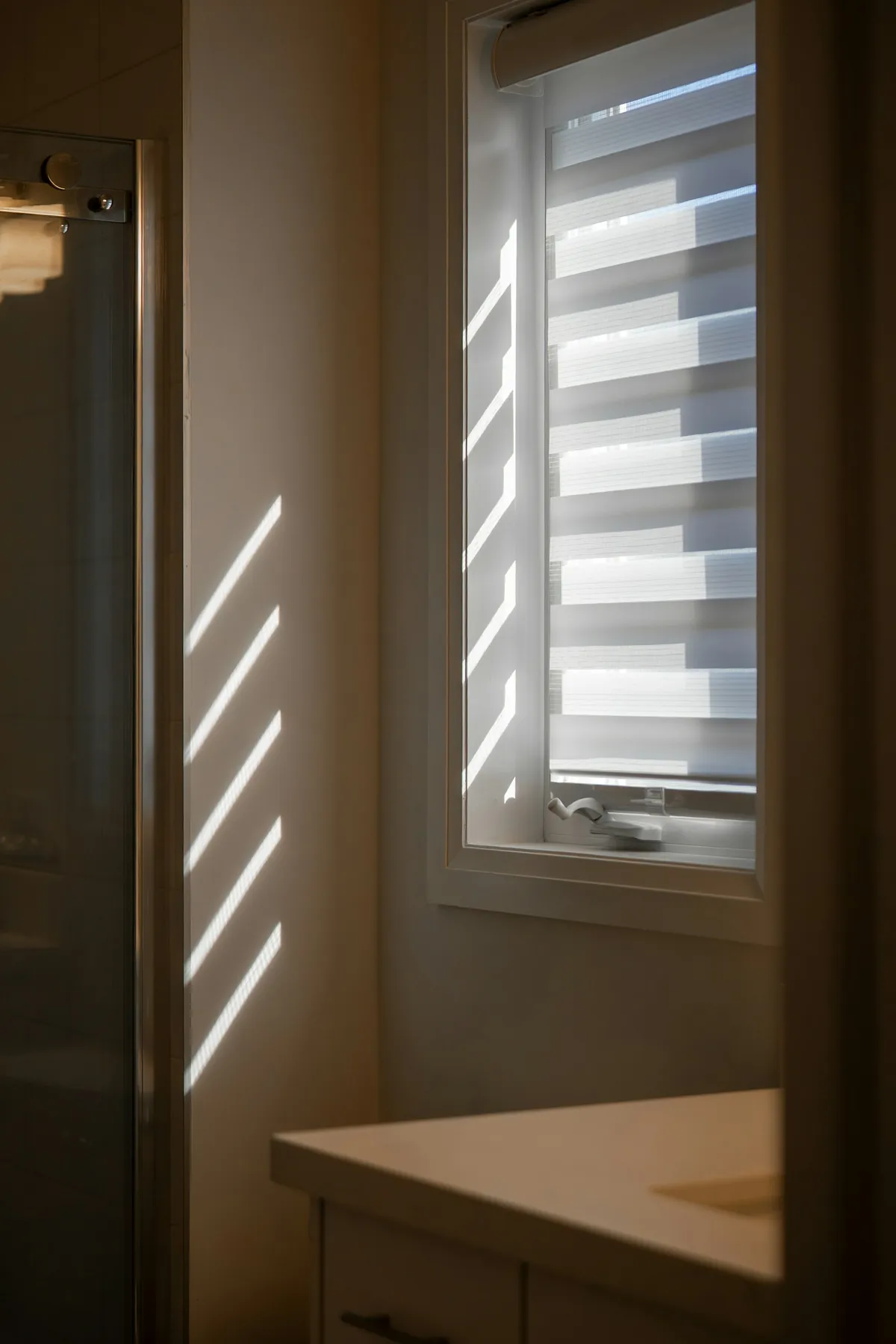
Measuring a mill house window takes care. Width is taken in three places from head to sill, since a frame that has racked over the years can be wider at one end, and height is taken at both jambs. We check the depth too, since later storm windows or replacement sash have often been fitted into the original opening and taken up some of the space.
Because the windows are small, the fabric choice carries more weight. A dark or heavy fabric can make a small room feel smaller still. Light filtering fabrics in pale colours keep these rooms bright while giving privacy from a sidewalk or the house next door, and many mill houses sit close to both. A bedroom at the front can still take blackout; the shade is then often fixed above the frame to reduce the light at the edges.
On stairways and in halls, mill houses often have a single small window that is the only daylight for the space. A shade there is usually best left raised most of the time, rolled up tight so it takes as little of the glass as possible, and lowered only at night.
Mill houses that have been renovated
Plenty of Lonsdale and Manville houses have been updated inside, with replacement windows fitted into the original openings. Replacement units are often slightly smaller than the opening they sit in and add their own frame, so the space left for a shade can be shallower than it looks. Sometimes the new frame leaves a neat recess that suits a shade inside it perfectly; sometimes there is only room for a shade fixed to the casing above. It varies from window to window even within one house, which is another reason we measure every opening rather than assuming they match.
Renovated mill houses also tend to have opened-up ground floors, where a front parlour and a back kitchen have become one room with windows at both ends. A shade at the street end for privacy and a solar screen at the back for the afternoon sun, both in the same colour, is a neat way to handle a long room lit from both directions. Ordering roller shades in Lincoln, RI for a renovated mill house is often a mix of the two approaches on this page: careful fit at the narrow front windows, and consistency across a newly opened interior.
Large Lots off Great Road
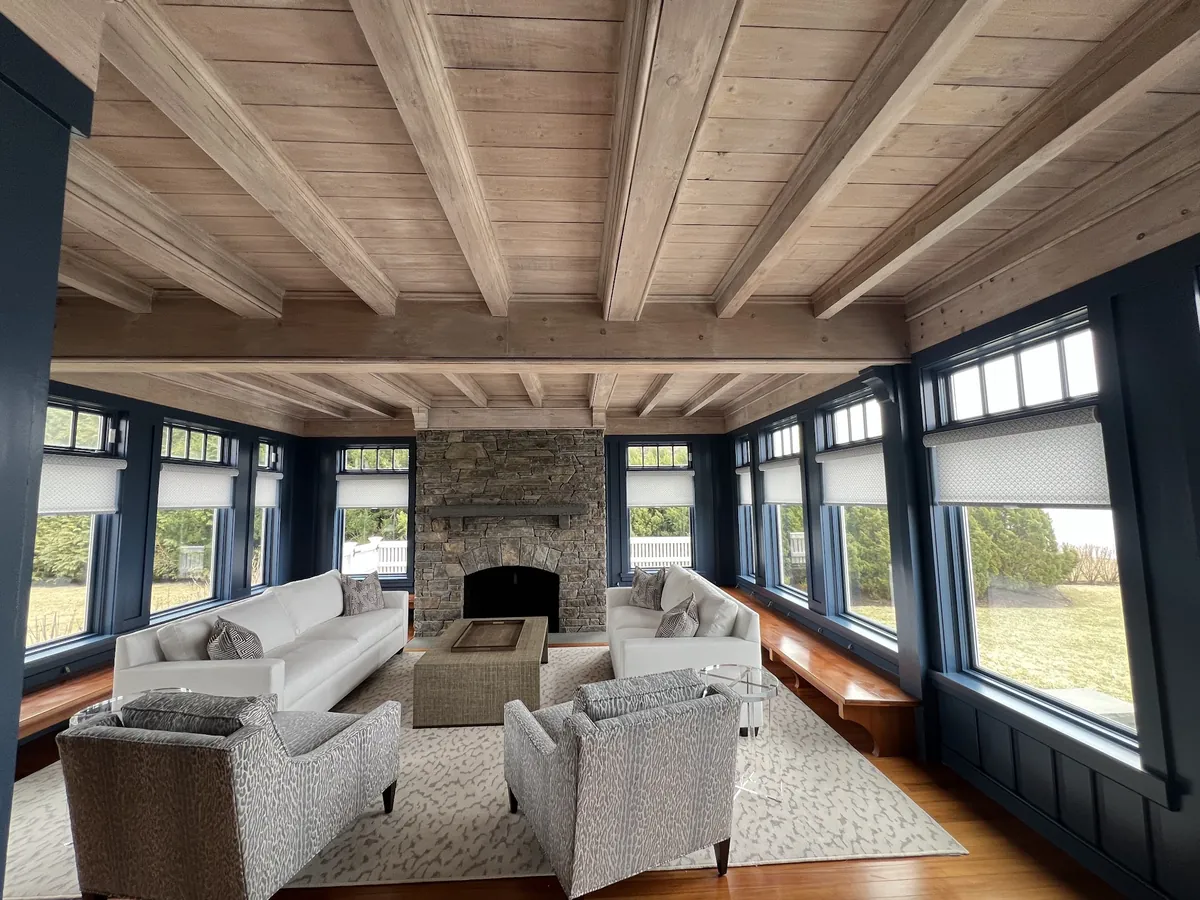
Further out along Great Road, the houses sit on bigger lots, often with fields, woods or long views to the back. These houses tend to have larger windows on the side facing that view, sometimes a sunroom or a wall of glass, and fewer neighbours close by.
Here privacy from the street matters less than control of the light itself. That is the case for a solar screen. The openness of the weave decides how the window behaves. A looser weave keeps more of the view and lets more daylight into the room. A closer weave cuts more glare and makes the room more comfortable when the sun is low and straight in through the glass. Because the view is the reason for the window, many owners here lean towards a looser weave and a darker colour, which tends to look clearer from inside.
Orientation matters more on an open lot than on a close-built street. With no trees or neighbours to block it, a west-facing window can take low, direct sun late in the day, while an east-facing bedroom gets it at dawn. We ask which way each room faces and how it is used at different times of day, then suggest a screen for the rooms where glare is the issue and a blackout fabric where an early sunrise is. The goal is that roller shades in Lincoln, RI houses on these lots are chosen for how the light really moves through the rooms.
A sunroom or a wall of windows is best handled with a matching shade on each window, so you can lower the ones the sun is hitting and leave the others up. One colour across the room keeps it looking finished even when every shade is down.
Larger houses also tend to have a few windows that are hard to reach: above a built-in, high in a stairwell, or at the top of a tall living room. For those, motorised roller shades raise and lower from a remote or a wall switch. Our page on motorised blinds and shades in Lincoln goes into them.
Ordering, Step by Step
An order follows the same sequence whether it is one mill-house bedroom or every window in a colonial, and you hear from us at every stage until it is finished.
- Get in touch with the call button or the form, list the rooms you have in mind, and book your free quote.
- A specialist measures each window in your home, recording width at several points, height, frame depth and anything in the way.
- For a whole-house order, we agree one colour and fitting for the front windows before choosing fabrics room by room.
- You look at samples at your own windows, or come to the Swansea showroom to compare fabrics and screens side by side.
- You receive a quote that itemises every window.
- The shades are made to the sizes taken in your home.
- Our installers fit them, run each one fully up and down to be sure it hangs straight, and show you how they work.
Pairing shades with other treatments
A roller shade often works alongside something else. In a colonial dining room or main bedroom, side drapes over a shade give a softer, more finished look while the shade does the daily work. Window Works makes custom drapes in Lincoln too, measured on the same visit. In a cold room, a cellular shade may suit better than a roller, because its cells hold air and help the room keep its heat. We will say which product suits which window.
Care and small repairs
Roller fabrics are easy to live with. A feather duster or the brush head of a vacuum run over them occasionally keeps dust off, and marks on most fabrics lift with a lightly dampened sponge. Rolling each shade fully up once in a while keeps the fabric flat. Should an older shade begin to track crooked or come loose at its brackets, ask our team to check it first, since a repair may be all it needs.
A Store That Measures Before It Quotes
Window Works began in Swansea in 1988 and is family owned, now in its second generation. For over 37 years it has served the SouthCoast of Massachusetts and the Rhode Island East Bay, and Lincoln is part of that area.
- A team of window treatment specialists
- Measuring in the home, so each shade is made for its opening
- Installation by our own team
- Kept informed until the work is done
- Warranties offered on the products sold
The Swansea showroom is the place to compare roller fabrics and solar screens in person, and the Norman range is on show there too. Comparing roller shades for a Lincoln, RI house is much easier with the fabrics in your hand.
All the services we offer in town are on the window treatments for Lincoln homes page, and our main roller shades page covers the full range.
Questions from Lincoln
Will a shade fit the narrow windows in a Lonsdale or Manville mill house?
Yes. Each shade is made to the opening, measured at several points, so it fits a slim or slightly out-of-square frame neatly.
My colonial has a lot of windows. Do I have to order them all at once?
No. We plan the whole house so later rooms match, then you order the rooms that need it most first.
Which weave of solar screen keeps the view from a Great Road house?
A looser weave keeps more of the view and lets in more light. A closer one cuts more glare. A darker colour usually looks clearer from inside. We bring samples so you can compare at your window.
Does a newer colonial with standard windows still need measuring?
Yes. Standard sizes help, but locks, trim and frame depth vary from window to window, and measuring each one is how every shade ends up fitting its own opening.
What does it cost to get a quote?
Nothing. Quotes are free. Use the call button or the form to arrange one.
Book Your Free Quote
The simplest next step is a free quote. Use the call button to speak with the Swansea store about roller shades in Lincoln, RI, to arrange measuring in your home, or to ask about installation, or send the form and we will be in touch. To see the fabrics in person first, visit the Swansea showroom; the contact page has directions. Window Works holds a 5.0 rating on Google.