
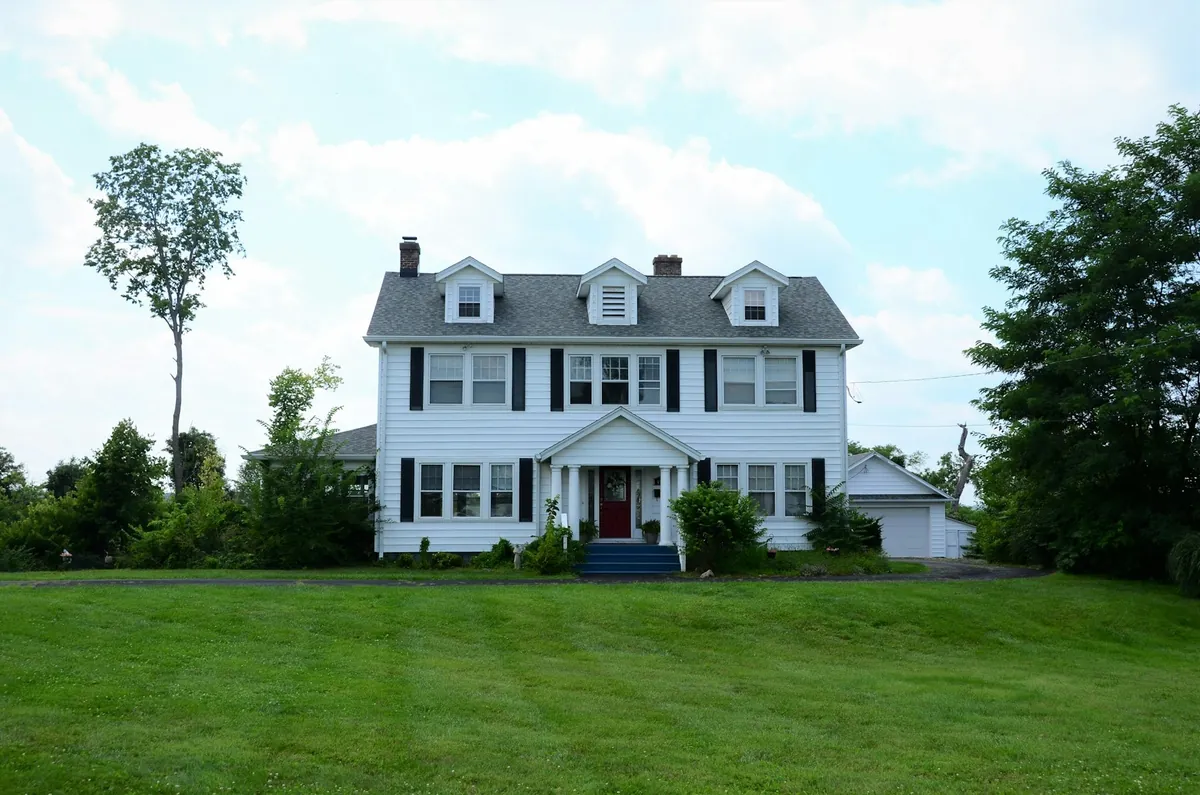
Deep Reveals and Historic Fronts on Hope Street
Walk the length of Hope Street and the windows tell you a lot about the houses behind them. Federal and Greek Revival fronts, many of them inside the historic district, have thick walls and window reveals deep enough to set a vase in. That depth is a gift for anyone fitting custom blinds in Bristol, RI, because a blind can sit right inside the opening, out of sight from most angles, with the old trim left completely clear.
It also sets the rules. What can be mounted, and where, depends on how deep each reveal is, how square it has stayed, and what the window looks like from the street. Toward the Mount Hope Bay shore and out on Poppasquash Point, the houses open up to the water, and the problem shifts from fitting into old walls to handling broad glass and strong light.
- Wood, faux wood, aluminium and vertical blinds, each sized to its own reveal
- Every window measured at the house by a specialist
- Fitted by our installers, set up the way you use each room
How a Blind Sits in a Bristol Window

Tucked into a deep reveal
Where the wall is thick, the whole blind fits inside the opening. The headrail hides under the top of the reveal and the trim stays on view.
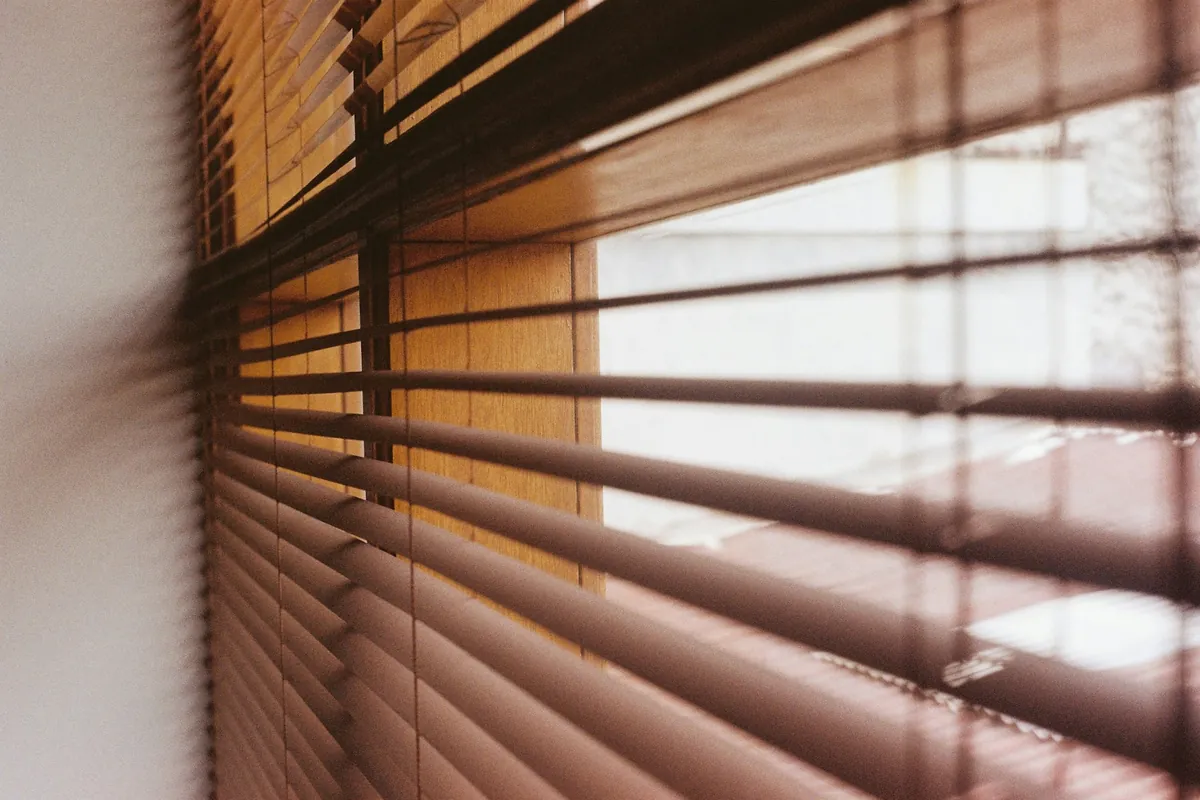
Wood on the main floor
Real wood slats suit the formal rooms of a Federal or Greek Revival house and look settled against painted woodwork.
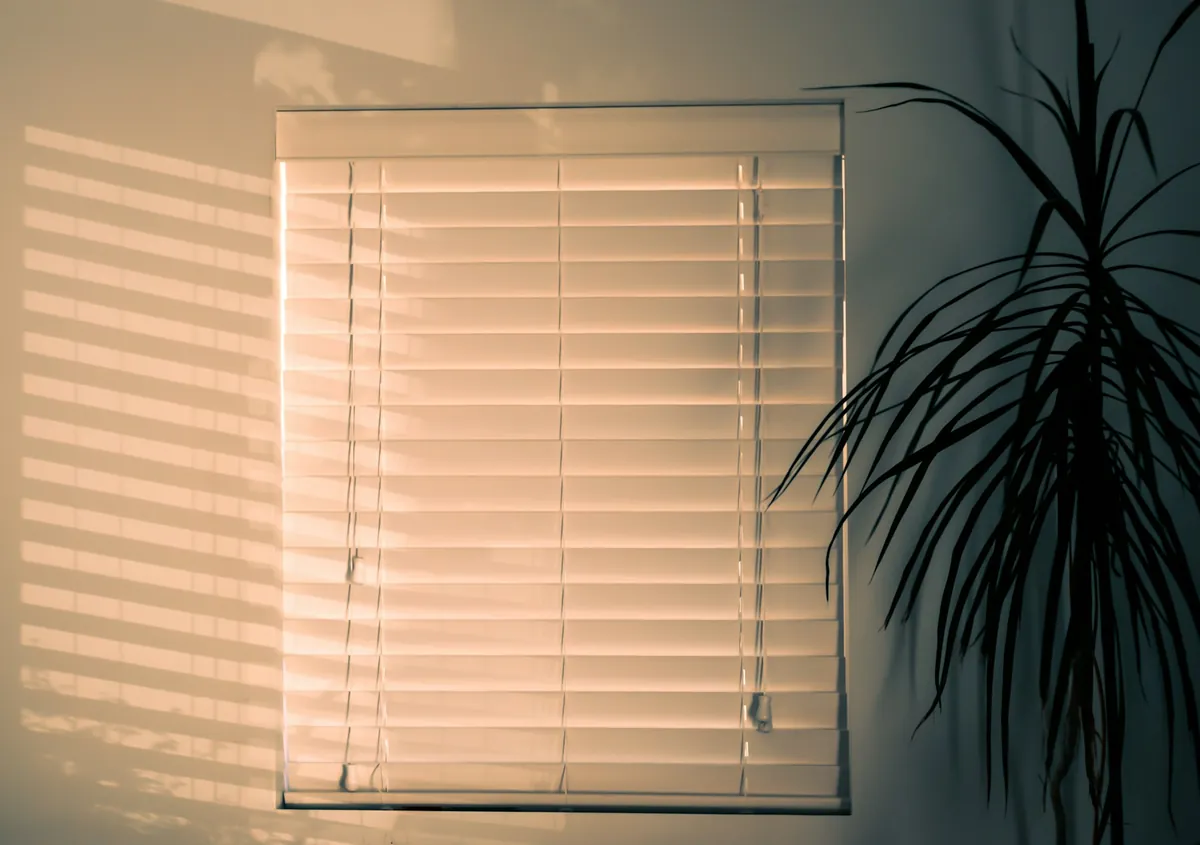
Faux wood where it is damp
A painted-wood look that takes steam, splashes and sea air. Kitchens, baths and shore-side rooms.
Aluminium for the small panes
A slim slat for attic, stair and pantry windows, where the blind should almost disappear when raised.
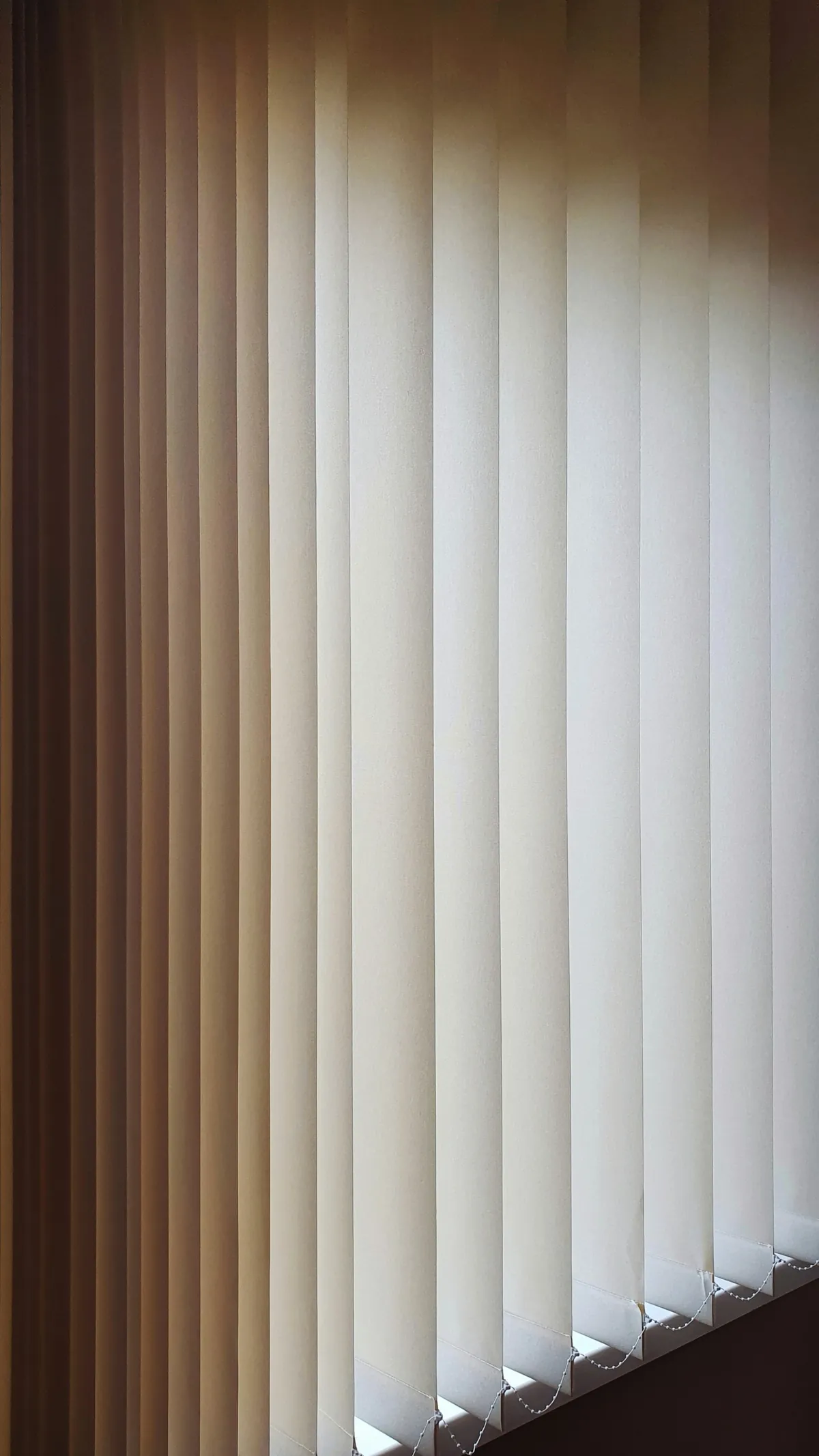
Vertical blinds at the water
One track across a slider or wide window facing the bay, with vanes that turn to cut glare. More on our vertical blinds in Bristol page.
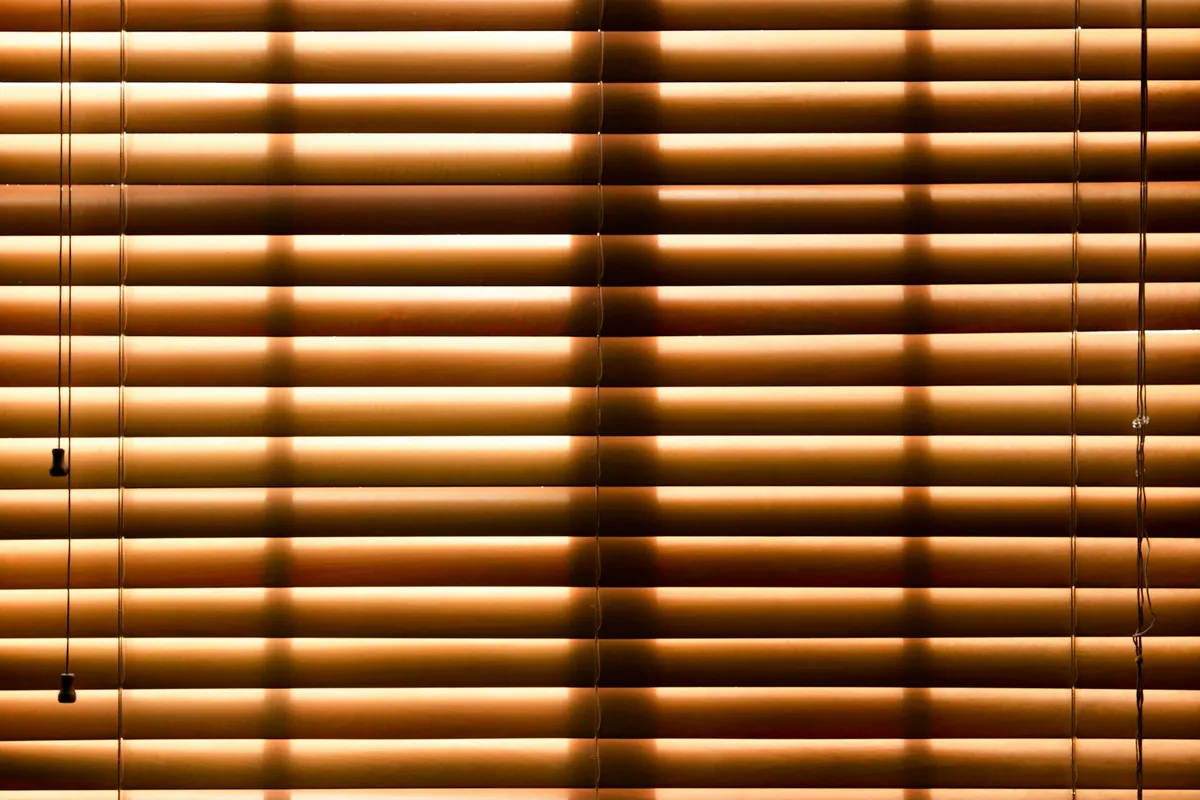
Norman, if you want to see it
The showroom carries the Norman range of blinds, so you can compare it in person. See Norman blinds in Bristol.
Custom Blinds in Bristol, RI, House by House
Bristol is a town where the same street can hold houses two centuries apart, and windows from different eras rarely share a size. A made-to-measure blind takes its width, drop and depth from the window itself, which is the only way to get a clean fit in a frame that was cut by hand, painted many times over and has moved a little with the house. Here is what the main kinds of house in town tend to ask for.
Federal houses along Hope Street
The Federal houses on and around Hope Street usually have a balanced front: windows set evenly either side of a central door, upper windows a little shorter than those below. The sash is divided into small panes, and the reveals are deep. Seen from the pavement, any blind behind that glass is part of a composed facade.
Inside, the best result is usually a blind fitted fully within the reveal, so the headrail sits under the head of the opening and the slats hang just inside the glass. From the street the blind reads as a quiet, even band behind the panes. From the room, the trim, the shutter pockets if the house has them, and the depth of the wall all stay on show.
We check that the reveal is deep enough not only for the headrail but for the slats to tilt without touching the sash lock or the window’s own stops. In a house this old, that can change from window to window, so every opening is measured on its own.
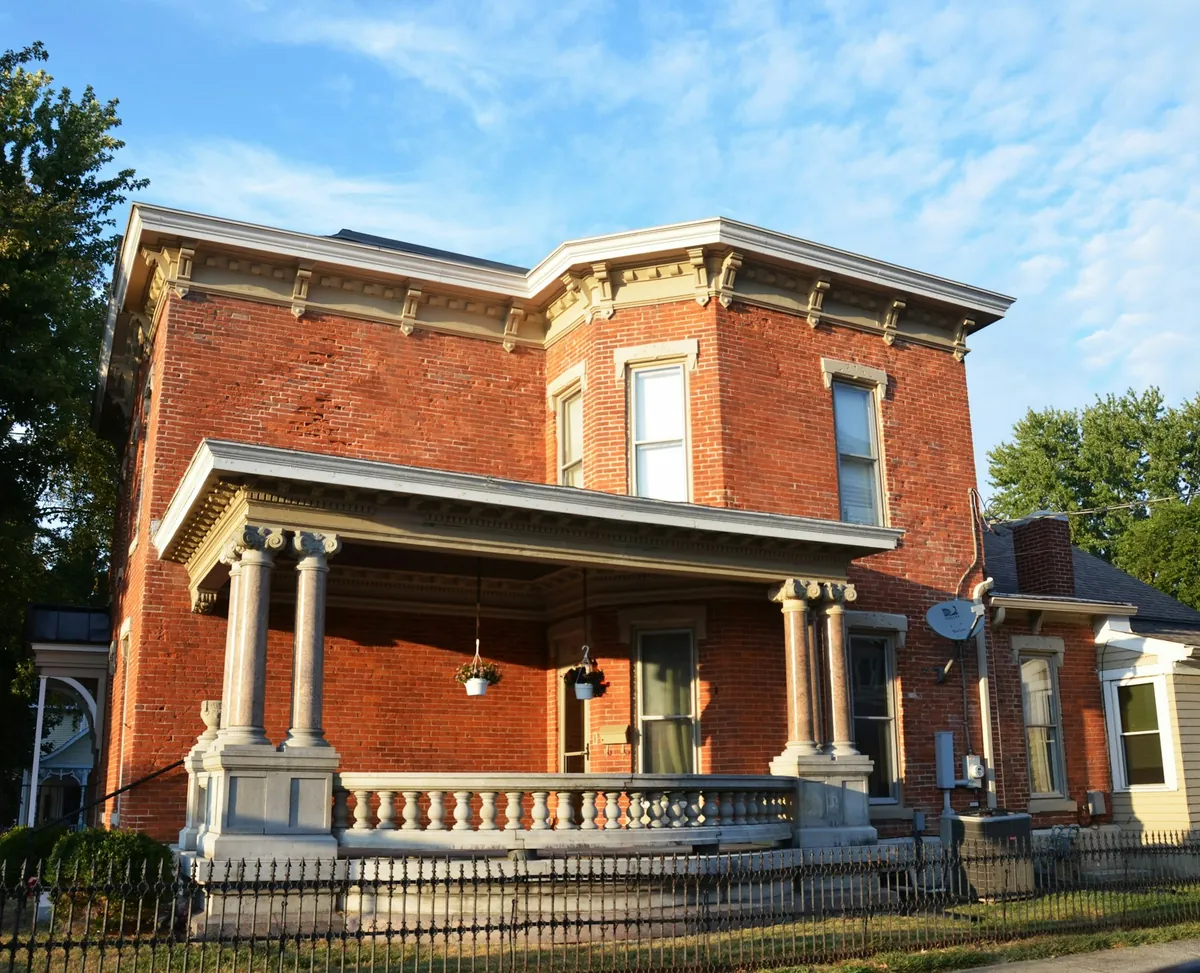
Greek Revival houses and their tall ground floor windows
The Greek Revival houses carry taller ground floor windows than the Federals, sometimes nearly floor to ceiling in the front rooms, with heavy flat trim and a strong cornice above. A long drop like that puts weight on a blind, and it puts the controls a long way from the top.
For these windows we look at slat width and material together. A wood slat is light for its size and works well at height. A wider slat means fewer slats on a long blind and a more open view when tilted, which suits a tall front room that you want to keep bright. The controls are set at a height you can reach from the floor, and on the very tallest windows we may suggest a motorised blind run from a remote or a wall switch. Our motorized blinds in Bristol page covers that option.
Where a Greek Revival room has a pair of tall windows either side of a fireplace, the two blinds are made as a matched pair, so they raise to the same line and the slats sit level with each other.
What historic district expectations mean for a blind
In the historic district, much of what matters is how the house looks from the street. A blind sits behind the glass, but it is still seen through it. A few simple choices keep the outside looking right: the same colour on every street-facing window, neutral or white slats that read softly through old glass, and blinds that lower and stack to the same height across the front.
An inside mount helps too, because nothing projects past the reveal and the line of the window opening stays sharp from outside. We cannot speak for the town’s commission, so if you are unsure whether something applies to your house, it is worth checking with them before you order. What we can do is keep every street-facing blind consistent and discreet.
The Mount Hope Bay shore and Poppasquash Point
Along the bay shore and out on Poppasquash Point, the houses face the water, and many have wider windows and sliders added to make the most of it. Here, the questions are glare, low sun across the bay late in the day, and doors that open straight onto a deck or lawn.
Vertical blinds take care of the sliders and the widest openings. On a run of separate windows, a set of horizontal blinds, one per window, with their headrails lined up across the wall, often looks better than one long blind and lets you raise just the window you want. Near salt air, faux wood and aluminium hold up well in rooms that see damp, and wood is kept to the drier rooms further from the shore.
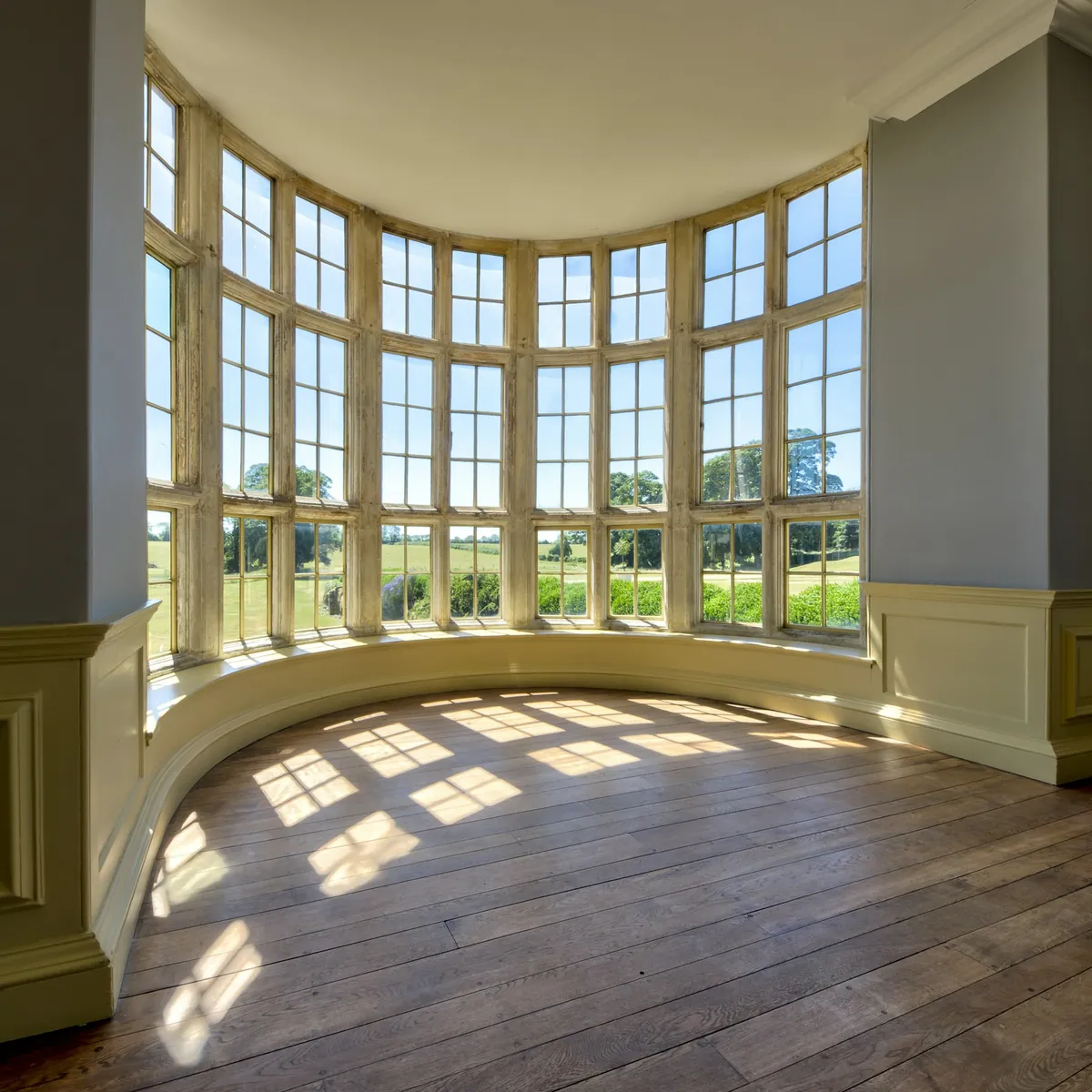
Measuring a Bristol Window, Step by Step
The fit of a blind is decided the day the window is measured, so this is the part we take most care over. Here is what a specialist does at each opening when we visit.
- Measures the width at the top, middle and bottom of the reveal, because old frames are rarely the same at all three, and works from the narrowest.
- Measures the drop at both sides and the centre, so a blind made for a settled frame still hangs straight.
- Checks the depth of the reveal and looks at what sits in it: sash locks, lifts, stops and any shutter hardware.
- Decides with you whether the blind goes inside the reveal or above the trim, and which side the controls belong on.
- Notes anything about the room that affects the choice, such as a radiator below, furniture in front or a door that swings close by.
- Records it all against the room and window, so your quote lists every blind exactly where it goes.
Once you have chosen material, colour and slat width, the blinds are made to those measurements, and our team comes back to install them, check each one tilts and lifts as it should, and show you how they work. We keep you up to date the whole way, from the first call until the last blind is up.
Picking a material for each room
Bristol houses usually end up with more than one material, chosen room by room.
Wood gives warmth and a real grain. It belongs in the parlour, the dining room, the bedrooms and a study, and it looks right beside the painted trim and wide floorboards of an older house. It does not like steam, so it is kept out of bathrooms.
Faux wood looks like a painted wood slat but is made for moisture. It is the one for kitchens, bathrooms, laundry rooms and any room close to the shore that sees damp air. In matching colours, it sits next to wood without anyone noticing the difference from outside.
Aluminium has the thinnest slat and stacks the smallest. It suits the small panes of attic and stair windows, and any room where the blind should keep a low profile.
Vertical blinds are made for sliders and wide openings, the kind of glass you find in the newer rooms facing the bay.
Light, privacy and the way the rooms are used
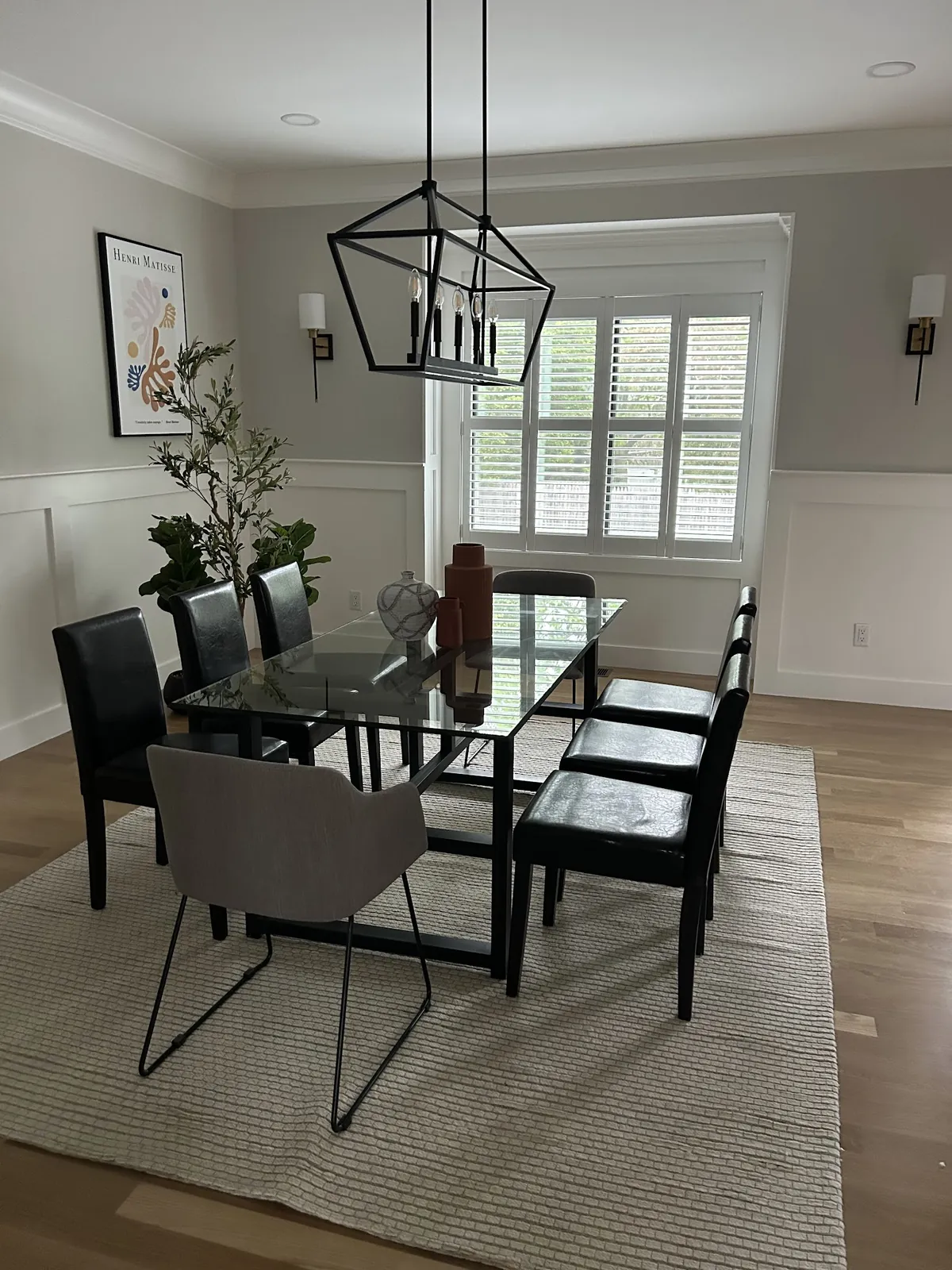
Many Bristol houses sit close to the street, especially through the centre of town, so ground floor rooms often need privacy and daylight at once. Tilting the slats upward does both: light comes in toward the ceiling, while someone on the pavement sees only the slats. At night, the slats close completely.
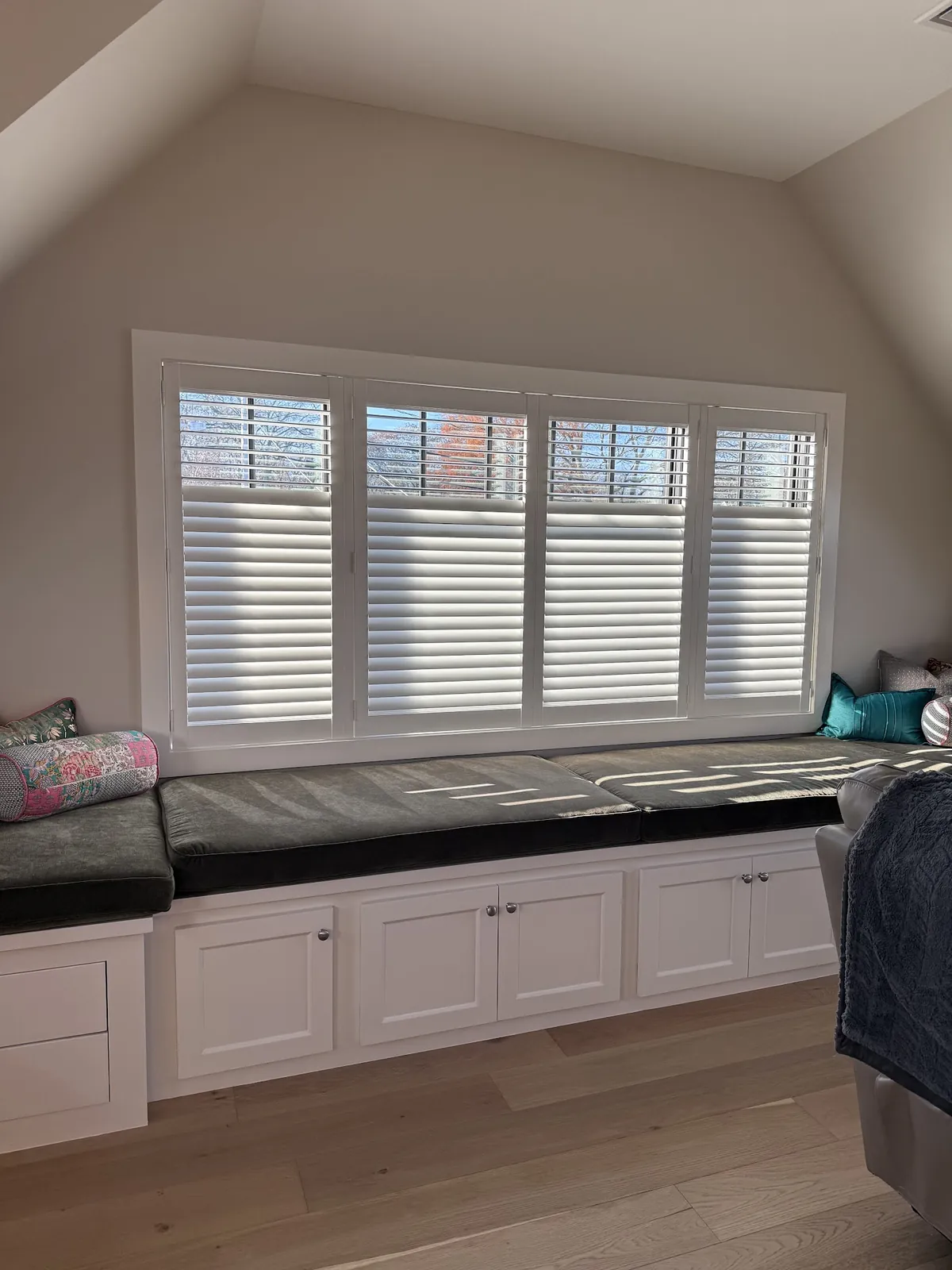
Bedrooms usually want a blind that closes tight and fits close at the sides, which an inside mount in a deep reveal does well. Rooms facing the bay want control of glare more than privacy, so the blind is often lowered partway with the slats angled against the sun while the lower part of the window stays clear for the view.
A room used as a study or home office has its own needs. With the slats tipped upward, daylight is thrown onto the ceiling and spread around the room instead of landing on a screen or a desk. In a deep reveal the blind sits well back from the glass, which also softens the light coming through old, slightly wavy panes. We ask how every room is used during the visit, so the slat and mount suit it.
When a blind is not the whole answer
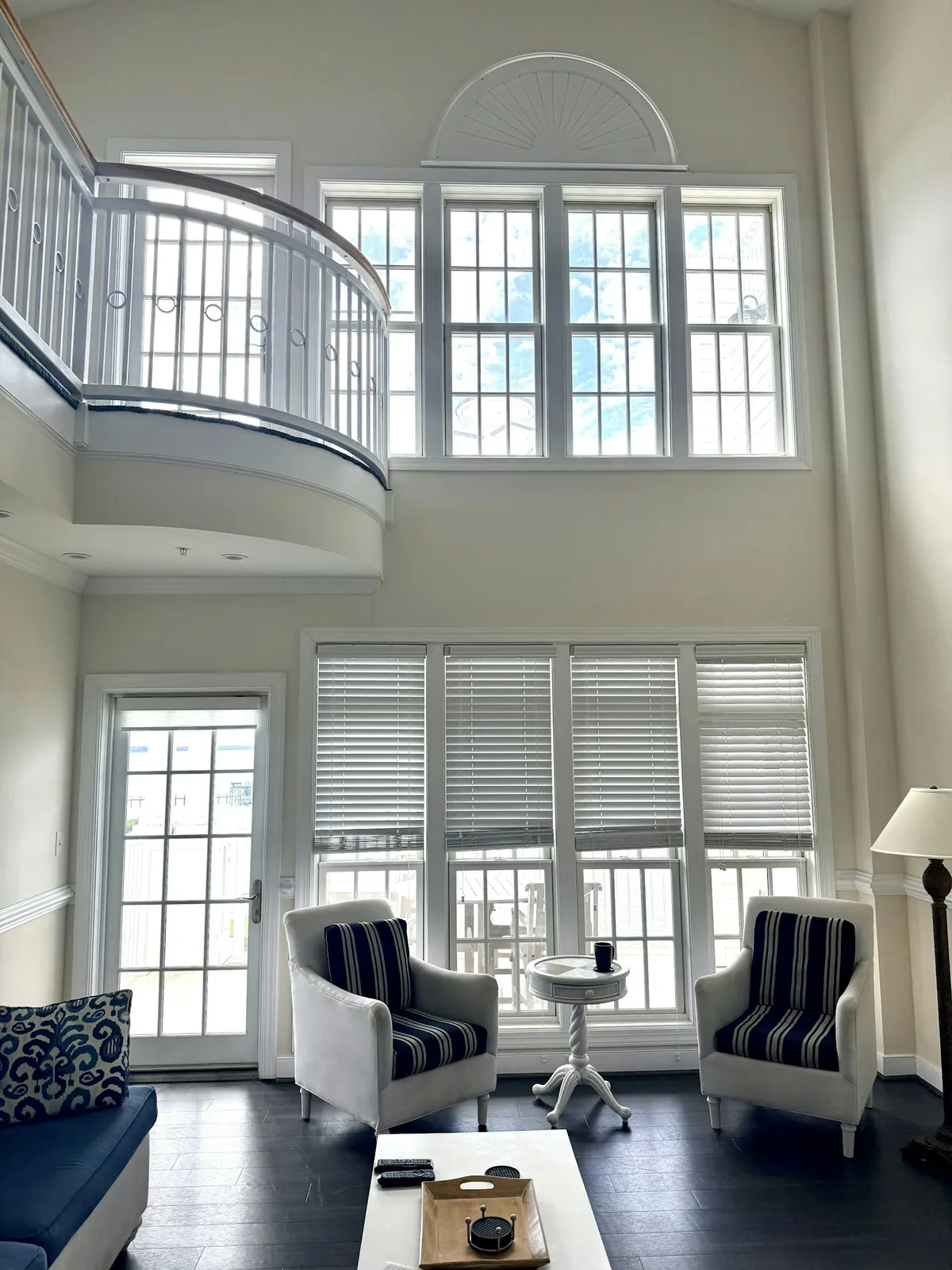
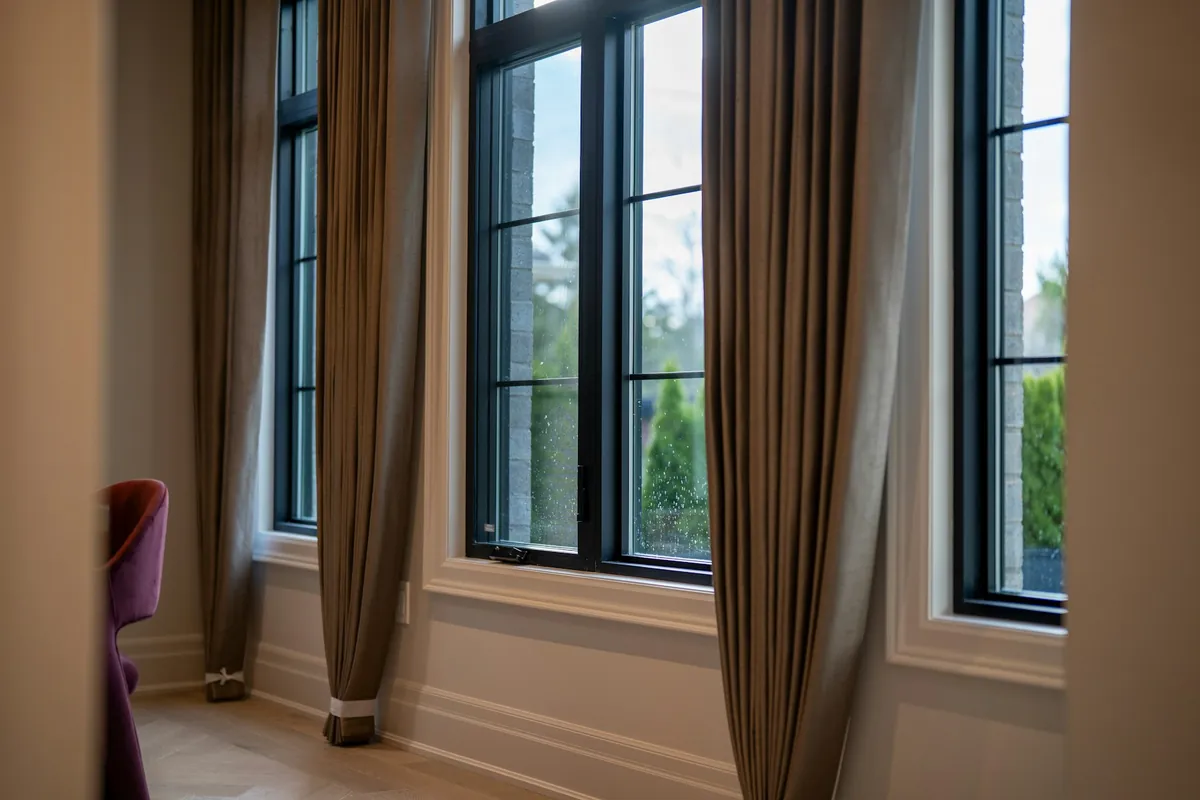
In a formal Federal or Greek Revival room, a blind inside the reveal pairs well with drapes hung outside the trim, which add colour and softness while the blind handles the light. Window Works makes drapes and custom fabric decor in house, so the two can be planned together. In some rooms another treatment fits better outright: shutters in a kitchen, roller shades in a sunroom, cellular shades in a cold bedroom. If that is the case, we will say so. Every service we offer in town is on our Bristol window treatments page, and the full blind range is on the main custom blinds page.
Upper floors, attics and back wings
The upper floors of a Federal or Greek Revival house are often simpler than the front rooms below, and that is where a lot of value lies. Bedroom windows on the second floor are usually shorter and plainer, so a matching set of blinds goes in quickly and keeps the upper row of the facade even. Attic rooms under the roof may have small gable windows or low windows set close to the floor; aluminium, with its short stack, keeps those clear when raised. Many older Bristol houses also have a back wing or ell added later, with its own window sizes and sometimes a lower ceiling, and those openings are measured separately rather than assumed to match the main house.
When planning custom blinds in Bristol, RI for a whole house, it helps to walk the rooms floor by floor with us on the measuring visit, so nothing is missed and each window is noted with the room it belongs to.
Keeping the house consistent from outside
A house on Hope Street is seen from the pavement at close range, and from the harbour side many shore houses are seen from the water. Either way, the windows read as a set. Choosing one colour and one slat width for every window that faces the street or the water keeps that set calm, even if the rooms behind use different materials. White faux wood in a front bathroom and white wood in the parlour look like one choice from outside.
Inside, a centre hall plan puts matching rooms either side of the door, and blinds that match across the hall keep the plan balanced. You do not have to do every room at once: many orders for custom blinds in Bristol, RI start with the street-facing rooms and add the rest later, matched to the first.
Caring for blinds in an older house
Blinds take little care. Dust the slats with a soft cloth or duster every so often. Faux wood and aluminium can be wiped with a damp cloth; wood should be kept dry. Vertical vanes can be dusted in place, turning them to reach both sides. In a house by the bay, a quick dust more often keeps salt off the slats.
A Family Store That Knows Bristol Windows
Window Works has been in Swansea since 1988, and the family business is now run by its second generation. That is over 37 years of fitting window treatments across the SouthCoast of Massachusetts and the Rhode Island East Bay, Bristol included.
- Window treatment specialists with long experience of older houses
- Every reveal measured at your home, never guessed from a photo
- Our own team installs what we sell
- We stay in touch until the job is done
- Warranties offered on our products
If you want to compare materials before you decide on custom blinds in Bristol, RI, the Swansea showroom has samples to handle, the Norman range on display and specialists to talk it through.
Questions from Bristol
Will a blind fit inside the deep reveals of my Hope Street house?
Usually, yes. Deep reveals are ideal for an inside mount. We measure the depth at each window and check the slats can tilt clear of the sash locks and stops.
Do blinds work for a house in the historic district?
A blind sits behind the glass, and keeping every street-facing blind the same neutral colour and height keeps the front looking right. If you are unsure about the commission’s view, check with the town before ordering.
What suits the tall ground floor windows of a Greek Revival house?
A wood blind with a wider slat is light for its length and keeps the room bright when tilted. On the tallest windows, a motorised blind with a remote or wall switch is an option.
What do you recommend for a slider facing Mount Hope Bay?
Vertical blinds. They draw aside so the door opens fully, and the vanes turn to cut glare off the water.
How do I arrange a quote?
Quotes are free. Use the call button or the form on this page and tell us which rooms you have in mind; we will arrange a visit to measure.
Your Next Step
Getting started is simple and the quote is free. Call the Swansea store from the button on this page to book it, to set up measuring at your house or to ask about installation, or send the form and we will reply. If you would like to handle samples first, the contact page shows how to find the showroom. Window Works is rated 5.0 on Google.