
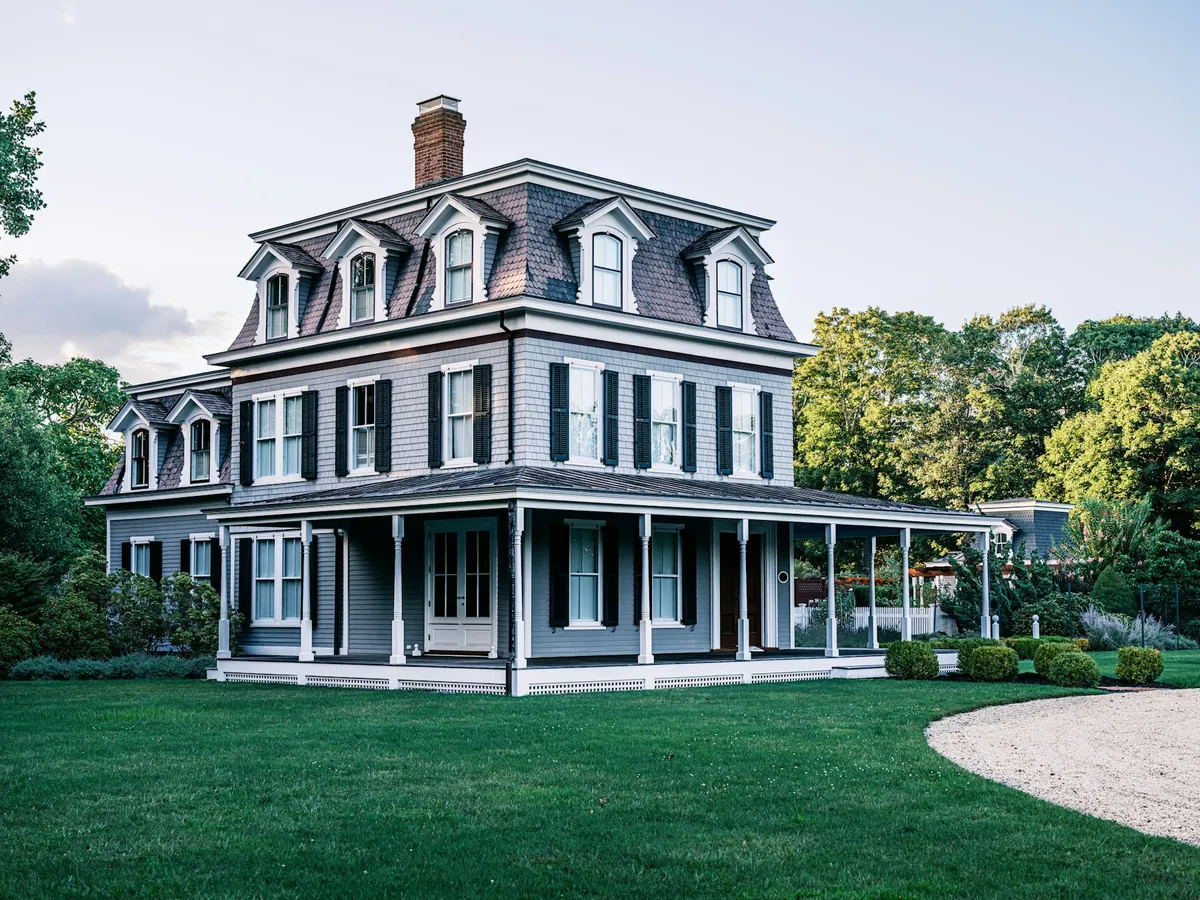
Tall Sash and High Ceilings
On the East Side, three things come up at almost every window: tall sash, high ceilings and historic-district review. The Victorians and Colonial Revivals along Blackstone Boulevard and up on College Hill were built with generous rooms and long windows, and many sit where the look of the street front is watched closely. Roman shades in Providence, RI suit those houses well, because a fabric shade can be scaled to a tall window, hung to make the most of a high ceiling and kept quiet and even from the street.
Across the city, the triple-deckers of Federal Hill and Elmhurst ask for something more practical: privacy on a close-set street, three floors of similar windows and shades that work hard every day.
We cover both kinds of house below, and the decisions each one turns on.
Where Roman Shades Fit in a Providence House
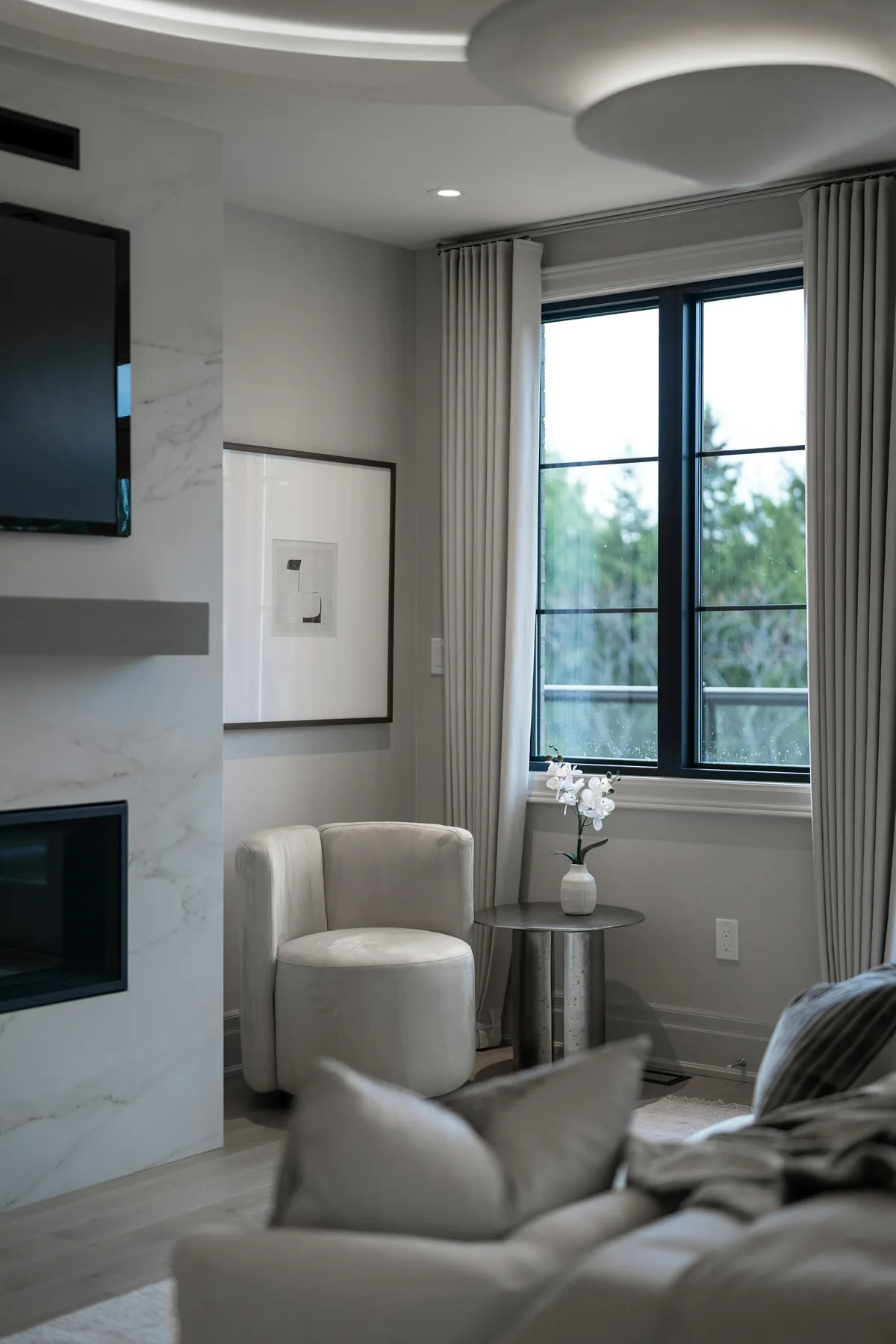
Parlours with long windows
A tall sash takes a long shade with a deep, graceful stack. Hobbled folds suit the scale of a Victorian front room.
Bedrooms under high ceilings
A lined shade fixed high above the frame darkens the room and makes the window look taller still.
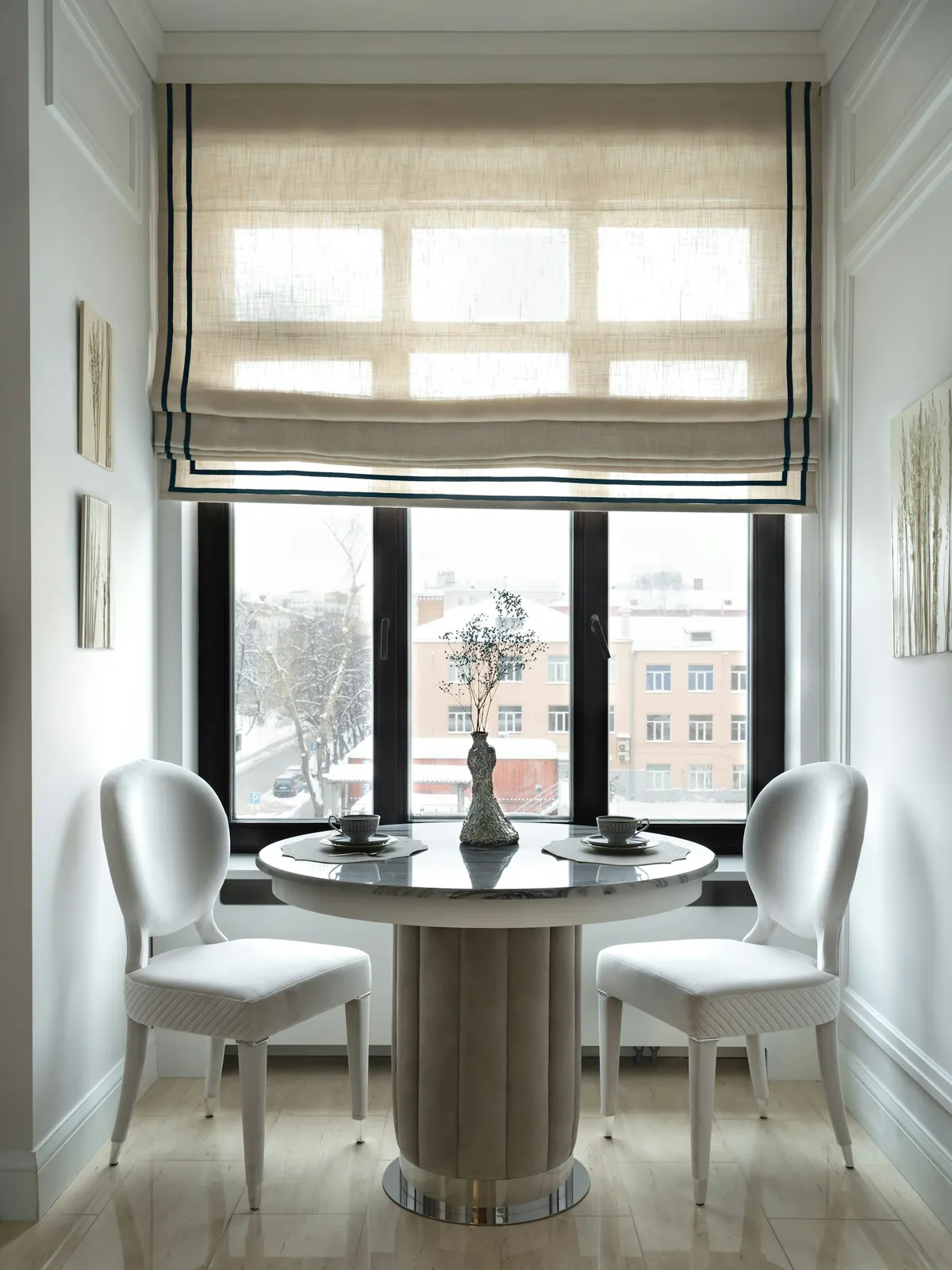
Kitchens and back rooms
A light flat fold lets morning sun glow through and stays tidy above a counter.
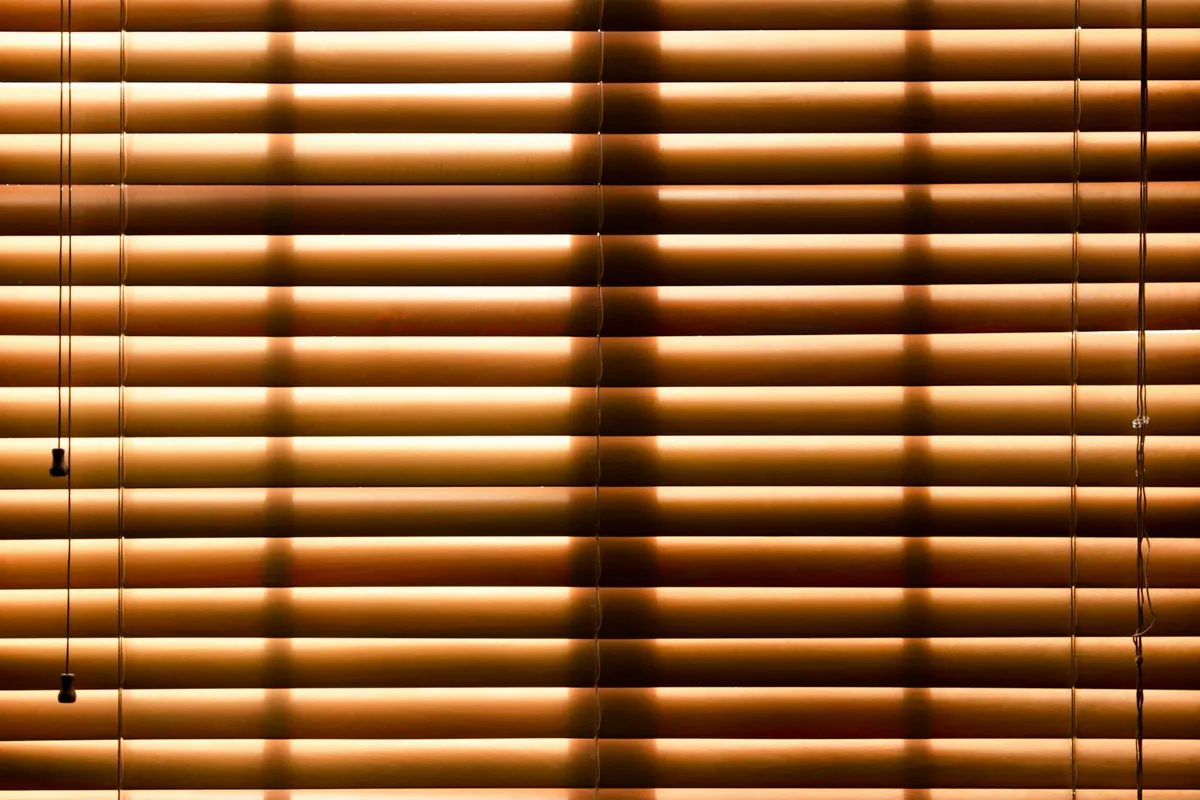
Blinds where fabric would struggle
Bathrooms and busy kitchens can suit a blind better. We make those too.
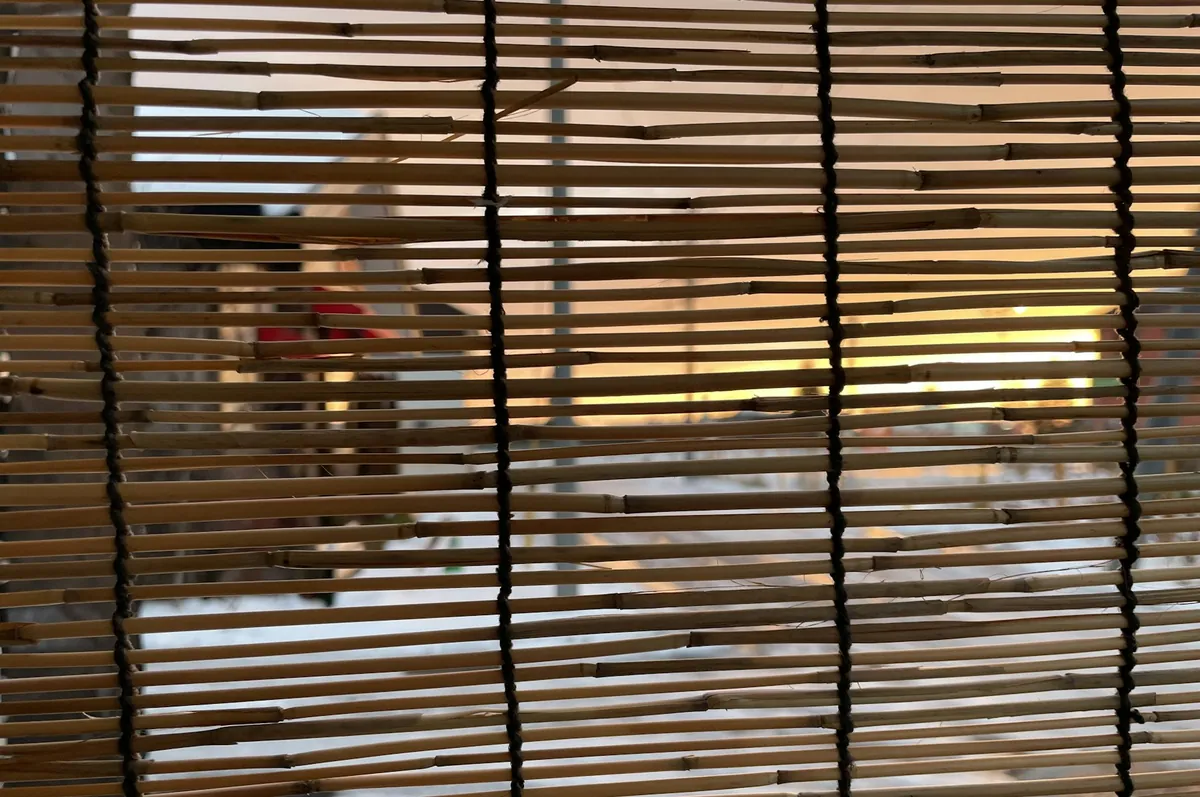
A woven alternative
A woven wood shade folds much like a roman shade, with texture in place of cloth.
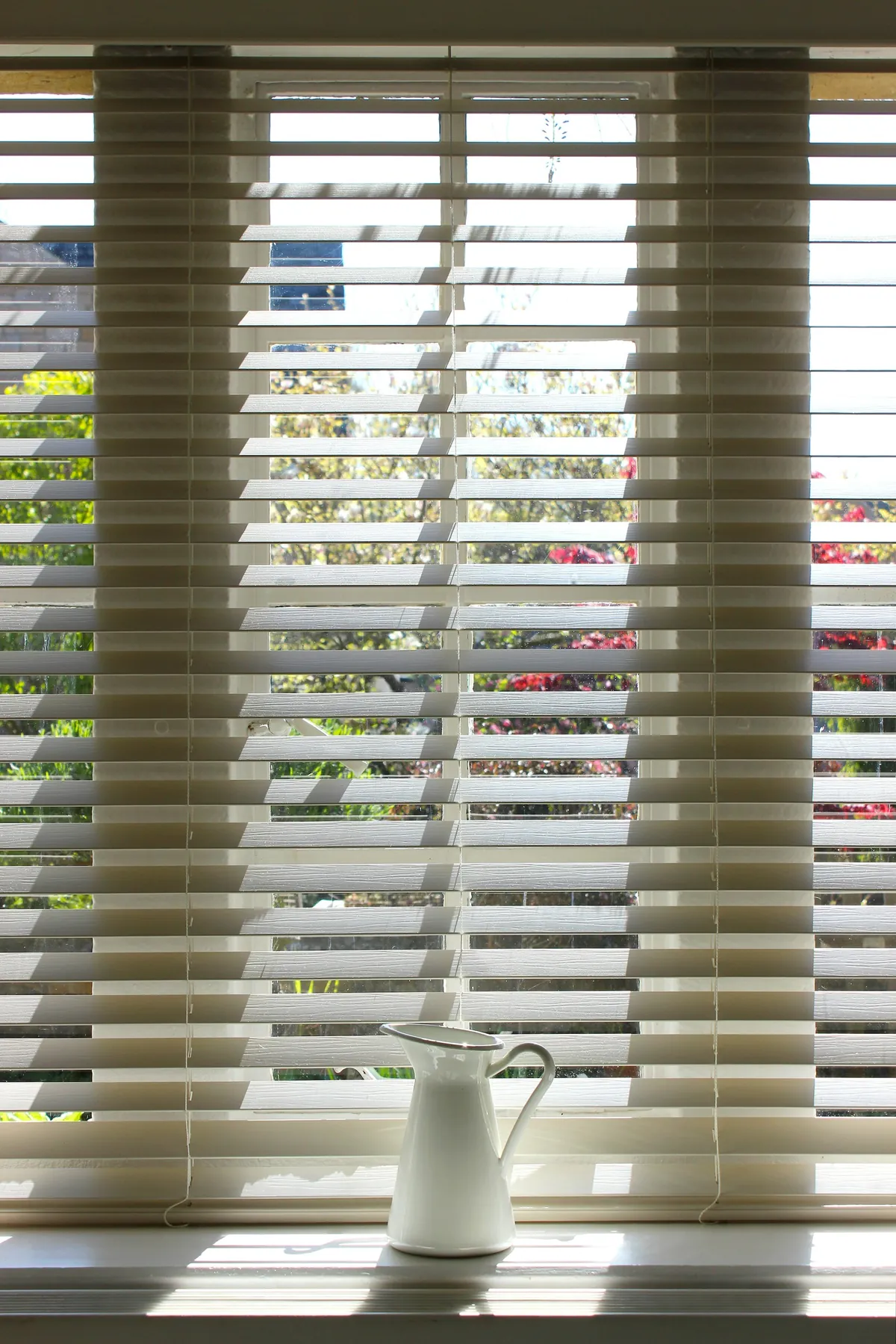
The Norman range
Norman blinds, shades and shutters are on display in our showroom.
Three Constants on the East Side
Every East Side job starts with the same three questions, and the answers shape the shade before any fabric is chosen.
Tall sash
A tall window needs a long shade, and a long shade has more fabric to gather when it is raised. On a flat fold the pleats stack neatly; on a hobbled fold, the tiers are fuller and the stack is deeper. On a very tall sash we plan the raised height so the folds sit over the head of the window rather than across the upper glass, and the room keeps its light when the shade is up. A long shade also carries more weight, so fabric choice matters: a mid-weight cloth hangs cleanly over a long drop without being heavy to lift.
High ceilings
High ceilings leave a band of wall between the top of the window trim and the cornice. A roman shade can use that space. Fixed on the wall above the trim, the shade raises clear of the window entirely, and lowered, it makes the window look taller than it is. In a room with a dramatic ceiling, a hobbled fold in a rich fabric hung high gives the window a presence that suits the room. Where the trim itself is the feature, we fit the shade inside the frame instead and leave the full trim on view.
Historic-district review
Many East Side houses sit in historic districts, where the street front is watched carefully. A roman shade hangs inside the room, and from outside it is the back of the shade, the lining, that shows through the glass. Giving every street-facing shade the same lining colour and the same raised height keeps the front of the house even. A soft white or pale neutral lining usually sits best behind old glass. Any questions about what a district allows belong with the owner and the district; what we can tell you is exactly what will show from outside.
Victorians on Blackstone Boulevard and College Hill
The Victorians bring the most variety: bays, tall parlour windows, narrow windows beside a door, stair windows part way up a wall and sometimes a decorative upper sash.
Bays
A Victorian bay is a set of tall windows at angles to each other. Each window gets its own shade, made to its own size, and we match the raised heights so the folds line up around the bay. Lowered, the shades meet at the corners and wrap the bay in one fabric. A bay is often the best place in the house for a strong pattern, because it is a natural focal point.
Decorative upper sash
Where a window has a decorative upper sash, coloured glass or a pattern of small panes you want to keep in view, the shade can be fixed to stop below it, covering the plain lower glass and leaving the upper sash to be seen. We look at each window and talk about what you want on show before deciding where the shade sits.
Fabric for a Victorian room
Victorian rooms carry richer colour and pattern well. A damask-style pattern, a deep solid or a velvet-like cloth suits a hobbled fold in a parlour or dining room. In bedrooms, a softer relaxed fold in a plain or small-patterned fabric balances the room’s height. Because drapery is our specialty, side panels can be added in a matching or contrasting fabric where the room calls for a full window treatment.
Hall and stair windows
The long stair of an East Side Victorian often climbs past a tall window on the landing, seen from the front door, the hall and the floor above. It is a window that rarely needs closing for privacy, so a shade there is mostly about softening the light and finishing the stair. An unlined flat fold, fixed where it can be reached from the landing, suits it. The fabric can echo the hall below or the bedrooms above, whichever the window is seen from most.
Colonial Revivals
The Colonial Revivals on the East Side are more ordered than the Victorians: symmetrical fronts, evenly spaced sash, often small-paned upper sash over a single lower pane, and sometimes a sunroom or sleeping porch to one side.
A matched set
Like any symmetrical house, a Colonial Revival front reads as a set. Shades inside each frame, raised to the same line and backed with the same lining, keep it orderly. A flat fold in linen, a stripe or a small check suits the clean lines of the rooms behind.
Where the upper sash is divided into small panes, it pays to plan the raised height carefully. A shade fixed above the trim can gather its folds clear of the glass, so with the shade up the whole pattern of panes is on show and the window keeps its character.
Sunrooms and sleeping porches
A sunroom or porch with windows on three sides gets sun most of the day. Several shades, one per window, let you follow the sun round the room. A lining protects the fabric in a room that bright, and a lighter colour shows fading less. For the very brightest rooms, roller shades can sit alongside roman shades elsewhere.
Studies and home offices
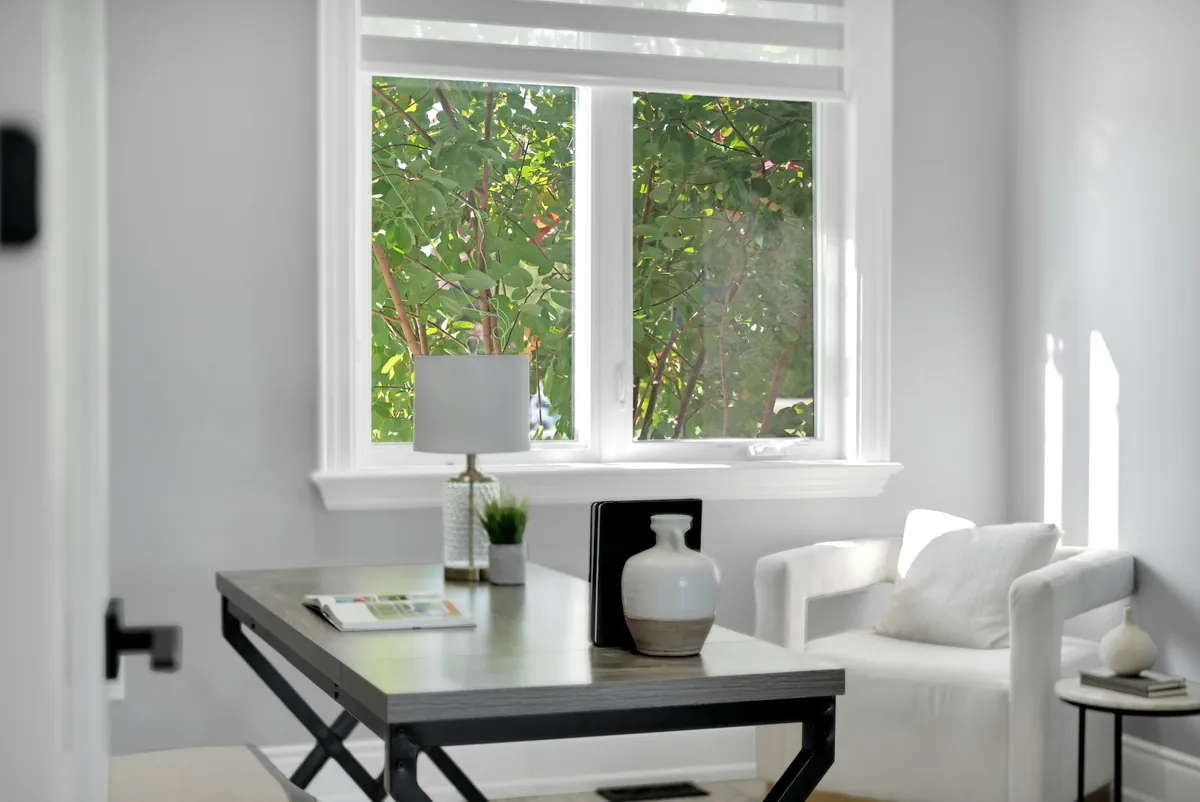
Many of these houses have a study or a small room off the hall that now serves as an office. Glare on a screen is the problem there. A light-filtering fabric lowered partway cuts the glare from the upper glass while keeping the room bright, and a flat fold stacks small enough to leave the window clear when it is raised.
Triple-Deckers in Federal Hill and Elmhurst
The triple-deckers of Federal Hill and Elmhurst are a very different job. Three flats sit one above the other, each with similar windows, and the houses stand close to the street and to each other. Many have a bay on the front of each floor.
Privacy on a close street
The front rooms of a triple-decker look out at the houses across the road, often at the same height. A lined shade, or a fabric with a close weave, keeps those rooms private in the evening. By day, a lighter cloth can stay lowered and still let a soft light into the room while blurring the view in from the pavement, which suits a flat that faces a busy street.
Three floors that match
If you own the building, the front of the house is seen as three rows of windows, one above the other. Shades with the same lining colour and raised height on every floor make the building look cared for from the street, even if each flat chooses its own fabric facing into the room. Choosing roman shades in Providence, RI for a whole triple-decker is a good case for planning the street side as one job.
Hard-working rooms
Triple-decker rooms are lived in hard: kitchens that are also dining rooms, bedrooms that face the street, small back rooms over a yard. A flat fold in a durable cloth suits that use. In the back rooms, where privacy matters less, an unlined shade in a light fabric keeps a small room bright.
The front bay on each floor
Where a triple-decker has a bay on the front of each floor, the bay is the main window of the flat and usually lights the living room. Three narrow windows set at angles each take their own shade. In a rented flat, a plain flat fold in a hard-wearing, lined fabric is the sensible choice; in an owner’s flat, the bay is a good place to bring in pattern. Planned together, roman shades in Providence, RI for a triple-decker bay can give each floor its own character inside while the bays still match one above the other from the street.
Matching Cloth to an East Side Room
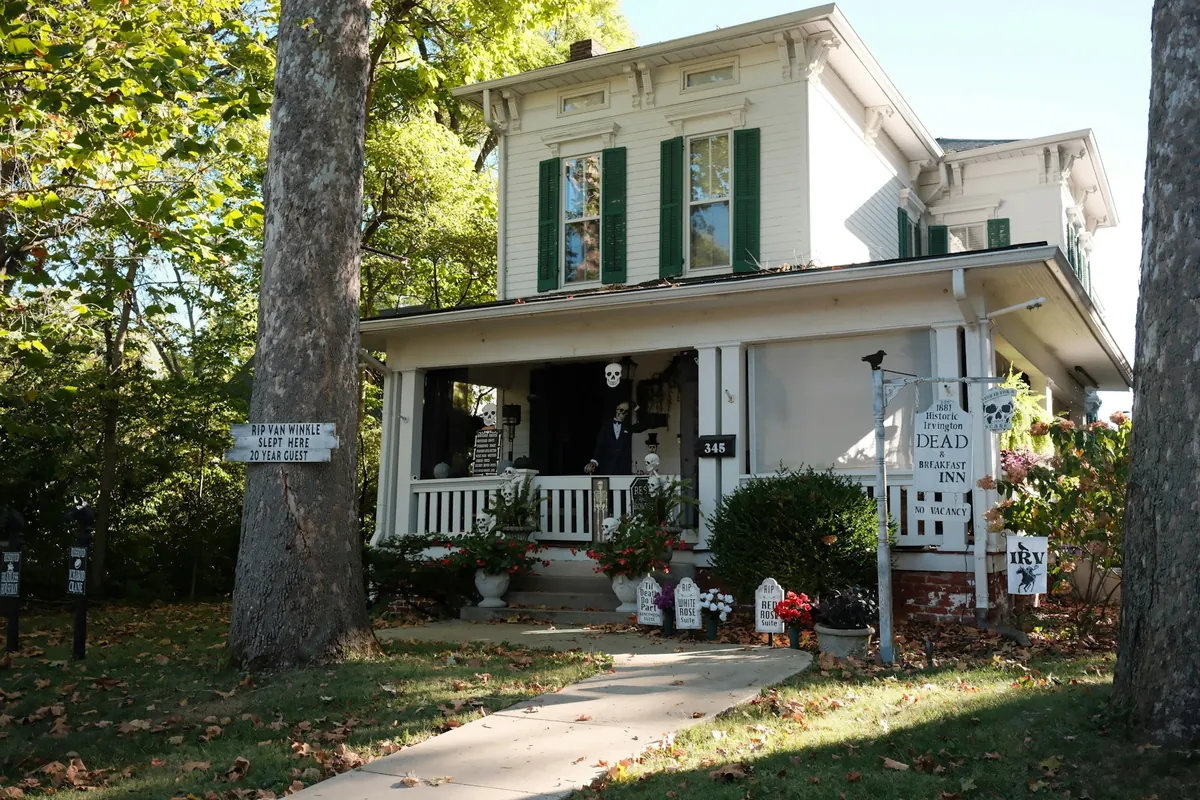
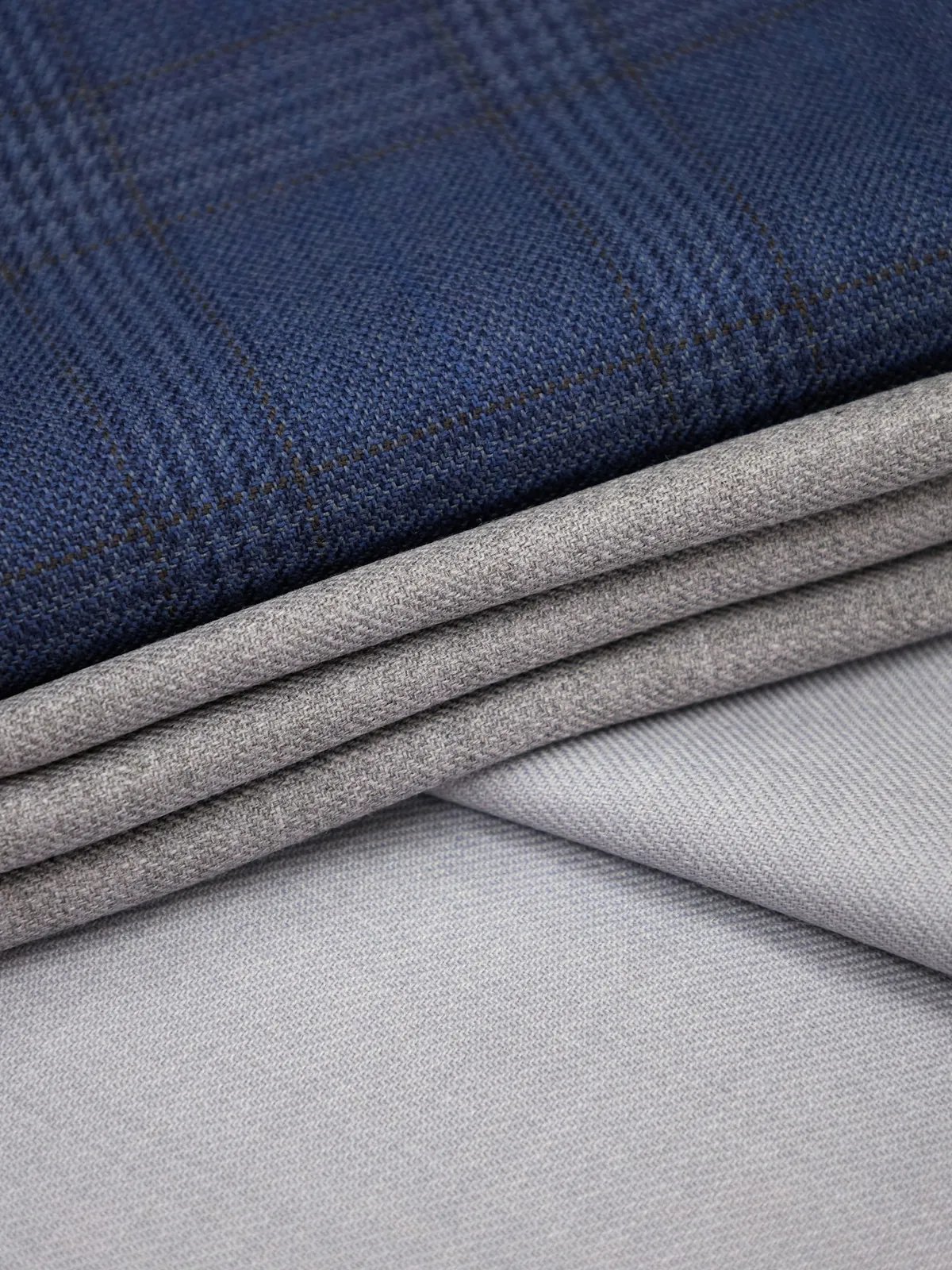
Picking the fabric is the most enjoyable part, and on a tall window it is also the part with the biggest effect. Linen and cotton give a crisp, pressed look that a flat fold shows off. A heavier weave or a cloth with a soft hand, the kind that drapes over your arm, gathers into deep hobbled tiers. A relaxed fold, with its easy curve at the hem, forgives a fabric with some movement in it. Lining is the other half of the decision. Behind a long shade on a sunny street front it protects the face cloth, adds weight so the folds fall straight, and closes the room off at night. In a back bedroom of a triple-decker, the same lining keeps out the early light.
Proportion on a long window
A tall window can take a bolder pattern than a small one, because the fabric is seen at full length. A large-scale print that would crowd a cape’s bedroom window can look right on an East Side parlour sash. Stripes are worth a thought too: running vertically, they stretch a window that is already tall; running across, they settle it. We hold fabrics up at length in the showroom so you can judge the scale before ordering roman shades in Providence, RI for a big room.
Rooms that open into each other
East Side houses often have a front and back parlour joined by a wide opening, or a hall that runs past both. When rooms are seen together, the shades in each should sit well side by side. The same fabric in both rooms is the simplest answer; a solid in one and a pattern that shares its colour in the other is a livelier one. Either way, the raised heights should match across the opening.
From Your Call to Hanging Day
You hear from us at each stage, and nothing moves forward without your say.
- Tell us about the house, East Side or triple-decker, through the call button or the form.
- One of our specialists visits to measure, recording each sash height, the wall space up to the cornice and any coloured or patterned upper glass.
- At the Swansea showroom you settle fabric, fold and lining room by room, and a lining colour for the street front.
- Your quote arrives with every window itemised.
- Each shade is made to the Providence measurements.
- Installation day: our team hangs every shade, runs it through its full travel and checks the stack sits square at the top.
Keeping a long shade clean
On a long shade, dust settles on the top of each fold. A soft brush worked from the top down, or a vacuum’s upholstery tool on its gentlest setting, lifts it before it builds up. Treat any mark by dabbing, never scrubbing, and try it first somewhere out of sight. Long shades should not go in a washing machine, since shrinkage over a long drop shows badly; a professional fabric cleaner is the safe choice.
Other windows in the house
An East Side house or a triple-decker will usually mix treatments, with blinds in a bathroom or shutters in a kitchen. The city’s full range is on our window treatments for Providence page, and the roman shades service page explains each fold and fabric.
The Store Behind Your Shades
Window Works is a family-run window treatment store in Swansea, open since 1988 and now in the hands of the second generation. Making things from fabric, drapery above all, is what the store is known for, which is why roman shades sit so naturally in what we do. Over 37 years we have worked in homes all over the Massachusetts SouthCoast and the Rhode Island East Bay.
You deal with one experienced team: the people who measure your East Side sash are the people who install the finished shades. Warranties are offered on our products, and you will not be left wondering what is happening; we keep in touch right up to the end.
Fabric Is Easier to Judge at Full Length
A tall window shows a lot of fabric, and a swatch rarely tells the whole story. At the Swansea showroom, cloth can be unrolled to something close to a real drop, folds compared side by side and a lining held up to the light behind the fabric. If your house faces a historic street, a photo of the front helps us suggest a lining colour.
Questions from Providence
Can a roman shade work on a very tall East Side window?
Yes. We plan the stack so the folds sit over the head of the window and choose a fabric that hangs well over a long drop.
Should the shade go inside the frame or above it?
Above the trim makes the most of a high ceiling and lets the shade clear the glass. Inside the frame keeps fine trim on show. We decide window by window.
What will show from the street in a historic district?
The lining. Every street-facing shade gets one lining colour and one raised height, so the front looks even.
Can I keep a decorative upper sash in view?
Yes. The shade can be fixed to stop below the decorative sash and cover only the plain lower glass.
Can you do every floor of a triple-decker?
Yes. We often plan the street side as one job, with matching linings and heights, while each flat chooses its own room-side fabric.
Start the Conversation
Whether it is one tall parlour window on College Hill or three floors in Elmhurst, the first step toward roman shades in Providence, RI is a free quote. The call button connects you with the store in Swansea to arrange a measuring visit at your home or ask how installation goes. You can write to us with the form instead. To start with the fabric, find the showroom through the contact page. Window Works holds a 5.0 rating on Google.