
Rooms Built Around the Water
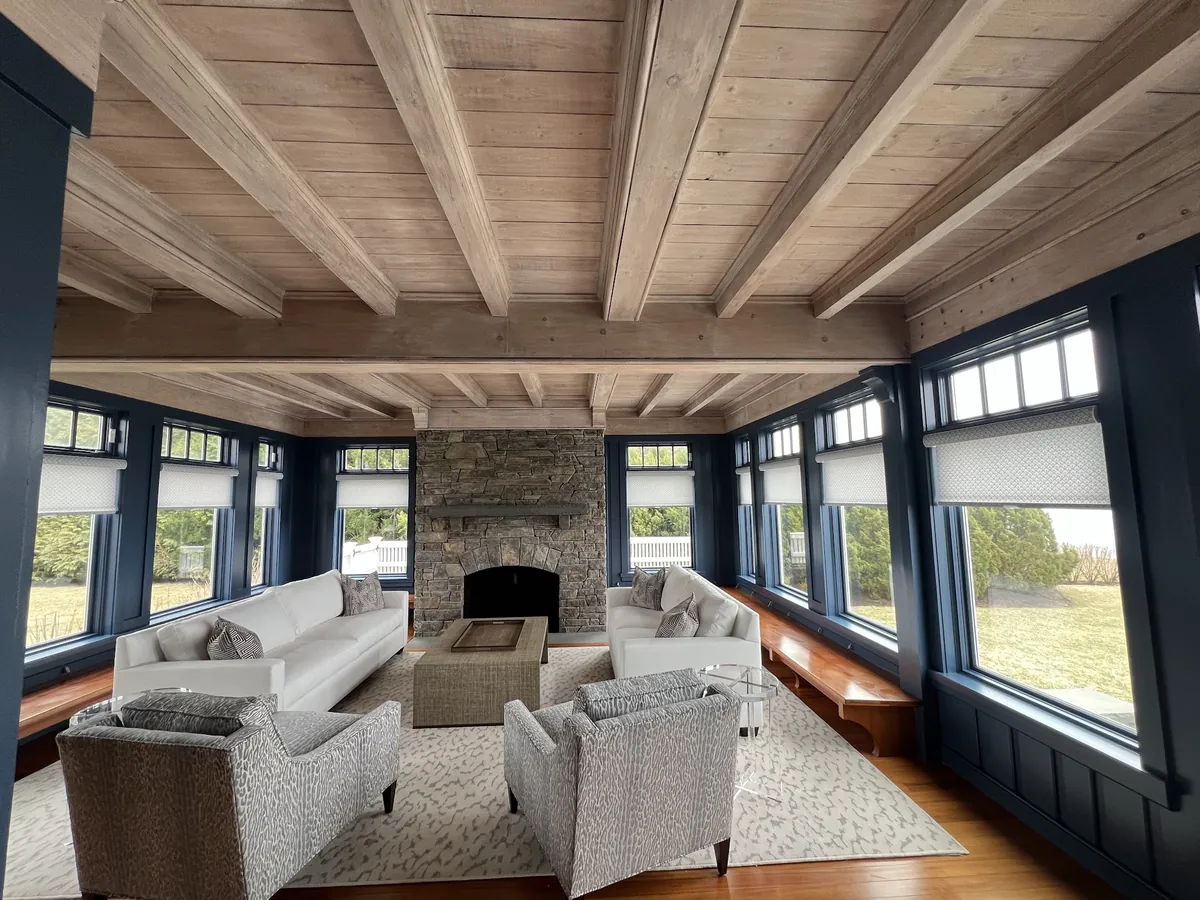
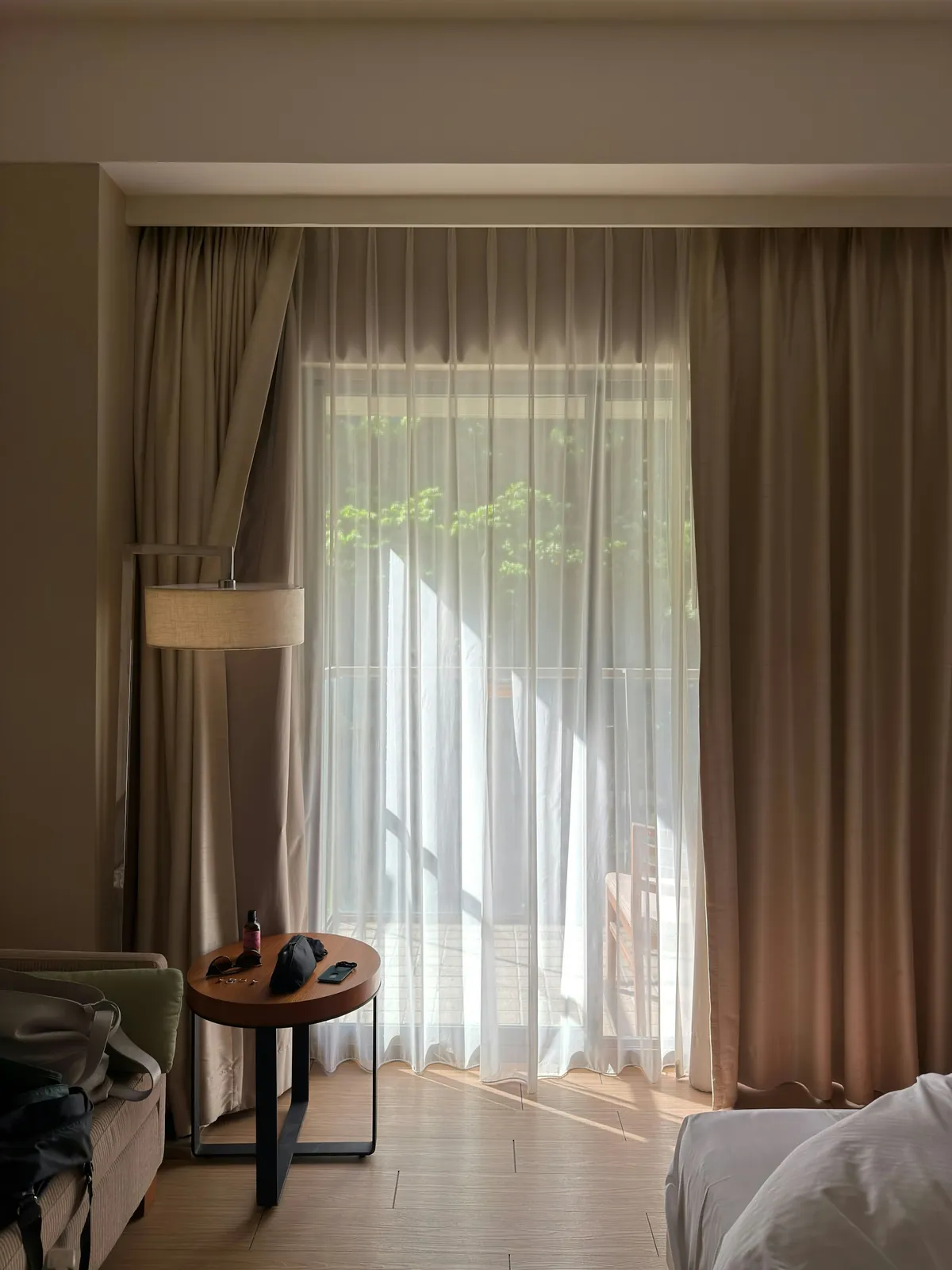
In the newer houses toward Horseneck and along the Westport River, the main rooms were designed for the view, so the glass takes up most of the wall. That is lovely until the sun drops toward the water and every pane turns bright at once. Motorized blinds in Westport, MA let you bring those shades down from a remote or a switch by the door, then send them back up when the glare has passed, without walking the room window by window.
Inland, along Main Road, the shingled capes and farmhouses are a quieter case. Their windows are smaller and spread through older rooms, with the odd one set high in a gable or tucked behind a built-in. A motor is not needed on every one of them, but on the windows that are a reach it makes daily use simple.
Coastal exposure decides a lot here. Salt air drifts well inland on a breezy day, so the fabric and the finish on each shade are chosen with it in mind before any motor is added.
- Remote or wall-switch operation, room by room
- Fabrics picked for sun and sea air
- Measured at the house and fitted by our installers
What a Motor Does for a Westport House
The harbour-side wall
A run of tall view windows where every shade can be lowered as the sun swings over the water, without a walk from pane to pane.
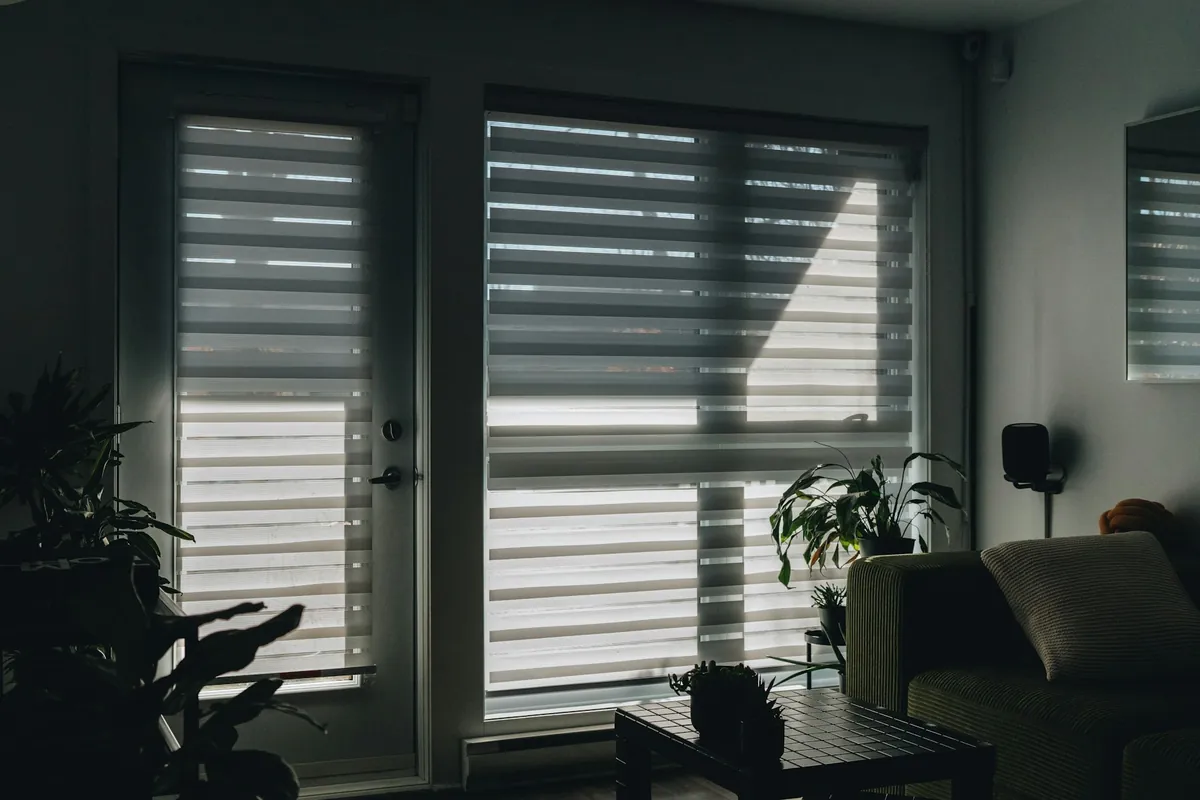
Glass doors to the deck
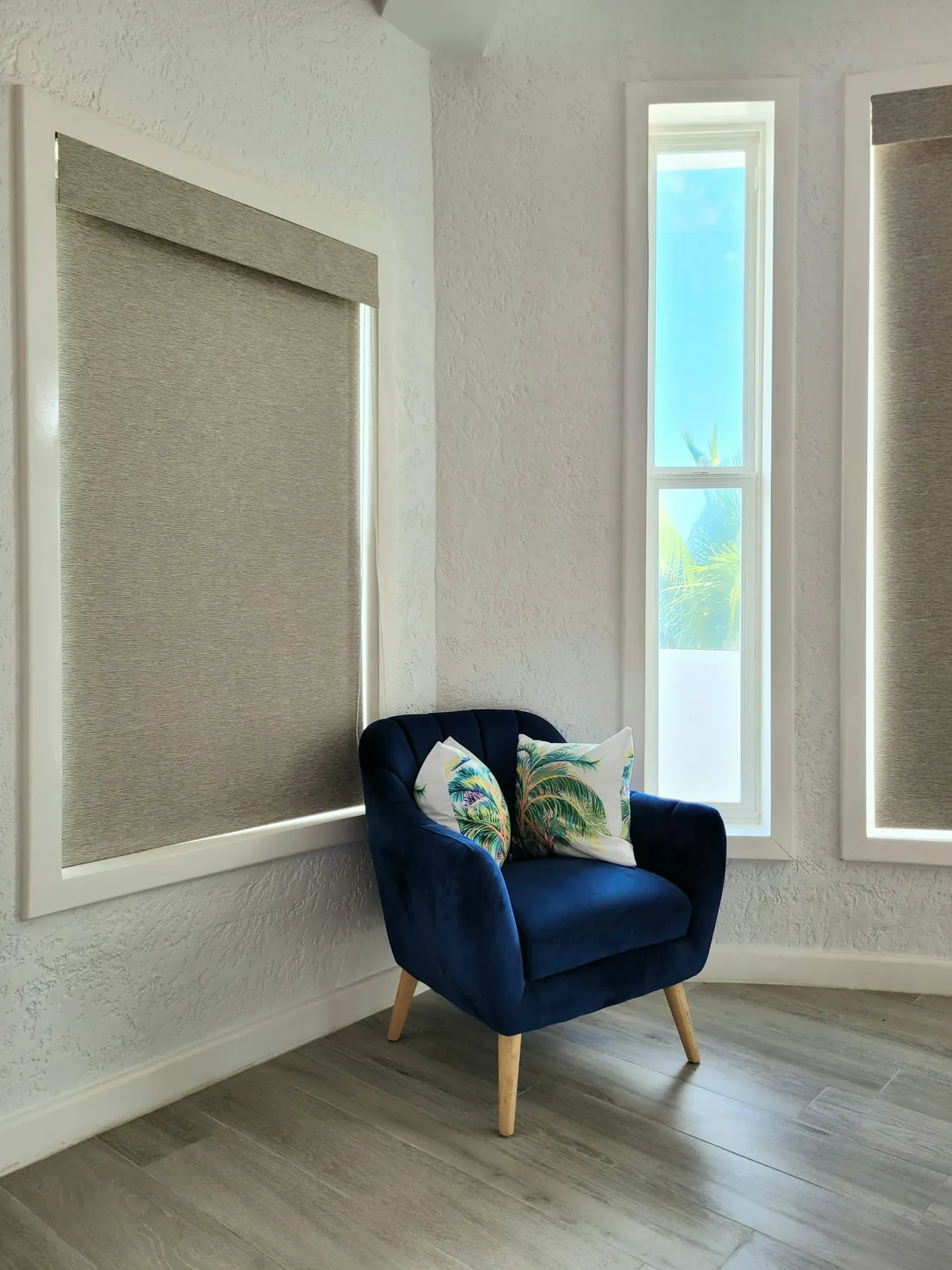
Doors that open onto a deck or a lawn, covered by a shade that stays clear of the handles when it is raised.
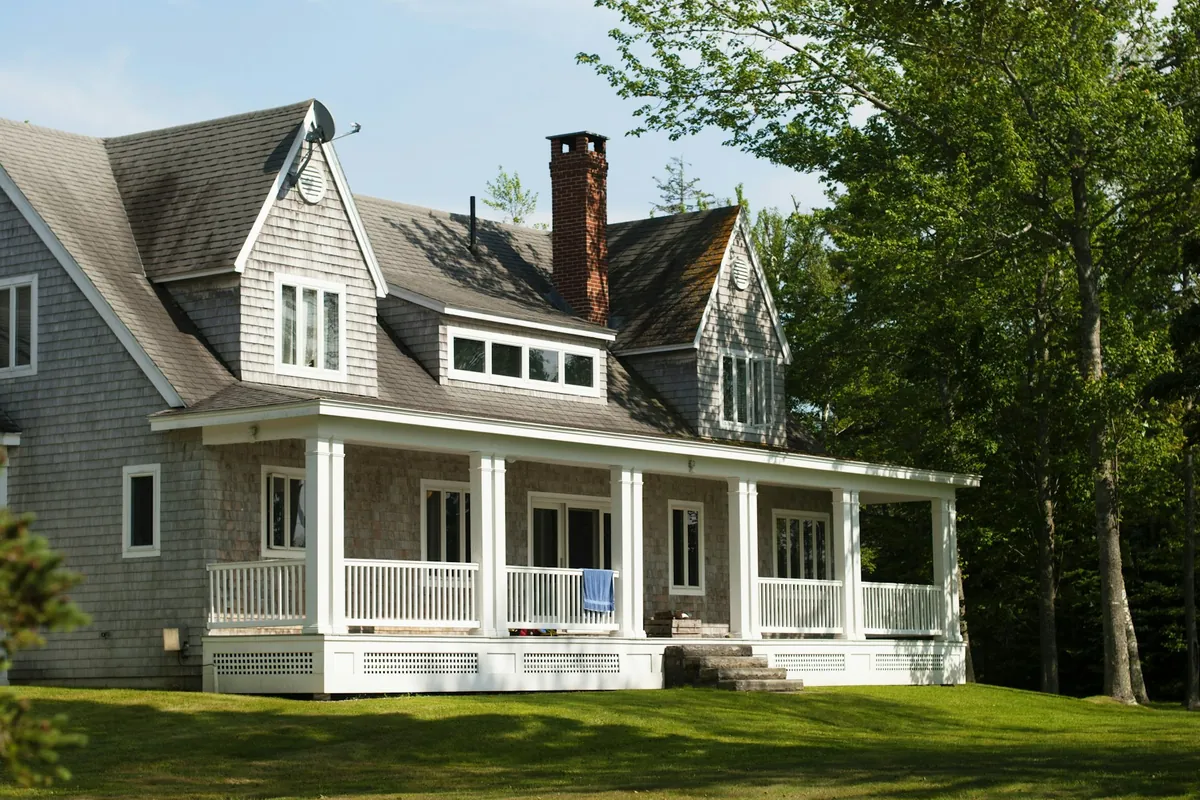
Gable and loft windows
The high window in a farmhouse gable or over a stair, finally dressed because you no longer have to climb to reach it.
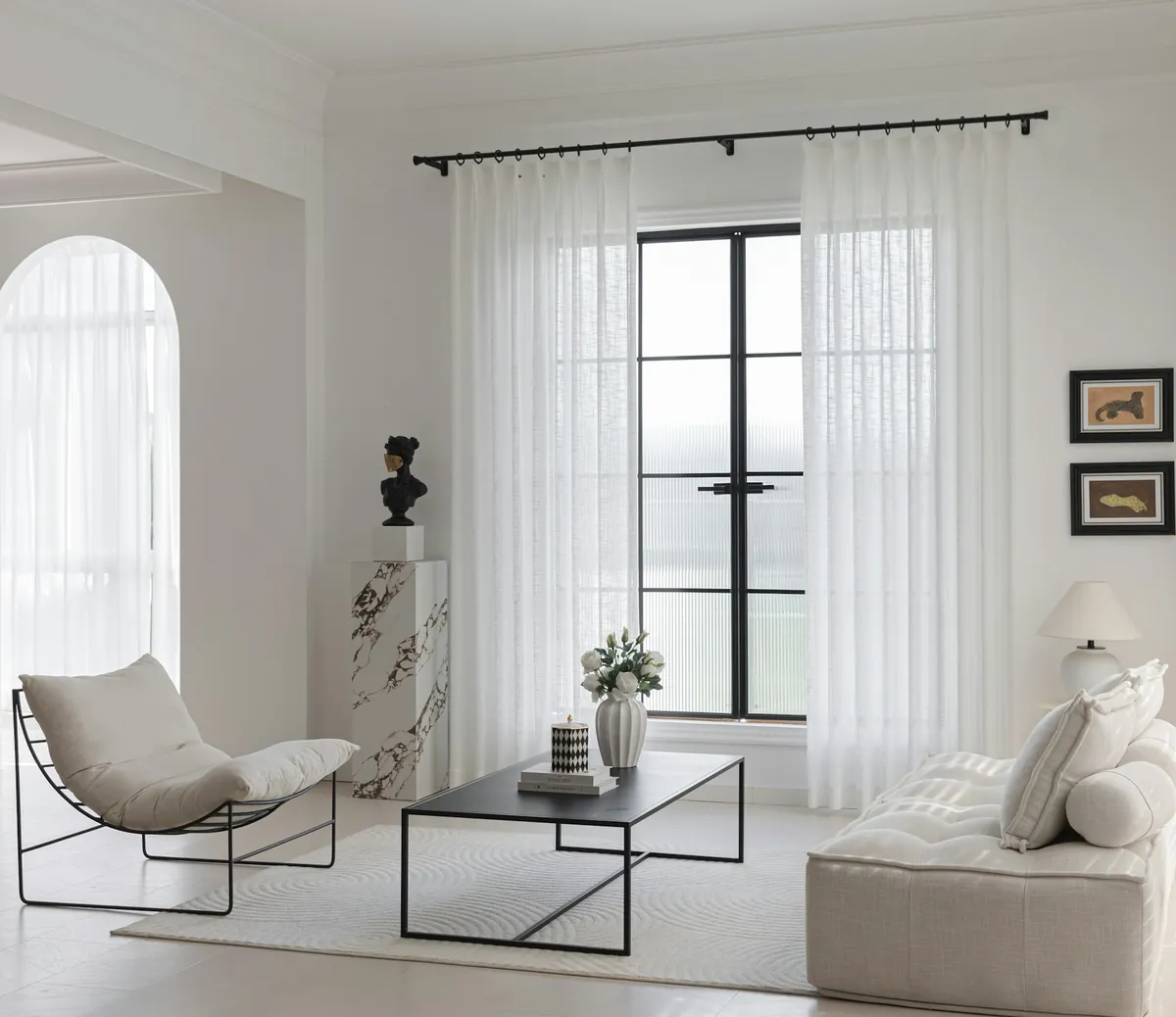
A remote by the chair
Soften the light from where you are sitting when a boat goes by or the evening sun lands on the screen.
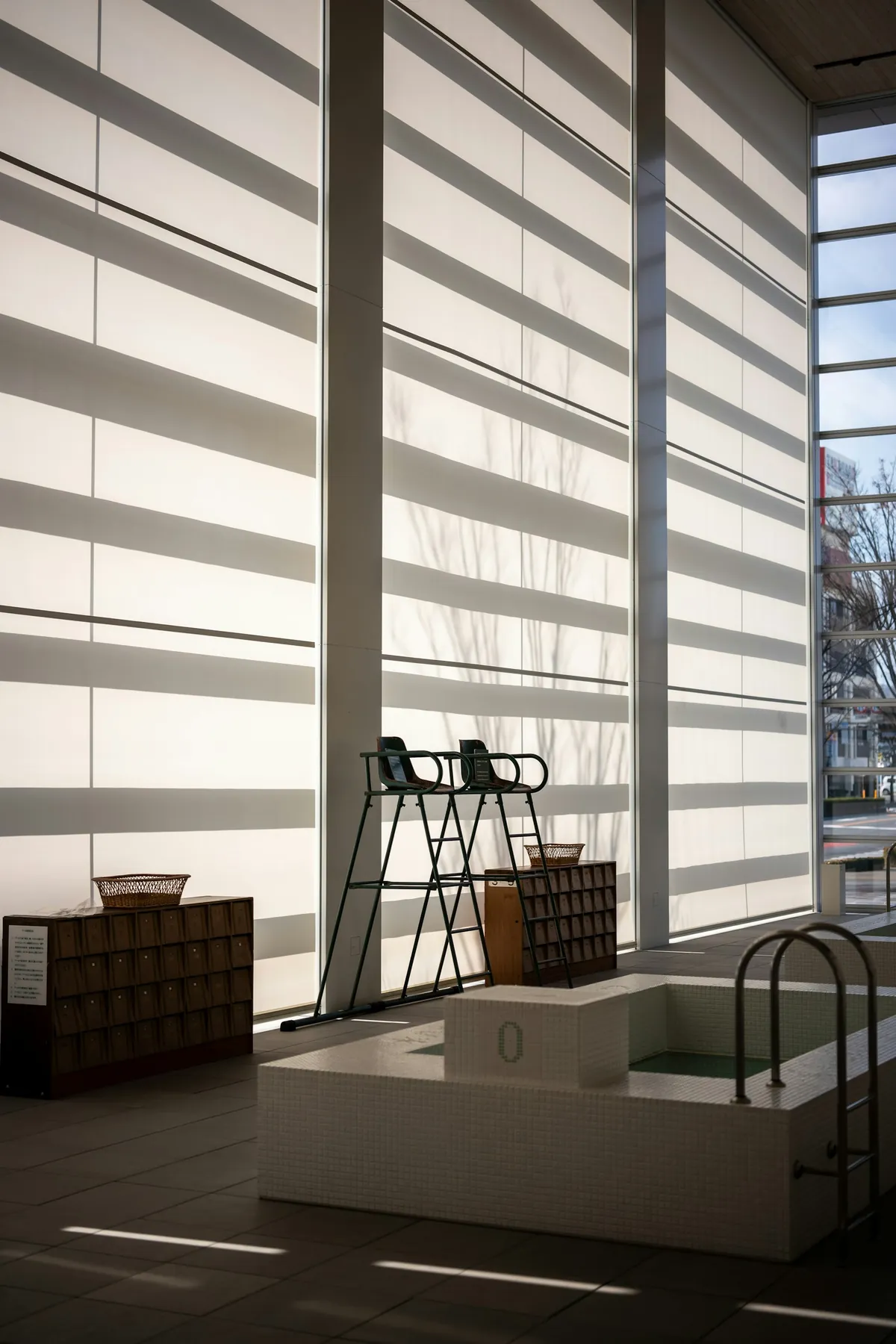
A switch at the door
A plate on the wall, like a light switch, so a bedroom or sitting room closes up as you walk in.
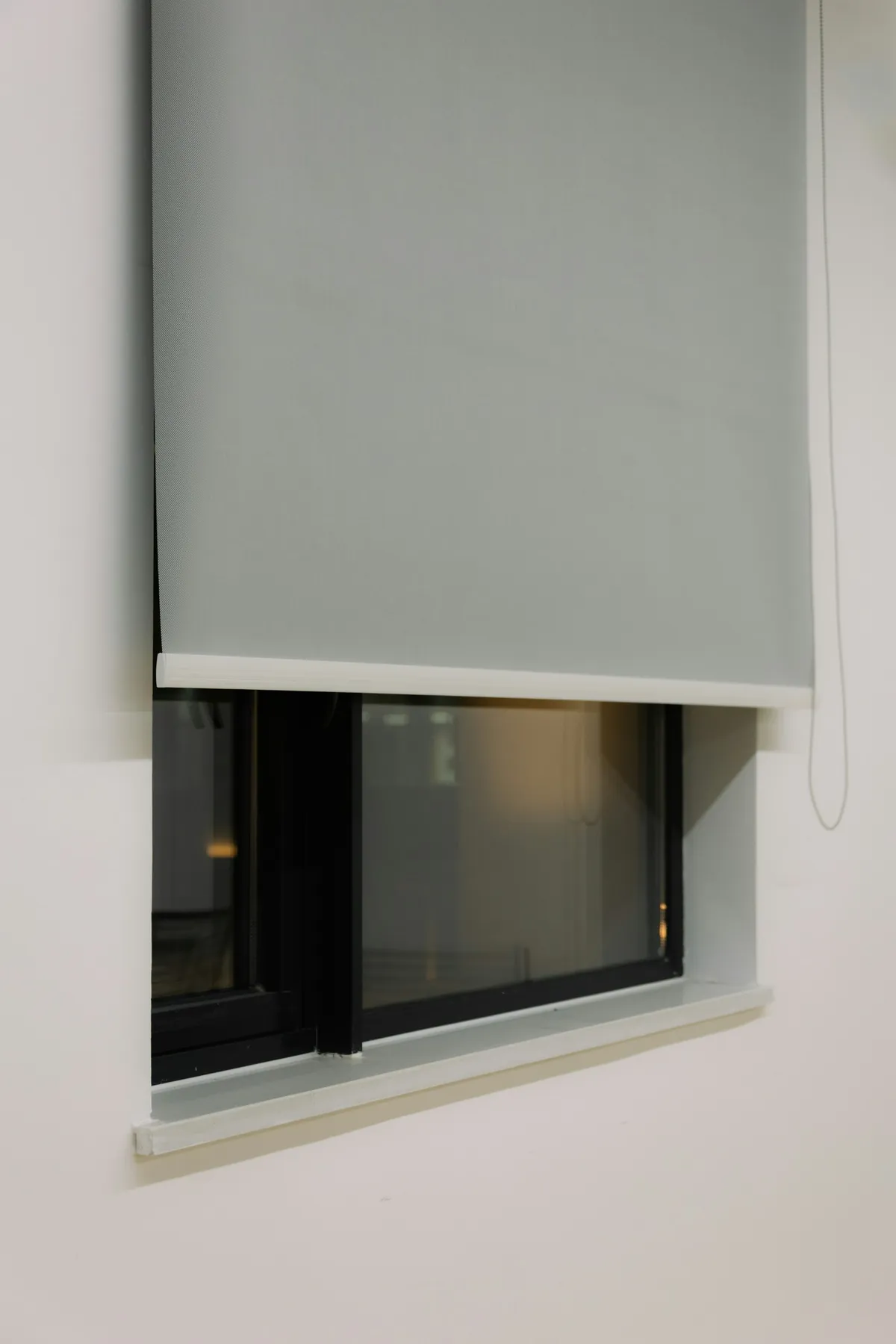
Salt-aware materials
Fabrics and finishes that suit a house near the shore, with the motor hidden in the headrail above.
The Coast Comes First
Any talk of motorized blinds in Westport, MA has to start with the setting. Salt air is the governing factor in town, and it reaches further from the shore than most visitors expect. A shade that hangs at a harbour window for years has to put up with strong sun off the water, damp mornings and the salt that settles on every surface near the glass. So before we talk about remotes and switches, we talk about what the shade itself is made of.
On the measuring visit we look at which way each room faces, how close it sits to the water and how open it is to the weather. A sitting room facing Horseneck with no trees in front takes a very different beating from a back bedroom on Main Road shaded by an old maple. We suggest fabrics and finishes to match, and you can see and handle them at the Swansea showroom before you decide. The motor goes on afterwards, on the windows where it will help.
Harbour-facing rooms and the view
The larger houses toward the river and the beaches tend to have one great room on the water side, with tall windows or glass doors across most of it. Those rooms were built around the view rather than the wall, and the last thing anyone wants is a heavy treatment that hides it. That is where a powered shade earns its keep. Up, it rolls away to a slim headrail and the view is untouched. Down, it can soften the low sun without shutting the water out, if you choose a fabric with some openness.
The pattern of light in these rooms changes through the day. A view window that is pleasant at noon can be blinding an hour before sunset, when the sun sits on the water and bounces straight in. With motorized shades, adjusting for that is a press of a button rather than a tour of the room, so the shades actually get used, and the floors and furniture by the glass are spared the strongest light.
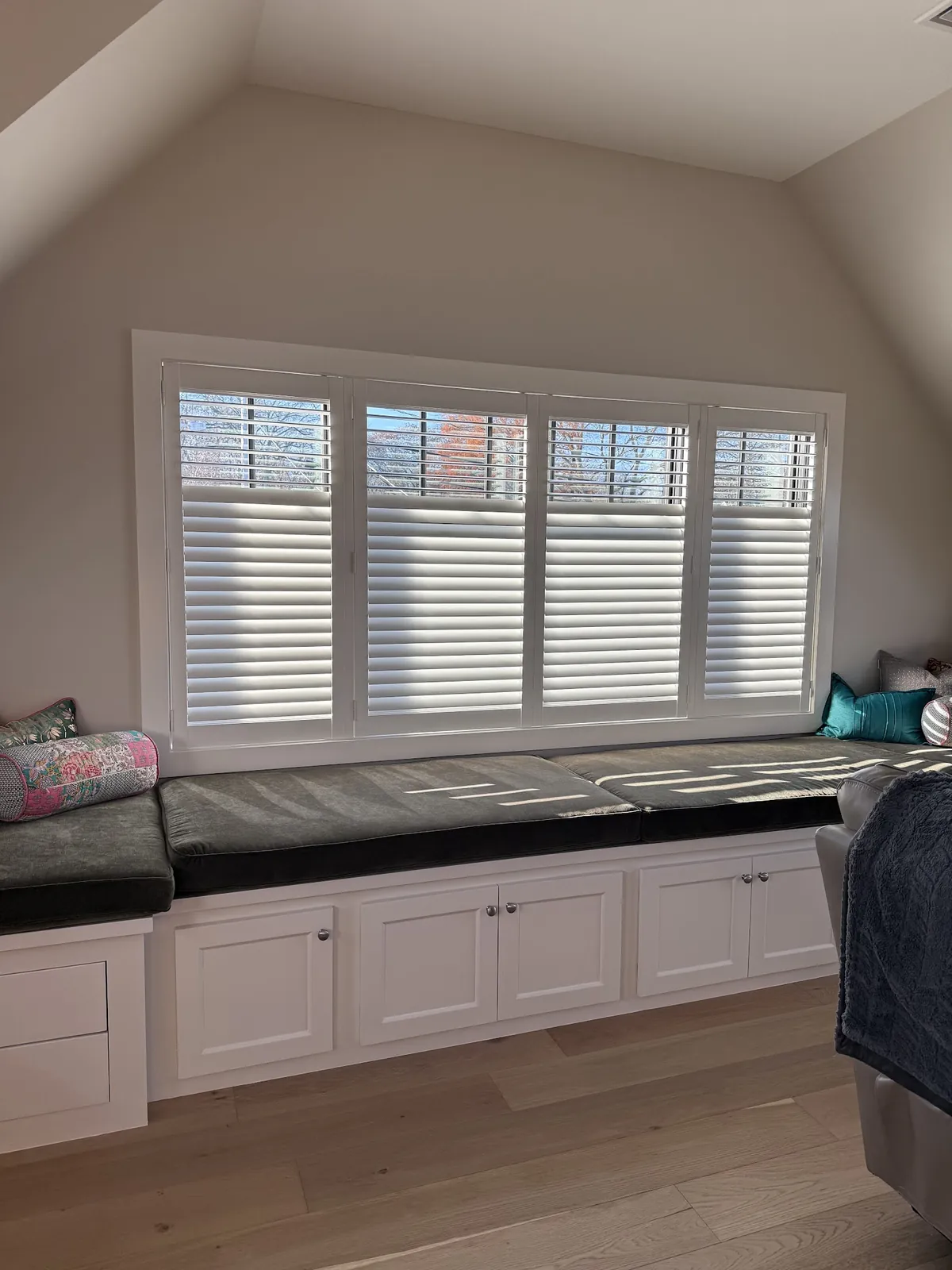
Many of these rooms also open onto a deck or a lawn through glass doors. A shade on a door has to clear the handle when it is raised and stop short of anything on the floor when it is lowered, and on a door that is used all day in summer a hand-pulled shade is constantly in the way. Powered, it can be sent up out of the way in the morning and brought down at night without anyone fiddling with a cord beside the latch. We measure each door with the handle and the swing in mind, so the shade sits clear of both.
Shingled capes along Main Road
The capes along Main Road are a different kind of job. Their windows are smaller and more regular, set into thick old walls, and most of them are easy enough to reach. A few are not. Upstairs, the dormers sit at the back of a small alcove under the roof, often with a bed or a chest of drawers right beneath. Downstairs, a window over a deep kitchen counter or behind a window seat can mean leaning across something every time you want to change the light.
Those are the windows worth powering in a cape. The rest of the house can keep ordinary controls, and if the fabric and colour match, nobody can tell which is which from the road. We check the space above each powered window carefully, because older cape windows often have little room between the top of the glass and the ceiling, and the headrail has to fit there neatly.
Farmhouses with a window out of reach
The farmhouses along Main Road and its side roads tend to have taller ground-floor windows and, in some, a window high in a gable end or over a stair landing. Those top windows are usually left bare, simply because covering them by hand is such a nuisance. With a motor, they can finally be dressed, and run from a switch at the foot of the stairs. A shade there takes the glare off a landing in summer and gives the stairway some privacy at night.
Farmhouse rooms also tend to have windows on more than one side. A kitchen might face the road on one wall and the fields on another. Powering the windows that catch the hard afternoon sun, and leaving the others by hand, is often the sensible balance.
Very large shades on the newer view windows
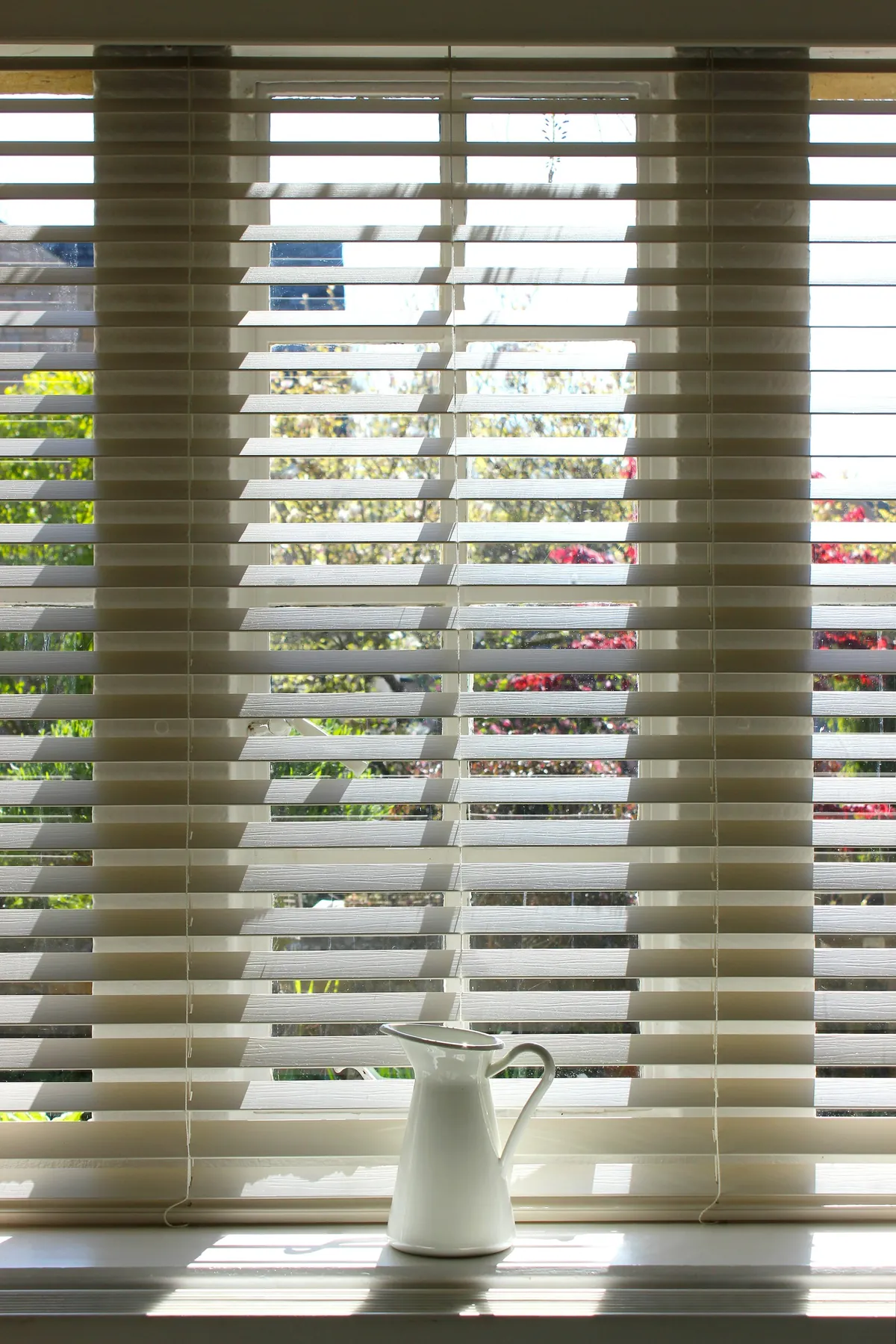
The bigger houses toward Horseneck often have view windows far wider and taller than anything on Main Road. A single shade across a window like that is heavy, and lifting it by hand means a long cord or a stiff pull every time. That effort is the reason so many big view shades are left halfway all summer. A motor takes the weight out of it. The shade rises evenly from end to end, stops where you want it and comes down square, and it behaves the same way every time you use it.
Where one opening is too wide for a single shade, we split it into two or three shades that line up at the top and bottom, so the wall still reads as one piece. Each section is made to its own measured width, and the motorized ones can sit beside hand-operated ones in the same fabric if only part of the wall needs power.
After dark on the water side
A harbour window works the other way round at night. Once the lamps are on, a wall of glass that framed the river all day becomes a lit stage that anyone on the water or the road below can see straight into. Closing a long run of shades by hand at dusk is exactly the chore that gets skipped. With a powered shade on that wall, privacy is a matter of a remote in your hand on the sofa, and in the morning the view comes back just as easily.
How We Take an Order from Start to Finish
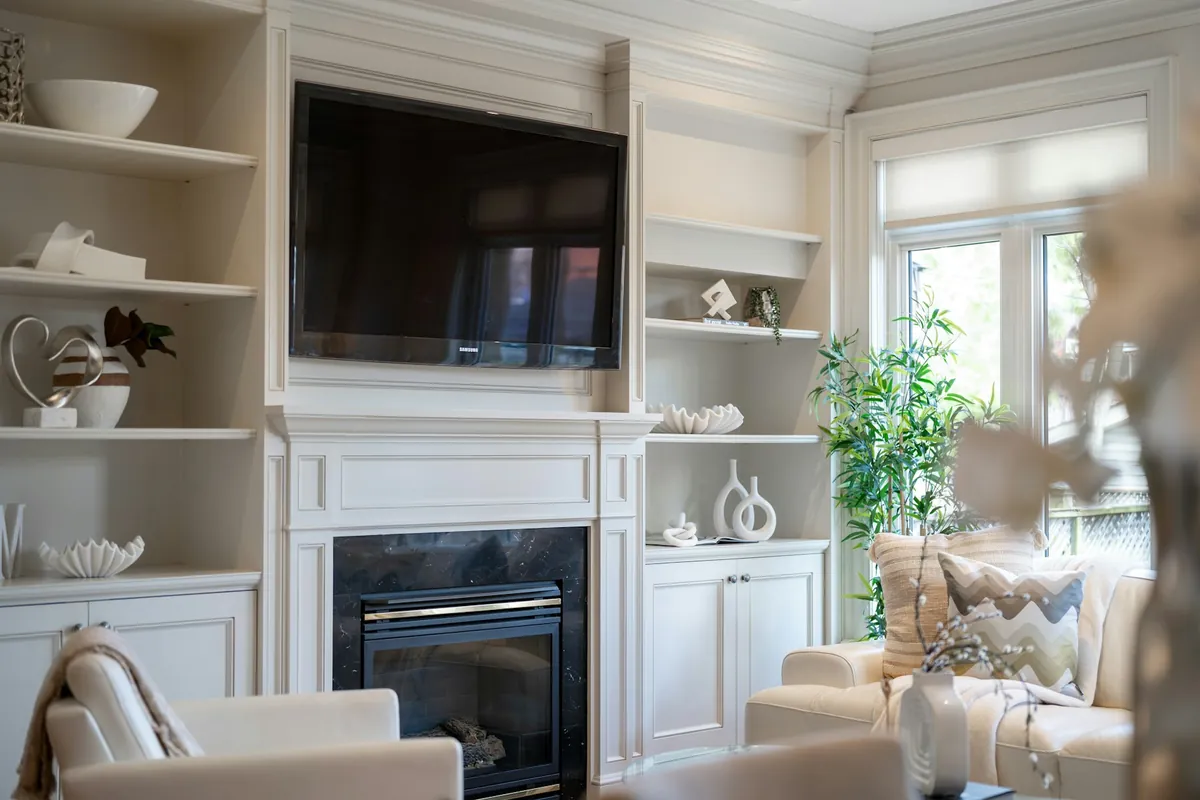
We keep in contact with you from the first call until the last shade is running, and the steps rarely change.
- Start with a free quote. Ring the Swansea store or fill in the form and tell us which rooms face the water and which windows are awkward.
- Come into the showroom if you can, to compare fabrics and finishes and try a remote and a wall switch for yourself.
- A specialist visits for measuring in your home, notes how exposed each window is and checks the room above the glass for the headrail.
- We agree together which windows get a motor and how each room will be run.
- Your quote lists every window, powered or not, so nothing is unclear.
- The shades are made to the sizes taken at the house.
- Our installers hang each one, set the controls and walk you through them before they go.
Remote, switch or both
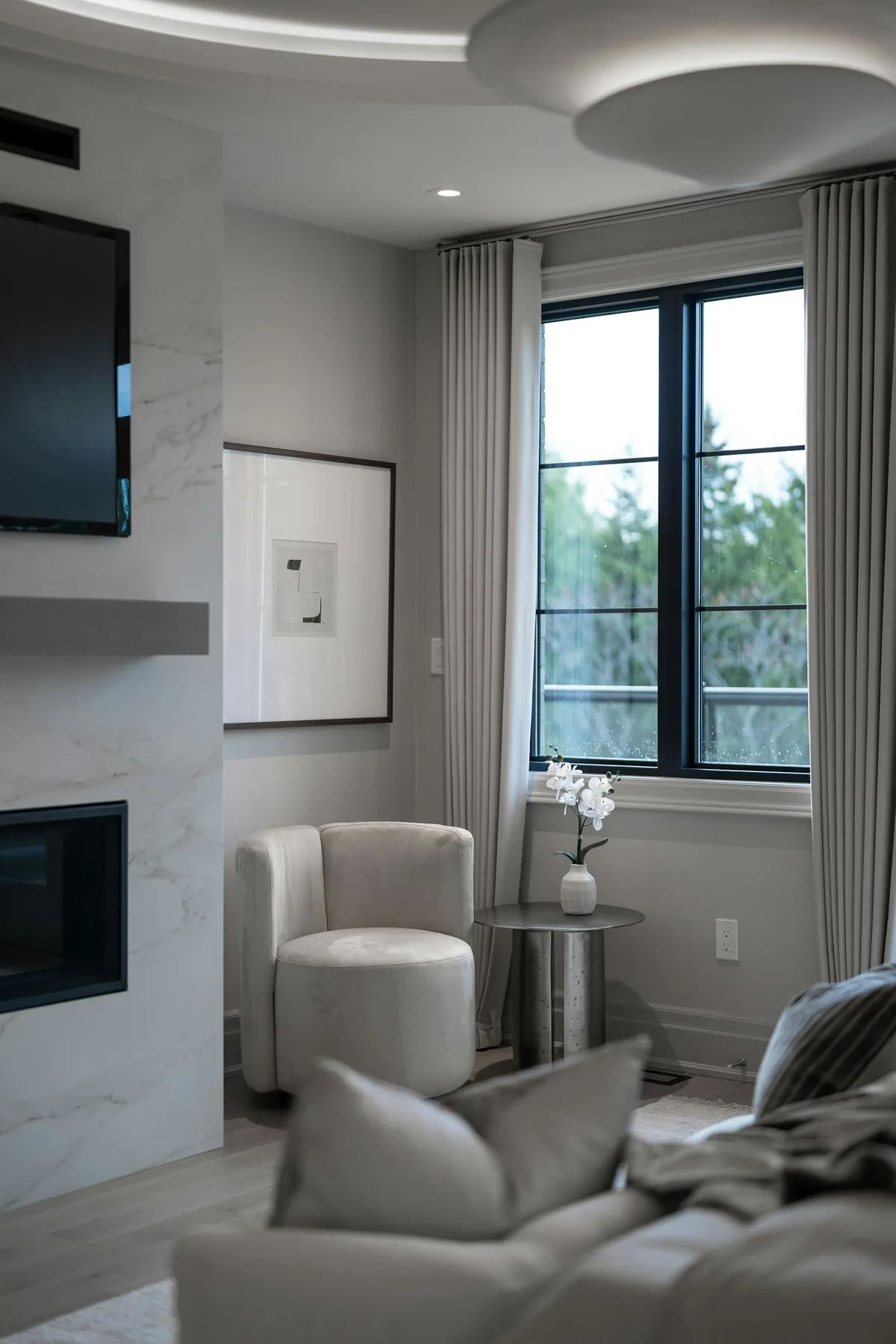
A remote makes sense in the rooms where you settle: the great room on the harbour side, the main bedroom, a den. Keep it by the sofa or on the nightstand and change the light as the sun moves. A wall switch makes sense in rooms you pass through, such as a front hall, a landing or a porch room you open up in the morning and close at night. The switch sits by the door, so the shades move as you come and go.
Some rooms end up with both: a remote by the bed and a switch by the bedroom door, for instance. We ask how each room is used before suggesting a control, so you are not left with buttons nobody touches.
Choosing fabric for sun and salt
The fabric is what you live with, so it deserves the most thought. On the water side, many people like a shade that cuts glare while keeping the view faintly visible, so the harbour does not disappear when the shades are down. In a bedroom, a room darkening fabric lets you sleep past sunrise in midsummer. In a sitting room that only needs privacy at night, a light filtering fabric keeps the room bright by day.
Near the shore, we also think about finish. Some materials shrug off damp and salt better than others, and hardware with a durable finish lasts better in a coastal room. Our roller shades in Westport and cellular shades in Westport pages show fabrics worth considering for a room by the water; we will tell you on the visit which styles can take a motor.
No cords at the glass
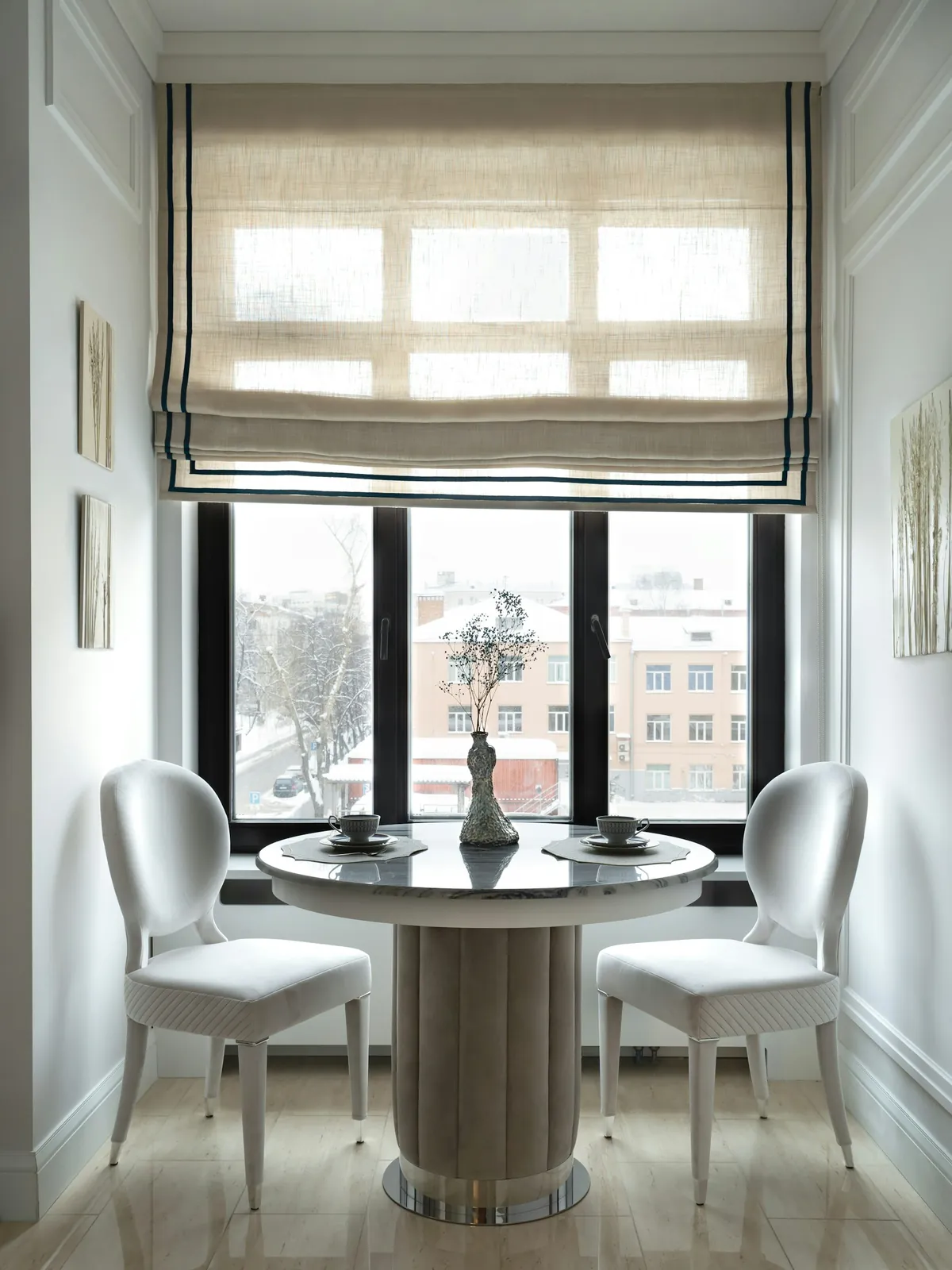
A powered shade has no lift cord hanging by the window. On a long harbour wall that would otherwise carry a cord at every pane, that alone tidies the room. It also removes something loose within reach of small children and pets, which matters in any house where small visitors come and go. Our guide to cordless blinds and child safety covers that side in more detail.
Things we check on the visit
Westport houses have their quirks, and a shade that moves on its own needs a clear path. On the measuring visit we note casement cranks, deep sills with shells or plants on them, doors that swing into the shade’s way and windows you leave open on summer nights, so the shade stops where it should. We also check for the space a headrail needs in older cape and farmhouse windows, which is often tighter than in the newer houses near the water.
Planning a whole house, one room at a time
You do not have to power everything at once. An order for motorized blinds in Westport, MA can start with the room that faces the water, with other windows following later. When they do, we match the new shades to the ones already up, so the house stays consistent. If some rooms suit a different treatment altogether, such as drapes in a dining room or shutters in a kitchen, we will say so. The window treatments for Westport homes page shows the full range for town, and the main motorized blinds page goes through the powered styles in general.
Keeping powered and hand shades in step
In a cape or farmhouse where only two or three windows get a motor, the rest of the house still matters. We keep the fabric, colour and lowered height the same across each face of the house, so from Main Road the front windows look like one set even though only some are motorized blinds in Westport, MA homes and the others run by hand. Inside, a powered dormer shade and a hand-operated one in the next bedroom can be identical apart from the controls, which keeps the upstairs calm and consistent.
Care in a coastal house
Powered shades need little care, but a house near the sea benefits from a routine. Dust the fabric lightly now and then, and wipe a slat or a headrail with a damp cloth where the material allows, which lifts any salt film before it builds up. Keep plants and furniture clear of each shade’s path. Run the shades you rarely use all the way up and down every so often, including the guest room ones in a summer house, so you notice early if one starts to move unevenly. If anything seems wrong, call the store and tell us which window it is.
What Sets Window Works Apart
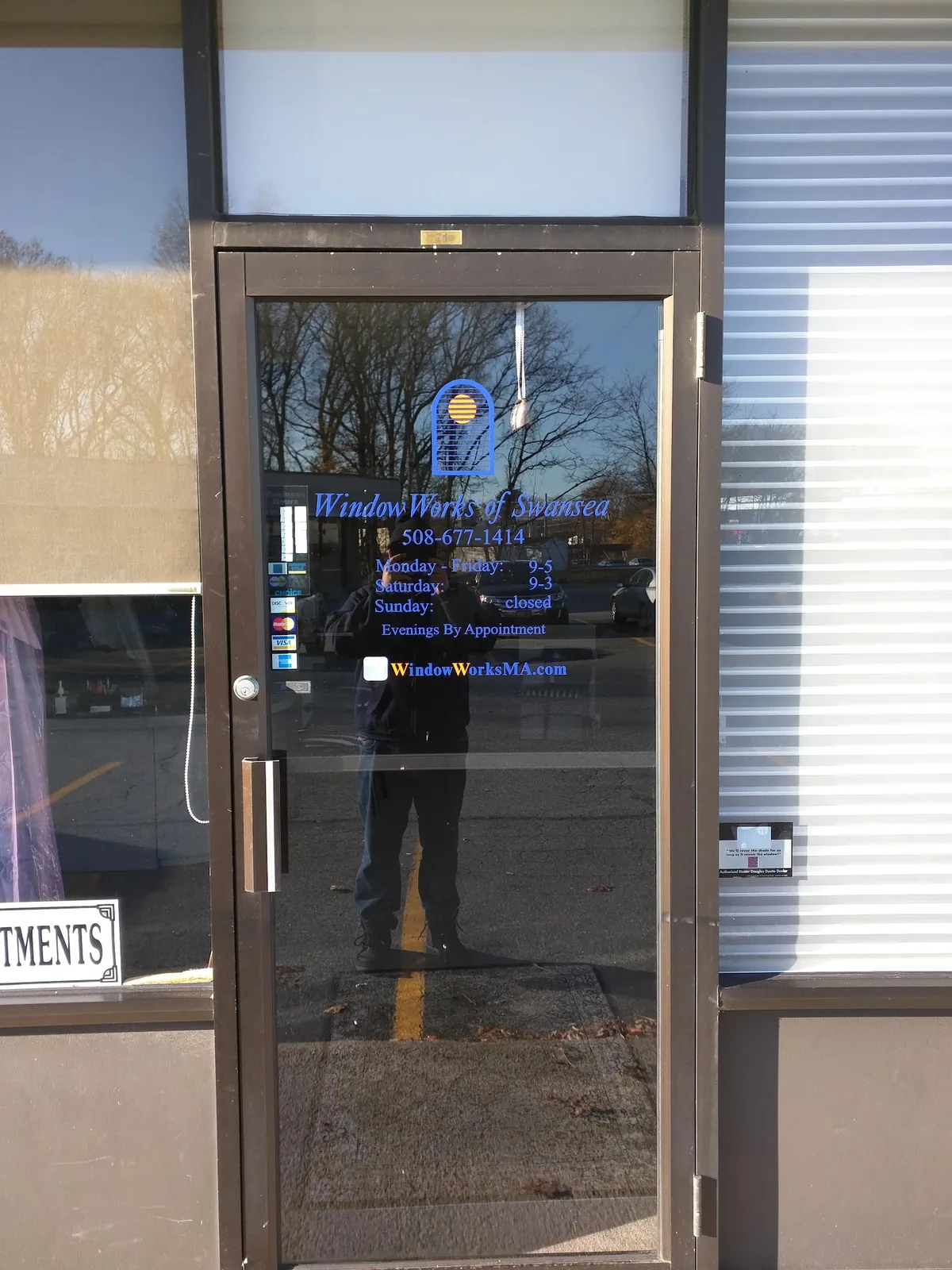
Window Works is a Swansea family store, started in 1988 and now in its second generation. For over 37 years it has covered windows across the SouthCoast and the Rhode Island East Bay, Westport among them.
- Experienced window treatment specialists who know coastal houses
- We measure in your home, and our own installers fit each shade
- Warranties offered on the products we sell
- Updates from us at every stage until the job is done
- A showroom where fabrics and controls can be tried before you order
Questions from Westport
Will a motorized shade stand up to salt air near the harbour?
The shade is chosen for the setting before the motor is added. We suggest fabrics and finishes that suit a room near the water and show them at the showroom.
Can I still see the water with the shades down?
With a fabric that has some openness, yes. It cuts glare while leaving the view faintly visible. A room darkening fabric shuts it out completely, which suits bedrooms better.
Is there room for a motor above my old cape windows?
The motor sits in the headrail, so we check the space above every window on the measuring visit and choose a style with a compact top where it is tight.
Which windows should I power first?
Usually the harbour-side wall and any window that is high or behind furniture. The rest can keep ordinary controls in a matching fabric.
How do I book a quote?
Quotes are free. Press the call button or send the form, tell us about the rooms facing the water, and we will arrange measuring in your home.
Talk to the Swansea Store
When you are ready, a free quote for motorized blinds in Westport, MA starts with the call button or the form on this page. The same call can set up measuring in your home or answer questions about installation. If you would like to feel the fabrics and press a remote first, come to the Swansea showroom; the contact page has directions. Window Works is rated 5.0 on Google.