
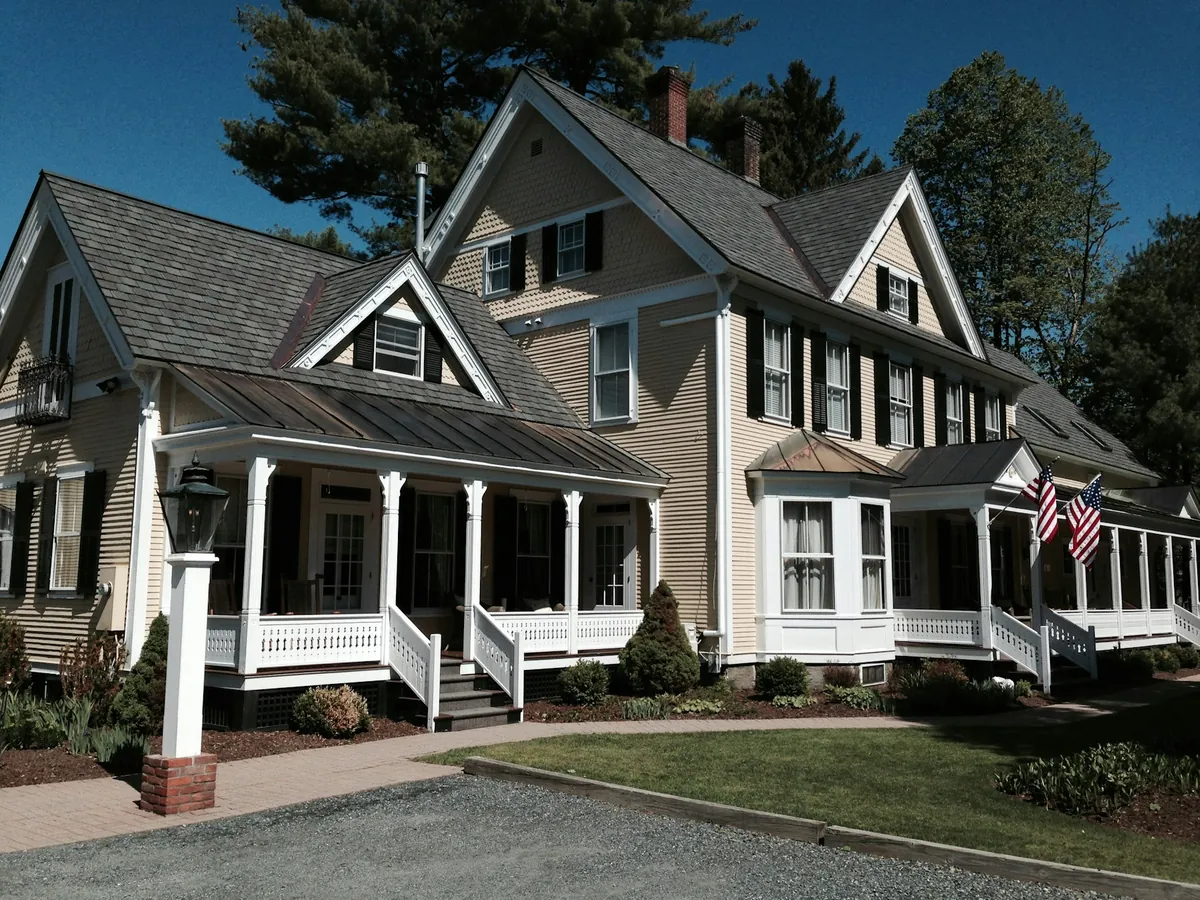
Coastal Houses and the Weather They Face
In Westport the weather comes off the water. The shingled capes and farmhouses along Main Road feel the wind across open ground, and the larger houses toward Horseneck and the Westport River take salt air, bright reflected light and winter gales straight on. Choosing cellular shades in Westport, MA means choosing for those conditions first and for looks second.
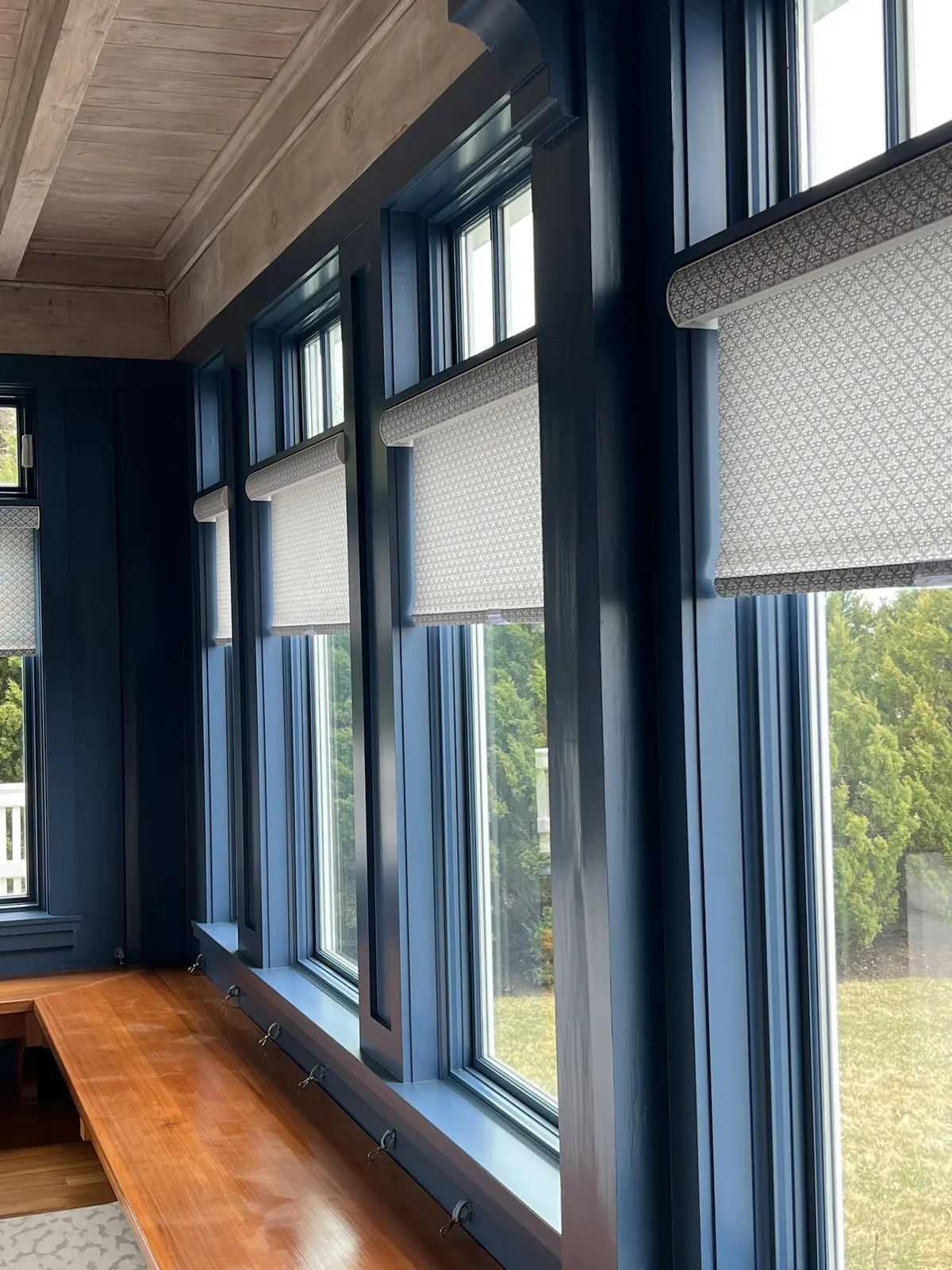
A honeycomb shade is well suited to a coastal house. Its cells trap still air against the glass, which keeps the warmth in on a raw January night and slows the heat coming in through a sunny harbour window in August. The fabric is light, it folds into a very small band at the top of the window when raised, and it brushes clean when the salt leaves a film. In a room built around the view, that small stack matters most of all: raised, the shade gets out of the way.
- Single and double cell honeycomb shades, made to each window
- Measured in your home by a specialist, installed by our own team
- Fabrics to compare in daylight at the Swansea showroom
Honeycomb Shades for Westport Homes
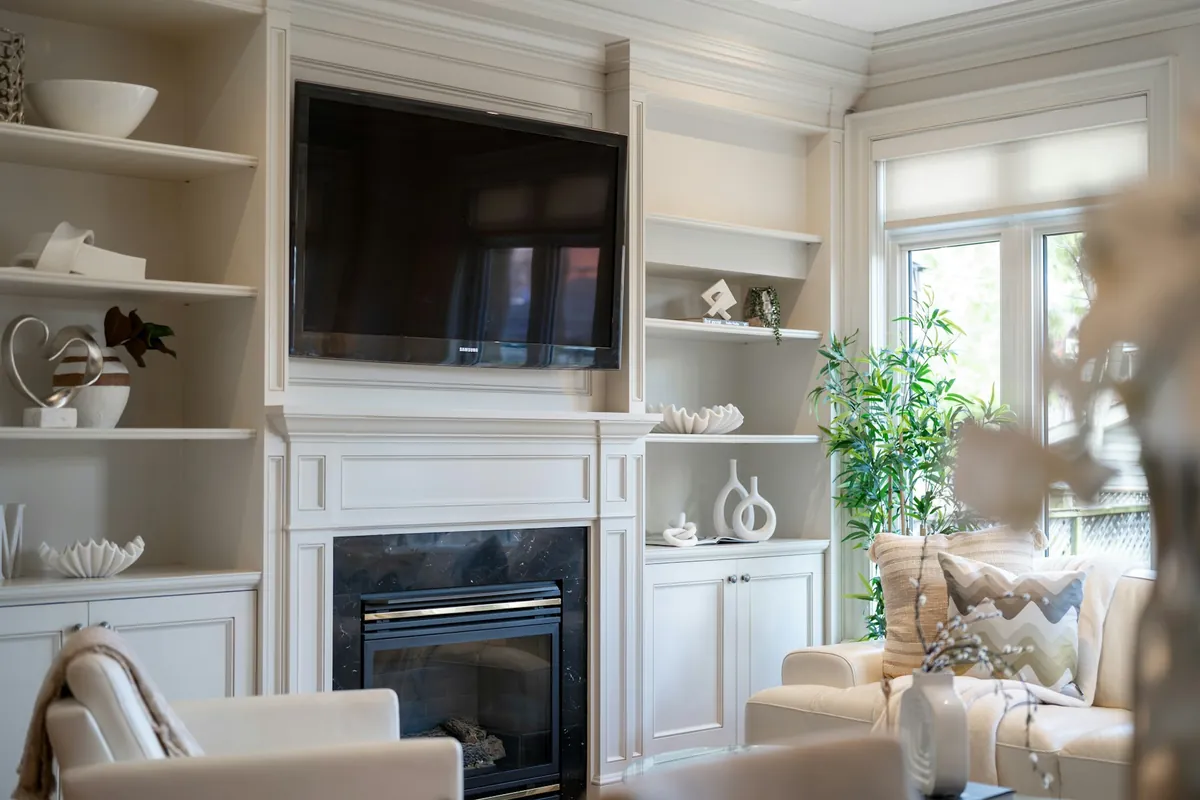
Single cell
One row of cells, the lightest look and the smallest stack. The usual choice for view rooms where the shade spends most of the day raised.
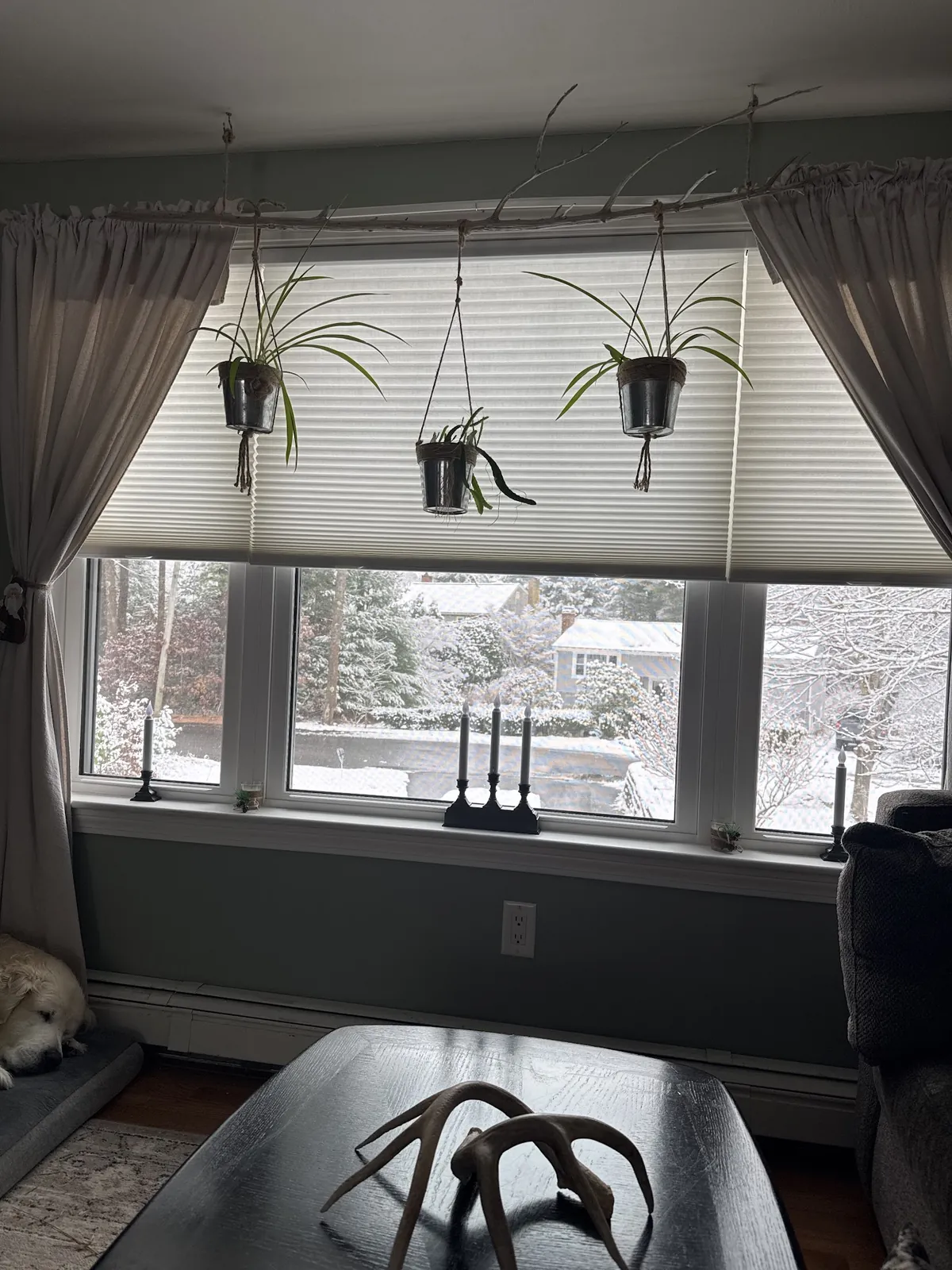
Double cell
Two rows of cells for the rooms that face the winter wind and the bedrooms in an older farmhouse.
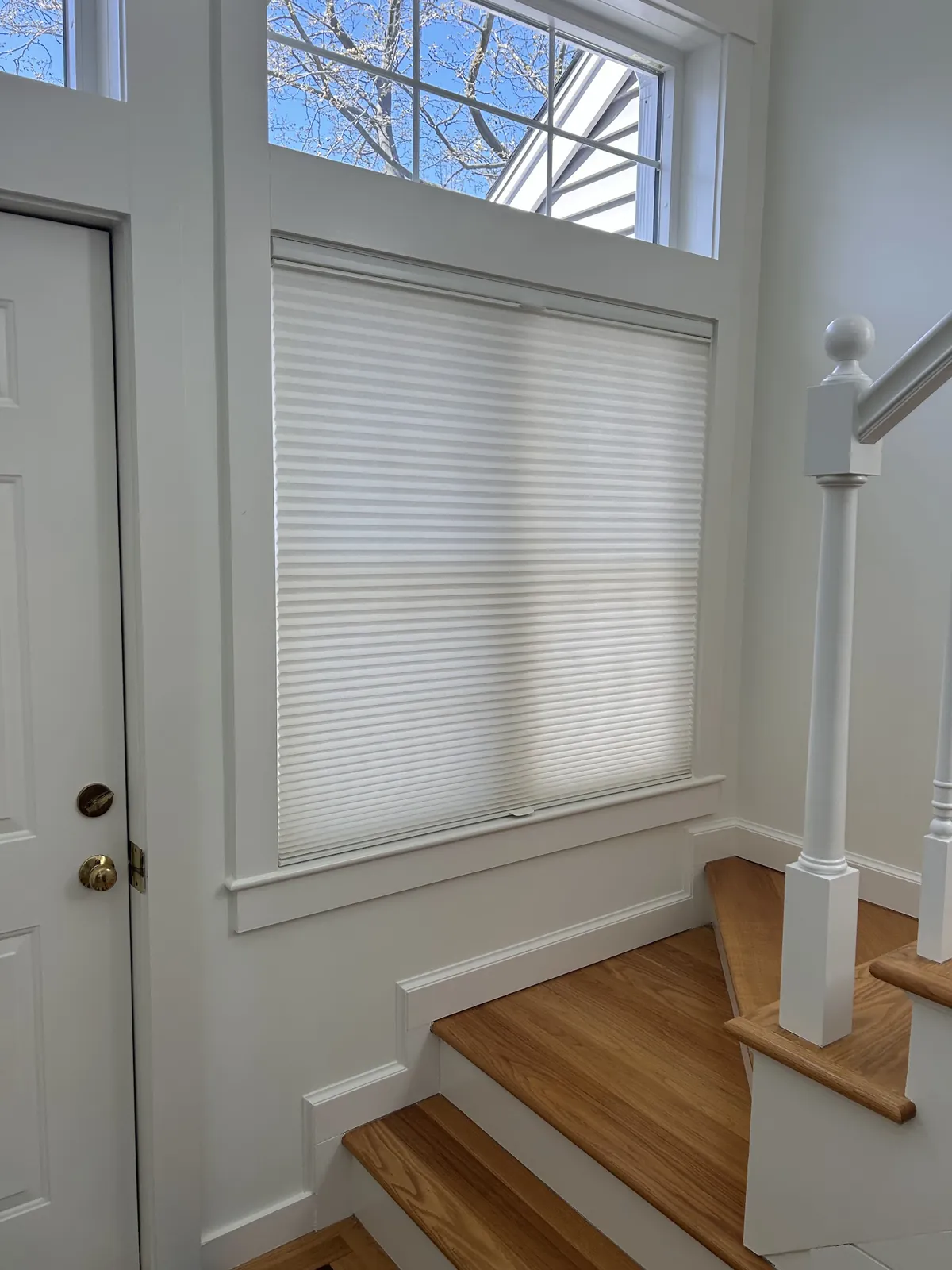
Top-down, bottom-up
Lower the top for sky and sea while the bottom stays closed for privacy from the road or the beach.
Rooms Built Around the View
Many Westport houses, especially the larger homes toward Horseneck and along the Westport River, put their main rooms on the water side and fill that wall with glass. The room exists for the view, and the window treatment’s first job is to stay out of it.
That is where cellular shades in Westport, MA earn their place. A honeycomb folds tighter than almost any other fabric shade, so a raised shade becomes a slim band at the head of the window and leaves nearly all the glass clear. Mounted inside the frame, it disappears into the opening. Mounted just above, it can be raised entirely clear of the glass.
When the view needs to stay but the light needs taming, a light-filtering fabric is the answer. Lowered, it turns the glare off the water into an even glow, so the room stays bright and comfortable. You lose the detail of the view while the shade is down, which is why many owners lower the shades only through the brightest hours and raise them again by late afternoon.
Top-down, bottom-up for waterside privacy
A house close to the beach or a well-used road often needs privacy at the bottom of the window while the top stays open. A top-down, bottom-up lift does exactly that. Drop the top of the shade a little way and the sky, the horizon and much of the light come in over it, while the lower part blocks the view in from the street or the sand. It is one of the most useful lifts we fit in coastal rooms.
Walls of glass and tall windows
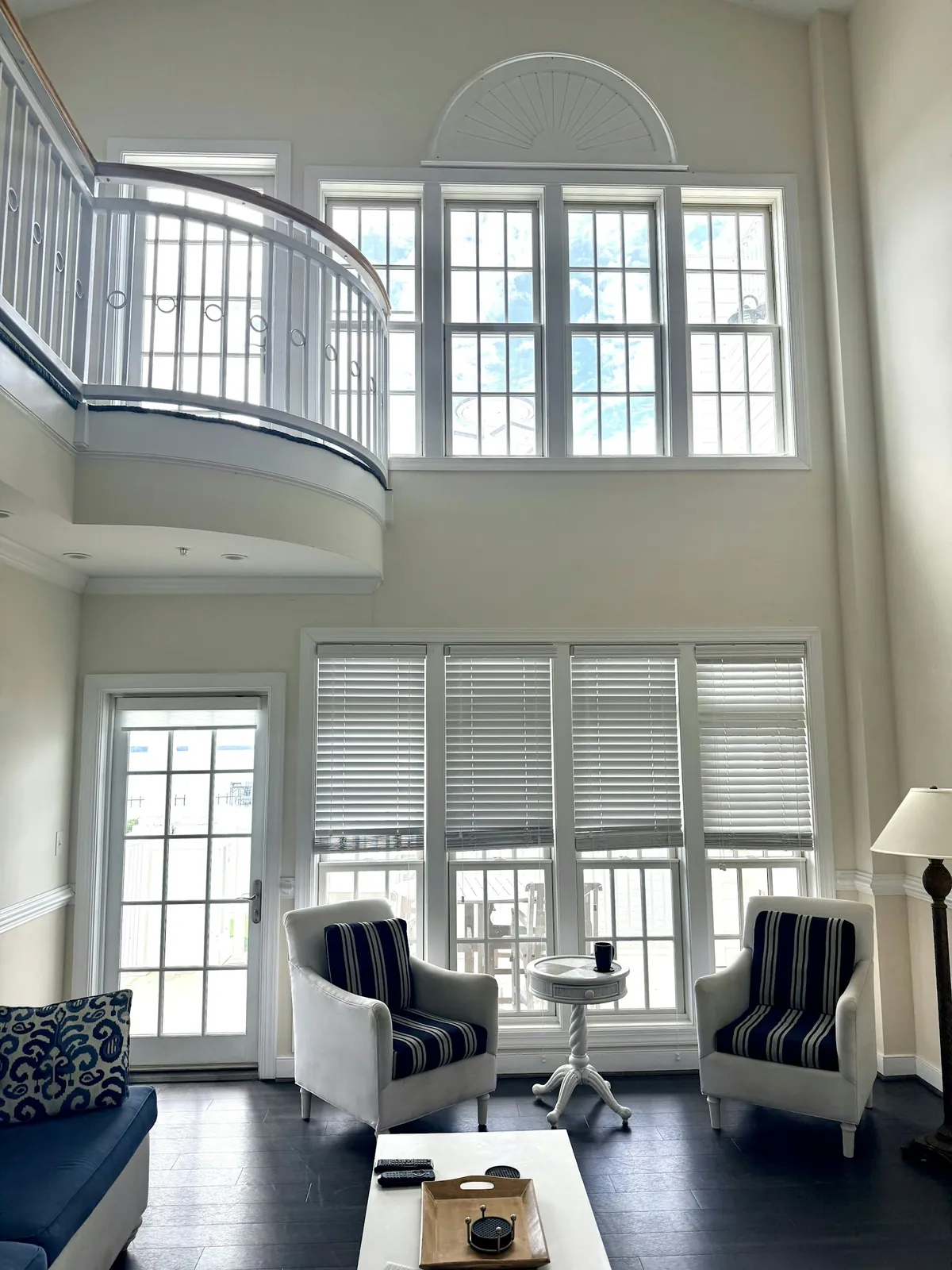
Some of the newer homes have tall windows, two-storey living rooms or long runs of glass doors facing the water. Reaching the bottom rail of a shade over a tall window is awkward, and raising a whole row one by one is a chore. Motorised shades solve both: each shade, or a whole group, raises and lowers from a remote or a wall switch. On a glass wall facing the water, that convenience means the shades are actually used when the sun comes round.
Sun, Salt and Fabric Choice
Coastal light is strong. It reflects off the water and the sand, it comes in low over the harbour in the late afternoon, and it reaches far into a room. That light is the reason people love these houses, and it is also hard on floors, rugs and upholstery, which fade where the sun sits on them day after day.
A honeycomb shade lowered through the brightest hours protects all of that. A light-filtering fabric still lets the room glow; a room-darkening one blocks the sun almost completely, which suits a bedroom facing east over the water. Either way, the cells also slow the heat building up behind the glass, so a sun-filled room stays more comfortable in high summer.
Colour matters in strong sun. Pale whites and soft natural tones keep a coastal room light, look calm from the water side and suit the shingled and painted interiors common in town. They also hide the light dusting of salt and sand that coastal windows collect between cleanings, which a deep navy or charcoal fabric would show. Very dark fabrics absorb more heat at the window, so we usually steer view rooms toward the lighter end of the range. We bring samples so you can see them in your own light, which is very different from a showroom’s.
Salt air and keeping shades clean
Salt air leaves a light film on windows and anything near them, especially in houses close to Horseneck and the river mouth. Honeycomb fabric copes with this well. A soft brush or a vacuum on its lowest setting lifts the dust and salt from the cells, and a damp cloth deals with a small mark. A quick going over at the start of each season keeps the shades fresh.
Hardware is worth thinking about near the water too. A cordless shade has no cords to fray or tangle, and its lift is tucked inside the headrail away from the damp. Where a window is opened often in summer, an inside mount keeps the shade clear of the sash and the breeze.

Shingled Capes and Farmhouses on Main Road
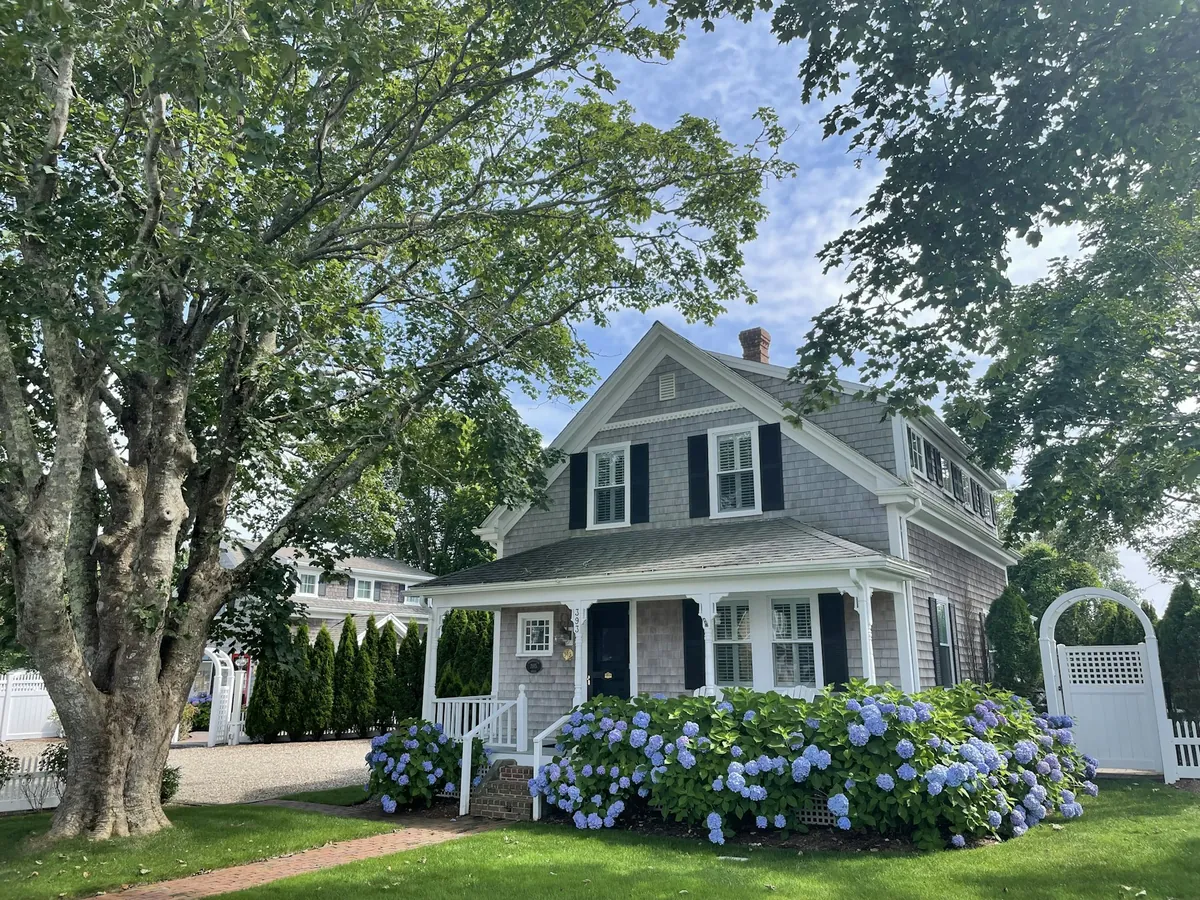
The older houses along Main Road are a different kind of coastal home. Shingled capes and farmhouses, built for working rather than for the view, have smaller windows set evenly along the walls, often with older sash and simple trim. They face open fields as much as water, and the wind that crosses those fields in winter finds every gap.
Here the shades are mainly about warmth. A double cell honeycomb on the windward side puts two layers of still air between the room and the old glass, and fitted closely inside the frame, it also cuts down the small draughts around a loose sash. The sheltered side of the house usually does well with single cell, in the same colour so the house looks consistent from the road.
Cape bedrooms upstairs
A shingled cape often has its bedrooms upstairs under the roof, lit by dormers or small windows in the gable ends. Those rooms run cold in winter and warm in summer, and they are where people sleep. A double cell shade in a room-darkening fabric handles both: it holds the warmth in on winter nights and keeps out the early summer sun. Because a dormer is narrow and close-walled, the honeycomb’s slim profile and small stack make it a much better fit than anything bulkier.
Farmhouse kitchens and sitting rooms
Farmhouse kitchens tend to be the heart of the house, often with a window over the sink and another looking out to the yard. A light-filtering single cell shade keeps them bright, with a cordless lift that is easy to reach across a counter. In a sitting room, side curtains beside a honeycomb shade add softness and a second layer across the wall on cold evenings, and since we make custom drapes in Westport too, both can be chosen together.
Winter on the Coast
Summer is when most people think about Westport, but the shades work hardest in winter. Wind off the water strips heat from a house quickly, and big glass facing the harbour, so pleasant in July, becomes a cold wall in January.
Lower a cellular shade at dusk and that cold wall changes. The trapped air in the cells sits between the room and the glass and slows the heat drain. Draw curtains or drapes across as well, and the window becomes one of the warmer surfaces in the room rather than the coldest. On sunny winter days, raise the shades on the south and west windows in the morning to let the sun warm the room, then lower them before the light goes to hold that warmth in through the evening.
Houses that are used mostly in summer and shut up for part of the winter benefit as well. Lowered shades keep the sun off floors and furniture while the house is empty, and the rooms are less of a shock when you return. When you open the house again in spring, a quick brush down removes the dust that has gathered over the quiet months, and running each shade up and down once confirms everything is ready for the season.
Choosing Cellular Shades in Westport, MA, Room by Room
Most houses in town end up with a mix, chosen to suit what each room faces. This is how it usually works out.
Living rooms facing the water. Single cell in a pale light-filtering fabric, often top-down, bottom-up. The shade spends much of the day raised, so a small stack and a light colour matter most.
Bedrooms facing east over the water. Room-darkening fabric, single or double cell depending on how exposed the wall is. Early summer light off the water is bright, and these rooms are where people want it kept out.
Rooms facing the winter wind. Double cell, fitted closely inside the frame. In the older capes and farmhouses this is usually the north or north-east side.
Kitchens. Light-filtering single cell with a cordless lift that is easy to reach across the counter.
Bathrooms. A small light-filtering shade for privacy that still lets the room stay bright.
Tall windows and glass walls. Motorised operation from a remote or wall switch, so a whole row can be raised or lowered together.
Keeping one colour on the street side and one on the water side gives the house a tidy look from both directions, whatever fabric each room uses inside.
Bay windows and window seats
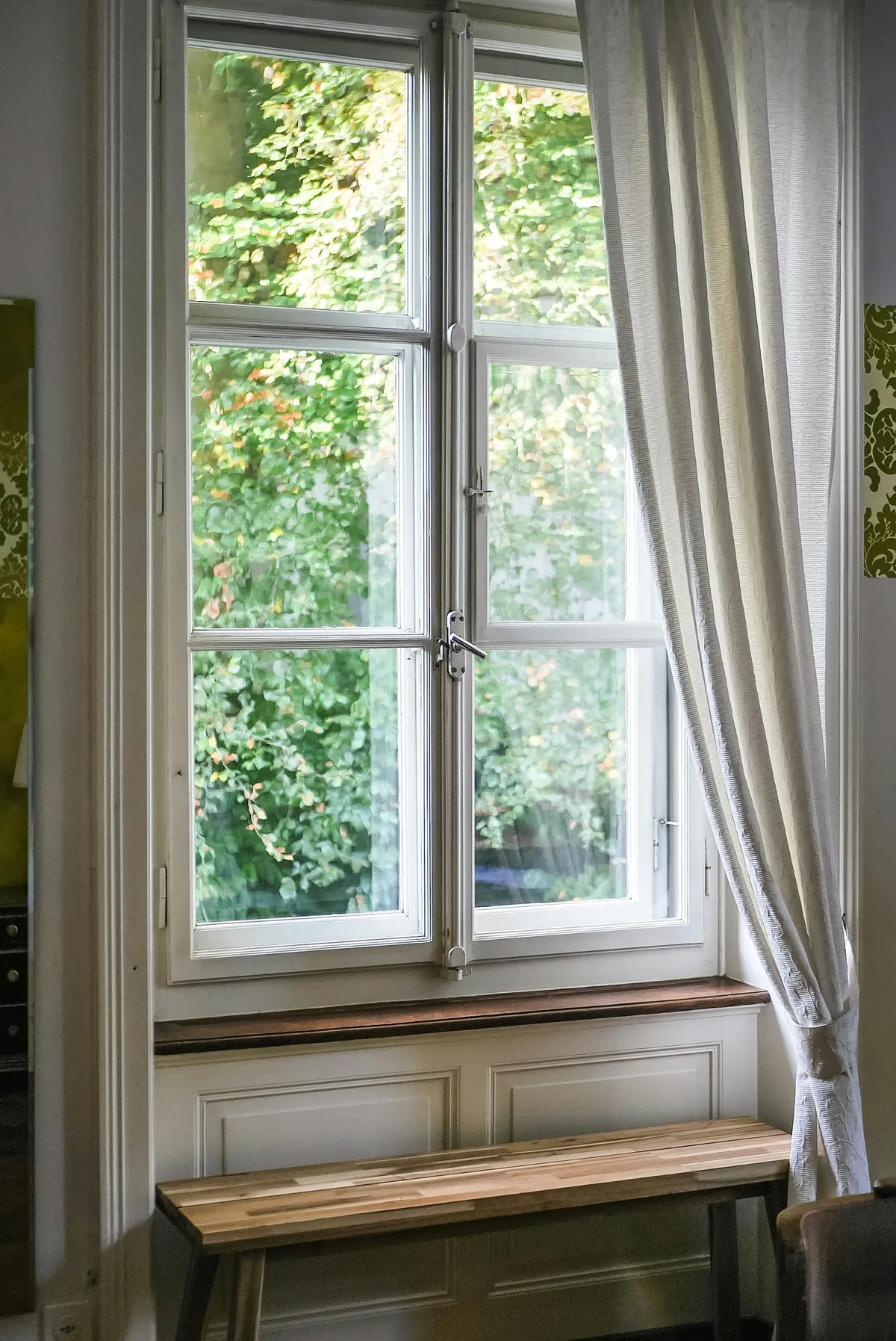
Bays and window seats are common in the larger homes and in renovated farmhouses, and they are often where people sit to look at the water. Each window in a bay takes its own shade, sized so the edges meet neatly at the angles. Over a window seat, an inside mount keeps the shade clear of the cushions, and a top-down, bottom-up lift lets you open the top for the view while the lower part screens the sun from your book. In winter, lowering the bay’s shades at dusk turns the coldest nook in the room into a sheltered one.
Guest rooms and rooms used now and then
Plenty of Westport houses have rooms that are only used when family visits. Lowered shades in those rooms keep the sun from fading the furniture while they sit empty, and in winter they stop a closed-off room from drawing warmth from the rest of the house. A double cell shade in a spare room facing the wind is a simple way to keep the house comfortable when cellular shades in Westport, MA are being planned for the whole home.

How Your Order Runs
From your first question to the last shade going up, someone from the store keeps you informed. An order for cellular shades in Westport, MA usually goes like this.
- Use the call button or the form to tell us about the rooms, the view and the light, and we arrange your free quote.
- A specialist visits to measure every window, checks frame depth for an inside mount, and notes glass doors, crank handles and any window that opens often.
- You pick single or double cell, fabric, colour and lift, looking at samples in your own rooms or in the Swansea showroom.
- You receive a quote that lists each window.
- The shades are made to the measurements taken at the house.
- Our installers fit them, check each one, and show you how the lifts work.
Doing the house in stages
Many owners start with the rooms facing the water, where the sun and the cold are both strongest, and add the rest later. We keep a note of every fabric and colour ordered, so the next rooms match the first, even if a season or two passes between orders. The bedrooms and the Main Road side of the house can follow when it suits you.
A note on the sliding doors
Glass doors to a deck or patio are common in the newer homes. A honeycomb shade on a door used all day can be awkward, and a vertical blind often suits it better, chosen to sit well with the shades on the windows around it.
The Store Behind the Shades
Window Works has been run by the same family in Swansea since 1988, now in its second generation. For over 37 years, we have measured and fitted window treatments in 25 towns across the SouthCoast and the Rhode Island East Bay, from inland farmhouses to houses on the shore.
- A team of window treatment specialists who measure in your home
- Our own installers fit every shade
- In constant contact with you until the job is done
- Warranties offered on the products we sell
- A showroom to compare fabrics in daylight, with the Norman range on display
Everything else we offer in town is on the Westport window treatments page, and there is more on how honeycomb shades work on our main cellular shades page. If an older shade needs a new cord or headrail, our blind and shade repair team can often fix it.
Questions from Westport
Will a honeycomb shade block my view of the water?
Only while it is lowered. Raised, it folds into a slim band at the top of the window and leaves almost all the glass clear.
How do the shades cope with salt air?
Well. A soft brush or a vacuum on low lifts salt and dust from the cells, and a cordless lift keeps cords out of the damp.
Which colours suit a sunny coastal room?
Pale whites and soft naturals. They keep the room light, look calm from outside and absorb less heat at the window than dark fabrics.
Can I have privacy from the beach and still see the sky?
Yes. A top-down, bottom-up lift lowers the top of the shade for light and view while the bottom stays closed.
What does a quote cost?
Nothing. Quotes are free; use the call button or the form to book one.
Book a Visit
Use the call button to reach the Swansea store for a free quote, to arrange measuring in your home or to ask about installation. If you would like to see the fabrics in daylight first, directions to the showroom are on the contact page. Window Works carries a 5.0 rating on Google.