
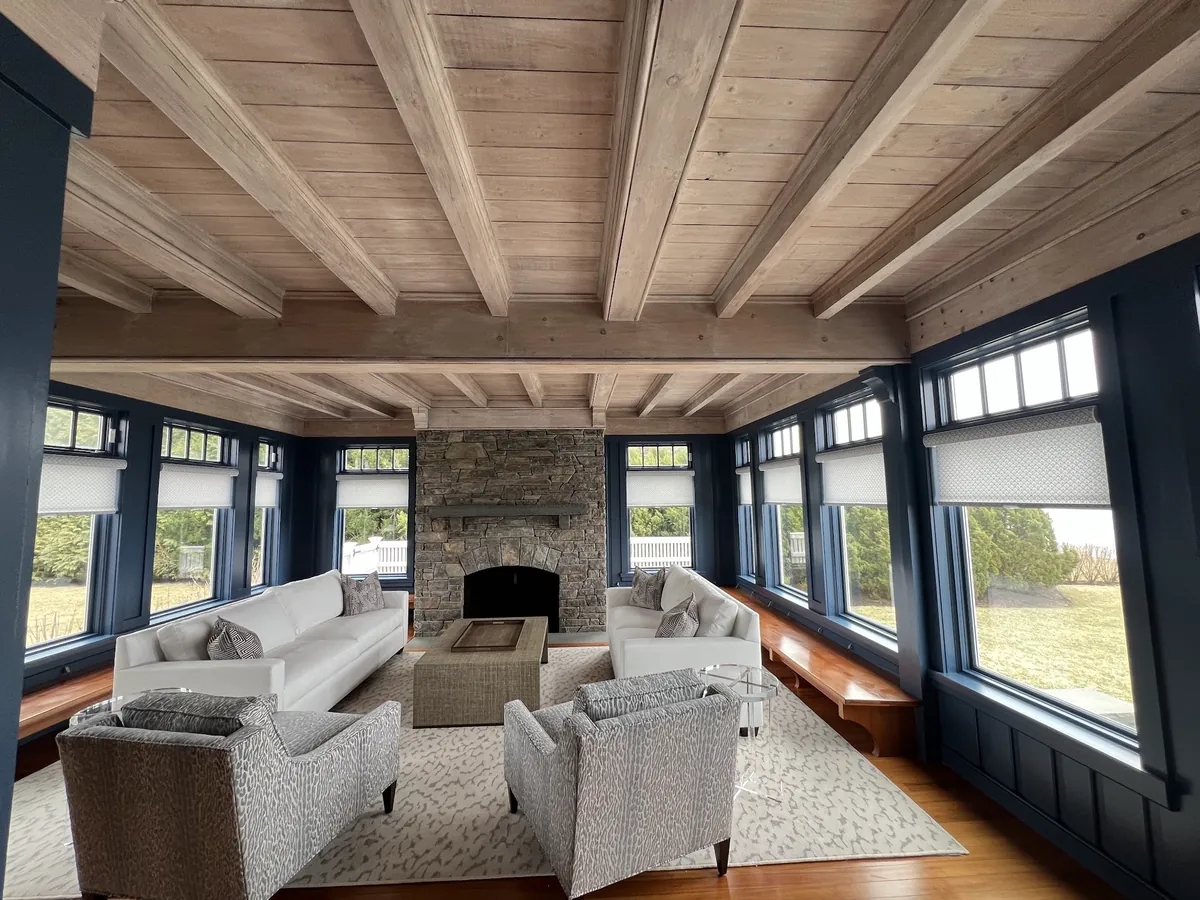
Glass Facing the Sakonnet
On Nanaquaket and along the Sakonnet River, the rooms that look toward the water are mostly glass. That is what they were built for: the river, the boats, the evening light. It also leaves them wide open to the elements, with hard sun bouncing off the surface in summer, a cold wind straight across the river in winter and salt hanging in the air whatever the month. Anyone pricing cellular shades in Tiverton, RI for a waterfront house should think about fabric before anything else.
Happily, the honeycomb is a good shape for those conditions. Every cell is a sealed chamber of air. Pull the shade down and those chambers line up across the pane, a cushion of motionless air that keeps the heat indoors on a bitter night and blunts the sun pouring through on a summer afternoon. Push it back up and the pleats gather so tightly under the head of the frame that the river is back in full view.
- Single and double cell honeycomb, built for each window and glass door
- One of our specialists measures on site; our installers hang the shades
- Samples you can hold up in your own waterside light
The Range for Tiverton Homes
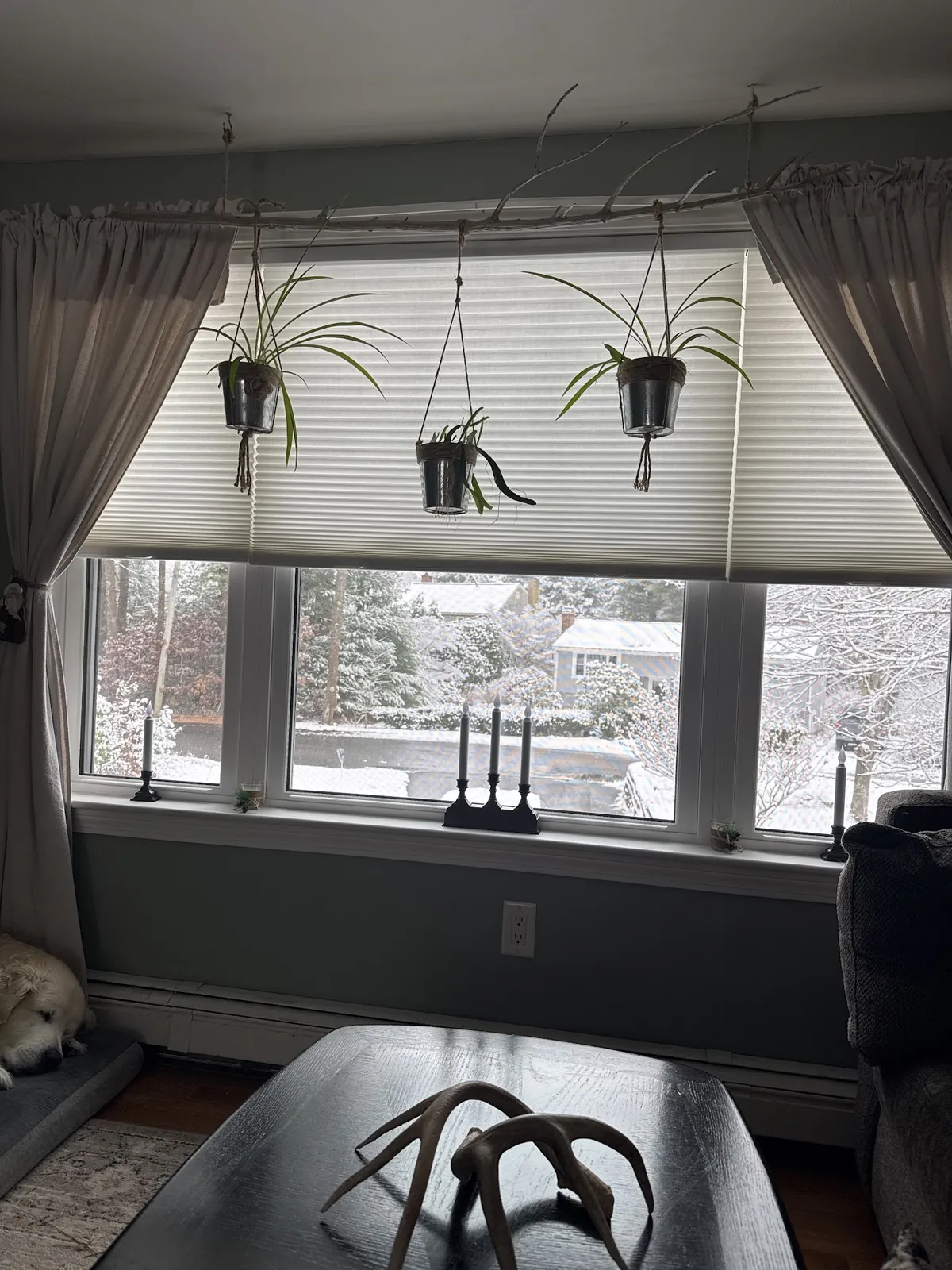
Double cell for exposed glass
Twin rows of air chambers for rooms that catch the wind off the river and the hardest frosts.
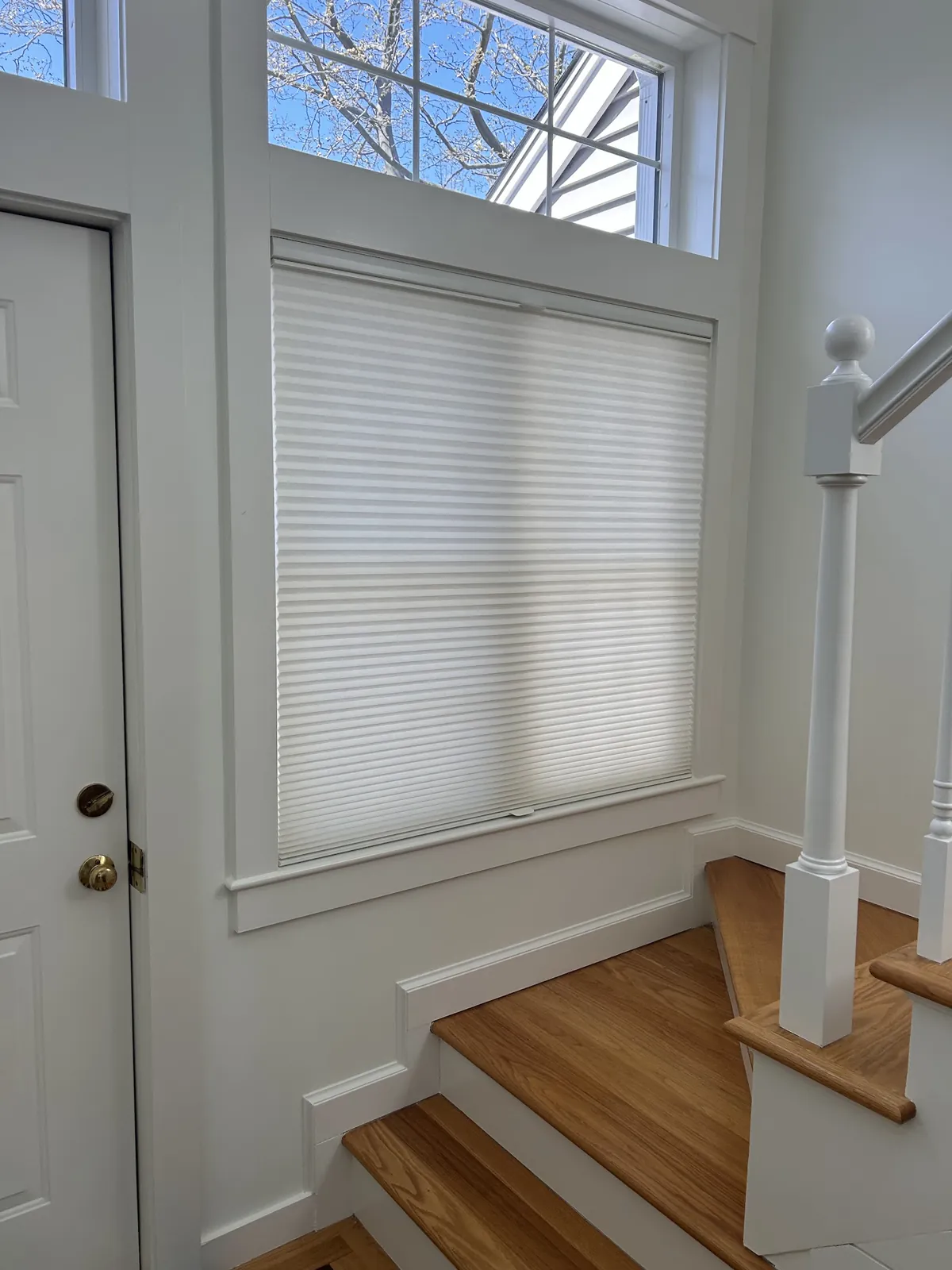
Single cell for sheltered rooms
One row of chambers suits rooms on the land side, or those shaded by a porch roof.

Fabrics for sun and salt
Light, sun-reflecting shades of cloth that dust off easily, picked with you in the rooms they will hang in.
Choosing Fabric for Sun and Salt
Inland, the cloth on a shade is mostly about taste. Facing the Sakonnet, it is a working decision first and a style choice second.
Sun
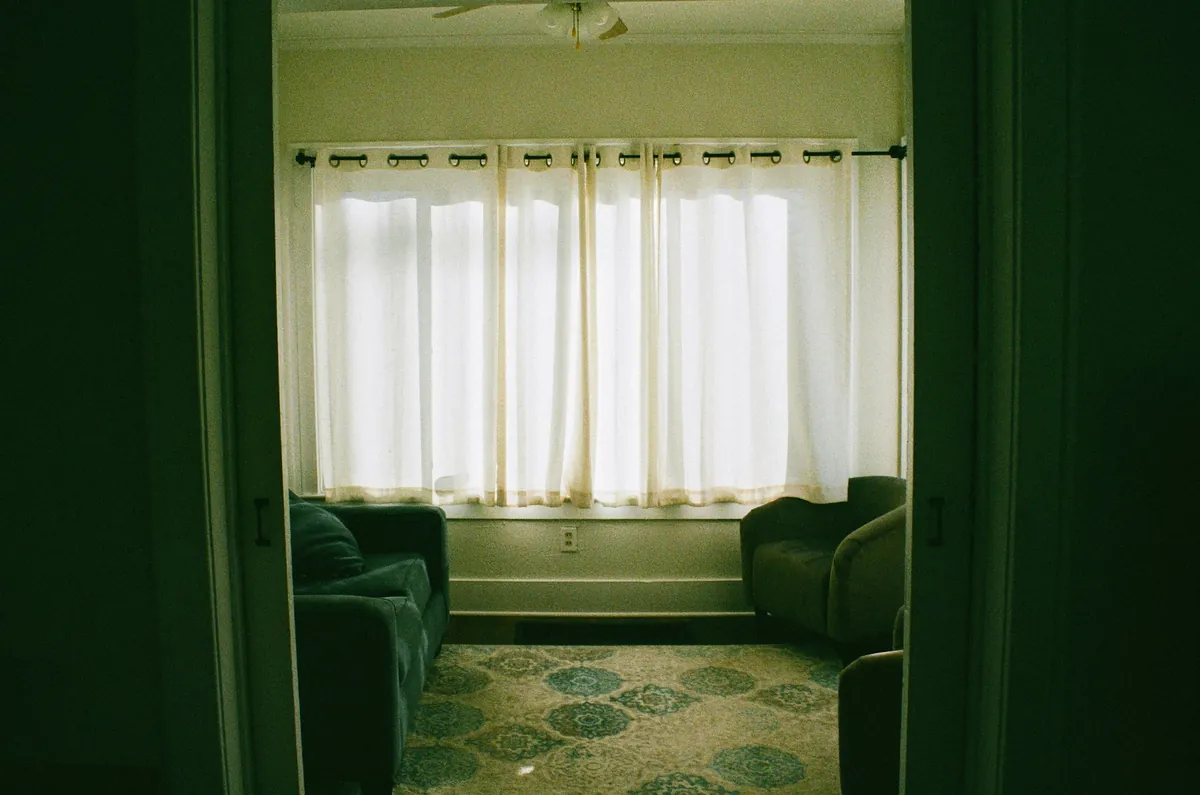
Daylight on the water side of a Tiverton house comes in twice, once straight from the sky and again thrown up off the river. Those rooms collect far more light, for more hours, than an identical room further from the water. Floors, rugs and sofas fade under it, and whatever hangs in the window takes the worst of it.
Light colours stand up to that best. Whites, ivories and gentle sandy tones bounce much of the sunshine back out instead of soaking it up, so the cloth stays cooler and so does the room. With the shades down, they also keep a glassy room airy rather than gloomy, and from a boat the house looks neat. Deep, saturated colours trap heat in the window and bleach sooner, so we tend to save them for rooms facing the road.
For a living room on the water, light-filtering cloth is the usual pick: drawn down at midday, it changes the glare into an even glow without leaving the room dull. For a bedroom looking east across the river, a room-darkening cloth makes more sense, because the midsummer sunrise climbs over the water long before most people want to be up.
Salt
Salt settles as a fine haze on glass and everything close to it, and the nearer the river, the faster it gathers. Honeycomb cloth handles this calmly. Every few weeks, draw the soft brush attachment of the vacuum, set low, along the pleats; a lightly wrung cloth takes care of any spot. Doing this as each season turns is plenty, and it keeps the cloth looking bright for years rather than months.
The lift deserves thought as well. Cordless shades have nothing to go stiff or fray in damp, salty air, since the working parts live inside the headrail. On very tall glass or a long row of windows, motorised shades go up and down by remote or by a switch on the wall, so nothing dangles at the window.
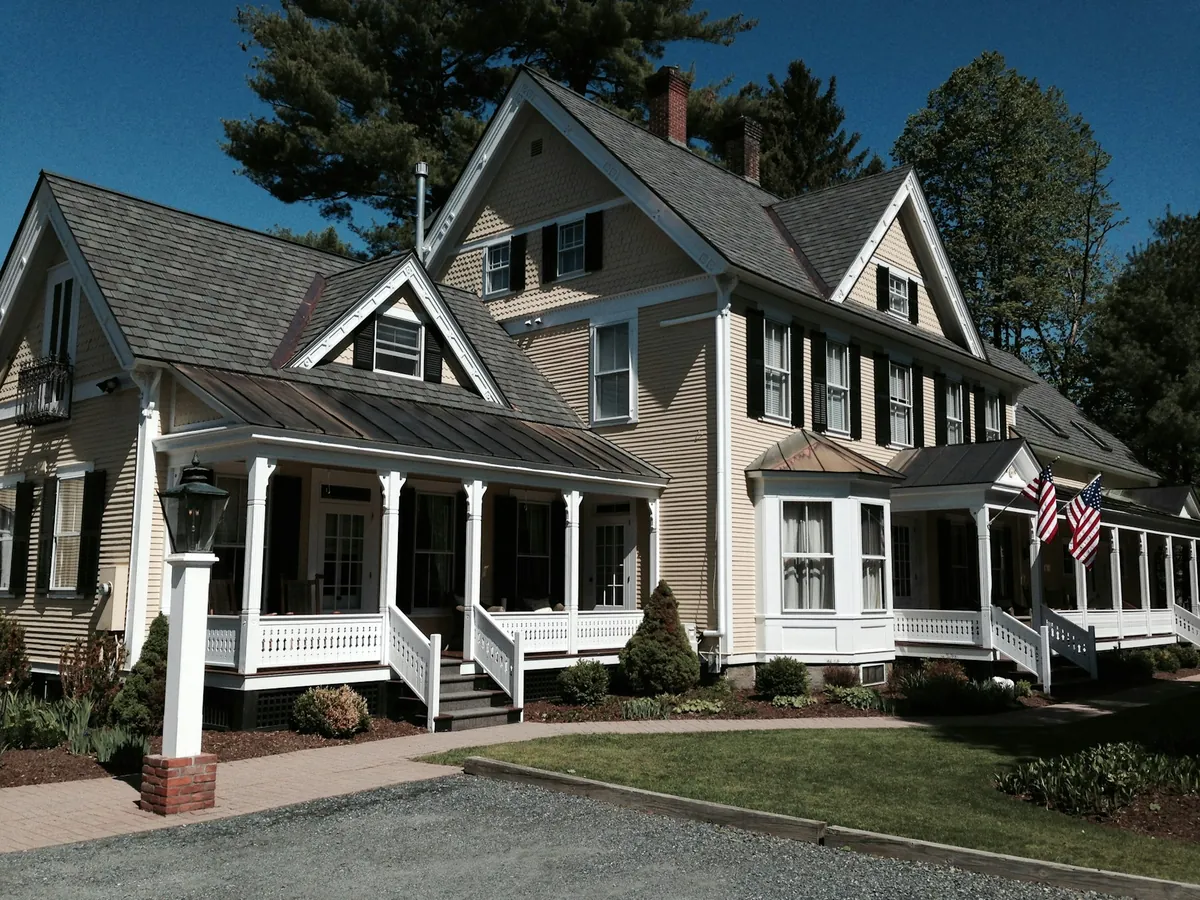
Waterfront Houses on Nanaquaket
Houses on Nanaquaket are oriented toward the water, with the main rooms glazed generously on that side: broad windows, a door or two out to the deck, occasionally an entire glass wall. Shades there juggle three tasks within a few hours: cutting midday glare, keeping the evening warmth in, and vanishing the rest of the time.
Vanishing is where honeycomb excels. Its folded cloth packs down into a remarkably shallow stack, so even on tall glass a raised shade leaves only a sliver at the top. Fixed to the wall just above the opening, it can rise completely above the glass. That is why owners who would never put heavy curtains in front of a view are comfortable with honeycomb.
On a long row of windows we build a shade for each opening, set so the bottom rails line up when everything is down and the stacks align when everything is up. Seen from the river, the house looks orderly at any hour. Where windows of different heights share a wall, we discuss whether to match the head heights or the sill heights, since lining up one or the other is what makes a mixed row look intentional rather than accidental.
Glass doors to the deck
Most water-side rooms have glass doors. A honeycomb on a slider that gets opened every few minutes all summer quickly becomes a nuisance, so for that one opening a vertical blind is often the sensible call, coloured to suit the shades around it. Hinged French doors are different: each leaf can carry its own shade.
Privacy close to the shore
Where a house sits near the shoreline, a path or a neighbour’s deck, the lower part of the glass may need screening while the upper part stays open to sky. Top-down, bottom-up shades are made for this, and on a river-facing window that half-open position is often where the shade sits from breakfast to dusk.
A room for the view, morning to night
It helps to picture a day in one of these rooms. At breakfast, with the sun still low over the far shore, the east windows glare and the west ones are fine, so only the east shades come part-way down. By early afternoon the sun is high and the river is bright as foil, and every light-filtering shade on the water side comes down to soften it. In the late afternoon the glare eases and the shades go back up for the best of the view. After dark, they all come down again to hold the warmth and stop the black glass from reflecting the room back at you. Honeycomb copes with that much use easily, and motorised operation makes it effortless.
Along the Sakonnet River in Winter
July is when water-facing rooms are at their best; January is when the shades earn their keep. Wind across the Sakonnet draws heat out of a house fast, and the glass that feels so open in summer turns into the coldest surface in the room.
For the most exposed glass, double cell is the usual advice. A second row of chambers deepens the cushion of still air, and in a room with this much glazing that extra depth is easy to feel. Let the shades down as the light fades and the room stays comfortable through the evening. On bright winter mornings, open the south-facing ones to let the low sun warm the floor, and close them again by mid-afternoon.
Framing a big window or a pair of glass doors with drapes adds another layer overnight and softens a room that can look bare when every shade is drawn. Because we also make custom drapes in Tiverton, the two can be planned as a set.
Farmhouses and Shingled Capes around Four Corners
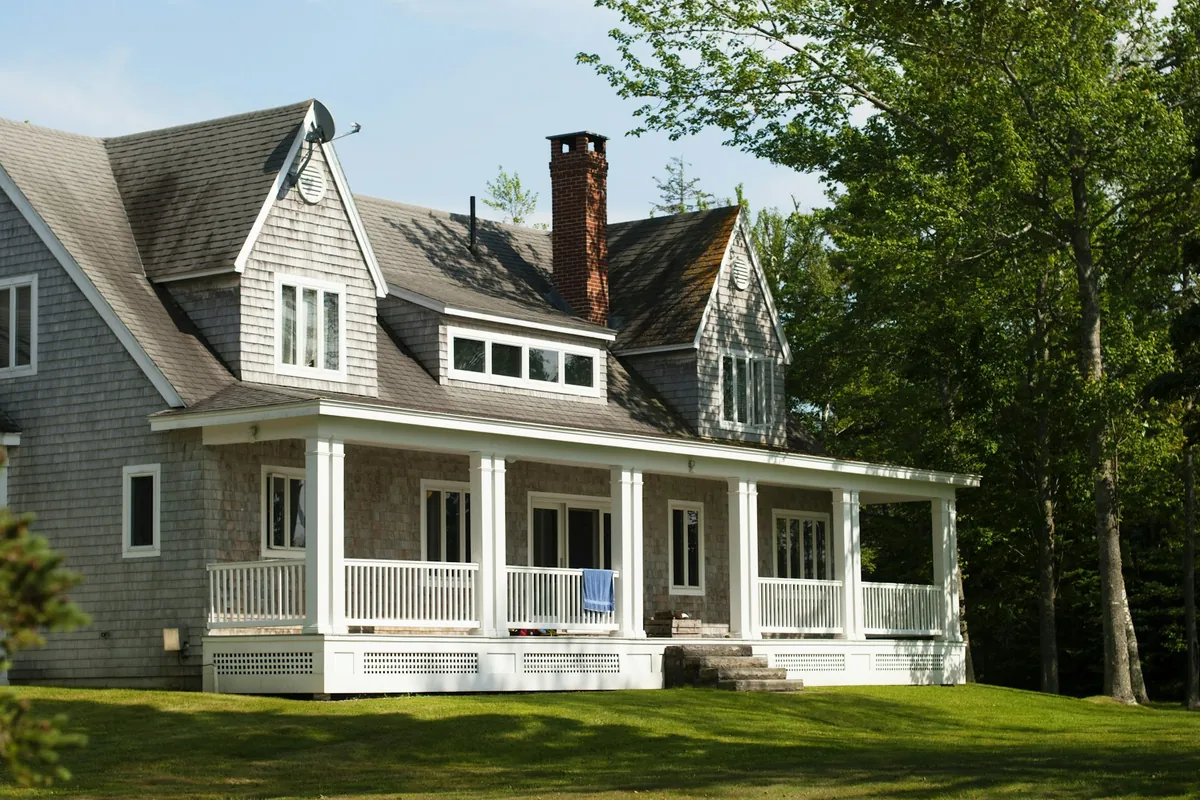
Away from the river, around Four Corners, the houses are older and their windows smaller. Farmhouses and shingled capes, many keeping their original sash and plain painted trim, stand among fields and stone walls. Here the weather problem is wind and cold rather than salt and glare, so the shades are chiefly about comfort in winter.
The farmhouses
A Four Corners farmhouse usually has evenly spaced double-hung windows on all sides, set in frames deep enough for a shade to sit inside. Mounted there, the honeycomb hugs the glass, where it insulates best, and the trim stays visible. Old frames drift out of true, so our specialist checks each one at the top, middle and bottom and the shade is built for that particular opening.
A common pattern is double cell on whichever walls face the prevailing wind and single cell on the lee side, all in one colour so the house looks consistent from the lane.
The shingled capes
Capes keep their bedrooms upstairs in the roof space, lit through dormers. Those rooms swing from chilly in winter to stuffy in summer, and their windows are small and boxed in by the dormer walls. Double cell in a dimming fabric suits them: warmth on cold nights, darkness on early summer mornings, and a headrail slim enough not to crowd the opening.
On the ground floor, a cape’s sitting room often has windows on two walls. Light-filtering single cell keeps it bright by day and private by night, and drawing both shades at dusk makes the room feel enclosed and warm.
Kitchens and mud rooms
Farm kitchens are often the most used room in the house, with a window over the sink and another facing the yard or the driveway. A light-filtering single cell with a cordless lift is easy to reach over a counter and keeps the room bright. The mud room or back entry, often an unheated addition with a window or two, benefits from double cell, which stops it drawing warmth from the kitchen beside it.
Porches, Sunrooms and Glassed-In Decks
On both sides of town, many houses have gained a sunroom or had a porch closed in with windows. On the river these rooms often face the water directly; inland they tend to look over a garden or a field. Either way they hold more glass than any other room, and they swing harder between seasons, baking on a June afternoon and too cold to sit in by December.
Fitting cellular shades in Tiverton, RI sunrooms changes how much of the year the room is usable. A shade on every window, drawn on summer afternoons, takes the heat and glare down to something comfortable. Drawn on autumn and winter evenings, the same shades stop the warmth from draining straight out through all that glass. Pale light-filtering cloth keeps the room feeling like a sunroom even with the shades down, and a motorised group lets you close the whole room with one switch.
Hall and stair windows in the older houses
Old farmhouses often have a window on the stair or at the end of an upstairs hall, sometimes with a deep sill and a draughty sash. It is easy to forget, yet it is often the coldest window in the house. A double cell honeycomb mounted inside its frame stops it chilling the hall, and a cordless lift keeps it simple to raise in the morning.
Planning Cellular Shades in Tiverton, RI
Most houses in town have a river side and a road side, or a sunny wall and a windward wall, and each deserves its own decision. The usual pattern looks like this.
- River-facing living rooms: pale light-filtering cloth, one or two rows of cells depending on exposure, often top-down, bottom-up
- River-facing bedrooms: dimming cloth for the early sunrise, double cell where the wind bites
- Windward farmhouse rooms: double cell, mounted snugly inside the frame
- Sheltered rooms and kitchens: light-filtering single cell, cordless
- Tall windows and long rows of glass: motorised, by remote or wall switch
Planned like this, cellular shades in Tiverton, RI homes give every room what it needs, while one colour facing the water and another facing the road keep the house tidy from either side.
Doing it in stages
If the budget suggests a phased approach, begin with the river side or the windward rooms, where shades make the biggest difference. Later rooms can match exactly, because we file every fabric and colour you choose.
Seasonal houses
Some river houses are lived in mainly from spring to autumn. Leaving the sunny-side shades down while the house stands empty spares the floors and furniture. When you open up again, a quick dusting removes whatever salt and grit settled over the winter, and a run of each shade up and down confirms the lifts are ready for the summer ahead.
How an Order Comes Together
You will hear from us at each stage, right through to the final shade. Ordering cellular shades in Tiverton, RI follows a simple path.
- Ring through the call button or fill in the form, describe the rooms and how exposed they are, and we book a free quote.
- A specialist visits, measures each window and glass door, checks the frame depth and asks how each opening gets used.
- You settle on cells, cloth, colour and lift, testing samples in your own light or browsing in Swansea.
- An itemised quote follows.
- Production uses the figures taken at your house.
- Our installers hang everything, level each row and walk you through the controls.

From Swansea, Across the Line
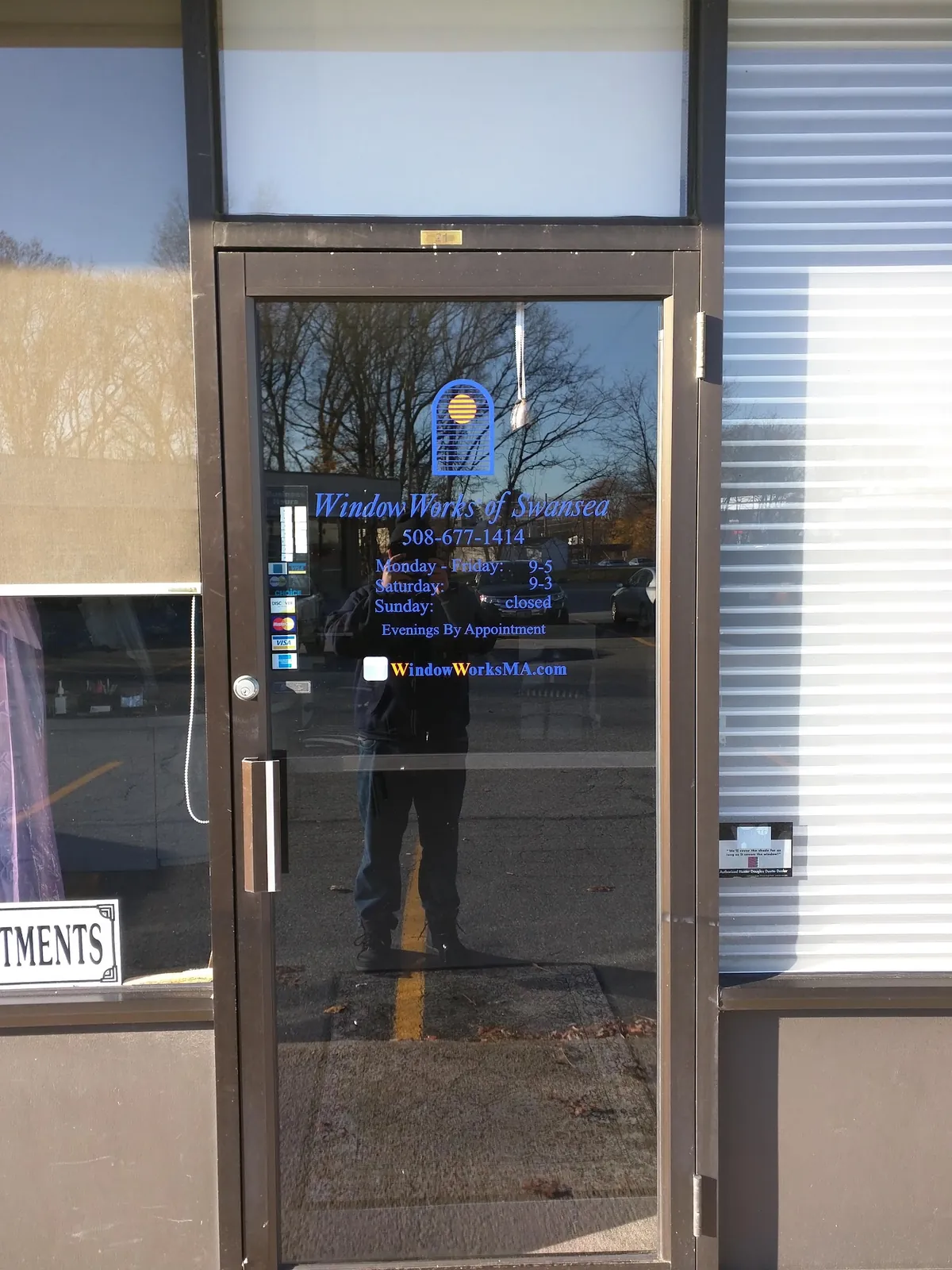
Window Works is a family store in Swansea, Massachusetts, a short drive over the state line from Tiverton. It opened in 1988 and the second generation runs it now. Across more than 37 years, our people have worked in 25 towns spanning the SouthCoast and the Rhode Island East Bay, in riverfront houses and inland farms alike.
- Seasoned window treatment specialists who measure at your house
- Shades hung by our own installers
- Regular word from us until everything is finished
- Warranties available on what we supply
- A showroom with cloths, lifts and the Norman range to look at
Every service we offer in town is on the Tiverton window treatments page, and the main cellular shades page goes into the honeycomb in more detail.
Questions from Tiverton
What colours suit a bright room facing the river?
Whites, ivories and sandy neutrals. They throw back more sun, keep the room airy and hide sun-bleaching better than deep colours.
Will salt air spoil the shades?
No. A low-power vacuum brush clears salt from the pleats, and cordless or motorised lifts leave no cords to fray.
Do the shades hide the river view?
Only when they are down. Raised, the pleats pack into a thin strip under the head of the frame.
What suits an old Four Corners farmhouse?
Typically double cell on the windward walls, mounted inside the frame against the old glass, and single cell on the sheltered side.
Is there a charge for the quote?
No. Quotes are free; ring through the call button or send the form.
Get in Touch
Press the call button to speak with the Swansea store about a free quote, a measuring appointment at your home or installation. Would you like to look at the cloths and colours first? The contact page explains how to find the showroom. Window Works has a 5.0 rating on Google.