
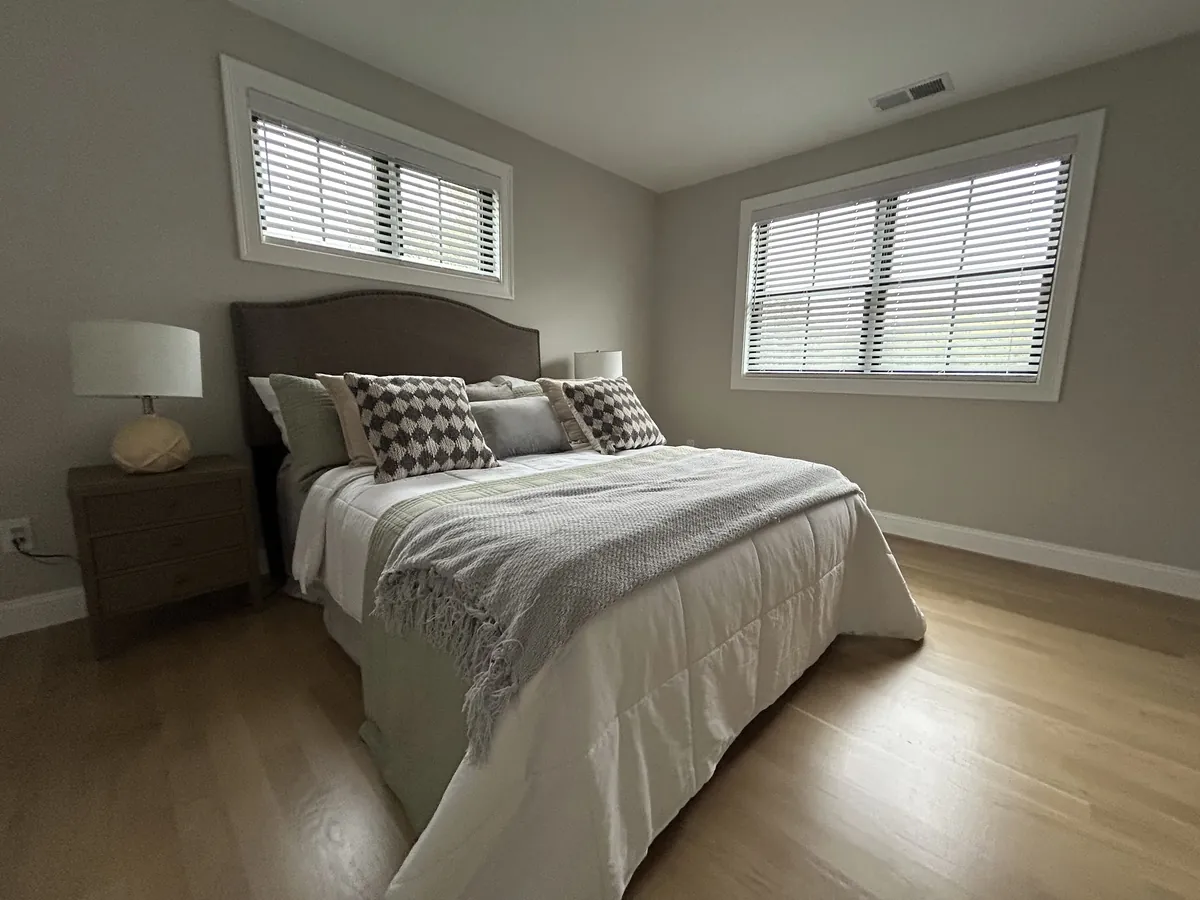
Close to the Street, Close to Next Door
In Warren’s historic waterfront district the houses stand near the pavement and near one another. A Federal or a Victorian on those streets may have its front windows only a few steps from people walking by and its side windows facing the clapboards of the house next door. Before a window treatment does anything else, it has to give the rooms behind that glass some privacy at street level, and that is the job plantation shutters in Warren, RI do especially well.
A shutter’s louvres can be angled rather than simply opened or shut. Tilt them so the slats slope down toward the room and anyone outside sees the face of the louvre, not the interior, while daylight still runs up onto the ceiling. Out at Touisset, where the shore lots are quieter and more open, the same shutter is set for a different purpose: opening the rooms to the water.
- Interior plantation shutters only
- Louvre size and frame style chosen for every opening
- Measured in your home and fitted by our own installers
Ways to Set Up a Shutter in Warren
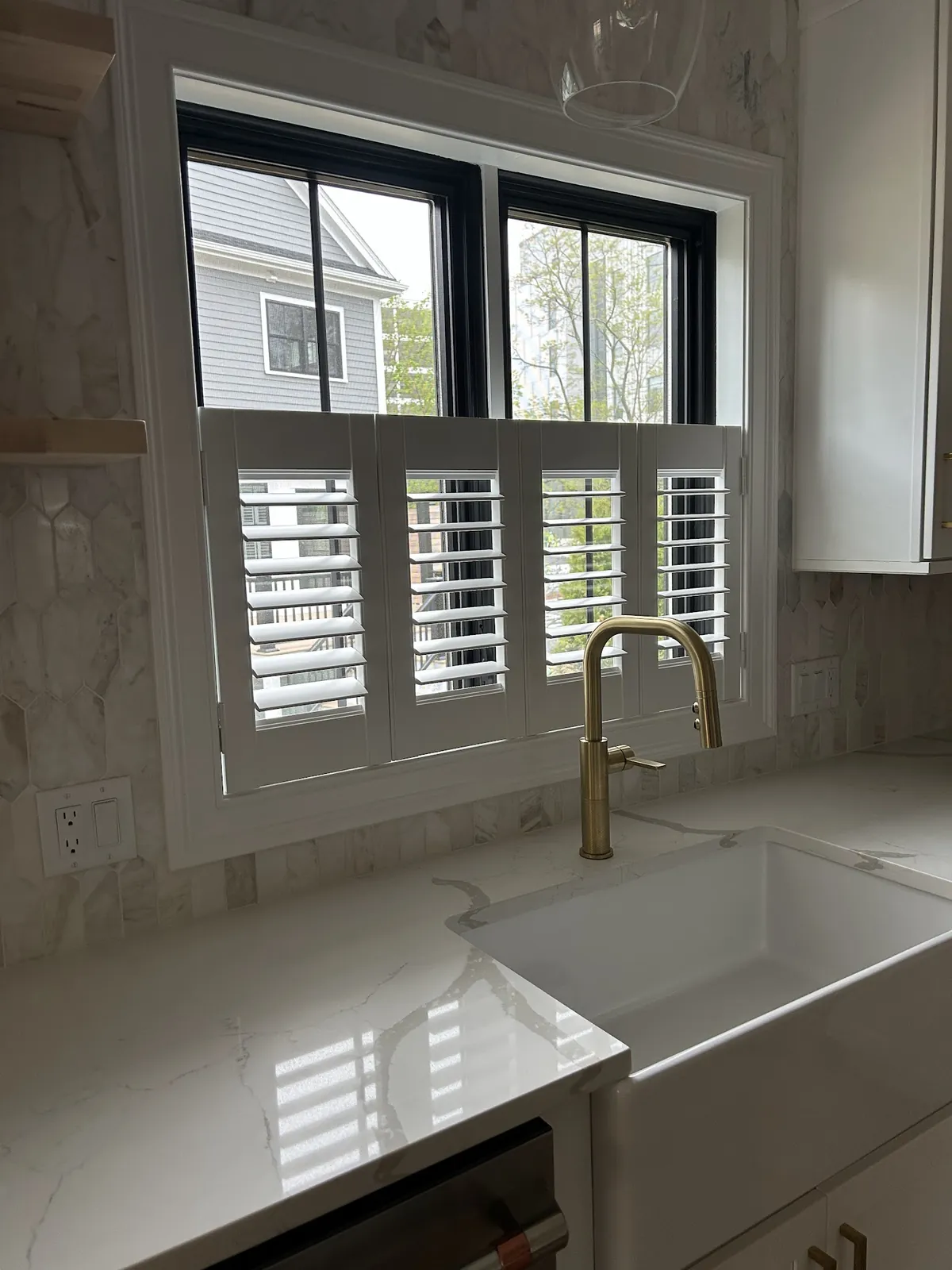
Cafe height
Panels across the lower half only. The bottom of the window is screened from the pavement and the top stays bright.
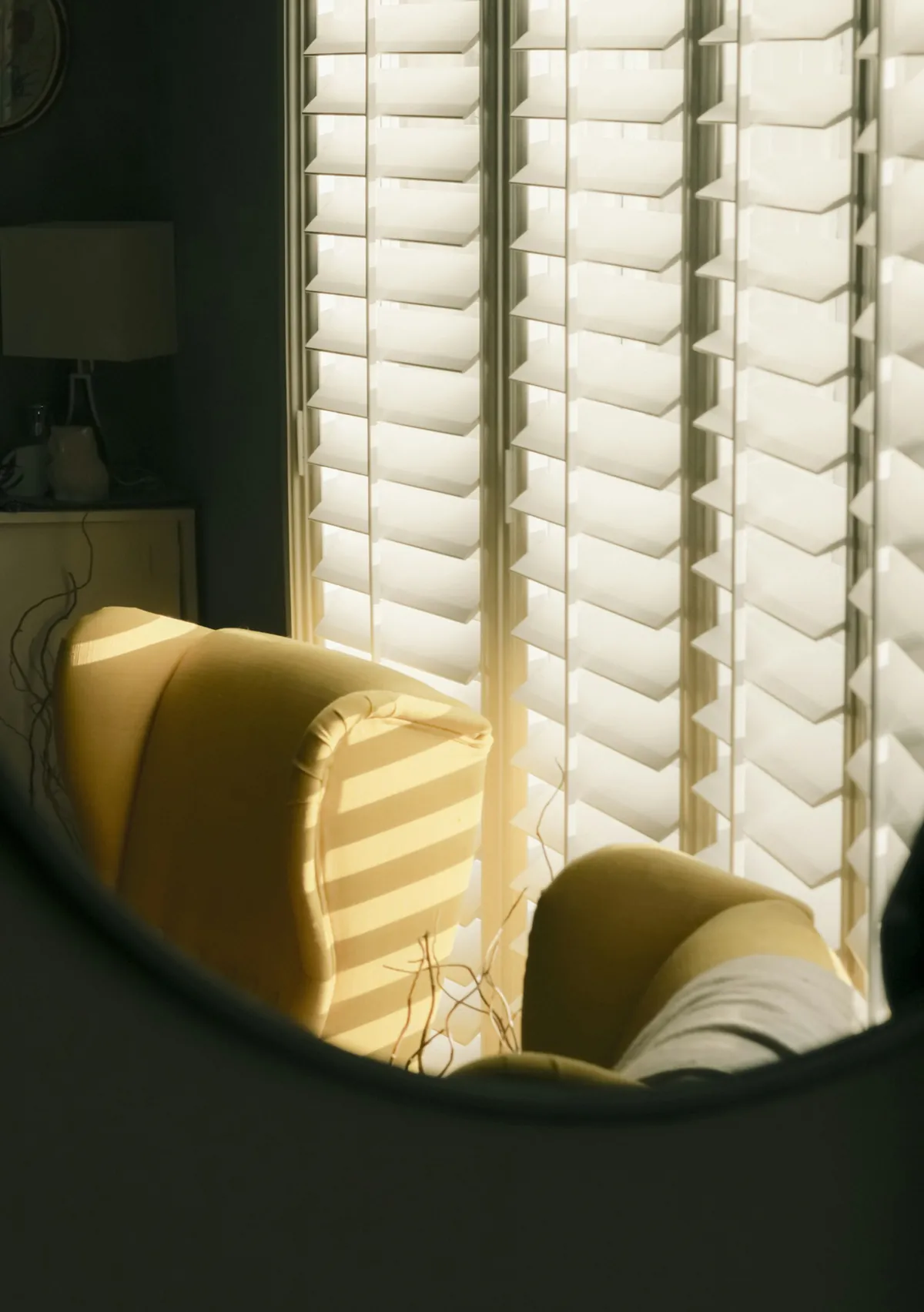
A rail across the middle
A divider rail lets the upper louvres open to the sky while the lower ones stay angled for privacy.
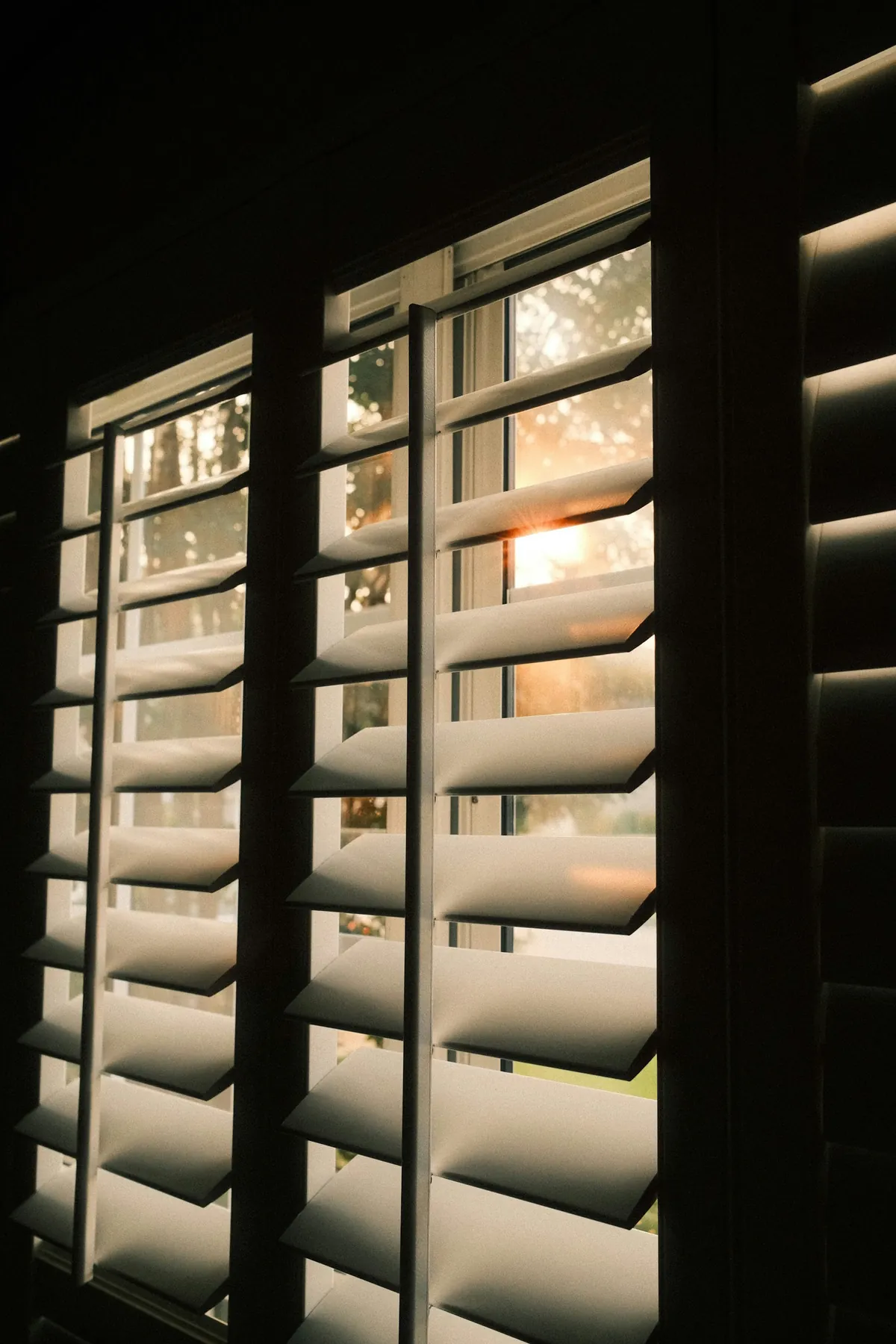
Full height
One panel from sill to head, the louvres moving together. Simple and clean on a tall Federal sash.
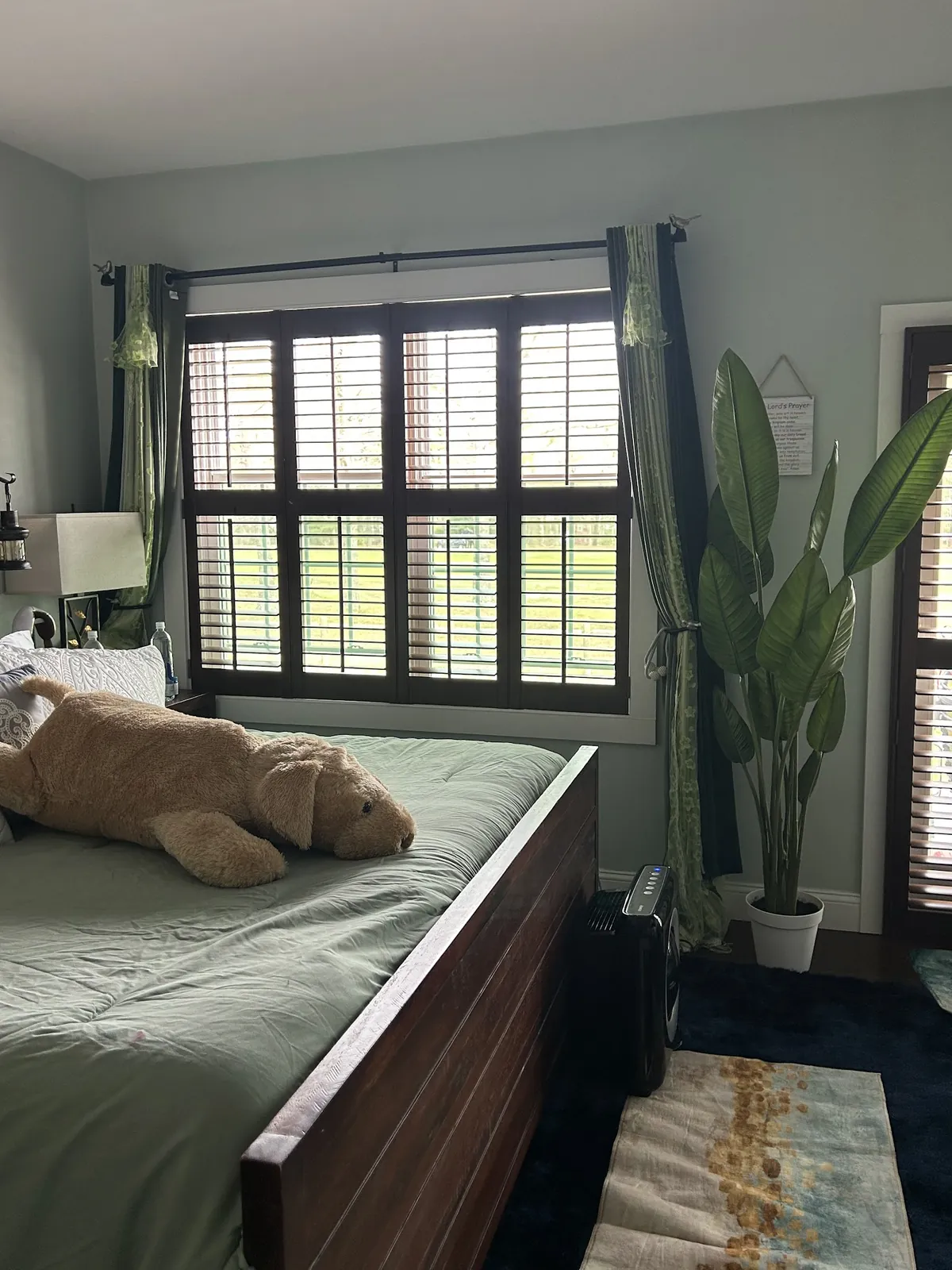
Warm wood
A stained finish for rooms with old floors, doors or a mantel that already carries the colour.
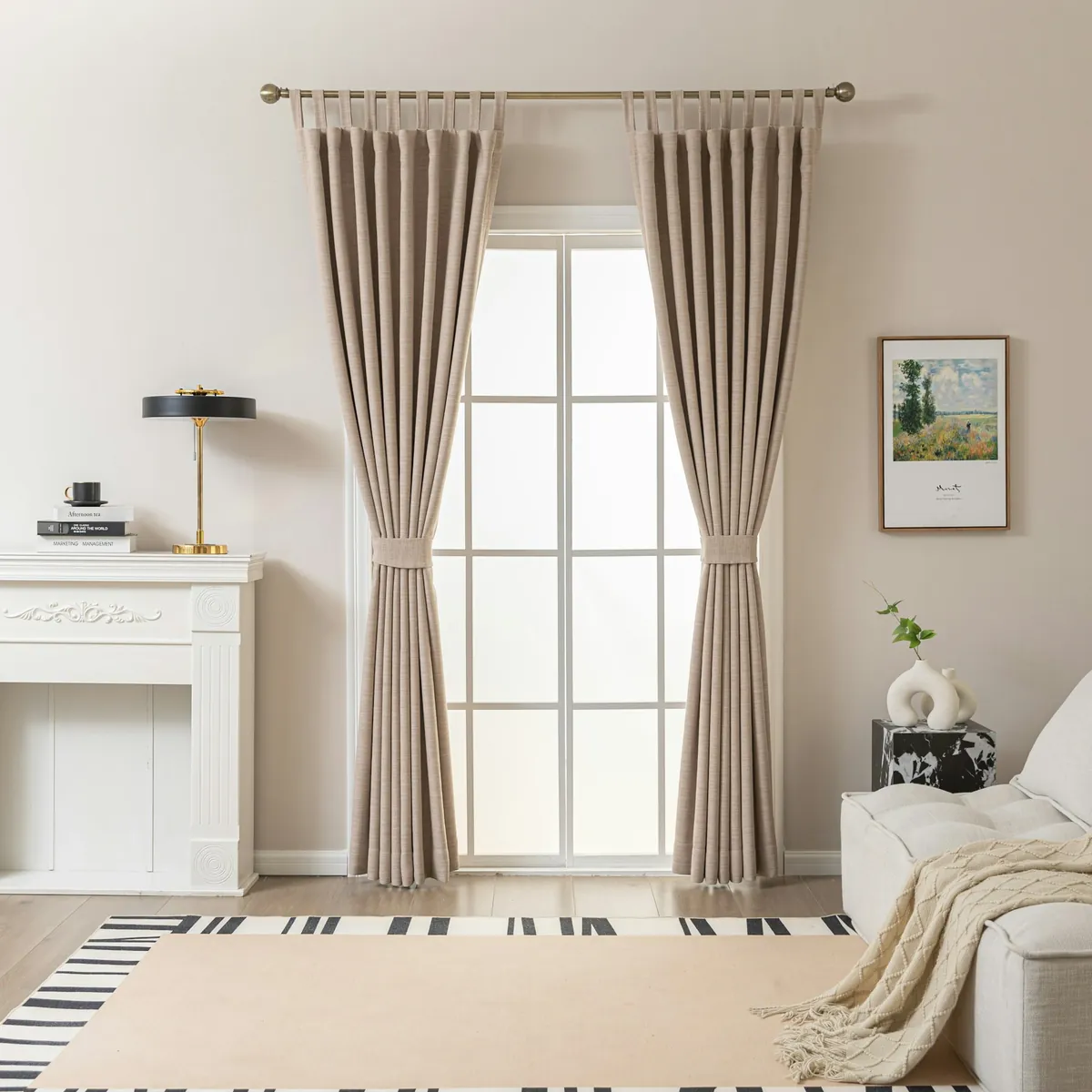

Every opening measured
Old frames are rarely square, so each window is measured where it stands before a panel is made.
Privacy First with Plantation Shutters in Warren, RI
Most window treatments give you two settings for privacy: open or shut. A shade lowered for privacy also cuts the daylight, and a curtain drawn for privacy closes off the room. With plantation shutters in Warren, RI there is a useful third setting, and on a close-set street it is the one used most.
Think about where someone walking past stands in relation to your window. They are lower than the glass, or level with it, and looking slightly upward or straight in. If the louvres are tilted so the room side of each slat is lower than the street side, their line of sight hits the back of the slat. Light from the sky, which comes in from above, still finds its way between the louvres and is thrown up onto your ceiling. The room stays bright and nobody on the pavement can see in.
That works best with a louvre that suits the window. On the narrow sash of an older Federal, a narrower louvre means more slats in each panel and smaller gaps between them when they are partly open, which gives tighter screening. On a wider Victorian window, a medium louvre keeps the panel from looking busy while still blocking a direct view.
When the window is right on the pavement
Some front rooms in the district are close enough to the street that people pass within arm’s reach of the glass. Here a divider rail is worth considering. It splits the panel into two sections that tilt on their own, so the lower louvres can stay angled shut all day while the upper ones open wide. Cafe-style shutters go one step further and cover only the lower part of the window, leaving the top completely clear. Either way the bottom of the window, which is what the street sees, stays private.
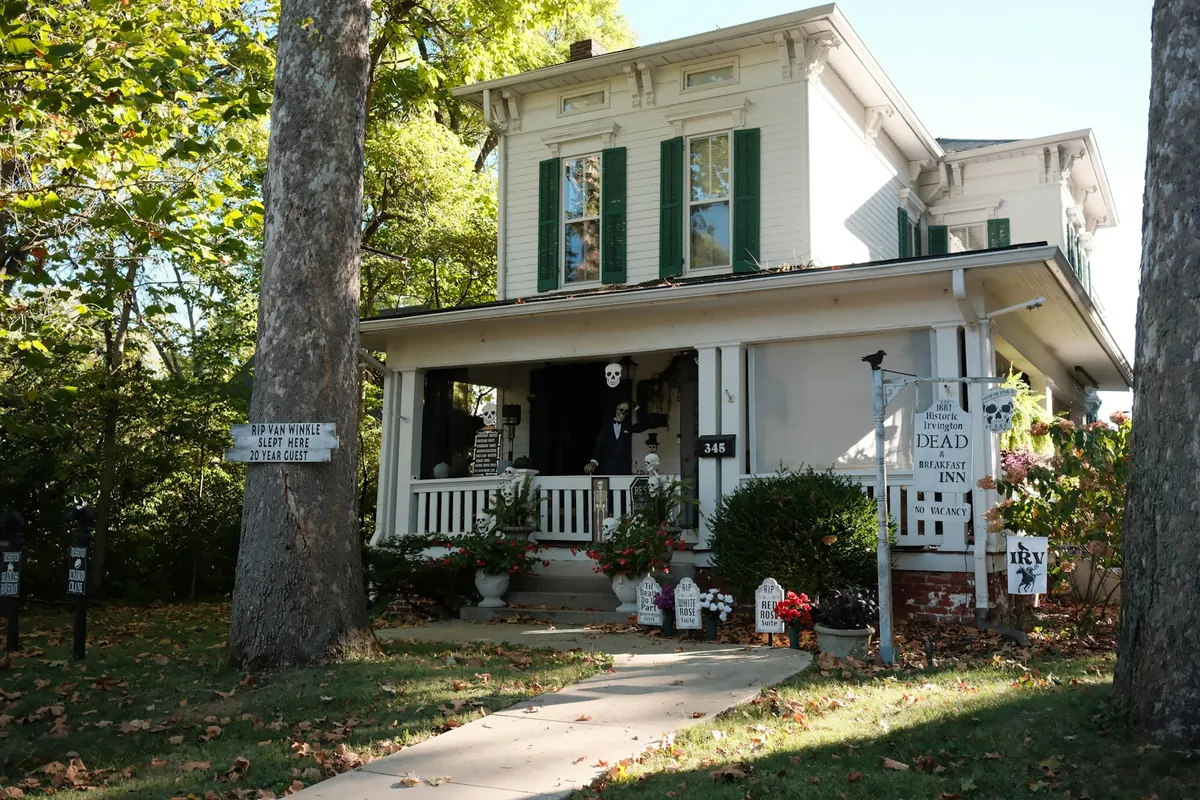
Federals in the Waterfront District
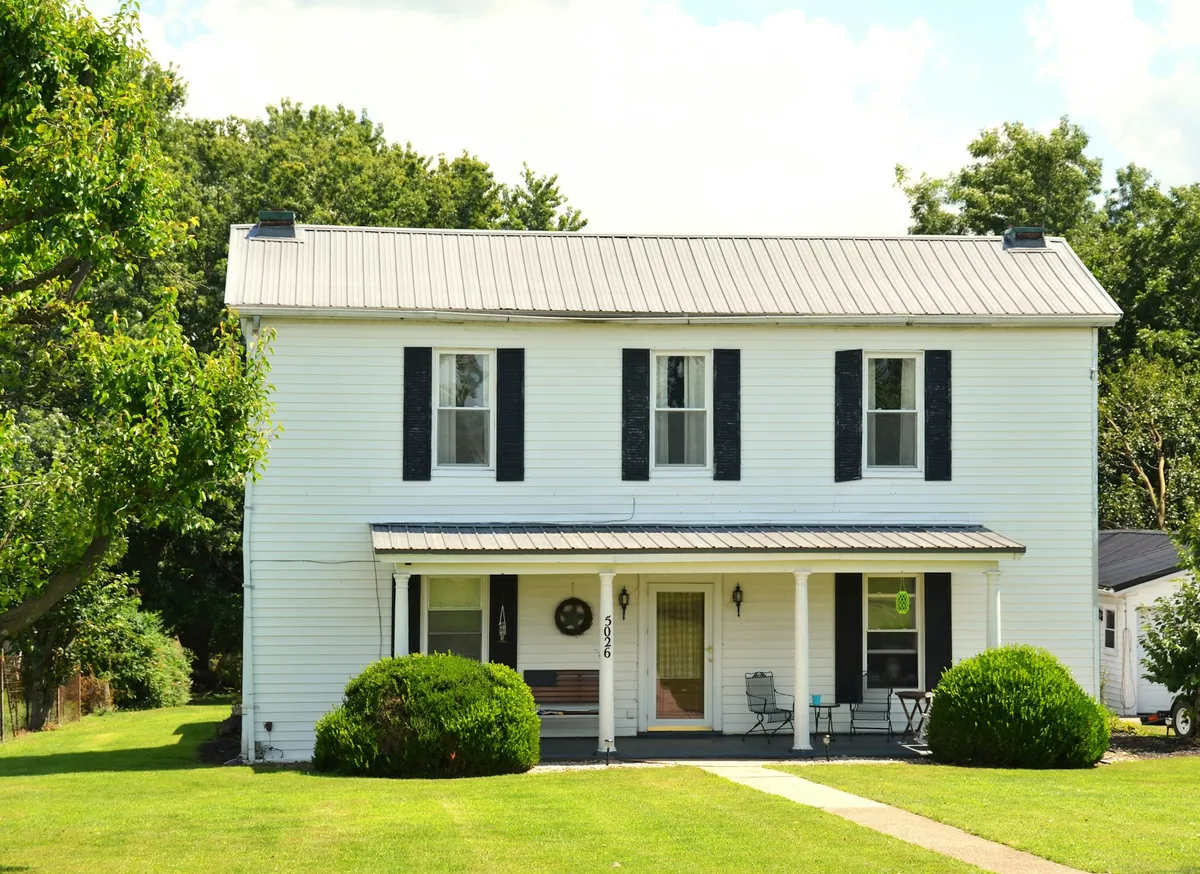
The Federal houses along Warren’s older streets are built on balance: windows set evenly across the front, usually tall double-hung sash with slim muntins and plain, handsome casings. Shutters for these houses should look as though they belong to that order.
An inside mount usually suits them best. The shutter frame sits within the window opening, so the casing remains on show and the panels look built in. The catch is depth. Older openings vary from one window to the next, and the frame needs enough depth to sit in the opening with the louvres free to turn. We measure that at every window, along with the width at the top, middle and bottom, because an old frame that has settled can be noticeably narrower in one place than another. The shutter frame is made to take up that difference so the panels still close in a straight, even line.
A simple frame profile with a modest edge sits comfortably against Federal trim, and a white or soft off-white finish matches it. Because these houses face the street so directly, the same louvre width and the same finish go on every front window, upstairs and down, so the house looks even to anyone walking past.
Upstairs rooms
Upper-floor bedrooms on a Federal are usually a little more private than the ground floor, but in a close-set block they often look straight across at a neighbour’s windows. A full-height panel, louvres closed in the evening and angled during the day, handles it without a heavy fabric layer.
Victorians and Their Taller Windows
The Victorians in the district bring a different set of windows: taller sash, higher ceilings, and sometimes a bay that projects toward the street. Plantation shutters for Warren homes of this era usually need a little more planning, because the windows are bigger and the bays put several openings at slightly different angles.
On a tall Victorian window, a divider rail placed near the meeting rail of the sash keeps the shutter in proportion with the window behind it. A medium or wider louvre suits the height and stops the panel from looking crowded.
A bay is treated as a set of separate windows, each with its own frame made to its own measurements, finished identically so they read as one. Because the windows in a bay meet at angles, the panels have to swing without striking each other or the side walls, and the hinging is worked out window by window.
Side Windows That Face the House Next Door
Close-set houses mean side windows that look onto very little: a narrow passage, a driveway, a neighbour’s wall or their own side windows. These openings still bring useful light into stairways, dining rooms and kitchens, so covering them with something solid is a waste.
A shutter can be set once and largely left. The louvres are angled to block the direct view across the gap while still passing light, and they rarely need to be moved. In a dining room where the side window is the main source of daylight, a wider louvre lets more of that light in when it is opened. On a stair landing with a small side window, a single panel is often all that is needed.
Stairways deserve a word of their own. In many close-set houses the stair runs along the side wall, lit by one tall window halfway up. That window is seen from the hall below and the landing above, so it should match the finish of the rooms on both floors. Because it is awkward to reach, it suits louvres that are set at a comfortable angle once and then left, with a panel that still swings open when the glass needs cleaning.
Some of these windows sit very close to a corner or a door frame. When there is not room for a panel to swing fully open, it can be hinged to the other side, or the shutter can be made with a single narrow panel that opens just enough for cleaning.
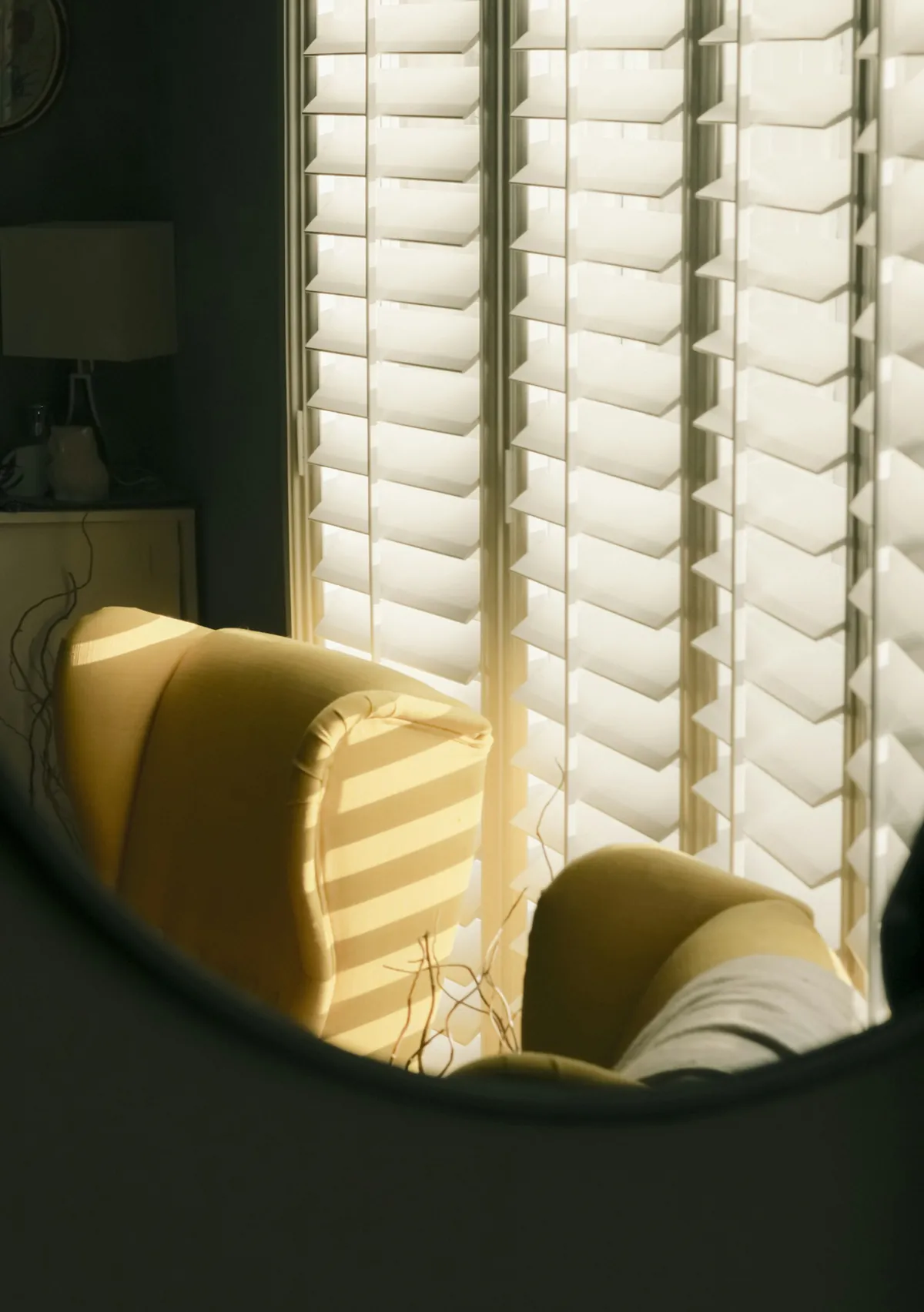
Touisset’s Shore Lots
The other side of Warren is quieter. On the shore lots at Touisset, houses sit farther apart and many rooms face the water rather than the street. Here privacy is less of a daily concern and the shutter’s job is mostly about light and view.
A wider louvre is the natural choice. When it is tilted flat, the gaps are bigger and more of the water shows through. Panels are hinged so they fold right back to the side of the window, returning all of the glass to the room on a clear day. When the sun comes off the water late in the day, the louvres can be angled to cut the glare without shutting out the scene.
Shore houses often mix window sizes, with a big picture window in the living room and smaller windows in bedrooms. We size the louvres so the bigger window looks substantial and the smaller ones match it from outside.
Looking after shutters near the water
Shutters are easy to keep clean. Close the louvres, wipe or dust down the panel, then reverse the angle and do the other side. On a painted finish, a cloth that is barely damp lifts the film that shore air can leave behind. A stained finish prefers a dry cloth.
Kitchens, Baths and Back Rooms
The rooms at the back of a close-set house are often the ones that need privacy most and get it least. A kitchen window may look straight into the neighbour’s kitchen across a narrow yard. A bathroom window may face a driveway. These rooms also deal with steam, splashes and cooking, which is hard on fabric.
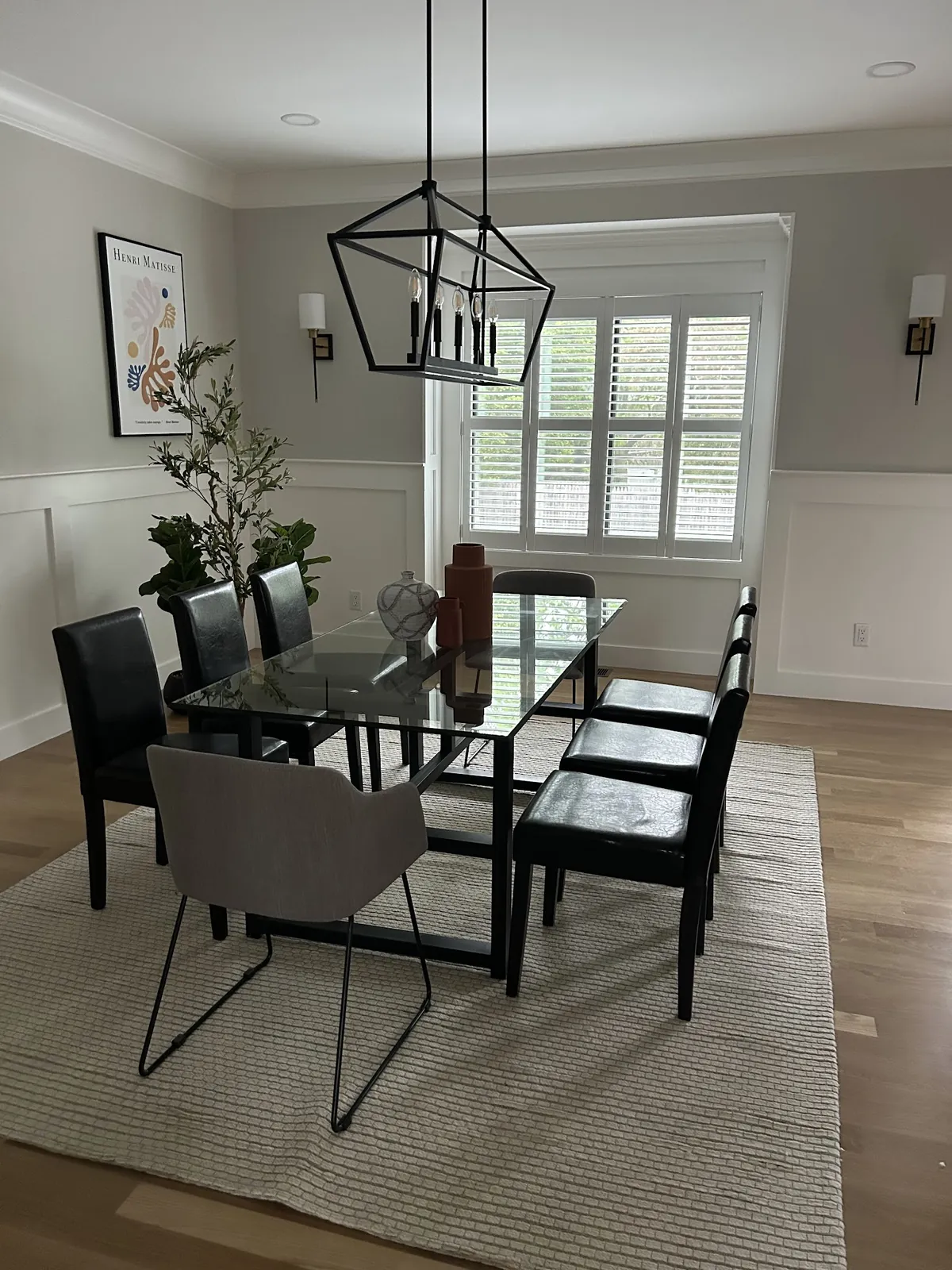
Shutters suit them well. A painted panel shrugs off steam and wipes clean, and there is no fabric to stain or fade. Over a sink, cafe-style panels screen the lower glass where you stand and work, while the top of the window stays clear for daylight. In a bathroom, full-height panels with the louvres angled down give privacy without making the room feel shut in, and they can be opened right up to air the room.
Back rooms in older houses were often added or altered over the years, so their windows may not match the front of the house at all. A bathroom might have a small square window, a kitchen a wider modern one. Each gets a frame made to its own opening, and because these windows are not seen from the street, the louvre width can be chosen purely for how the room works.
Finishes That Suit an Older House
Colour is the last decision and often the one people think about most. In a Federal or a Victorian with painted trim, a white or warm off-white shutter that matches the trim makes the window look complete, and it keeps a narrow room as bright as possible. When the trim is a cream, a grey or a historic colour, a painted shutter can follow it instead.
A stained finish brings out the grain of the wood. It suits a dining room with an old wood floor, a parlour with a carved mantel or a study lined with shelves. From the street, though, a stained shutter looks darker than a painted one, so in a house where the front windows face the pavement many people choose paint for the front rooms and stain for rooms at the side or back.
Whatever you choose, keeping one finish across all the windows that face the street is what makes plantation shutters in Warren, RI look settled on an old facade. A mix of colours on the front reads as a house still halfway through a project.
What Happens Between the Quote and the Fitting
Every Warren order follows the same plain route, and we keep you informed at each stage.
- Tell us which rooms are on your mind, by phone through the call button or through the form, and we book a free quote.
- A specialist visits your house and measures each window several times across and down, noting the depth of the opening and any lean in the frame.
- At the windows we look at locks, cranks, radiators and furniture close by, because they decide how the panels split and swing.
- You choose louvre width, frame profile, finish, divider rail and tilt rod. If you would like to handle samples, they are at the Swansea showroom.
- Your quote lists every window separately.
- The shutters are built to the measurements from your house, then our installers fit them, set each panel so it closes squarely and show you how they work.
Tilt rods
A tilt rod moves all the louvres in a section at once. Running down the front of the panel, it gives the traditional look that suits a Federal or a Victorian. Set at the back, it leaves a cleaner face. Both work the same way in daily use.
A Swansea Store That Knows the East Bay
Window Works began in Swansea in 1988, and the same family runs it in its second generation. Warren is just over the state line from the showroom, and we have worked in East Bay houses for over 37 years.
- Specialists who have measured a great many old frames
- Your windows measured in person, every one
- Installation done by our own team, not passed on
- We stay in touch from the first call until the work is done
- Warranties offered on the products we supply
Call in at the showroom to open panels, try a tilt rod and compare louvre widths. The Norman range is on show there as well.
There is more on louvres, frames and finishes on our main plantation shutters page, and every service we offer in town is gathered on the window treatments for Warren page.
Questions from Warren
How do shutters keep a front room private without making it dark?
Tilt the louvres so the room side of each slat sits lower. People outside see the slat, while daylight from above still reaches your ceiling.
My house is right on the pavement. What do you suggest?
A divider rail, so the lower louvres stay closed while the upper ones open, or cafe-style shutters that cover only the lower part of the window.
Can you fit shutters inside an old Federal window frame?
Usually, if the opening has the depth. We measure each window and make the frame to take up any lean in an old opening.
What about the windows in a Victorian bay?
Each window in the bay gets its own frame and panels, made to its own size and finished to match, with the hinging planned so nothing collides.
Which louvre suits a room facing the water at Touisset?
A wider louvre, which shows more of the view when tilted flat. The panels fold back fully when you want the whole window clear.
Start with a Quote
Your first step costs nothing: a free quote. Use the call button to reach the Swansea store, book measuring at your house or ask about installation, or send the form and we will come back to you. You are also welcome to visit the showroom and try the shutters before anyone comes out; the contact page has directions. Window Works is rated 5.0 on Google.