
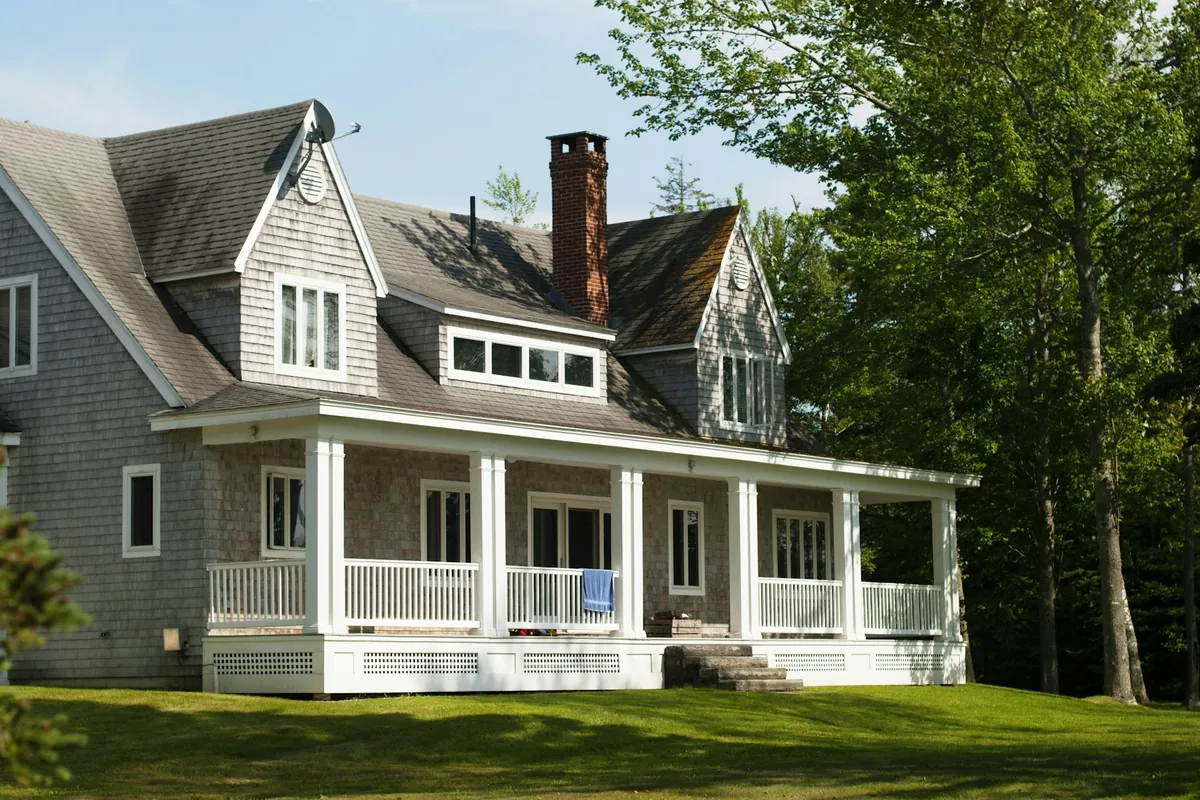
Salt Air, Big Glass and Old Shingle
The salt air decides a great deal about woven wood shades in Westport, MA. A natural weave of wood, reed or bamboo sits in a room where the air off the water is damp for much of the year, and the shade has to be chosen and placed with that in mind. Done well, it is one of the most natural partners for a coastal house, because its texture belongs with weathered shingle, painted floors and an open view.
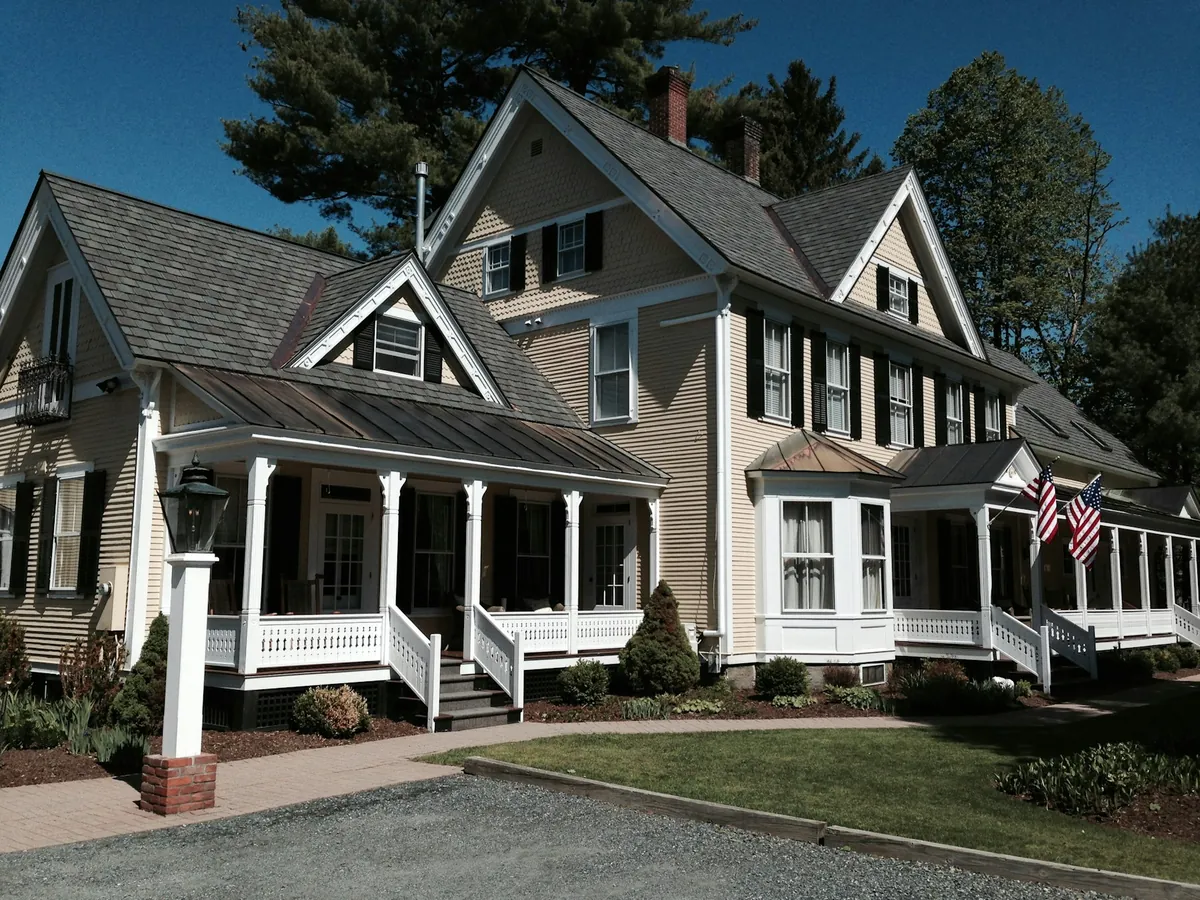
The town’s houses split into two kinds. Along Main Road there are shingled capes and farmhouses, many of them old, with smaller sash, low ceilings and rooms that were built to keep the weather out. Toward Horseneck and the Westport River the houses are larger and newer, and their harbour-facing rooms are built around the view rather than the wall, with wide glass that takes the full sun off the water.
- Woven wood and bamboo, with or without a fabric liner
- Measured at each window in your house
- Installed by our own team, with weaves to handle in the Swansea showroom
Three Ways a Woven Shade Earns Its Place
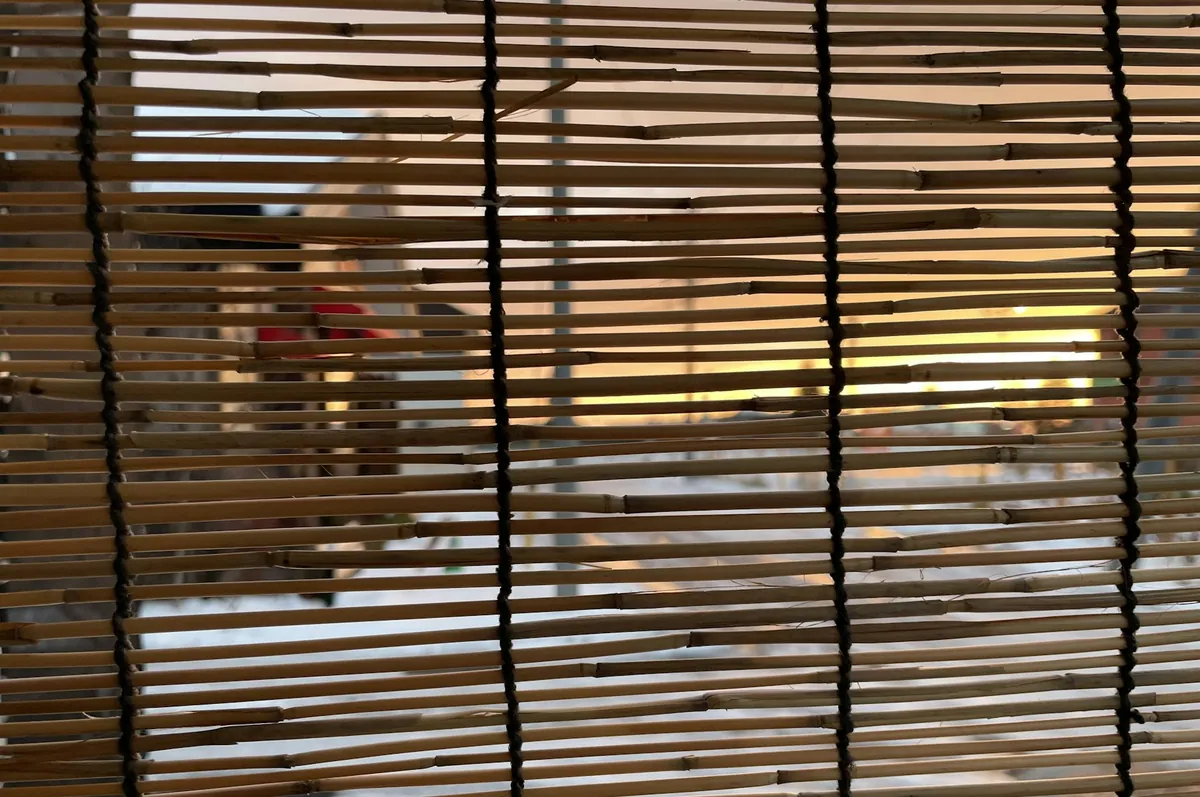
A softer view of the water
Lowered over harbour-facing glass, an unlined weave cuts the glare but leaves the shape of the river and the sky showing through.
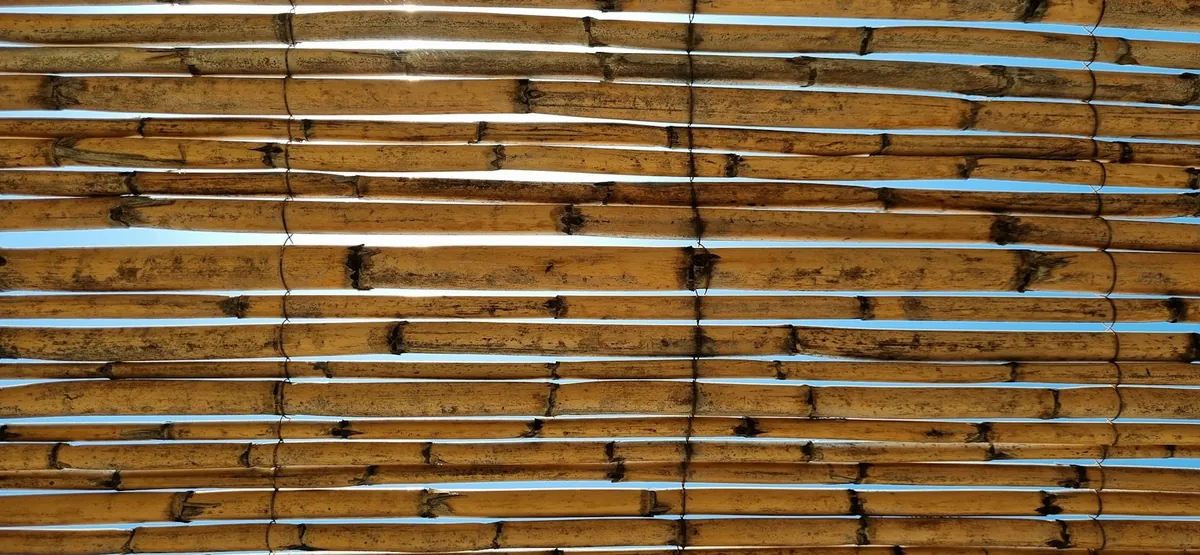
Texture for an old farmhouse
On the small sash of a Main Road cape, a fine bamboo weave adds warmth without hiding the old trim around the frame.
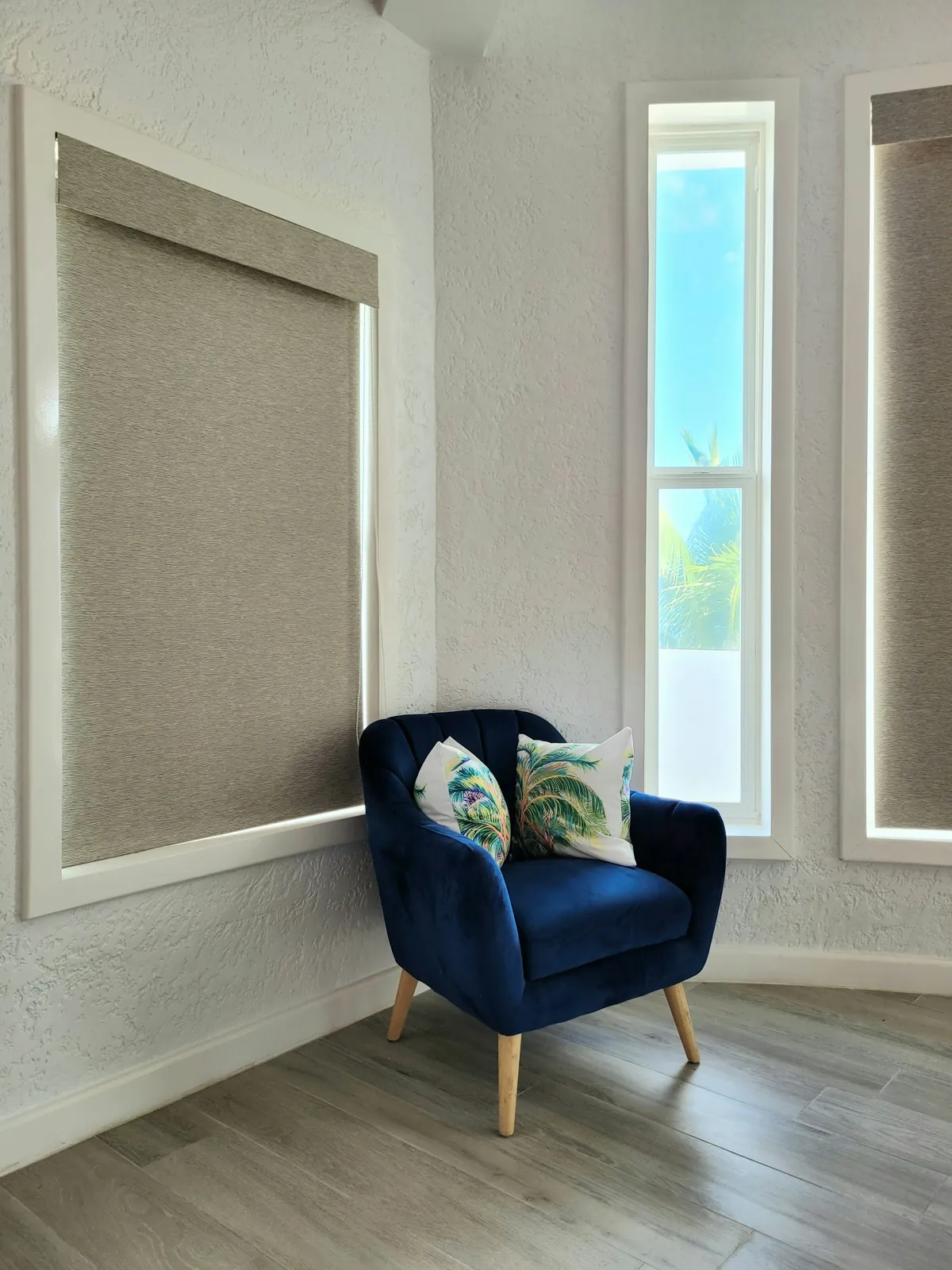
Tall glass in newer rooms
The bigger rooms near Horseneck often have tall windows in a row. Matching woven shades keep that wall calm and even.
How Weave and Liner Shape the Light
Two choices do most of the work: how tight the weave is, and whether a liner is sewn behind it. Getting woven wood shades for Westport, MA right means looking at both against the glass they will cover, because a weave that looks dense in your hand can let in a surprising amount of daylight once the sun is behind it.
An open weave gives you the most light and the most view. The gaps between the reeds or slats break the sun into a scatter of small bright points, and on a clear afternoon that pattern moves across the floor as the light changes. In a room that faces the water, that is often exactly the effect you want, because the shade takes the hard edge off the brightness without turning the view into a blank wall.
A tighter weave keeps more of the room private during the day and dims it further, while still showing its texture. The light that comes through is warmer and more even, with fewer bright points. This suits a bedroom or a sitting room on the road side of a Main Road farmhouse, where you want daylight but not a clear view in from the road.
A liner changes the shade’s job at night. An unlined woven shade in a lit room shows shapes and movement to anyone outside, which matters on a ground floor close to the road. A privacy liner stops that while keeping the natural face toward the room. A room-darkening liner goes further, for a bedroom where the early summer sun off the river would otherwise wake you. The liner also shields the weave from some of the direct sun, and we talk about whether that is worth having on the brightest windows in the house.
Living With Salt and Damp
Coastal exposure is the governing factor for any window treatment in this town, and natural materials ask for a little more thought than most. Wood, reed and bamboo respond to moisture. Here is how we handle that when we plan a house near the water.
Keep them away from wet rooms. A woven shade is right for a living room, a bedroom, a study or a dry porch. It is not right for a bathroom with a shower, a mudroom where wet coats hang by the window, or an outdoor shower enclosure. For those windows we will suggest a material that copes with water, and the house can still look consistent from outside.
Think about the windows you leave open. Many coastal rooms have their windows open all summer to catch the breeze. Spray and rain coming in through an open sash will reach a shade hanging right behind it. On those windows we look at the mount, the depth of the frame and the side of the house that takes the weather before we suggest a woven shade there.
Dust a little more often. Salt carried on the air settles on every surface near the water, the weave included. A soft brush or a vacuum with a brush head, run down the shade every few weeks, keeps it from building up. It takes a minute and keeps the colour clean.
Let the sun do less. The strongest sun on the river side will fade any natural material over the years. A liner, a slightly darker weave or a shade that is raised when the room is empty all help. We would rather tell you this when we measure than have it come as a surprise.
Main Road capes and farmhouses
The older capes and farmhouses along Main Road usually have modest sash windows, often with the original trim, and rooms with low ceilings. A woven shade can sit inside the frame here, so the trim stays on show, as long as there is enough depth. We check that depth at every window, because in an old house it changes from room to room and sometimes from one side of a window to the other.
Low ceilings bring one practical point. A woven shade folds into a fairly deep stack when it is raised, and on a short window that stack can sit over a good share of the glass. Where there is room on the wall above the frame, mounting the shade higher lets it clear the window when raised and makes the window look taller. Where there is no room, a lighter, thinner weave folds into a smaller stack.
These houses also tend to have rooms that face every direction, so the same weave can look quite different from the kitchen to the front parlour. We often suggest one material through the house with liners only where they are needed, so the windows read as a set from the road.
Measuring, Choosing and Fitting, Step by Step
Every house gets the same careful process, whether it is one window over a reading chair or every window on the water side. You can expect to hear from us at each stage until the job is done.
- Start with a free quote: use the call button or the form and tell us roughly which rooms you are thinking about.
- Come and see the weaves at the Swansea showroom if you would like to, before or after the visit, and handle the materials and liners side by side.
- A specialist measures each window in your home, noting the frame depth, the wall space above it for the stack, and which windows take the sun and the weather.
- We talk through weave, liner, colour and how each shade lifts, window by window, so you know why each choice was made.
- Your quote lists every window, and once you are happy with it the shades are made to the measurements taken in your house.
- Our team installs them, checks that each one raises and lowers evenly, and shows you how to look after the weave near the salt.
Harbour-facing rooms near Horseneck and the river
The newer, larger houses toward Horseneck and the Westport River have the hardest windows to dress in town. A living room that faces the harbour may have a whole wall of glass, sometimes with a slider to a deck, and the sun comes off the water for much of the day. Nobody wants to cover the view, but a room like that can be too bright to sit in on a summer afternoon.
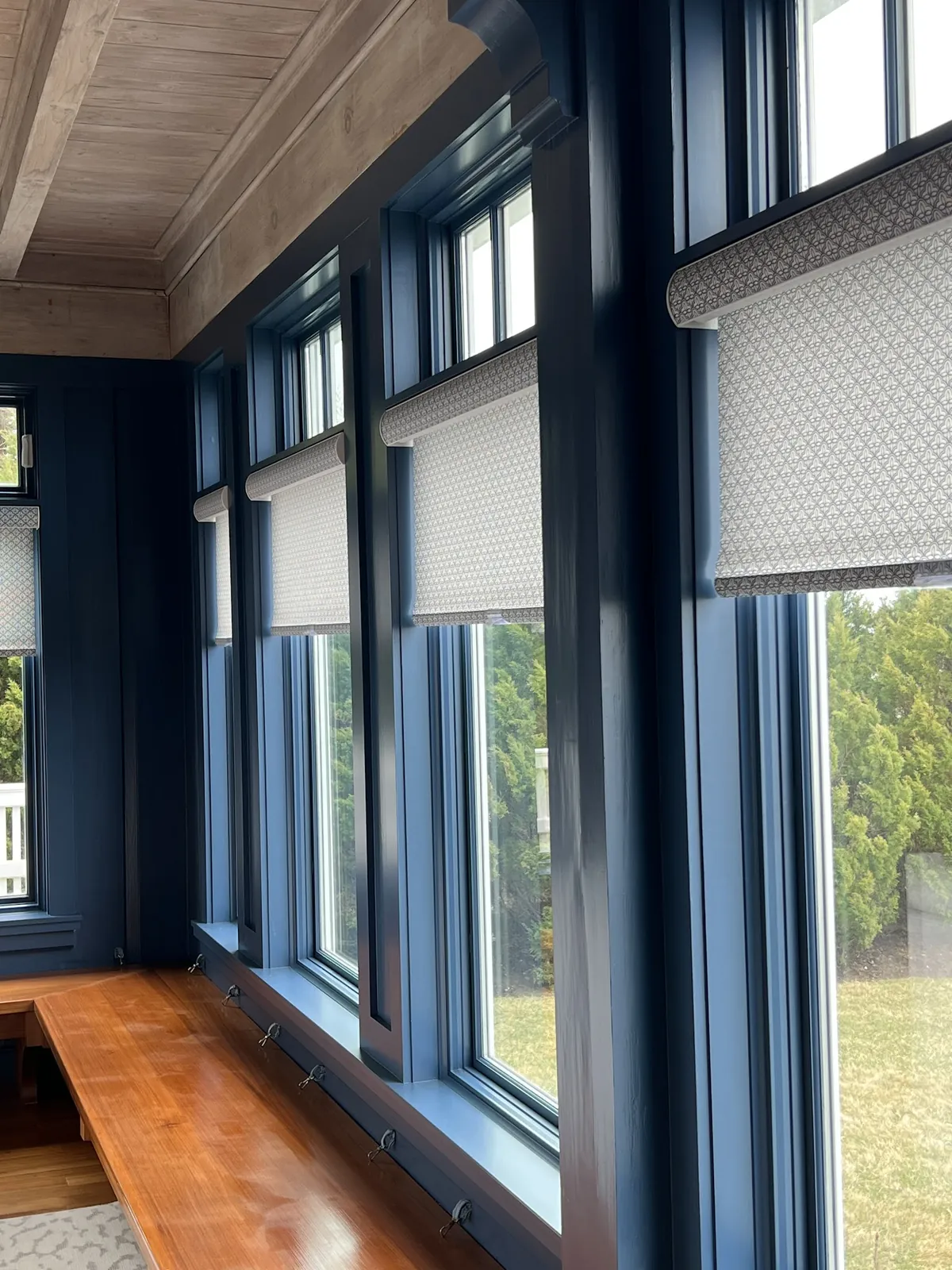
A woven shade is a good answer because it does not have to be all or nothing. Lowered, an open weave turns the glare into soft light and keeps the outline of the water and the far shore visible. Raised, it sits as a neat band of natural texture above the glass. On a long run of windows we size each shade to its own frame so the bottom edges line up across the wall when they are all lowered together.
Where a wall is one large sheet of glass, a single wide shade can be heavy to lift, so we often divide the width into two or three shades that meet neatly. That also lets you lower one part of the wall against the afternoon sun while keeping the rest open. If a slider is part of the wall, we look at whether a woven shade or a different treatment suits it better, since a shade has to clear the door handle and the traffic in and out.
Porches and three-season rooms
Many Westport houses have an enclosed porch or a three-season room, and woven shades suit them well. The look is relaxed, it belongs with wicker and painted wood, and a row of shades can be lowered against the sun on one side of the room while the other side stays open. On a porch that is closed in but not heated, damp is the thing to watch, and we will be honest if a room is too exposed for a natural weave.
Bedrooms and early light off the water
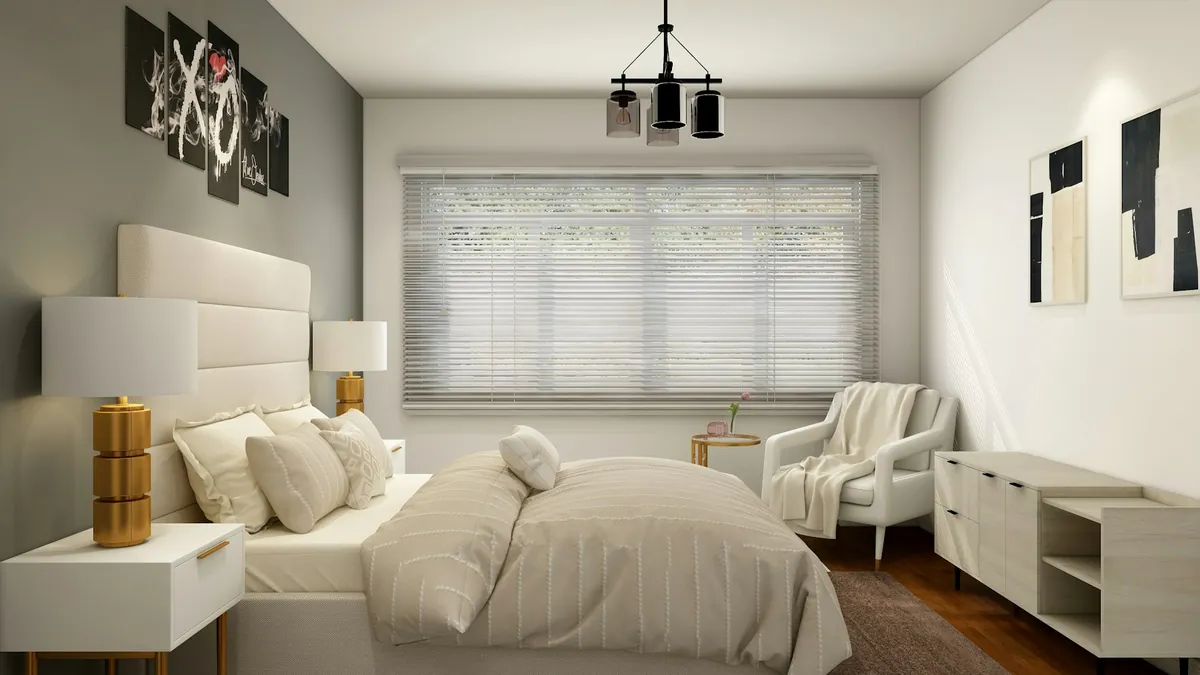
A bedroom that looks over the river or the marsh gets the first light of the day, and in summer that comes very early. An unlined woven shade will soften it but not stop it, so this is where a room-darkening liner earns its place. The weave still faces into the room, so the bedroom keeps the same natural look as the rest of the house, while the liner behind it holds back most of the morning sun.
How the shade sits in the frame matters as much as the liner. A shade mounted inside a deep frame leaves a thin line of light down each side, which some people like and others find too bright at dawn. Mounted on the wall over the frame, the shade covers those gaps and the room stays darker. We talk about how dark you want the room before we decide, and show you both mounts at the window.
Upstairs rooms in the old capes often have dormer windows tucked under the roof, with little wall around them. Here a fine, light weave makes sense, because it folds into a slim stack and keeps the small amount of glass clear when raised. Many people who order woven wood shades in Westport, MA start with these bedrooms and add the main rooms later, matching the weave so the house still looks like one choice from outside.
The top of the shade
A woven shade can carry a matching valance across the top, made from the same weave, which hides the headrail and gives a finished line on a window with no drapes. On a row of windows in a harbour room, a continuous run of valance can tie the shades together. On the small sash of a farmhouse, a plain top often looks lighter. We bring the question up when we measure, because it affects how much wall space the shade needs.
Colour and how it changes with the light
Natural fibres vary from slat to slat, which is part of their charm. Pale bamboo and light grasses keep a room bright and sit easily with white trim and the soft greys of a shingled house. Mid browns pick up old pine floors and beams. Darker weaves suit a den or a study where you want a warmer, more enclosed feel. The colour you see in the showroom will shift once the sun is behind it, so we always suggest holding a sample against the window it is meant for.
Pairing a woven shade with fabric
A woven shade often looks best with something soft beside it. Side panels in linen or cotton frame the window, add colour and can be drawn at night for extra privacy, which helps on an unlined shade. Window Works makes drapes as well as shades, so both can be measured on the same visit. For the full range in town, see our window treatments in Westport page, and if a room needs something that copes better with damp, our roller shades in Westport are worth comparing.
A Family Store Since 1988
Window Works opened in Swansea in 1988 and is now in its second generation of the same family. For over 37 years we have measured and fitted windows across the SouthCoast of Massachusetts and the Rhode Island East Bay, coastal houses among them.
- A team of window treatment specialists who know the materials
- Measuring in your home, so each shade fits its own opening
- Installation by our own team
- In constant contact with you until the job is done
- Warranties offered on what we sell
The showroom in Swansea is the place to compare weaves and liners in person before you choose woven wood shades for Westport, MA.
Smaller windows and odd shapes
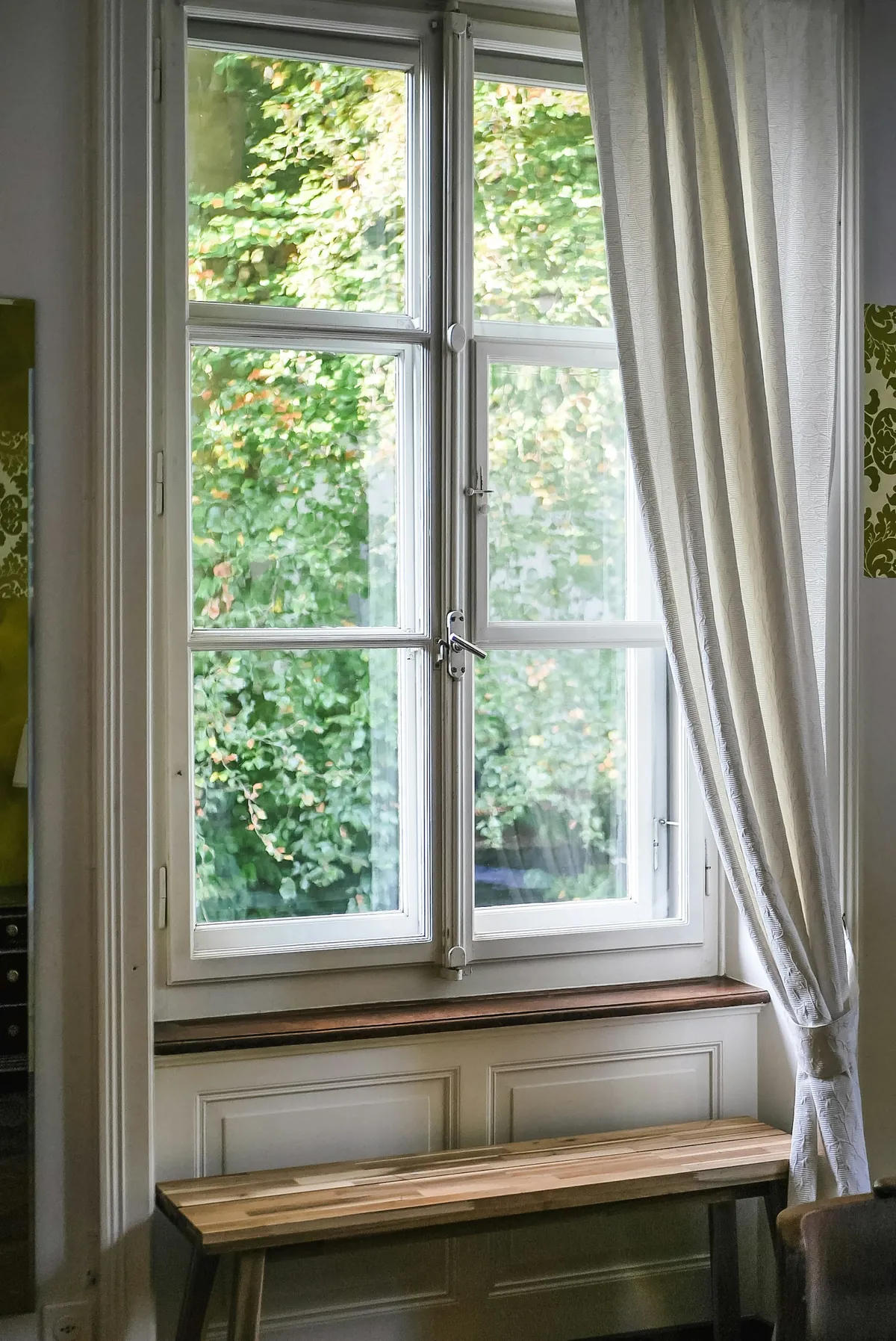
Old farmhouses and capes often have a small window by a stair, a narrow one beside a chimney or a single window in a dormer bedroom. Each of these is measured on its own. A woven shade in a fine weave suits the small ones well, because it stays light and folds into a modest stack. Where a window is an unusual shape, we will tell you plainly what a woven shade can and cannot cover. The main woven wood shades page has more on the weaves themselves.
Questions from Westport
Will salt air spoil a woven shade?
Not in a dry living room, bedroom or porch, as long as the shade is dusted now and then. It is not the right choice for a wet room or a window that stays open to spray.
Can I keep the harbour view and still cut the glare?
Yes. An open weave lowered over the glass softens the sun and keeps the outline of the water visible. A tighter weave or a light liner takes more of the glare away.
Do I need a liner on the road side of a Main Road house?
If the room is lit at night, a privacy liner is worth having, because an unlined weave shows shapes from outside after dark. By day an unlined shade gives a fair amount of privacy.
How do you handle a whole wall of glass?
We usually divide a wide wall into two or three shades sized to the frames, so each is easy to lift and the bottom edges line up when they are lowered.
How do I get a quote?
Quotes are free. Use the call button or the form, tell us which rooms you have in mind, and we will arrange measuring in your home.
Your Next Step
A free quote is the place to start for woven wood shades in Westport, MA. Use the call button to book it, arrange measuring in your home or ask about installation, or send the form and the Swansea store will be in touch. If you would like to feel the weaves and see the liners first, the contact page has directions to the showroom. Window Works holds a 5.0 rating on Google.