
Sun, Salt Air and a Natural Weave
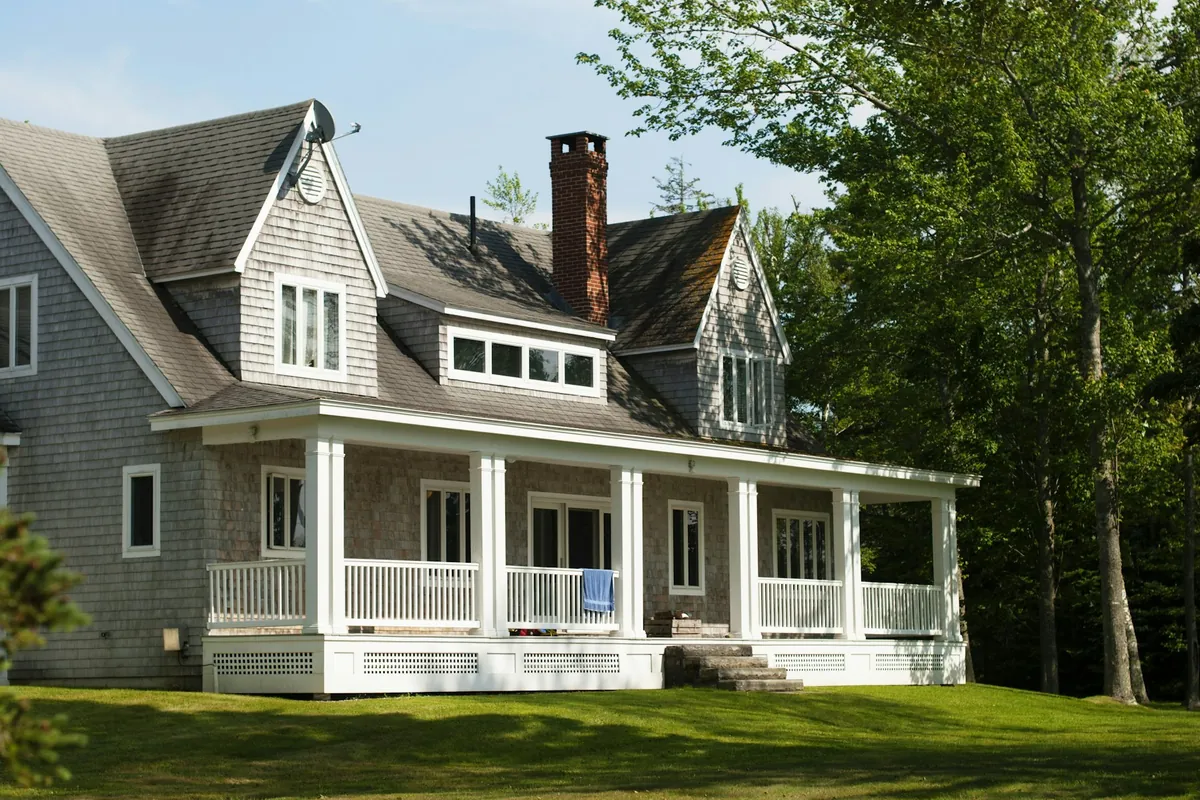
Tiverton’s houses split into two kinds of room. Inland, around Four Corners, the farmhouses and shingled capes have modest windows in thick old walls. On Nanaquaket and along the Sakonnet River, the rooms that face the water are mostly glass, open to strong sun and to salt air off the river. Choosing woven wood shades in Tiverton, RI means being honest about which kind of room each shade is for, because a natural material behaves differently in each.
Woven wood and bamboo bring the texture and the warm, filtered light that suit a coastal house so well. Where the glass faces the water and the sun hits it for hours, we talk through weave, lining and placement with care, and say plainly if a particular window would be better with something else.
- Woven wood and bamboo, lined or unlined
- Measuring in your home and fitting by our own team
- The full set of weaves to handle at the Swansea showroom
Picking the Right Woven Shade for the Room
Rooms that look at the river
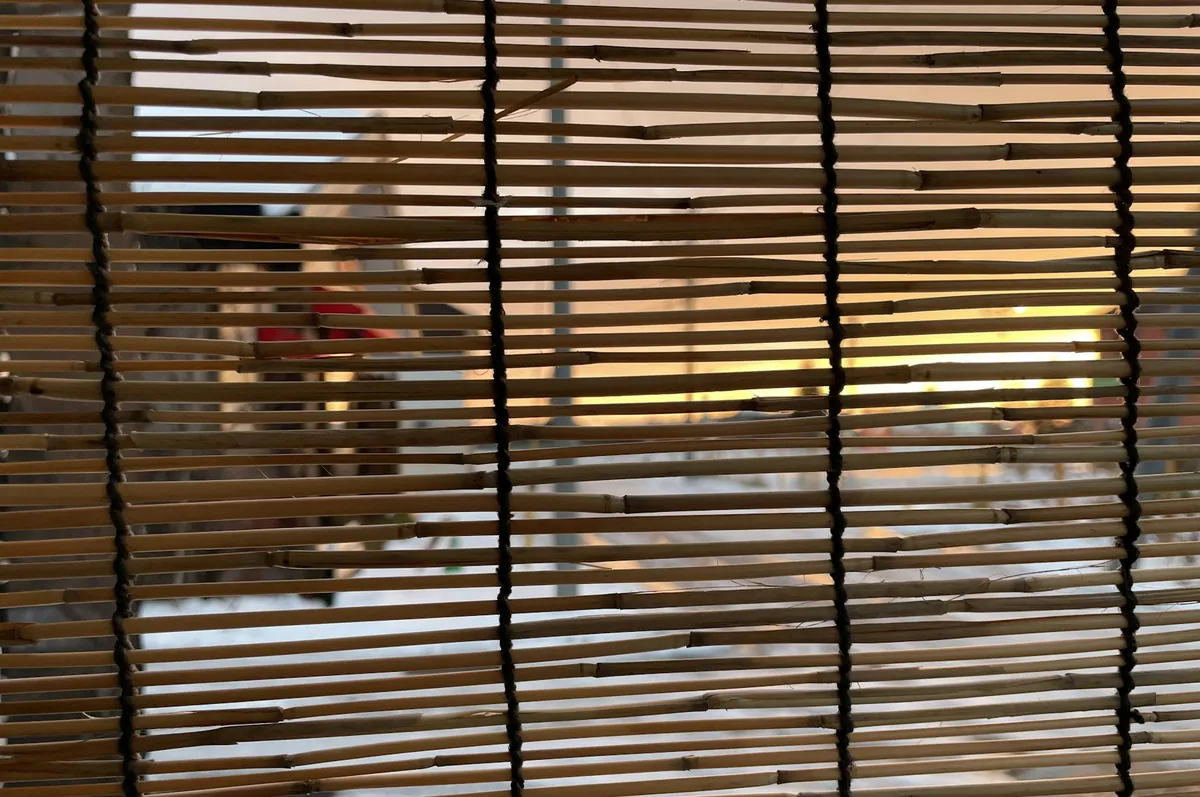
A looser weave holds the water in soft focus while it takes the edge off the glare coming up off the river.
Bedrooms facing the morning
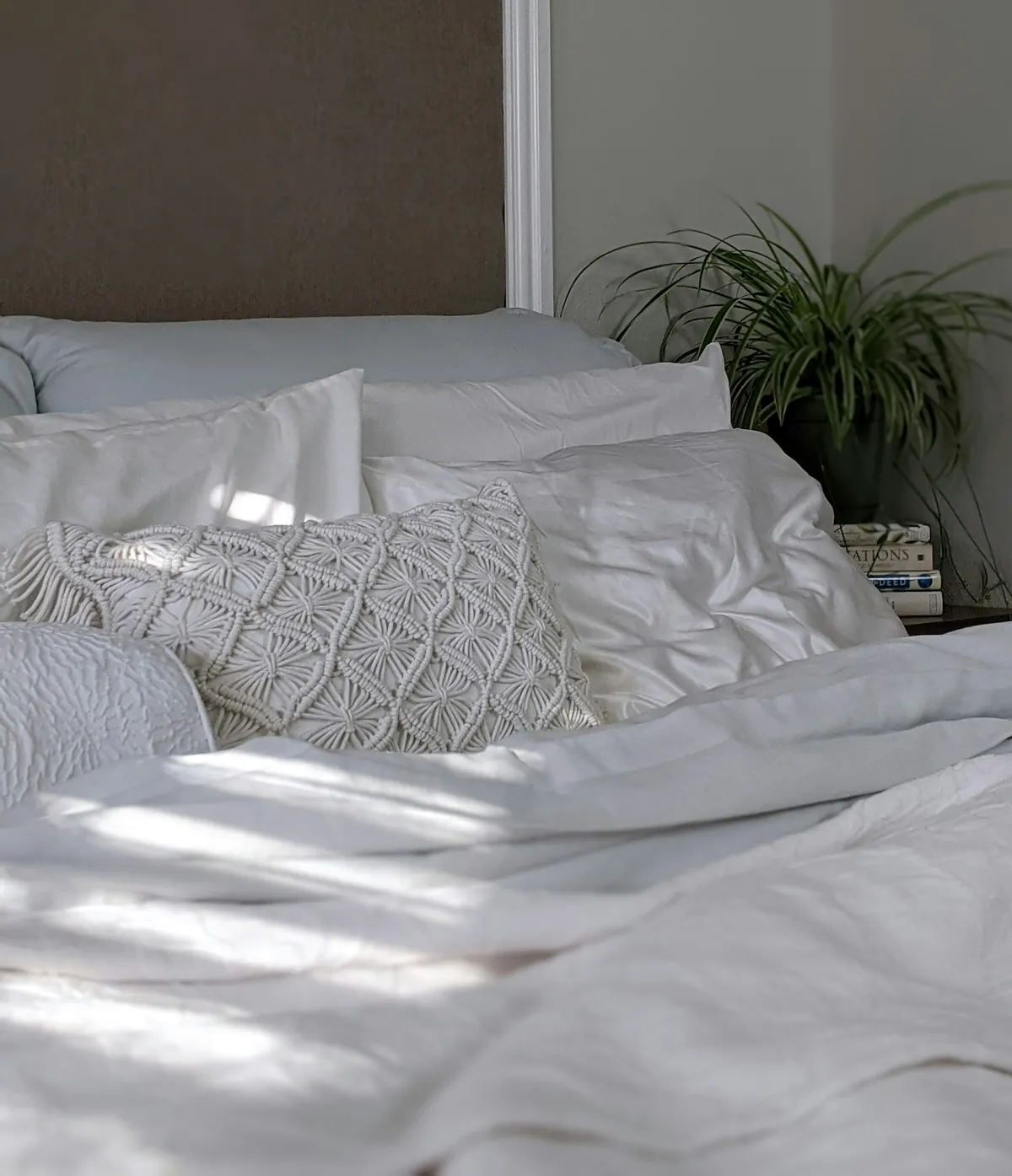
Sunrise over the water reaches east-facing rooms early. A heavier lining behind the weave keeps them dim.
Tall glass on the waterfront
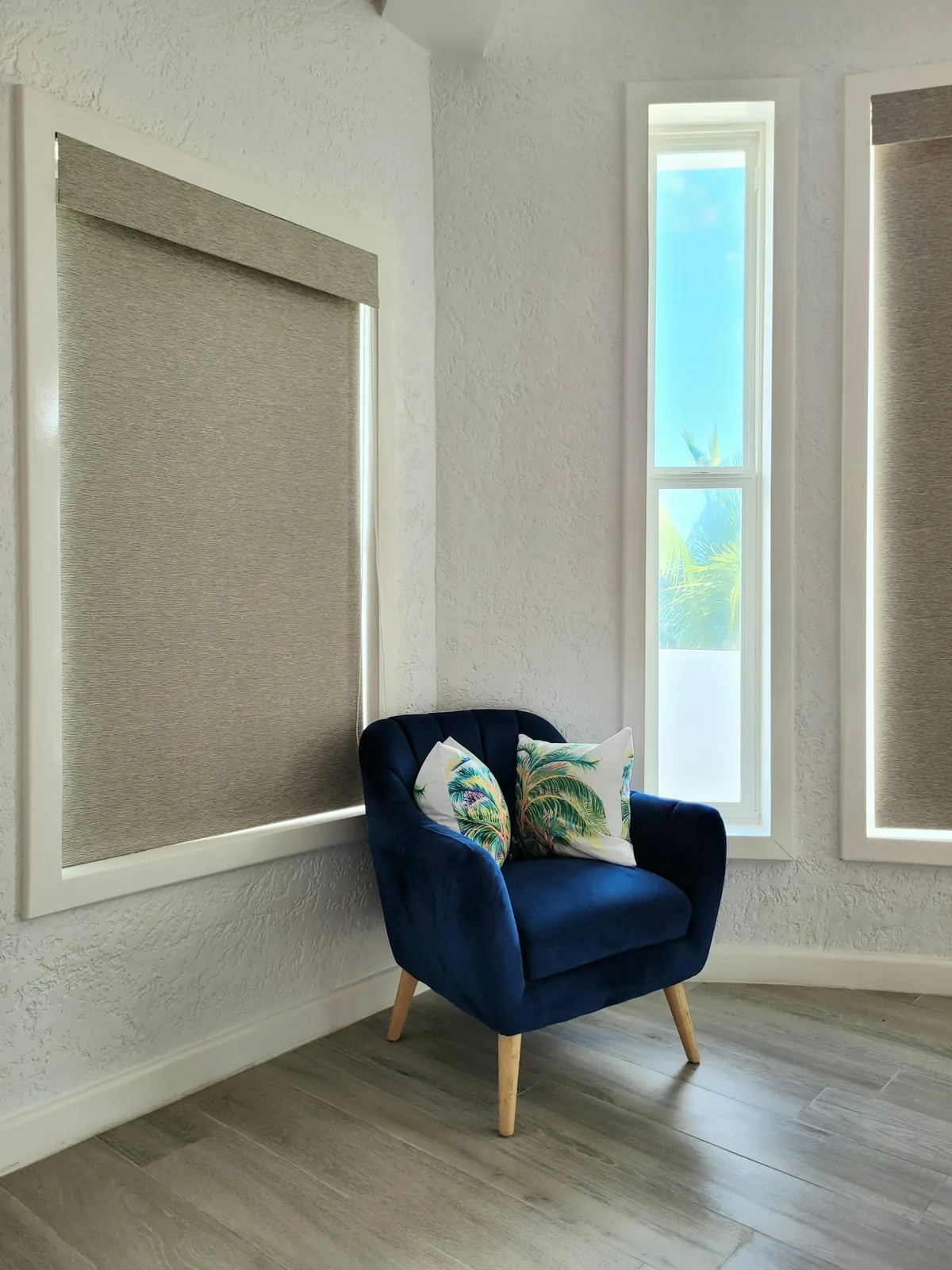
Floor-to-ceiling windows take a long, matching run of shades, lowered to one level so the wall reads as a whole.
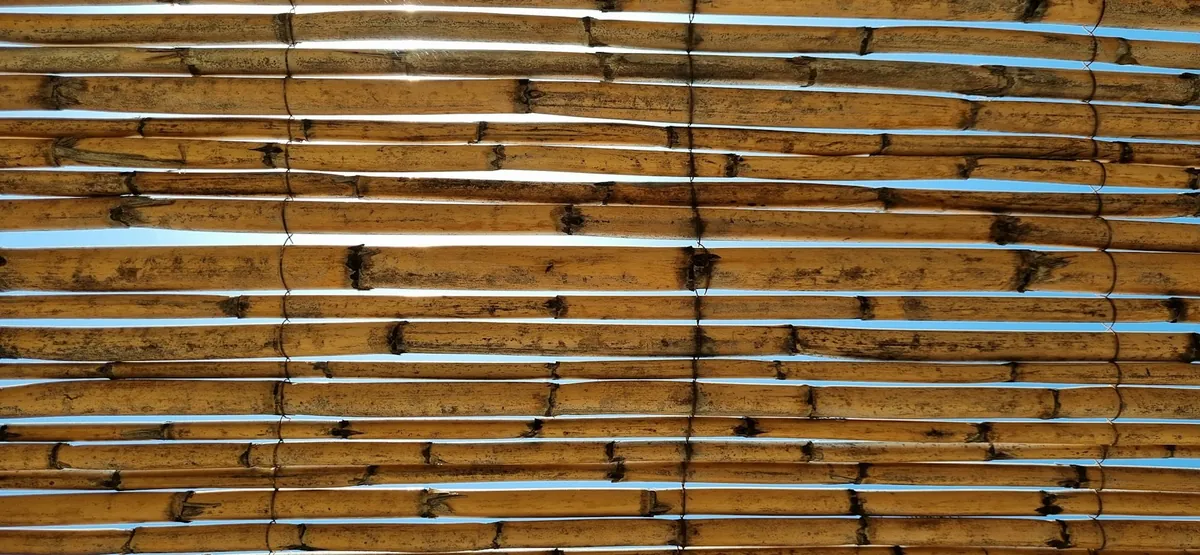
Farmhouse sash at Four Corners
Close bamboo set inside a deep old frame keeps the trim in view and suits the scale of a smaller window.
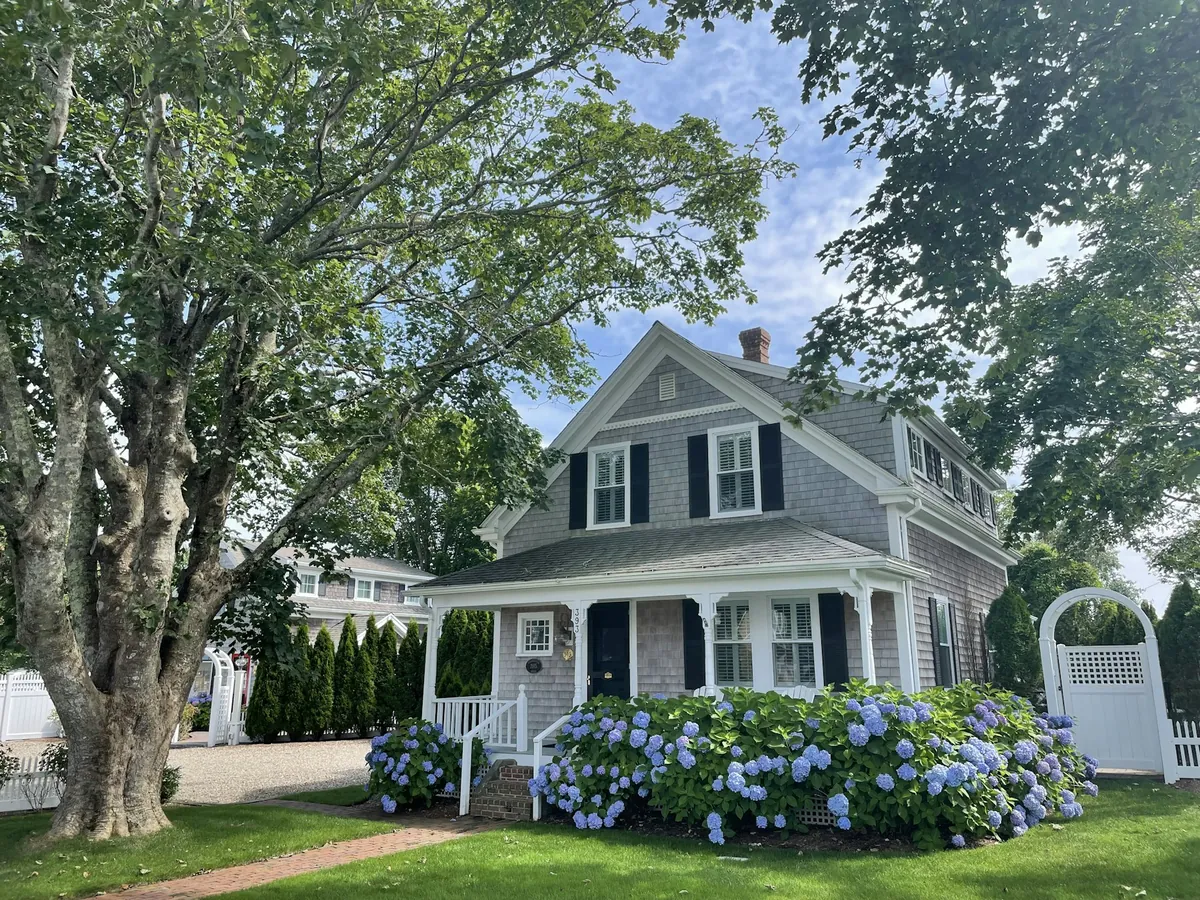
Cape dormers upstairs
Upstairs rooms under the roof often have one small dormer window, where the shade has to stack high and small.
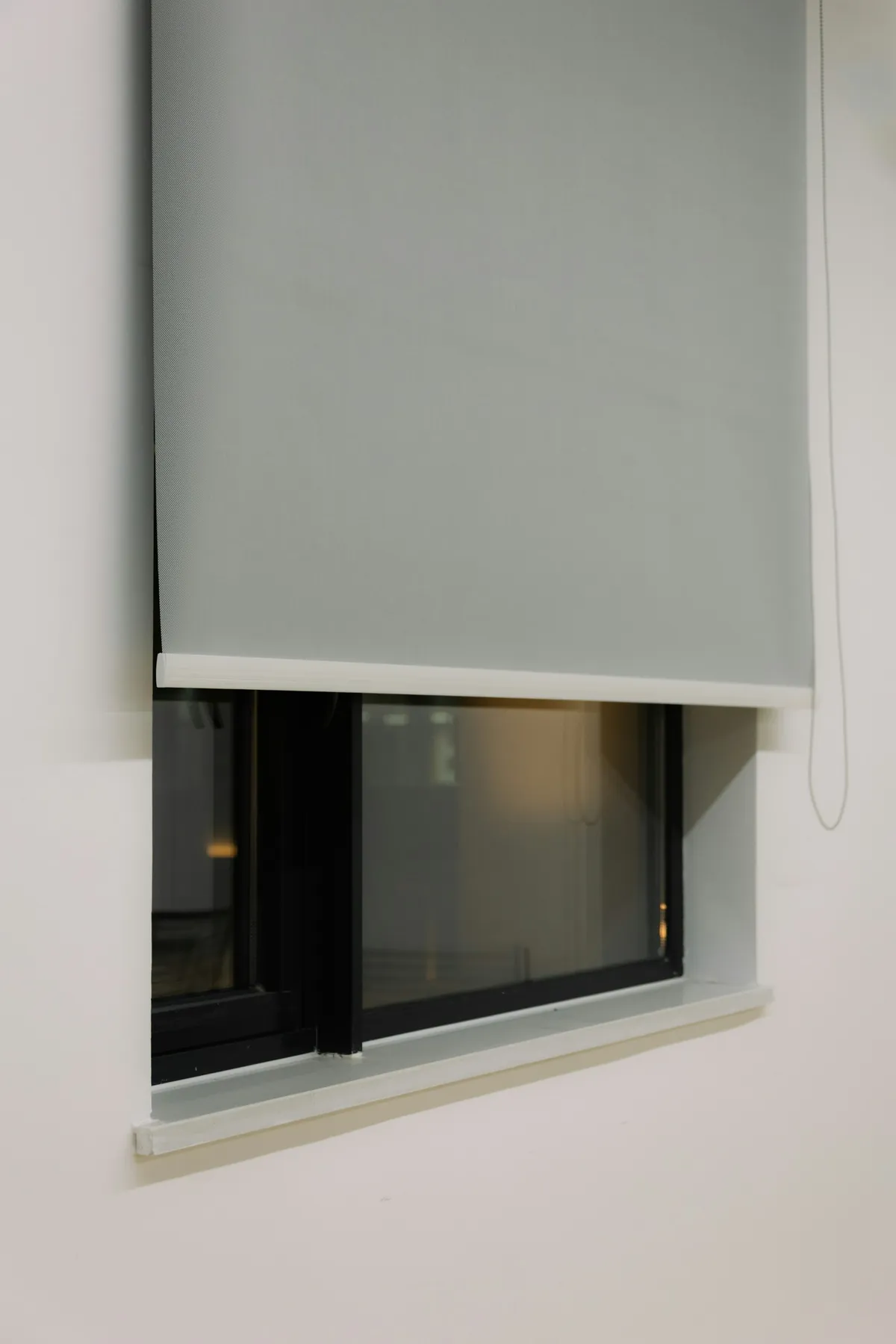
The most exposed window
For a window that takes full sun and spray all day, a smooth roller shade may serve better. We will say so.
Woven Wood Shades in Tiverton, RI: Water Side and Land Side
The questions behind woven wood shades in Tiverton, RI change completely depending on whether the window looks at the Sakonnet or at a hayfield. We take the two in turn.
Water-facing rooms on Nanaquaket and the Sakonnet
Houses on the water are built to look at it. Living rooms, kitchens and main bedrooms on that side often have wall after wall of glass, sliding doors to a deck and sometimes windows running right up into the gable. These rooms get long hours of direct sun, glare bouncing up off the water and, on a windy day, a fine salt haze on the glass.
Natural weaves handle this better than people expect, with some planning. Sun will mellow the colour of any natural material over the years, the way a cedar shingle weathers, and lighter weaves show that change less than dark ones. A pale bamboo or a light grass is the forgiving choice for a south or west-facing water room. A lining on the back adds a layer between the weave and the glass, which spares the strands some of the direct sun and evens out the light in the room.
Salt is the other factor. Inside the house, with windows closed in bad weather, salt is mostly a cleaning matter: it settles as a fine film and wants dusting a little more often than it would inland. What a woven shade does not tolerate is being soaked. A shade on a window that is left open to spray, or one that hangs right beside a door that is always open to the deck, will have a harder life, and a smooth fabric shade may be the better choice for that particular opening.
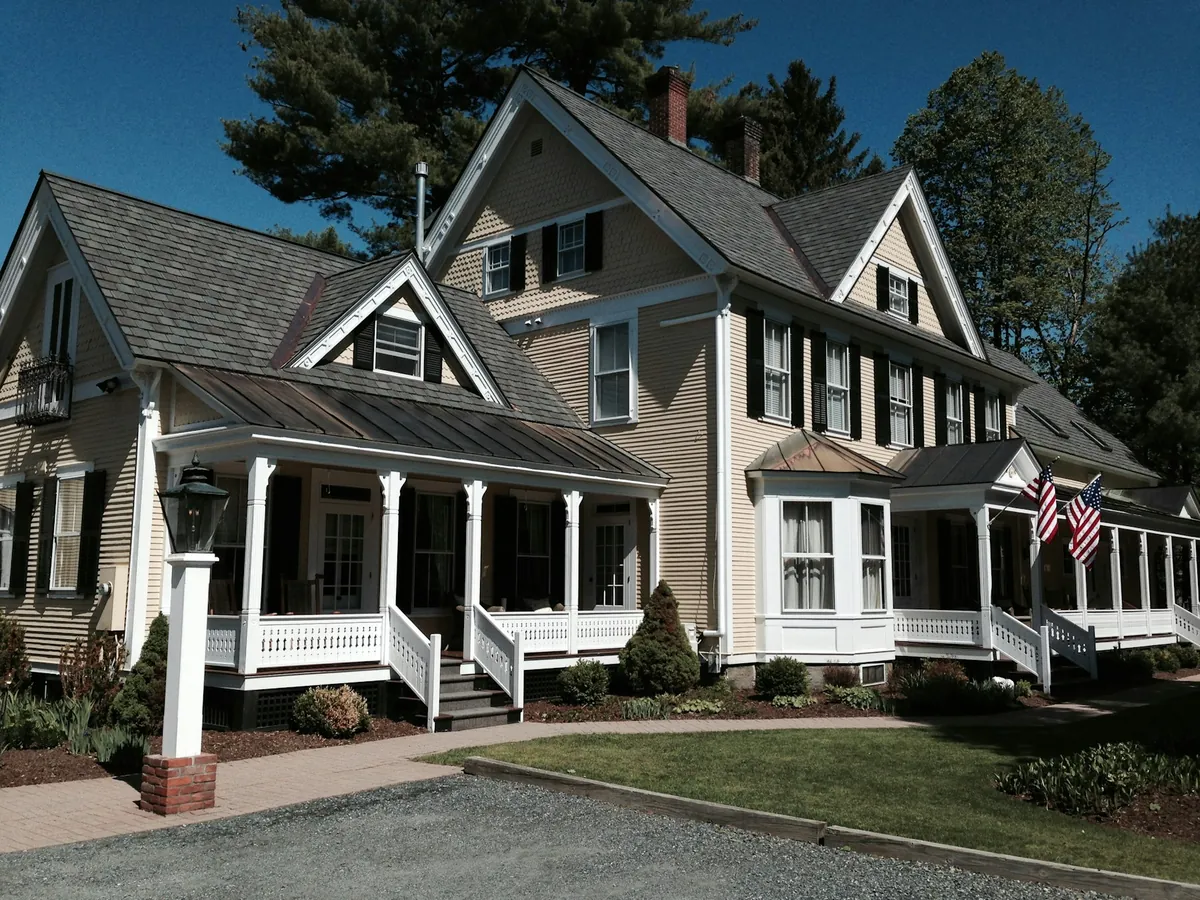
How the light looks through the weave on the water
On a bright day over the river, an open weave turns the view into a soft, textured screen: you still see the line of the far shore and the movement of the water, but the hard light is broken up into a warm, dappled glow. A tight weave gives a more even, private light and less of the view. Many waterfront owners choose a medium weave for the main living room, so the view stays during the day, and something tighter in rooms where the sun is strongest in the late afternoon.
At night the picture flips. With the lamps on and darkness outside, an unlined shade lets anyone on the water or the shore see shapes moving inside. On a waterfront house with a dock or a path along the shore, that matters more than people think. A privacy lining stops it while keeping the daytime glow.
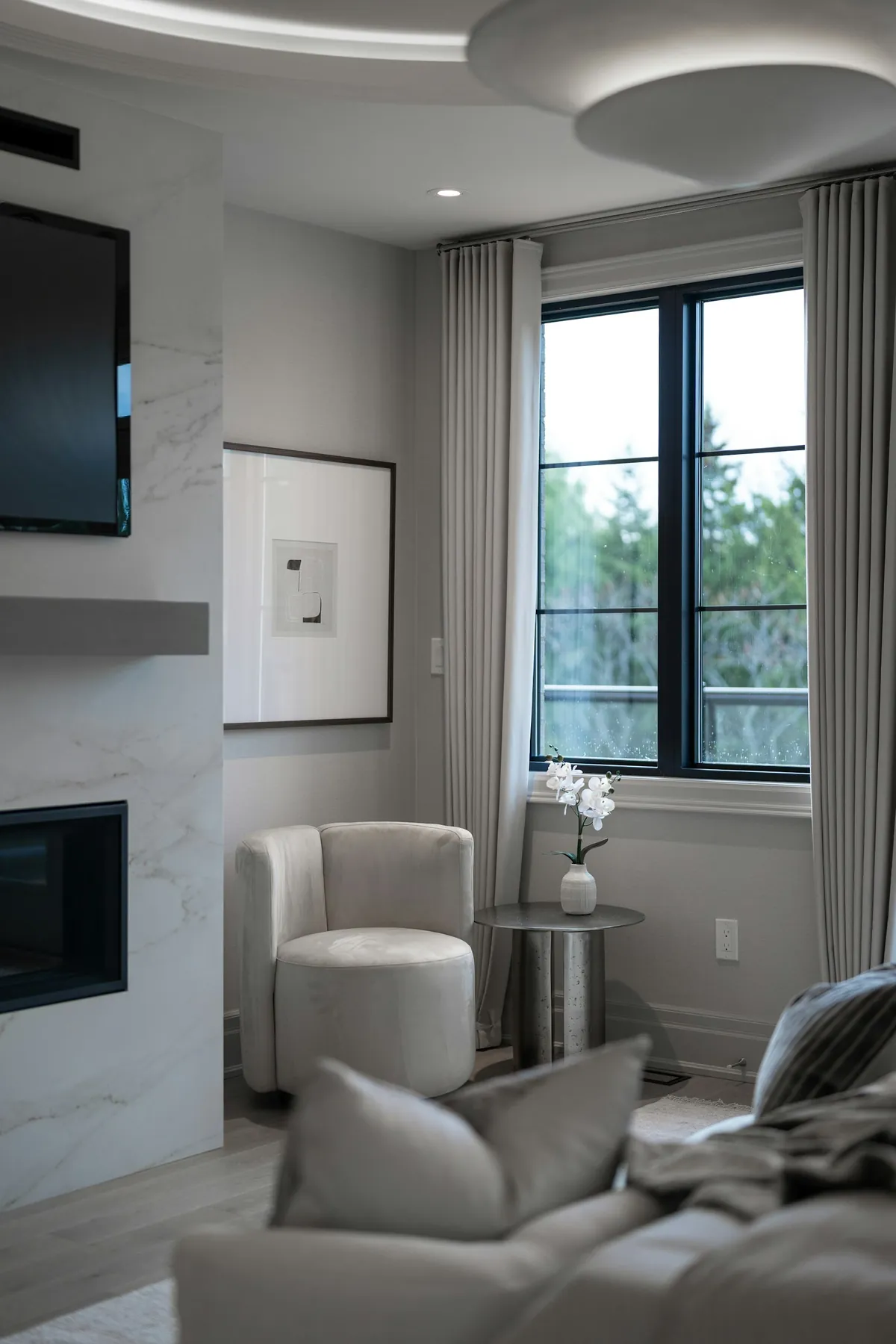
Walls of glass and sliding doors
A run of tall windows across a water-facing wall is best done as a set of shades, one per window, all made to drop to the same line. That keeps the wall looking ordered whether the shades are up, down or set at half height. Where the glass runs high into a gable, the upper shaped panes are usually best left clear, so the room keeps its sky.
Sliding doors to a deck are the hardest opening in a waterfront house for a woven shade. The door is used constantly in summer, and the shade has to be raised all the way every time. Busy deck doors tend to work best with vertical blinds or sliding fabric panels, coloured to keep company with the weave on the neighbouring glass.
Choosing a tone for a coastal house
Colour on the water side is partly about the view. A pale weave tends to disappear against a bright sky and lets the eye go straight through to the river. A mid tone frames the view more, like a picture mat, and reads warmer in the evening. Dark weaves are handsome but show the effect of long sun most, so we tend to keep them for the land side of the house or for rooms that face away from the water.
Inside, the weathered shingle, painted panelling and wide pine floors common in coastal houses all sit well with natural texture. A sample held up to daylight tells you more than any picture, so we help you bring the choice down to a few and suggest you see them against the window light in the showroom.
Houses with both sides to dress
Plenty of waterfront houses have a busy road or a neighbour on the land side and the river on the other. The two sides want opposite things. The water side wants the view and some glare control by day and privacy after dark. The road side wants privacy all day and more light than the small windows give. A sensible plan for woven wood shades in Tiverton, RI houses like these is one weave throughout, so the house looks of a piece, with a lining on the water side for night privacy and the road-side windows left a little more open in weave so the rooms stay bright.
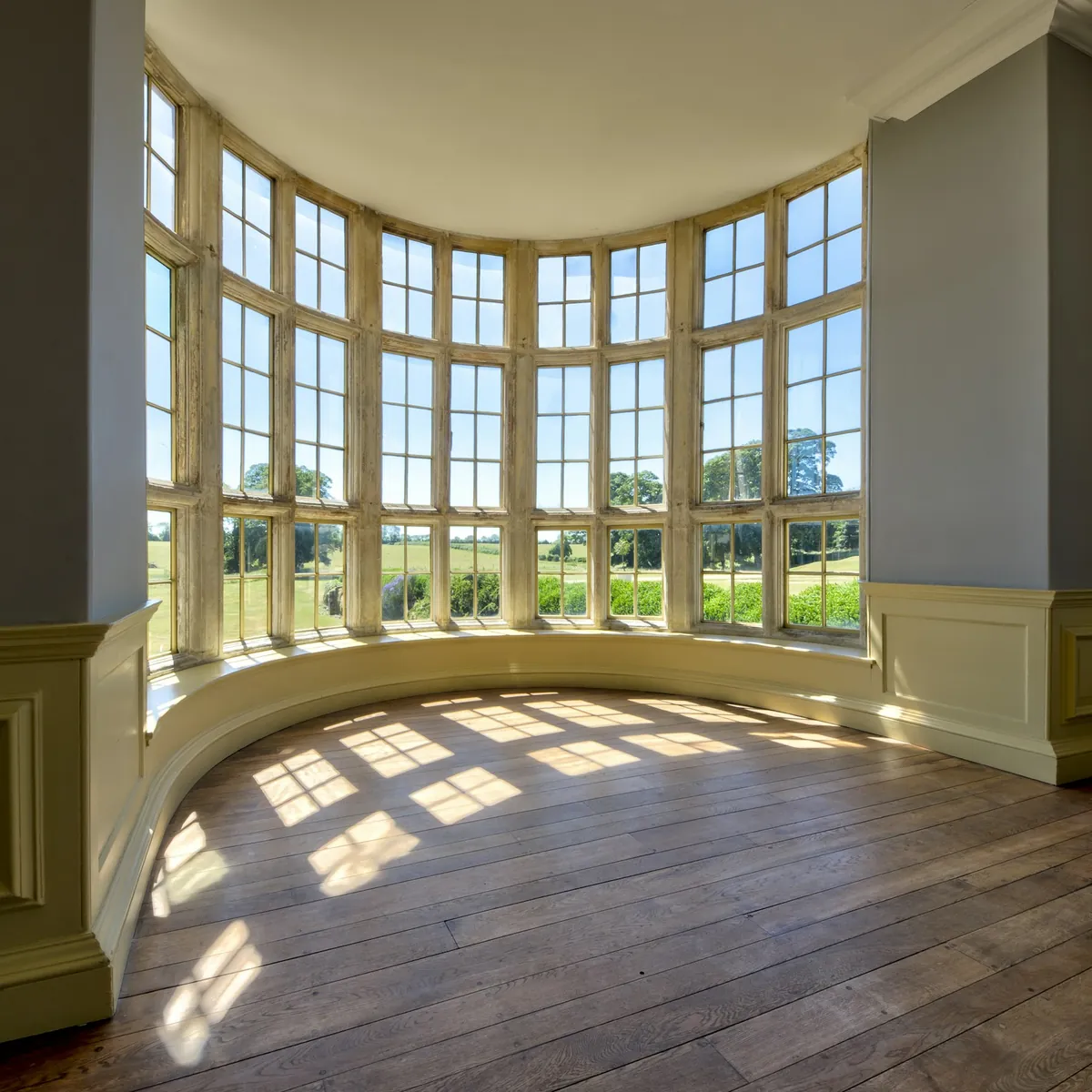
The Land Side: Four Corners Farmhouses and Shingled Capes
Away from the water, Tiverton’s older houses around Four Corners are farmhouses and shingled capes, with smaller windows and a quieter light. These are often the easiest houses of all for a woven shade.
Deep frames and old sash
Farmhouse walls are thick, and the windows often sit deep within them with a broad sill. That depth makes an inside mount easy, with the shade set inside the frame so the old trim stays on show. Old frames lean and settle, so we take several widths from head to sill and a height at each side, then make the shade to the tightest figure so it drops plumb and never scrapes.
Rooms in these houses tend to be lit from one or two smallish windows, so the aim is usually to keep as much light as possible. An open or middling weave, left unlined, softens what light there is and adds texture while the room stays bright. Only the front parlour that faces the road after dark usually calls for a privacy lining.
Farmhouse rooms were often laid out around a hearth, with windows placed for daylight rather than for a view, and many still have their original wide board floors. A woven shade in a warm, mid tone suits that setting, picking up the colour of old pine and the painted trim. Where a room has been opened up or extended with a newer, larger window, the same weave across old and new glass ties the room back together, even if the frames themselves differ in depth and need different mounts. We note each frame separately for exactly that reason, so the shades line up at the top even when the windows do not.
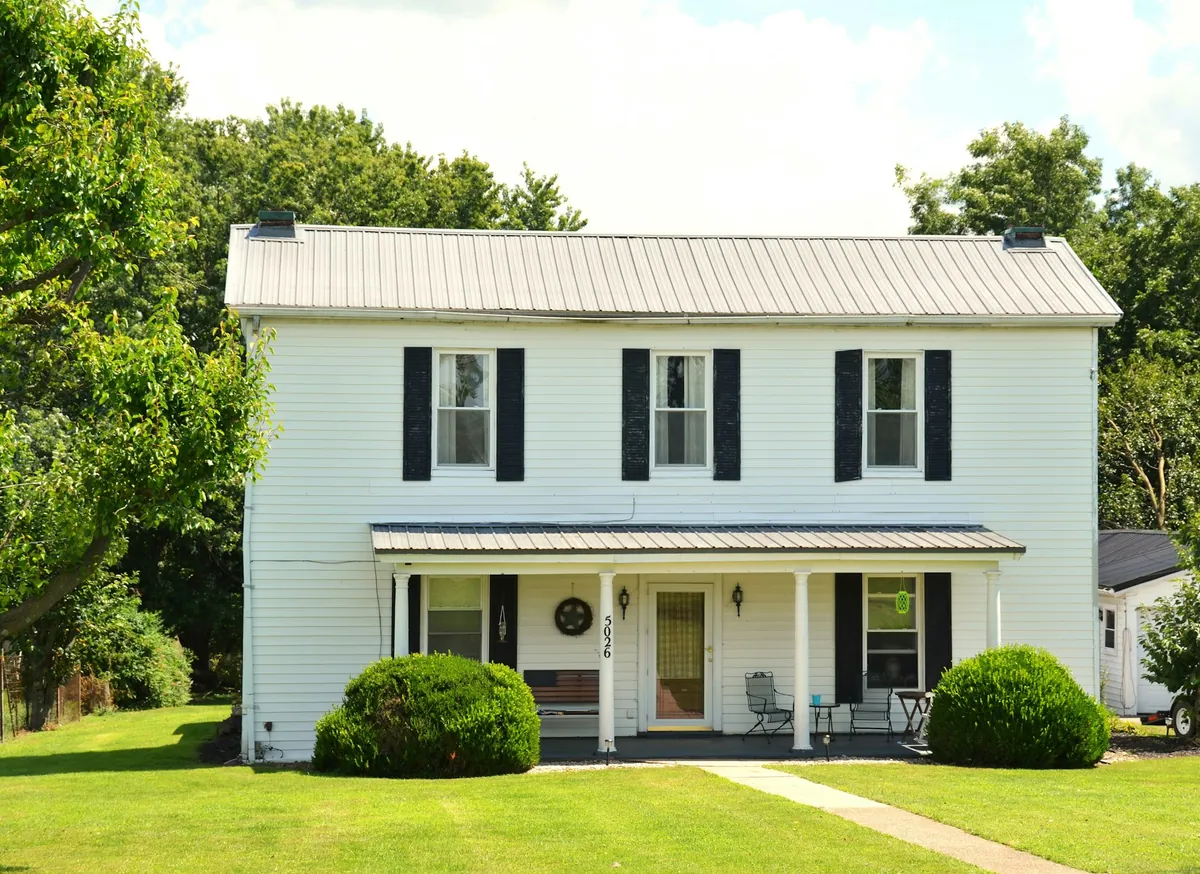
Capes and their upstairs rooms
The shingled capes have a regular row of windows downstairs and dormers upstairs. Downstairs, a matching weave across the front windows keeps the house looking even from the road. Upstairs, each dormer window is often the only light in the room, and the walls of the dormer close in around it. Raised weave folds up thick, so in a dormer we usually mount it above the frame, on the wall or ceiling, so the raised shade does not cover the top of the glass. We check the clearance at each dormer, because the space above the window varies.
Cape bedrooms under the eaves heat up on a summer afternoon, and the dormer glass is often the culprit. A tight weave with a lining keeps much of that sun off the glass side of the room while still letting a soft glow through, and in a room used mostly for sleeping a heavier lining makes early mornings far easier. Downstairs, where the cape’s front rooms sit close to the road, the same weave carried across every front window keeps the face of the house tidy, and each room behind decides on its own lining. Back rooms that look over a yard or a field can usually stay unlined, which keeps the texture showing from both sides and the light at its most natural.
Kitchens, baths and mudrooms
Steam and wet boots are no friends to a natural weave. Shower rooms, the glass straight over a sink and the mudroom door all suit moisture-proof blinds or a smooth fabric shade instead. The breakfast table window, well clear of the taps, can wear weave without trouble.
Pairing Woven Shades with Fabric
Alone, a woven shade looks easy and unfussy, right for a shore cottage or a farmhouse kitchen. In a front parlour or the main bedroom, side drapes or a sheer panel alongside the weave add softness and a second layer of light control. Sheers in particular sit well beside woven wood on the water, softening the glare without blocking the view. Since the store makes fabric treatments as well, both can be ordered together, and at the showroom the sheer can be picked with the weave sample beside it.
How a Tiverton Job Runs
Someone from the store keeps in touch at each step, so you always know where the order stands.
- Get in touch by phone or form and say whether the house sits on the water, inland, or has rooms facing both ways. That sets up your free quote.
- On the day of measuring in your home, a specialist marks which windows bake in full sun, which open onto a deck, and how deep and how clear each frame is.
- Back at the store, we narrow the field to two or three weaves and linings per room.
- You can hold those finalists up to daylight in the Swansea showroom if you like.
- An itemised quote follows, window by window.
- Production follows the figures taken at the house.
- Our fitters hang each shade, level it with its neighbours along the wall and run through how it lifts.

Looking after a shade near the water
Dust and that faint salt film come away with a feather duster or a vacuum’s upholstery nozzle drawn lightly down the weave. By the river, do it a little more often than you would inland. Dab at a spill; scrubbing roughs up the strands. Water is the real enemy, so shut the window when a storm blows spray across the deck. Cords and lifts wear in time, and on shades you already own our team can usually mend them.
Our woven wood shades service page sets out the full range, and the Tiverton, RI window treatments page lists the other work we do in town.
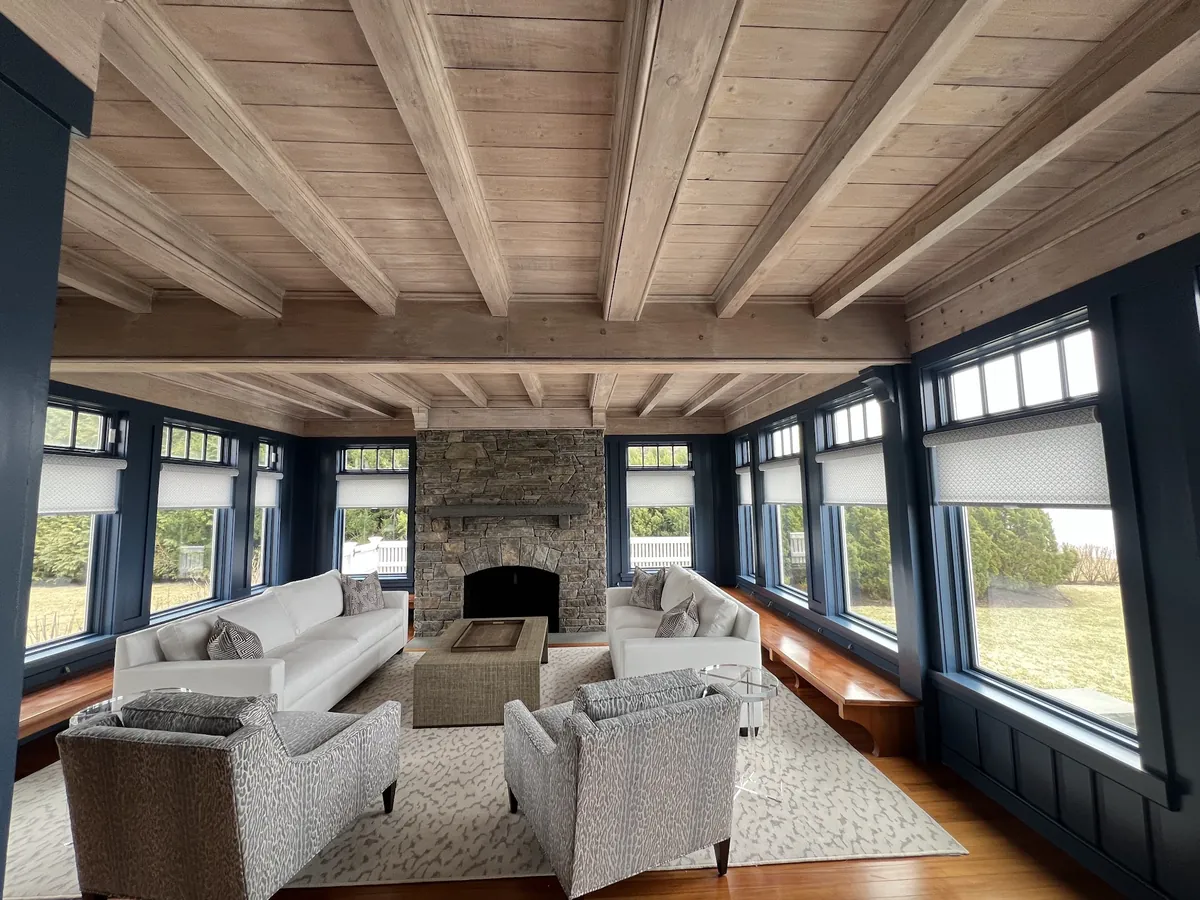
Glass Rooms and Three-Season Porches
Many Tiverton houses, on the water and off it, have a sunroom or a closed-in porch with glass on three sides. These rooms get the most sun in the house and often the best view. A run of woven shades gives them a warm, natural texture, while smooth roller shades give a crisper line and stand up better on the windows that take the hardest sun.
We take every pane on its own so the row hangs level, and the two types can be mixed where it makes sense: woven shades on the sheltered side, rollers on the side that faces the water.
The Store Behind the Work
Window Works opened its doors in Swansea, Massachusetts in 1988, and the family’s second generation runs it now. Across the state line, Tiverton is one of the nearest towns we serve, and it has been part of our East Bay work for over 37 years.
- Specialists in window treatments, from the quote to the fitting
- Our own installers on every job
- Steady contact with you right through to completion
- Warranties offered on the products we supply
- Weaves, linings and the Norman range on show in Swansea
Questions from Tiverton
Does strong sun off the river change the colour?
Any natural material mellows in strong sun over time. Lighter weaves show it least, and a lining adds a layer between the weave and the glass. We will help you choose for the room’s exposure.
Does salt air damage woven shades?
Indoors, salt mostly means dusting a little more often. A shade that gets soaked by spray through an open window will not last as well, so for that kind of window we may suggest a smooth fabric shade.
Can I still see the river through the shade?
With an open or medium weave, yes, softly. A tighter weave or a lining gives more privacy and less view.
What goes on the slider to the deck?
A door that opens all summer is usually happier with vertical blinds or sliding panels, coloured to sit beside the weave on the windows.
What does the quote cost?
Nothing. The quote is free. Call through the button on this page or fill in the form, and we will find a date to come out and measure.
When You Are Ready
Start with a free quote. The call button puts you through to the Swansea store, where we can book measuring in your home and talk through installation; the form works just as well if you would rather we got back to you. Plenty of people ordering woven wood shades in Tiverton, RI like to see the weaves in daylight before we visit, and the showroom is only a short drive away, with the route on the contact page. Google reviewers rate Window Works 5.0.