
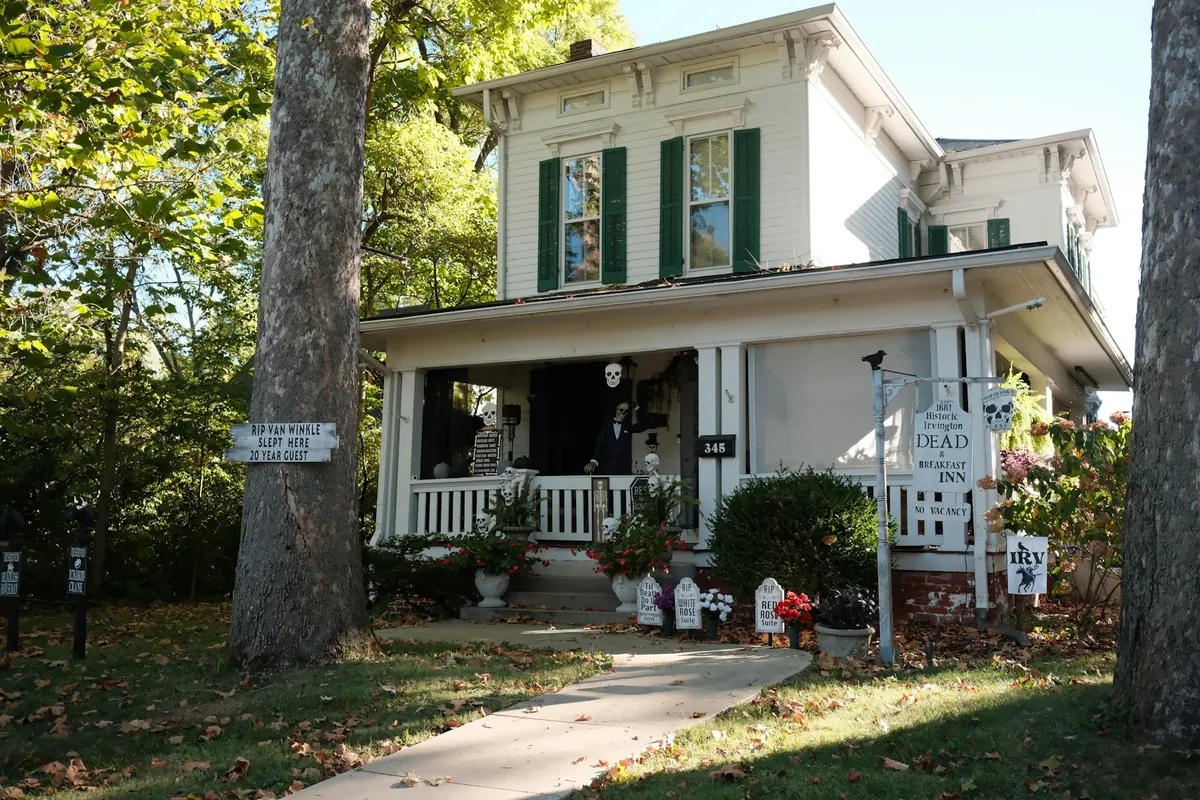
Privacy First on Close-Set Streets
Most houses in Warren’s historic waterfront district stand close to the pavement and close to each other, so the first thing any window treatment has to do is give privacy at eye level. That shapes how we plan vertical blinds in Warren, RI. On these Federals and Victorians the vertical blind rarely goes on the front sash. Its place is at the back and side of the house: the kitchen door onto a narrow yard, the slider in a rear addition, the French doors from a dining room to a small garden that the house next door can see straight into.
Out in Touisset the picture changes. The shore lots there are quieter and more open, and the houses tend to have wider glass toward the water, with sliders onto decks and porches.
- Vertical blinds and panel tracks, sized to each door or opening
- Measuring in your home and installation by our team
- Vane and panel fabrics to compare at the Swansea showroom
What a Vertical Treatment Can Do in Warren
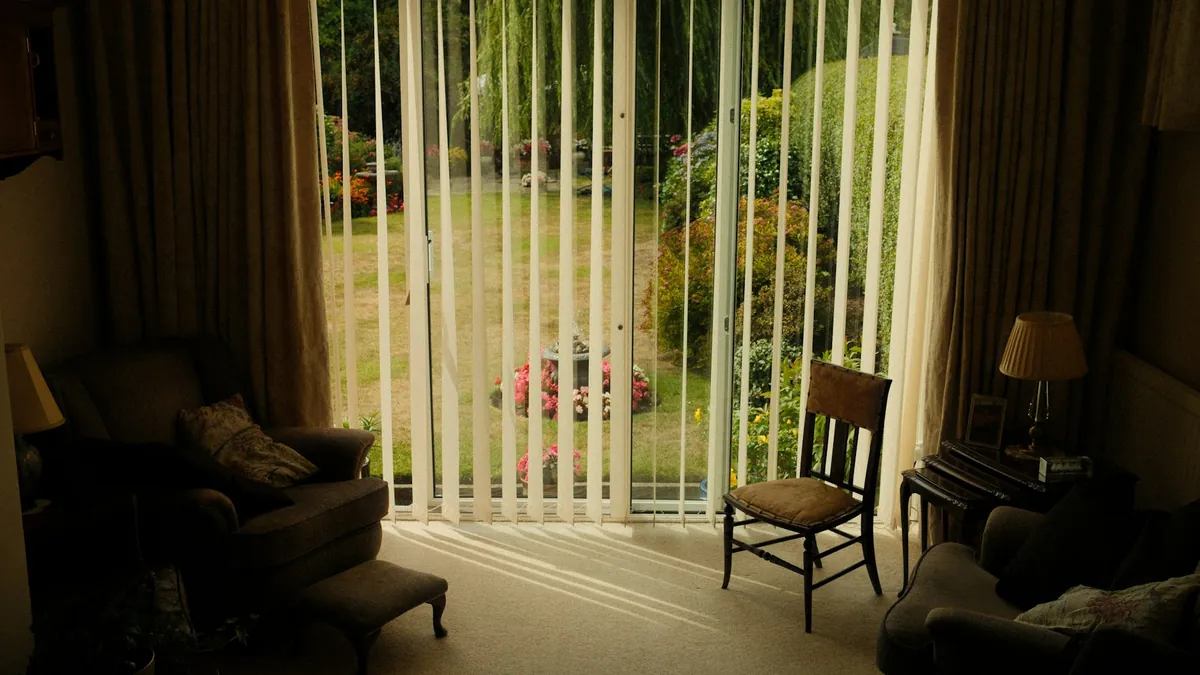
Hide the yard next door
Vanes angled one way block the sightline from a neighbour’s window while still letting daylight into the room.
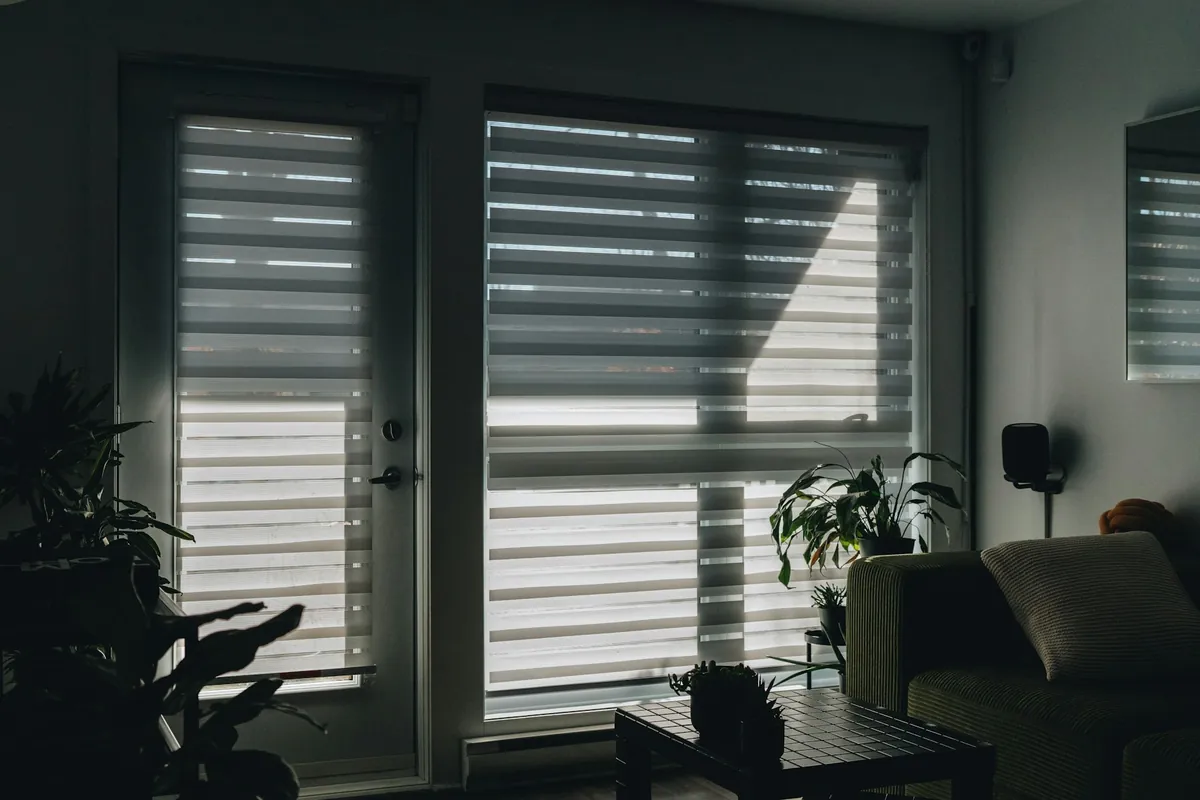
Soften a glass door
A panel track in a light fabric turns a bare rear door into a soft wall of fabric that slides clear when you want the garden.
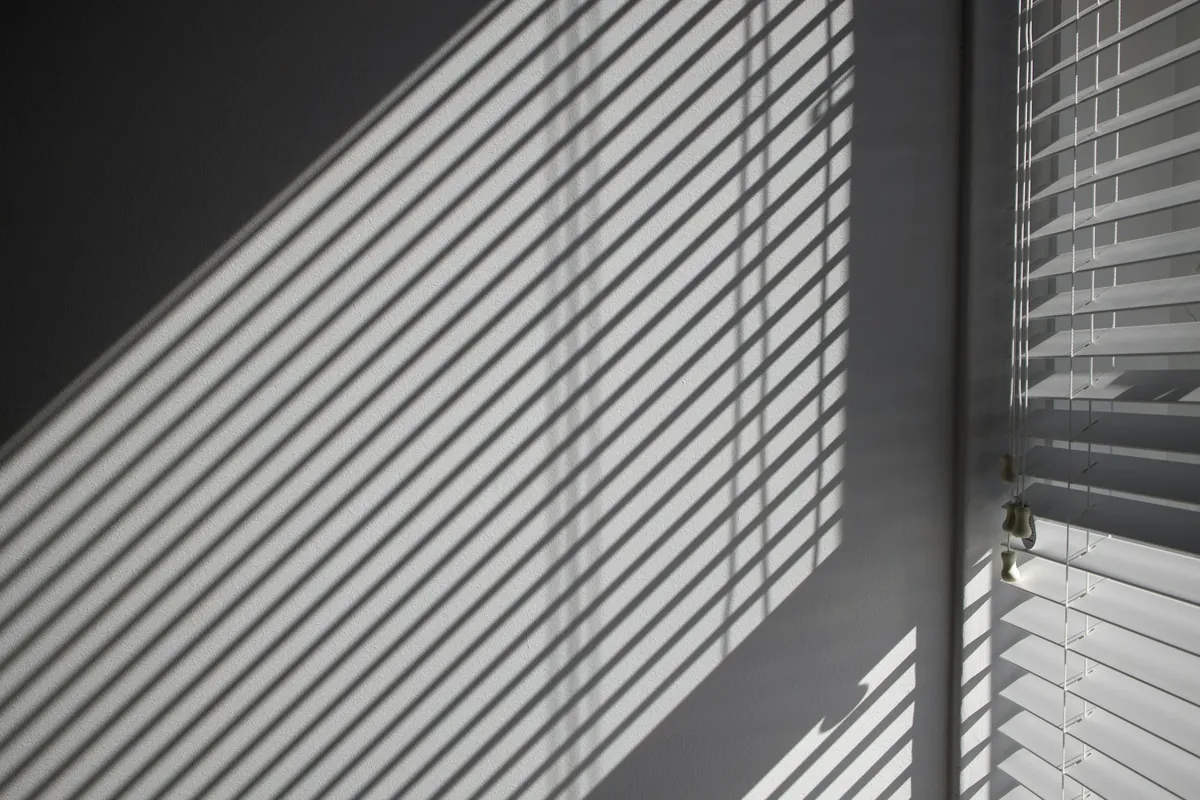
Control the light by the slat
Turn the vanes a little at a time to decide exactly how much light comes in, from a thin line to a fully open view.
Close Houses, Narrow Yards and Vertical Blinds in Warren, RI
Planning vertical blinds in Warren, RI is mostly a question of sightlines. In the older streets near the water, a window at the back of one house may look straight across a few feet of yard into the kitchen of the next. The usual answer of drawing a shade all the way down works, but it also shuts out the light, and in a narrow Federal with windows on only two sides that light is precious. Vertical vanes solve the problem differently. Because they turn on their own axis, they can be angled to close off one direction while staying open in another, so the room keeps its daylight and loses the view in.
That is the reason we spend time at each door before suggesting anything. We look at where the nearest neighbouring window sits, whether the yard is overlooked from above or at ground level, and which way the light falls through the day. From there it is usually clear whether the vanes should tilt one way or the other when they are partly closed, which side they should stack on, and whether a panel track would serve the room better.
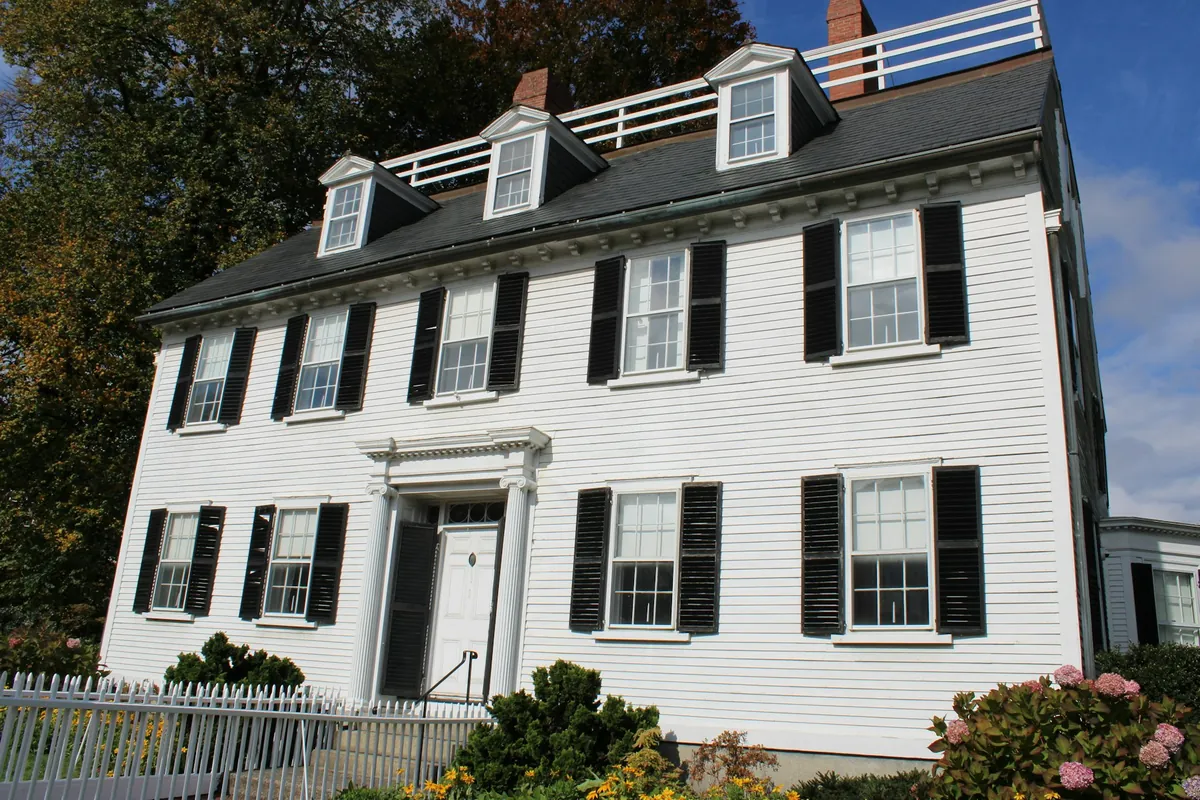
Federals in the waterfront district
The Federal houses close to the harbour were built tall and narrow, with rooms one behind the other and a back ell that was often extended later. That back extension is where most sliding doors and wide glazed doors turn up, because it is the part of the house that has been rebuilt to suit modern kitchens and family rooms. The original sash on the front and sides is narrow, regular and set in deep old trim, and it almost always suits horizontal blinds, shades or shutters better than a vertical blind.
At the back, the door may open onto a small brick or stone yard with walls or fences on three sides. In that kind of space, privacy and light pull in opposite directions all day. A vertical blind lets you find the balance. In the morning the vanes can be turned to let the light in while closing off the house behind. In the evening, when the lights are on inside and the room can be seen clearly from outside, they close fully.
Because the back ell is often narrow, the stack needs thought. A vertical blind that stacks across the only window in the room takes away the light it was meant to manage. We look for solid wall beside the door to park the vanes, and where there is none, we may suggest a split draw or a panel track whose panels stack thinner.
Victorians and their later doors
Warren’s Victorians brought bay windows, taller ceilings and more decoration inside and out. Some have had rear porches enclosed into sunrooms or breakfast rooms, and those enclosed porches often end in a pair of glazed doors or a slider to the garden. The opening may be taller than a standard door, because it follows the height of the old porch, and the wall above it may be shallow where the porch roof meets the house.
Those details decide the mount. Where there is a decent stretch of wall above the door, the head track goes there and the vanes fall just clear of the floor. Where the porch ceiling comes down almost to the top of the frame, a ceiling mount keeps the blind neat. We measure both the opening and the space around it, because a track that looks fine on paper can foul a cornice, a light fitting or the swing of a door handle in an old house.
Old openings that are not quite square
Doors and frames in a house of this age have usually moved a little. A back door in a Federal ell may be slightly out of square, the floor beneath it may slope toward the yard, and the head of the frame may not be level with the ceiling above. A vertical blind shows those differences clearly, because the bottoms of the vanes form one straight line across the opening. If the floor drops away at one end, a blind cut to a single height will leave a gap at one side and brush the floor at the other.
So we measure the height at several points across the opening, check the level of the wall or ceiling where the track will go, and set the drop to keep an even, small gap above the floor all the way along. Where the frame is badly out of true, mounting the track on the ceiling rather than the trim can hide the difference. These are small things, but they decide whether vertical blinds in Warren, RI houses look made for the room or simply hung in it.
Touisset’s shore lots
Touisset is a different kind of place for a blind. The lots are larger and quieter, the houses face the water, and privacy is less about the house next door than about the light and the view. A cottage or shore house there may have a slider onto a deck, a picture window beside it, and a long view over the water to the west.
Late in the day, that west-facing glass takes the sun low and straight in, with glare off the water on top of it. Vertical vanes are useful here because they can be angled to take the edge off the glare while the door stays open for the breeze. A panel track in a light filtering fabric is another good answer, giving the room a soft glow without blocking the outlook. Salt air reaches these houses too, so solid vanes that wipe clean are a practical choice on a door used to come in from the shore.
From the First Call to the Last Bracket
We stay in contact with you all the way through, until the blind is up and working. For a Warren door or opening, the order usually goes like this.
- Call the Swansea store or send the form, describe the door, and book your free quote.
- One of our specialists visits to measure the opening in your home, noting the wall or ceiling above, the floor below, the handle, and where the neighbouring windows sit.
- Together we decide between vertical vanes and a panel track, and settle the draw, the stack side and the controls.
- You pick the fabric and colour, with your own room around you or with the full range in front of you at the showroom.
- A written quote lists each opening.
- The blind is made to the measurements taken in the house.
- Our installers fit it, check it draws, tilts and clears the door, and show you how it works.

Vanes or a panel track for a narrow back room
The difference between the two matters more in a small room than a large one. A vertical blind with narrow vanes gives the most control over privacy, because the vanes turn. A panel track has fewer, wider panels that slide past each other. The panels do not turn, so privacy and light come from the fabric you choose and how far you draw it. In a narrow ell where the yard is closely overlooked, the turning vanes usually win. In a bright Touisset living room where the view is the point, a sheer panel track often looks better, because even closed it lets the shape of the water show through.
Fabrics for older rooms
The rooms in Warren’s older houses tend to have strong character: painted woodwork, old floors, sometimes patterned wallpaper. A vertical treatment is a large area of fabric, so it should sit quietly in that setting rather than compete. Soft neutrals, warm whites and textured fabric vanes usually blend best. Smooth solid vanes in white give a crisper, more modern line, which can suit a renovated kitchen extension better than the original front rooms.
If you have a paint colour, a cushion or a piece of the wallpaper, bring it to the showroom. Seeing a vane against the colours of your own room is the quickest way to choose.
French doors and garden doors
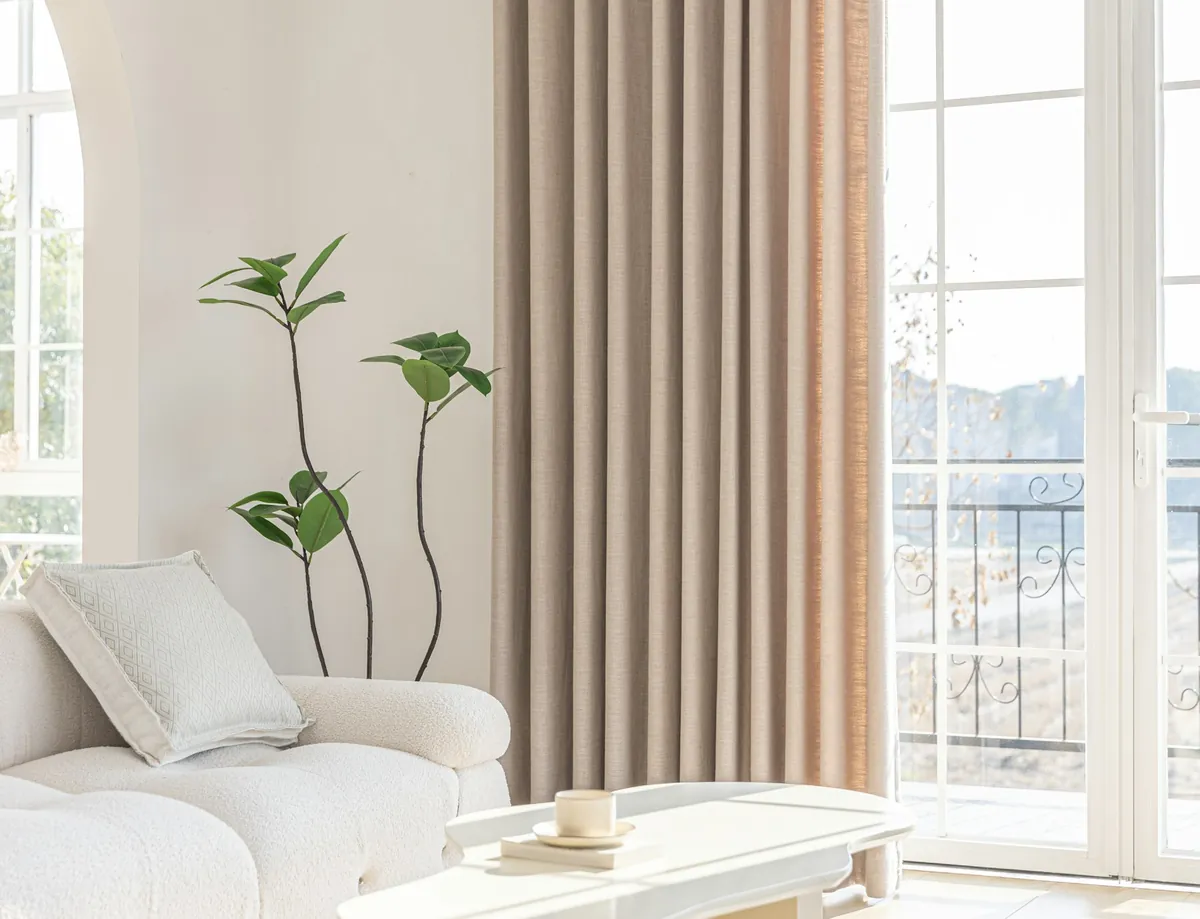
Not every opening at the back of a Warren house is a slider. Many older houses have a pair of French doors or a single glazed door that swings inward. A vertical blind can work on these, mounted high enough above the frame that the vanes clear the door when it opens, and stacked fully to one side when the doors are in use. On a pair of French doors that open often, though, side drapes on a rod or a shade fitted to each door may be easier to live with. We will show you both, and our custom drapes in Warren page covers the fabric options.
Kitchen extensions and wipe-clean vanes
Where the back ell has become a modern kitchen, the slider is usually a few steps from the cooker and the sink. Steam, cooking splashes and sticky hands all reach the blind sooner or later. Smooth solid vanes cope with that best, because they wipe clean with a damp cloth and do not hold on to cooking smells the way some fabrics can. If the kitchen opens into a family room with softer furnishings, a solid vane in a warm neutral can still look relaxed rather than clinical.
Keeping the street side and the garden side consistent
From the pavement, the front of a Warren house is what people see, and the front sash usually takes horizontal blinds, shades or shutters. The back of the house is seen from the garden and the neighbouring yards. It makes sense to tie the two together with colour, so that a white vertical blind at the back sits comfortably with white blinds or shutters at the front, even though the treatments are different. Our custom blinds in Warren page covers the horizontal side of that pairing, and every service we offer in town is listed on our Warren page.
Controls for a door in daily use
A back door in a close-set house is used constantly: for the bins, for the dog, for bringing in shopping from the car. The blind on it has to be easy to move and hard to damage. A wand that draws and turns the vanes in one hand keeps cords out of reach of children and pets and makes the blind quick to clear. We place it on the side you reach first, and we set the vanes to hang just clear of the floor so they are not scuffed by feet or paws.
Evening privacy when the lights are on
On a close-set street the hardest time for privacy is after dark. With the lamps on inside, a bare glass door shows the whole room to the yard next door and to anyone passing the end of the drive. A vertical blind closes edge to edge, and with the vanes turned so their overlap faces away from the nearest window, very little shows through. For a room that should feel completely shut in at night, such as a back bedroom with a door to the garden, a heavier vane fabric or a room-darkening panel fabric adds a further layer.
Seeing Your Choices in a Real Room
Window Works has been a family store in Swansea since 1988, and the second generation runs it now. For over 37 years we have measured and installed window treatments across the SouthCoast of Massachusetts and the Rhode Island East Bay, and Warren is just over the state line from the showroom.
- Window treatment specialists who measure every opening in your home
- Installation by our own team
- One store, in touch with you from the first call until the job is done
- Warranties offered on what we sell
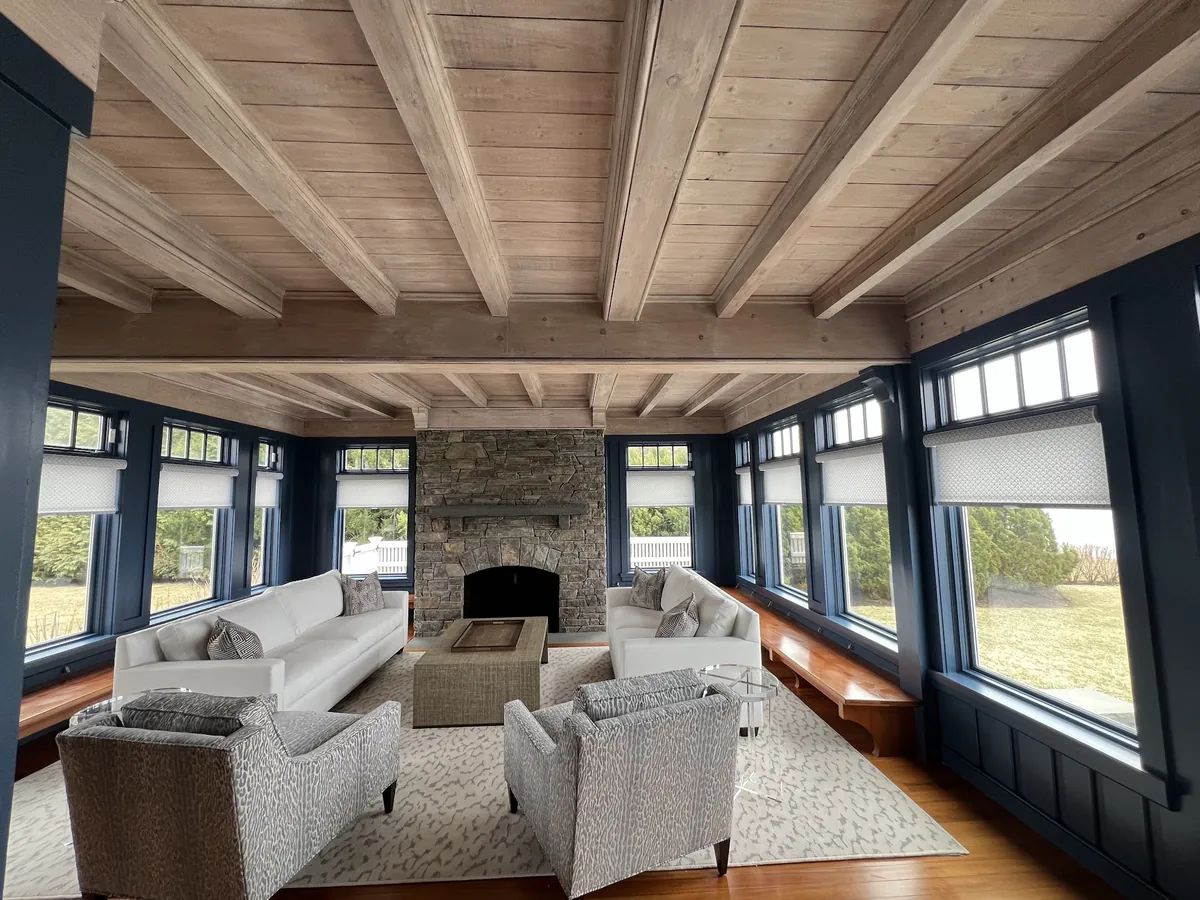
- A showroom with vertical vanes, panel tracks and the Norman range to see in person
Seeing the opening in person tells us more than any drawing, which is why we measure on site and plan the whole room, not just the door.
Care and small repairs
Turn the vanes flat and dust them, or run the soft brush of a vacuum down them, every so often. Solid vanes take a damp cloth when the back door picks up marks. Always draw the blind clear before sliding or opening the door. If a vane falls, a wand stops turning or the track sticks on a blind you already have, tell us when you call; it is often a repair rather than a new blind. The full range is on our main vertical blinds page.
Questions from Warren
Can vertical blinds stop the house next door seeing in?
Yes. The vanes can be angled to close off the view from one side while still letting daylight in, and they close fully at night.
Will a vertical blind suit the front sash of an old Federal?
Usually not. The narrow front sash is better with horizontal blinds, shades or shutters. Verticals belong on the wider doors and openings at the back.
What about a door that swings rather than slides?
A vertical blind can work if it is mounted high enough to clear the door and stacks to one side. On French doors used often, drapes or a shade on each door may suit better.
Which is better on a Touisset slider facing the water?
Vanes are good for angling the late sun and glare. A sheer panel track keeps the view softer. Both can be tried at the showroom.
Is the quote free?
Yes. Quotes are free. Use the call button or the form and tell us about the door or opening.
Ready When You Are
The next step is a free quote for vertical blinds in Warren, RI. Use the call button to reach the Swansea store, book measuring in your home or ask about installation, or send us the form. If you would rather see the vanes and panels first, come into the Swansea showroom, and the contact page has the directions. Window Works is rated 5.0 on Google.