
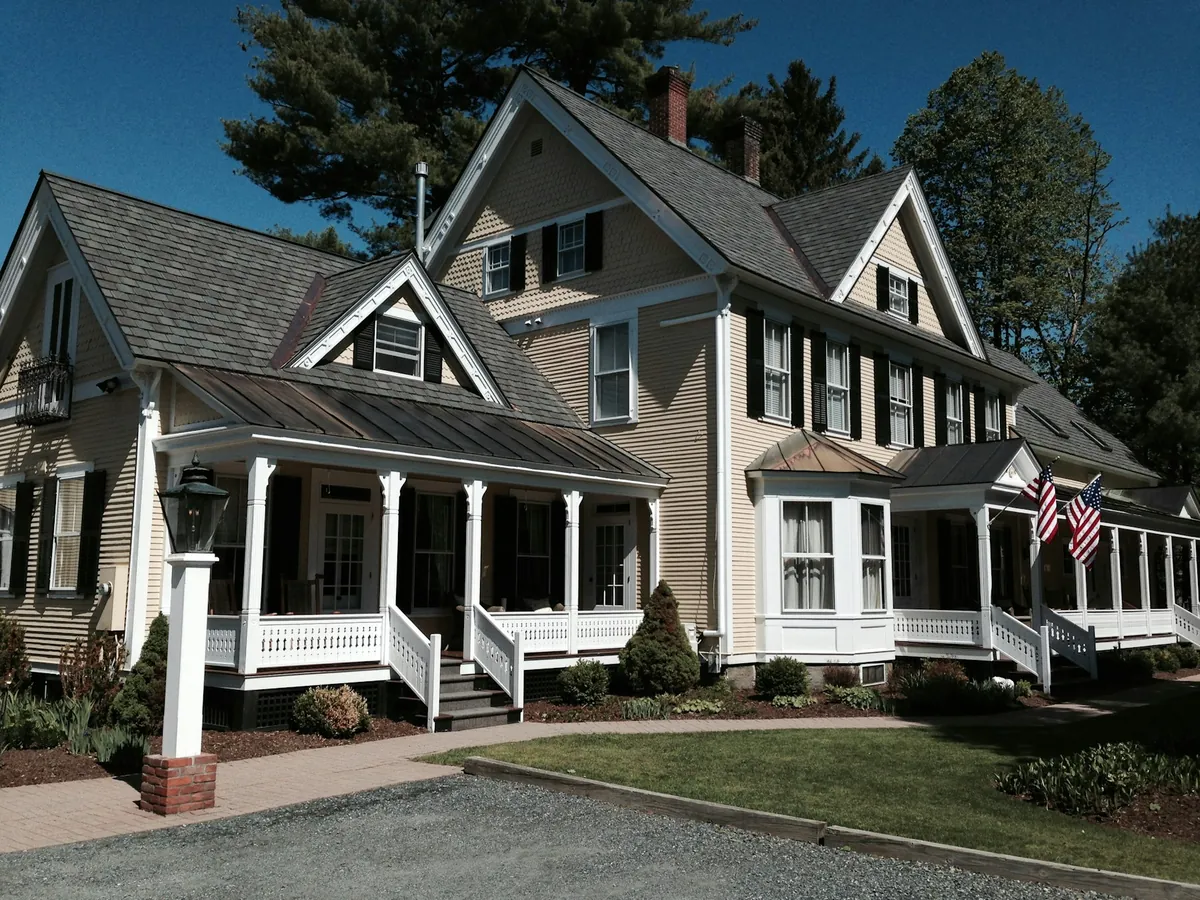
Two Sides to Every Portsmouth House
Portsmouth sits on an island with water on both sides, and that shapes the light in almost every house. One side faces the bay and takes the sun and the glare off the water; the other side is shaded, cooler and dimmer. Motorized blinds in Portsmouth, RI let you treat those two sides differently through the day, lowering the shades on the bright side from a remote or a wall switch while the shaded rooms stay open to whatever light they get.
The houses themselves vary. The cottages at Island Park and Common Fence Point are compact and close together, with small rooms and windows set close to the ceiling. The newer colonials off East Main Road are larger, with two storeys, a family room at the back and plenty of glass. Toward the bigger lots, the larger homes are built around the view, with tall windows and wide spans of glass facing the water. Each one asks for a different plan.
- A remote, a wall switch or both, chosen for each room
- Every blind and shade made to its window
- Measured at the house; installed and set up by us
Where Powered Shades Help on the Island
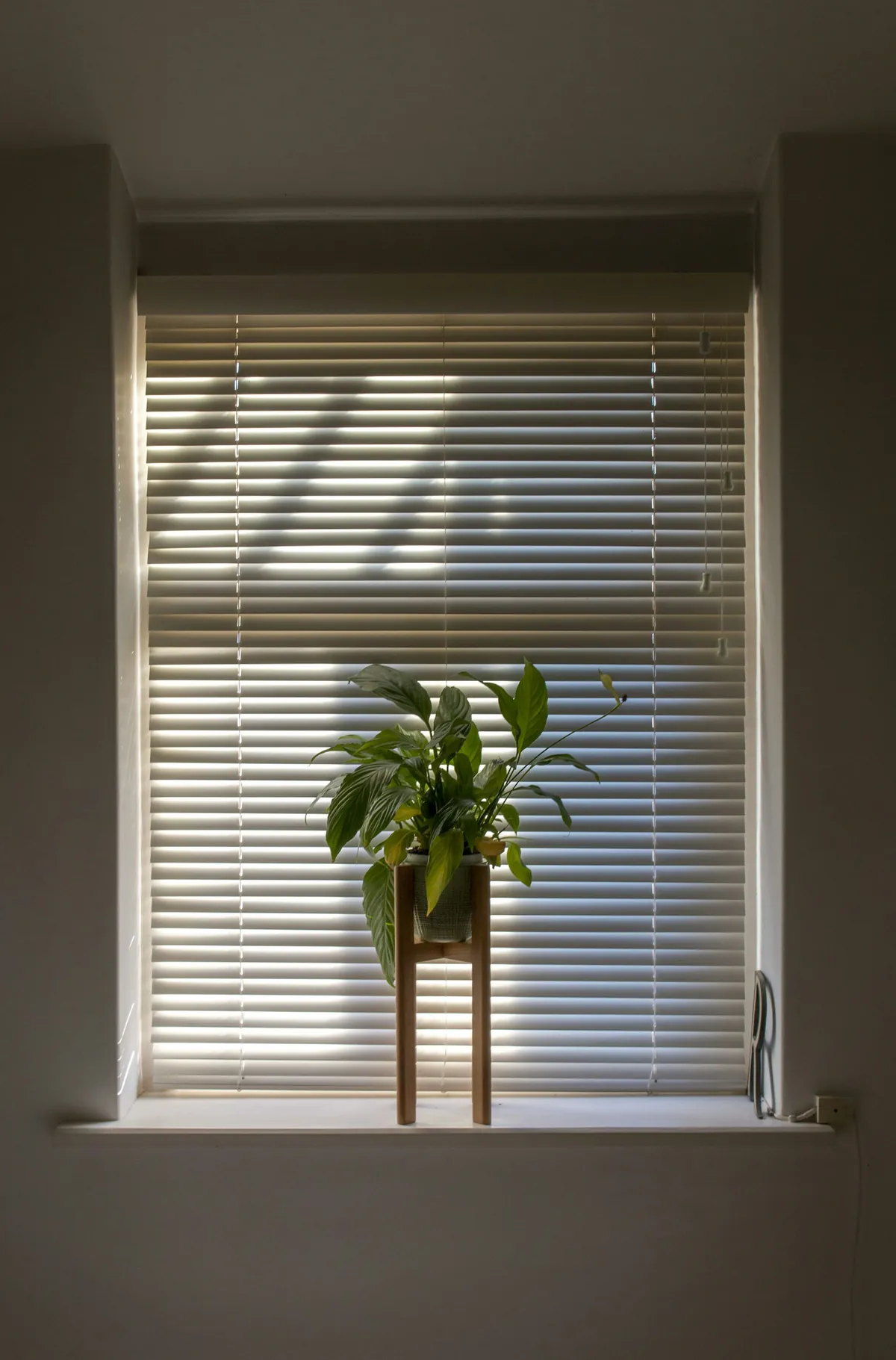
The bright side
Rooms facing the bay, where the shades come down in the strongest sun and go back up once it passes.
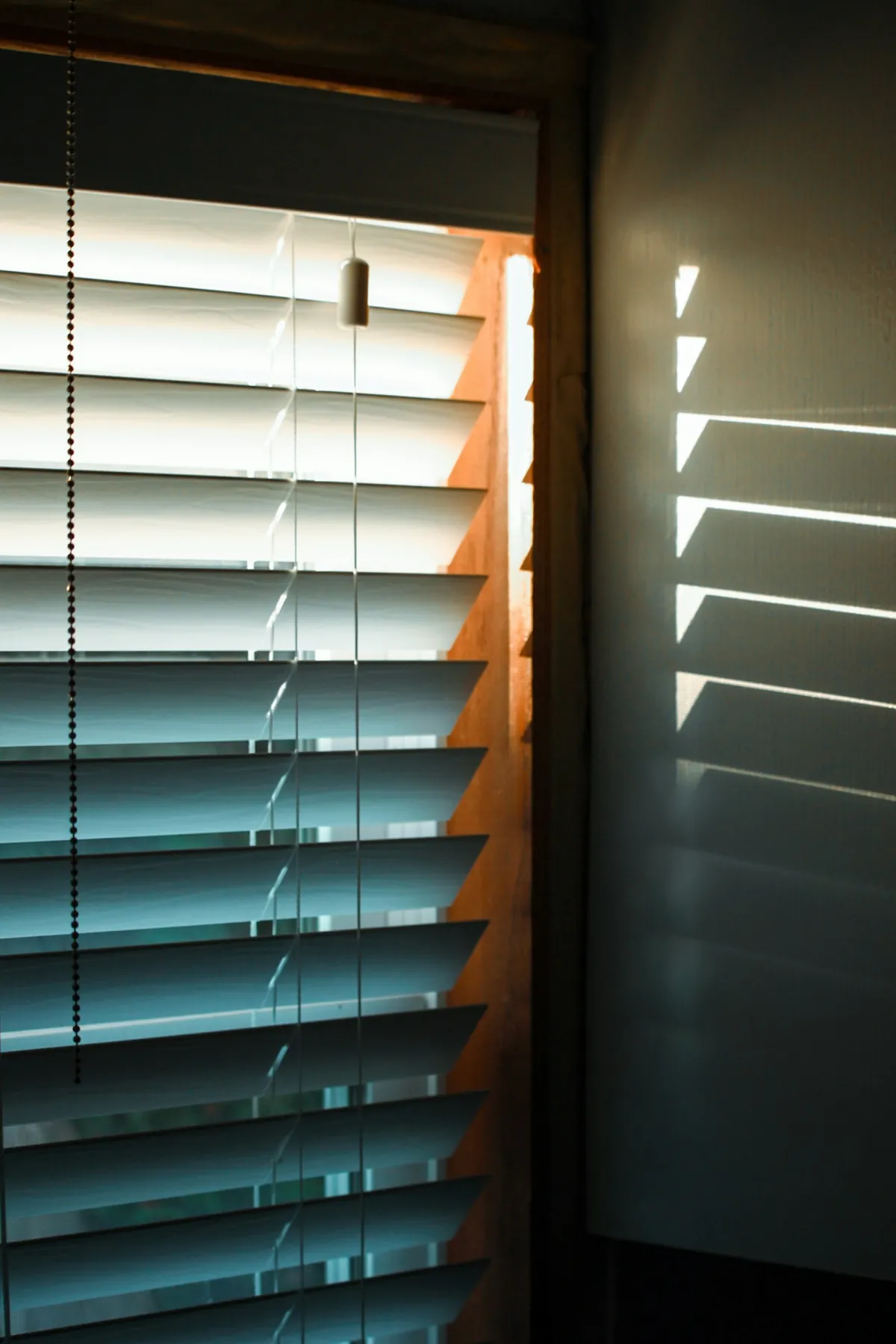
The shaded side
Rooms that need every bit of light by day and privacy at night, so the shades mostly stay up.
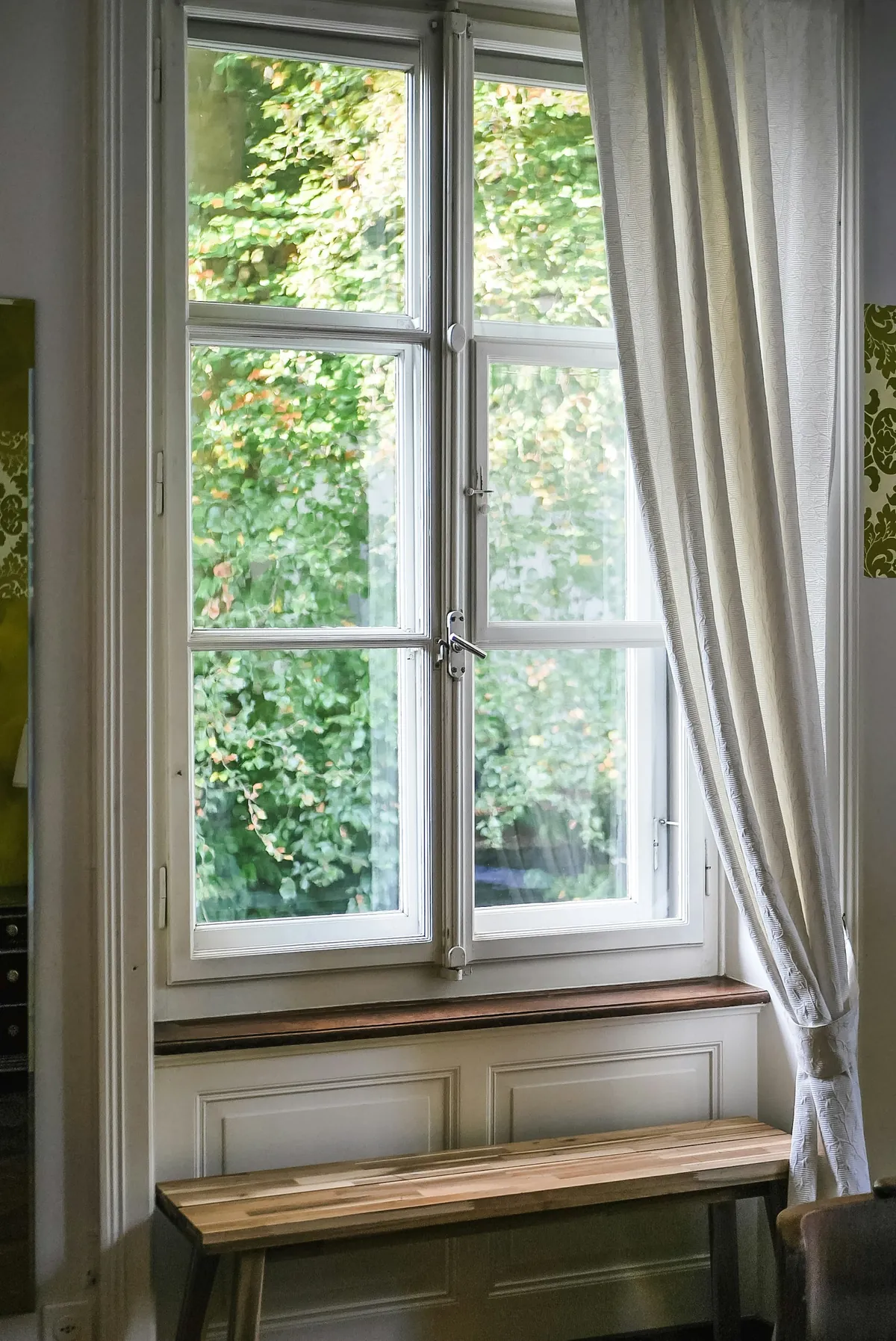
Cottage rooms
Small windows high on the wall or over a built-in, where a cord is always a reach.
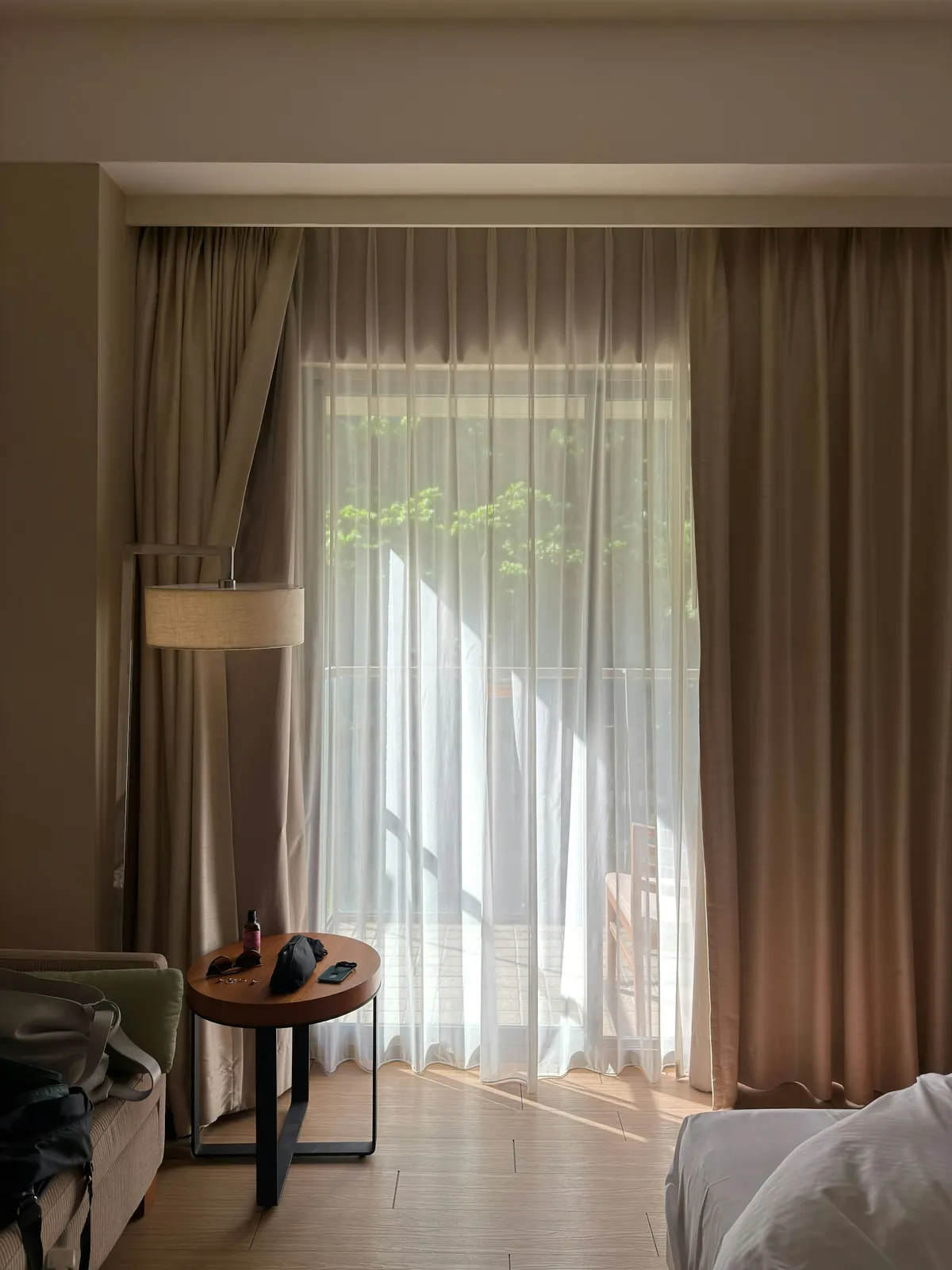
Colonial family rooms
The big room at the back of an East Main Road colonial, managed from the sofa.
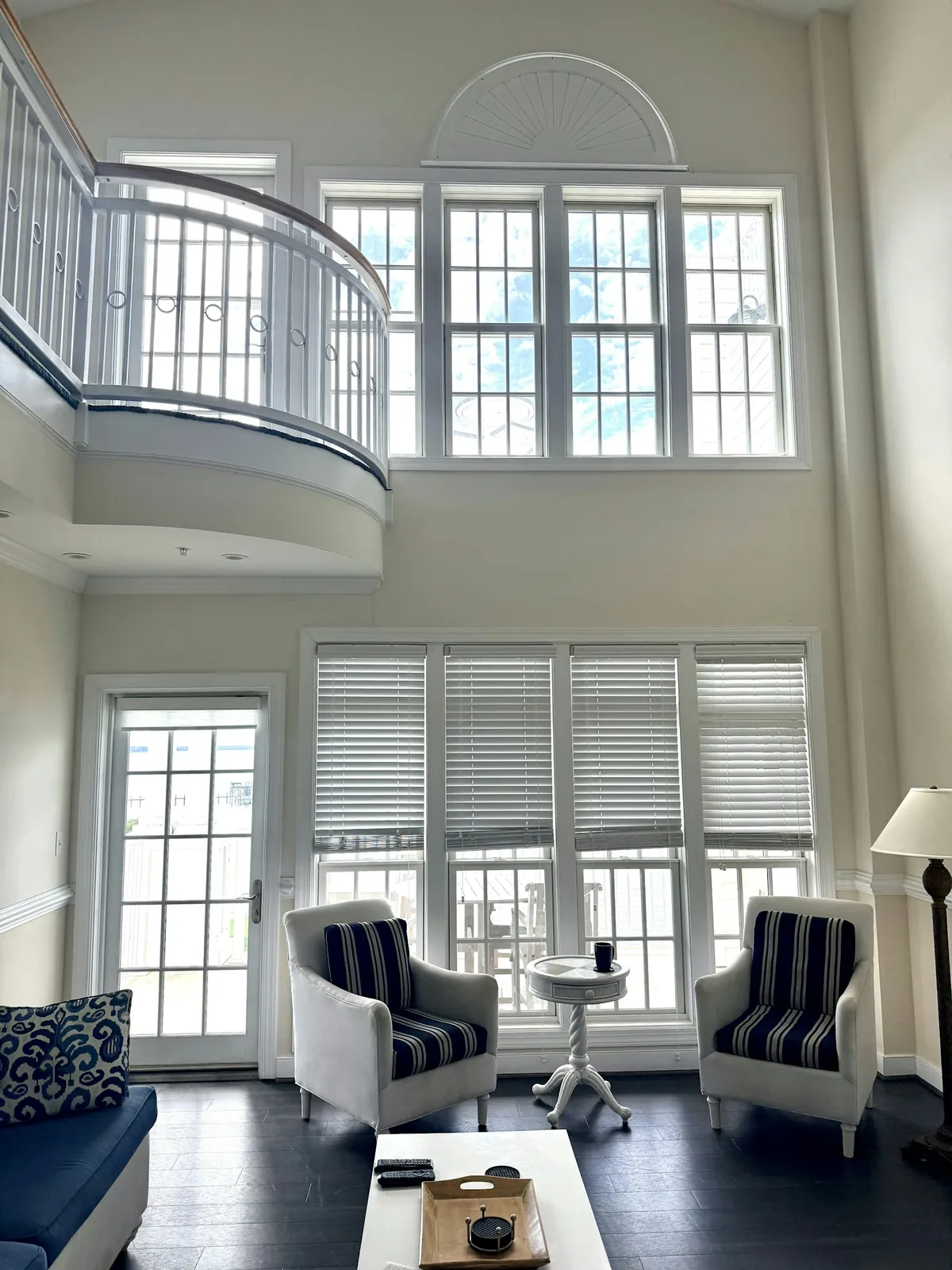
Tall glass on larger homes
Long windows built for the view, covered without a ladder or a long pole.
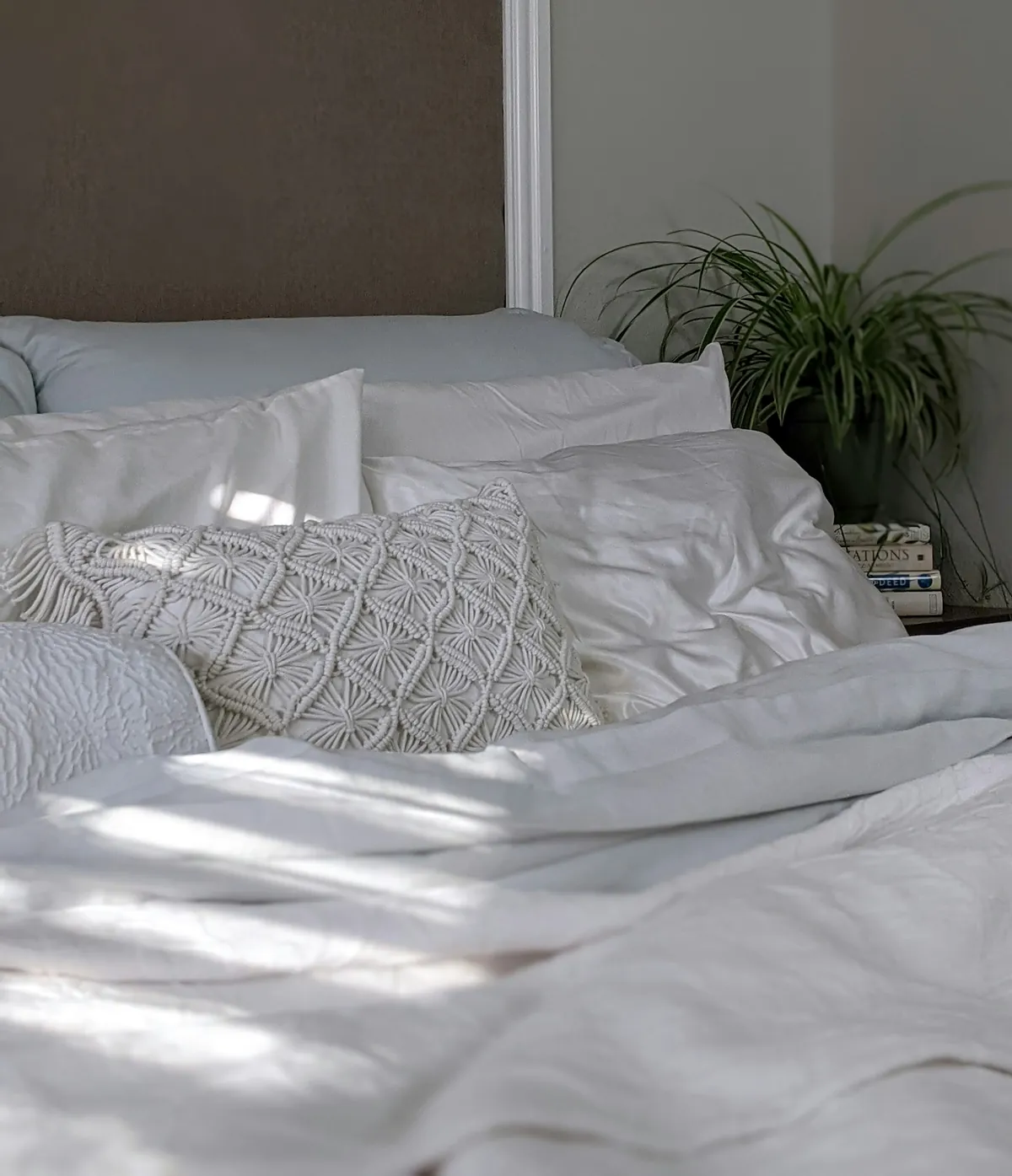
From your pillow
Lower the bedroom shades at night and raise them in the morning without getting up.
Planning Motorized Blinds in Portsmouth, RI around the Light
Getting motorized blinds in Portsmouth, RI right means starting with a simple question: which side of the house takes the sun? On the island, that is usually the side facing the water, and in many houses it changes the whole plan.
The water side
Rooms facing the bay take sun straight through the glass and more of it bounced off the water. It is the light that fades a sofa, warms a room by mid-afternoon and puts a white sheet of glare across a television. These are the rooms where shades get raised and lowered most often, and where walking from window to window by hand quickly becomes a chore that gets skipped. A motor on those shades means you lower them as soon as the sun arrives and raise them as soon as it goes, so the view is hidden only when it has to be.
The fabric matters as much as the motor here. A fabric that softens the glare while keeping some of the bay in view is often a better choice than one that blocks everything, because it lets you sit in the room with the shades down and still see out. We talk through the options when we measure, and the Swansea showroom has the fabrics to hold up to the light.
The shaded side
The other side of the house is a different story. Rooms there may get little direct sun, and the aim is to let in as much light as possible during the day. Shades on this side tend to stay up until evening, then come down for privacy once the lamps are on. That pattern suits a wall switch by the door, so the shades close as you settle in for the night, more than a remote.
Because the two sides are used so differently, we often suggest a different fabric on each. A lighter, more open fabric on the shaded side keeps the rooms bright; something with more control on the water side handles the glare. Colour can still match, so the house looks consistent from outside. Inside, a hallway that runs from one side of the house to the other shows both at once, so we choose shades that sit comfortably together when you look down its length. If you are unsure which side needs what, an afternoon visit to the showroom with a note of which rooms face the water is a good place to begin the conversation.
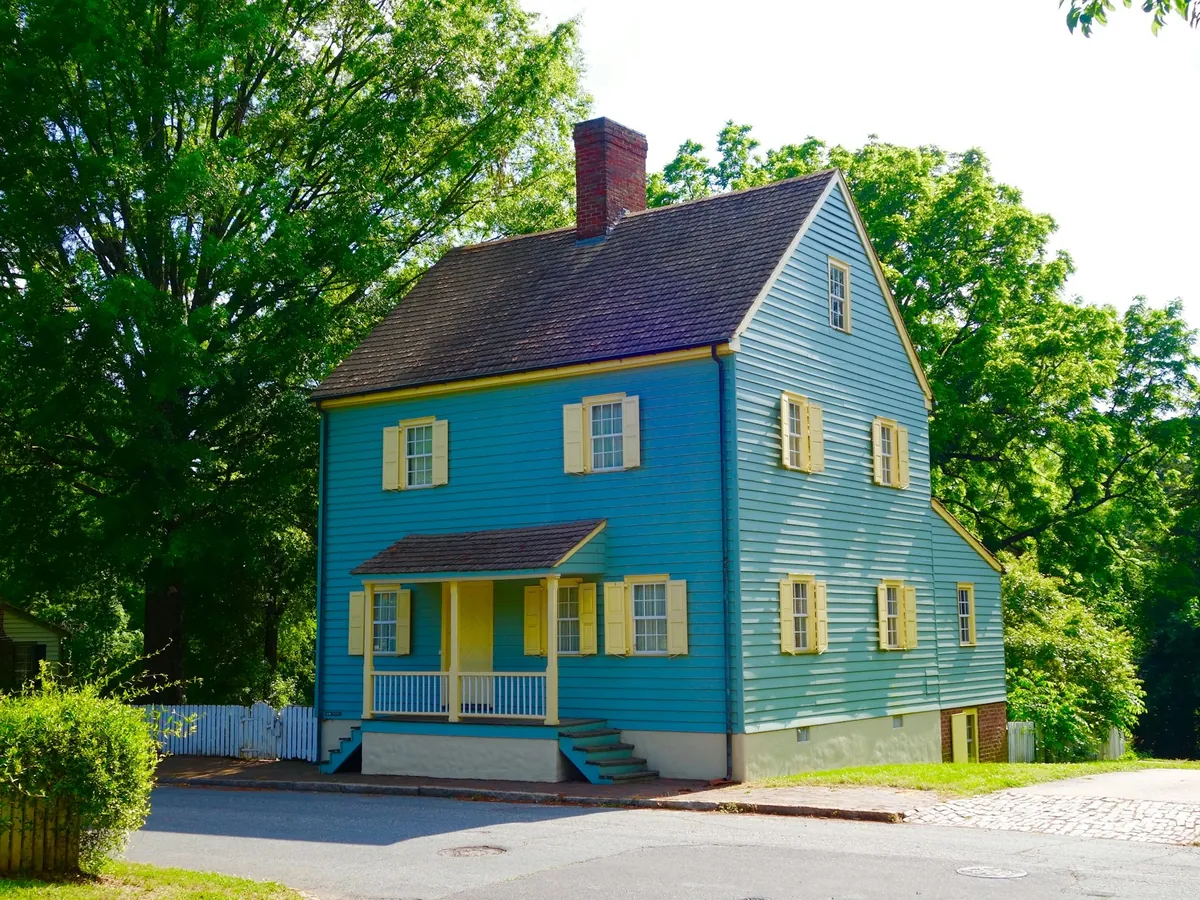
Morning Shore and Evening Shore
Which side of the island a house faces makes a real difference to when the shades come down. Along the eastern shore, looking across the Sakonnet River, the water-side rooms take the morning sun, and the glare off the river arrives early. A bedroom on that side can be bright at first light, and a kitchen or breakfast room facing the river can be hard to sit in over coffee. Along the western shore, looking over the bay, it is the reverse: the strong light comes in the afternoon and lingers into a long, low sunset straight through the glass.
That timing is why we ask about it before planning motorized blinds in Portsmouth, RI. On the eastern side, a remote by the bed or a switch in the kitchen does most of its work in the morning. On the western side, it is the living room and the family room that need attention from mid-afternoon into the evening, and a remote by the sofa earns its place. Houses in the middle of the island, away from either shore, may have a bright side and a shaded side that follow the sun round rather than the water, and we plan those room by room too.
Keeping the view when the sun is out
The reason most island houses have so much glass on the water side is the view, and nobody wants to give it up every time the sun comes round. Powered shades help in two ways. They make it easy to lower a shade only partway, enough to take the glare off the table or the screen while the water stays in sight below it. And they make it just as easy to raise the shades again the moment the light softens, so the view is hidden for minutes rather than for the rest of the day.
Cottages at Island Park and Common Fence Point
The cottages at Island Park and Common Fence Point are small houses on small lots, many of them close to the water and close to each other. Their windows tend to be modest in size, and in a lot of them the windows are set high on the wall or above built-in furniture to make the most of a small room.
Those high windows are awkward. Reaching them means leaning over a bed, a bench or a kitchen counter, and in practice the shades stay in one position. A small powered shade on each solves that, run from a remote or a switch by the door.
Space above the glass is the other thing to check. In a cottage, the window often runs close to the ceiling or the roof line, leaving little room for a headrail, and the motor sits inside that headrail. We measure the space at each window and suggest a shade with a compact top where it is tight. Because the cottages sit close together, privacy at night is a real need in many of them, and a powered shade means the bedroom and living room can be closed in moments.
The water-facing cottages also see salt on the breeze. A fabric that handles sea air well is worth choosing for the shades on that side, whether or not they are powered. Our coastal window treatments guide covers what to look for.
Colonials off East Main Road
The newer colonials off East Main Road are two-storey houses with a front hall, formal rooms at the front, a family room and kitchen at the back and bedrooms upstairs. They have more windows than a cottage and more variety.
The family room is usually where a motor helps most. It is the room with the most glass, often a run of windows or a slider out to the yard, and it is where you sit through the afternoon and evening. A remote on the side table lets you follow the light without getting up. If the family room faces the water side of the island, it is often the brightest room in the house by mid-afternoon.
The front hall in many of these colonials rises two storeys, with a tall window above the door or on the stair landing. Covering that window by hand is close to impossible, so it is often left bare. A motorized shade lets you dress it at last, with a switch by the front door or at the top of the stairs.
Upstairs, the main bedroom often has three or four windows. Closing them one at a time at night is tedious. With powered shades and a remote by the bed, the room is dark in moments and light again in the morning.
Larger Homes Built around the View
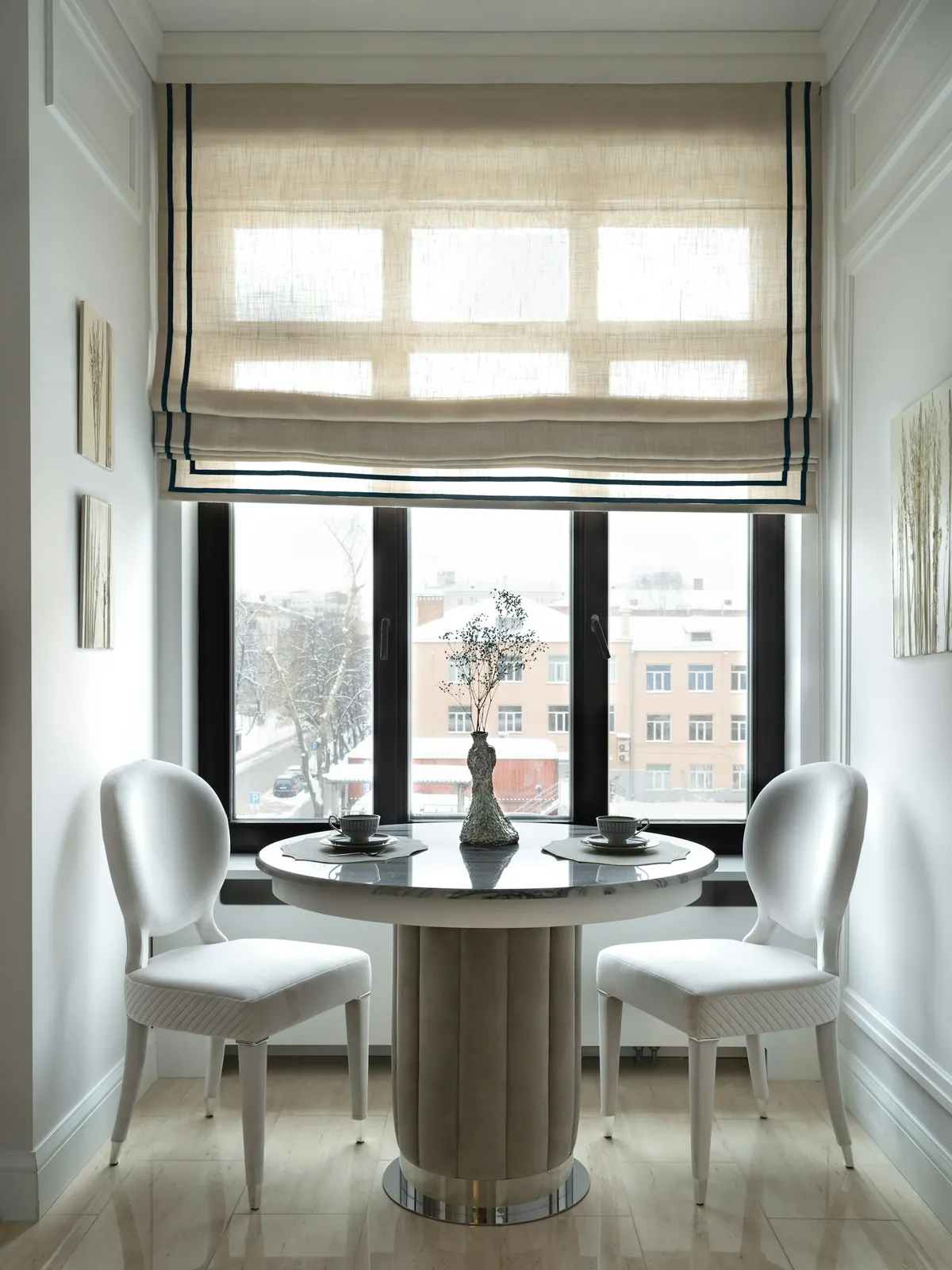
The larger homes on the island’s bigger lots are built to look out, with tall windows, wide spans of glass and sometimes windows set high in a raised ceiling or a gable. On the water side, those windows are the whole point of the room.
They are also the windows most likely to be impossible to reach. A tall window rising above a doorway, a clerestory near the ceiling, a long wall of glass behind furniture: none of these work well by hand. Powered shades let you cover them properly, and lower them only when the sun or the glare calls for it.
On glass this size, the measuring visit matters more than ever. We check the space above each window, the depth of each frame and anything below the glass, such as a radiator, a built-in seat or a door that swings into the shade’s path. We also look at how the shades will line up when they are all lowered, so a long wall of windows reads as one even row.
Some of these homes also have doors of glass opening onto a deck or a terrace on the water side. A powered covering there has to stack well clear of the doorway when it is up, so the door can be used freely, and it should be lowered only when nobody is standing in the opening. We plan the mounting above the frame and the controls beside it so the door stays easy to use through the summer.
How a Portsmouth Order Works
From the first call to the last shade, we stay in touch with you until the job is done. A typical order goes like this.
- You call the Swansea store or fill in the form, tell us which side of the house is giving you trouble, and book a free quote.
- If you want to start with the look, you visit the showroom and narrow down the fabrics and colours.
- A specialist visits the house to measure, checking each window’s size, the room above it for the headrail and what sits in front of it.
- We agree, room by room, which windows to power and whether to run them by remote, wall switch or both.
- A quote arrives, set out window by window, so it is clear which shades are motorized.
- Everything is made to the sizes taken at the house.
- Our installers fit the shades, set up each control and walk you through using them.
Choosing remote or switch
On the water side, where the shades move several times a day, a remote kept in the room is usually the handier choice. On the shaded side, where the shades go down once in the evening, a switch by the door is often enough. Bedrooms suit a remote by the bed, and a two-storey hall suits a switch at the foot or the top of the stairs. Plenty of houses mix the two.
Powered and hand-operated together
Not every window needs a motor. A cottage might power only its high windows; a colonial might power the family room and the hall window and leave the rest. We match fabric and colour across both so the house looks planned as a whole. The window treatments for Portsmouth homes page shows the rest of what we do on the island, and the cellular shades in Portsmouth page covers a popular choice for the shaded side’s rooms.
Clear of cords
Powered shades have no lift cords. That keeps windows tidy and leaves nothing loose for children or pets to reach. Our guide to cordless blinds and child safety explains more.
Looking after them
Day-to-day care is light work. A soft duster over the fabric or slats keeps them fresh, and a damp cloth is fine only on materials made for it. Shades facing the bay pick up a fine film of sea air over a breezy summer, so give those a little more attention than the ones on the shaded side. Leave the space beneath every shade free of chairs and plants. Now and then, send a rarely used shade all the way down and back up; if it hesitates or hangs crooked, ring the store and describe which window it is. Our main motorized blinds page covers the service across all the towns we serve.
What Sets Window Works Apart
Window Works began in Swansea in 1988 as a family store and is now in the hands of the second generation. For over 37 years we have worked across the SouthCoast of Massachusetts and the Rhode Island East Bay, with Portsmouth among the towns we serve.
- Specialists who work with window treatments every day
- Measuring in your home and installation by our team
- Warranties offered on the products we sell
- Kept up to date by us until the work is done
- A showroom in Swansea with fabrics and colours to compare
Questions from Portsmouth
Should the water side and the shaded side of my house have different shades?
Often, yes. The water side usually needs more glare control, and the shaded side benefits from a lighter fabric. The colours can still match.
Is there room for a motorized shade in a small cottage window?
Usually. Cottage windows often sit close to the ceiling, so we measure the space above each one and choose a shade with a compact top where it is tight.
Can you cover the tall window over a two-storey front hall?
Yes. A powered shade is often the only practical way to cover it, and a switch by the front door or at the top of the stairs runs it.
Which rooms in an East Main Road colonial suit a motor?
Usually the family room, the hall window and the main bedroom. The rest can keep ordinary controls in matching colours.
How do I book a quote in Portsmouth?
Quotes are free. Use the call button or the form, mention which side of the house gets the sun, and we will arrange a visit.
Getting Started
If you are weighing up motorized blinds in Portsmouth, RI, the first step is a free quote. Use the call button to talk to the Swansea store, set up measuring in your home or ask about installation, or send the form and we will reply. You can also drop into the showroom to compare fabrics for the bright and shaded sides of the house; directions are on the contact page. Window Works holds a 5.0 Google rating.