
Salt Air, Sea Light and the Parts That Give Way
Near the coast, the air itself wears window treatments out, and that is the heart of most blind and shade repair in Westport, MA. Salt carried on the breeze settles on cords, slats and the small metal parts inside a headrail. Damp days follow bright ones. Over time cords stiffen, locks stop gripping cleanly and tilt gears grow reluctant, even on blinds that look fine from across the room.
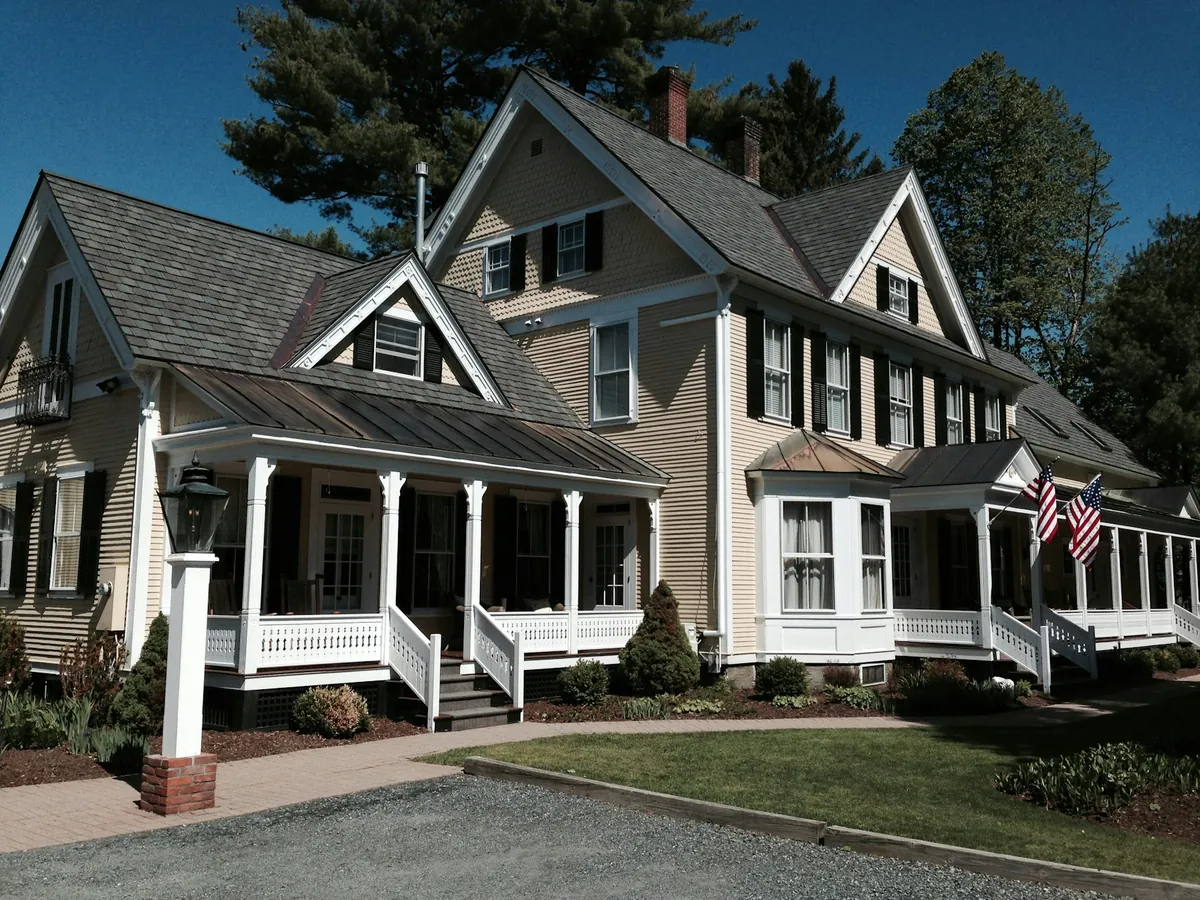
The houses add their own pressures. The shingled capes and farmhouses along Main Road have older windows and blinds that have often hung for many years. The larger, newer homes toward Horseneck and the Westport River have rooms laid out around the view rather than the wall, with wide glass, sliders and shades that spend most of the day raised to keep the outlook clear.
In most cases the slats or fabric are still worth keeping. The work is in the cords, the wand and the headrail.
Repairs for Coastal Homes
Cords stiffened by salt
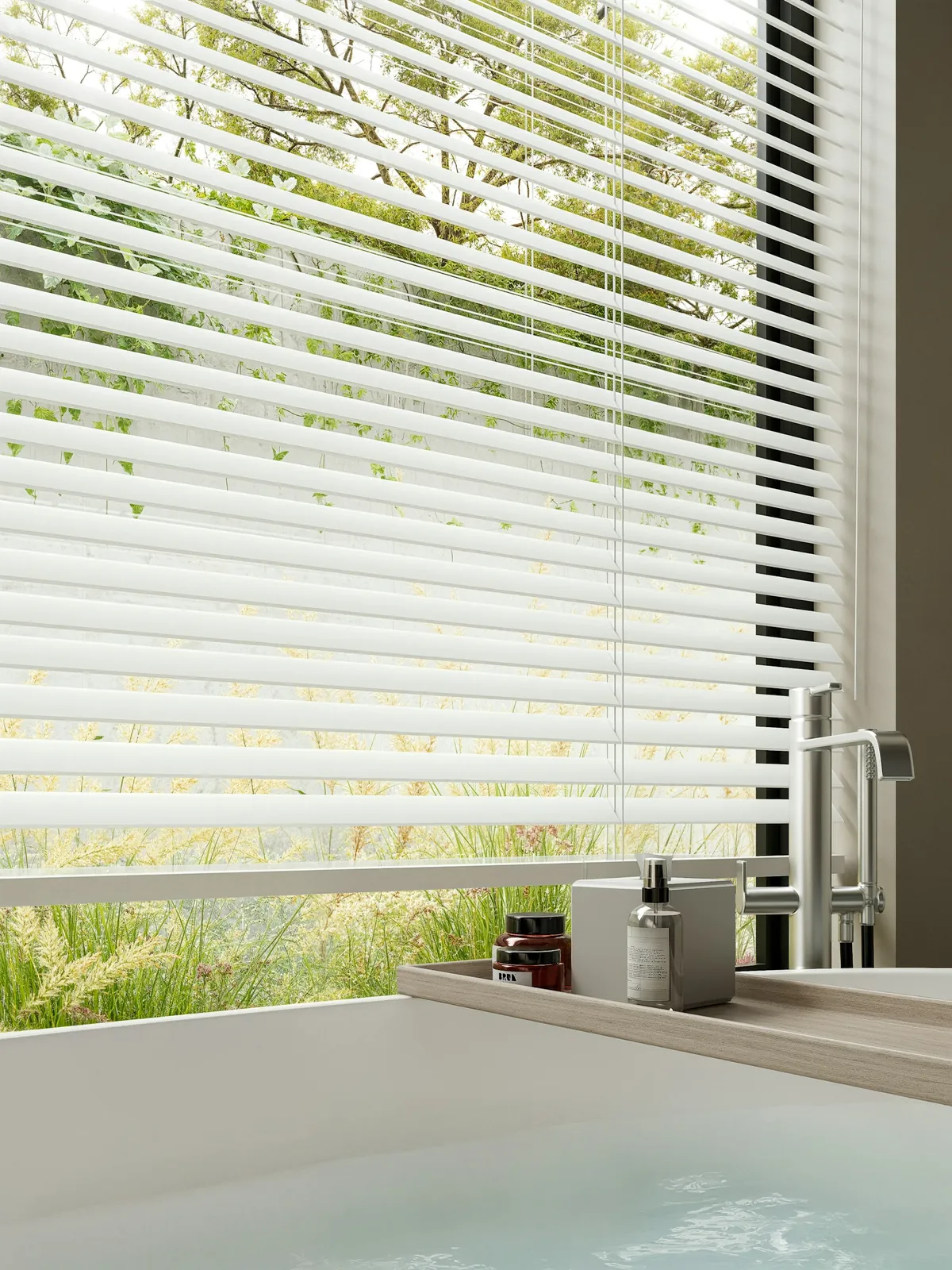
Lift cords that have hardened, discoloured or frayed in damp, salty air, replaced so the blind or shade runs smoothly again.
Locks and tilt gears
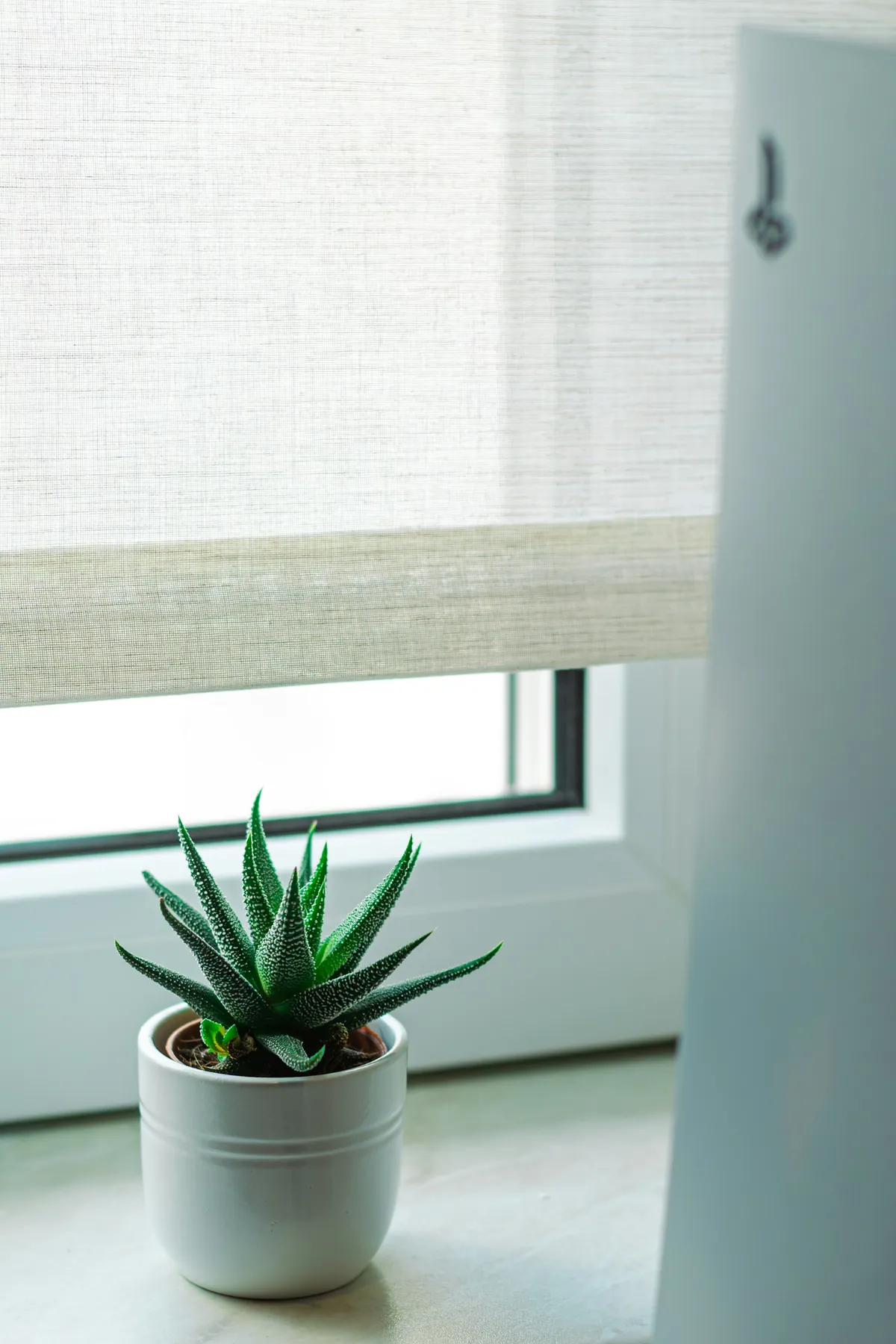
Headrail parts that have grown sluggish or stopped gripping, looked at so the treatment holds its height and turns as it should.
Wide view windows
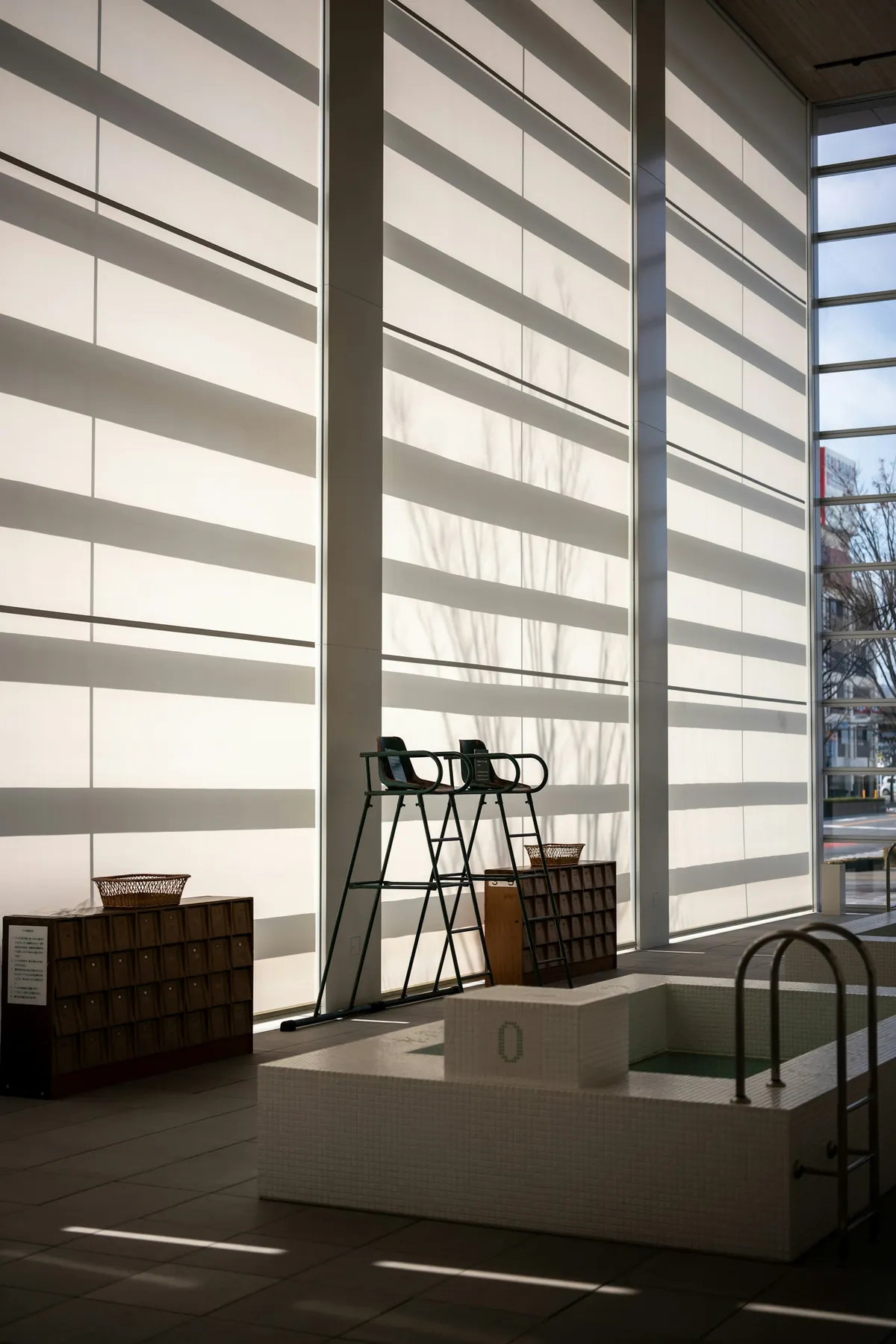
Large shades and blinds across harbour-facing glass, restrung when they lift at a slant or will not hold.
What Salt Air Does to Blinds and Shades
Salt is the governing factor for window treatments in Westport, and it shapes nearly every request for blind and shade repair in Westport, MA. It does not usually cause one dramatic failure. It causes a slow stiffening of everything that moves, until one day a cord snaps or a blind refuses to tilt. Knowing where it does its work makes repairs easier to judge.
On the cords
Cords absorb moisture, and salt carried in that moisture stays behind when they dry. A salty cord is rougher than a clean one, so it drags as it runs through the headrail and over the cord lock. The extra friction wears it faster at the points where it turns, and it also makes the blind harder to lift, so people pull harder, which wears it faster still. Cords on harbour-facing windows often look darker or blotchy compared with cords on the landward side of the same house. Once they feel stiff or gritty between your fingers, they are close to the end of their life, and replacing all of them on that blind at once makes more sense than waiting for each to fail.
On the metal parts
A headrail carries small metal parts: the cord lock, the tilt mechanism, the axle that turns the cord drums and the brackets that hold the rail up. In salty air, any of these can start to corrode. A cord lock with roughened surfaces stops releasing cleanly, so the blind jerks down or will not drop at all. A tilt gear that has stiffened turns grudgingly, and a wand forced against it may slip or break. Aluminium slats can show small spots or a dull film over time. Whether a corroded part can be dealt with depends on how far it has gone, which is why a photo of the headrail is so useful.
On the fabric
Fabric shades in coastal rooms take damp and strong reflected light off the water. Cellular and pleated shades can lose their crispness and hang less evenly, and their internal cords stiffen just as a blind’s do. If the fabric is clean and has held its colour, restringing usually brings the shade back. If it has spotted, faded in bands or gone limp, it is worth talking about whether a repair is the right use of money.
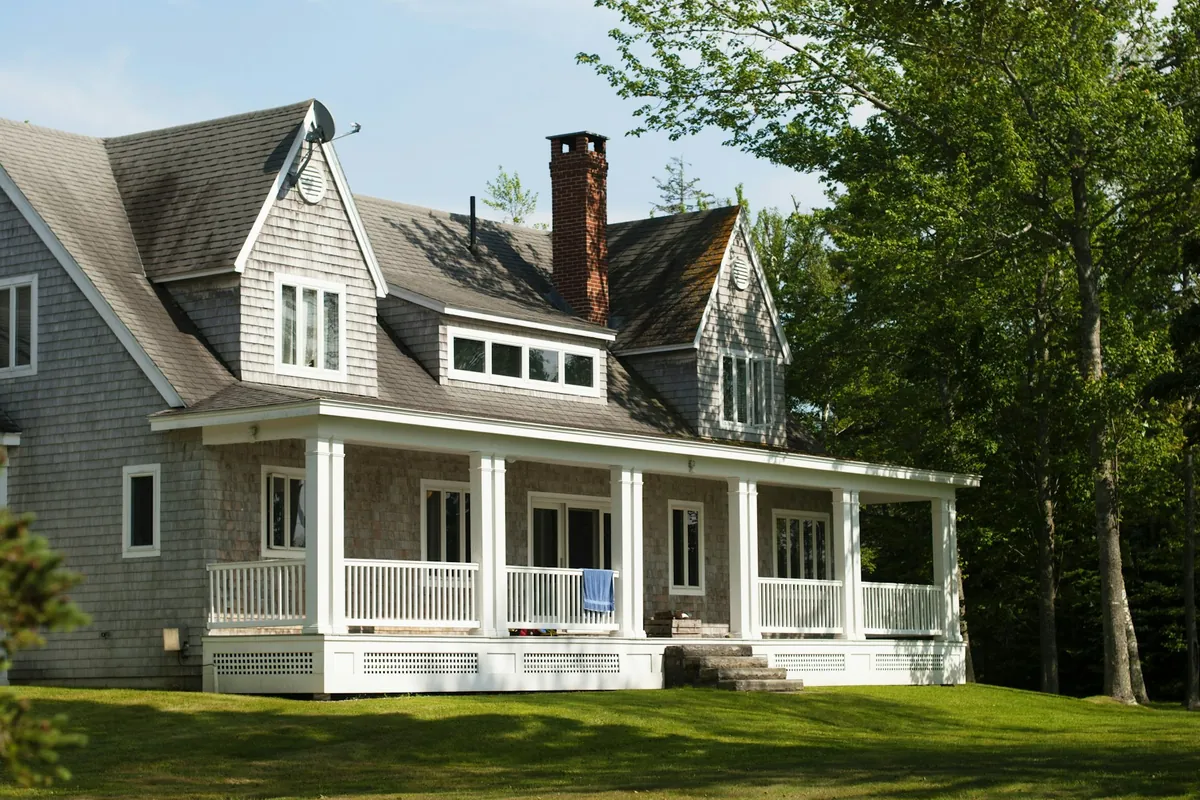
Main Road Capes and Farmhouses
The shingled capes and farmhouses along Main Road tend to have more modest windows than the newer houses near the water, and their blinds and shades have often been in place for a good long time. That brings a different mix of repairs.
Long-serving blinds
A blind that has hung in a farmhouse kitchen or a cape bedroom for years may have slats in perfectly good order and cords that are worn through. That is the ideal repair: the part you see is sound, and the part that failed is the simplest part of the blind to put right. New cords and, where needed, a new wand can keep a good blind working well for a long while yet. Wood slats on an older blind are worth a close look first: if they have stayed flat and their finish is intact, they are well worth restringing. If damp has made them bow or the finish has lifted along the edges, that changes the answer, and we will tell you so. In a farmhouse with deep old trim, check too that the brackets are still firm in the wood, since a rail that rocks in loose brackets will wear new cords unevenly.
Smaller windows, closer handling
In the smaller rooms of a cape, blinds are often within easy reach and handled constantly: raised in the morning, tilted at noon, lowered at night. Constant handling wears cords where hands grip them and loosens wands where they hook on. Those are small, simple repairs. The bigger question on an older blind is whether the headrail is still sound, and that is something we can usually tell from a description and a photo.
Kitchens and bathrooms
Steam on top of salt air is a hard combination. Blinds in kitchens and bathrooms in these houses often show stiff, stained cords well before anything else wears. Faux wood and aluminium slats usually clean up well enough that new cords are all the blind needs.
Rooms Built around the View
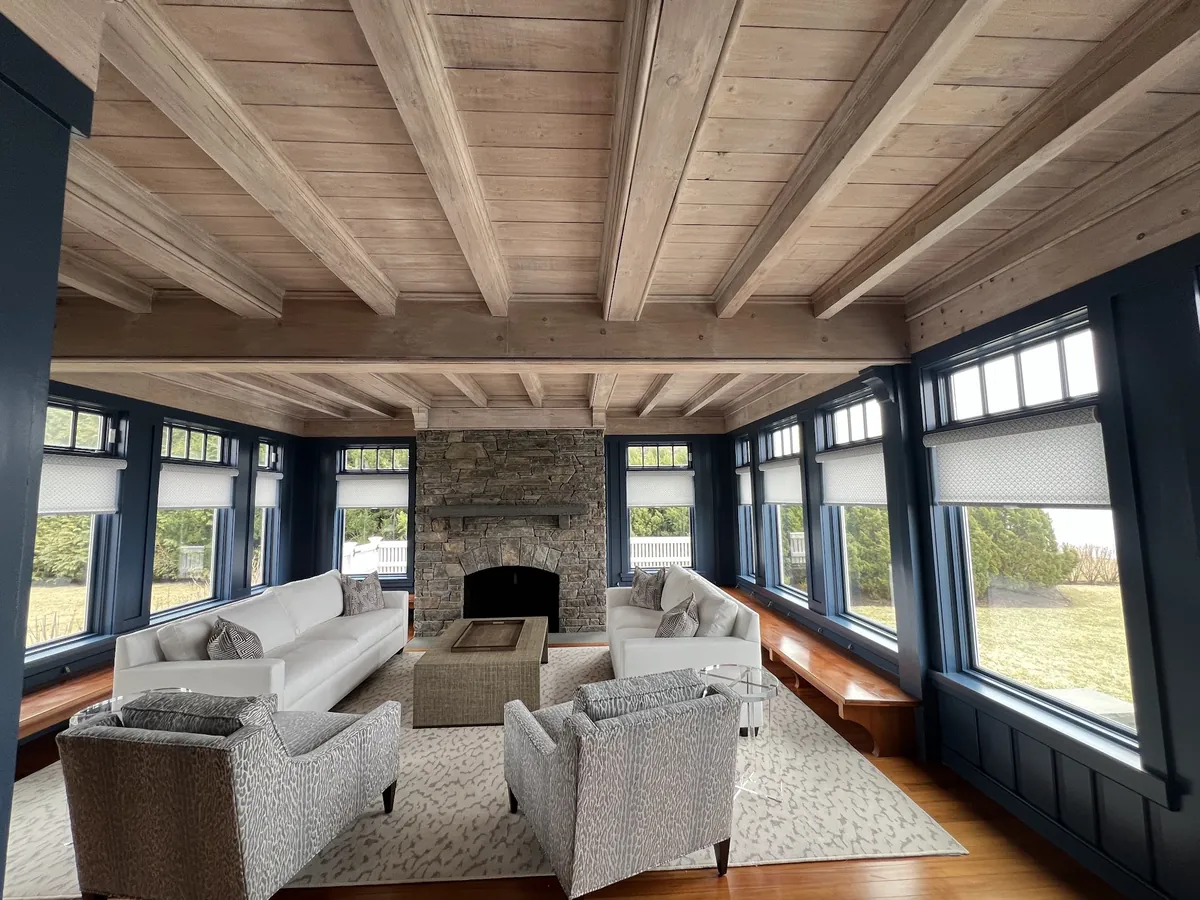
In the larger, newer homes toward Horseneck and the Westport River, the main rooms are often arranged around the harbour or the river, with glass taking up much of the wall. The treatments there are wide, and they spend most of their lives raised.
Shades kept up all day
When the point of a room is the view, blinds and shades are raised in the morning and left that way until the evening, sometimes for days at a time. That leaves the lift cords bent around the same points inside the headrail for hours, and those bends are where a stiff, salty cord eventually cracks. It also leaves the stacked slats or folded fabric in strong light. If a raised shade starts to drop on one side when you finally lower it, that bent section of cord is usually the cause, and restringing is the fix.
Wide shades and slanting hems
A wide shade across a big pane lifts on several cords spaced along its width. If one stretches or stiffens more than the rest, often the one nearest the sunniest corner, the shade lifts at a slant and the hem stops sitting level. Restringing sets every cord to the same length again.
Sliders onto decks and porches
Many of these houses have sliders out to a deck or porch, often with vertical blinds or fabric panels. Sliders are used constantly in warm weather, and the salty air reaches the track as well as the cords. Vertical blinds there tend to show stiff carriers, vanes that no longer turn together and wands that have worked loose. A track that has started to drag is worth mentioning, because grit and salt in the track change what the repair involves.
Roman shades in living rooms and bedrooms
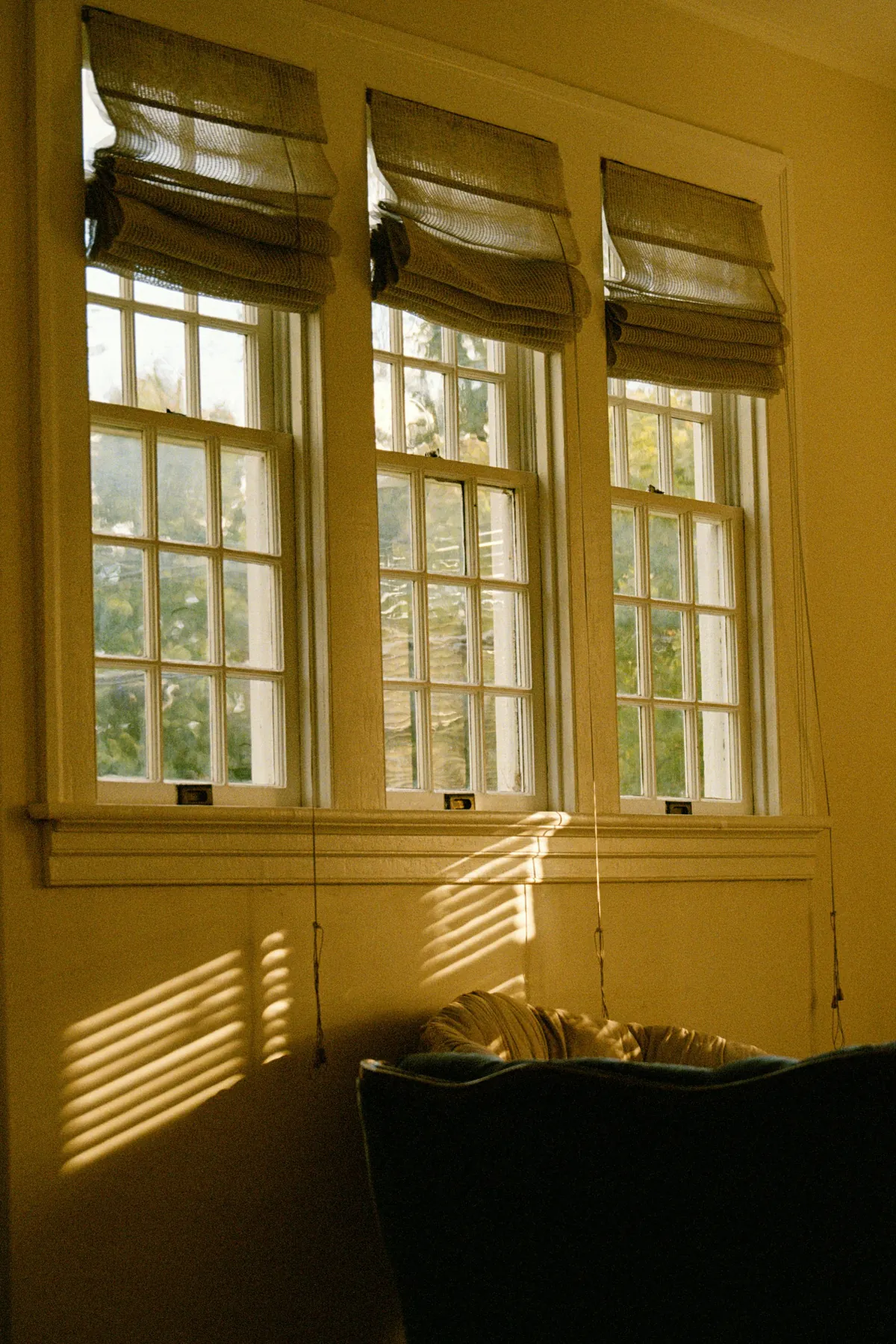
Roman shades are a natural choice for a room with a view, because they fold up neatly above the glass. They lift on cords that run through rings sewn on the back of the fabric, and in salty air those cords stiffen like any other. A stiff cord does not slide through its rings as freely, so the folds start to stack unevenly or the shade lifts on one side. Sometimes a ring has pulled loose from the fabric as well. Restringing, and re-securing any ring that has come away, usually brings the folds back into line, as long as the fabric itself has kept its body and colour.
After a damp spell
Coastal houses go through stretches of fog and wet weather, and treatments on harbour-facing windows can feel limp or sticky afterwards. Give a blind or shade a chance to dry out before deciding something has failed: lower it, leave the slats or fabric open to the air, and try it again a day or two later. If it still drags, sticks or will not lock once it is dry, the cords or the headrail parts have probably had enough, and that is a good moment to get in touch.
Upstairs rooms facing the water
Bedrooms on the upper floor of a waterfront house often get the strongest light of all, early in the day and off the water, and their blinds and shades are lowered and raised every morning and night. That steady use, on top of salt and sun, wears cords at the headrail and loosens wands faster than in rooms downstairs. If the blinds upstairs are failing while the ones below are fine, that pattern is usual, and it is worth dealing with the whole upstairs set while you are about it.
How Repairs Are Handled
We keep things simple and stay in touch with you from the first call until the job is done.
- Tell us about the blind or shade, by the call button or the form, and what has gone wrong with it.
- We talk over the likely cause, salt and sun included, and whether a repair will last well enough to be worth doing.
- If it is, a free quote comes first, before anything is agreed.
- After the repair, the treatment is run through every movement: raised, lowered, held part way and tilted.
How and where a repair is carried out depends on the treatment and the fault, so that is decided with you in the first conversation rather than set in advance. Describe the problem and we will talk it through.
Worth noting before you call
These details make a question about blind and shade repair in Westport, MA much quicker to answer.
- What it is. A slatted blind in wood, faux wood or aluminium, vertical blinds on a slider, or a fabric shade.
- Which way it faces. A harbour-facing window takes far more salt and light than one on the landward side.
- What it does. Jerks down, will not drop, lifts at a slant, will not tilt, or the wand slips.
- How the cords feel. Supple, stiff, gritty or frayed.
- Photos. The whole window, the faulty part, and the headrail, where any corrosion usually shows first.
When Repair Is Not the Best Answer
Salt air can take a treatment past the point where repair makes sense. We will tell you plainly when we think that has happened. Signs to look for:
- Metal parts in the headrail corroded badly enough that they no longer move
- Aluminium slats dulled, spotted or bent along their length
- Shade fabric that has faded in bands, spotted or lost its body
- A room where the other treatments are near the end of their life as well
If replacing is the better way forward, the roller shades in Westport and custom blinds for Westport homes pages show what can be made to measure for coastal rooms and wide view windows, and a free quote with measuring in your home is where that starts. For the repair service across our area, see the main blind and shade repair page.
Small habits for coastal blinds
Wipe cords and slats now and then with a barely damp cloth to lift the salt film, then let them dry before raising. Lower blinds that are usually kept up all the way every so often, so the cords move through the rail. Pull cords evenly and straight down. Open the slats before raising, and never force a wand that has stiffened, because a corroded gear breaks rather than bends. Keep slider tracks free of sand and grit. If a cord frays, leave the blind down rather than knotting it.
Where cords and loops reach the floor, keep them tied up high, out of reach of small children and pets. We are glad to talk that through when you call about a repair.
A few minutes spent on these habits does more to extend the life of a blind by the coast than anything else, and it makes any blind and shade repair in Westport, MA that you do need last longer afterwards.
A Family Store Serving the Coast
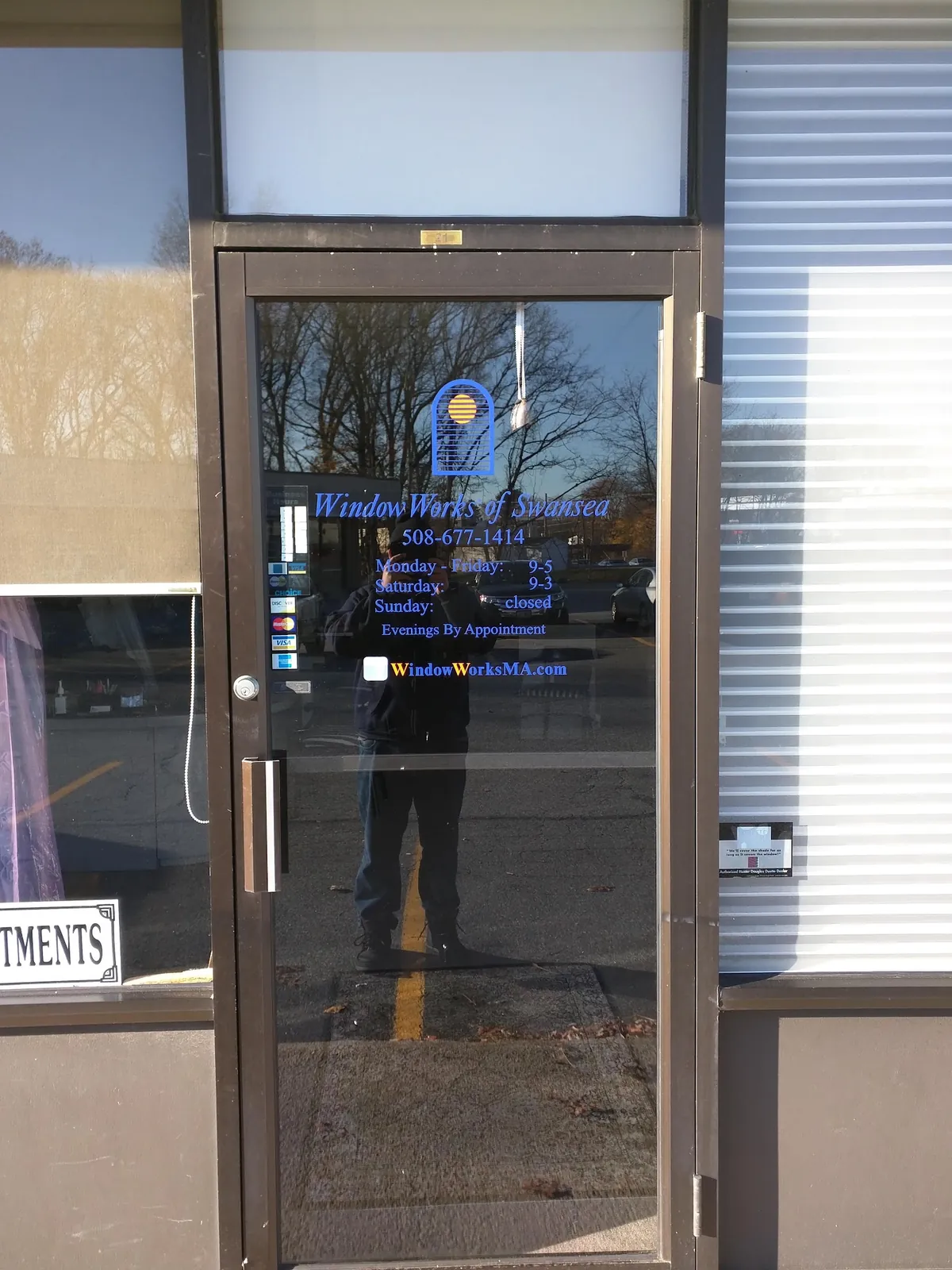
Window Works has been in Swansea since 1988 and is now run by the founding family’s second generation. For more than 37 years it has worked in houses across the SouthCoast and the Rhode Island East Bay, and Westport’s coastal homes are part of that.
- Experienced window treatment specialists
- In contact with you all the way to the end of the job
- Repairs on blinds and shades you already own
- Measuring in your home and installation for new treatments
- Warranties offered on what the store sells
Come and Talk It Over
The Swansea showroom is an easy drive from Westport. Bring photos of the blind or shade, including the headrail, and our specialists will go through them with you and explain what is likely wrong.
If a coastal room needs something new, the showroom has samples to see and handle, the Norman range among them, so you can compare options in person.
Questions from Westport
Does salt air really affect blinds?
Yes. Salt settles on cords and metal parts, making cords stiff and rough and causing locks and tilt gears to stiffen or corrode. That is why coastal blinds often need new cords sooner.
My shade drops on one side after being up all day. What is wrong?
A cord left bent in the headrail for long spells can stiffen or crack at that bend. Restringing usually puts it right if the fabric is still in good condition.
Can a corroded headrail be repaired?
It depends how far the corrosion has gone. A photo of the headrail helps us judge whether a part can be dealt with or whether replacing makes more sense.
The vertical blinds on my deck slider no longer turn together. Can they be fixed?
Often, yes. Worn carriers and loose wands are common. Mention if the track drags too, since salt and grit there change the repair.
Are repair quotes free?
Yes, quotes are free. Use the call button or the form and tell us what the blind or shade is doing.
Ask Us about a Repair
Use the call button to reach the Swansea store about blind and shade repair in Westport, MA and the blind or shade that is giving trouble, or send the form with a note on the treatment, which way it faces and what it does. If new treatments are the better answer, we can book a free quote, arrange measuring in your home and talk through installation. The contact page has directions, and our window treatments for Westport homes page lists every service we offer in town.