
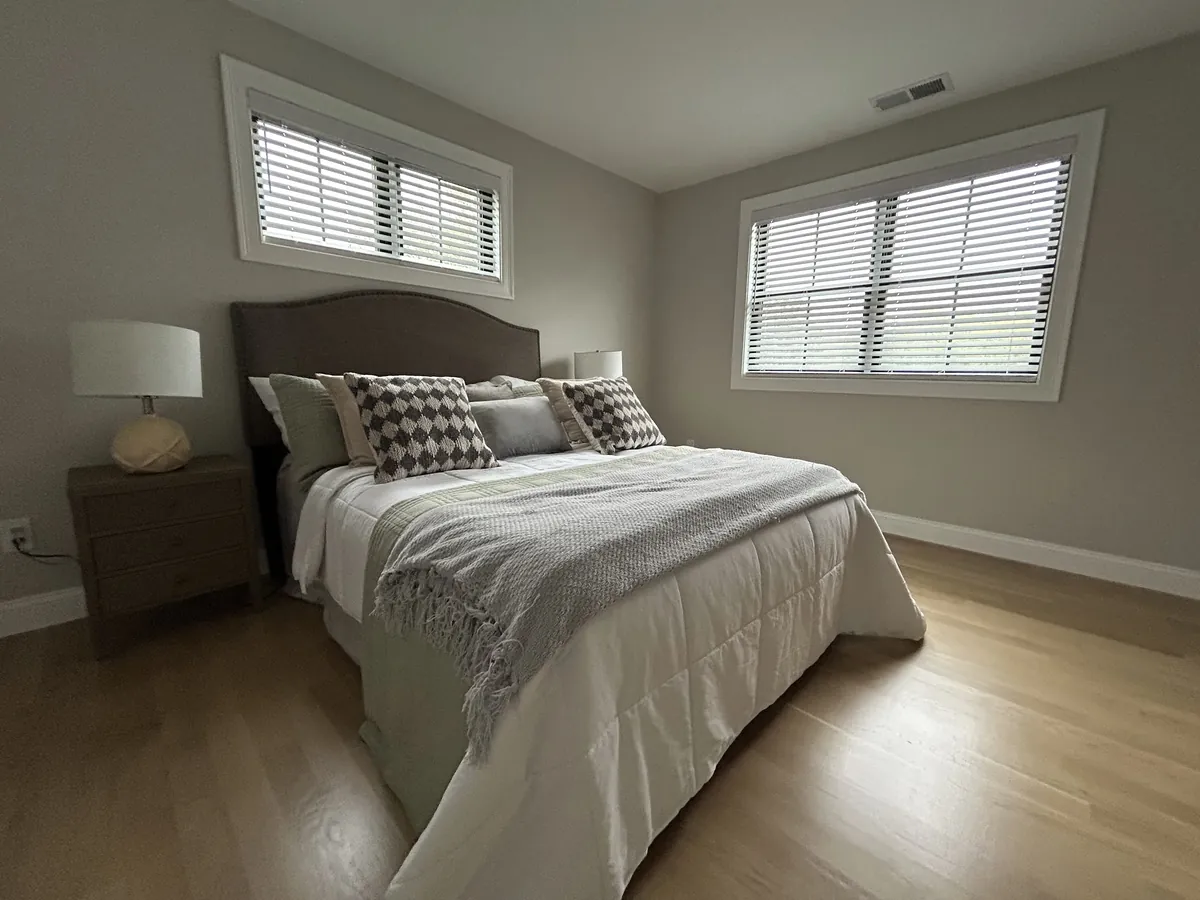
Windows That Come in Groups
Walk along a street in Riverside or Rumford and you will notice that the bungalows rarely have one big window at the front. They have two, three or four windows set side by side, separated only by narrow strips of trim, so that from the room they read as a single opening. That is how they are usually treated, and it is the main thing to get right with plantation shutters in East Providence, RI.
The same neighbourhoods also have colonials from the same years, with their more familiar pairs of double-hung sash. Watchemoket, near the river, has some of the city’s older houses, with frames that have shifted over a long life. Kettle Point brings newer construction with larger, more regular windows. A shutter has to suit each of these, and the grouped bungalow window is where careful planning pays off most.
- Interior plantation shutters only
- Louvre size and frame style matched to each opening
- Measured in your home and fitted by our own installers
Shutter Options for East Providence Houses
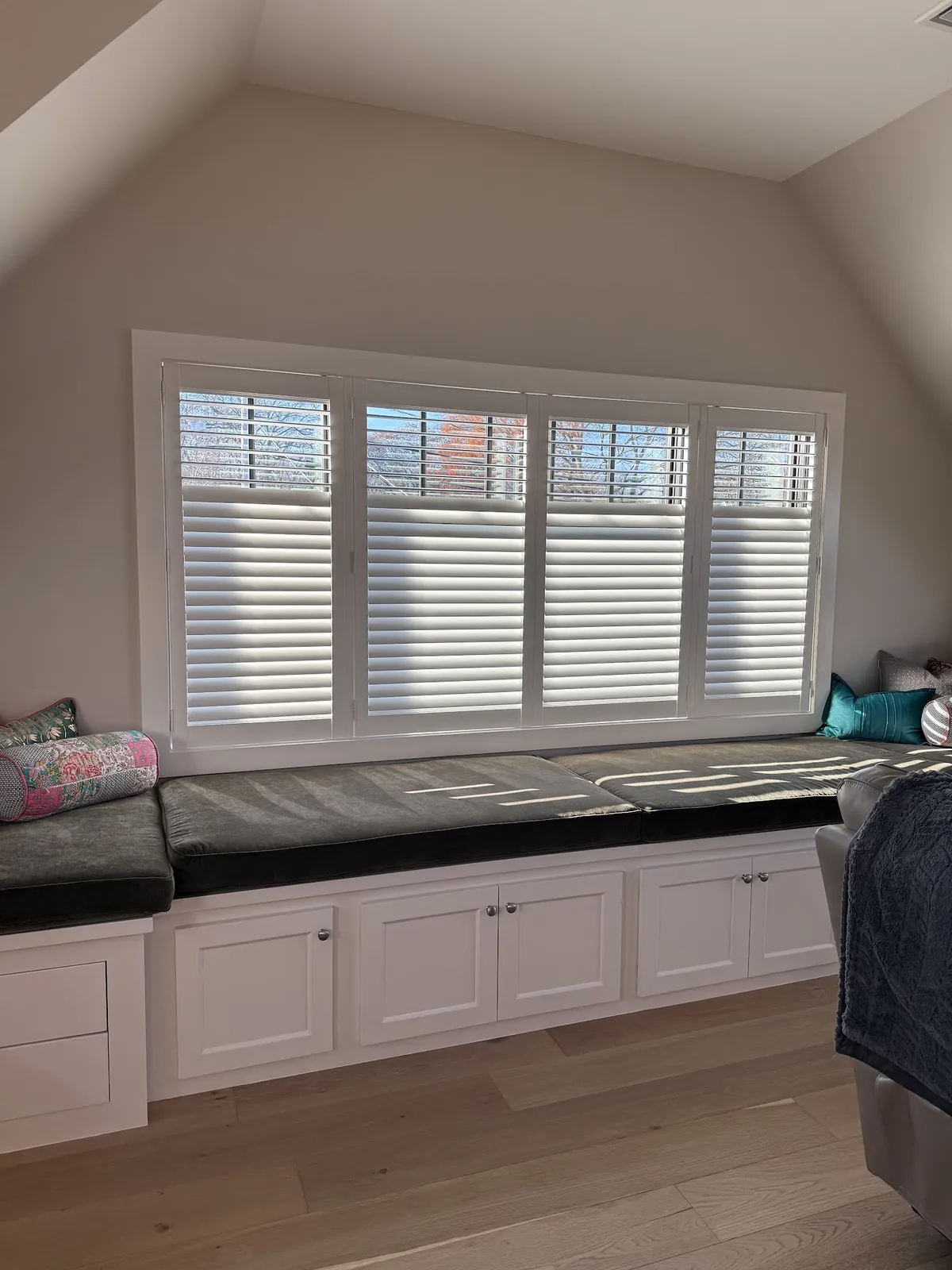
One look across a group
Several windows side by side, finished as one run of panels with the louvres and rails lined up across the whole group.
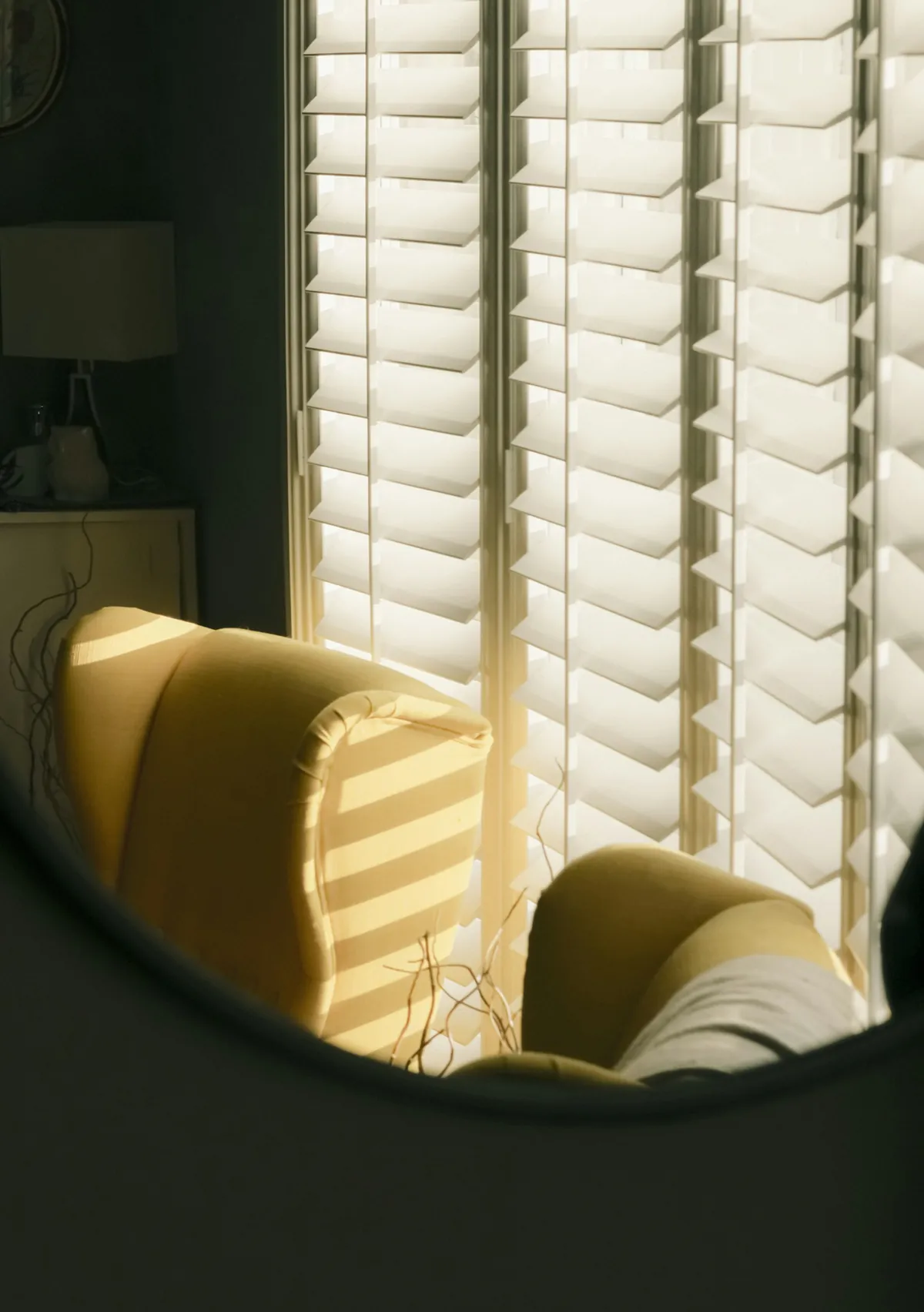
Panels that fold in pairs
Wide openings split into narrower panels hinged together, so each folds back neatly without crowding the room.
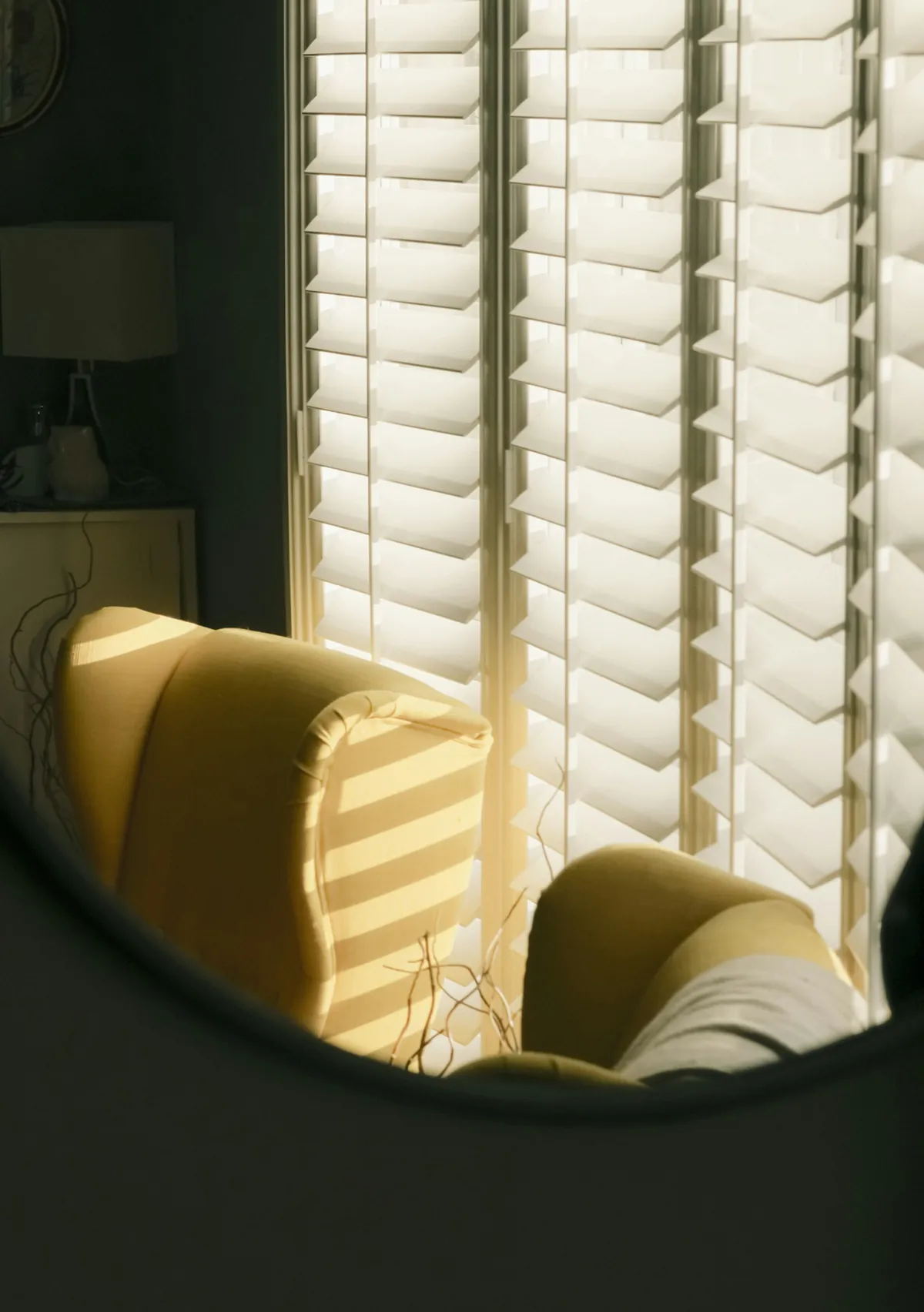
Colonial sash
Matched shutters for paired double-hung windows, with a divider rail set at the sash’s own meeting point.
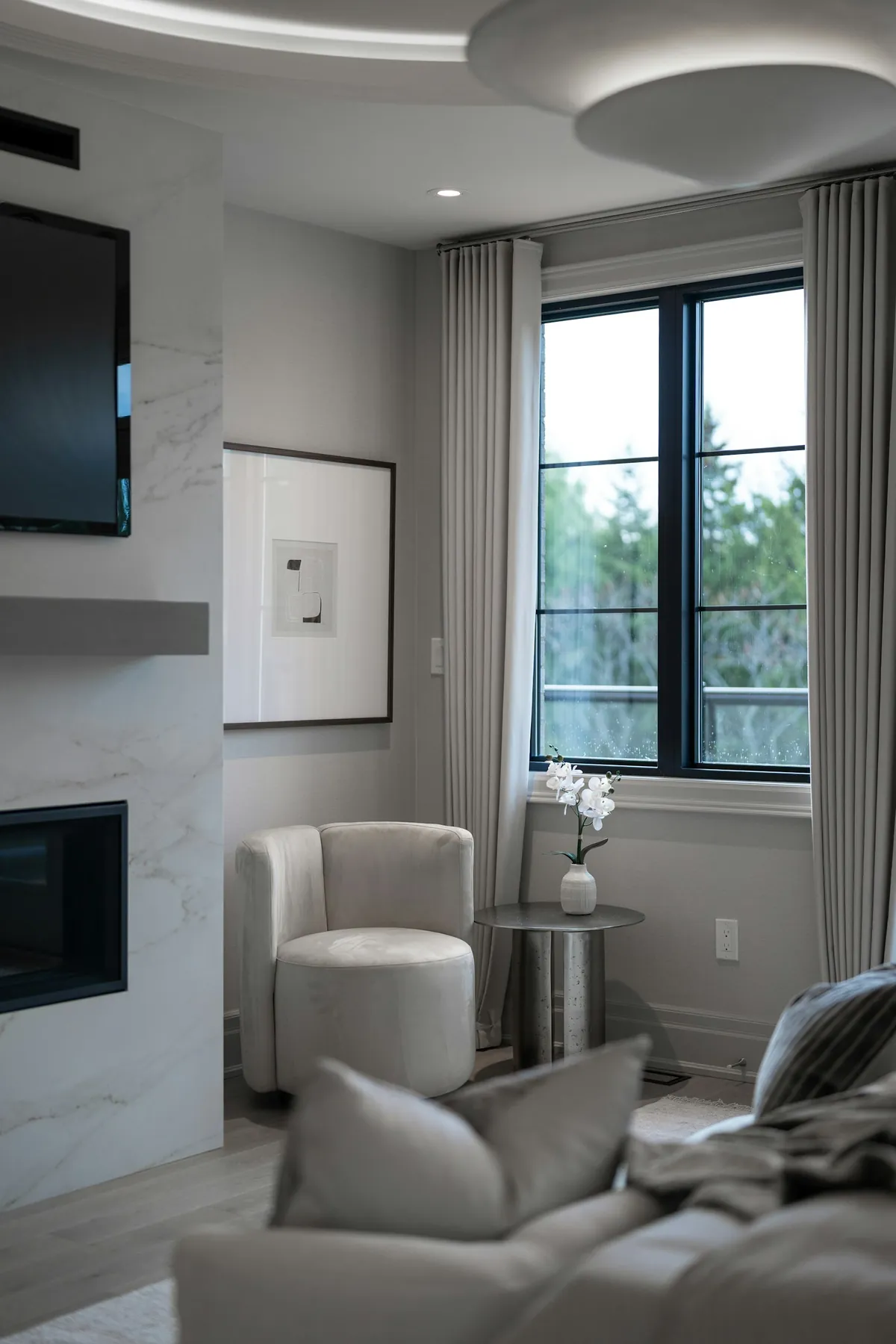
Larger, newer glass
Wider louvres and a plain frame for the bigger, more regular windows of newer houses at Kettle Point.
How Grouped Windows Are Shuttered
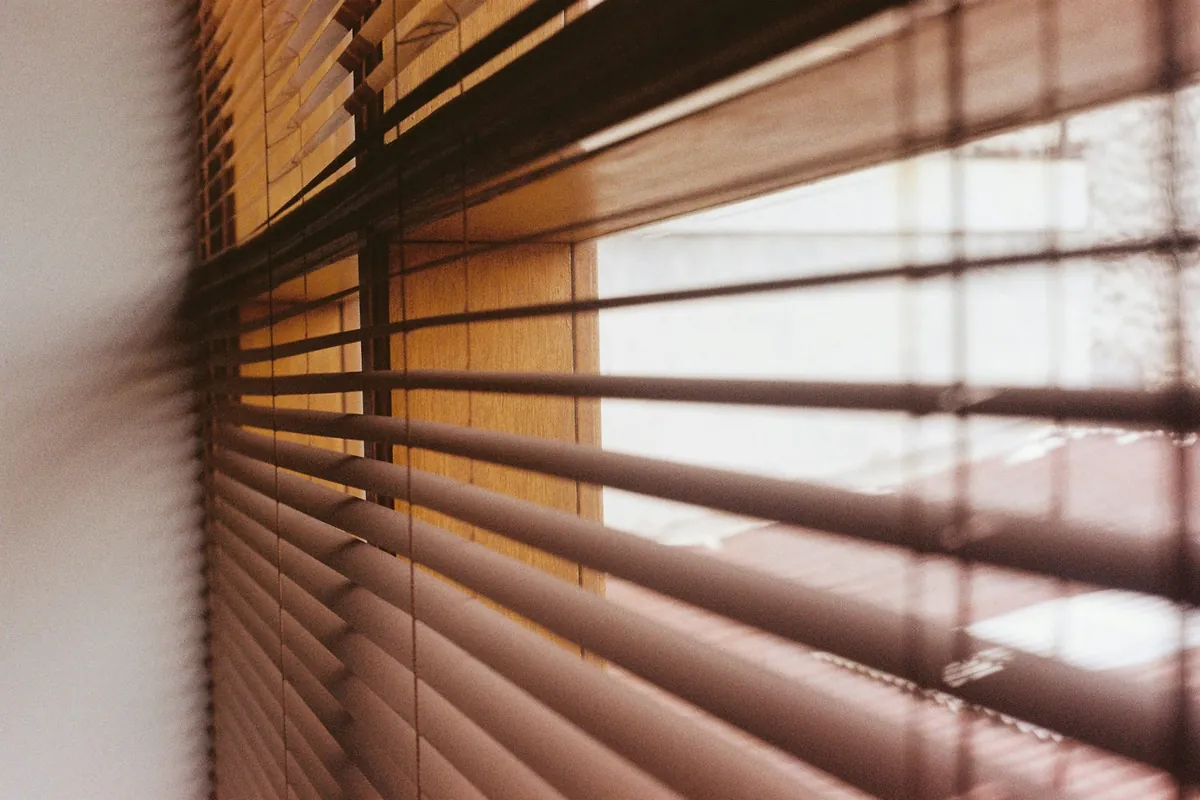
A group of bungalow windows is several separate sash set in one wide opening, with narrow posts or mullions between them. You could shutter each window on its own, and sometimes that is right. More often the group looks best treated as one, with the shutter planned across the whole width so the louvres, the divider rails and the edges of the panels all line up.
The starting point is the posts. Wherever a mullion divides two sash, the shutter has a natural place for a join, so the panels are sized to meet over the posts rather than across the middle of the glass. When the panels are closed, the shutter looks continuous. When they are open, each pair folds back against its own post or the side of the opening, and every window in the group is clear.
The louvres need to line up too. If one panel’s louvres start a little higher than its neighbour’s, the eye catches it straight away across a row of four windows. So the louvre spacing and the height of any divider rail are set across the whole group, not panel by panel. From outside, the row of windows then looks like one considered element on the front of the house.
When to treat windows separately
Not every group should be one shutter. If the windows in a group are different heights, if one opens on a crank while the others are double-hung, or if the posts between them are wide enough to read as wall rather than trim, separate shutters for each window often look better. Each one still gets the same louvre, finish and rail height so the set matches. We look at the group before suggesting either approach.
Choosing a louvre for a group
Grouped bungalow windows are often individually narrow even though the group is wide. A medium louvre usually suits them: wide enough to look substantial across the whole run, but not so wide that each narrow panel ends up with only a few slats. On a group of larger windows, a wider louvre can work well and opens more of the view when tilted flat.
Bungalows in Riverside and Rumford
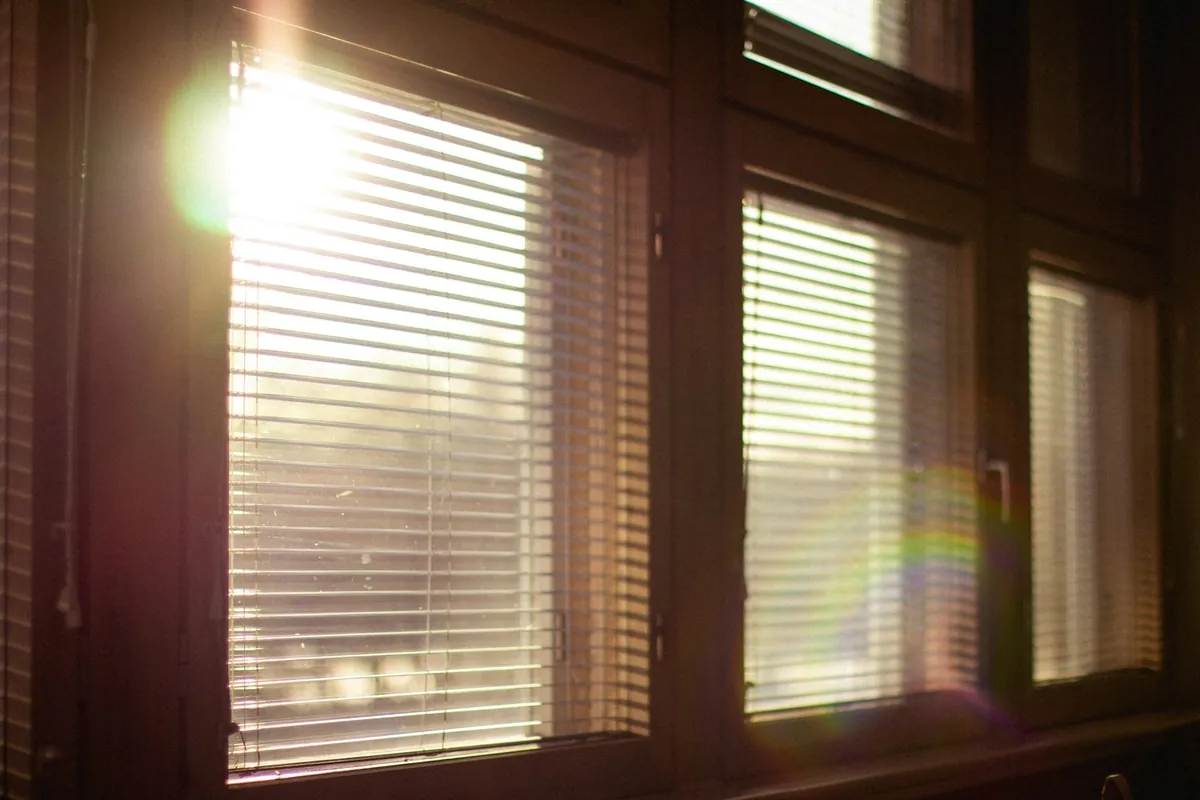
The bungalows of Riverside and Rumford were built low and broad, often with a front porch, a living room across the front and a dormer or two in the roof. Their windows tend to be grouped at the front and simpler at the sides and back.
Many of them still have their original wide wood casings, which are part of the house’s character. Where the openings are deep enough, the shutter frame sits inside each opening so the casing stays on show around it. Where the depth is shallow, as it often is in a bungalow, the frame mounts on the face of the casing instead, sized so its edges line up with the trim and it still looks deliberate.
The porch matters too. A front room behind a covered porch gets softer light than a room facing open sky, so privacy from the street is often the bigger concern than glare. Louvres angled so the room side of each slat sits lower block the view from the pavement while still letting daylight through.
Dormer bedrooms upstairs
The upstairs rooms in a bungalow are tucked under the roof, with dormer windows set into the slope. These windows are small and the walls close in around them, so there is little room for a panel to swing. A single panel, or a pair of narrow ones, hinged to open toward the side with the most clearance, keeps the shutter usable. A narrower louvre keeps a short panel looking in proportion.
Colonials from the Same Years
Alongside the bungalows, Riverside and Rumford have plenty of colonials built in the same era. Their windows are more regular: pairs of double-hung sash in the main rooms, matching windows upstairs, a smaller window over the kitchen sink.
For these houses, a divider rail at the height of the sash’s meeting rail is a natural choice. It lets the top louvres open to the sky while the bottom ones stay angled for privacy, and it keeps the shutter in proportion with the window behind it. The front windows all take the same louvre and finish so the house looks even from the street, and the bedrooms upstairs repeat the pattern.
Watchemoket’s Older Houses
Watchemoket, close to the river, holds some of the oldest housing in the city. Older houses bring older frames, and over many decades a window opening can drift out of square, with the top wider than the bottom or one side a little taller than the other.
That is where a made-to-measure shutter earns its keep. The frame is built to the opening as it actually is, measured at several points across and down, and it takes up the difference so the panels inside it still hang straight and close evenly. A ready-made product sized to a standard width cannot do that.
Older houses also tend to have a wider variety of window sizes, sometimes changed over the years as rooms were altered. Each opening gets its own measurements and its own shutter, finished to match the others so the house still feels consistent. A front parlour might have a broad window that was widened at some point, while the bedrooms keep their original narrow sash. Plantation shutters for East Providence houses like these use one finish throughout, with the louvre width chosen to suit the biggest and smallest windows alike, so nothing looks out of step from the street.
Kettle Point’s Newer Construction
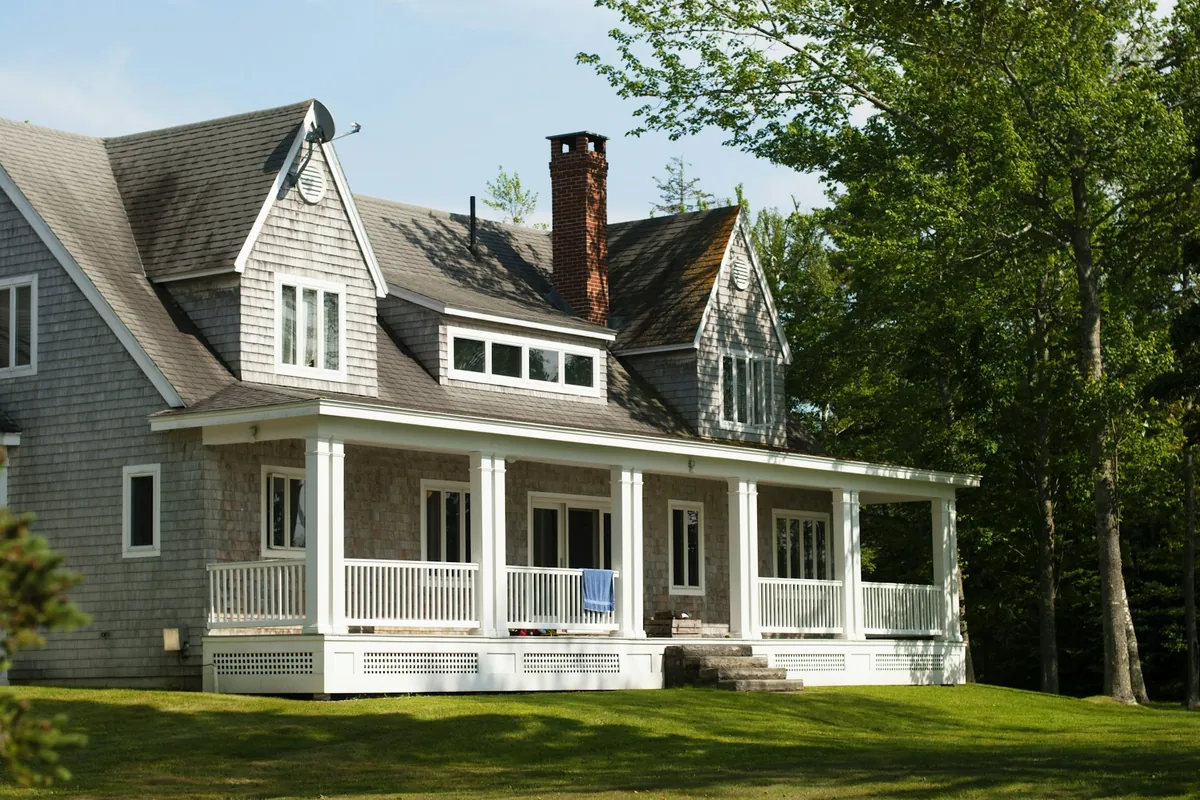
At Kettle Point the houses are newer, and the windows are larger, squarer and more regular. Open-plan living spaces often run kitchen, dining and living together, with a wide expanse of glass toward the water.
These windows suit plantation shutters in East Providence, RI that are simpler in style: a wider louvre for a more open view when tilted, a plain, flat frame and, if you like a cleaner face, a tilt rod hidden at the back of the panel instead of running down the front. Because the openings are square and true, inside mounts are usually straightforward where the depth allows.
In an open-plan space, every window that can be seen at once should match. That means the same louvre, finish and rail height across kitchen, dining and living windows, even if the windows themselves vary in size. A sliding door to a deck is usually better with a different treatment that does not swing across the doorway, chosen in a matching colour.
Room by Room in an East Providence House
Every room uses a window differently, and the shutter is set up to match.
Living rooms behind grouped windows
The front room of a bungalow is where the grouped windows usually are, and where the house meets the street. Plantation shutters in East Providence, RI on those windows spend most of the day with the louvres angled: open enough to fill the room with light, tilted so the pavement cannot see in. In the evening, with the lamps on, they close fully. On a quiet afternoon the panels fold back and the whole group of windows is clear.
Bedrooms
In a bedroom, how well the shutter closes matters most. A frame made to the opening and louvres that shut tight against each other keep early light to a minimum. A divider rail lets you open the top for air and daylight while the lower louvres stay closed.
Kitchens and bathrooms
A kitchen window over the sink suits cafe-style panels on the lower part of the window, giving privacy at the counter and leaving the top of the glass open. Shutters cope with steam and splashes far better than fabric, which makes them practical in bathrooms too, and a painted panel wipes clean in seconds.
Home offices
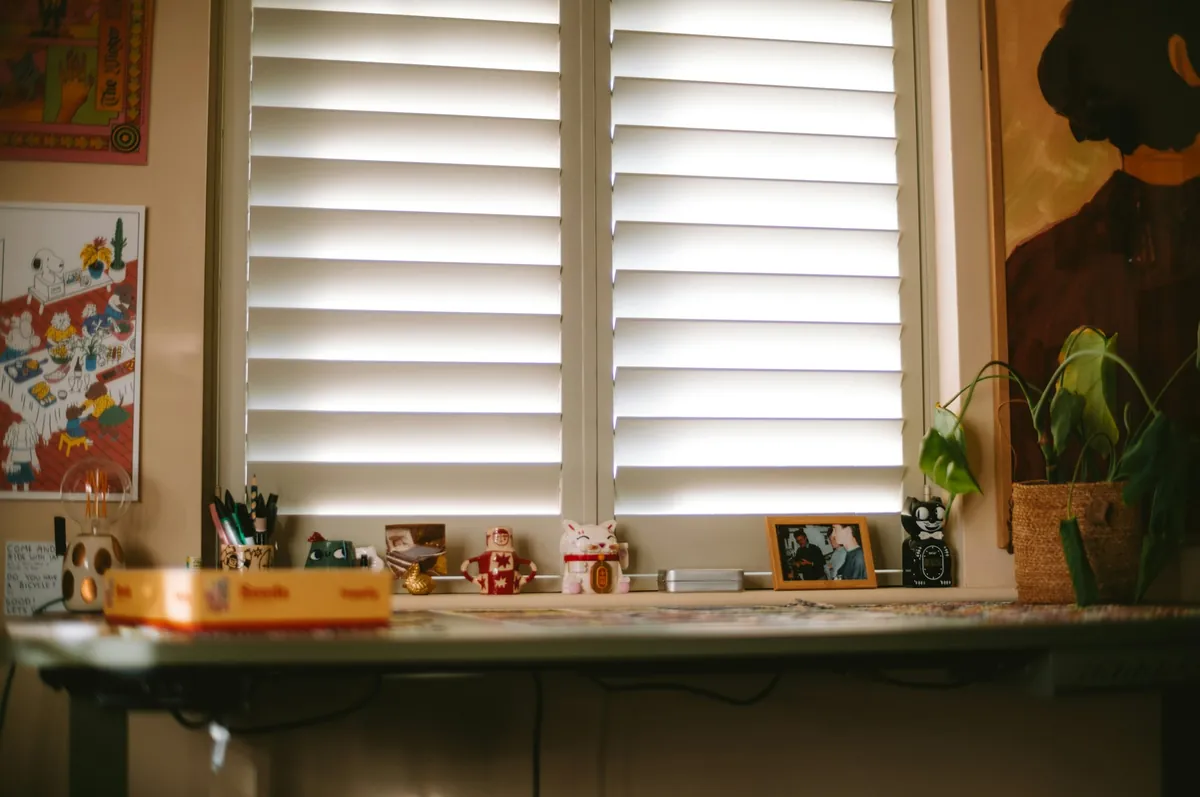
A small bedroom turned into an office needs to control glare on a screen. Tilting the louvres upward sends daylight onto the ceiling instead of across the desk, so the room stays bright without reflections.
Getting the Panel Layout Right
The number of panels in a shutter is a practical choice as much as a look. Too few panels across a wide opening and each one is heavy and swings far into the room. Too many and the shutter looks busy and the louvres are short.
We work out the layout from the opening, the room and what sits near the window. A panel that would hit a chair, a lamp or a radiator cover when it swings can be hinged the other way or made narrower. Panels hinged together fold back on each other into a neat stack beside the window. On grouped bungalow windows, the posts decide most of the layout for us, which is one reason those windows shutter so well.
Tilt rods
A tilt rod moves every louvre in a section at once. A rod down the front of the panel is the traditional look and suits a bungalow or a colonial. A rod at the back leaves a cleaner face, which many people prefer in newer houses. Both are equally easy to use day to day.
Caring for your shutters
Shutters need very little upkeep. Close the louvres, dust down the panel with a soft cloth or a vacuum brush, then tilt them the other way and repeat. A barely damp cloth takes marks off a painted finish; a stained one prefers a dry cloth. Well-fitted plantation shutters in East Providence, RI should simply keep working, and if a hinge loosens or a louvre stops holding its angle, call the store and tell us what you see.
Finishes to Suit the House
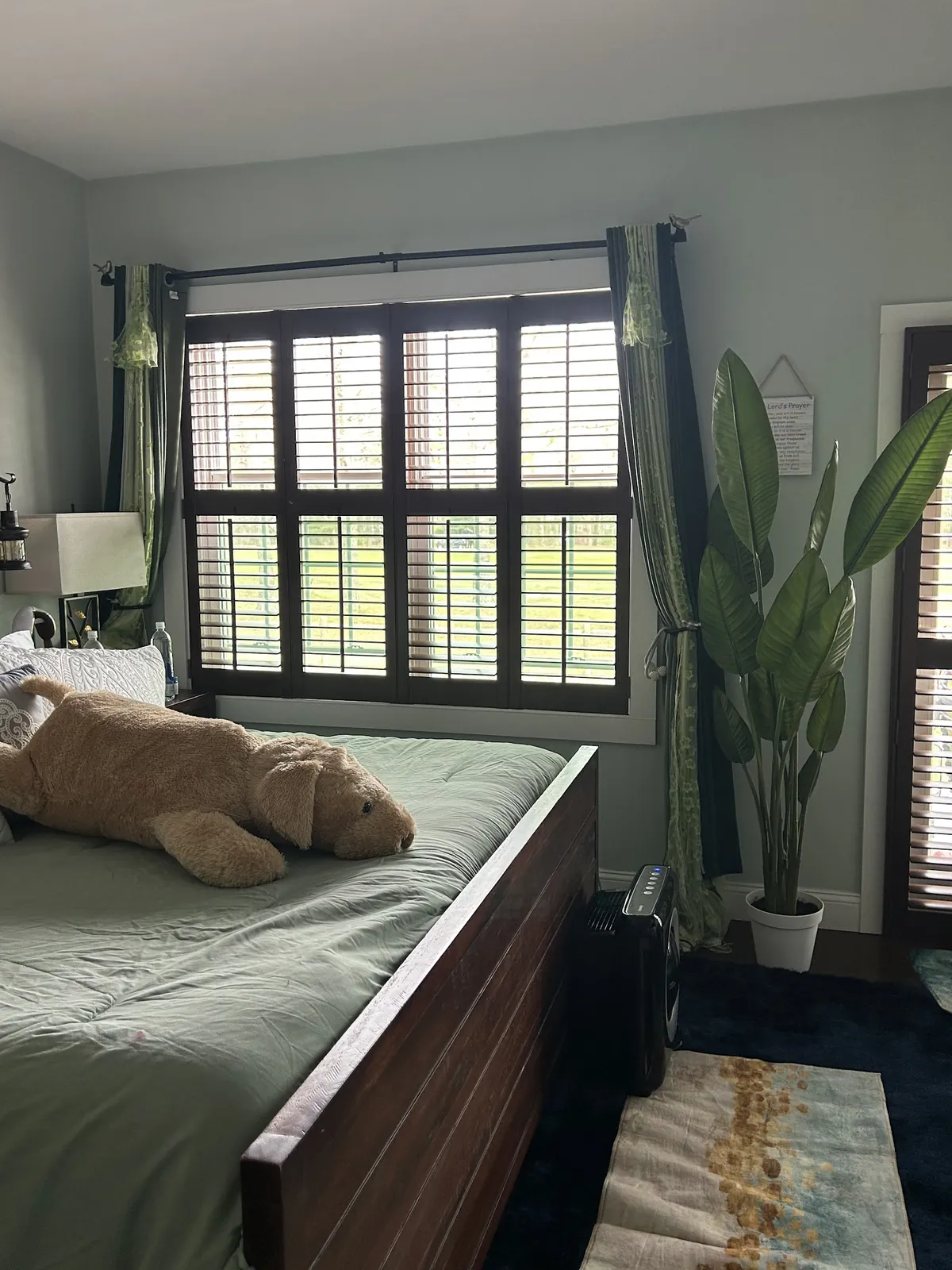
Most shutters are painted, and white or off-white is the common choice because it matches window trim and keeps rooms bright. Bungalows with stained wood trim, built-in cabinets or beamed ceilings are an exception: a stained shutter can pick up the colour of that original woodwork and look as though it was always there.
A painted shutter can also follow a trim colour that is not white. Whatever finish you choose, keep it consistent across the windows that face the street.
Finishes are easier to judge in daylight with a sample in hand, and the Swansea showroom has them to see.
From Free Quote to Finished Windows
Our process is simple and we keep you informed throughout.
- Get in touch through the call button or the form, mention which rooms you have in mind, and we will arrange your free quote.
- A specialist measures every window in your house, checking each opening at several points, its depth and how square it is. For a group of windows, the posts are measured too.
- Nearby furniture, radiators, cranks and locks are noted so the panels open freely.
- You choose louvre width, frame style, finish, divider rails and tilt rod. Samples are at the Swansea showroom.
- Your written quote lists every window, so you can see exactly what you are getting.
- The shutters are made to the measurements taken in your house.
- Our team installs them, sets each panel so it closes cleanly and the louvres line up, and shows you how they work.

Window Works, Swansea, Since 1988
We are a family store, founded in Swansea in 1988 and now in our second generation. For over 37 years we have worked in houses across the SouthCoast and the Rhode Island East Bay, and East Providence is a straightforward drive from the showroom.
- Specialists in window treatments, with long experience
- Measuring done in person, window by window
- Installation by our own team
- We keep in touch with you until the job is done
- Warranties offered on our products
The showroom has shutters you can open, close and tilt, as well as the Norman range.
The main plantation shutters page explains louvres, frames and finishes in more depth, and every service we offer in the city is on the window treatments for East Providence page.
Questions from East Providence
Can a row of bungalow windows have one shutter?
Often, yes. The panels are sized to meet over the posts between the windows, and the louvres and rails are lined up across the whole group.
What if the windows in my group are different sizes?
Then separate shutters for each window usually look better, finished alike with matching louvres and rail heights.
My bungalow has shallow window openings. Can it still have shutters?
Yes. The frame mounts on the face of the casing instead of inside the opening, sized to line up with the trim.
Do shutters suit a newer house at Kettle Point?
They do. A wider louvre, a plain frame and a hidden tilt rod suit larger, more modern windows well.
Will shutters fit an old window that is out of square?
Yes. The frame is built to the opening as measured and takes up the difference so the panels still close evenly.
Let’s Get Started
Begin with a free quote. Use the call button to speak with the Swansea store, book measuring in your home or ask about installation, or send the form and we will reply. To try the panels first, drop into the showroom; directions are on the contact page. Window Works has a 5.0 rating on Google.