
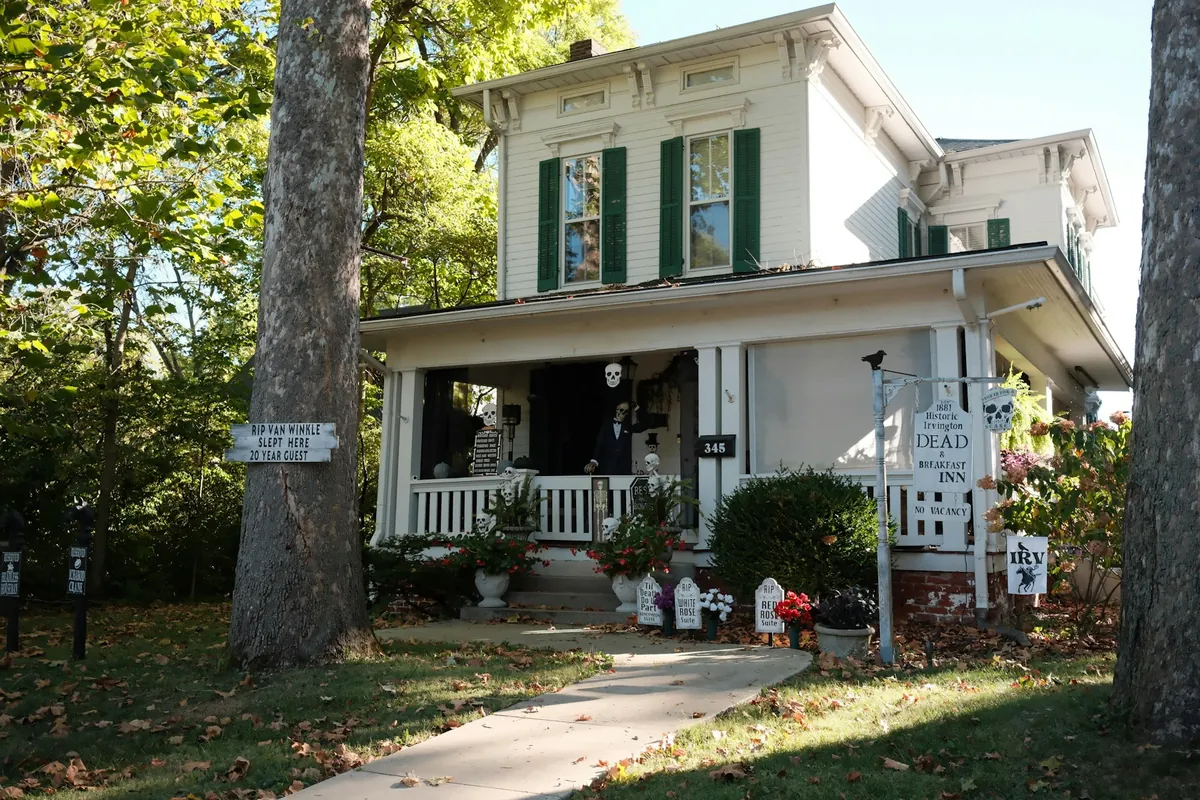
Three Eras in One City
Cranston holds three distinct generations of house. Down near the bay, Edgewood has Victorians with tall windows and high ceilings. Garden City is mostly capes and ranches from the 1950s, with lower rooms and broad, simple openings. Out in Western Cranston, newer colonials bring standard windows, bigger rooms and open plans. A drape that looks just right in a Garden City ranch would look skimpy in an Edgewood parlour, and an Edgewood treatment would swamp the ranch. So custom drapes in Cranston, RI start with the question of which house they are for.
That is no hardship. Because every pair is made from the fabric up and cut to measurements taken in your rooms, each house gets drapery scaled to its own windows rather than a compromise. Below, we take the three eras in turn, then set the differences side by side.
A Drapery Range for Every Era
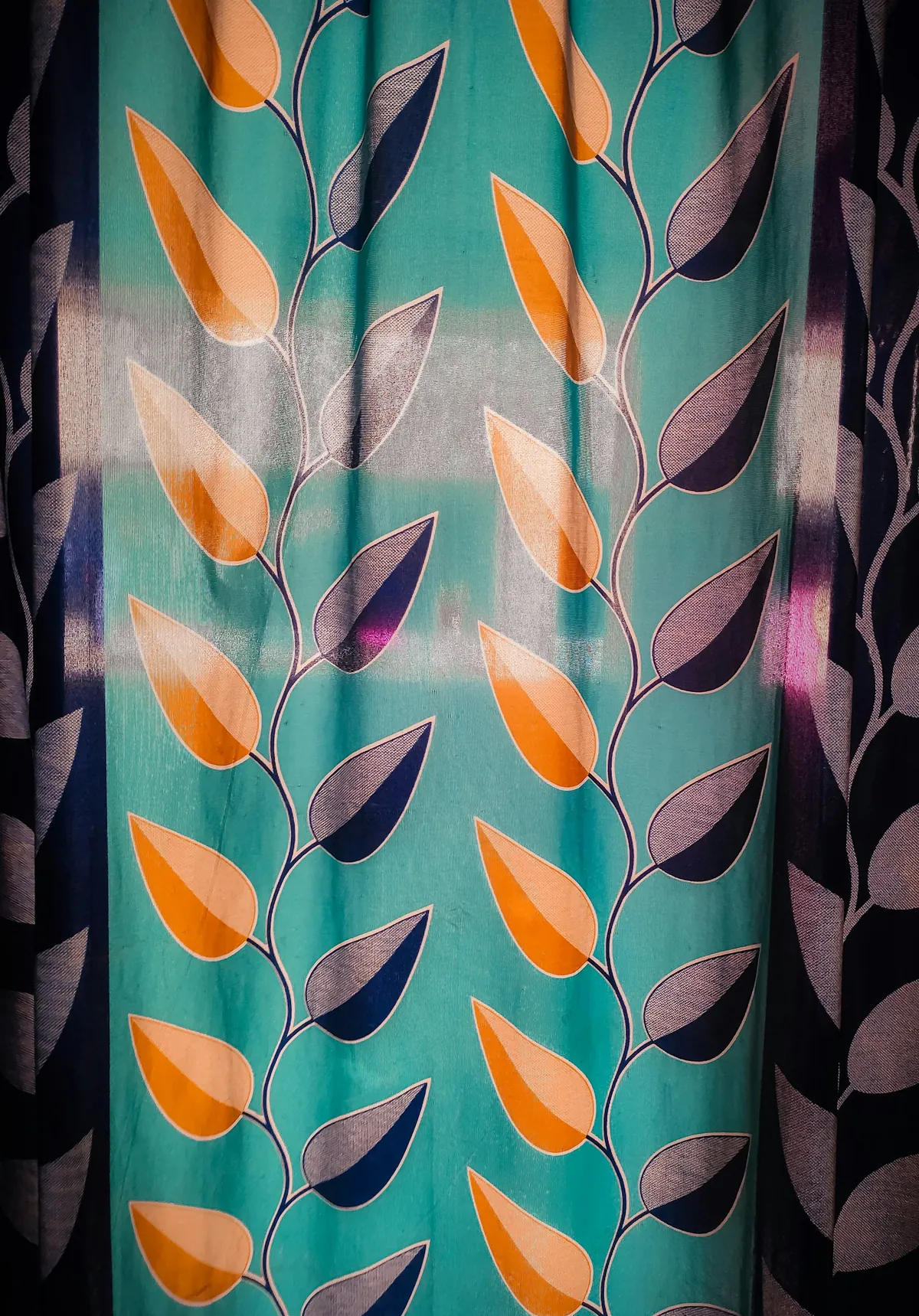
Bold prints for tall rooms
A large-scale pattern needs height to show its repeat, which Edgewood ceilings provide.
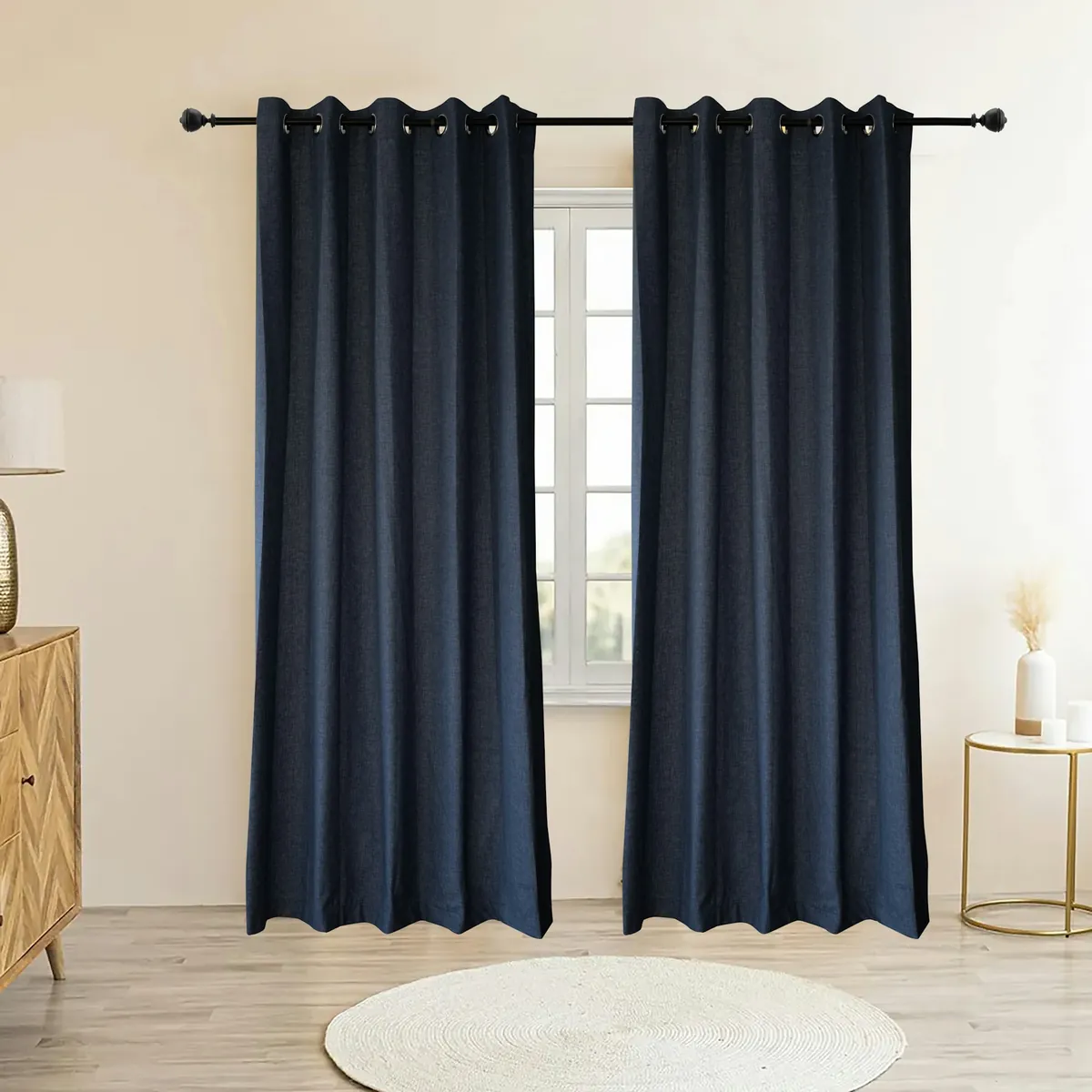
Easy-sliding ranch curtains
Ringed headings that glide along a long rod, ideal for a picture window that opens and closes daily.
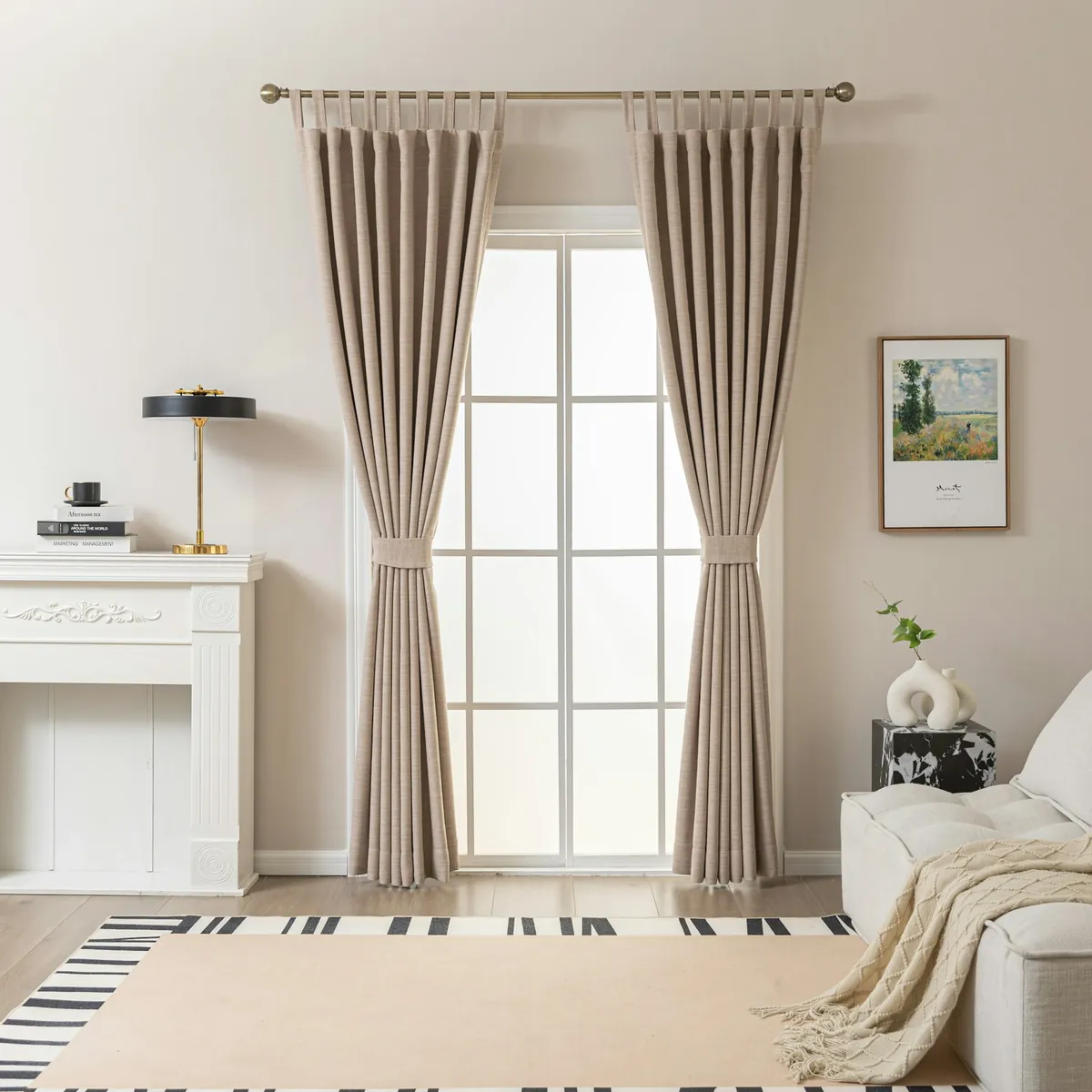
Tailored pleats for a colonial
Crisp, regular folds that echo the order of a symmetrical front.
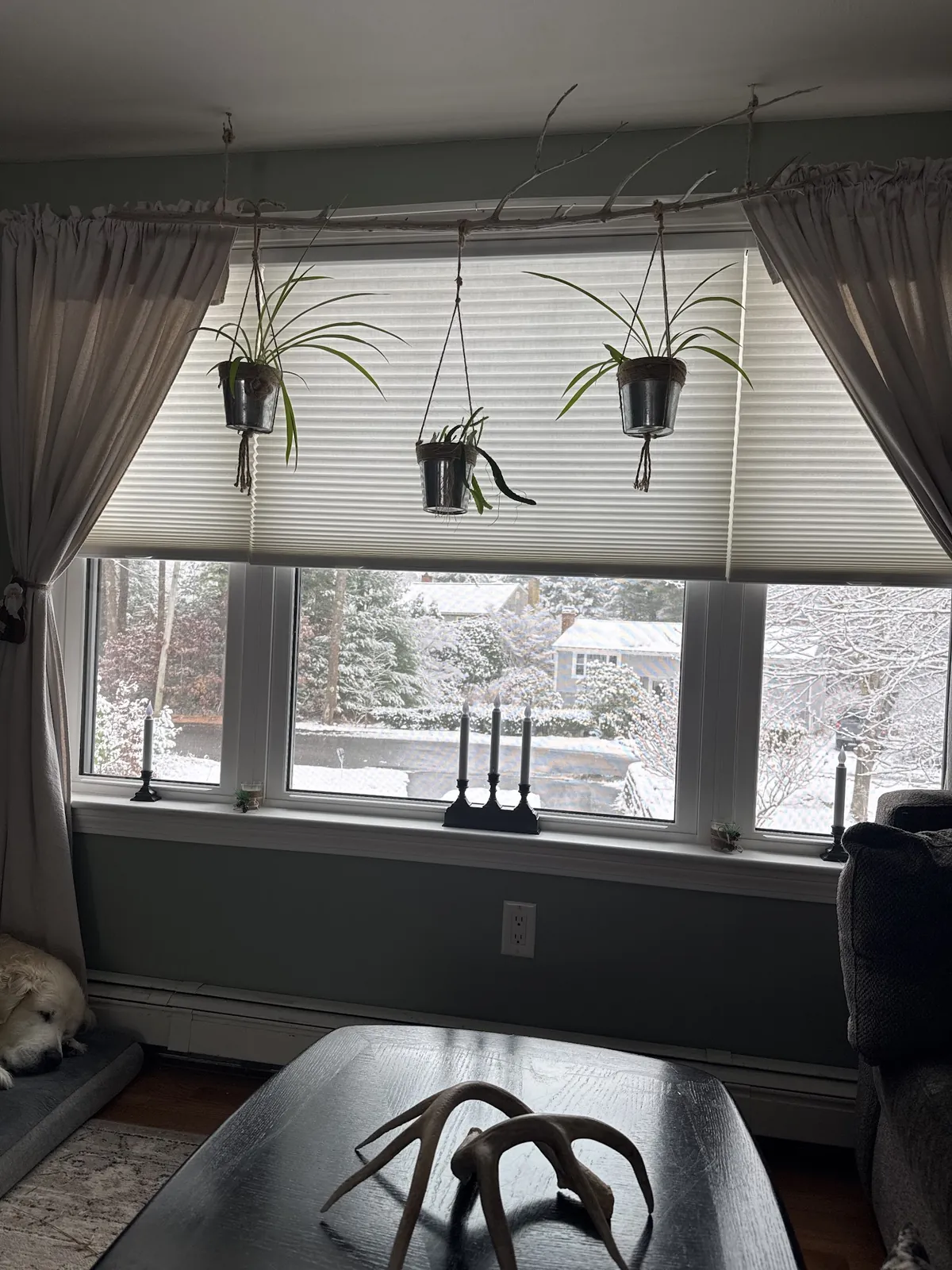
Drapes over shades in a bay
Shades on each pane for daily control, framed by drapes that close at night.
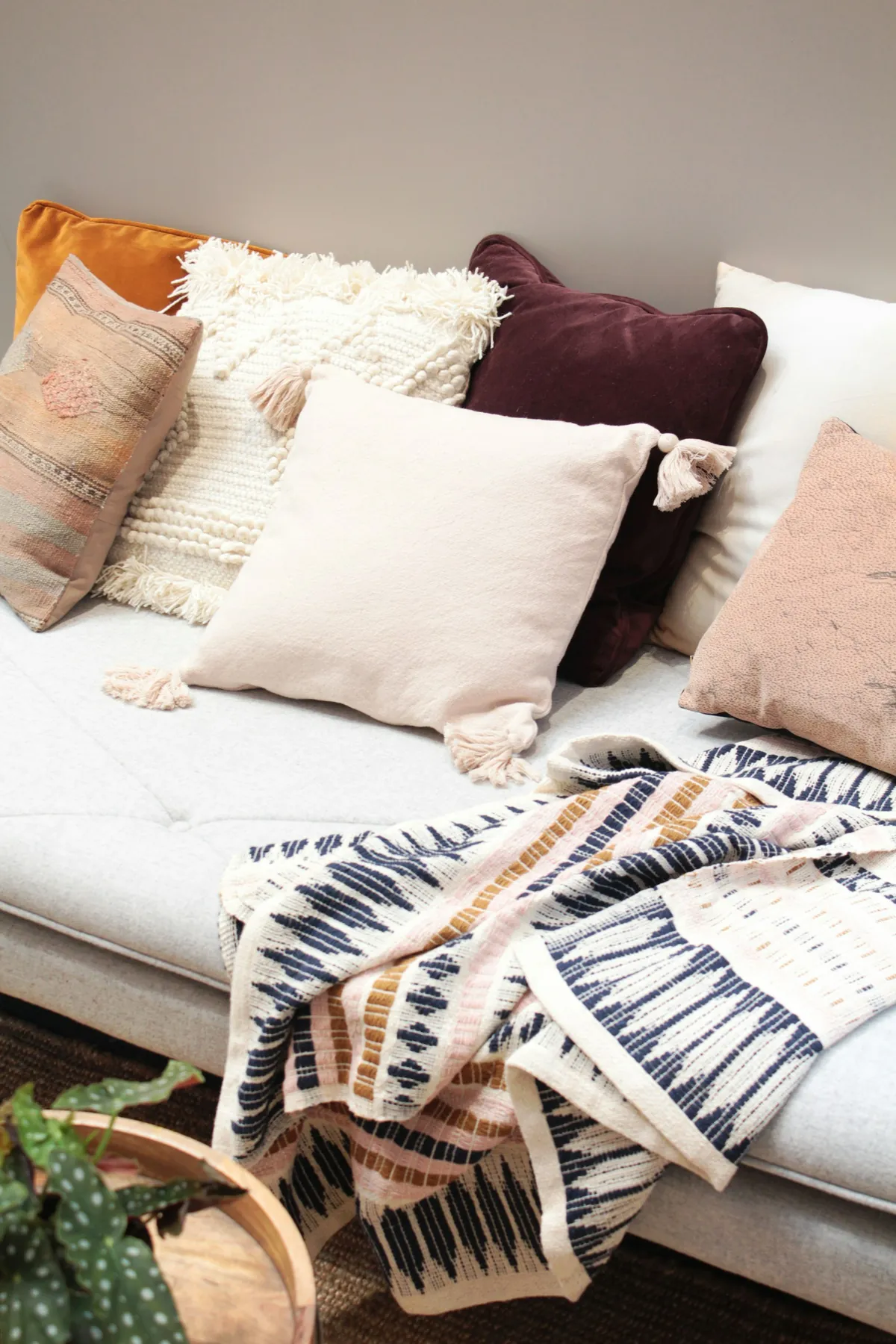
Matching cushions
Pillows and throws in the window cloth, from our fabric decor workroom.
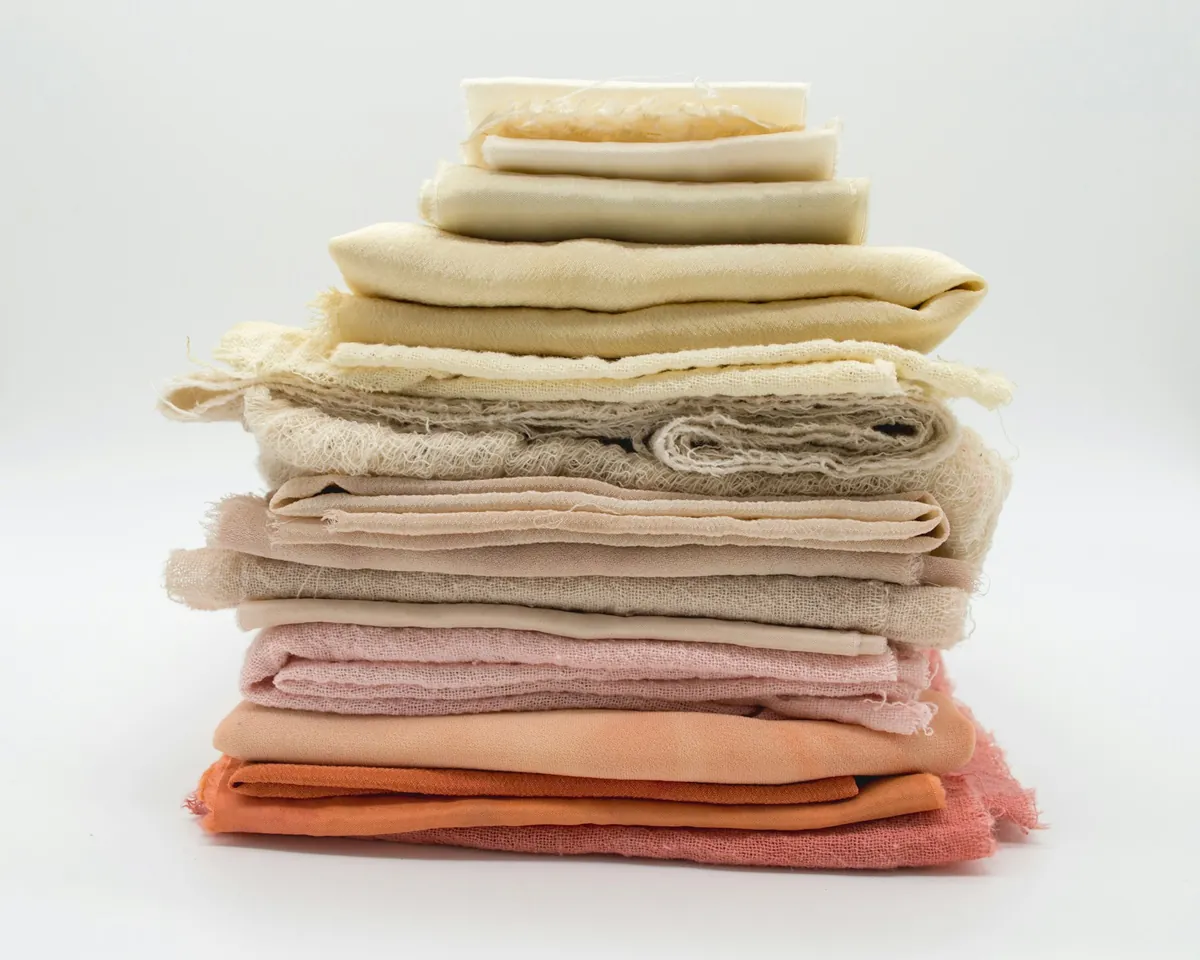
A range to handle
Weights and weaves to compare at the Swansea showroom before you commit.
Custom Drapes in Cranston, RI: Edgewood Victorians
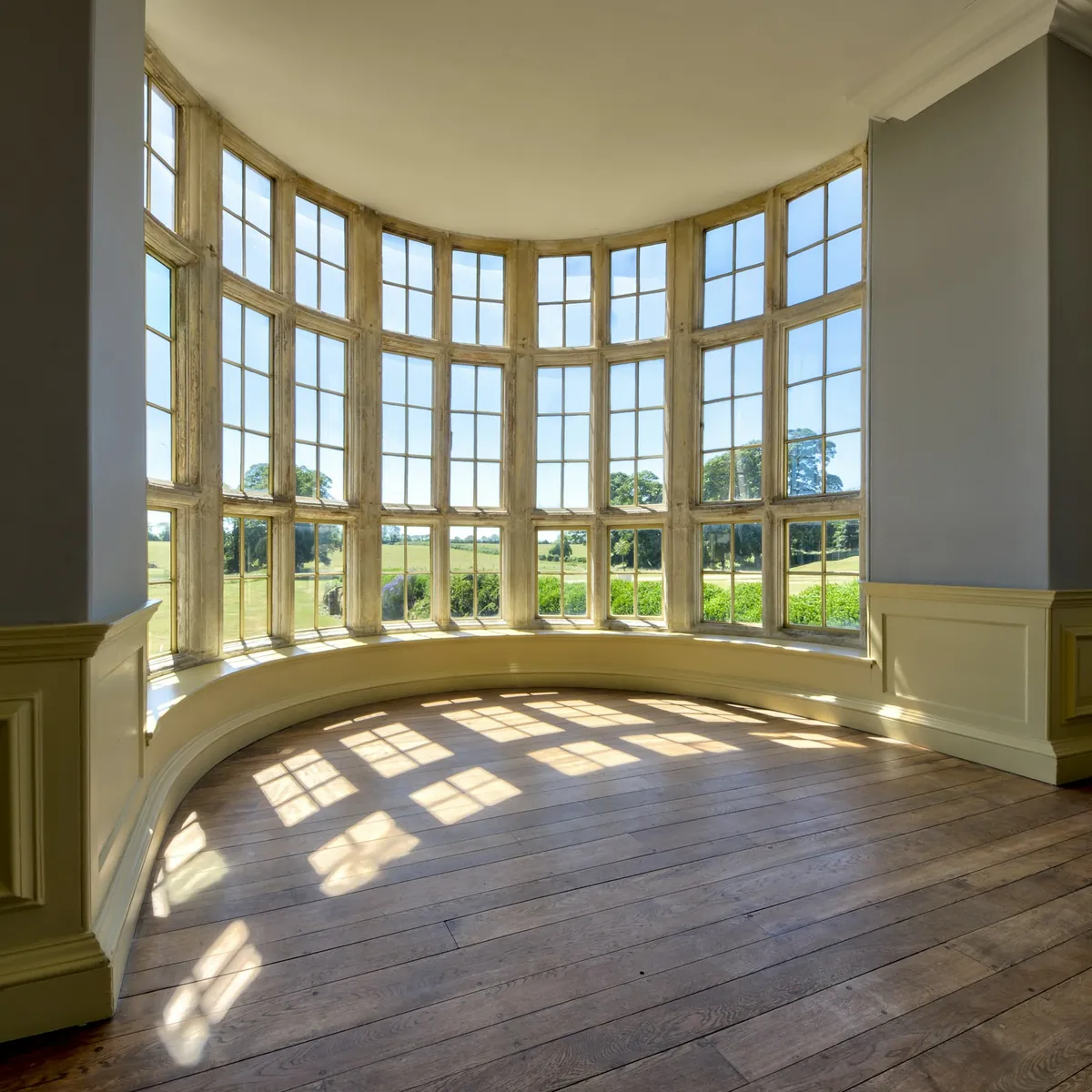
Edgewood’s Victorians, close to the bay, were built for show. Ceilings are lofty, windows tall and often grouped in bays, and the woodwork can be elaborate. Fabric has room to perform here.
Using the height
The single most effective move in an Edgewood front room is putting the rod high. Fixed near the ceiling or tucked under the cornice, it lets the drapery fall in one long line to the floor, so the window reads at its true height and the room keeps its upward sweep. Stopping the rod just above the casing wastes that height and leaves a band of plaster that makes the window look squat.
A long drop is demanding. The cloth has to hang plumb over a great length without twisting, and the heading has to carry the weight. Lining helps on both counts. It adds body so the panel falls in even folds and gives the face fabric protection from the sun pouring through a south or west window.
Bays
Many Edgewood houses have a bay, three or more tall windows set at angles. One approach dresses the whole bay as a single opening, with panels at the outer corners and the glass left clear between them. The other dresses each window with its own panels. The first keeps the bay open and bright and the seat or floor inside it usable. The second gives finer control but crowds the narrow strips of wall between windows. Where privacy is needed, shades on each pane, framed by drapes at the corners, do both jobs. We measure every angle, since no two bays turn quite the same.
Pattern and richness
Victorian rooms carry richer fabric than most: velvets, damasks, bold botanicals or deep solid colours. A big print shows its full repeat on a tall panel and can anchor a parlour. A valance or shaped top across the head of a window fills the gap below a very high ceiling in keeping with the period. Sheers beneath soften daylight and screen a street-facing room.
Near the bay
Houses close to the water get bright, reflected light and damp air. Lined drapes resist fading better, and a tighter weave holds up better to the salt and moisture than a loose, open one. We will talk through which cloths suit a bayside room when you choose.
Upstairs bedrooms
Edgewood bedrooms usually keep the tall sash of the floor below, and tall glass lets in a lot of dawn. Darkening one properly means attacking the three gaps where light sneaks round a drape. Mount high to kill the glow over the heading. Turn the rod ends back to the wall so each panel hugs the side of the frame. Bring the hem right down to the boards. With a lining chosen for darkness behind the face cloth, even a big east-facing window goes dim. It is a small engineering job as much as a decorating one, and it relies on measurements taken at that exact window.
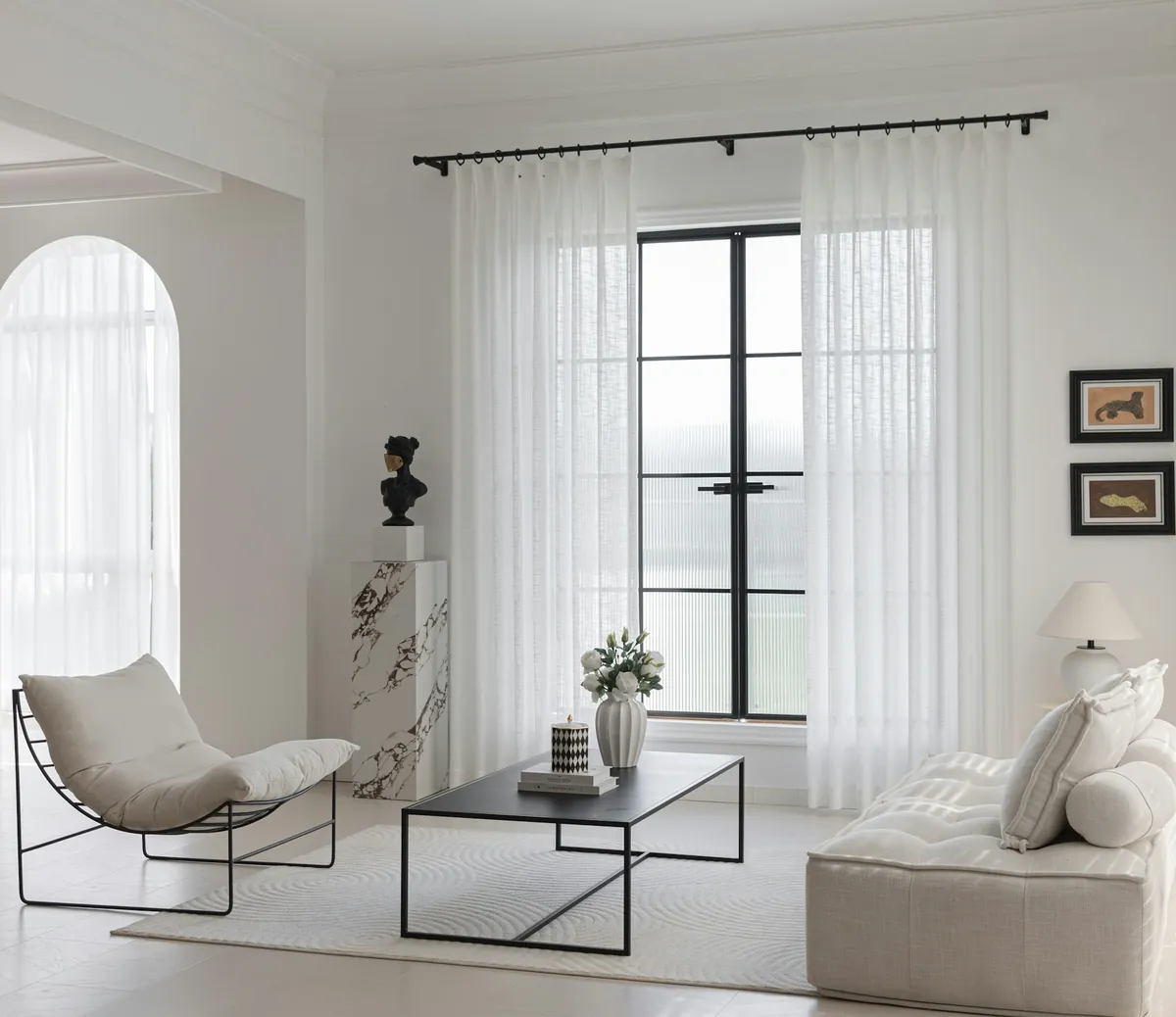
Porches and the street
Many Edgewood houses have a front porch, which shades the parlour but also brings the street, and anyone on the porch, right up to the glass. A sheer that stays closed through the day keeps the room bright while screening it, and a heavier panel takes over after dark. On side windows that look across a driveway to the next house, the sheer alone often stays drawn permanently.
Garden City Capes and Ranches
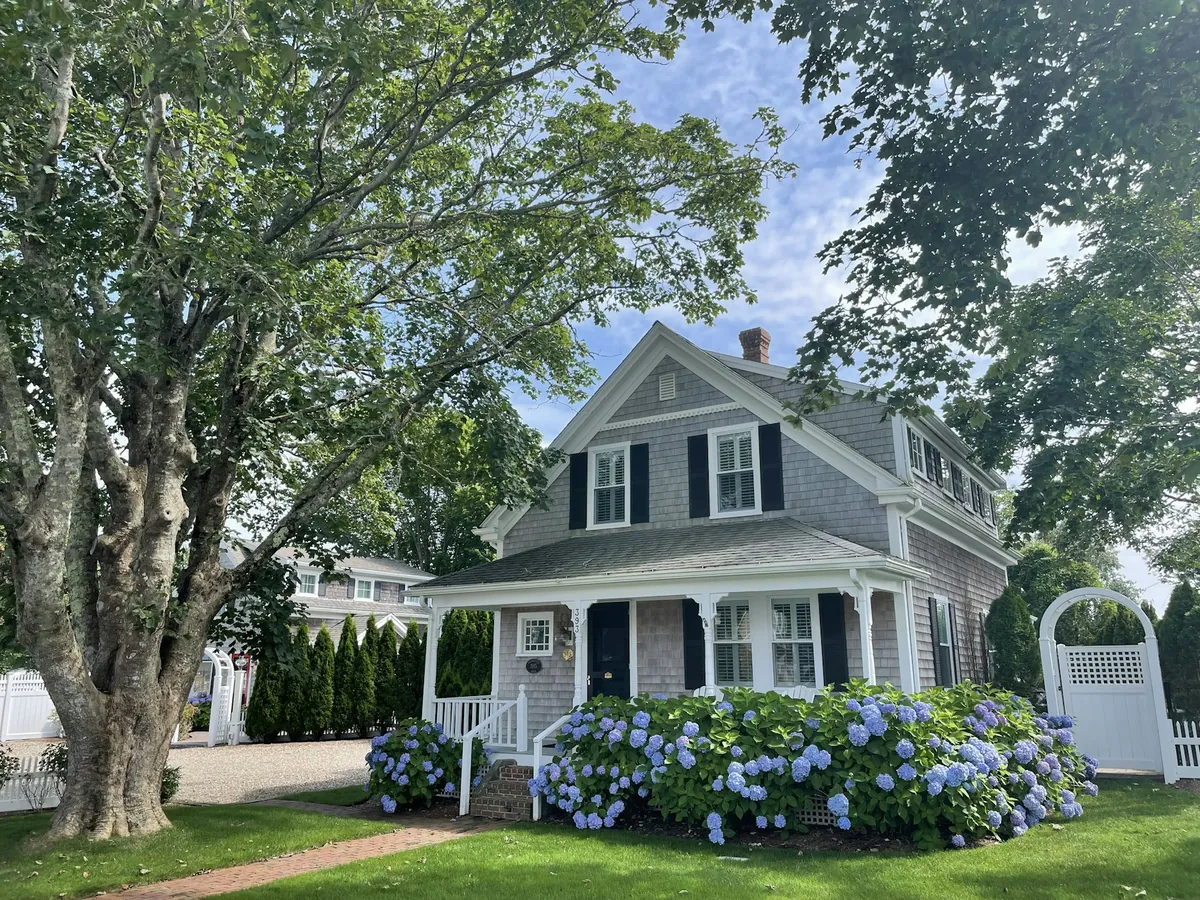
Garden City is a different world: houses built in the 1950s, single-storey ranches and one-and-a-half-storey capes, with lower ceilings and simpler windows. The approach that works in Edgewood would overwhelm these rooms. Lighter, simpler and more practical is the rule.
The ranch picture window
Every Garden City ranch seems to be organised around one wide pane facing the street. Let the rod overshoot that glass generously at both ends and the opened fabric parks on plain wall, leaving the whole view free. Nudge the brackets upward, closer to the ceiling than the window head, and a low-ceilinged room suddenly reads taller; carry the cloth all the way down to the carpet and the trick doubles. Because this is the curtain you will pull morning and night, pick rings or a soft gathered top that glide without a tug.
Capes
Downstairs in a Garden City cape, the windows are regular and evenly spaced, and hanging every rod at one height keeps the little facade orderly. The upstairs rooms are where it gets interesting. Their dormers punch out of a sloping roof, leaving almost no flat wall at either side, so a full-width drape has nowhere to go. A compact rod fixed across the dormer opening itself, carrying one panel or two narrow ones, solves it neatly. Add a lining, since even a small dormer floods a bedroom at sunrise.
Fabric scale
Large prints and heavy velvets tend to look oversized in Garden City rooms. Linens, cottons, fine stripes, small checks and soft textures suit the scale better, and lighter colours keep the rooms bright. Where a bedroom needs darkness, a lined panel with a light face fabric gives the best of both.
Ranch bedrooms sit along one side of the house, often with fairly high, wide windows above the bed or a dresser. Curtains there tend to stop at the sill or just below it, since furniture fills the wall underneath. A lined panel on a rod that extends past the frame closes fully at night and opens clear of the glass by day. Keeping the same lining on all the bedroom windows means the long side of the ranch looks tidy from the yard.
Kitchens and family rooms
Plenty of Garden City houses have grown a rear addition over the decades, or knocked the kitchen through to a new family room. Those rooms get the hardest daily wear. Launderable cloth, simple hardware and curtains hung clear of the cooktop are the sensible brief.
Western Cranston’s Newer Colonials
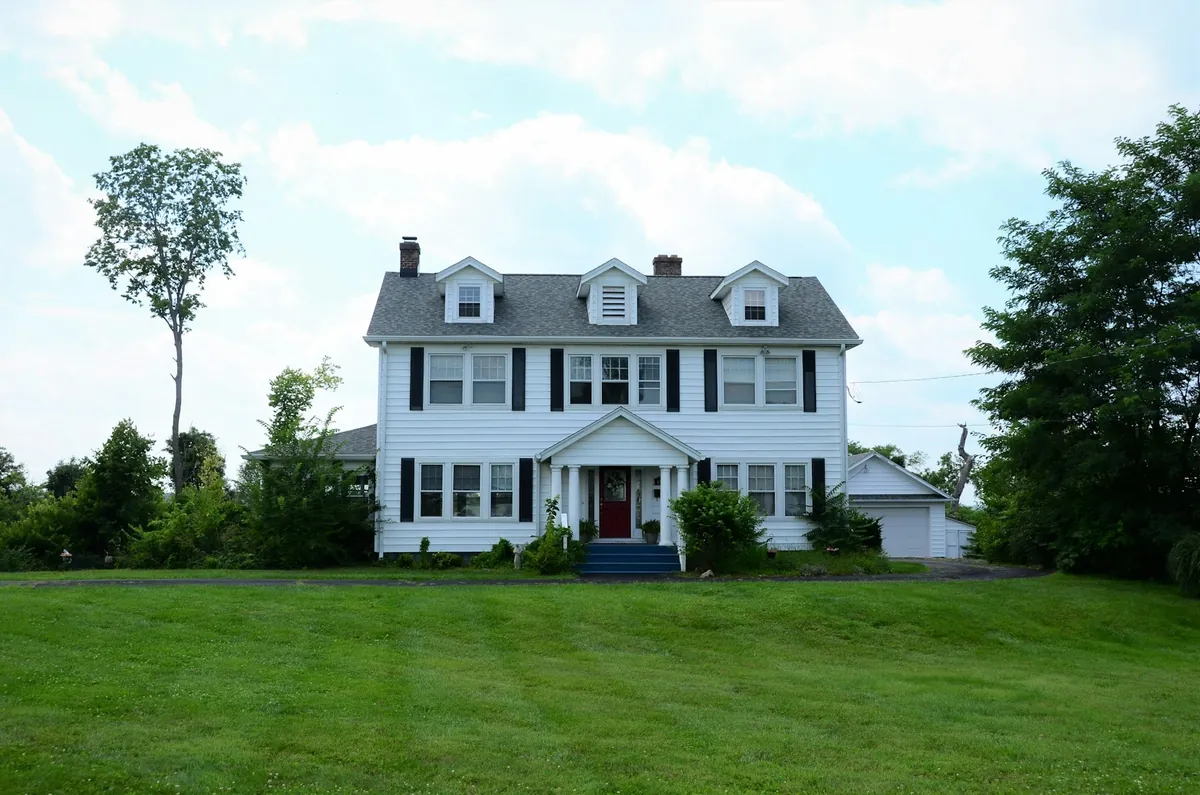
The newer colonials in Western Cranston bring standard window sizes, more windows overall, larger rooms and often open plans. The work here is less about fitting tricky openings and more about planning a whole house so it looks coordinated.
A house-wide fabric plan
With a long list of windows to dress, it helps to choose a lead fabric for the formal front rooms and a couple of supporting cloths for the family room and bedrooms. The house then feels joined up as you move through it, without every room looking the same. Doing the work in stages is easy when the plan exists, since later rooms can be matched to the first ones. Many people start with the rooms guests see and the main bedroom, then fill in the family room and the children’s rooms over the following seasons, knowing the cloth is already chosen.
Formal front rooms
The living and dining rooms at the front take tailored drapery: lined panels with a pleated heading, floor-length, on rods set above the window and past the trim. Seen from the curb, a uniform pale backing on all the front glass makes the house look composed, whatever colours face into each room.
Open plans
At the back, the kitchen, eating area and family room often share one large space. Sticking to a single cloth, or a pair of near cousins, keeps that space restful, and lining the brackets up at a common height ties together windows of different sizes. For the glass door onto the deck, extend the hardware far enough beyond the opening that the gathered fabric sits entirely on wall and the door runs free.
Two-storey spaces
Some of these houses have a tall entry or a family room open to the floor above. The high windows there are best dressed with fixed side panels on a rod near the top, framing the glass without needing to be drawn, with a shade on the glass if the room needs privacy or glare control.
The main bedroom suite
Western Cranston colonials often have a large main bedroom with several windows, sometimes on two walls, plus a bathroom and dressing area. That is a good room for something a little more luxurious: full-height lined panels in a softer, heavier cloth, a matching duvet cover or pillows from our fabric decor work, and a lining dark enough for a lie-in. Planning custom drapes in Cranston, RI for a suite like this is about making several windows look like one considered design, so we keep rod heights and hems consistent around the room.
Why One Treatment Rarely Suits All Three
It is worth spelling out the differences, because they decide almost everything:
- Rod height: near the ceiling in Edgewood to use the height; raised a little in Garden City to add height; set consistently in Western Cranston to keep many windows in line
- Fabric weight: rich and heavy in Edgewood parlours; light and simple in Garden City; medium and hard-wearing for Western Cranston family rooms
- Pattern scale: large in tall Victorian rooms; small or none in compact mid-century rooms; coordinated across a colonial’s many rooms
- Operation: many Edgewood panels are dressed once and left framing the window; Garden City curtains are drawn daily; a Western Cranston house mixes both
Mixed houses exist too. An Edgewood Victorian may have a modern kitchen extension at the back, and a Garden City ranch may have gained a second storey. In those cases each part of the house is treated on its own terms: tall, rich drapery in the original parlour, simpler curtains in the newer rooms, with a shared colour or a companion fabric to stitch the two together. Seeing the house in person is the only way to judge where one era stops and the next begins.
None of these choices is right everywhere, and that is exactly why custom drapes in Cranston, RI are worth the measuring visit.
How a Cranston Order Runs
- Tell the Swansea store what you have in mind, by phone or online, and a free quote gets booked.
- A specialist arrives to take measurements at the house: widths, drops, ceiling height, spare wall, and any radiator, door or stair rail in the way.
- Talk turns to the age of the house and how you live in each room, which steers weight, pattern and heading.
- Cloth and lining are picked, best done hands-on at the showroom.
- An itemised price arrives, opening by opening.
- Workroom production follows, from those exact figures.
- Installers put up the hardware, hang every panel, train the pleats and true the hems.
Expect updates from us all along, right up to the day it is finished.
Drapes with blinds, shades and shutters
Every era suits layering. A ranch picture window might take a blind behind the drapes; an Edgewood bay, shades on each pane; a Western Cranston dining room, interior shutters with side panels. You can see the shutter side on our plantation shutters in Cranston page. Because we make all of these, they are chosen and measured together.
Looking after your drapes
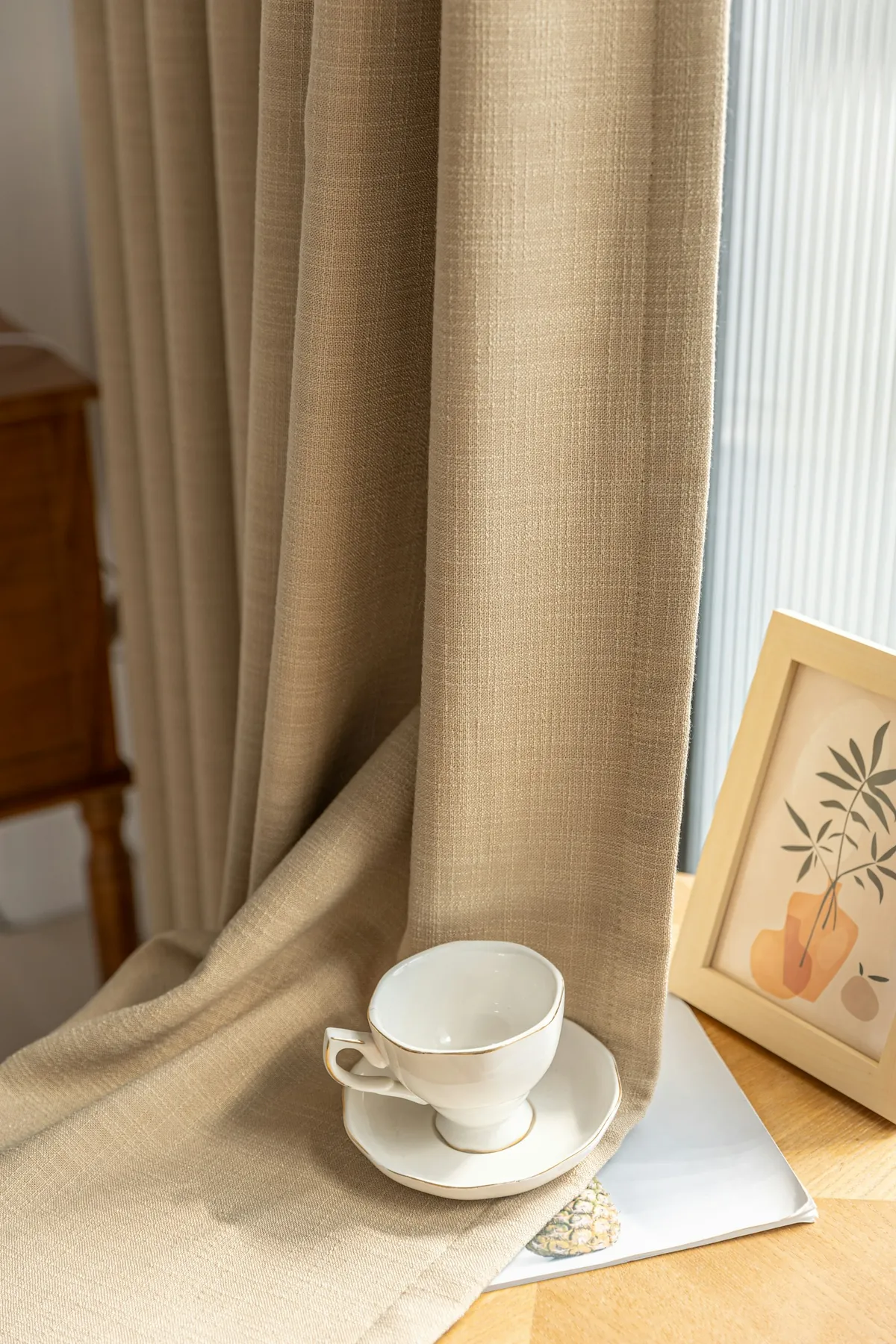
Dust settles along the top of the folds first, so run the upholstery brush over the heading and down each panel every few weeks. Anything lined belongs with a dry cleaner, because two layers of cloth seldom shrink in step. Kitchen curtains and sheers can usually go through a gentle home wash. On bay-facing Edgewood windows, an occasional airing on a dry, breezy day helps lift the dampness that sea air leaves in the cloth. Ask us about the specific cloth when you order.
A Swansea Family Store
Since 1988, a Swansea family has run Window Works, and the second generation is at the helm today. Curtains and drapery have always been the speciality, made for every age of house from the Massachusetts SouthCoast across to Rhode Island’s East Bay over more than 37 years.
Edgewood parlour or Western Cranston great room, the same specialists measure it, order it and put it up, and they keep you informed the whole way. The products carry warranties, and the fabric library is on the showroom shelves for you to browse.
Our Cranston window treatments page shows every service we offer the city.
Questions from Cranston
What suits a tall window in an Edgewood Victorian?
A rod set near the ceiling with lined drapes falling to the floor, so the window looks as tall as it is and the long panels hang straight.
Will the same drapes work in a Garden City ranch?
Usually not. Ranch rooms suit lighter fabrics, smaller patterns and curtains that slide easily on a long rod past the picture window.
How do you dress a Victorian bay?
Often as one opening, with drapes at the outer corners and shades on each pane if privacy is needed. We measure every angle first.
My Western Cranston colonial has a lot of windows. Where do I start?
With a fabric plan for the whole house: a main cloth for the front rooms and companions for the rest. You can do the rooms in stages.
Can I see fabrics before deciding?
Yes. The Swansea showroom has the range to handle in daylight.
Start the Conversation
Whichever era your house belongs to, custom drapes in Cranston, RI begin with a free quote. Tap the call button and the Swansea team will find a time to come and measure, and explain how fitting works, or fill in the form if that is easier. You will find showroom directions on the contact page and every drapery style on our custom drapes page. Google reviewers give Window Works 5.0.