
Why Sliding Doors Need Something Different
A sliding glass door is wide, tall and used every day. A horizontal blind that size would be heavy to lift and would get in the way of the door. A shade would have to be raised every time someone went outside. What a slider needs is a treatment that draws sideways, clear of the door, and still controls the light when it is closed. That is why vertical blinds for sliding doors have been the usual answer for so long, with panel tracks as the more modern alternative.
Both hang from a track across the top of the opening. Both draw to the side. The differences are in how they control light, how they stack and how they look.
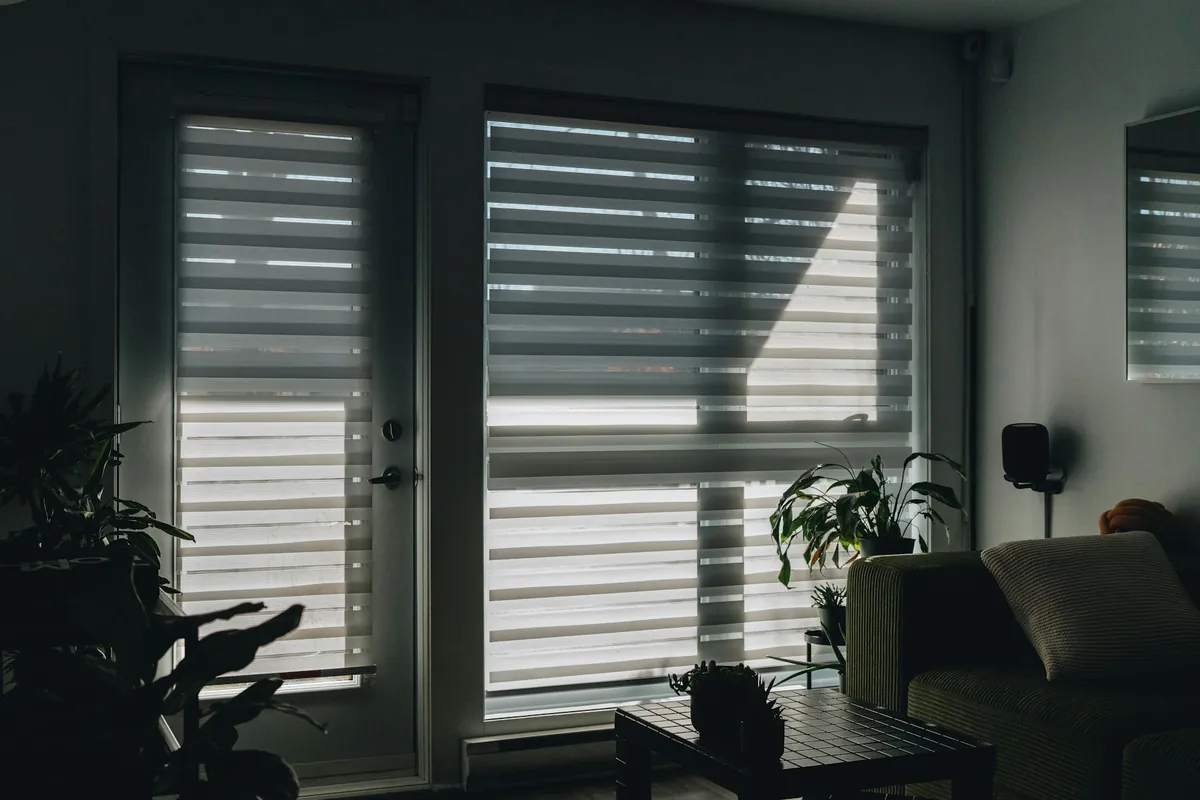
Two Ways to Cover a Wide Opening
Vertical blinds are made of narrow vanes that hang side by side from the track. Each vane can rotate, so you can tilt the whole blind to let light in, angle it for privacy or close it completely, without drawing it back. To go outside, you draw the vanes to the side and they turn edge on and stack together.
Panel tracks use a few wide, flat fabric panels, each on its own channel of the track. They do not tilt. Instead, you slide them across each other: closed, they cover the opening as a smooth wall of fabric; open, they stack neatly one behind the other at the side.
- Vertical blinds: tilting vanes, fine light control, narrow stack
- Panel tracks: wide flat panels, a clean modern look, no tilt
- Both: draw sideways, clear of the door
How Each One Stacks
The stack is the bundle of vanes or panels that gathers at the side when the treatment is open. It matters on a slider, because a stack that covers part of the glass narrows the doorway and blocks the view.
Vertical blinds stack tightly. The vanes turn edge on and press together, so the stack is narrow for the width covered. On a slider, that keeps most of the opening clear.
Panel tracks stack by the width of one panel. However many panels there are, they slide behind one another, so the stack is as wide as a single panel. That can be wider than a vertical blind’s stack, so on a narrow opening it may cover more of the glass. On a very wide window wall, it can be the neater choice.
How Each One Draws
The draw, or traverse, is the direction the treatment opens. On a slider, the rule is simple: the stack goes on the side that does not slide, so the moving door is never behind it.
Vertical blinds for sliding doors usually draw one way, all to the fixed side. On a wide window wall or a pair of doors that open from the middle, they can split and draw to both sides. A wand at the leading edge both draws and tilts the vanes.
Panel tracks draw one way or split the same way, and the panels are pushed or pulled along by a wand. Because the panels overlap, there are no gaps between them when they are closed.
Light, Privacy and Use
When light control matters most
If you want to let light in while keeping privacy, vertical blinds have the edge. Tilting the vanes lets daylight through and blocks the view from outside, all without drawing the blind back. On a back slider facing a neighbour’s yard, that flexibility counts.
When the look matters most
Panel tracks give a cleaner, more modern look, closer to fabric than to a blind. They suit a contemporary room, a wide window wall or an opening where you want a smooth surface when it is closed. To let in light, you slide panels back; you cannot tilt them.
Where You Find Sliders
The mid-century capes and ranches across Somerset and Seekonk often have a slider at the back, out to a deck or patio, usually in the family room or kitchen. That door gets used all day, so the treatment needs to draw easily and stack clear. Vertical blinds for a sliding door are the common answer in these houses.
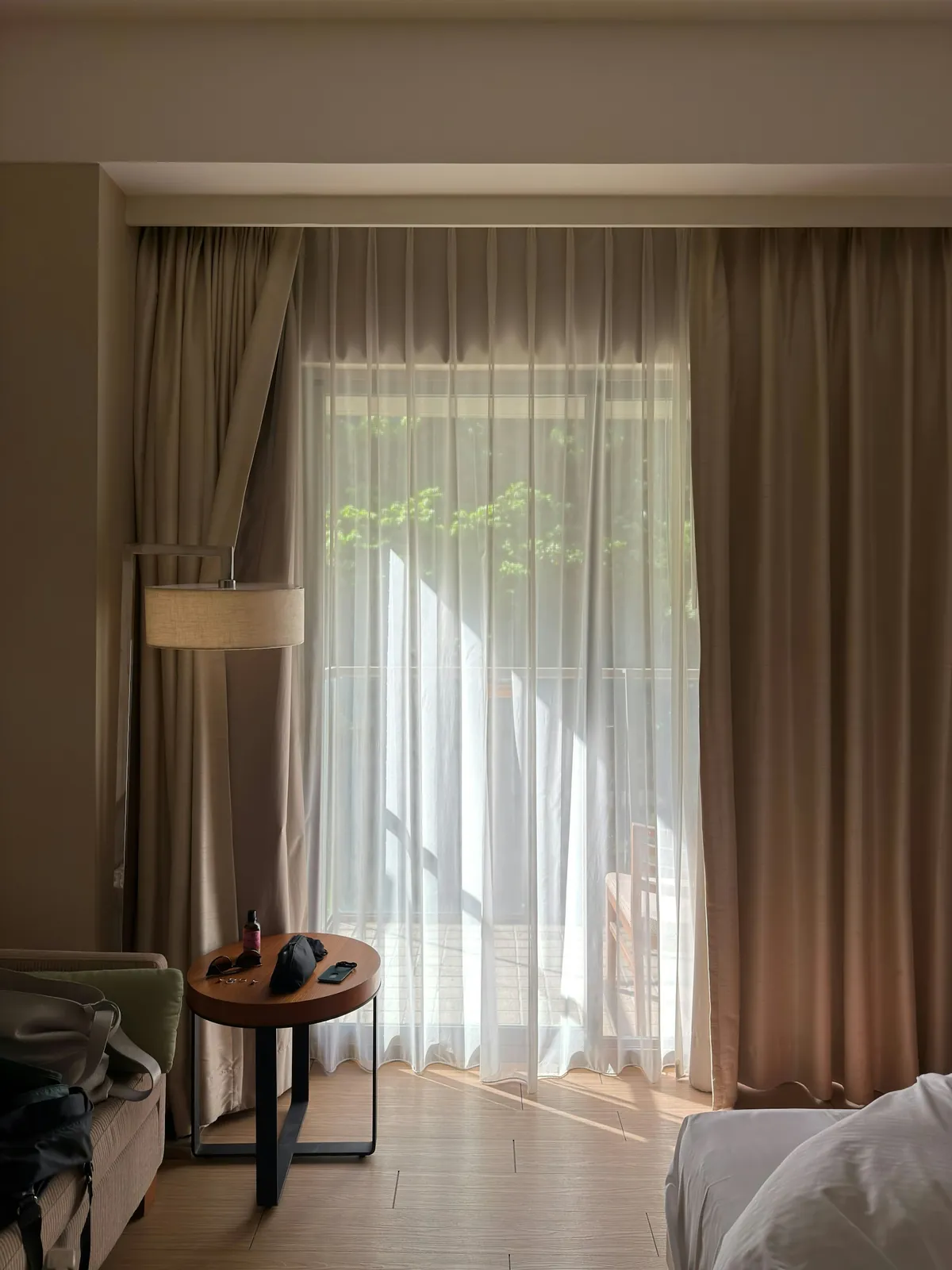
The coastal cottages and shingled capes near Mount Hope Bay and the Sakonnet often have glass doors facing the water, where the view is the reason for the door. A panel track that stacks to one side, or verticals that turn edge on, keeps the view open when you want it.
Sliders turn up in the Victorians in Fall River and Pawtucket, and in three-deckers, too, usually where a back porch or a kitchen was opened up at some point. And around the historic sash on College Hill and Newport’s Point, a rear addition with glass doors may need a treatment that suits the newer part of the house without clashing with the old.
Measuring the Whole Opening
Both treatments are measured across the whole opening, not just the glass. We check the width the door needs to clear, the height to the floor, the space above the frame for the track, and anything in the way, such as a door handle that a vane must clear when it turns. That is why measuring is done in your home. A track sized to the door, with the stack on the right side, is what makes it work every day.
On a very wide or tall opening, motorised operation with a remote or a wall switch can make drawing the vanes or panels easy.
Vertical Blinds for Sliding Doors, with Drapes
Some rooms layer drapes over the vertical blinds for sliding doors, so the blinds handle the light while side panels add warmth and softness. The drapes hang on their own rod above the track and draw to the same side as the stack.
Seeing Them in Person
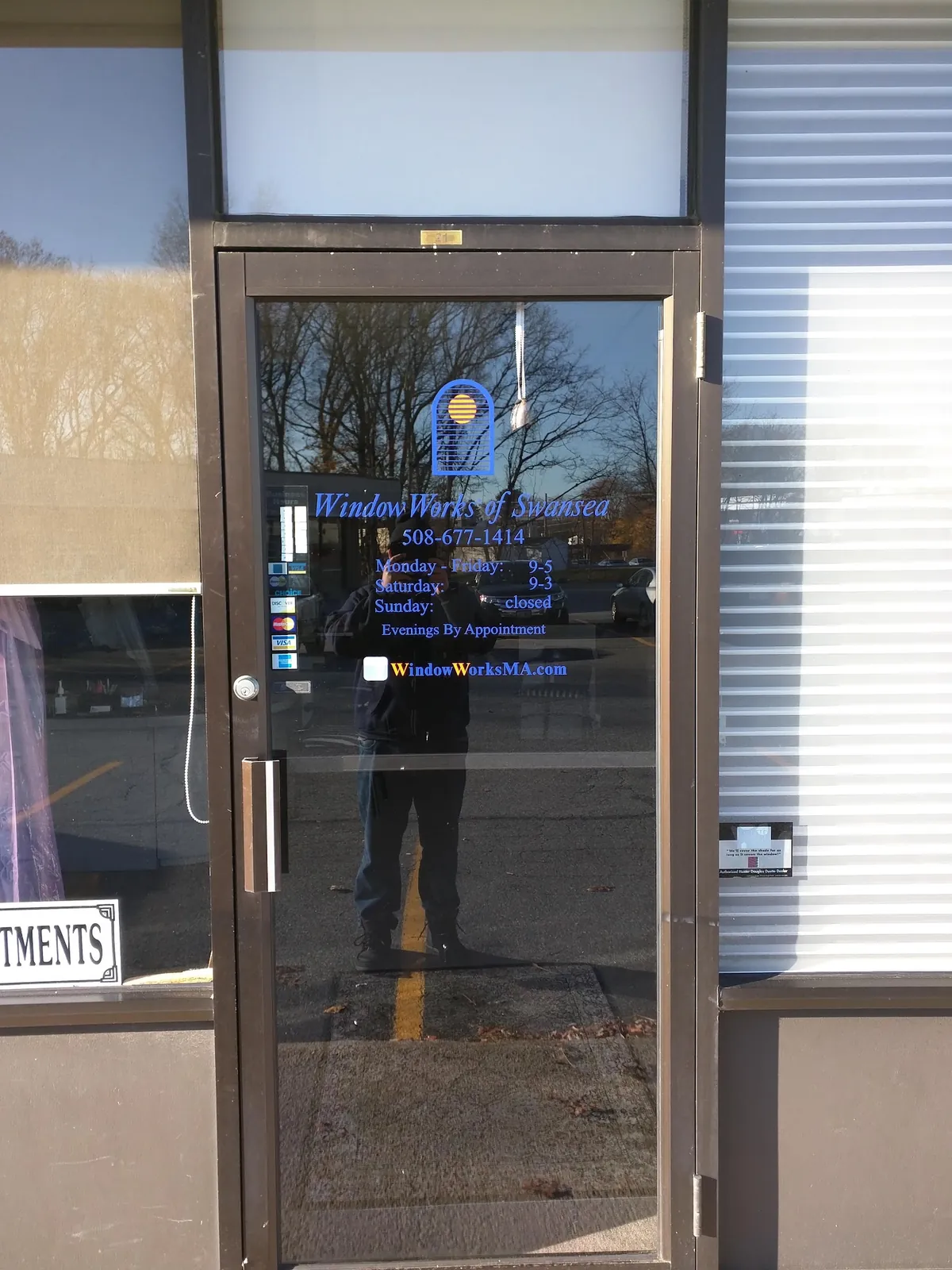
It helps to see a vertical blind and a panel track draw and stack before you choose. The Swansea showroom is the place to compare materials and colours, and we bring samples when we measure.
Window Works is a family store, founded in Swansea in 1988 and now in its second generation, with an experienced team of window treatment specialists. We measure in your home, our team installs, warranties are offered on what we sell, and we stay in constant contact with you until the job is done.
Treatments for Wide Openings
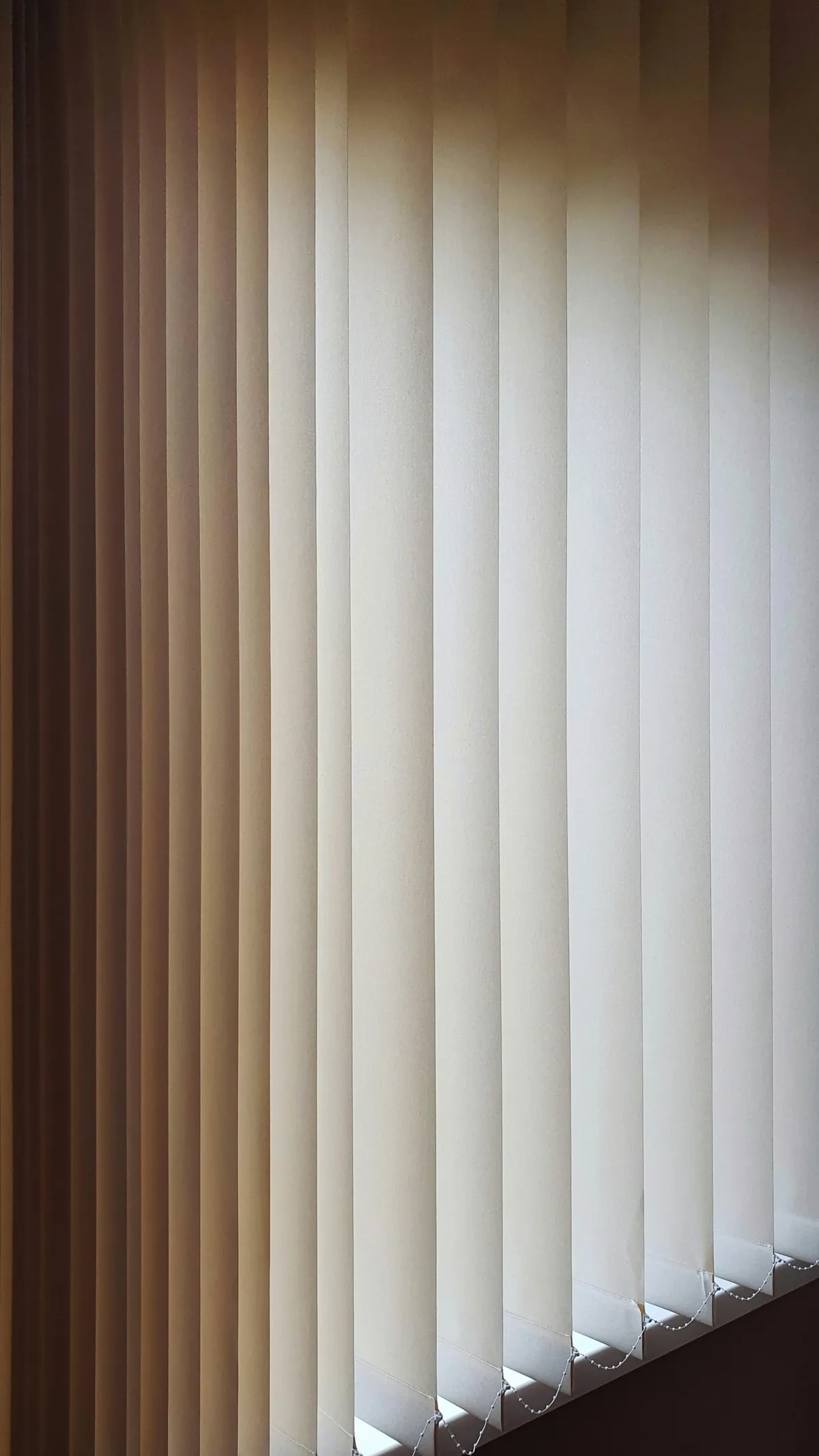
Vertical blinds
Verticals and panel tracks for sliding doors and wide openings, measured across the whole opening.
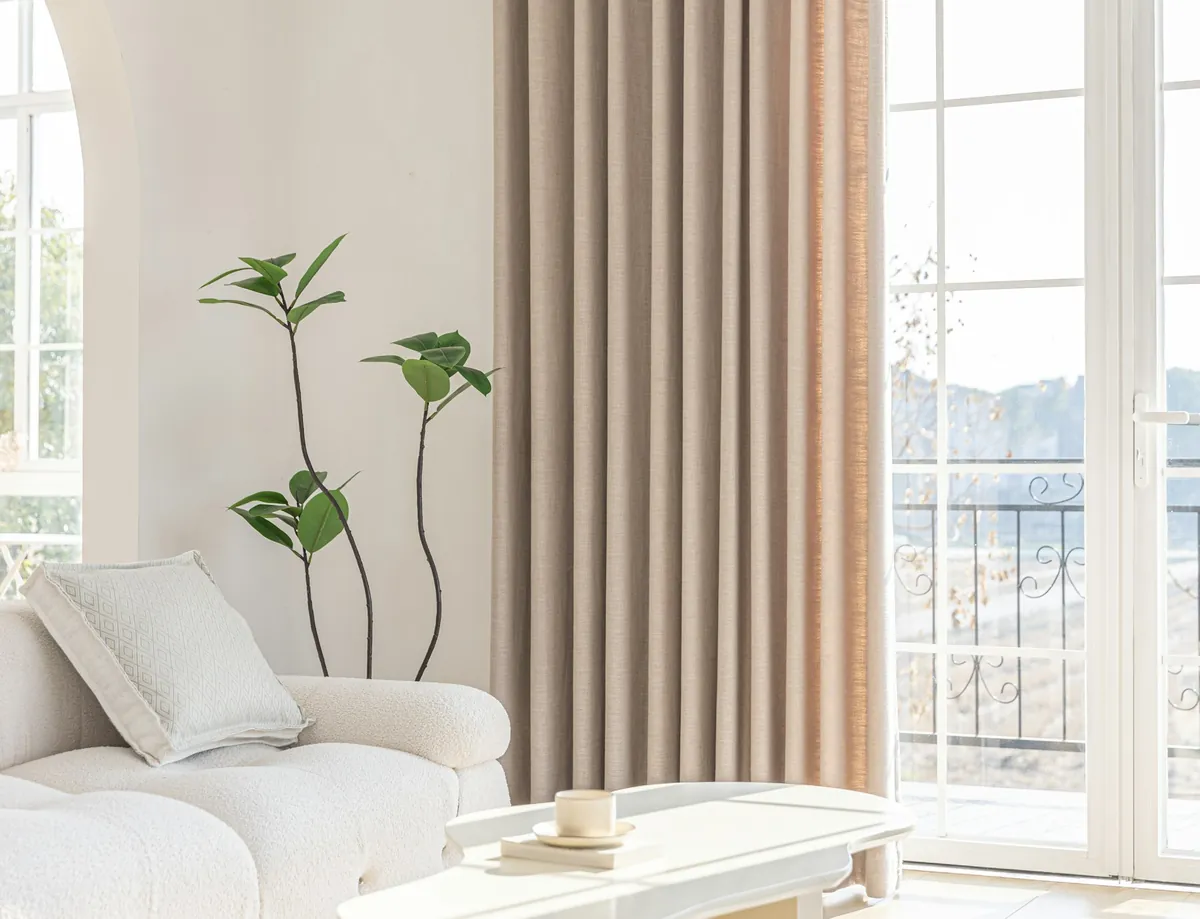
Custom drapes
Panels on their own rod, drawn over the slider at night.
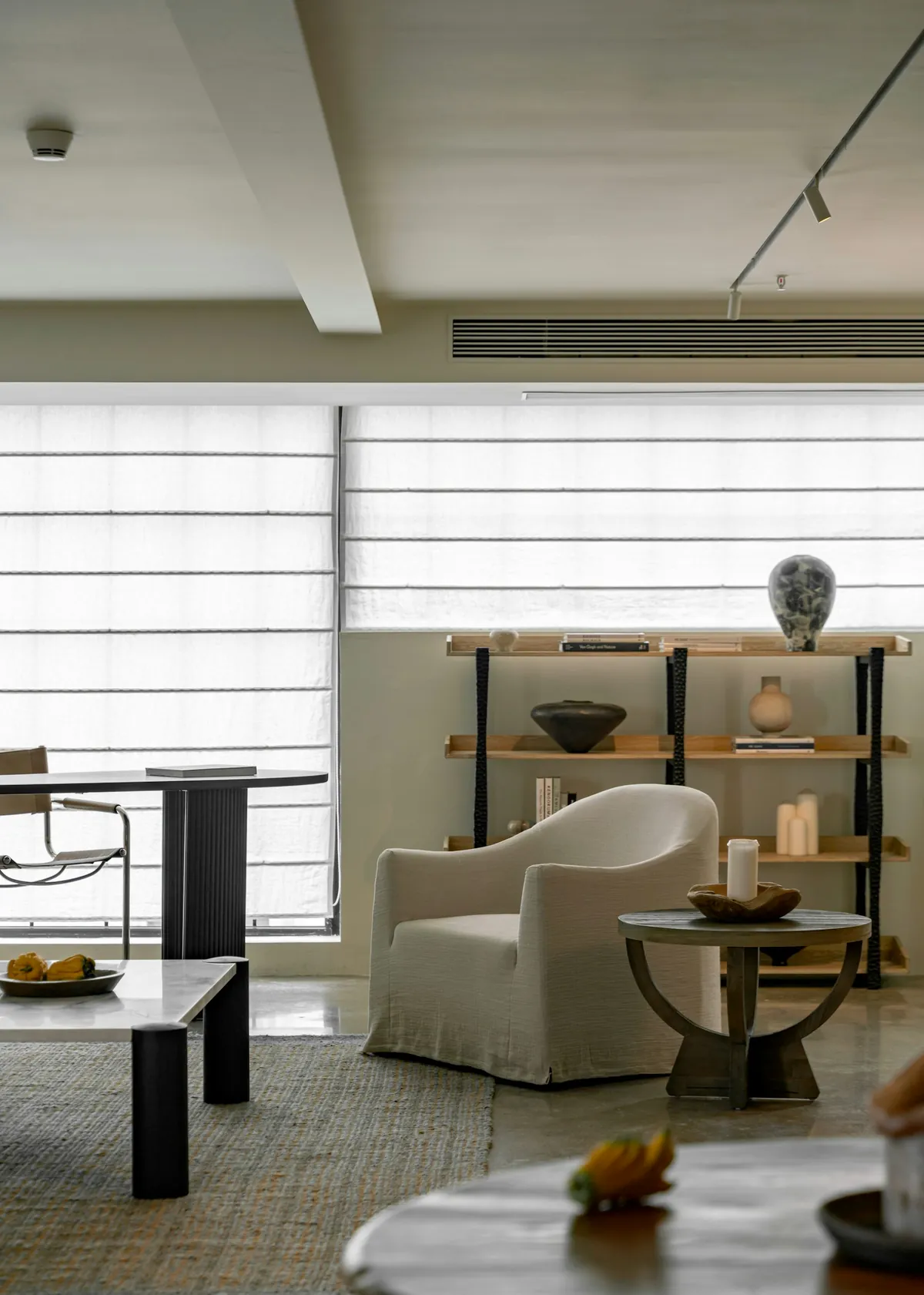
Motorized blinds and shades
Remote and wall-switch operation for wide or tall openings.
Sliding Door Questions
Which side should the blind stack on?
On the side of the door that does not slide, so the moving door is never behind the stack.
Can I tilt a panel track like a vertical blind?
No. Panel tracks slide but do not tilt. If you want to angle the light without drawing back, choose vertical blinds.
Which takes up less glass when open?
Usually vertical blinds, because the vanes turn edge on and stack tightly. A panel track’s stack is as wide as one panel.
Can I add drapes as well?
Yes. Drapes on their own rod above the track can draw to the same side as the stack.
Do you measure the door yourselves?
Yes. A specialist measures the whole opening in your home, including the space the door needs to clear.
Book Your Free Quote
Use the call button to book a free quote, arrange measuring in your home or ask about installation. Or come into the Swansea showroom to compare verticals and panel tracks before you choose.