
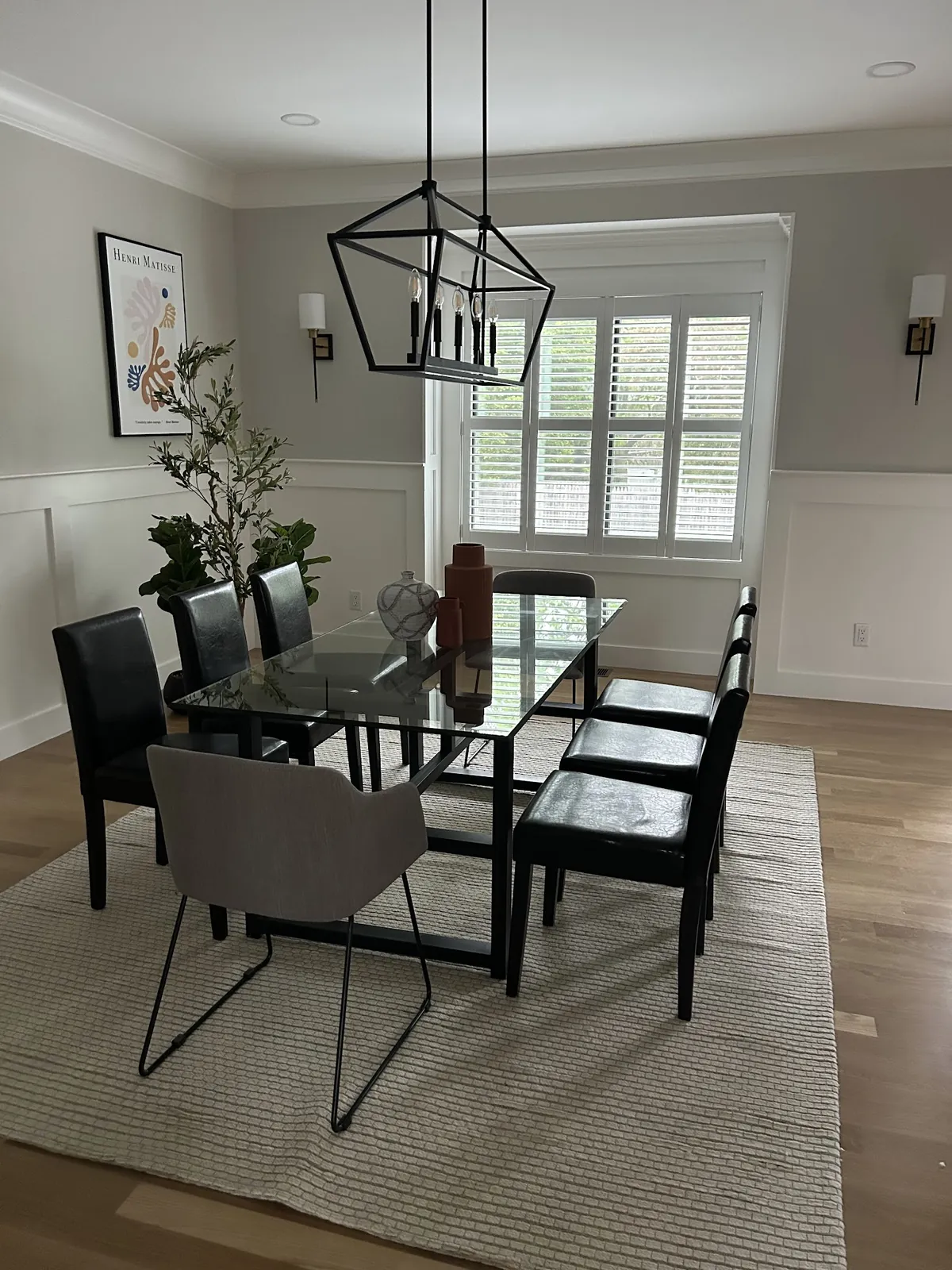
One Room, Two Kinds of Window
Dighton’s older houses have grown over time. A farmhouse on Main Street or a cape on Somerset Avenue may have kept its nineteenth-century sash in the original rooms while an addition, built much later, brought in larger modern glass, and quite often the two end up side by side in the same room. That mix is the most common puzzle we meet with plantation shutters in Dighton, MA: how to make an old window and a new one look as if they belong together.
The housing across town is low in density and mostly older, with farmhouses and capes spread along the main roads and river lots running down to the Taunton River. Each of those settings asks something different of a shutter, from a small, slightly crooked sash in a front parlour to a broad window looking out over the water.
- Interior plantation shutters, made only for inside the house
- One louvre size and one frame style carried across mismatched windows
- Each frame built for its own opening, old or new
What a Dighton Shutter Can Do
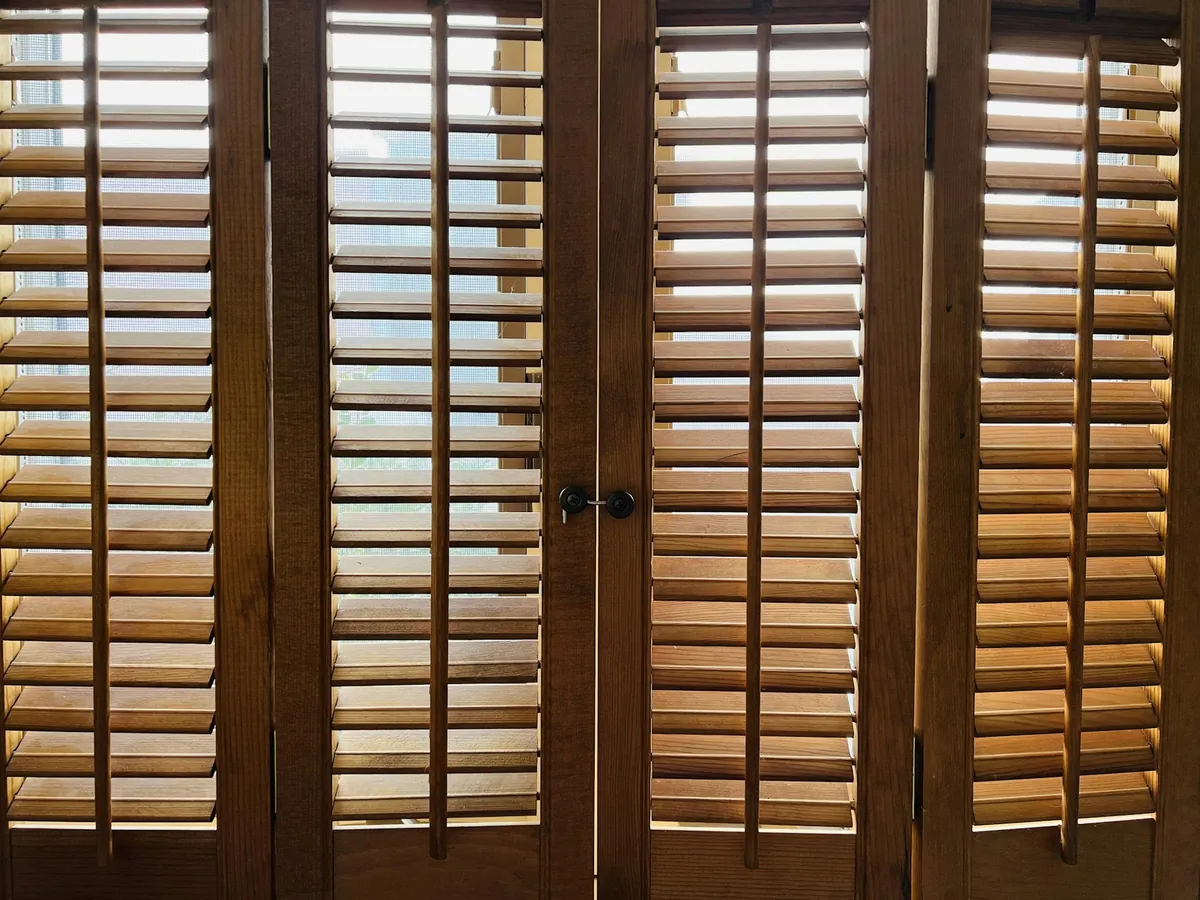
Original sash
Smaller, older windows with their casings intact, where a frame set within the opening keeps the trim on display.
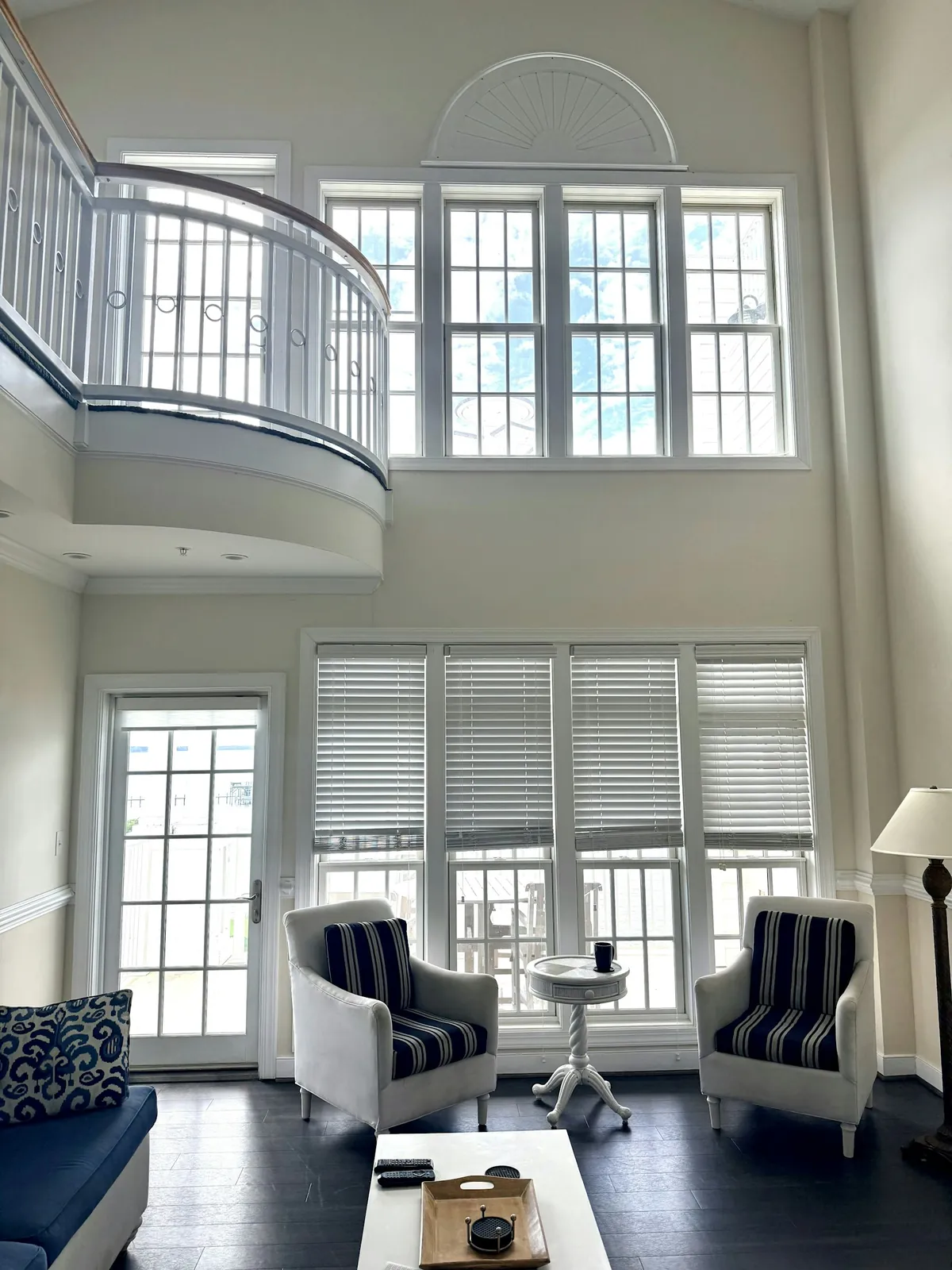
Addition glass
Bigger modern windows in a newer wing, given the same louvre and finish as the old rooms so the house reads as one.
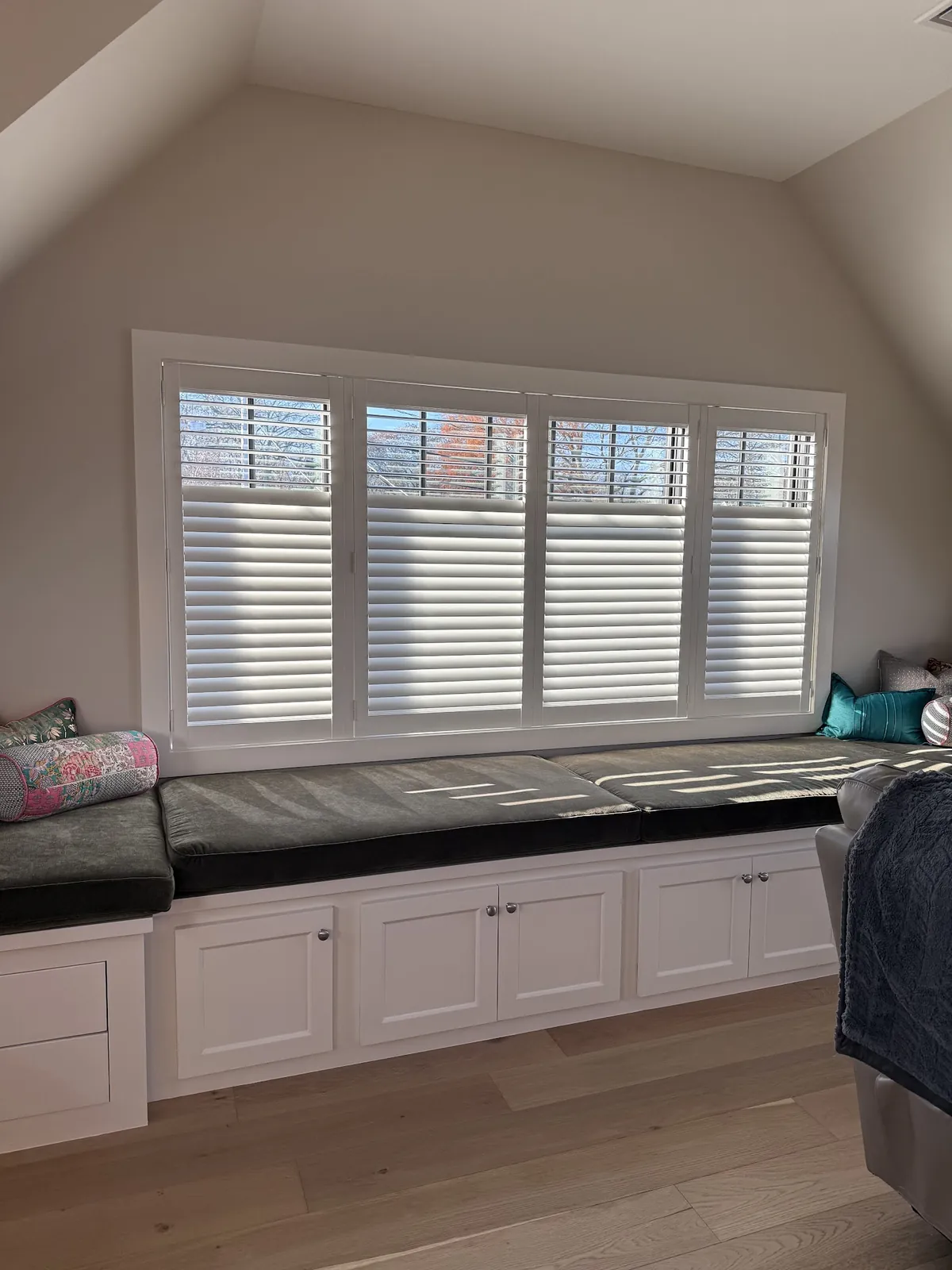
The window seat
A wide opening above a built-in seat, with panels that fold back clear of the cushion and the drawers below.
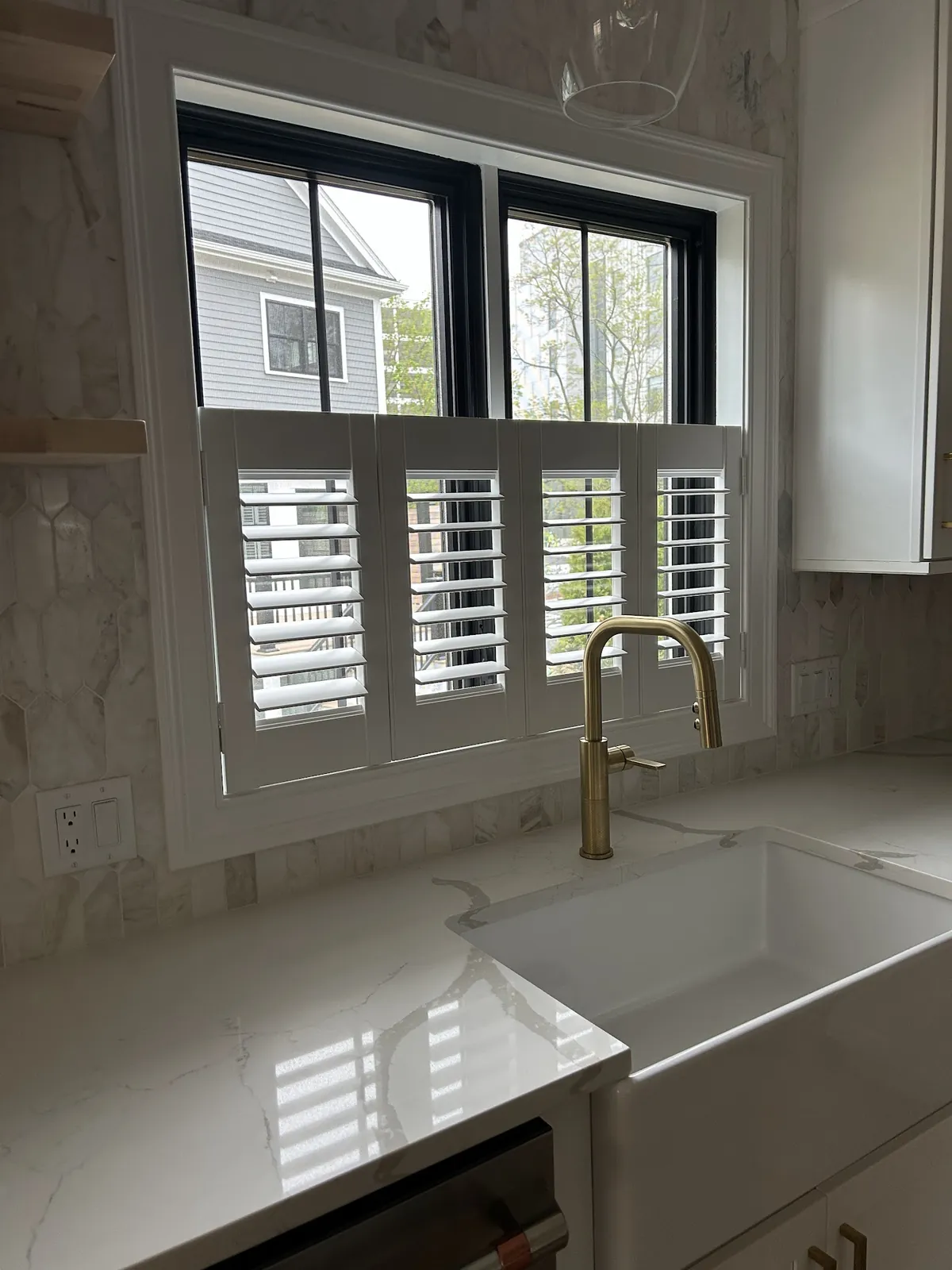
Kitchen sink
Cafe panels on the bottom half only, so the counter is screened and the top of the window still lights the room.
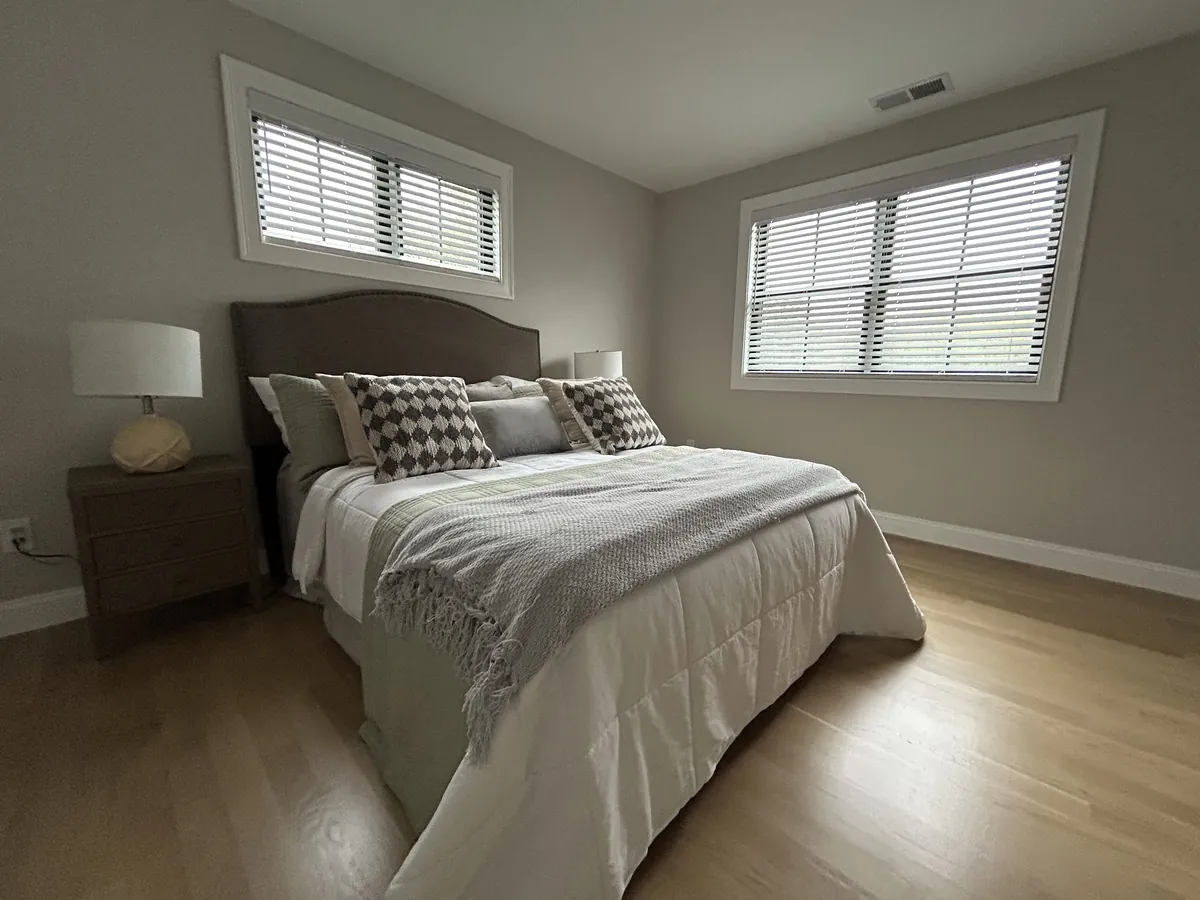
Upstairs in a cape
Bedroom windows under the roof, often short, filled with panels that close for a dark room at night.
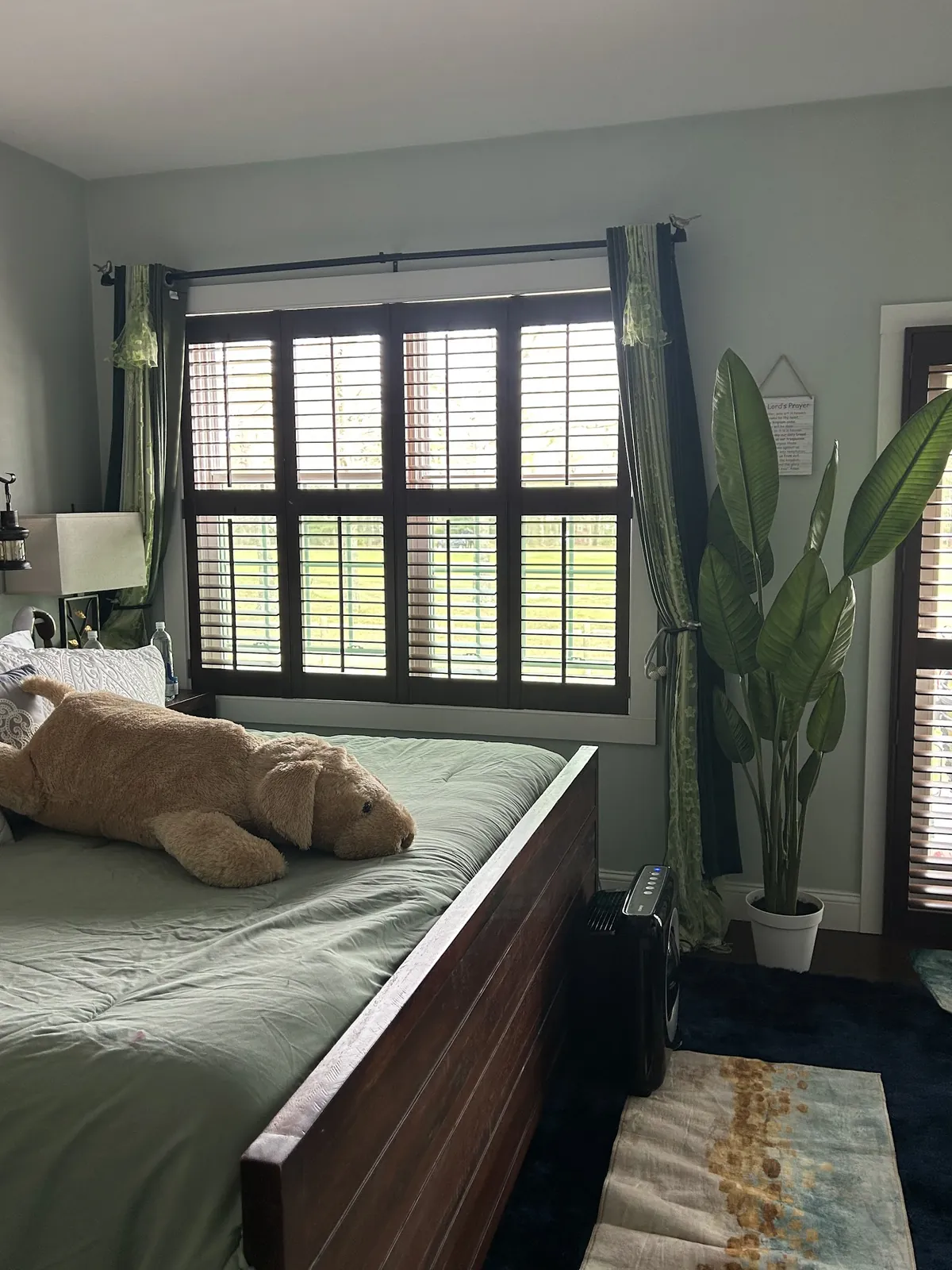
Wood for the old rooms
A wood finish where the old part of the house keeps stained doors and floors, paired with side drapes for warmth.
Matching an Old Window to a New One
When an addition puts modern glass beside original sash, the two windows rarely line up. The new one may be wider, taller or set at a different height from the floor. Its opening may be shallower, with plain modern trim, while the old window sits deep in a thick wall with a hand-made casing. Hang anything ready-made on both and the difference jumps out.
Made-to-measure plantation shutters in Dighton, MA can close that gap, because every part of the shutter can be chosen to tie the two together even though each frame is built for its own window.
The same louvre size. Using one louvre width on every window in the room is the single biggest step. The slats then read as one pattern across the room, even where the windows are different sizes.
The same finish. One paint colour, or one wood finish, on every shutter in the room.
The same frame edge. Choosing one frame profile, plain or moulded, for both windows so the outlines match.
Lining things up where possible. Where the windows have different heights, the louvres and any rail across the panels can often be set at a matching height, so the eye runs level across the wall. We look at this carefully at the measuring visit, because it depends on where each window sits in the wall.
None of this hides the fact that the windows are different. It simply lets the shutters do the work of making the room feel planned, which is often why a homeowner with an addition chooses shutters in the first place.
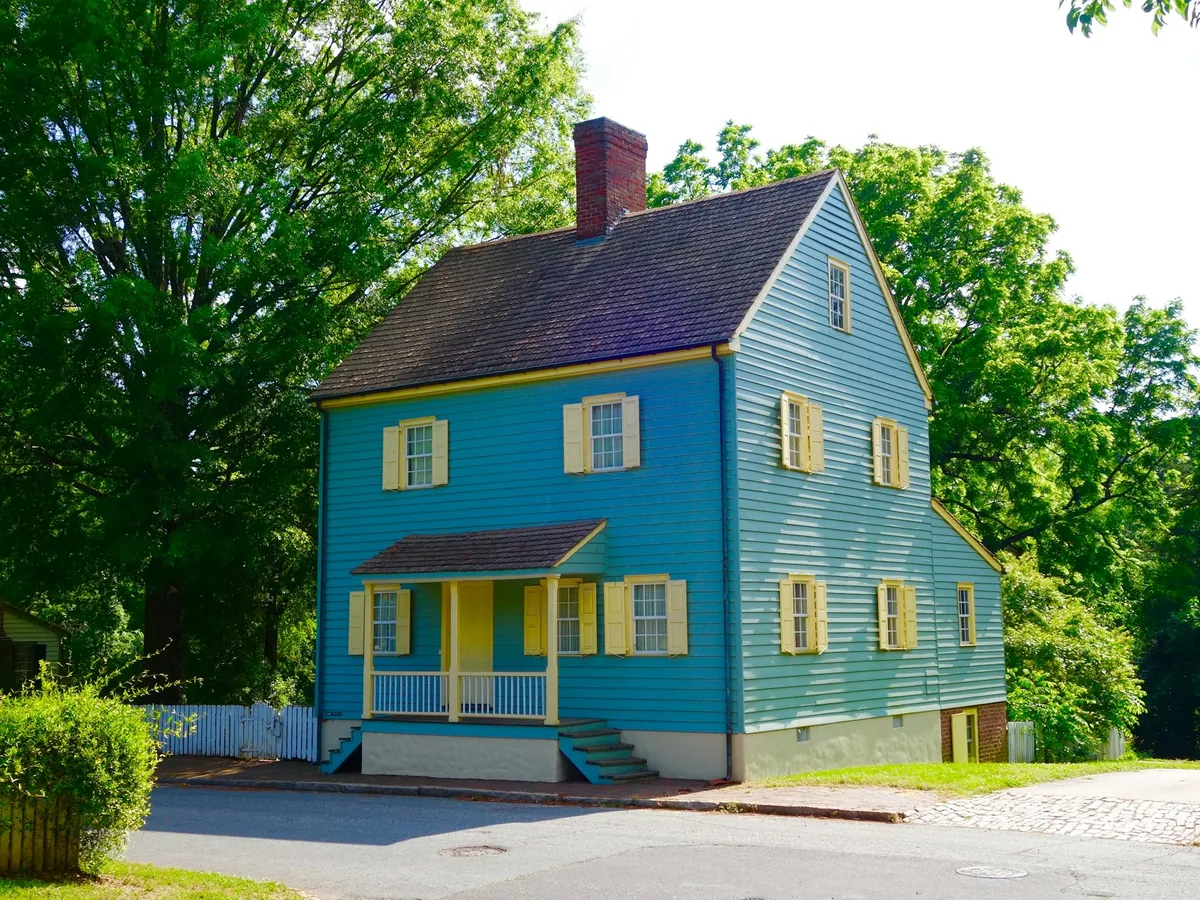
Frames for Old Openings and New Ones
The frame is what holds the panels and fixes them to the house, and in a Dighton room with two kinds of window it is where most of the thinking goes.
The original sash usually sits deep in the wall, which suits a frame set inside the opening. The casing stays visible and the shutter looks as though it was part of the house from the start. Old openings have often moved a little over the years, so the frame is made to take up any lean, and the panels hang straight within it.
The addition window may be shallower. If there is not enough depth for a frame inside it, the frame can be fixed around the opening instead, on the wall or the trim. That raises a question: do you keep both windows the same, with outside frames on each, or mix an inside frame on the old window with an outside frame on the new? Either can look right. The answer usually depends on how much you want to show the old casing, and we talk it through in the room on the measuring visit before anything is decided.
Choosing the Louvre for a Mixed Room
The louvre size is chosen once for the whole room, so it has to suit both windows. A narrower louvre looks at home in the small panels of an old sash; a wider one opens up more view through the bigger glass of an addition. In most mixed rooms a middle size is the comfortable compromise, wide enough to let the new window breathe and fine enough not to overwhelm the old one.
The louvre also has to clear whatever sits behind it. Old sash often has a lock in the middle; a modern window may have a crank or a handle. On a shallower window, a wider louvre may need an outside frame to give it room to turn. We check every window, because the room only works if all the shutters in it can open properly. In a parlour with old sash on one wall and an addition window on the next, that sometimes means choosing the louvre for the more awkward of the two windows and letting the easier one follow. There is more on the choice in our plantation shutter louvre sizes guide.
River Lots on the Taunton
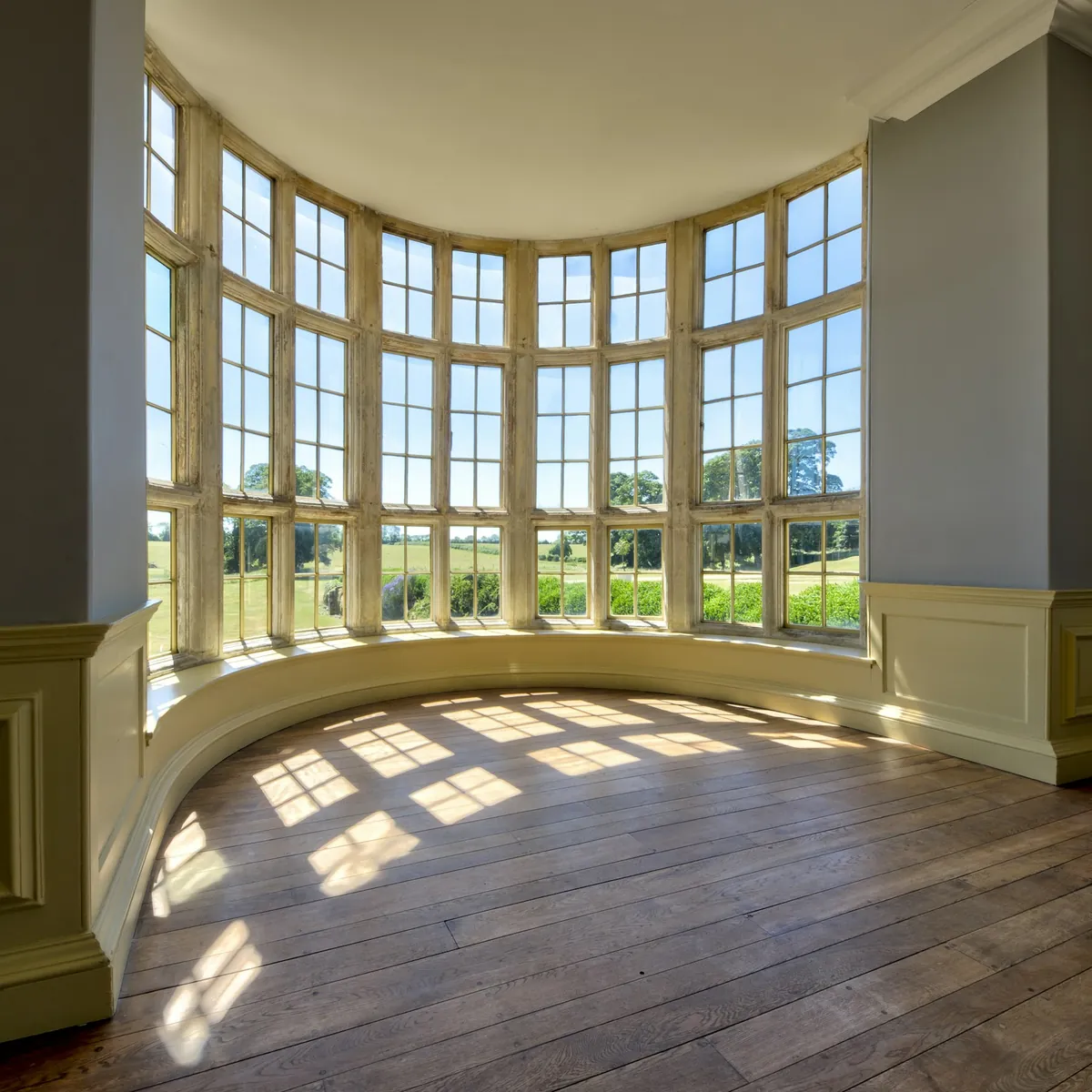
Down on the Taunton River lots, the windows facing the water are the ones that matter most, and they are often the larger windows in the house, sometimes added for the view itself.
Shutters work well here because they let you choose between view and shade without taking anything up or down. Tilted flat, the louvres leave the river in sight between the slats; folded back, the panels clear the glass completely. When the sun comes off the water in the afternoon, angling the louvres down cuts the brightness while you can still see out beneath it.
A wider louvre usually suits the big river windows, because fewer slats mean a clearer view when they are open. If a river room is also an addition beside an older room, the same louvre can be carried through both spaces so the house still feels like one.
Farmhouses and Capes on the Main Roads
Along Main Street and Somerset Avenue, the farmhouses and capes sit close enough to the road that the front rooms often want some screening, even in a quiet town. Louvres tilted with their upper edge toward the room let daylight in while the view from the road is blocked. At night, closing them fully gives complete privacy.
In a farmhouse, the windows are often tall and narrow in the main rooms and smaller in the kitchen ell and upstairs. Pairs of panels that open from the middle suit the tall windows, while a single panel suits the small ones. Over the kitchen sink, cafe-style panels cover the bottom half of the window.
In a cape, the ground floor usually has standard double-hung windows and the bedrooms sit upstairs under the roof. Those upstairs windows can be short, set into dormers or gable walls with little space around them. A shutter needs no room above the glass for anything to stack, so it can use the whole opening, and a narrower louvre keeps the short panels balanced.
Planning an Addition? Leave the Shutters until the Windows Are In
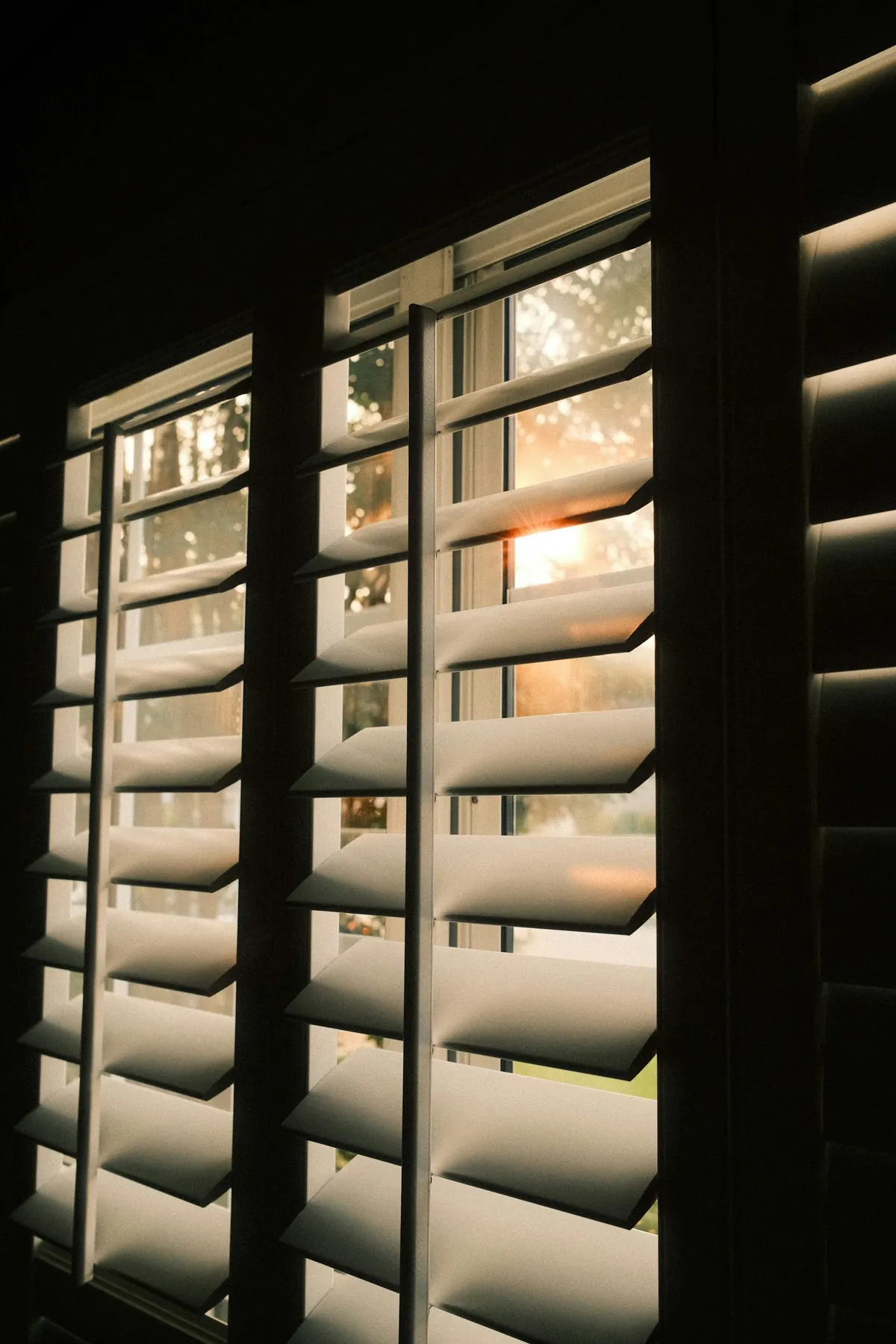
If you are still building or about to build, it is worth knowing when to bring us in. Plantation shutters in Dighton, MA are made to the exact opening, so we measure once the new windows are installed and the trim around them is finished. Measuring from drawings or before the casing goes on risks a frame that does not quite fit.
That said, it does no harm to talk early. If you know the addition will sit beside an old room and you want the two to match, mention it when the windows are being chosen. A new window of a similar height to the old sash, or with its sill at the same level, makes it easier for the shutters to line up later. We can also look at the old room first, so you know what louvre and finish you will be matching.
Once the addition is finished, the order runs as normal, and the old and new rooms can be measured on the same visit.
Halls and Stairs in an Old Farmhouse
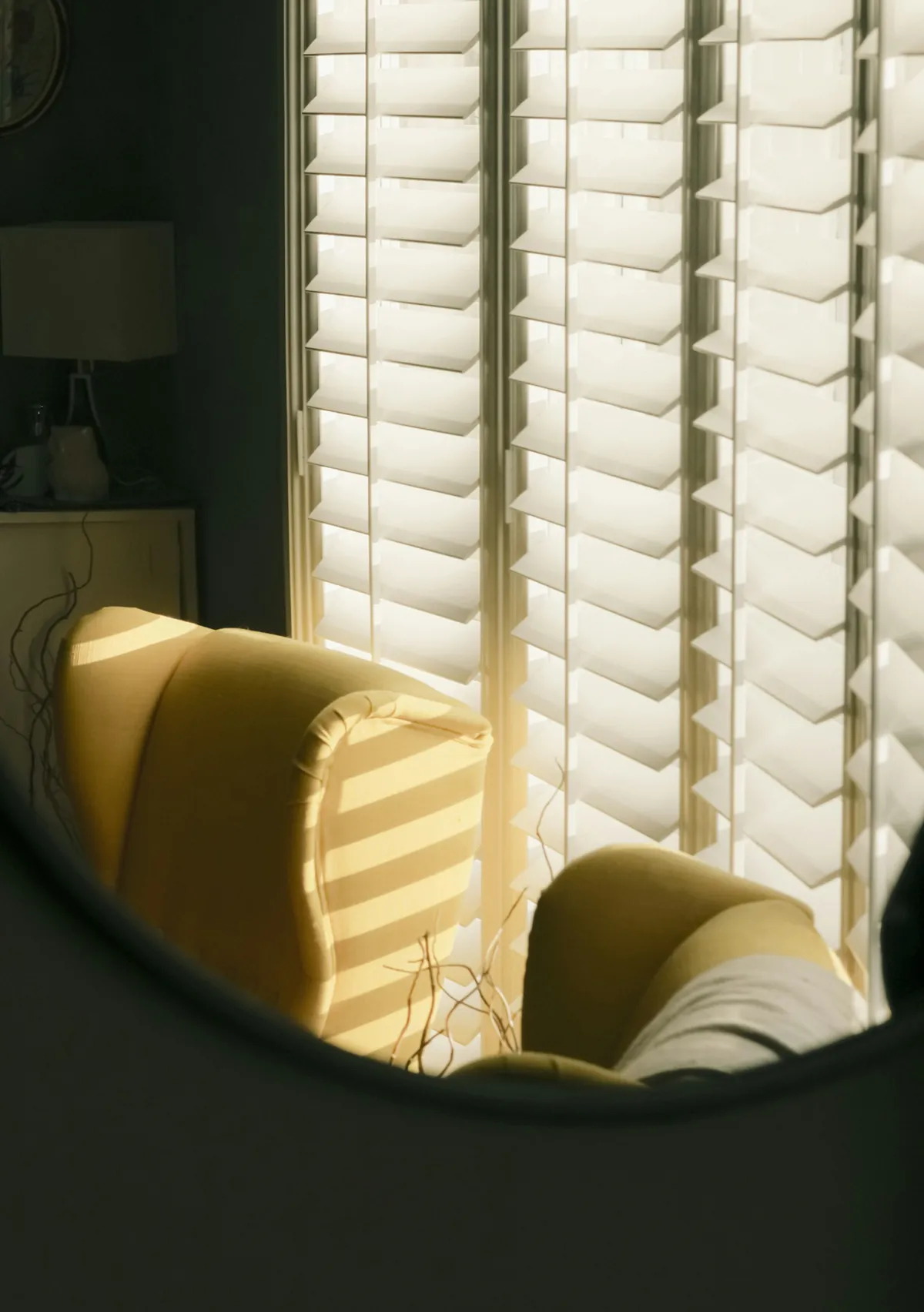
The windows people forget are often the ones on the stairs and in the upstairs hall. In an older farmhouse they can be oddly sized, set at an awkward height or squeezed between a wall and a door frame. They are seen from both floors and, on the front of the house, from the road. A made shutter fills one of those windows properly, and painted to match the stair trim it looks like part of the joinery. Plantation shutters in Dighton, MA on a landing window are a small job that often makes the whole stairway look finished.
Privacy, Light and a Dark Bedroom
What you want from each room shapes how the shutter is set up. A few Dighton examples:
- Front parlour on the road: louvres tilted up for daylight and privacy together, closed in the evening.
- Bedroom in the old part of the house: panels that close snugly in an old frame, so the room is dark at night.
- River room in an addition: a wider louvre for the view, panels that fold right back to the walls.
- Kitchen ell: cafe-style panels at the sink, the upper glass left open.
- Upstairs cape bedroom: a narrower louvre in short panels, filling a dormer window edge to edge.
Your Order, from Phone Call to Fitting
You will hear from us throughout, so you always know what stage your shutters are at.
- Get in touch by the call button or the form, describe the rooms, and mention if any of them mix old and new windows, and we will book your free quote.
- A specialist visits and measures each opening: width at several heights, height on both sides, depth, the lean of old frames and the hardware on each window.
- In the room itself, we work out how the shutters will match across different windows, including louvre size and where the lines should fall.
- You settle frame style, finish and panel layout, or come to the showroom to try the panels first.
- You receive a quote that sets out each window.
- Every shutter is made for its own opening.
- Our installers fit them, adjust each panel so it opens and closes cleanly in old frames and new, and show you how to tilt and fold them.
Paint, Wood and the Whole House
Most Dighton shutters are painted in a white or soft white that matches the window trim. In a house with an addition, a painted shutter is often the easiest way to make old and new rooms feel connected, because it reads the same on both.
A wood finish suits the older rooms where stained floors and doors survive. If you choose wood in an old room and the addition sits next to it, it is worth thinking about whether the addition should match or step back to paint. We can help you weigh it up.
Drapes at the sides of a shutter add colour and softness. Window Works makes those too, so custom drapes for a Dighton room and its shutters can be planned in one visit, with the rod placed so the fabric clears the panels.
Care over the Years
A shutter needs dusting and not much else. With the louvres shut, wipe down each panel with a soft cloth or a vacuum brush, then reverse the tilt and wipe the other face. A cloth wrung nearly dry takes marks off a painted panel, and a wood finish should stay dry. If, after some years, a louvre loosens or a panel sinks a little, give the store a call and we will look at it.
A Family Store Just Down the River
Window Works started in Swansea in 1988 and is still owned by the same family, now in the second generation. In more than 37 years, its team has fitted window treatments in every kind of house across the SouthCoast and the Rhode Island East Bay, from antique farmhouses to new builds.
- Experienced window treatment specialists
- Measuring done at your windows, in your home
- Installed by our own team
- We stay in contact until your order is complete
- Warranties offered on the products we supply
At the showroom you can work the panels yourself, compare louvre sizes side by side and see the Norman range.
To see the full range, visit plantation shutters, and for blinds, shades and drapes in town, go to window treatments in Dighton.
Questions from Dighton
My addition has bigger windows than the old rooms. Can the shutters still match?
Yes. Each frame is made for its own window, but using one louvre size, one finish and one frame edge across the room makes the shutters read as a set.
Will a shutter fit an old sash that is out of square?
Usually. The frame is built to take up the lean, so the panels hang straight inside it. If an opening is too far out, a frame fixed around it is the alternative.
Which louvre size works for a room with old and new windows?
A middle size is often the best compromise, fine enough for the old sash and open enough for the newer glass. The showroom has sizes side by side to compare.
Are shutters a good idea for a river-facing room?
They suit it well. Folded back, they clear the glass; tilted, they cut the glare off the water while keeping the view below.
How do I book plantation shutters in Dighton, MA?
Ask for a free quote through the call button or the form, and we will arrange to measure at your house.
Book Your Free Quote
When you are ready, a free quote is the place to begin. The call button connects you with the Swansea store to arrange measuring in your home or ask about installation, and the form is there if you would rather write. If you want to see the shutters for yourself first, call in at the showroom; the contact page explains how to get there. Window Works is rated 5.0 on Google.