
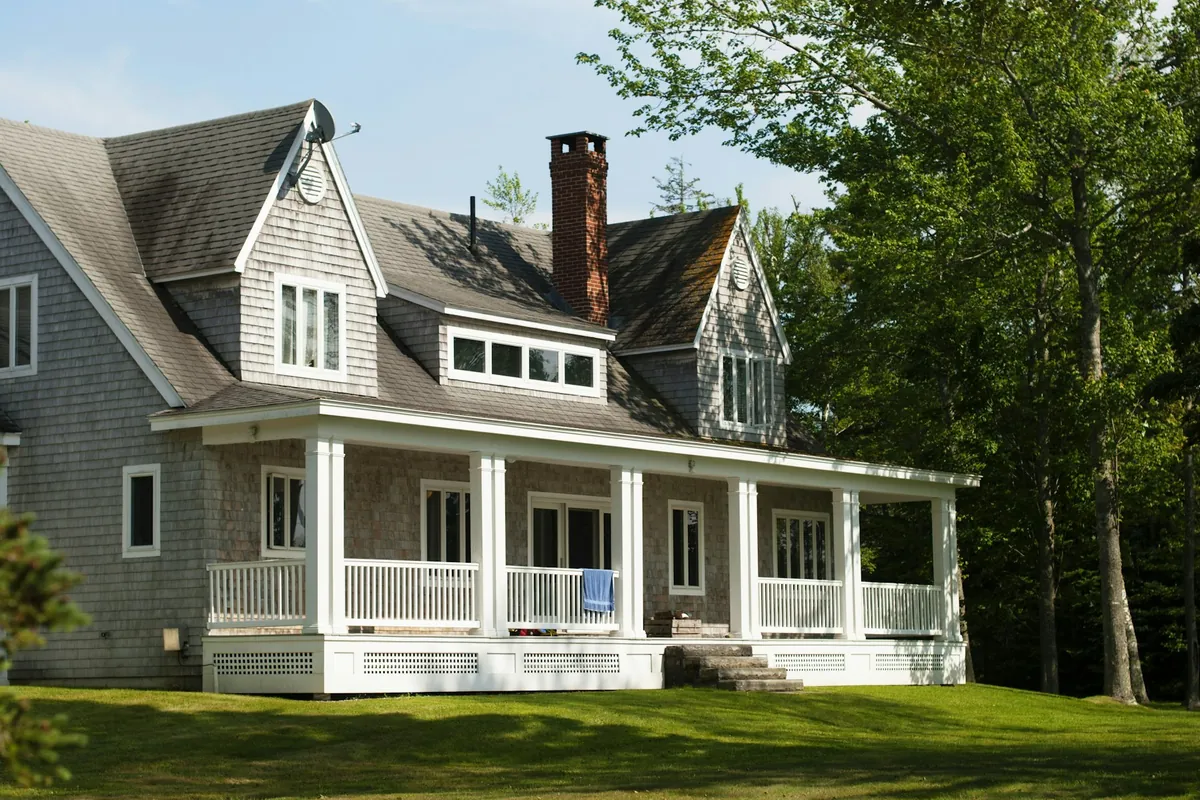
Glass on the Water, Small Panes Inland
Tiverton has two very different kinds of window. Along the Sakonnet River and around Nanaquaket, the waterfront houses put as much glass as they can toward the water, and those rooms are exposed: strong sun, salt in the air and nothing between the window and the weather but the glass. Inland around Four Corners, the farmhouses and shingled capes have smaller windows, older frames and the low, cosy rooms that go with them. Plantation shutters in Tiverton, RI have to serve both.
On the water, the shutter’s job is to manage hard light without hiding the view, and to stand up to a room that gets a lot of sun. Inland, it is to fit small, often out-of-square openings neatly and look as though it belongs to an old house. The louvre and the frame are chosen differently for each, and every window is measured where it is.
- Shutters made for the inside of the house only
- Louvre size chosen for the view on the water or the small panes inland
- Frames built for long runs of glass and for older openings
Tiverton Windows, Window by Window
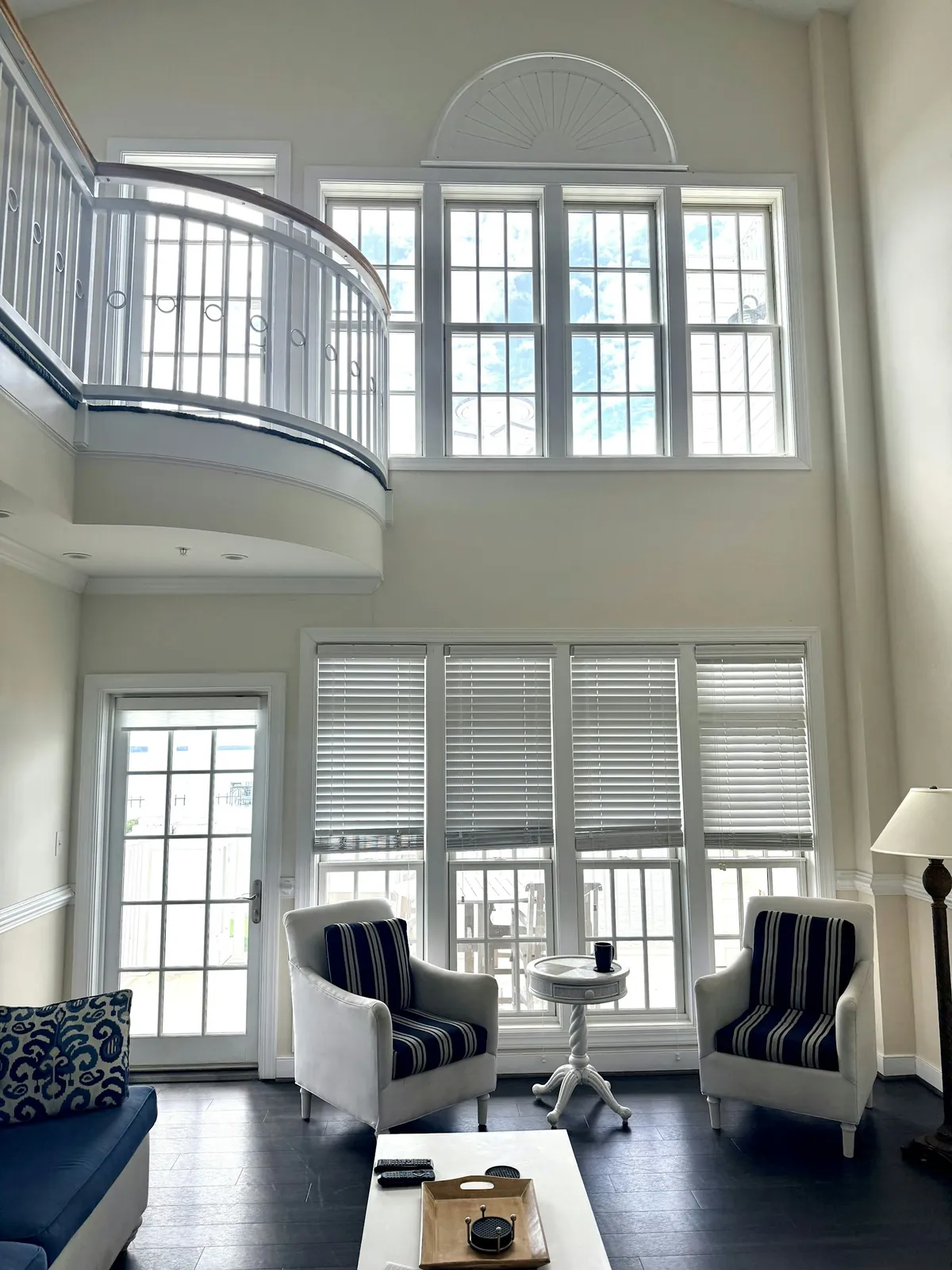
Rows of river glass
Several windows side by side toward the water, each with its own shutter and the frames aligned so the slats run in one level line.
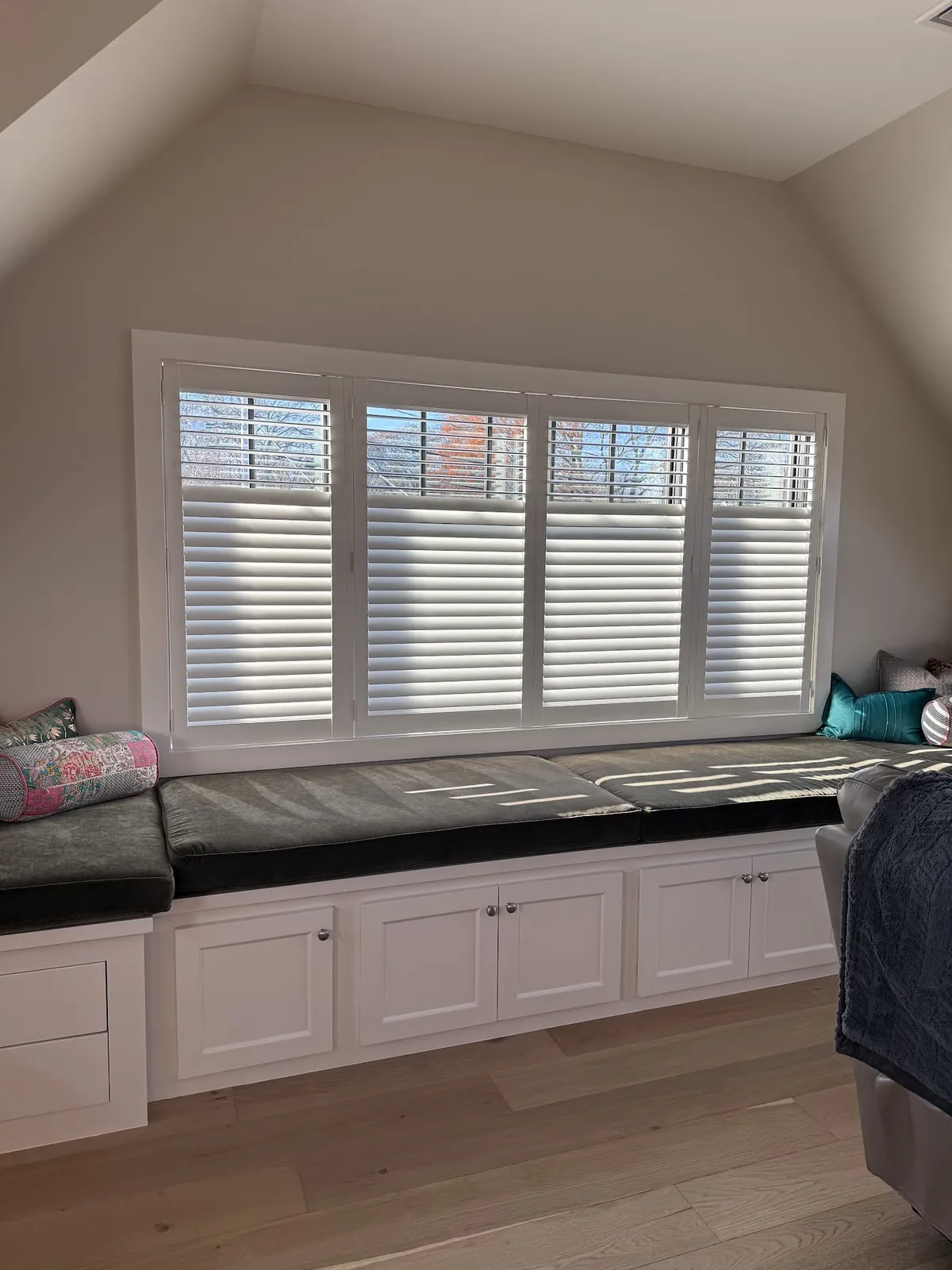
The seat by the window
A built-in seat under a wide window, with panels that swing back over the cushion and rest against the side walls.
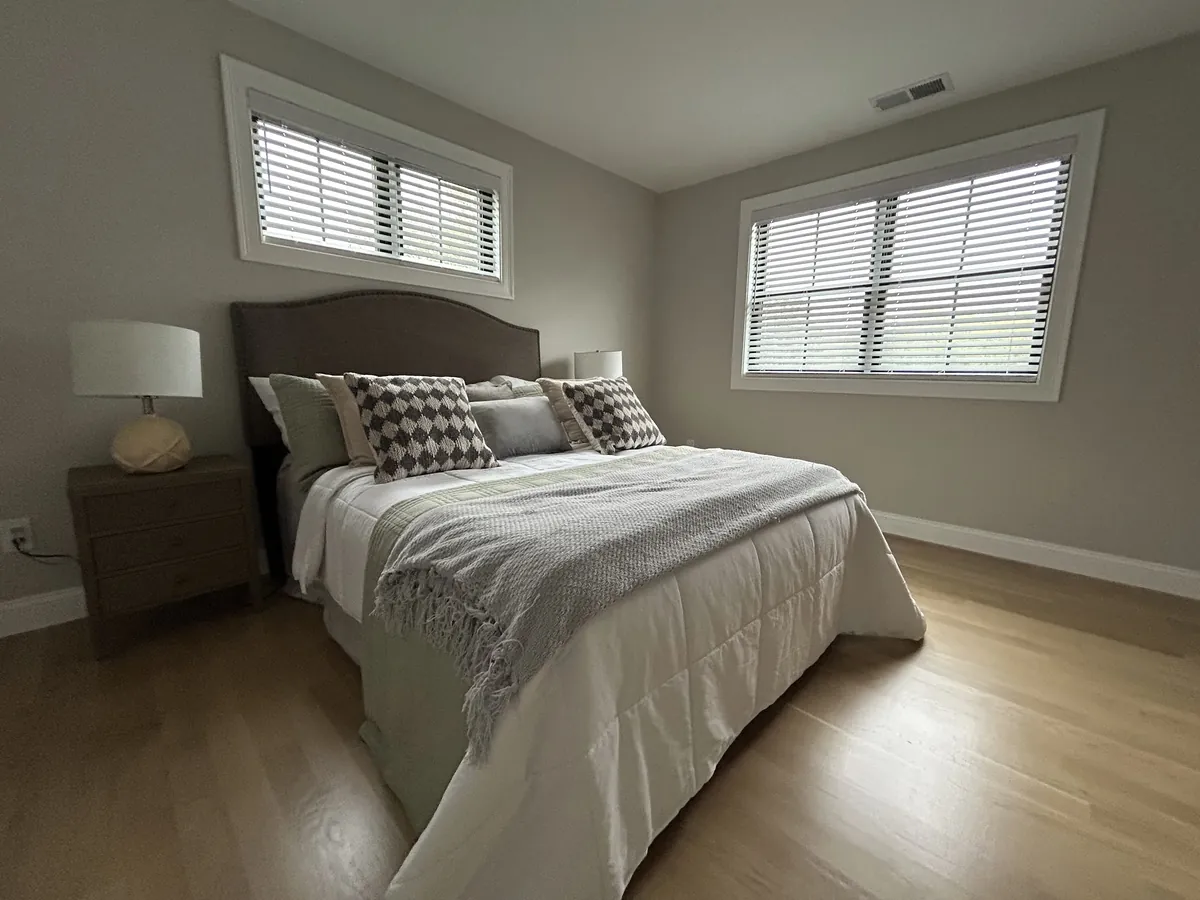
Four Corners bedroom
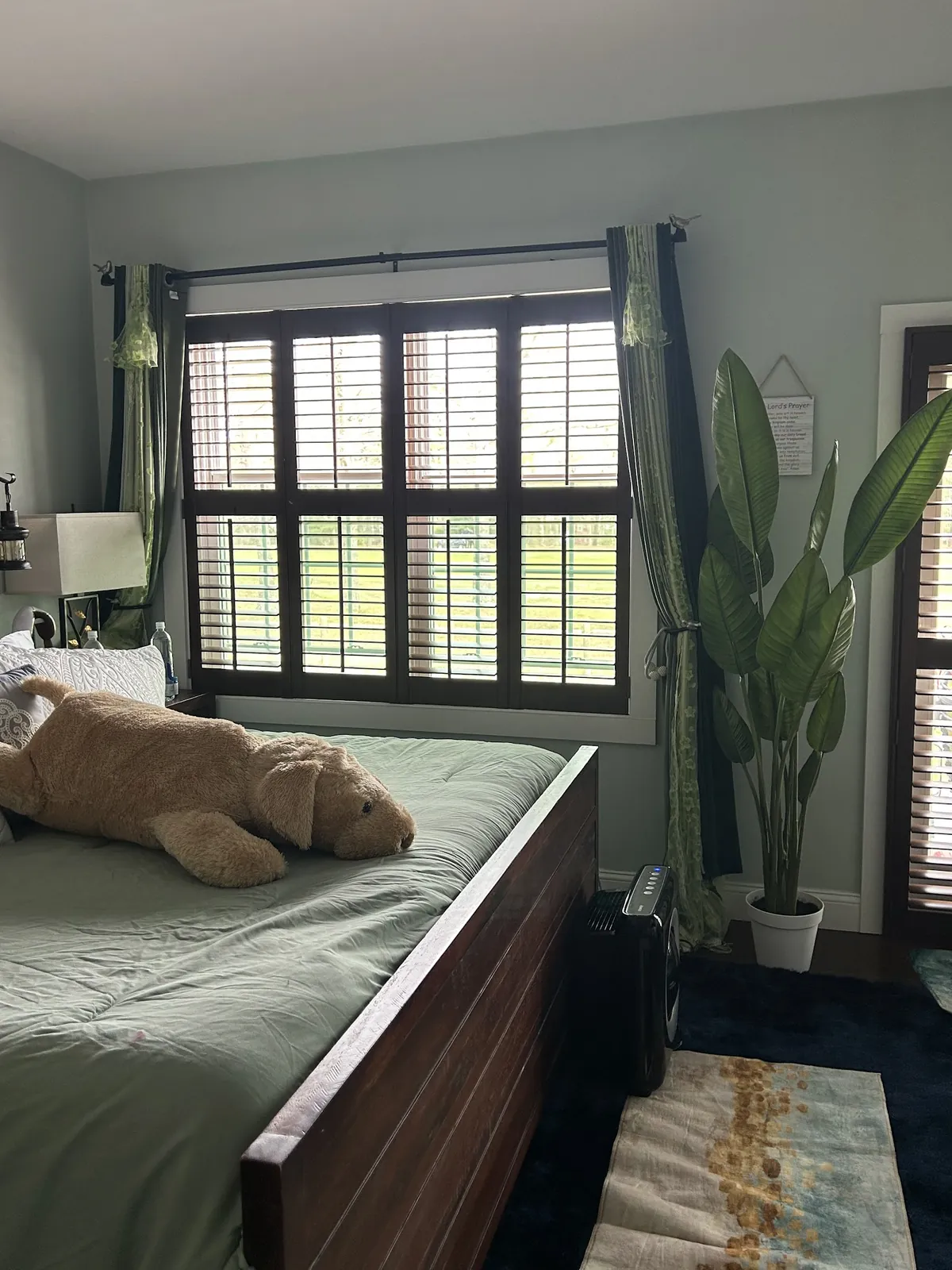
Small farmhouse windows under a low ceiling, filled to the edges and closed for a dark room at night.
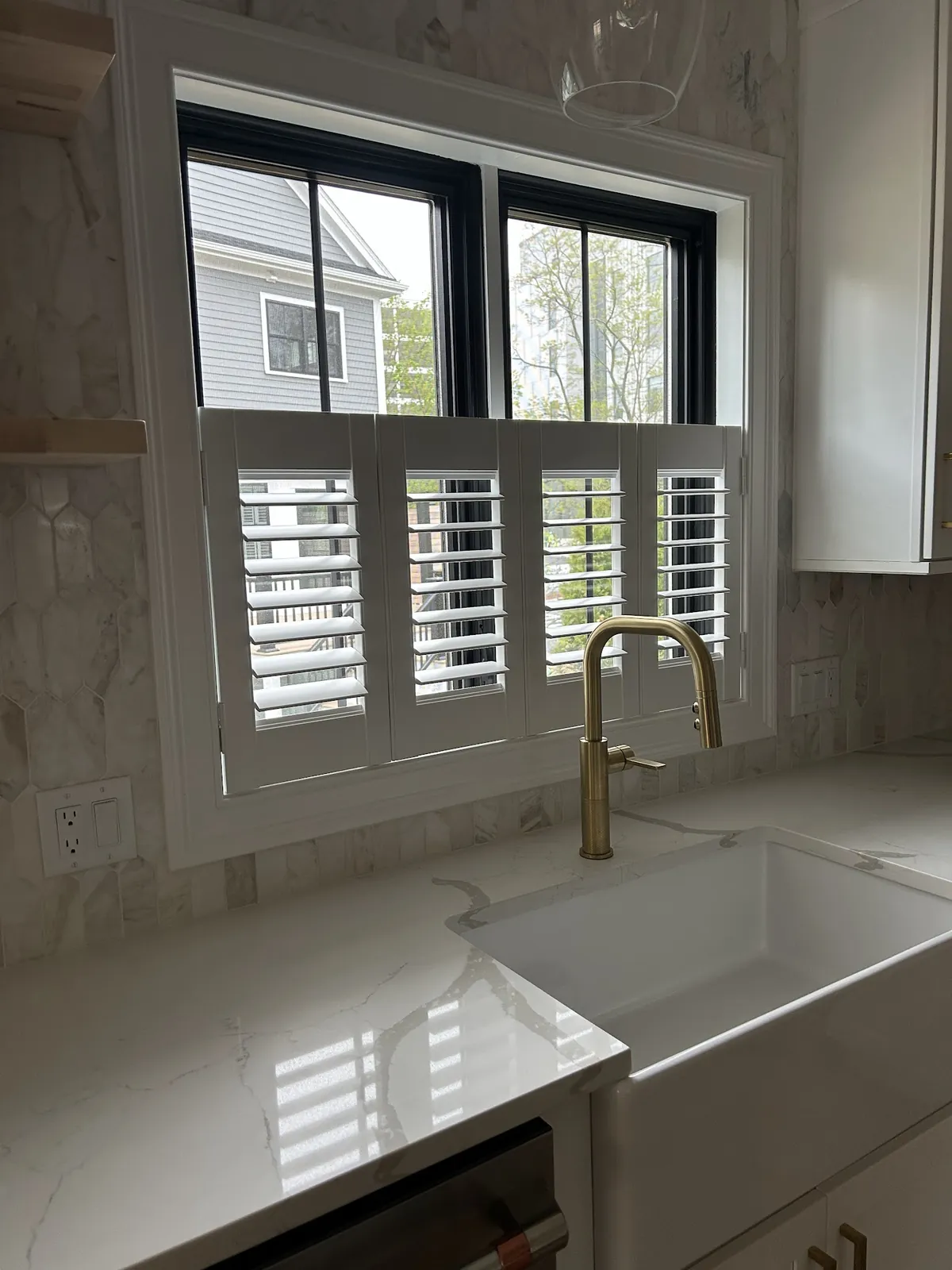
Cape kitchen
Cafe panels screening the counter, the top of the old sash left open to the garden.
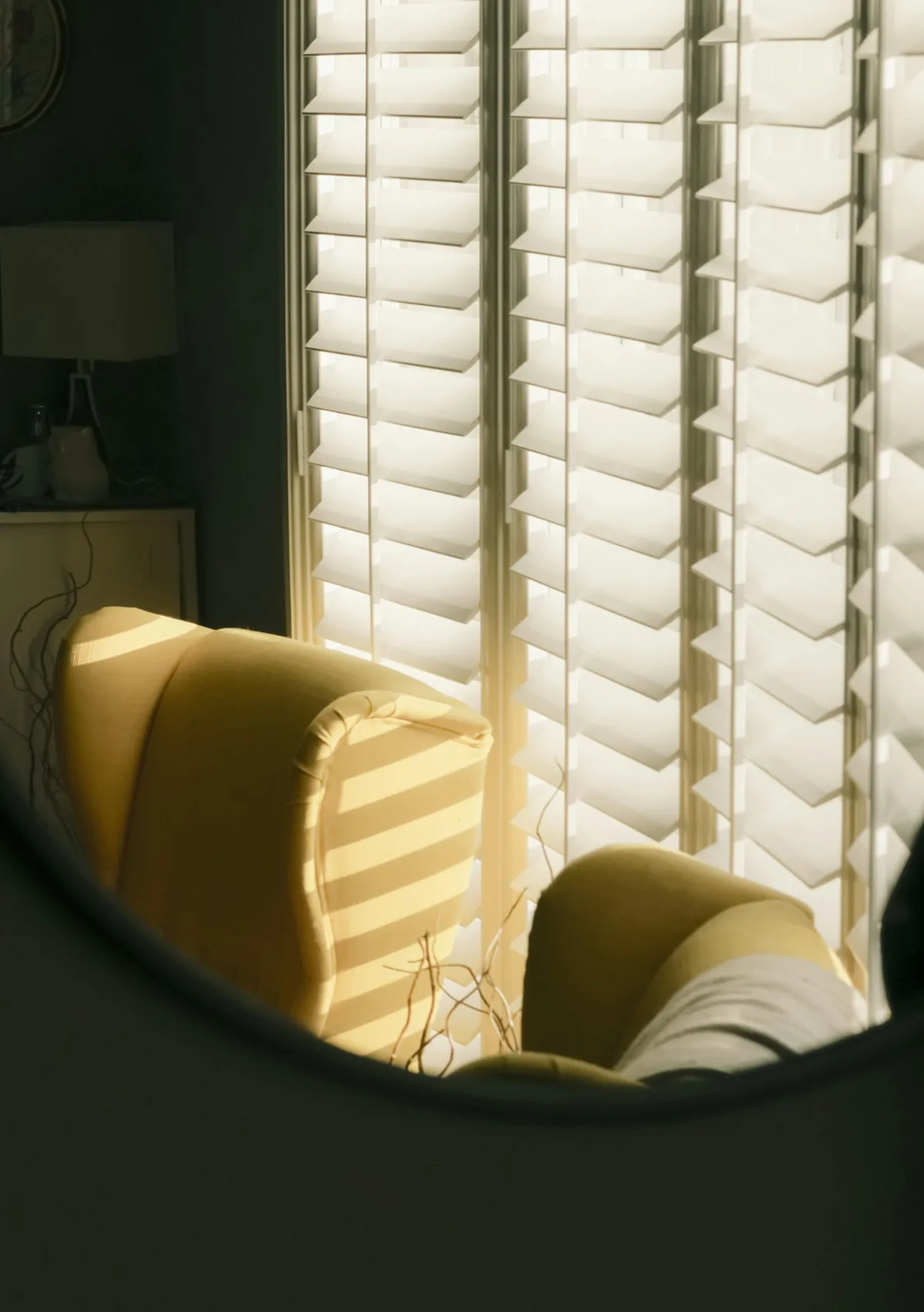
A sunny reading chair
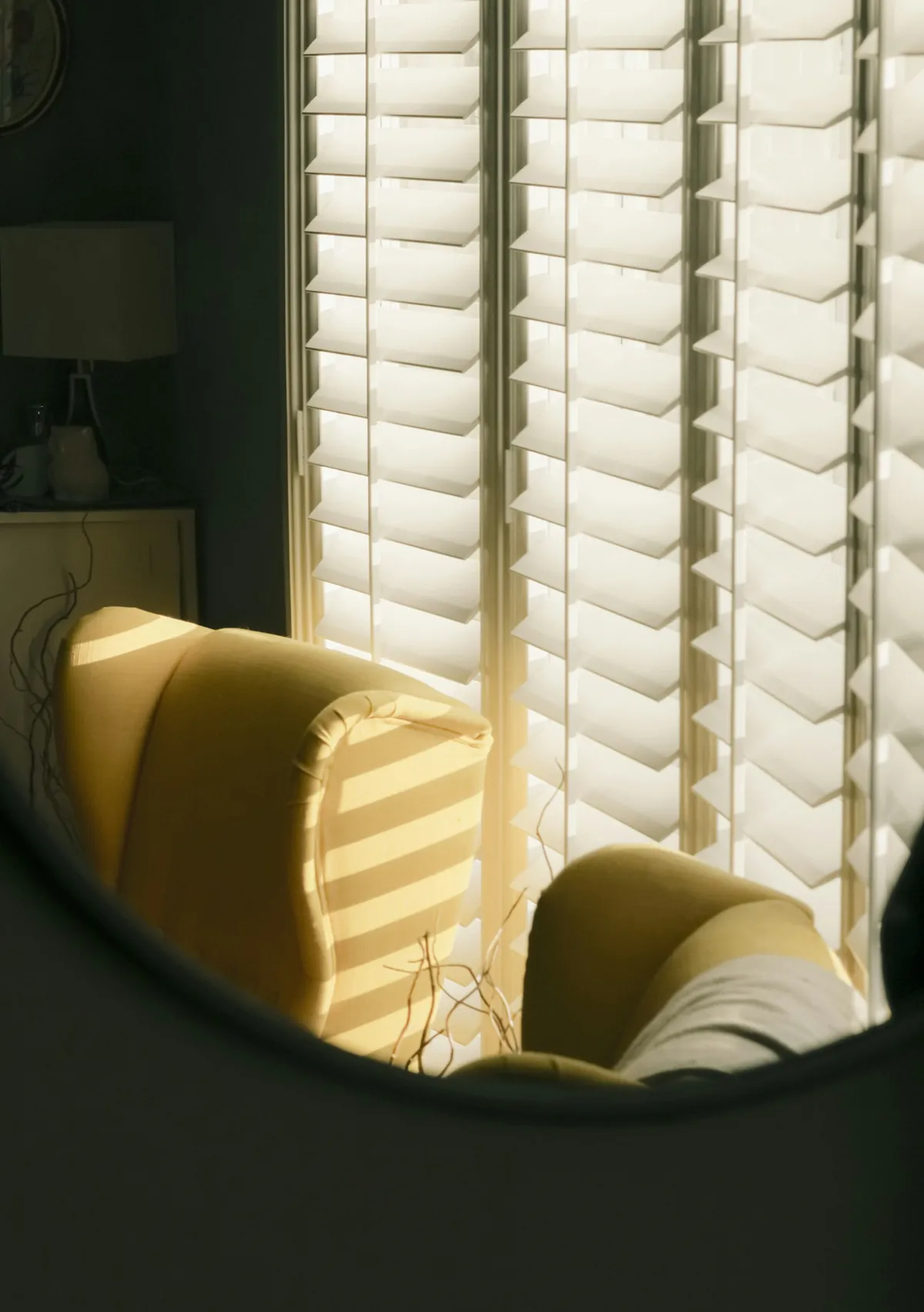
Louvres set to put daylight on the page and keep the glare off it, adjusted as the sun moves round.
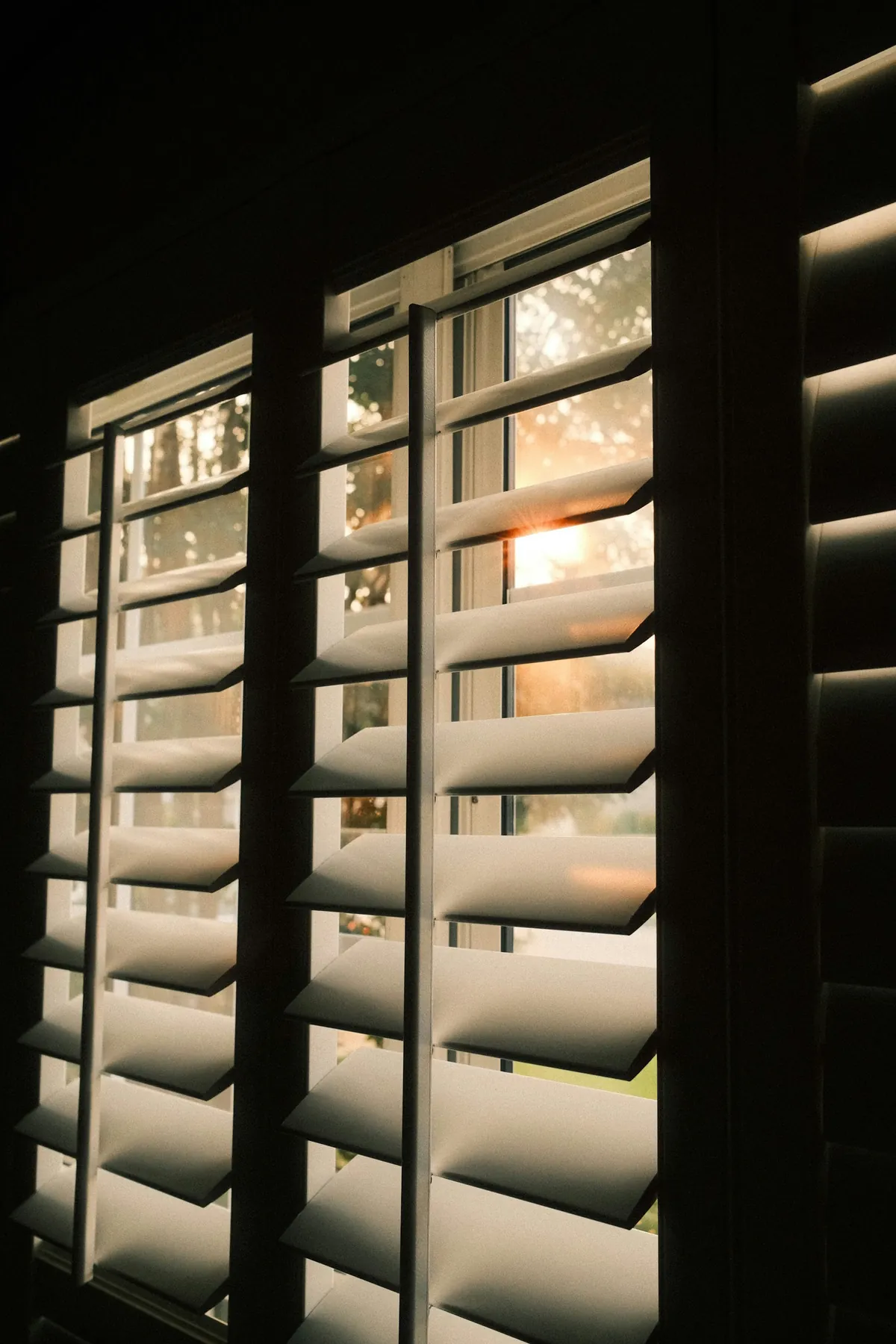
Light through wood
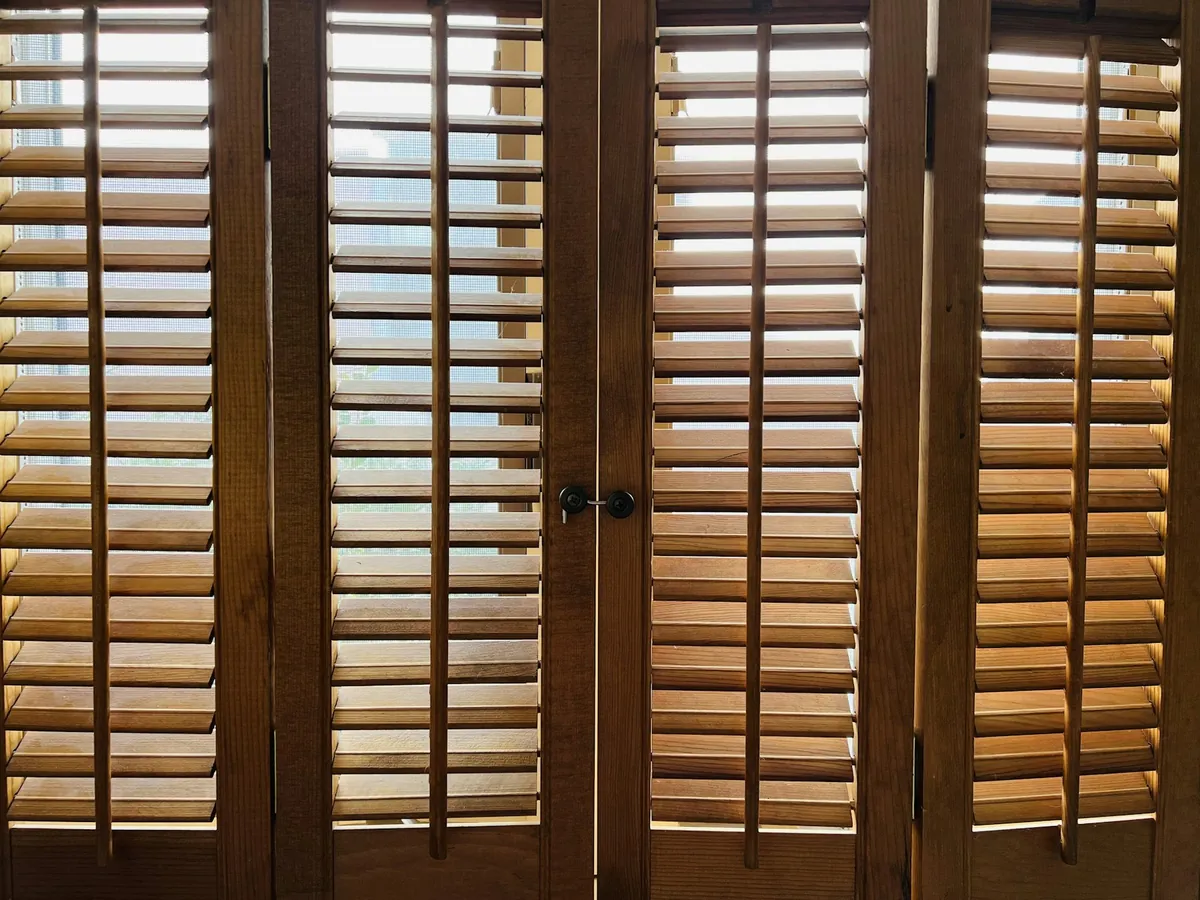
A stained finish for an older room with wide boards and dark doors, the light coming through in narrow bands.
Rooms Built Toward the Sakonnet
The houses along the Sakonnet River and on Nanaquaket are glazed heavily on the water side, often with a long row of windows across a living room, sometimes with more above. They were built that way for the view, and any treatment has to respect it. Plantation shutters in Tiverton, RI suit these rooms because, folded back, they leave the glass entirely clear, and with the louvres tilted open they still let the water show between the slats.
A row like that is treated as a set of individual shutters, one per window, built so their tops and bottoms align precisely and the slats form an unbroken line from one end of the wall to the other. Opened, each set of panels folds onto its own pier of wall. Where the strips of wall between windows are narrow, we plan the panel widths so they fold without overlapping the next window’s glass.
Broad slats usually win here. The broader the slat, the bigger the gaps when it lies flat, so the river and the Portsmouth shore opposite remain visible even while the panels stay shut. For more on this choice, see our guide to plantation shutter louvre sizes.
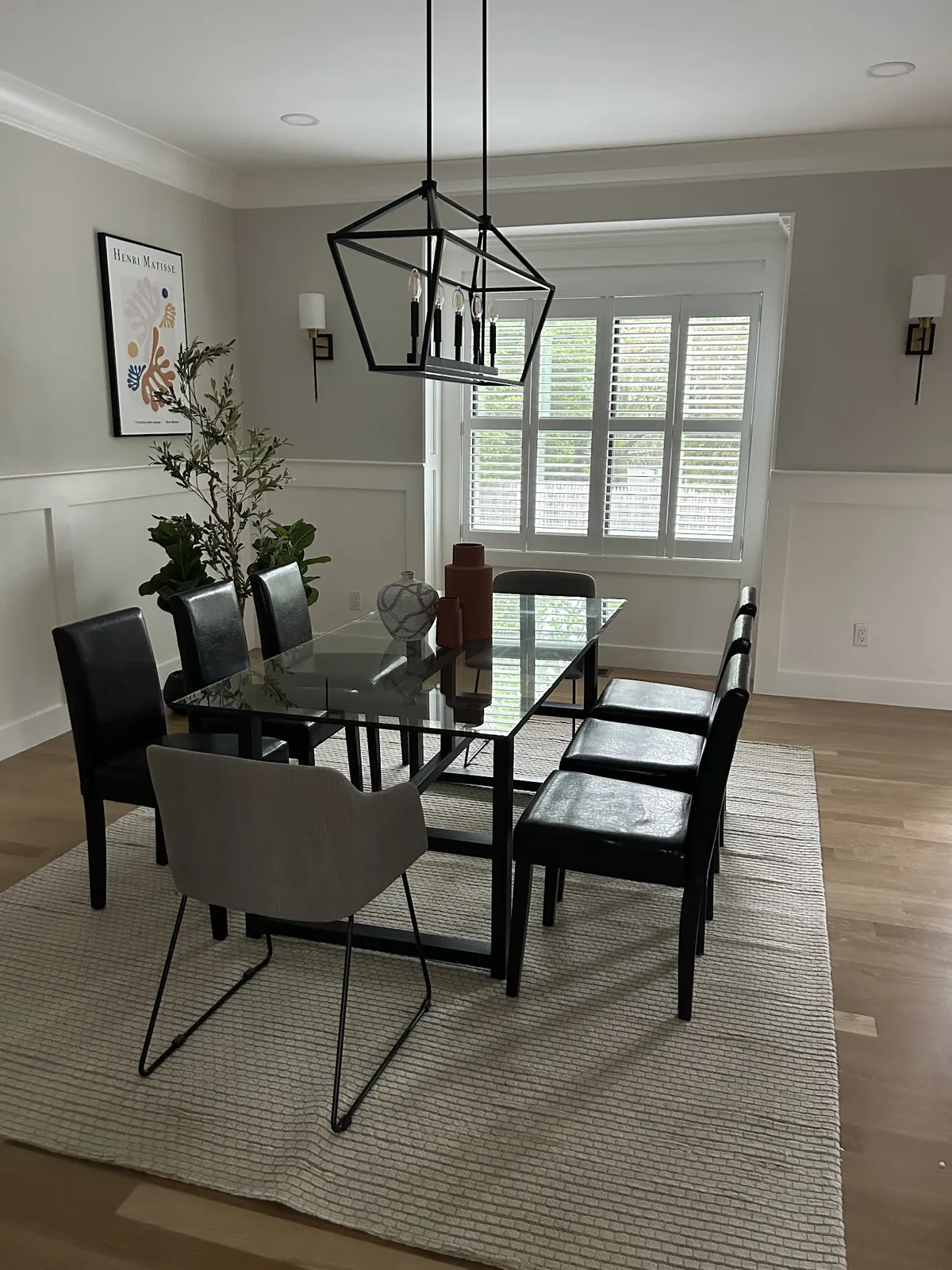
After dark
A wall of glass behaves differently at night. With the lamps on inside and nothing but darkness over the river, the windows turn into black mirrors, and a lit room is on show to anyone on the water or the far bank. Closing the shutters at dusk changes the feel of the room completely: the glass disappears behind a calm, even surface, the room feels enclosed and warm, and nothing is visible from outside. In the morning the panels fold away again and the view is back. It is a small daily routine, but in a glass-fronted room it changes how the space feels from morning to night.
Exposed Rooms Without the Fabric Worry
When a Tiverton room faces open water, the usual question is what fabric will survive it. Hours of sun bleach colour; salt carried in on the breeze leaves a dull film; a heavily glazed wall gives neither any shade. Plantation shutters in Tiverton, RI sidestep the question, because there is no fabric involved at all. They are solid panels, fixed indoors behind the glass, with louvres you can simply angle away from the sun.
Upkeep in a salty room is a matter of a cloth. Run a just-damp cloth along each painted slat now and then, dry it off, and the haze is gone. Doing it alongside the inside of the windows makes it a habit rather than a chore.
Which shutter material is the right one for a room sitting right on the river is a conversation for the measuring visit, where we can see the exposure for ourselves. For the broader picture, the coastal window treatments guide compares what works by the sea.
The Evening Sun across the River
Rooms on the Tiverton shore of the Sakonnet look west across the river, and that means the strongest sun of the day arrives in the late afternoon and evening, low and straight into the room, often doubled by its reflection off the water.
That is exactly the light louvres are good at. Angle the slats down toward the outside and the low sun and the glare off the surface are both cut, while you can still see the water below. As the sun sinks, close them a little further. Once it has set, fold the panels back for the last of the light, or close them fully for privacy with the lamps on.
West-facing bedrooms have the opposite problem from east-facing ones: the room heats up and brightens just as you might want it calm. A shutter closed through the late afternoon keeps the bedroom shaded and ready for the evening, and because the slats hold their angle, you can set them before leaving for work and come home to a room that has stayed in shade.
Farmhouses and Capes around Four Corners
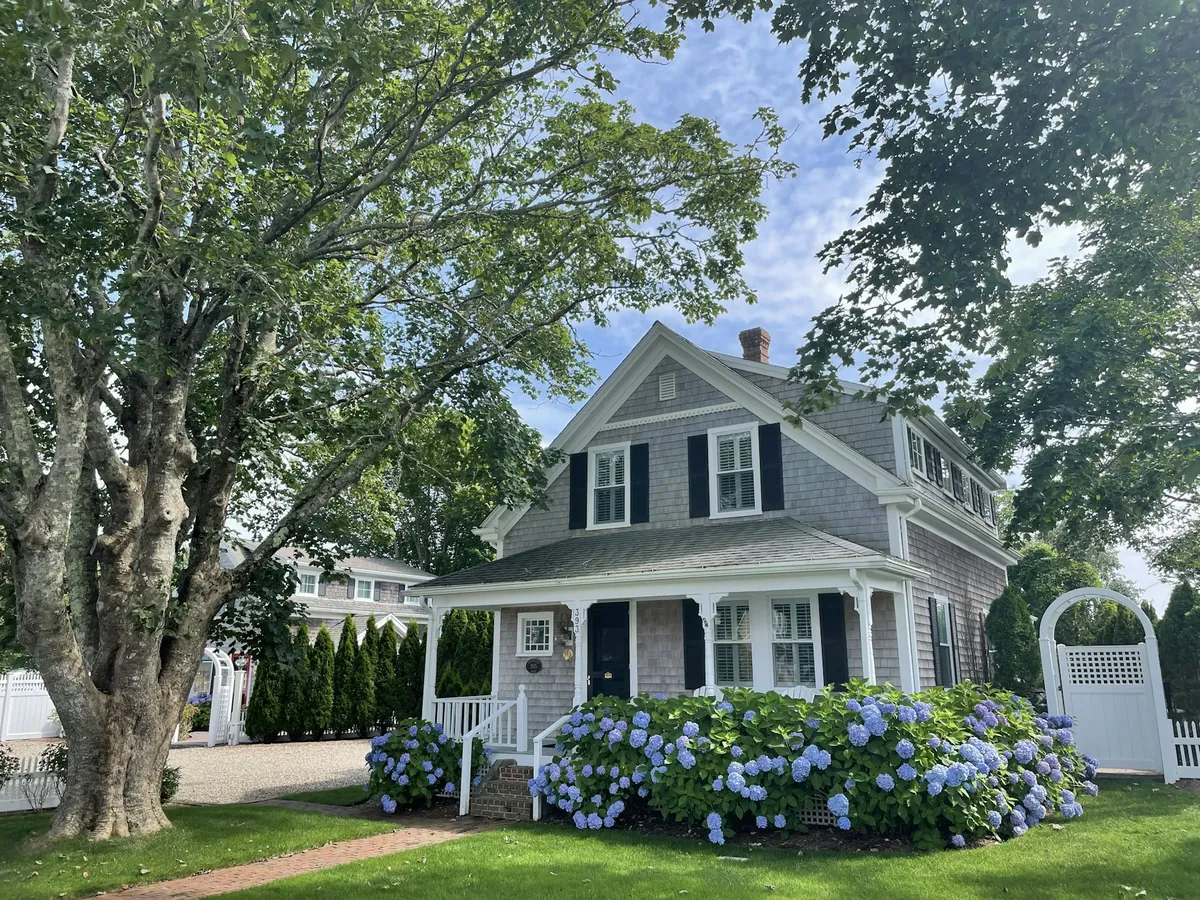
Inland, around Four Corners, the older farmhouses and shingled capes have a quite different set of windows. They are smaller, often with small panes in the sash, set in older frames that have settled over the years. Ceilings are lower, rooms are cosier, and the trim around the windows is often plain, original and part of the house’s character.
For these windows, a narrower louvre usually looks right. It gives more slats in a small panel, a finer pattern and a look that sits comfortably with old glass. Where a window sits back in the wall, the frame goes inside the opening and the old casing stays visible. Where the frame has moved out of square, the shutter frame is made to take up the difference, so the panels hang straight and meet cleanly in the middle.
Shingled capes put their bedrooms upstairs beneath the slope of the roof, lit by a dormer or a little window in the gable end. With no headroom to spare, a shutter’s frame simply lines the opening and covers every bit of it. In a farmhouse kitchen, cafe-style panels on the lower half of the sash give privacy at the sink and leave the top open.
Small rooms, swinging panels
Low farmhouse rooms are often small as well, with a bed, a dresser or a chair pushed close to the window. Shutter panels open into the room, so each one needs a clear arc to swing through. Where space is tight, we divide the window into narrower panels, which need less room to open, and hinge them so they fold toward the side with the most open wall. In a small bedroom under a low ceiling, a single neat panel on each little window is often the tidiest answer. Every one of these decisions is made with the furniture in front of us on the measuring visit.
Around Nanaquaket
The houses around Nanaquaket look onto more sheltered water than the open river, and they face it from several directions. That means the hard light does not arrive at the same hour for every house: one gets it in the morning, another at midday, another at sunset. Plantation shutters in Tiverton, RI deal with that without any guesswork, because the louvres are set by hand to whatever the light is doing at the time.
What the pond houses do share is glass. Rooms on the water side tend to have large windows and sometimes glazed doors to a deck, while the rooms on the road side are more enclosed. A common plan is to shutter the water side with a wider louvre for the view, keep the road side in the same louvre and finish for a consistent look, and treat any slider separately.
Where the Frame Goes
Every shutter hangs from a frame, and the frame has to attach somewhere. Tiverton houses tend to split neatly between the two options.
Recessed. In the old farmhouses near Four Corners, walls are thick and windows sit back from the room. A frame tucked into that recess leaves the original casing untouched and visible, provided the slats can still rotate clear of the sash lock. It is the natural fit for the older housing.
Surface-mounted. In many waterfront rooms the windows are shallow modern units with plain trim. Fixing the frame onto the face of the wall gives the slats their clearance, and making that frame a touch wider than the glass gives folded panels a landing spot beside the window instead of over its edge. When the view is the reason for the room, that small extra width is worth having.
Pick a square-edged frame for a newer river house and a gently rounded one where the casing is traditional.
Plantation Shutters in Tiverton, RI for Every Room
Some rooms tend to come first, and each uses the shutter a little differently.
- Water-facing living room: a wider louvre, panels that fold right back, slats angled down against the evening glare.
- Bedroom on the river side: panels closed through the late afternoon, opened again after sunset or in the morning.
- Farmhouse front room: a narrower louvre, a frame inside the old casing, pairs that open from the middle.
- Cape bedroom under the eaves: a dormer window filled edge to edge, closed at night.
- Kitchen: cafe-style panels on the lower sash, easy to wipe down.
You do not need to do every room at once. Many orders start with the rooms that face the water or the road, with others matched later in the same louvre and finish.
Patio and Deck Doors on the Shore
Plenty of Sakonnet and Nanaquaket houses open onto a deck through a slider. Shutter panels on a slider must get completely off the glass every single time the door is used, and on a busy door that soon becomes a nuisance. A vertical blind that sweeps to one side is often the easier companion for shuttered windows; the Tiverton vertical blinds page explains them. French-style doors that swing are a different matter and are looked at case by case.
From Enquiry to Installed
The same Swansea store handles every stage and checks in with you until nothing is left to do.
- Your call or form tells us which rooms you mean and which of them look over the water; a free quote is then booked.
- A specialist drives over to Tiverton and measures each opening, plus the wall beside it where panels will rest.
- Panel layouts are agreed room by room, keeping river views unobstructed.
- Slat width, frame and paint or stain are chosen, either at your house or among the displays in Swansea.
- You get a price for each window in writing.
- Each shutter is built to its own window’s sizes.
- Installation day ends with every panel swinging true and you knowing how to set the slats as the evening sun comes round.
Finishes and Drapes
On the shore, white paint is almost universal, bouncing light around rooms that already have plenty and looking clean against shingle and sky. Inland, white still dominates, though trim in another colour can be matched.
Stain comes into its own in a Four Corners farmhouse with wide pine boards and dark-painted doors, especially with a pair of drapes either side to soften a low room. Window Works sews drapes as well, so drapes for a Tiverton room can hang on a rod set wide enough to keep clear of the folding panels.
Keeping Them Clean
Inland, an occasional dusting is plenty: slats shut, top to bottom with a soft brush, slats flipped, repeat. On the shore, add the damp-cloth wipe described above whenever the glass gets its clean. Stained shutters skip the water. Anything that loosens with age is worth a call to the store.
Over the Line in Swansea
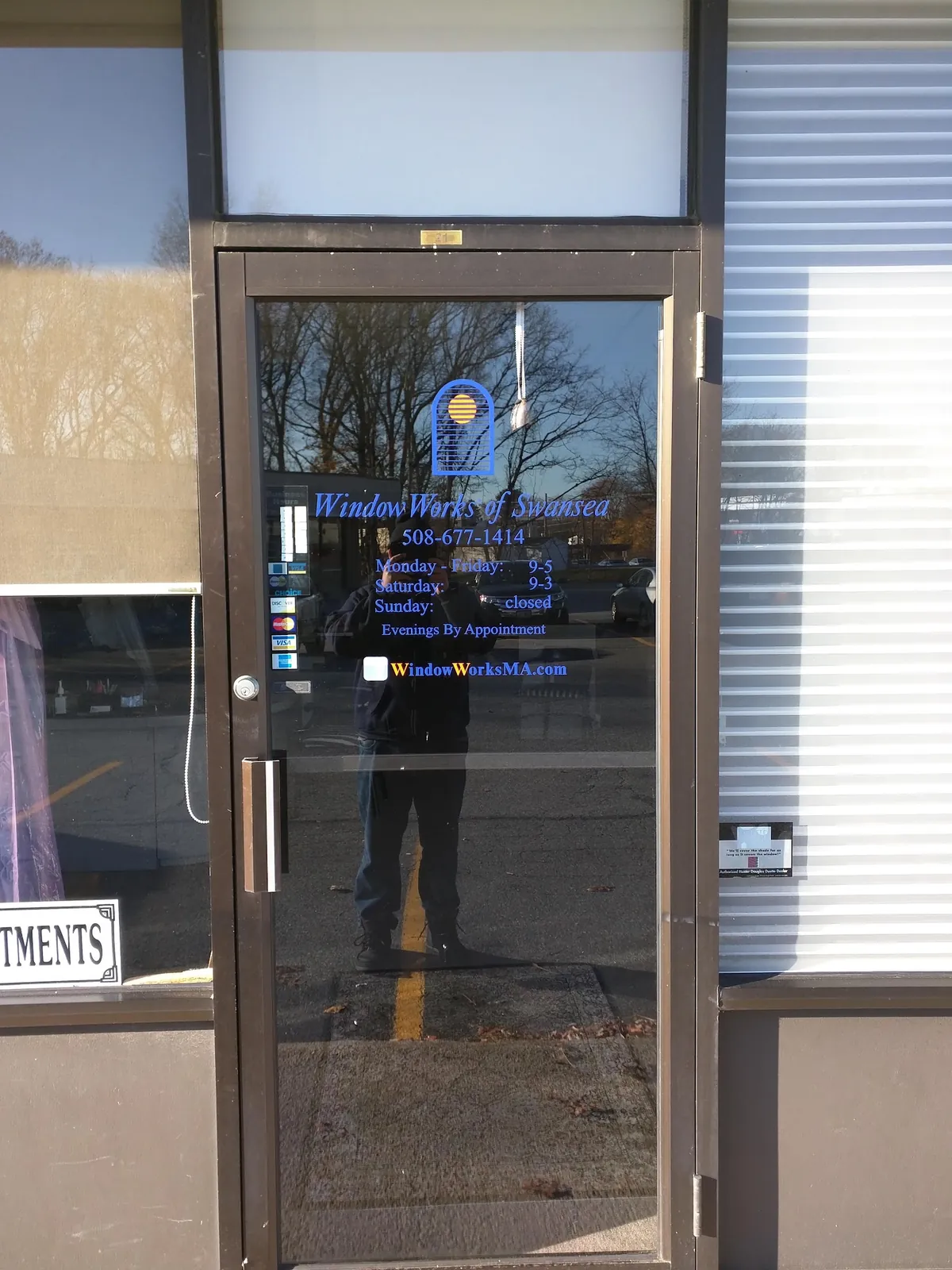
The showroom is in Swansea, Massachusetts, where the family opened Window Works in 1988; the second generation runs it today. Across over 37 years the store has worked either side of the state line, through the SouthCoast and down into the Rhode Island East Bay.
- Specialists who handle window treatments every working day
- A measuring visit to your Tiverton house first
- Shutters hung by Window Works, not a stranger
- Updates from the store right through to completion
- Warranties offered on our products
Inside you will find panels to swing, slats to tilt, widths to compare and Norman shutters alongside.
The whole range is explained on plantation shutters, and what else we do for the town is on Tiverton window treatments.
Questions from Tiverton
Will shutters spoil the view from a room on the Sakonnet?
No. Folded back, they leave the glass clear, and a wider louvre tilted open keeps the water in view between the slats.
How do shutters cope with the evening sun off the river?
Well. Angling the slats down cuts the low sun and the reflection off the water, and you can close them further as the sun sinks.
Are shutters a good choice near salt water?
There is no fabric to bleach or hold salt, and a painted panel is cleaned with a quick wipe. The best material for a room on the river is something we decide together at the visit.
Can shutters fit the small windows of an old farmhouse near Four Corners?
Yes. A narrower louvre suits small panes, the frame can sit inside the old casing, and it is made to take up any lean in the opening.
What is the first step toward plantation shutters in Tiverton, RI?
A free quote. Ring through or use the form, and the store sets a day to come and measure.
Start with a Free Quote
Quotes are free, and that is the place to begin. Tap the call button for the Swansea store to fix a measuring appointment at the house or to ask about fitting, or leave a note through the form. If handling a shutter first would help, the showroom sits a short way over the state line; directions are on the contact page. Window Works is rated 5.0 on Google.